- Composer
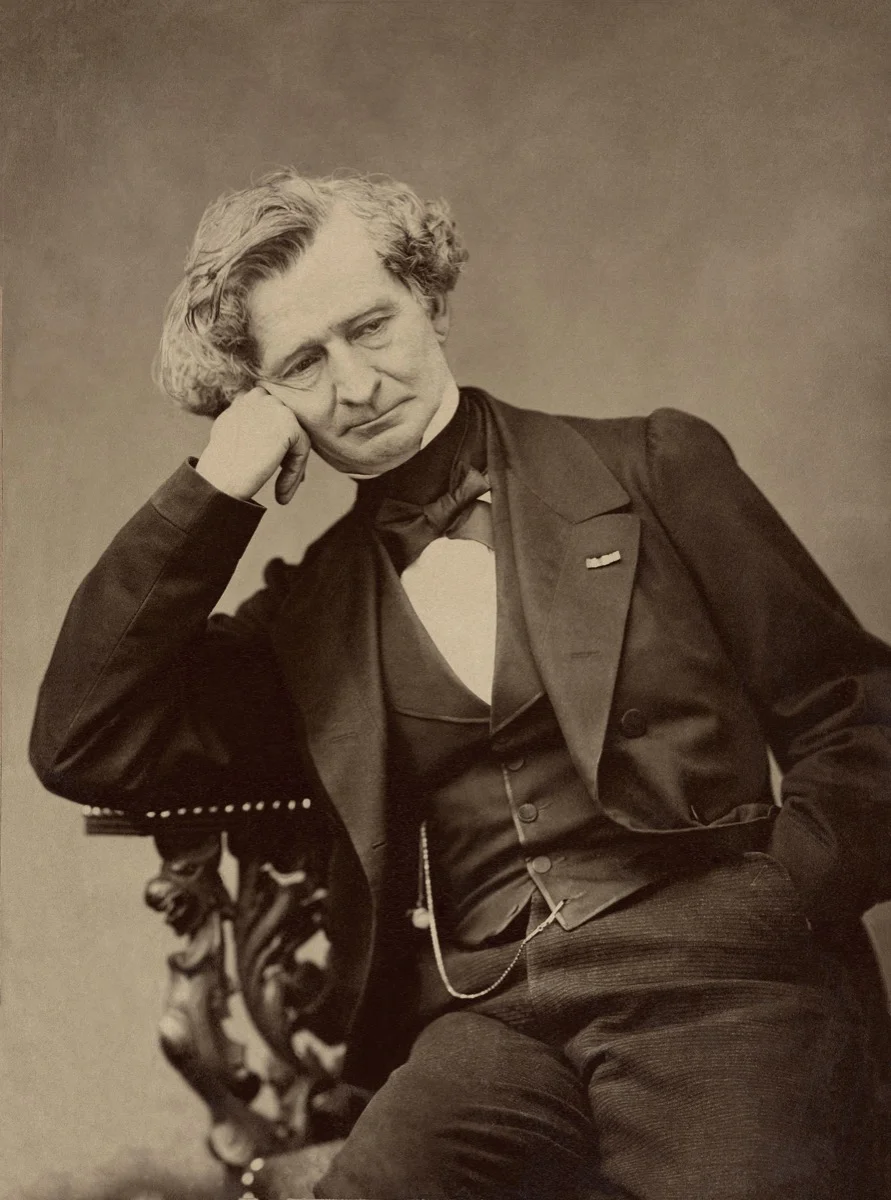
- Hector Berlioz
(1803–1869) - Work
- Symphonie fantastique, Op. 14
- Composed
- 1830
- Premiere
- December 5, 1830, Paris
- Key
- C major (1st movement)
- Instrumentation
- 2 flutes (piccolo), 2 oboes (English horn), 2 clarinets (E♭ clarinet), 4 bassoons, 4 horns, 2 trumpets, 2 cornets, 3 trombones, 2 ophicleides (tubas), 4 timpani, bass drum, snare drum, cymbals, 2 bells, 2 harps, strings
- Movements
- 5 movements
I. Rêveries – Passions (C minor / C major)
II. Un bal (A major)
III. Scène aux champs (F major)
IV. Marche au supplice (G minor)
V. Songe d’une nuit du Sabbat (C major)
I. Dreams – Passions
II. A Ball
III. Scene in the Fields
IV. March to the Scaffold
V. Dream of a Witches’ Sabbath - Duration
- Approx. 50 minutes
September 11, 1827. A Theater in Paris.
A twenty-four-year-old sits in the audience. He dropped out of medical school, defied his father, and chose music — though he has accomplished nothing yet. His name is Hector Berlioz.
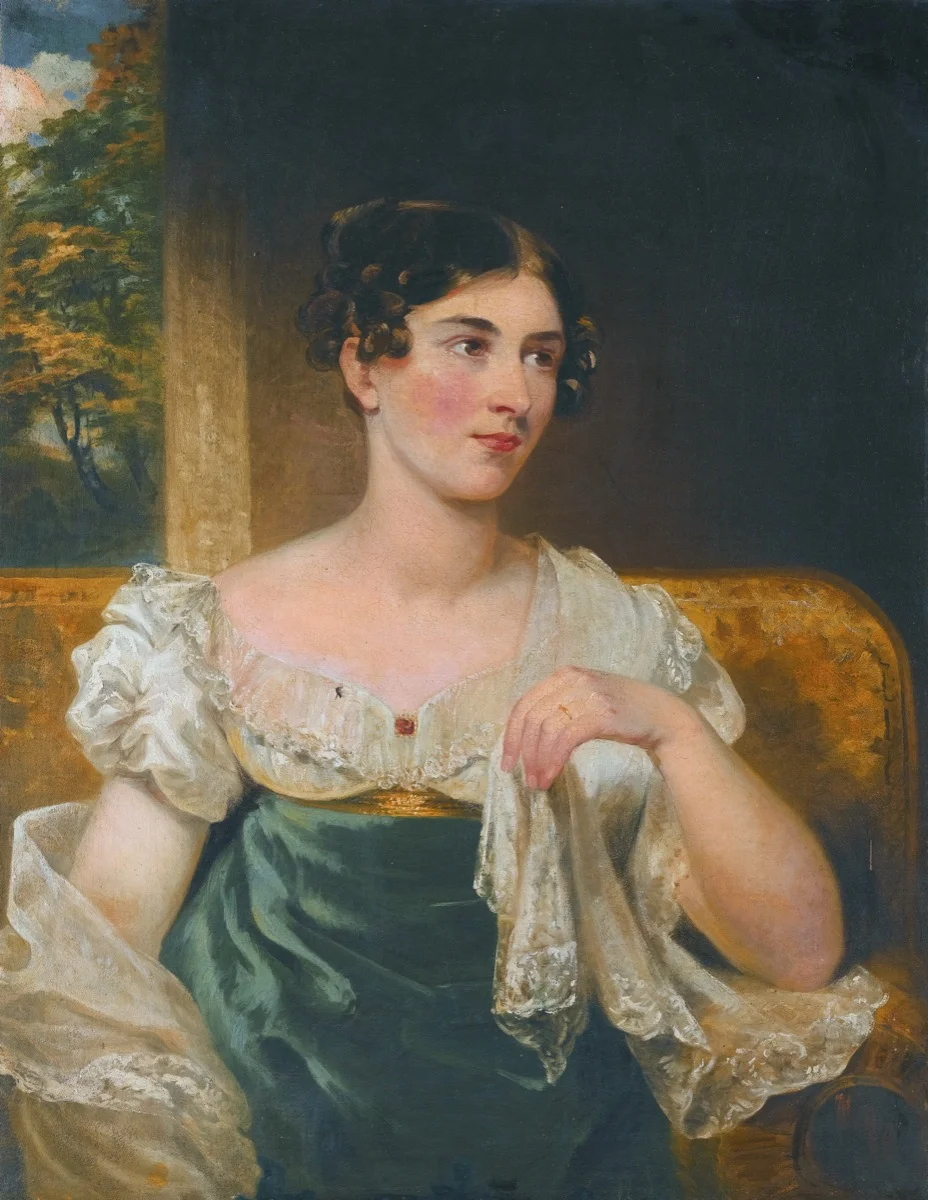
On stage, Shakespeare’s Hamlet is being performed. The Irish actress Harriet Smithson plays Ophelia. When she reaches the madness scene, Berlioz’s heart stops. Not a figure of speech. He later wrote in his memoirs: “I was struck as if by lightning.”
After that night, his life was never the same.
Work: Symphonie fantastique, Op. 14 (“Épisode de la vie d’un artiste”) · Composer: Hector Berlioz
Five Things to Listen For
You don’t need a music degree to be floored by the Symphonie fantastique. But knowing a few things before you press play turns a good listen into an unforgettable one.
1. The idée fixe is your compass.
About ninety seconds into the first movement, after quiet exchanges between the strings and woodwinds, a flute starts a long, delicate melody — almost nervous, almost trembling. This is the idée fixe, the “obsessive idea” that represents the woman Berlioz loved. It returns in every single movement, but never the same way twice. By the fifth movement, what began as a tender love theme has been warped into a grotesque, cackling witch-dance. Follow that melody and you follow the entire story.
2. The guillotine falls at the end of the fourth movement.
“March to the Scaffold” builds for about four minutes — a heavy, inexorable procession. Just before the end, the idée fixe appears one final time: a brief, quiet flash of the beloved’s face crossing the condemned man’s mind. Then the full orchestra delivers a single, blunt stroke. Thud. The head has fallen. Even if you’re expecting it, it lands like a punch.
3. A funeral hymn crashes a demon party in the fifth movement.
In the “Dream of a Witches’ Sabbath,” Berlioz quotes the Dies Irae — a medieval Latin hymn sung at Catholic funeral masses for centuries. He hurls it into the middle of a grotesque, demonic celebration. When you hear a solemn brass melody rising through the chaos, that’s it. Sacred music, deliberately desecrated.
4. Two harps open the second movement — and the obsession follows.
The shift from the intense first movement to the second is startling. Two harps begin a glittering waltz — suddenly you’re at a ballroom. Then, between the dancers, the idée fixe sneaks in. Even at a party, surrounded by people, the obsession never leaves. Listen for that moment the waltz falters.
5. The third movement asks a question nobody answers.
It begins with an oboe and an English horn exchanging a shepherd’s call — a pastoral conversation across a valley. Berlioz’s score instructs the English horn player to stand offstage, behind the audience. Near the end of the movement, the oboe calls again. The English horn stays silent. Nobody answers. That silence is intentional. So is the thunder that follows immediately after.
Now you’re ready. Let’s go back to the beginning.
The Letters That Were Never Opened
After that night at the theater, Berlioz started writing to Smithson. One letter. Two. Dozens. She didn’t read a single one. She refused to meet him. She was the most talked-about Shakespearean actress in Paris — the woman who had made French audiences weep at English-language Shakespeare, something no one thought possible. He was a nobody. An aspiring composer without a name, without money, without a single notable work to his credit.
His love letters were noise. She wasn’t cruel. She simply didn’t notice.
In modern terms: he sent message after message after message. She never even opened them. Every single one — left on “delivered.”
Most people would have given up. Berlioz was not most people.
He decided to pour the entire madness of his unrequited love into music. Add to that the frustration of failing the Prix de Rome — France’s most prestigious composition prize — four times in a row, and by 1830, the very year he finally won it on his fifth attempt, an unprecedented symphony was born.
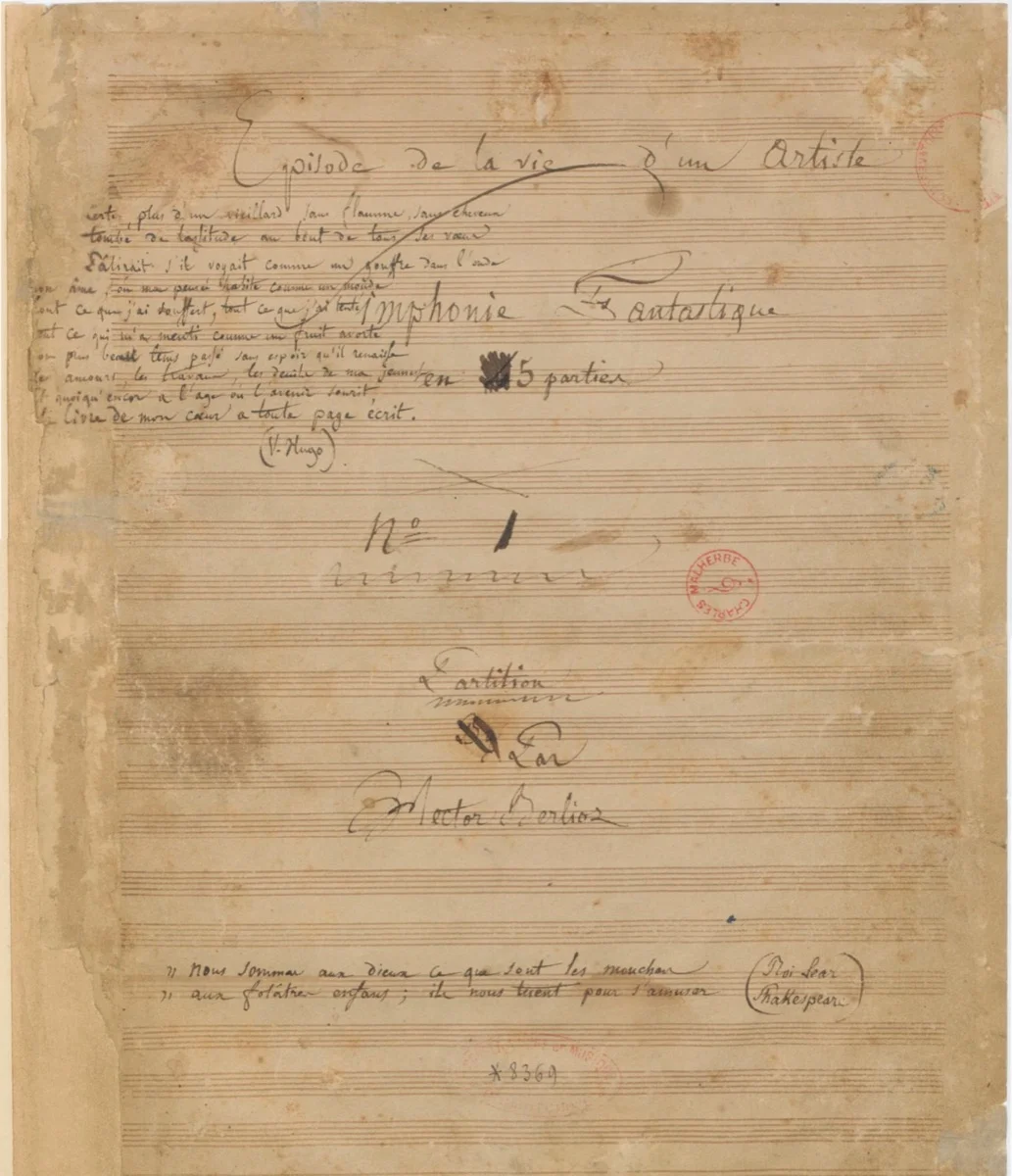
Its title: Symphonie fantastique. Its subtitle: “Episode in the Life of an Artist.” The artist was Berlioz himself. The episode was everything Harriet Smithson had refused to hear.
Five Movements, Five Hallucinations
Berlioz wrote the plot himself. He drafted detailed program notes — among the first in music history — and distributed them to the audience before the performance. The story: a young artist, in despair over unrequited love, swallows opium. He doesn’t die. The dose isn’t enough to kill him. Instead, he falls into five visions — each more extreme than the last.
I. “Dreams and Passions” (Rêveries – Passions) — about 12 minutes
Vague melancholy before love strikes — the drifting sadness of a young man who doesn’t yet know what’s about to hit him. Then, about ninety seconds in, it arrives: a long, winding melody in the flute and first violins, delicate and trembling. This is the idée fixe — the “fixed idea,” the obsession. It’s the melody that represents her.
Every time the artist thinks of the woman he loves, this melody returns. It’s the soundtrack of an obsession that will not let go.
The killer moment: Later in the movement, the idée fixe erupts across the full orchestra — the strings, the brass, everything. It’s the difference between thinking about someone quietly and being completely consumed. Berlioz is painting the exact instant infatuation becomes something you can’t control.
II. “A Ball” (Un bal) — about 6 minutes
Two harps open a glittering waltz. You’re at a grand party. Chandeliers, dancing couples, the swirl of movement. And then, slipping through the crowd like a face you can’t stop looking for — the idée fixe appears. Briefly. Then it vanishes back into the waltz.
The killer moment: The exact point where the waltz rhythm stumbles to make room for the idée fixe. Berlioz is telling you: even in a room full of people, even surrounded by music and laughter, the obsession doesn’t leave. It can’t.
III. “Scene in the Fields” (Scène aux champs) — about 16 minutes
The longest movement, and the most deceptive. It begins peacefully — an oboe on stage and an English horn placed offstage exchange a shepherd’s call, like two farmhands chatting across a valley. This spatial arrangement, with one player hidden behind the audience, was unheard of in 1830.
The idée fixe drifts through the middle section, quiet and uneasy. Even in the countryside, even in supposed peace, the artist cannot stop thinking about her.
The killer moment: Near the end, the oboe calls again. The English horn doesn’t answer. Silence. Then four timpani roll like distant thunder, and the pastoral calm shatters. Peace was an illusion. It always was.
Up to this point, the symphony is beautiful. From here on, all hell breaks loose.
IV. “March to the Scaffold” (Marche au supplice) — about 5 minutes
In his opium vision, the artist has murdered the woman he loves. He’s sentenced to death. A march plays — heavy, brutal, and strangely exhilarating. The crowd roars. The drums pound. He’s being dragged to the guillotine.
The killer moment: The last thirty seconds. The march reaches its peak, then falls away. In the sudden quiet, the idée fixe sounds one final time — a clarinet, soft and brief. Her face, flashing through his mind at the moment of execution. Then: the full orchestra delivers a single, crushing blow. Thud. Cut. The brass blares a short, triumphant fanfare. Done. The head has fallen.
This was written in 1830. Eighty-three years before Stravinsky’s Rite of Spring turned a Paris concert hall into a riot.
V. “Dream of a Witches’ Sabbath” (Songe d’une nuit du Sabbat) — about 11 minutes
Hell throws a party. Monsters and witches gather. Bells toll from offstage. The funeral hymn Dies Irae thunders through the trombones and tubas. And in the middle of it all — the idée fixe returns.
But listen carefully. It’s not the same melody. The rhythm is warped. The instrument has changed — it’s now an E-flat clarinet, shrill and mocking. The tender love theme from the first movement has become a vulgar, cackling dance.
The woman he loved has become a witch, dancing in the flames.
Three moments to wait for. First: right at the start, cellos and double basses make an eerie sound — col legno, striking the strings with the wood of the bow instead of the hair, producing a dry, rattling clatter like bones. Second: around three minutes in, the bells toll and the idée fixe enters in its distorted form on the E-flat clarinet. Third: immediately after, the trombones and tubas launch the Dies Irae hymn. When all three layers collide, the symphony reaches its climax.
This is where obsession ends. Worship becomes disgust. Disgust becomes demonization. Berlioz took the darkest corner of his own psyche and orchestrated it for a hundred musicians. Even Paganini — the violinist rumored to have sold his soul to the devil — heard this piece and was awestruck.
The Idée Fixe — A Revolutionary Idea
The Symphonie fantastique is still in every music textbook not just because of its scandalous love story, but because it changed how music works.
At the center of that change is the idée fixe. The term translates literally as “fixed idea” or “obsession.” In the 1830s, it was also a clinical term — psychiatrists used it to describe a pathological fixation, a thought that lodges in the mind and won’t leave. Berlioz borrowed a medical diagnosis and turned it into a musical technique.
The concept is simple: one melody, assigned to one meaning, recurring and transforming across all five movements. But the transformations are dramatic:
- Movement I: A long, delicate melody in the flute and violins. The trembling of first sight.
- Movement II: The idée fixe slips into a waltz. Her face glimpsed in a crowd.
- Movement III: It drifts through a pastoral landscape, tinged with anxiety. Peace that can’t hold.
- Movement IV: A brief flash of the melody — then the guillotine cuts it short.
- Movement V: The melody returns warped beyond recognition. Distorted rhythm, shrill E-flat clarinet. The love theme has become a witch’s dance.
Why is this revolutionary? Composers before Berlioz had used recurring themes. But no one had made a single melody carry psychological meaning across an entire multi-movement work — transforming it not just musically but dramatically, tracking the arc of a mind unraveling.
About thirty years later, Richard Wagner developed the Leitmotiv — short musical phrases assigned to characters, objects, or emotions in his operas, recurring and transforming throughout the drama. It’s the technique behind Darth Vader’s theme in Star Wars, behind every character motif in The Lord of the Rings. The entire tradition of narrative film scoring traces back to this idea.
And the Leitmotiv’s ancestor is the idée fixe. Berlioz got there thirty years before Wagner.
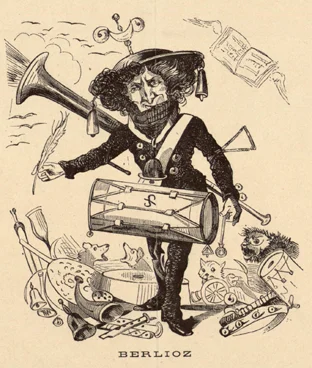
The innovations didn’t stop at the melody. Berlioz expanded the orchestra to unprecedented scale: two harps, English horn, E-flat clarinet, offstage bells, four timpani. In 1830, this was outrageous. He used every instrument not just for volume but for color — the lonely shepherd’s pipe of the English horn in the third movement, the mocking shriek of the E-flat clarinet in the fifth. This “drama of timbre” became the foundation of modern orchestration.
In 1844, Berlioz published his Grand traité d’instrumentation et d’orchestration modernes — the first systematic textbook on orchestration in history, later revised by Richard Strauss and studied by every serious composer since. The Symphonie fantastique was the laboratory where those ideas were first tested.
The Night Harriet Was in the Audience
December 5, 1830. The hall of the Paris Conservatoire was packed. François-Antoine Habeneck raised his baton. Berlioz sat somewhere in the audience, a wreck of excitement and terror. This was the first performance of the work he had poured everything into.
But the woman the symphony was written for — Harriet Smithson — was not there. She was likely on tour in England. She had no idea that the persistent young man who had been sending her letters had composed a fifty-minute symphony about her. She had never heard his name mentioned with any seriousness.
The premiere was a sensation. No one had heard a symphony like this — opium, murder, a guillotine, a witches’ sabbath. The audience was divided between astonishment and bewilderment. Franz Liszt, sitting in the hall, was so enthralled that he immediately began transcribing the work for solo piano. The name “Berlioz” was suddenly on everyone’s lips in Paris.
The real twist came two years later.
In 1832, Berlioz organized a new concert: a revised Symphonie fantastique, followed by a sequel he had composed — Lélio, ou le Retour à la vie (Lelio, or the Return to Life). Lélio is a “monodrama” for actor, soloists, chorus, and orchestra, in which the protagonist — barely disguised as Berlioz himself — speaks aloud about his love, his despair, and his art. The idée fixe appears again, woven into the new work.
Harriet Smithson came to this concert.
How exactly she ended up there isn’t entirely clear — some accounts say mutual acquaintances invited her, others that curiosity brought her. But she was there. She read the program notes. And she understood.
The “artist” in the symphony was Berlioz. The “beloved woman” was herself. The obsession, the hallucinations, the murder, the witches’ sabbath — all of it was about her. This man she had ignored for five years had turned his unrequited love into one of the most talked-about musical works in Paris. And she was hearing it for the first time while sitting among hundreds of people who already knew.
And this time, she was the one struck by lightning.
The Marriage That Proved His Point
Within weeks, they met. Within a year, they were married — October 3, 1833. A single symphony accomplished what hundreds of letters could not. It is probably the most effective love declaration in history, though it took five years and a full orchestra to deliver.
But real love couldn’t match the drama of the Symphonie fantastique.
The language barrier was the first crack. Smithson’s French was limited; Berlioz’s English was no better. The Ophelia who had shattered him on stage in 1827 turned out to be a real woman with real problems — a fading career, mounting debts, a temperament that clashed with his. Her star in Paris had dimmed. She attempted to run her own theater company in 1835; it failed financially. The debts accumulated.
Berlioz, too, struggled. Making a living as a composer in Paris was brutal. He supplemented his income writing music criticism and journalism — work he resented. Their son Louis was born, but a child couldn’t stabilize what was already fracturing.
In 1842, Berlioz began a relationship with the singer Marie Recio. By 1843, he and Smithson had separated. Her health deteriorated rapidly — repeated strokes left her partially paralyzed, and she spent her final years in a small house on the outskirts of Paris, largely alone. Berlioz continued sending money for her living expenses even after the separation. He did not abandon her entirely.
Harriet Smithson died on March 3, 1854, in Montmartre. She was fifty-three.
Did Berlioz truly love Harriet Smithson — or was it Ophelia on stage that he loved? Perhaps both. And perhaps that confusion — obsession tangled with worship, madness tangled with creation — is exactly why this symphony still fills concert halls nearly two centuries later.
Today, the Symphonie fantastique remains essential repertoire for every major orchestra in the world. It is also a proving ground for young conductors — the work demands command of a massive ensemble, extreme dynamic range, and the ability to give each of the five movements its own distinct character, all while holding the psychological arc together.
The most dangerous love letter ever written was written in music.
Listen with the Score
Following the score while listening makes the idée fixe’s transformations visible. The moment it breaks off in the fourth movement, the moment it returns distorted in the fifth — these hit harder when you can see them on the page.
If you’ve never read a score before, start with the idée fixe in the first movement’s introduction. It’s a forty-bar melody in C major, presented in the flute and first violin parts. Memorize its shape, and you’ll recognize it every time it returns — even when Berlioz has twisted it beyond recognition.
The full score is freely available at IMSLP. View the Symphonie fantastique, Op. 14 score on IMSLP →
Frequently Asked Questions
How many movements does the Symphonie fantastique have, and how long is it?
Five movements, each with a descriptive title. A typical performance runs about 50 minutes. The movements are: I. Rêveries – Passions, II. Un bal (A Ball), III. Scène aux champs (Scene in the Fields), IV. Marche au supplice (March to the Scaffold), V. Songe d’une nuit du Sabbat (Dream of a Witches’ Sabbath).
What is the idée fixe?
A long, lyrical melody introduced by the flute in the first movement, representing the woman the artist is obsessed with. It recurs in every movement, transformed each time to reflect the protagonist’s changing emotional state — from tender longing to grotesque mockery. It predates Wagner’s Leitmotiv by about thirty years.
Did Berlioz and Harriet Smithson actually get married?
Yes, in 1833. After hearing the revised 1832 performance and reading the program notes, Smithson realized she was the “beloved woman” in the story. The marriage was turbulent and ultimately unhappy. They separated in 1844, and Smithson died in 1854.
What is the story of the Symphonie fantastique?
A young artist, consumed by hopeless love, takes opium and experiences a series of visions: a ballroom, a pastoral scene, his own execution on the scaffold, and finally a witches’ sabbath where the beloved appears as a grotesque parody. Berlioz published a detailed program for the audience to follow.
Why is the Symphonie fantastique considered revolutionary?
It was the first major orchestral work to tell a detailed autobiographical story through purely instrumental music, using a recurring theme (the idée fixe) as a narrative device. Berlioz also expanded the orchestra’s palette with unprecedented combinations of instruments and effects, laying the foundation for modern orchestration.
You Might Also Enjoy
- Stravinsky’s Rite of Spring — The 1913 Premiere That Started a Riot
- 10 Classical Symphonies to Hear Before You Die