- Composer
- Igor Stravinsky
(1882–1971) - Work
- The Rite of Spring
(Le Sacre du printemps) - Composed
- 1911–1913
- Premiere
- May 29, 1913, Théâtre des Champs-Élysées, Paris
- Instrumentation
- 3 flutes (piccolo, alto flute), 4 oboes (cor anglais), 3 clarinets (E♭ and bass), 4 bassoons (contrabassoon), 8 horns, 4 trumpets (piccolo trumpet), 3 trombones, 2 tubas, 5 timpani, multiple percussion, strings
- Structure
- Two parts
Part I: The Adoration of the Earth
– Introduction · Augurs of Spring · Ritual of Abduction
– Spring Rounds · Ritual of the Rival Tribes · Procession of the Sage
– The Kiss of the Earth · Dance of the Earth
Part II: The Sacrifice
– Introduction · Mystic Circles of the Young Girls
– Glorification of the Chosen One · Evocation of the Ancestors
– Ritual Action of the Ancestors · Sacrificial Dance - Duration
- Approx. 35 minutes
The premiere of Stravinsky’s The Rite of Spring is remembered as the greatest scandal in the history of classical music. This guide explores the truth behind the 1913 Paris “riot,” what made the music so revolutionary, and its lasting impact on modern art. A complete guide for first-time listeners and devoted fans alike.
The night of May 29, 1913. Paris. The curtain at the Théâtre des Champs-Élysées hadn’t even risen, and the audience was already restless.
A bassoon began to play. One note, then another. But something was wrong. The bassoon — that low-voiced pillar of the woodwind section, the instrument that anchors an orchestra’s foundation — was straining in an impossibly high register. As if a bass singer were being forced to squeeze out soprano notes.
Laughter rippled through the hall.
That was the beginning.
The Finest Night in Paris, the Greatest Scandal in Music
When the curtain rose, the scene on stage was stranger still. The ballerinas were not poised elegantly on pointe. They stood with feet turned inward, knees bent, heads angled to one side, their bodies lurching. These were movements reenacting an ancient Russian pagan ritual — but to Parisian eyes, they looked like bizarre mistakes.
Catcalls erupted. A few at first, then cascading from every corner. Supporters yelled back: “Quiet!” The opposition roared louder: “Rubbish!” A gentleman hurled his hat. A lady turned around and slapped the man behind her. Police entered the theatre; 40 people were ejected.
In the wings, choreographer Vaslav Nijinsky stood shouting the counts to the dancers. The noise was so overwhelming they couldn’t hear the orchestra. Conductor Pierre Monteux held his ground on the podium, baton never wavering. Impresario Sergei Diaghilev flicked the house lights on and off, trying to calm the crowd. It didn’t work.
Stravinsky, in shock, fled backstage.
The work was Le Sacre du printemps — The Rite of Spring.
An Unknown Composer Meets an Extraordinary Impresario
In 1909, in St. Petersburg, the young composer Igor Stravinsky (1882–1971) presented a modest orchestral piece called Feu d’artifice (Fireworks). The response was lukewarm.
But one man in the audience was paying close attention. Sergei Diaghilev — former law student, genius impresario, and head of the Ballets Russes. He heard Stravinsky’s music and made his decision: This is the one.
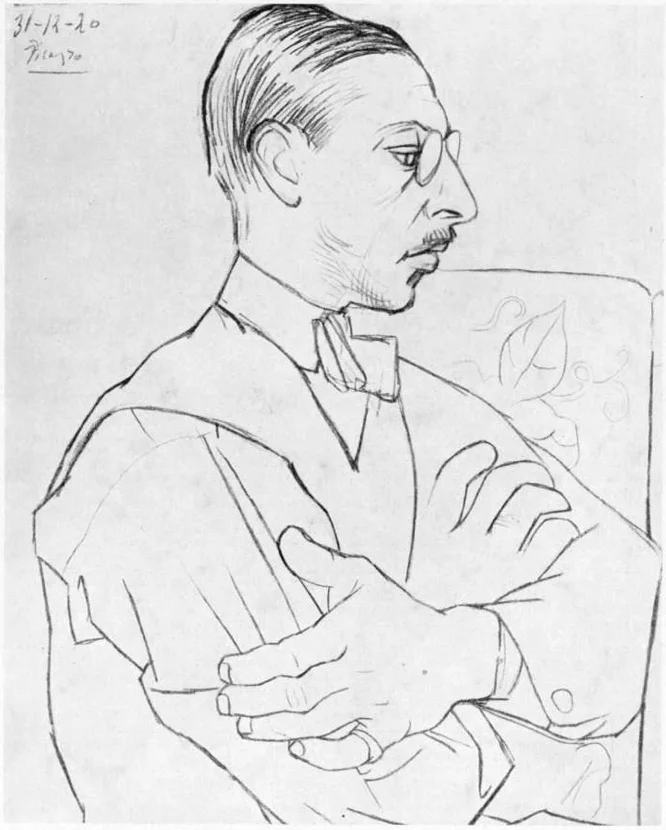
Diaghilev’s Ballets Russes was the collective shaking the European art world. Musicians, painters, choreographers, and costume designers, all converging to redefine ballet from the ground up. Stravinsky became its composer, delivering two consecutive triumphs: The Firebird (1910) and Petrushka (1911).
While preparing his third work, Stravinsky had a strange dream.
A Girl from a Dream — Dancing Until She Dies
“One day I had a sudden vision: I saw elders seated in a circle, watching a young girl dance herself to death. She was the sacrifice to propitiate the god of spring.”
So Stravinsky wrote in his autobiography (1936), describing the birth of The Rite of Spring.
He developed the concept with Nicholas Roerich, a Russian ethnographer and painter who had spent a lifetime studying ancient Slavic rituals and folk art. Together they settled on the theme of a primeval spring ceremony — a rite in which a virgin is chosen as a sacrificial offering. The original working title was Velikaia zhertva — “The Great Sacrifice.”
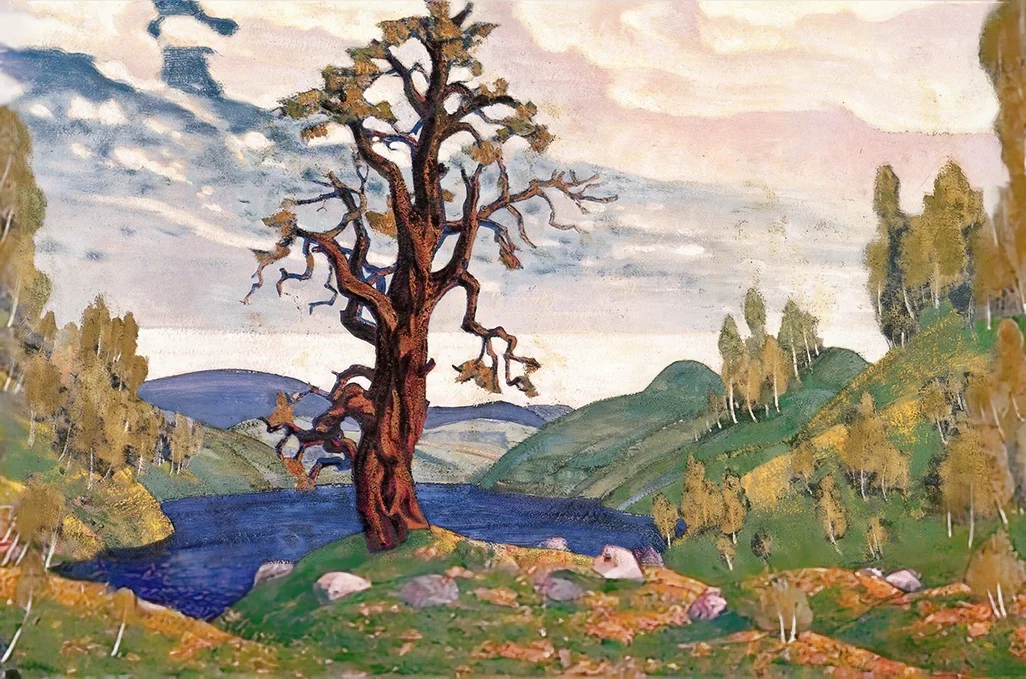
Stravinsky composed in a tiny rented room in Clarens, Switzerland. Roughly 2.4 by 2.4 meters — about two and a half paces in each direction. A muffled piano, one desk, two chairs. Through the winter of 1911–1912, he filled page after page of the score in that cramped space.
On March 8, 1913, he wrote the final note and signed the full score. Complete.
Before the premiere, Stravinsky played through a four-hand piano arrangement with Claude Debussy. Debussy was stunned into silence. Maurice Ravel wrote in a letter: “The premiere of this work will be an event as significant as the premiere of Debussy’s Pelléas et Mélisande in 1902.”
Listen First — Hear What This Music Sounds Like
Before any more words, listen. From the bassoon solo at the opening to the full-orchestra explosion that builds and builds — experience it for yourself.
Why Was This Music So Shocking?
What had Parisian audiences been accustomed to hearing in 1913? Music with clear tonality. Melodies flowing within the scale of do-re-mi. Regular meters — 1-2-3-4, or 1-2-3. At the very least, you could predict where the downbeat would fall.
The Rite of Spring upended all of it.
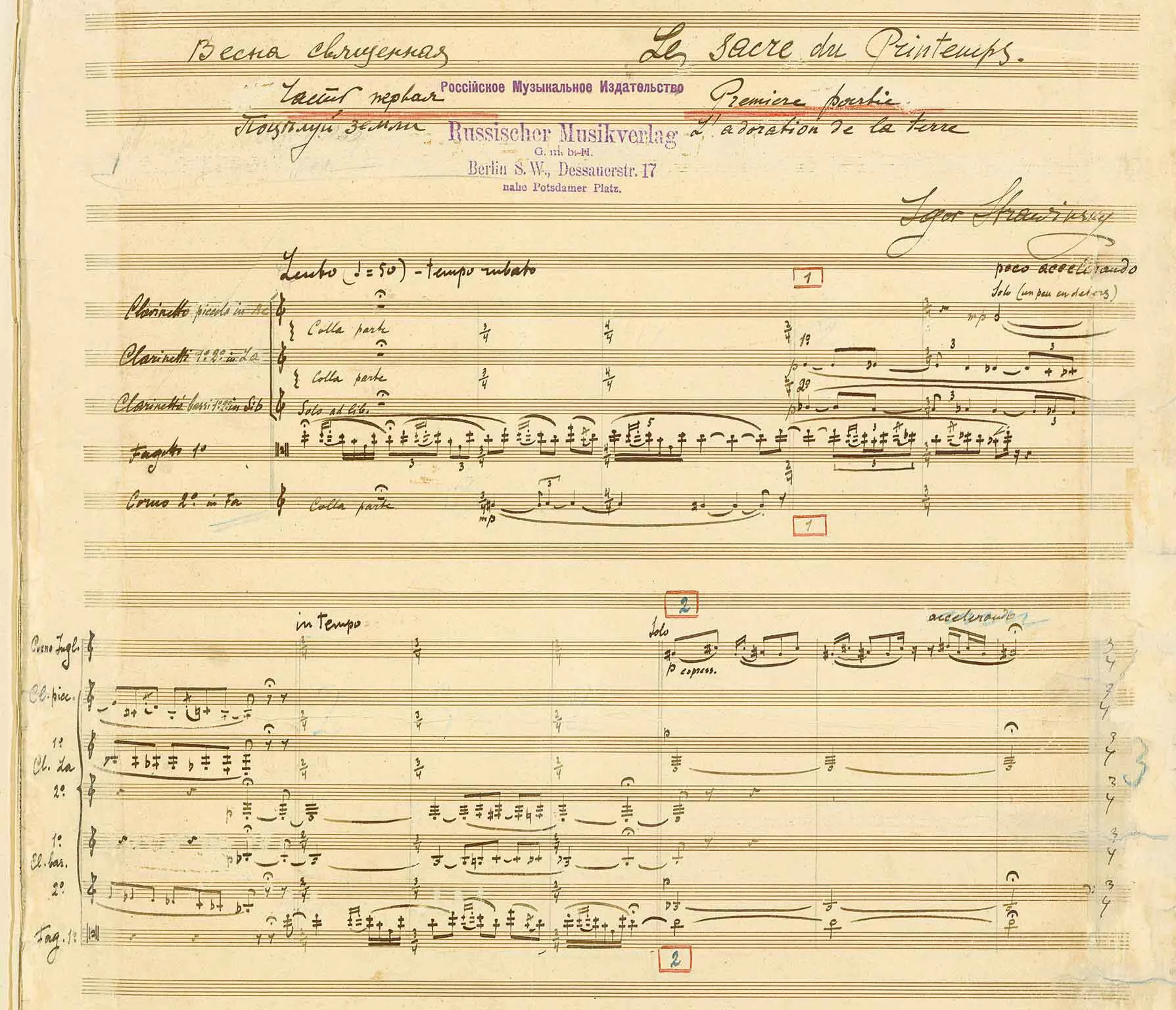
The moment “Augurs of Spring” begins in Part I, the entire string section hammers a single chord in unison — but the accents shift unpredictably. Two beats, two beats, two beats, three beats, two, three, three… No pattern. You can’t anticipate where the blow will land. And the chord itself is polytonal — an E♭ major seventh stacked on top of an F♭ major triad. In plain terms, two clashing harmonies forced together.
Dissonance. Deliberate.
The sheer scale of the orchestra was different, too. Stravinsky doubled the woodwinds: five flutes, five oboes, five clarinets, five bassoons. Over 100 players driving aggressive rhythms forward. This wasn’t ballet accompaniment. The orchestra itself was a primal force.
In hindsight, the laughter was almost inevitable. The audience was bewildered.
Nijinsky’s Provocation — Why Aren’t the Ballerinas on Pointe?
The music alone wasn’t the issue. The choreography was equally revolutionary. The grammar of ballet in 1913 was clear: ballerinas must be graceful; they stand on pointe; arms form curves; the stage is beautiful.
Nijinsky’s choreography rejected all of this head-on. Dancers’ feet were turned inward. Knees were bent, arms rigid, movements convulsive and repetitive. The aim was not beauty but raw, primordial power — an untamed life-force.
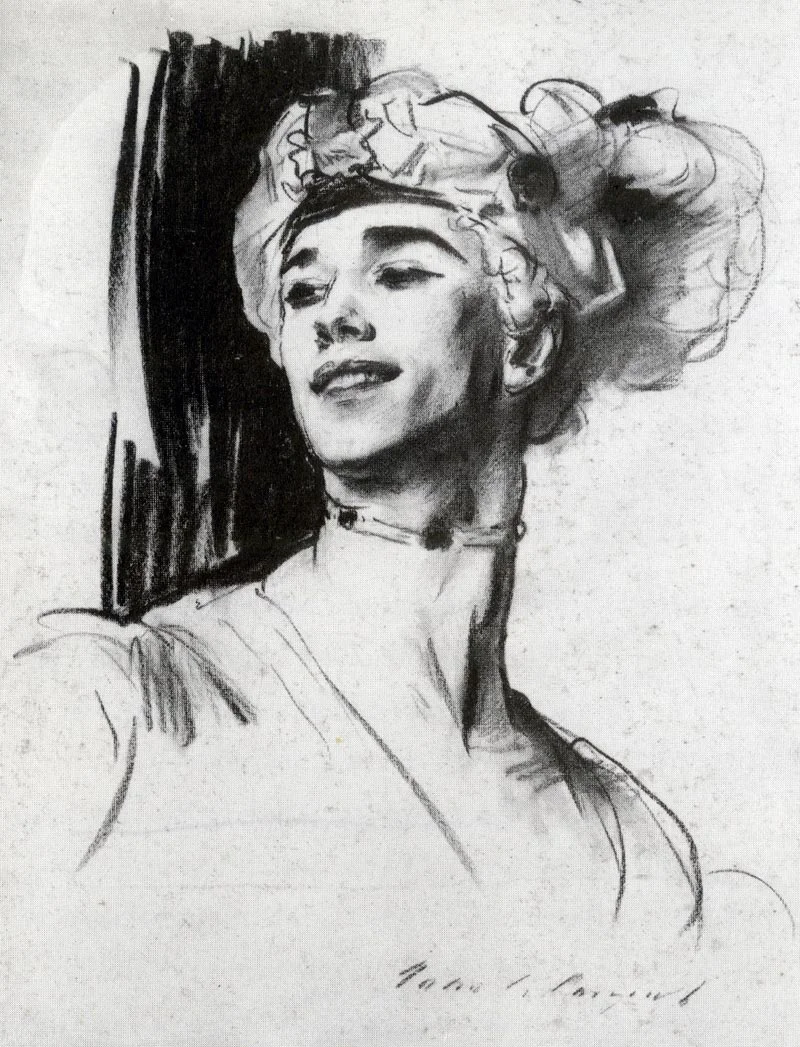
Rehearsals were a nightmare. Stravinsky’s score shifts meter constantly. Dancers had to count while moving, but during the performance the orchestra drowned out everything. Nijinsky screamed the counts from the wings — to little avail.
They rehearsed 17 times. Stravinsky later recalled: “Pierre Monteux endured the whole ordeal with the patience of an angel.”
What Actually Happened That Night
Thursday evening, May 29. The Théâtre des Champs-Élysées was packed with Parisian high society. Elegant gowns, tailcoats, jewels. It was the opening night of the Ballets Russes’s new season.
Before the curtain rose, the bassoon solo began.
A bassoon is not supposed to sound like this. At the very ceiling of the instrument’s range, a Lithuanian folk melody began to strain and wail. The composer Camille Saint-Saëns reportedly flew into a rage at this opening: “How dare he use the bassoon like that!” (Whether the quote is verbatim is debated, but multiple sources confirm his fury.)
When the curtain went up, the noise exploded. Catcalls, cheers, shouts, laughter — all tangled together. Supporters and detractors turned on each other. Diaghilev toggled the house lights. Nothing worked. Police were called; 40 audience members were removed.
The dancers couldn’t even hear the orchestra. Nijinsky screamed from the wings. Monteux never put his baton down.
Stravinsky later recalled: “I was so furious I left my seat. I went backstage and held onto Diaghilev’s shirtsleeve.”
After the performance, Diaghilev reportedly smiled: “Exactly what I wanted.”
A Plot Twist — The Word “Riot” Was Added a Decade Later
Here’s an important fact.
The event we commonly call the “1913 Rite of Spring premiere riot” — that word, riot, doesn’t appear in any newspaper coverage from 1913. The next day’s papers called it a “scandal,” “protests,” “hissing.” The word “riot” became attached to this event only around 1924, when revivals of the piece brought it back into the spotlight.
In other words, the “greatest premiere riot in history” is a legend that was built over a decade.
And here’s another thing. On April 5, 1914 — less than a year later — a concert version (orchestra only, no ballet) was performed at the Casino de Paris. Pierre Monteux conducting, once again. This time, the audience reacted completely differently: rapturous applause, demands for an encore. After the concert, fans hoisted Stravinsky onto their shoulders and paraded him through the streets of Paris.
The same music. The same composer. One year apart, the reactions were mirror opposites.
The Sacrificed Girl, and the Filter of History
The story of The Rite of Spring is simple. Two parts.
Part I, “The Adoration of the Earth”: a primitive tribe celebrates the arrival of spring. An old woman reads omens, young girls emerge from the river, rival tribes compete in a ritual. The Dance of the Earth brings Part I to a close.
Part II, “The Sacrifice”: the girls move in mystic circles. One is chosen — as the offering. Before the assembled elders, she performs the Sacrificial Dance. She dances until she dies.
Simple, yet devastating. And the music bears every ounce of that weight.
Stravinsky continued to revise the score for decades after the premiere. Nijinsky’s original choreography survived only eight performances before vanishing — known for years as “the lost choreography” until the Joffrey Ballet miraculously reconstructed it in 1987, after years of painstaking research.
Today, The Rite of Spring is the most frequently cited work in 20th-century music. Film scores, pop, advertising, video game soundtracks — its influence is everywhere. Stravinsky himself never once said, “I wanted a revolution.” He said he saw a girl in a dream, and he put her into notes.
Without that tumultuous night of May 29, 1913, we might never tell this story with such relish.
The scandal created the legend. And the legend made the music immortal.
The girl is still dancing.
Follow the Score
Frequently Asked Questions
Did a riot really break out at the premiere of The Rite of Spring?
Severe disruption did occur at the Théâtre des Champs-Élysées on May 29, 1913 — catcalls, cheers, and police intervention. However, the word “riot” was not used in contemporary press coverage; it was applied retroactively in the 1920s. The event has been mythologized over time.
Why does The Rite of Spring sound so difficult?
Because it replaces traditional harmony and regular meter with polytonality (two keys sounding simultaneously) and constantly shifting time signatures. The deliberate unpredictability creates the work’s core tension.
Any tips for a first-time listener?
Don’t try to follow a melody. Focus instead on the rhythmic shocks and the shifting orchestral colors. Start with the string-section hammering at “Augurs of Spring” in Part I — that will give you an instant feel for this work’s raw energy.
Further Reading
- → Symphony Beginner’s Guide — Three Essential First Listens
- → The Classic Note Composer & Works Map
🎼 View the Score — Free score download at IMSLP
What caused the riot at the premiere of The Rite of Spring?
The riot at the 1913 premiere in Paris was a reaction to the ballet’s radical nature. The audience was shocked by Igor Stravinsky’s dissonant, rhythmically complex score and Vaslav Nijinsky’s unconventional, primitive choreography, which broke sharply from classical ballet traditions. The combination of the jarring music and startling on-stage movements provoked a tumultuous response.
What is the story of The Rite of Spring?
The ballet depicts a series of ancient pagan rituals in pre-Christian Russia celebrating the arrival of spring. The narrative is divided into two parts, “Adoration of the Earth” and “The Sacrifice.” It culminates with a young maiden being chosen as a sacrificial victim, who must dance herself to death to ensure the earth’s fertility.
How long is The Rite of Spring and how many movements does it have?
A complete performance of The Rite of Spring lasts approximately 33 minutes. The work is not structured with traditional movements but is divided into two main parts, which contain a total of 14 continuous sections, each with its own descriptive title.
Why was the music of The Rite of Spring considered so revolutionary?
Stravinsky’s score broke new ground with its intense rhythmic drive, extensive use of polyrhythms, and harsh, unresolved dissonances. He treated the enormous orchestra like a percussion instrument, favoring stark, raw sounds over lyrical melodies. This aggressive modernism was a deliberate departure from the lush orchestrations of late Romanticism.