- Composer
- Johannes Brahms
(1833–1897) - Work
- Symphony No. 2 in D major, Op. 73
- Composed
- Summer 1877, Pörtschach am Wörthersee, Austria
- Movements
- 4 movements
I. Allegro non troppo (D major)
II. Adagio non troppo (B major)
III. Allegretto grazioso (G major)
IV. Allegro con spirito (D major) - Instrumentation
- Strings, Flutes 2, Oboes 2, Clarinets 2, Bassoons 2, Horns 4, Trumpets 2, Trombones 3, Tuba, Timpani
- Premiere
- 30 December 1877
Musikverein, Vienna / Vienna Philharmonic
Cond. Hans Richter - Duration
- c. 40–50 minutes
He warned it needed black borders — the score was pure sunshine
On 22 November 1877, Johannes Brahms sat down and composed one of music history’s most entertaining lies. Writing to his publisher Fritz Simrock about the symphony he’d just finished, he warned: “This symphony is so melancholy that you will not be able to bear it. I have never written anything so sad. The score must appear with a black border.” A few weeks later, he told his friend Elisabet von Herzogenberg that the orchestra should wear black armbands when performing it.
The joke, of course, is that Symphony No. 2 in D major is the sunniest, most openly lyrical piece Brahms ever wrote for orchestra. Where his First Symphony had taken twenty-one tormented years to complete — a brooding C-minor monument to Beethovenian struggle — the Second poured out in a single summer, bright and singing from first bar to last. At the premiere, the audience demanded an encore of the third movement. Black armbands were not in evidence.

After Twenty-One Years of Labor, a Summer of Freedom
Kurt Masur conducts the Gewandhaus Orchestra Leipzig at the Nikolaikirche, Leipzig (1989)
You can’t understand the Second Symphony without understanding the First. Brahms started sketching his Symphony No. 1 in C minor around 1855, when he was twenty-two. He didn’t finish it until 1876. That’s twenty-one years spent wrestling with the ghost of Beethoven — the anxiety that any symphony after the Ninth had to justify its own existence. When Hans von Bülow called it “Beethoven’s Tenth,” it was meant as a compliment. For Brahms, it probably felt like a chain.
Then came Pörtschach. The summer after the First’s premiere, Brahms decamped to this lakeside village in Carinthia, southern Austria, and something unlocked. He told a friend that “so many melodies fly about here that one must be careful not to step on them.” Within months, the D-major symphony was done. The contrast is almost absurd: two decades of anguish for one symphony, a single vacation season for the next.
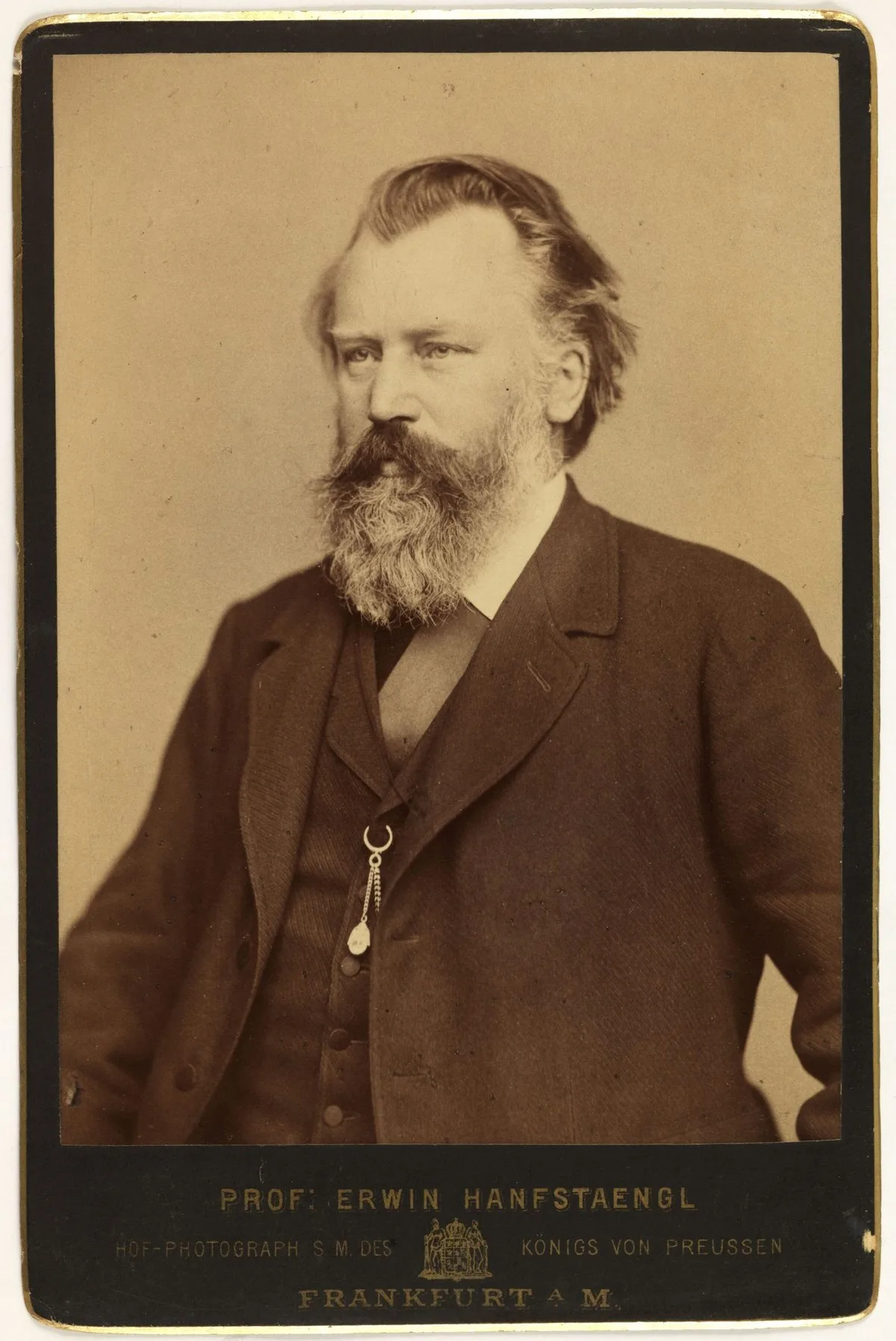
And the music reflects it. Where the First opens with hammering timpani and grinding chromaticism, the Second begins with cellos and basses whispering a three-note motif — D, C-sharp, D — so quietly you might miss it on first listen. Where the First claws its way from darkness to light across four movements, the Second is bathed in warm D major from the start. People quickly dubbed it “Brahms’s Pastoral Symphony,” after Beethoven’s Sixth. Brahms, characteristically, responded with deadpan sarcasm about mourning.
The Joke That Reveals Everything
Why would a composer describe his most radiant work as unbearably sad? The easy answer is that Brahms was a chronic ironist. He deployed sarcasm the way other people deploy small talk — reflexively, as social armor. The man who once said “if there is anyone here I have not insulted, I apologize” was hardly going to send his publisher an earnest note saying “I think you’ll find this rather cheerful.”
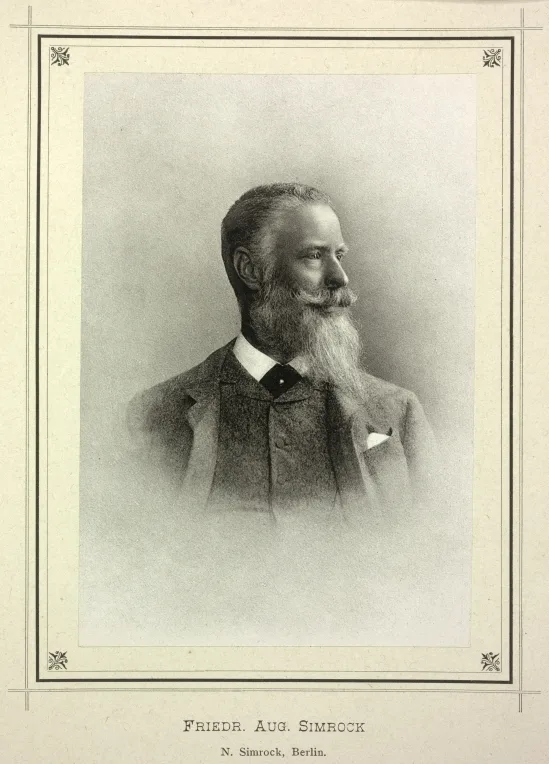
But there’s a deeper reading. The Second Symphony is not, in fact, uncomplicated sunshine. The slow movement is one of the most emotionally searching pieces Brahms ever wrote. Shadow passes through even the brightest passages of the first movement. Brahms may have been half-joking, but he was also half-serious — telling Simrock, in his roundabout way, that this music had more under its surface than its D-major warmth might suggest. The best comedy, after all, has a melancholy engine.
This symphony is so melancholy that you will not be able to bear it. The score must appear with a black border.
— Brahms to Fritz Simrock, 22 November 1877
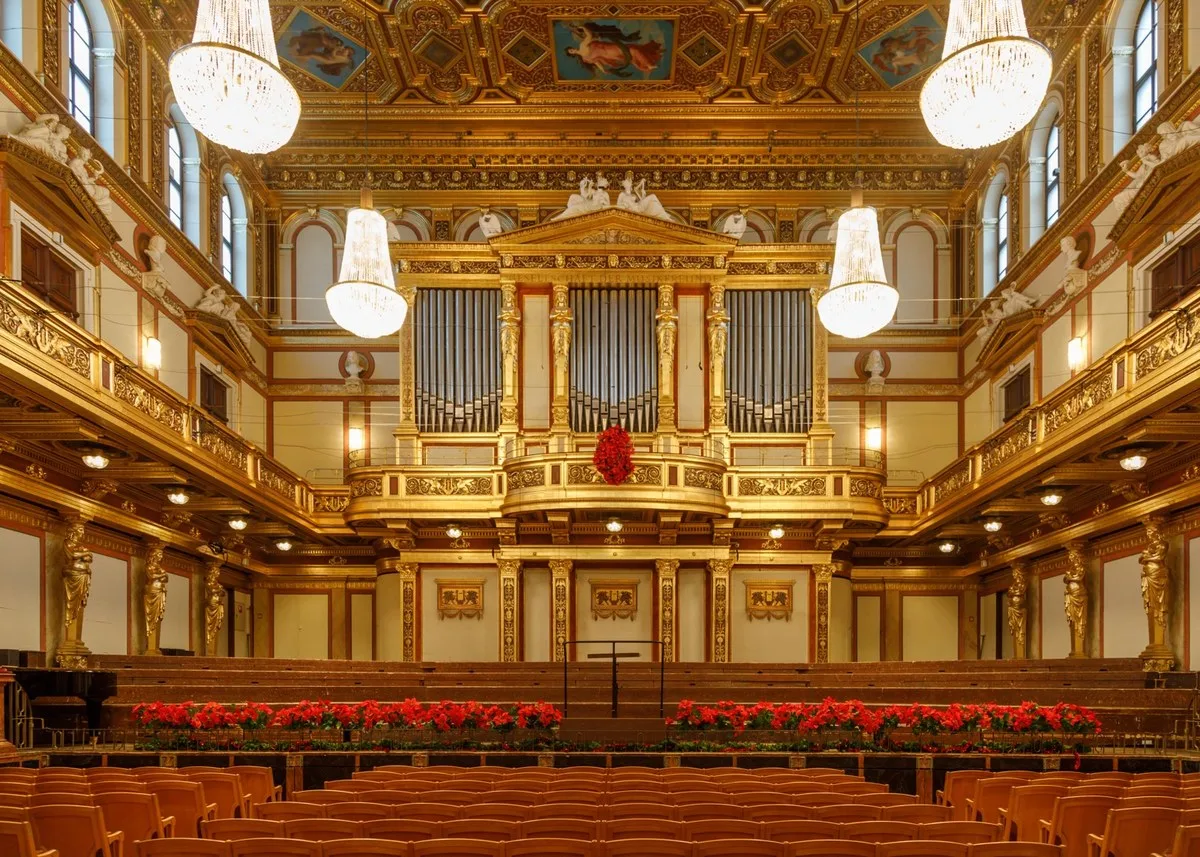
The premiere on 30 December 1877 settled the question of audience reception decisively. Hans Richter led the Vienna Philharmonic at the Musikverein — the concert had been postponed from 9 December because the orchestra was busy rehearsing Wagner’s Das Rheingold — and the response was rapturous. The third movement got an immediate encore. Whatever Brahms had told Simrock, the Viennese public heard joy.
Movements I & II: Morning Light, Then Shadow
I. Allegro non troppo (D major) — The symphony’s opening is one of Brahms’s most deceptive gestures. Cellos and basses lay down the three-note cell — D, C-sharp, D — barely audible. Then horns unfurl a broad, singing theme that sounds like a landscape opening up at dawn. It’s pastoral in the best sense: not cute, not decorative, but genuinely spacious.
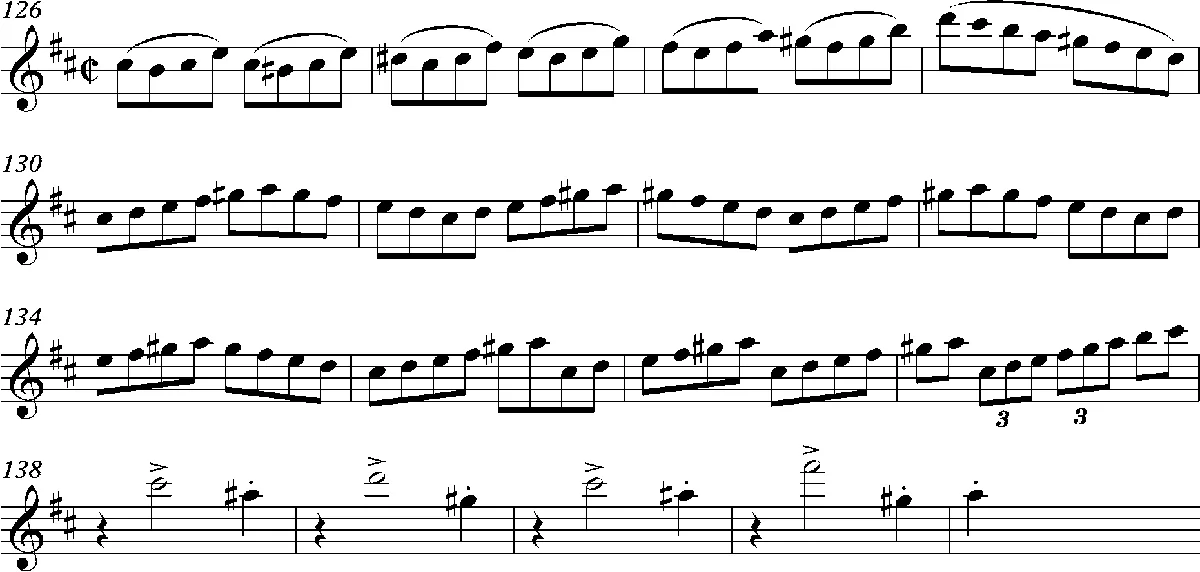
Listen for the second theme, played by violas and cellos with a gently rocking rhythm. It bears a striking resemblance to Brahms’s own Lullaby (Op. 49 No. 4) — whether intentional quotation or unconscious echo, nobody knows, but it gives the whole movement a quality of tenderness that’s hard to shake. The development section darkens considerably, introducing minor-key tensions and agitated counterpoint, but the recapitulation returns to D major’s warmth like someone coming home.
II. Adagio non troppo (B major) — If the first movement is a sunlit landscape, the second is what happens when the sun goes down and you’re alone with your thoughts. It opens with a long, unaccompanied cello melody — one of the most beautiful passages in all of Brahms — that winds through unexpected harmonic territory. B major should feel warm, and it does, but the melodic line keeps bending toward places that aren’t warm at all.
Brahms uses what analysts call “developing variation” here: the main theme is never repeated identically, but morphs with each return, as if the same emotion were being examined from slightly different angles. Syncopated woodwind figures create moments of unease in the middle section before the strings gather the music back. This movement is where Brahms’s “black border” remark makes the most sense. The sadness is real — it’s just wrapped inside a larger structure of acceptance.
Movements III & IV: Dance, Then Fireworks
III. Allegretto grazioso, quasi andantino (G major) — After the emotional weight of the Adagio, Brahms gives us something disarmingly simple: an oboe melody over pizzicato cellos in 3/4 time, sounding like a village dance that wandered into a symphony. It’s the kind of tune you might hum without realizing it.
But Brahms has a structural trick up his sleeve. He interrupts this graceful waltz with two Presto episodes in 2/4 time — sudden bursts of energy that transform the genteel dance into something breathless before snapping back to the original tempo. The effect is like a kaleidoscope: the same material keeps reappearing in different rhythmic guises. Dvořák’s Slavonic Dances come to mind, and the connection isn’t accidental — Brahms was Dvořák’s champion, having recommended him to Simrock for publication. It’s no wonder the premiere audience demanded this movement again.
IV. Allegro con spirito (D major) — The finale opens with a surprise. Instead of a bold declaration, the strings whisper the main theme at near-inaudible volume — mysterious, restrained, holding its breath. Then, within bars, the full orchestra erupts. That contrast between hushed beginning and fortissimo explosion is one of the great theatrical moments in symphonic music.
From there, it’s pure kinetic energy. This is the most athletic, most extroverted finale in all four Brahms symphonies. Brass fanfares blaze, timpani drive relentless rhythms, and the coda unleashes a blinding D-major blaze that feels genuinely triumphant without the struggle-to-victory narrative that Beethoven required. Brahms earns his jubilation differently — through structural logic. Listen for the D–C-sharp–D motif from the first movement’s opening: it returns here, transformed into something exultant. The entire forty-minute arc snaps into focus.
Four Recordings Worth Your Time
Carlos Kleiber / Vienna Philharmonic (1988, DG) — The recording most conductors wish they’d made. Kleiber’s rhythmic spring and the Vienna Philharmonic’s golden tone produce a reading that feels both inevitable and spontaneous. The finale has a forward momentum that borders on reckless — in the best possible way. If you listen to only one recording, make it this one.
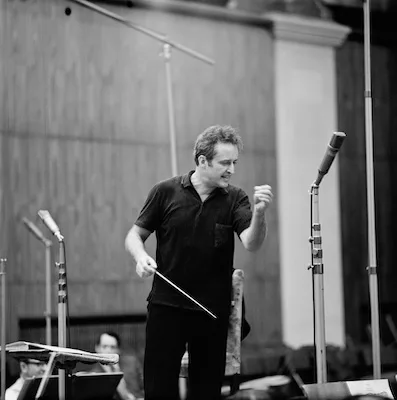
Leonard Bernstein / Vienna Philharmonic (1983, DG) — Where Kleiber prioritizes structural perfection, Bernstein goes straight for the emotional jugular. His tempos run slower, his rubato runs deeper, and the second movement becomes something close to a confessional. It’s not everyone’s Brahms, but when the mood is right, it’s devastating.
Herbert von Karajan / Berlin Philharmonic (1987, DG) — Grand, polished, and relentlessly precise. Karajan recorded this symphony multiple times; the 1987 version offers the Berlin Philharmonic at its most lustrous. The orchestral sound is heavier and darker than what you’ll hear from Vienna under Kleiber — a fundamentally different take on the same score, and worth hearing for the contrast alone.
Günter Wand / Berlin Philharmonic (1996, RCA) — The anti-glamour recording. Wand strips away interpretive ego and lets the architecture speak. No grand gestures, no souped-up climaxes — just transparent textures and rigorous proportions. If you already know this symphony well, Wand will make you hear details you’ve been missing for years.
Follow the Score
Simon Rattle conducts the Berlin Philharmonic — full symphony with synchronized score
The full score is freely available at IMSLP.
→ View Brahms Symphony No. 2 score on IMSLP
Even if you don’t read music, score-following videos are remarkably illuminating. Watch the D–C-sharp–D motif appear in the cellos at the very start, then track how it migrates through the orchestra across four movements. Seeing the architecture makes you hear it differently — the musical equivalent of understanding a building’s blueprint while standing inside it.
Frequently Asked Questions
How long is Brahms’s Symphony No. 2?
Most performances run between 40 and 50 minutes. Kleiber’s famous 1988 recording clocks in around 43 minutes; Bernstein’s more expansive reading approaches 50. In the concert hall, expect roughly 45 minutes.
Why is it called “Brahms’s Pastoral Symphony”?
The nickname draws a parallel to Beethoven’s Symphony No. 6 (“Pastoral”) because of the Second’s warm, lyrical, outdoorsy character. The fact that Brahms composed it at a lakeside resort in the Austrian countryside reinforced the comparison. Brahms himself never used the title — he was too busy joking about funeral wreaths.
How does the Second Symphony compare to the First?
They could hardly be more different. The First is in C minor, dark, heavy, and took twenty-one years to complete. The Second is in D major, bright, lyrical, and was written in a single summer. Only about a year separates their premieres, yet they sound like products of entirely different temperaments.
What is the D–C♯–D motif and why does it matter?
The cellos and basses introduce this three-note figure in the symphony’s very first bars. It functions as a unifying thread across the entire work — reappearing in various guises through all four movements. It’s the seed from which the whole symphony grows, and recognizing it transforms how you hear the piece.
Which recording should I start with?
Carlos Kleiber with the Vienna Philharmonic (1988, Deutsche Grammophon) is the near-universal recommendation for a first listen. It balances structural clarity with emotional warmth and features the Vienna Philharmonic at their most glowing. From there, try Bernstein for depth and Wand for transparency.
No Black Border Needed
Brahms’s Second Symphony is a paradox dressed in D major. The composer who spent two decades agonizing over his First tossed off his Second in a few months. The man who warned of unbearable melancholy produced his most joyful orchestral score. The music that sounds simplest turns out to be threaded with intricate motivic connections from first note to last.
Maybe that’s why the “black border” letter endures as more than an anecdote. It tells us something essential about Brahms: that his relationship with his own music was never straightforward, that irony and sincerity coexisted in him without contradiction, and that even his happiest work carried undertones he couldn’t — or wouldn’t — fully explain. The score needed no mourning trim. It had sunlight in it from the beginning.