- Composer
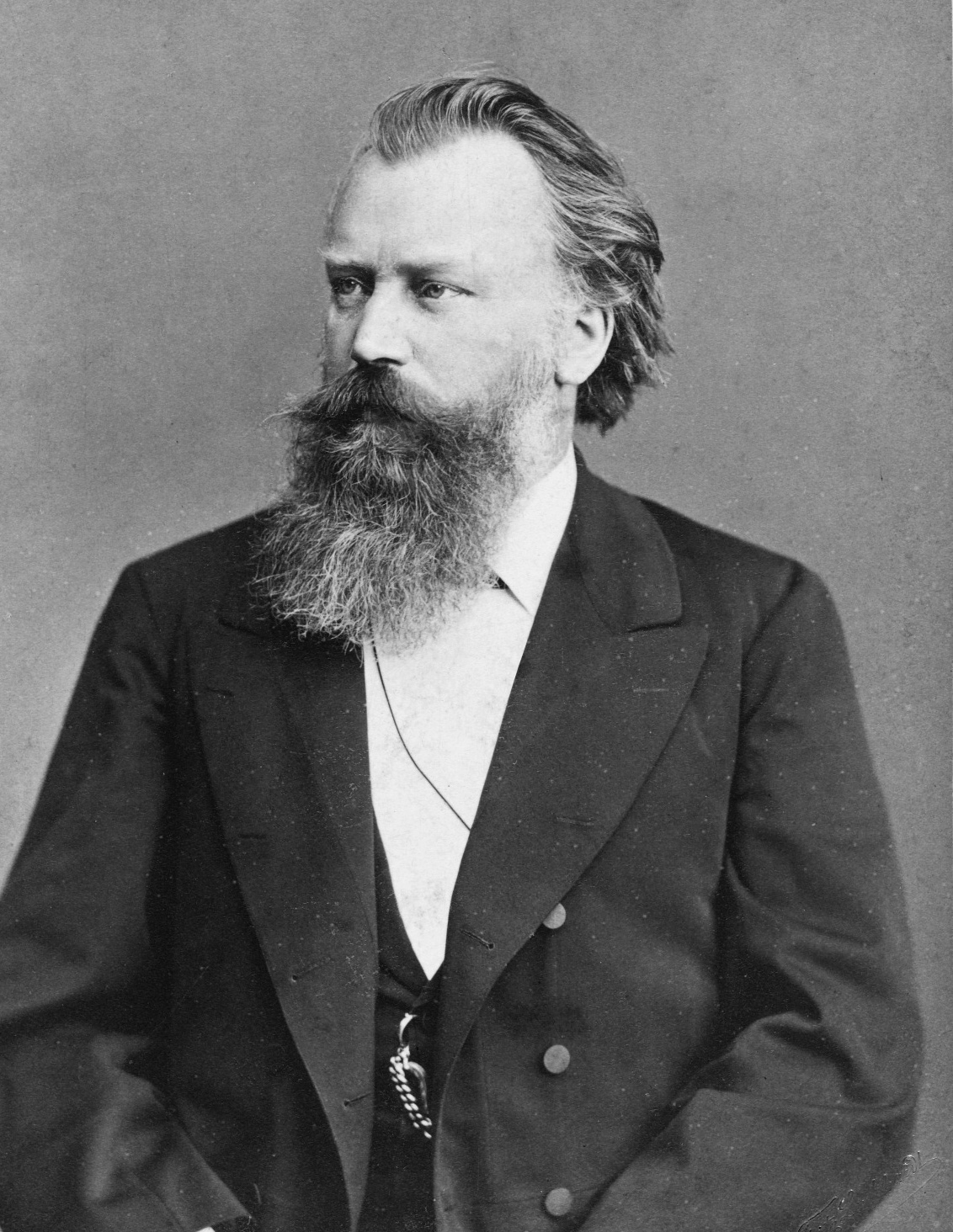
- Johannes Brahms
(1833–1897) - Work
- Symphony No. 4 in E minor, Op. 98
- Composed
- 1884–1885, at Mürzzuschlag
- First performance
- October 25, 1885, Meiningen, conducted by Brahms
- Key
- E minor
- Instrumentation
- 2 flutes (piccolo), 2 oboes, 2 clarinets, 2 bassoons, contrabassoon, 4 horns, 2 trumpets, 3 trombones, timpani, triangle, strings
- Movements
- I. Allegro non troppo (E minor)
II. Andante moderato (E major)
III. Allegro giocoso (C major)
IV. Allegro energico e passionato (E minor) - Duration
- About 40 minutes
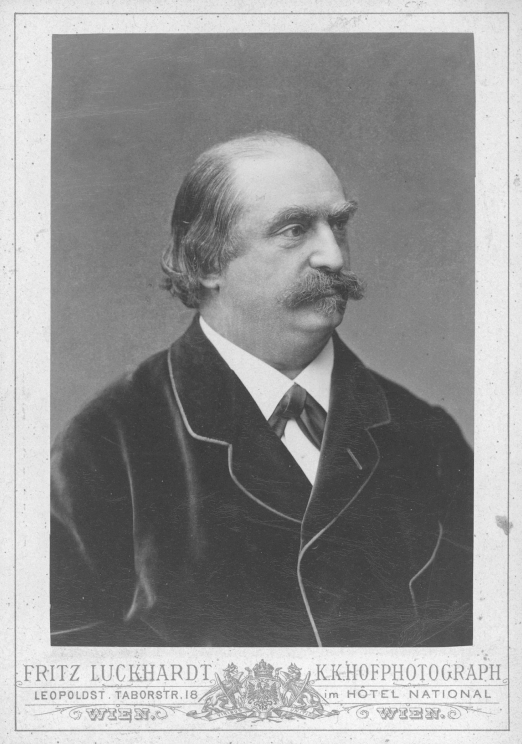
A Vienna drawing room, early October 1885. Two pianos, pushed together. At one sits Brahms, fifty-two years old and famous. At the other, his friend the composer Ignaz Brüll. Turning pages for them are Eduard Hanslick, the most powerful critic in the city, and Hans Richter, its most powerful conductor. Word had got round that there was a new symphony, and this was how you heard it before an orchestra ever touched it.
The first movement finished. Nobody said anything. The silence went on long enough to become its own event, until Brahms muttered that they might as well carry on — and Hanslick, who had been sitting on it, finally let go: “For the whole movement I had the feeling that I was being given a beating by two incredibly intelligent people.”
Everyone laughed, the pianos started again, and the joke has outlived every serious review the piece ever got. It is also, still, the most useful sentence anyone has written about this symphony. Brahms’s Fourth argues with you. It is built to be resisted on a first hearing and re-heard afterwards, and once you know what the argument is about, it turns out to be one of the great ones.
The cherries that never ripen
Brahms started the symphony in 1884 in Mürzzuschlag, a small town in the Styrian hills a couple of hours south of Vienna, and finished it there over a second summer in 1885. He was not confident about it. Writing to the conductor Hans von Bülow to ask whether he might borrow the Meiningen court orchestra, he warned that the piece had picked up the local weather: “the cherries never ripen here, and you wouldn’t eat them.”
Getting the insult in before anyone else could was standard Brahms, and the joke doubled as a fairly accurate weather report on the music. Elisabeth von Herzogenberg, the sharpest musical friend he had, read the first movement and told him it seemed “designed too much with a view to microscopic inspection.” Too cerebral, she said, and she said it as a friend rather than as a critic.
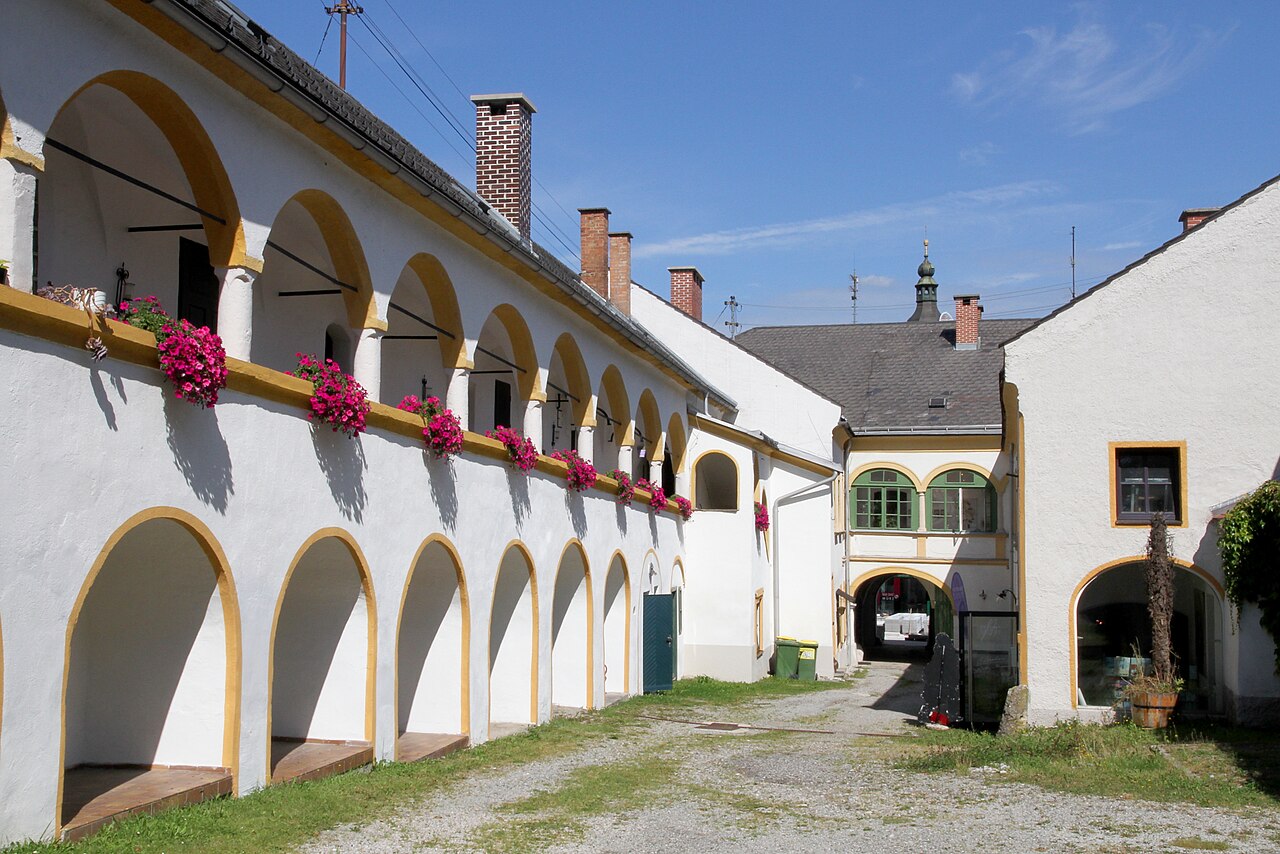
Bülow said yes anyway. On October 25, 1885, in Meiningen, Brahms conducted the first performance himself with the Meiningen Court Orchestra, and the room that had gone silent in Vienna was replaced by one that would not stop applauding.
Hanslick and Herzogenberg had both diagnosed it accurately. It is dense; it does reward inspection under a microscope; it is the only one of his four symphonies that ends in the minor, and it drives towards that ending with a single-mindedness the other three never attempt. Those same properties are why I think it is the best thing he wrote.
The falling third, and why the whole thing is built on it
Play the opening. Violins, no introduction, no throat-clearing: a long line that seems to sigh downwards.
Now look at what the line actually is. B down to G. E down to C. A down to F sharp. D sharp down to B. It is the same interval — a falling third — four times, with the gaps filled by rising sixths, which are the same interval upside down. Brahms phrases it like a tune, so that is how the ear files it. On paper it is one shape, repeated.
That is the mechanism, and once you hear it you cannot stop hearing it. The second subject is built from it. The development pulls it apart and stacks it. By the time the recapitulation arrives, the same four notes come back stretched out to enormous length under held wind chords, so slowly you barely recognise them, and then the movement drives to its end without ever repeating the exposition — the only Brahms first movement that skips the repeat. Every bar of the movement is that same idea under interrogation.
From inside a string section this is the movement where you learn how little of it is tune. The violas and second violins spend most of the exposition passing fragments of that third back and forth as accompaniment figures, and if you are not counting, the entries slide out of alignment and the whole texture goes muddy. It is a piece that punishes coasting, which is exactly what Hanslick felt from the page-turner’s chair.
Cristian Măcelaru and the WDR Symphony Orchestra, the complete symphony, free to watch. If you only have twenty minutes, start at the first movement and stay to the recapitulation.
Movement by movement: what to actually listen for
I. Allegro non troppo
Sonata form, and unusually strict about it. The thing to track is the second subject group: a horn call answered by woodwinds, then a broad cello theme that sounds like relief after all that argument. Notice that Brahms lets it run for a while and then quietly starts folding the falling third back into it. Every safe harbour in this movement is on loan.
II. Andante moderato
Horns open alone, on a bare unison figure that refuses to say whether it is in a major or a minor key — it behaves like the old Phrygian church mode, which is why it sounds simultaneously warm and archaic. The strings arrive underneath and settle the harmony into E major, and the effect is of a light being switched on in a room you thought was empty.
The great moment comes later: a long cello melody, marked to be played broadly, that is the closest this symphony gets to unguarded singing. Brahms spent his life resisting exactly this kind of tune. He lets himself have it here, once, and then takes it away.
III. Allegro giocoso
The odd one out, and the reason people who dislike the Fourth usually change their minds. It is the only genuinely boisterous fast movement in any Brahms symphony — C major, hammering downbeats, and a triangle, which appears in this movement and nowhere else in the piece. Piccolo and contrabassoon join in too. The scoring is deliberately loud and slightly crude, like a village band that has had a good afternoon.
Listen for the moment near the end when the violins turn a corner and, for a couple of bars, play a shape that will open the finale. The party is already carrying the funeral in its pocket.
The finale: thirty variations on eight bars
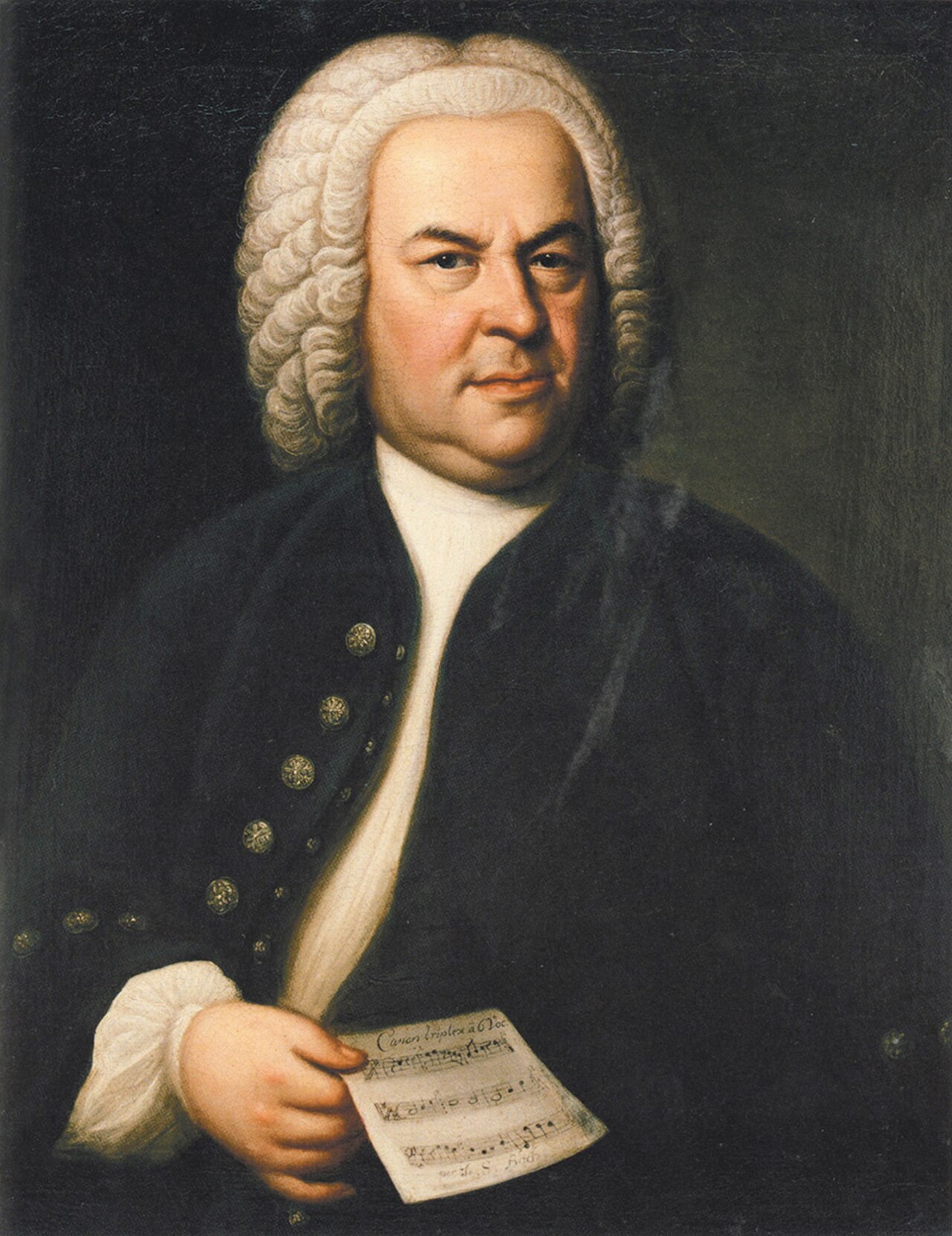
The last movement is a passacaglia. A short theme sits in the bass, or moves between voices, and repeats without stopping while everything above it changes. It is a Baroque device, and Brahms took his theme from the closing chaconne of Bach’s cantata Nach dir, Herr, verlanget mich, BWV 150, adding a chromatic step of his own and stretching Bach’s four bars to eight.
Eight bars, and then thirty variations on them, and then a coda. Every variation the same length. Thirty times the ground comes round, and thirty times Brahms has to find something new to put on top of a chord sequence the listener now knows by heart.
The constraint is what does the dramatic work, and those eleven minutes are what I would play to anyone who thinks Brahms is dry. Because you know exactly when the eight bars will restart, every arrival lands as either a promise kept or a trap sprung. Brahms groups the variations into waves: a hard-driving opening block, a slower middle stretch where the tempo eases and a solo flute takes the line over quiet off-beat chords, a return to the storm, and then the coda — which finally breaks the eight-bar pattern and, having broken it, cannot be stopped.
Two details worth waiting for. The trombones, silent for three whole movements, play their first notes here, in the theme itself — Brahms held an entire brass section in reserve for forty minutes to make one entrance count. And in the coda, the falling third from the first bar of the symphony comes back and locks against the passacaglia ground. The argument that opened the piece is answered by the form that closes it.
He never wrote another symphony. He lived until 1897, twelve more years of chamber music and late piano pieces, and left the symphonic door shut behind him.
Recordings I would actually put on
The interpretive question in this piece is always the same: how much do you push the first movement, and how much rubato survives contact with the passacaglia? Fast and lean makes the argument clear. Slow and heavy makes it monumental and risks making it dull. These four sit at different points on that line, and all four are defensible.
Carlos Kleiber / Vienna Philharmonic (1980, Deutsche Grammophon) — my first choice, and not a controversial one. Kleiber takes the first movement quickly and keeps the phrasing elastic, so the falling thirds sound like speech rather than sequence. What sets it apart is the finale: he holds the tempo of the eight-bar ground almost rigid while letting the inner parts breathe against it, which is precisely the tension the form was designed to create. The Vienna strings give it warmth that a leaner orchestra cannot. If you buy one recording of this symphony, buy this one.
🎧 Also on: Apple Music · Spotify
Kurt Sanderling / Staatskapelle Dresden (recorded 1972, Eurodisc) — the opposite temperament, and the one I reach for when Kleiber feels too quick to grieve. Sanderling is broad, dark and completely unhurried, and the Dresden woodwind blend gives the slow movement a burnished quality nothing else quite matches. The cost is real: the third movement loses some of its rowdiness, and the first movement can feel like it is explaining rather than arguing. Buy it second, after you have lived with Kleiber for a while.
▶ Listen on YouTube · Apple Music · Spotify
John Eliot Gardiner / Orchestre Révolutionnaire et Romantique (SDG 705) — period instruments, gut strings, narrow-bore brass, and the whole texture opens up. If you have ever found the middle of Brahms’s orchestration thick, this recording moves the blame off the score and onto the modern orchestra. The passacaglia benefits most: you can hear the ground bass through the variations instead of inferring it. What you lose is heft — the coda does not overwhelm you the way Vienna does. Best for a second or third listen, when you want to see the machinery.
▶ Listen on YouTube · Apple Music · Spotify
Wilhelm Furtwängler / Berlin Philharmonic (live, Titania-Palast, Berlin, October 1948) — a historical document, and you should treat it as one. The sound is mono, congested and occasionally harsh. The playing is not always tidy. What it has is a way of shaping the long paragraphs of the first movement that no studio recording has matched, and a finale that accelerates through the last variations in a manner most conductors would call reckless. Do not start here. Come back to it once you know the piece, and it will reorganise your sense of what the symphony can be.
▶ Listen on YouTube · Apple Music · Spotify
Follow the score
This is one of the pieces where reading along genuinely changes what you hear, because so much of the argument happens in the inner parts. Watch the finale with the score in front of you and the eight-bar grid becomes visible on the page — you can literally see the bar lines that Brahms refuses to move.
The full score is free at IMSLP: Symphony No. 4, Op. 98 on IMSLP.
Where the Fourth sits among the others
If you have come to this symphony first, be aware that it is the hardest of the four to love on day one and the hardest to exhaust. Hugo Wolf, writing as a critic in Vienna and thoroughly on the Wagner side of the argument, complained that Brahms “has mastered the art of composing without ideas.” He meant it as a killing blow. What he was actually describing — making an entire forty-minute structure out of almost no material — is what Arnold Schoenberg would later celebrate in his essay Brahms the Progressive, the piece of writing that installed Brahms in the line of descent to twentieth-century music.
For the friendlier way in, our guide to Brahms’s Symphony No. 2 in D major is the place to start; for the drama of the young composer finally clearing Beethoven’s shadow, try Symphony No. 1 in C minor. The Third in F major is the bridge between them and this one.
Frequently Asked Questions
What is a passacaglia, and why did Brahms use one for a symphony finale?
A passacaglia is a set of variations over a short repeating bass pattern, a Baroque device, a long way from what a Romantic symphony normally does with its last movement. Brahms used it because it let him build an enormous movement out of almost no material, which is the governing idea of the whole symphony. The fixed eight-bar cycle also gives the listener a clock: you always know when the next arrival is coming, so every surprise lands against a beat you can feel.
Is the finale a passacaglia or a chaconne?
Both terms get used, and the distinction is genuinely blurry. In the usual modern definition, a passacaglia repeats a melodic bass line that may move to other voices, while a chaconne repeats a harmonic progression. Brahms took his theme from the closing chaconne of a Bach cantata and then treated it in a way most writers now describe as a passacaglia. If a programme note calls it a chaconne, it is following Bach’s own label for the source, and you can let it pass.
Which Brahms symphony should a newcomer hear first?
The Second. It is sunlit, tuneful and roughly the same length, and it teaches your ear how Brahms builds long phrases without asking you to work. From there the First gives you the big dramatic arc, and the Fourth is the one to save for when you want to be challenged rather than charmed.
How long is Brahms’s Symphony No. 4?
About forty minutes in most performances, in four movements. Brisk readings such as Kleiber’s come in a little under; broad ones such as Sanderling’s run several minutes longer, with most of the difference showing up in the first two movements.