- Composer
- Johannes Brahms
(1833–1897) - Work
- Symphony No. 1 in C minor, Op. 68
- Composed
- 1855–1876
- Premiere
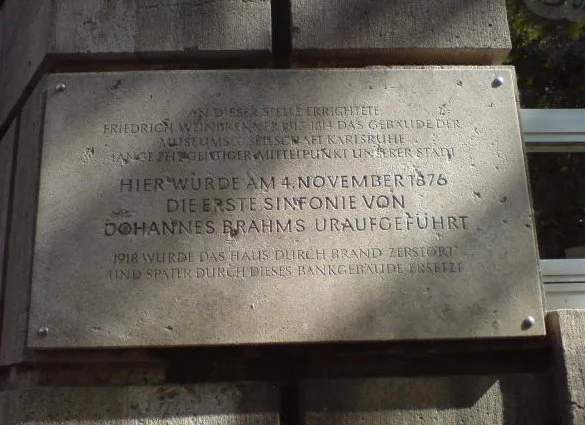
- November 4, 1876, Karlsruhe
- Key
- C minor → C major
- Instrumentation
- 2 flutes, 2 oboes, 2 clarinets, 2 bassoons, contrabassoon, 4 horns, 2 trumpets, 3 trombones, timpani, strings
- Movements
- 4 movements
I. Un poco sostenuto – Allegro (C minor)
II. Andante sostenuto (E major)
III. Un poco allegretto e grazioso (A♭ major)
IV. Adagio – Più andante – Allegro non troppo (C minor → C major) - Duration
- Approx. 45 minutes
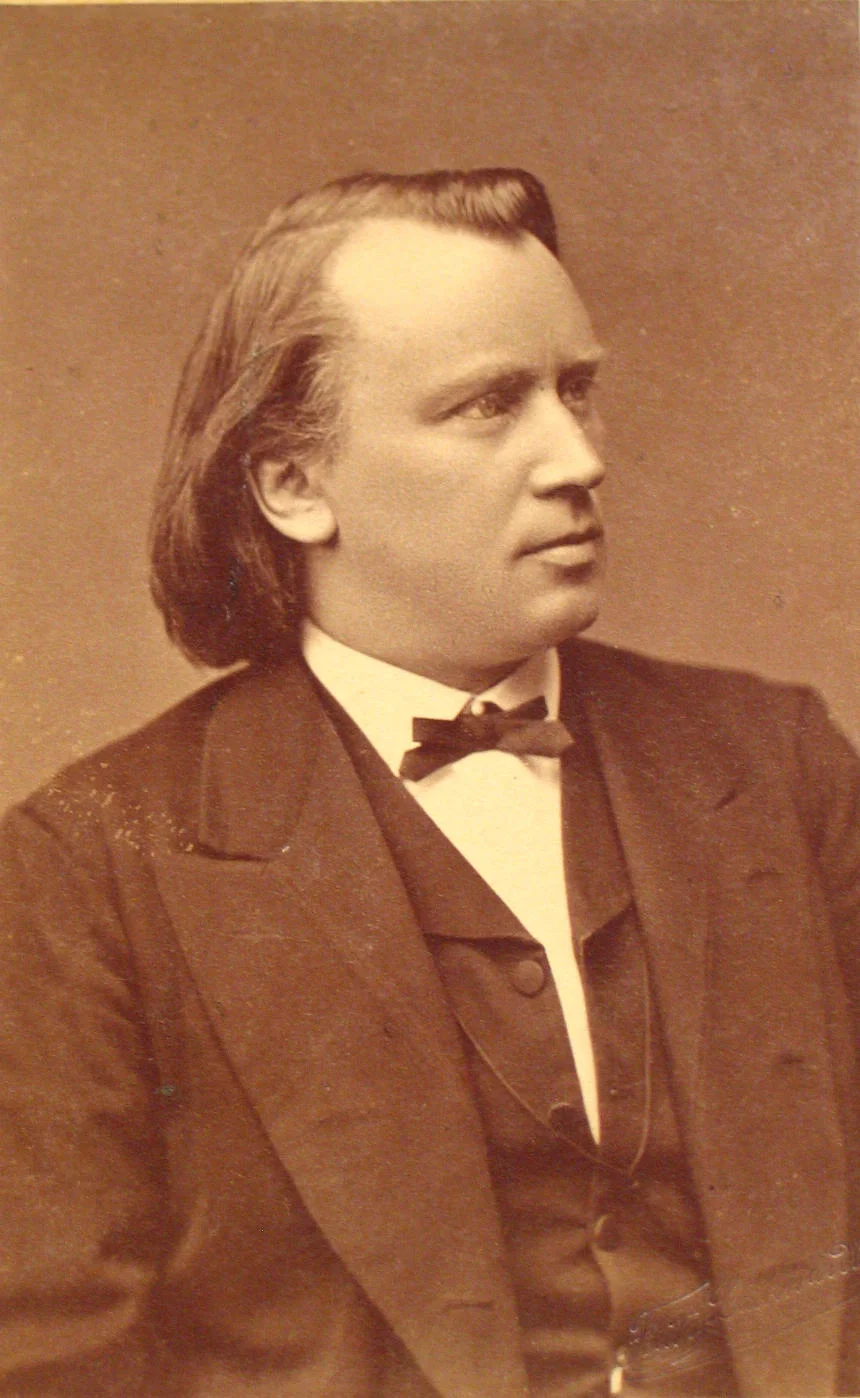
In 1876, the conductor Hans von Bülow heard the premiere of Brahms’s First Symphony and declared it “Beethoven’s Tenth.” He meant it as the highest possible praise. Brahms, reportedly, was not amused.
He had spent 21 years writing this symphony. From 1855 — when he was 22, unknown, and electrified by the legacy of Beethoven — to 1876, when he was 43 and Europe’s most respected living composer. Two decades of wrestling with a single question: how do you write a symphony after Beethoven?
This is the story of that struggle.
The Weight of Beethoven
In 1853, the young Brahms visited Robert Schumann in Düsseldorf. Schumann, already one of the most influential critics in Europe, heard Brahms play and immediately published an article declaring him a genius — “the one who was destined to come.” He called Brahms the heir to Beethoven.
It was a blessing that became a curse. For the next two decades, every note Brahms wrote would be measured against the Beethoven standard. He knew it, and it paralyzed him.
“You have no idea,” Brahms wrote to a friend, “what it’s like to hear the footsteps of a giant behind you.”
He began sketching a symphony in the 1850s. He abandoned it, reworked it, abandoned it again. The first movement’s opening — a searing, upward-surging theme over pounding timpani in C minor — was conceived early and barely changed. But the rest took years. Brahms was not someone who composed quickly when he wasn’t sure.
Clara Schumann and the Long Wait
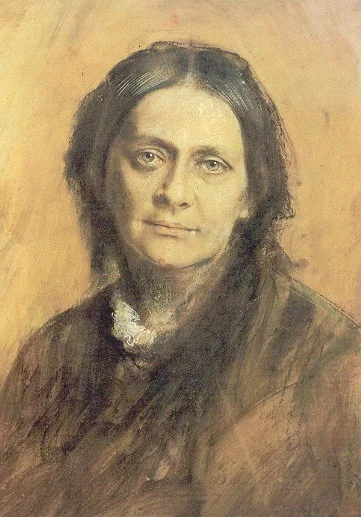
Clara Schumann — virtuoso pianist, Robert’s wife, and the most important person in Brahms’s emotional life — was among those who waited longest for this symphony. Brahms sent her excerpts, fragments, and drafts over the years. She encouraged, prodded, and occasionally despaired of ever hearing the finished work.
Their relationship — intense, devoted, almost certainly never consummated — is one of the great ambiguities of music history. What is clear is that Clara’s expectations weighed on Brahms almost as heavily as Beethoven’s shadow. He was writing this symphony not only for the concert hall but for her.
The Symphony That Answers Beethoven
When the symphony finally emerged in 1876, it was evident that Brahms had not tried to escape Beethoven — he had walked straight through him and out the other side.
The first movement is a battle. C minor, the same key as Beethoven’s Fifth. Pounding timpani, surging strings, anguished woodwinds. This is music born of struggle — and it never pretends otherwise.
The second movement is balm. E major, warm and expansive. A solo violin sings a melody of almost unbearable tenderness — many believe it was written for Clara.
The third movement is a breath. Light, graceful, and surprisingly brief. After the weight of the first two movements, this intermezzo offers a moment of calm before the storm.
And then the finale — where everything Brahms had agonized over for 21 years resolves.
It opens in darkness: C minor, slow, groping. A horn call sounds from a distance. Then pizzicato strings outline a chorale. And then — the great theme arrives. A broad, striding melody in C major that anyone who knows Beethoven’s Ninth will recognize: not a quotation, but a deliberate echo. When critics pointed out the resemblance, Brahms snapped: “Any fool can see that.”
The resemblance was the point. Brahms wasn’t copying Beethoven — he was answering him. Where Beethoven’s Ninth ends with voices singing of universal brotherhood, Brahms’s First ends with instruments alone, declaring that the orchestral symphony still had something to say. The answer to “How do you write a symphony after Beethoven?” turned out to be: you acknowledge the giant, and then you find your own voice.
Recommended Recordings
Carlos Kleiber / Vienna Philharmonic (1991) — The most thrilling Brahms First on record. Every bar crackles with energy and purpose.
Furtwängler / Berlin Philharmonic (1952) — Monumental, dark, and deeply Romantic. The finale has an inevitability that no other recording matches.
Gardiner / ORR (2007) — Period instruments strip the work bare. You hear Brahms’s counterpoint and orchestration with forensic clarity.
Abbado / Berlin Philharmonic (1990) — Beautifully balanced, warmly lyrical. The slow movement is especially fine.
Follow the Score
The full score is freely available at IMSLP. View the Symphony No. 1, Op. 68 score on IMSLP
Frequently Asked Questions
When and why was Symphony No. 1 in C minor, Op. 68 composed?
The work was composed in 1855–1876 Premiere November 4, 1876, Karlsruhe Key C minor → C major Instrumentation 2 flutes, 2 oboes, 2 clarinets, 2 bassoons, contrabassoon , 4 horns, 2 trumpets, 3 trombones , timpani , strings Movements 4 movements I. Un poco sostenuto – Allegro (C minor. The premiere took place November 4, 1876, Karlsruhe Key C minor → C major Instrumentation 2 flutes, 2 oboes, 2 clarinets, 2 bassoons, contrabassoon , 4 horns, 2 trumpets, 3 trombones , timpani , strings. 45 minutes { "@context": "https://schema.org", "@type": "MusicComposition", "name": "Symphony No.
How many movements does Symphony No. 1 in C minor, Op. 68 have and how long is it?
The work is in 4 movements. , 2 bassoons, contrabassoon , 4 horns, 2 trumpets, 3 trombones , timpani , strings Movements 4 movements I. Un poco sostenuto – Allegro (C minor) II.
Which recordings of Symphony No. 1 in C minor, Op. 68 are recommended for first-time listeners?
68", "composer": { "@type": "Person", "name": "Johannes Brahms" }, "description": "21 years in Beethoven’s shadow — how Brahms finally completed his First Symphony", "inLanguage": "en", "url": "https://theclassicnote.com/brahms-symphony-1-beethoven-shadow-guide/" } In 1876, the conductor Hans von Bülow heard the premiere of Brahms’s First Symphony and declared it "Beethoven’s Tenth." He meant it as the highest possible praise. Electrifying pacing and white-hot intensity from perhaps the great…
What is the historical significance of Symphony No. 1 in C minor, Op. 68?
The first movement’s opening — a searing, upward-surging theme over pounding timpani in C minor — was conceived early and barely changed. Clara Schumann and the Long Wait Clara Schumann — virtuoso pianist, Robert’s wife, and the most important person in Brahms’s emotional life — was among those who waited longest for this symphony.
Why did Brahms take 21 years to write his First Symphony?
The weight of expectation — both from the public and from himself. Schumann had declared him Beethoven’s heir, and every note of a symphony would be measured against that standard. Brahms was a perfectionist who destroyed more music than he published.
Is the finale’s theme really borrowed from Beethoven’s Ninth?
Not borrowed — echoed. The similarity is deliberate: both themes are broad, hymn-like melodies in C major. Brahms acknowledged the resemblance but insisted his symphony was its own statement.
Is this a good entry point for Brahms?
Absolutely. The emotional arc — from struggle through tenderness to triumph — is immediate and powerful. If you respond to Beethoven’s Fifth, you’ll feel at home here.
Further Reading
- → Brahms Symphony No. 4 — A Farewell Written in Passacaglia
- → Beethoven Eroica — Dedicated to Napoleon, Then Torn Apart
🎼 View the Score — Free score download at IMSLP
Why did it take Brahms over 20 years to write his first symphony?
Johannes Brahms felt immense pressure to compose a symphony that could stand alongside those of Beethoven, whose legacy he deeply respected. He began initial sketches around 1854 but struggled with self-criticism for two decades, only completing the work in 1876 after years of painstaking revision.
Why is Brahms’s Symphony No. 1 sometimes called “Beethoven’s Tenth”?
The conductor Hans von Bülow gave it this nickname to praise its power and craftsmanship, suggesting it was a worthy successor to Beethoven’s nine symphonies. The connection is strongest in the finale, where the main hymn-like theme closely resembles the “Ode to Joy” melody from Beethoven’s Ninth Symphony.
How long is Brahms’s First Symphony and how many movements does it have?
A complete performance of Brahms’s Symphony No. 1 typically lasts between 45 and 50 minutes. The work is structured in four movements, progressing from a tense and dramatic opening to a triumphant and majestic finale.
What is the significance of the key C minor in this symphony?
The symphony follows a narrative from darkness to light by beginning in the stormy key of C minor and ending in the heroic, bright key of C major. This tonal journey was a model famously used by Beethoven in his own iconic Symphony No. 5, creating a sense of struggle leading to ultimate victory.