Every big Romantic symphony you can name ends by winning. Trumpets, timpani, a held chord, applause. Brahms’s Third ends with a few muted violins remembering the opening theme, a soft timpani roll, and then nothing. It is the shortest of his four symphonies, by most accounts the least often programmed of them, and the only one that declines the payoff. That refusal is not a flaw in the design. It is the design, and it is the reason this piece rewards a careful listener more than the First or the Fourth do.
What follows: the three-note cell the whole thing is built from, the two movements where Brahms strips the orchestra to chamber size, why the finale evaporates, and five recordings with a verdict on each.
The work, in one box
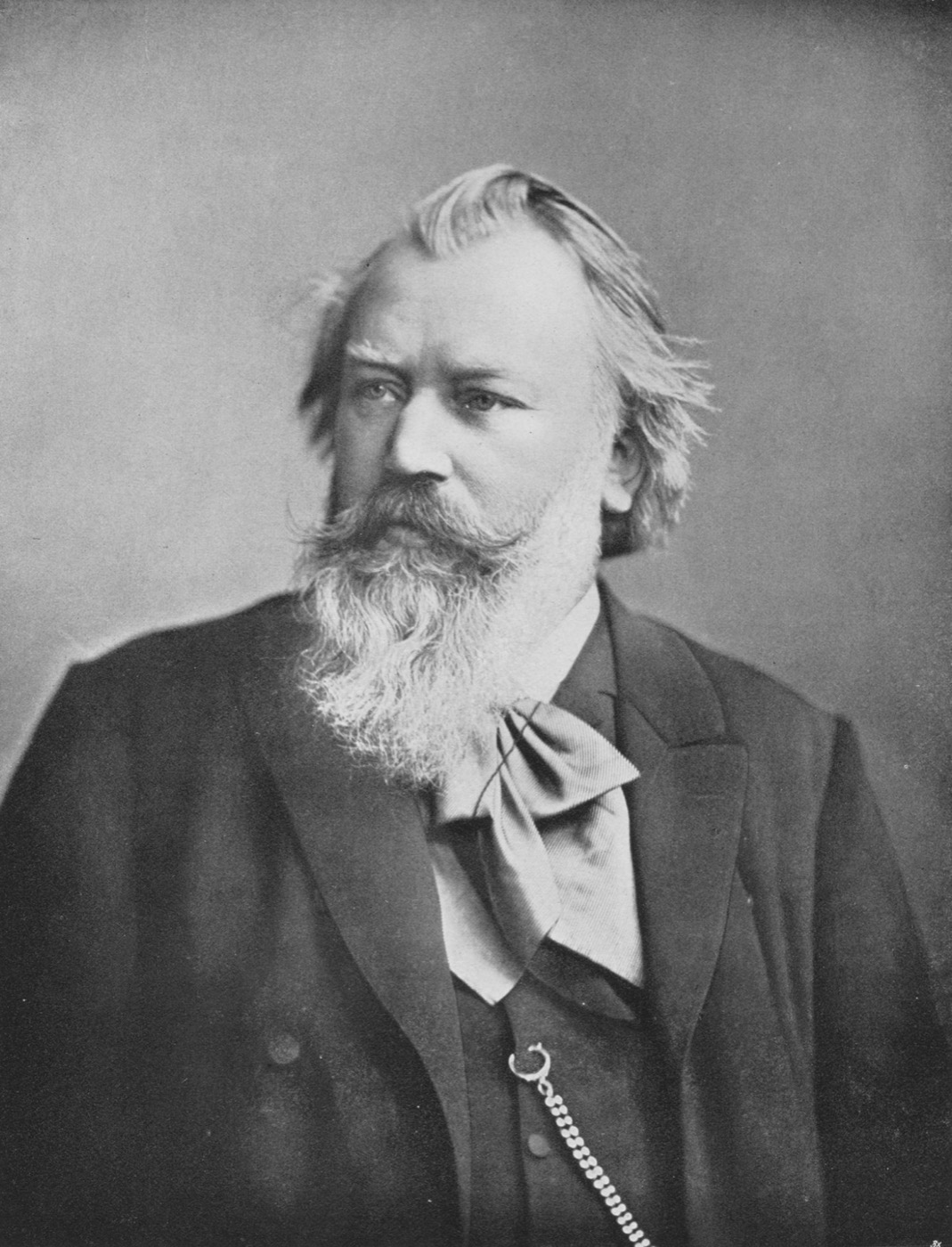
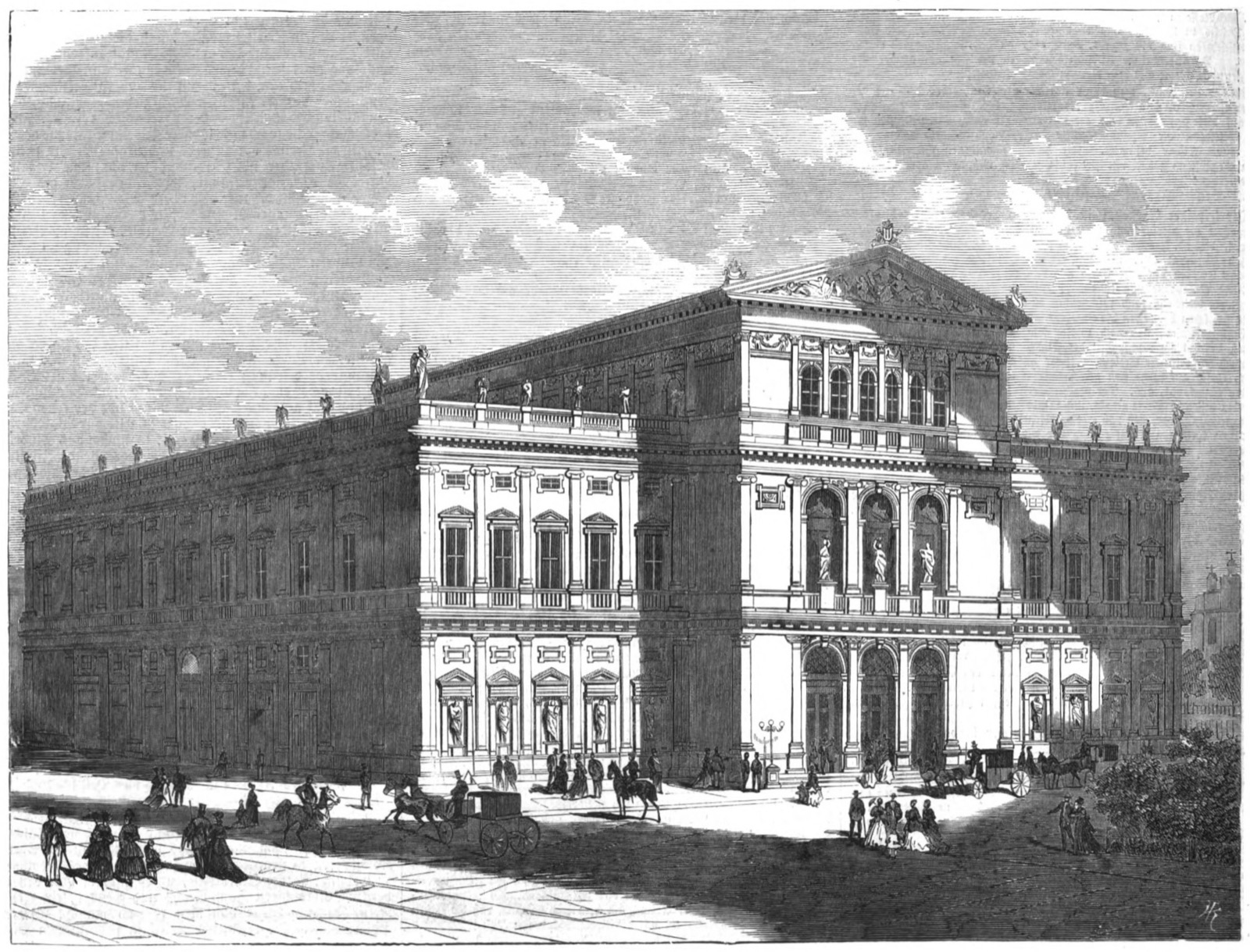
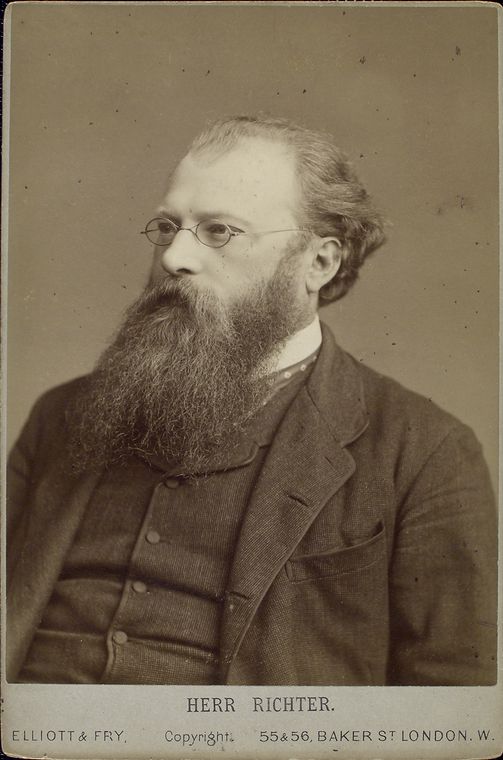
Brahms wrote the Symphony No. 3 in F major, Op. 90 during the summer of 1883 at Wiesbaden, nearly six years after he completed his Second Symphony. The first performance took place on 2 December 1883 at the Musikverein in Vienna, with Hans Richter conducting the Vienna Philharmonic. Richter christened the piece Brahms’s Eroica in a toast while the score was still in manuscript, and by several accounts he urged Brahms to attach that name to it. Brahms declined, and the published score carries no subtitle. The comparison stuck anyway, and it has confused people ever since, because nothing about this symphony is heroic in the Beethoven sense.
The scoring is two flutes, two oboes, two clarinets, two bassoons, contrabassoon, four horns, two trumpets, three trombones, timpani and strings. Four movements: Allegro con brio in F major, Andante in C major, Poco allegretto in C minor, Allegro moving from F minor to F major. A typical performance runs 35 to 40 minutes.
Richard Wagner had died in Venice in February 1883, and the factional war between Wagner’s partisans and Brahms’s had not cooled — the Vienna premiere had a vocal Wagner-Bruckner contingent in the hall, and the piece succeeded anyway. Antonín Dvořák, who heard Brahms play parts of it at the piano, wrote to the publisher Simrock that the new symphony surpassed the first two: not in grandeur, but in beauty. Dvořák named the right quality. Beauty is exactly what makes this symphony unsettling rather than comforting.
The three notes, and the thing nobody can prove
The symphony opens with two wind chords spelling F, A-flat, F. That cell recurs across all four movements, sometimes as melody, sometimes buried in the bass, sometimes just as a rhythmic shape. If you learn to hear it, the whole forty minutes snaps into focus.
Now the part most program notes get wrong by stating it as fact. The standard story is that F–A–F stands for frei aber froh — “free but glad” — Brahms’s answer to the violinist Joseph Joachim’s personal motto F–A–E, frei aber einsam, “free but lonely.” Brahms had already played with Joachim’s letters once: he contributed a scherzo to the collaborative F.A.E. Sonata in 1853, written as a gift for Joachim. So the connection is not invented out of nothing.
But Brahms himself said nothing on the subject. The frei aber froh reading was attached to the symphony largely by Max Kalbeck, his biographer, and scholars have argued about it ever since. Treat it as a plausible attribution rather than a decoded message, because the music itself argues against the cheerful version anyway: that middle note is A-flat. The motto Brahms supposedly used to declare his contentment is, harmonically, a shadow. It drags F major toward F minor in the first three chords of the piece and never fully lets go. Whatever Brahms meant, what he wrote is a symphony that cannot decide whether it is in a major or a minor key — and that indecision is the actual subject.
What to listen for
Four things, in rough order of how quickly you notice them.
Meter that will not hold still. The first movement’s second theme drifts between six and nine beats per bar, and Brahms phrases across the barlines so consistently that you lose the downbeat. This is not a difficulty for its own sake — it is why the movement feels like it is being pulled sideways even when the tempo is steady. Conductors who beat it too squarely flatten the whole thing.
The orchestra shrinking. The contrabassoon, the F horns, the trumpets and the timpani are all silent through the second and third movements, and the trombones sit out the third as well. Brahms empties the back of the stage for twenty minutes in the middle of a symphony. What is left sounds like a wind serenade with strings attached, and that is the point: the piece keeps retreating from public utterance into private speech.
Inner voices carrying the argument. From inside a string section, this symphony is unusual in how much of the real information lives in the middle. The violas and second violins are constantly holding a harmony still while something above them moves, or supplying the syncopation that makes a “calm” passage restless. If a recording sounds merely pretty here, the middle is being buried — that is the single fastest test of whether a conductor understands this piece.
Endings that decline to land. All four movements end quietly. Not one of them gives you the cadence you are braced for. In a hall this is genuinely awkward, and it is why some conductors avoid the piece: there is no moment to release the audience.
Hear it whole before reading on — a complete performance by the University Orchestra Weimar, free and in good sound.
Movement by movement
I. Allegro con brio — the assertion that collapses
No introduction. Two wind chords hammer the motto, and the violins fall through a wide, plunging first theme while those chords are still ringing. Two things happen simultaneously: a fixed pillar and a landslide. Brahms compresses what most composers would spread over a page into three bars, and the movement never quite recovers its footing.
What follows alternates between that muscular opening and a lilting, almost pastoral second idea in the clarinet — the meter games described above live here. Then the development gets hold of the motto and takes the brass shine off it. F–A-flat–F goes into the minor, moves down into cellos, basses and horns, and starts muttering. By the recapitulation the opening gesture returns not as a proclamation but as something closer to a concession. Listen to how quietly the movement finally puts itself away.
II. Andante — chamber music smuggled into a symphony
C major, and the stage empties. A clarinet and bassoon trade a plain, almost folk-simple phrase, the remaining horns warm it, and the strings answer rather than lead. If you have played this, you know the trap: it is marked simply and it is extremely exposed, so any imprecision in the wind chording is audible from the back row.
The middle of the movement is where Brahms plants the trap for the whole symphony. A harmonically vague passage circles a shape that is the motto’s rhythm in disguise, and it will come back in the finale to do serious damage. On first hearing it sounds like a mild digression. On the fourth hearing it sounds like a threat.
III. Poco allegretto — the famous one
This is the movement you have heard without knowing where it came from. Brahms replaces the expected scherzo with a slow C minor song, and hands the tune to the cellos: a long, curling line that is too tightly held for grief and too shaded for comfort.
Anatole Litvak’s 1961 film Goodbye Again, adapted from Françoise Sagan’s novel Aimez-vous Brahms?, used the theme repeatedly for the affair between Ingrid Bergman’s and Yves Montand’s characters, and film and television have leaned on it ever since as instant sophisticated melancholy. Divorced from the symphony it becomes a mood; inside it, it is structural. The form is a plain A–B–A, with a brief warmer episode in A-flat major before the return. And the return is the real event: the theme comes back on the horn, then the oboe, with the cellos’ original warmth stripped out of it. Same notes, thinner air. That is the whole symphony in ninety seconds.
IV. Allegro — the storm that runs out of energy
Scurrying strings in F minor, kept deliberately under the surface, and then the most aggressive writing in the symphony: Brahms bends the motto into jagged shapes and sets strings against brass. If you wanted proof that this piece can shout, it is here.
Then he does the thing nobody else does. The storm simply exhausts itself. F major returns, the tempo relaxes, and the first movement’s opening theme reappears in muted violins, drained of everything that made it turbulent. The orchestra takes its own architecture apart on stage. A quiet timpani roll, a few pizzicato chords, and it is over.
On the production side, this ending is a nightmare to capture — the last two minutes sit barely above the noise floor of a live hall, which is exactly why the great versions of this piece tend to be the ones where the room is allowed to breathe rather than being close-miked into submission.
Five recordings, and who each one is for
The interpretive split here is unusually clean. Either a conductor treats the Third as late-Romantic weight to be sustained, or as a taut, transparent piece that needs air. Both work. Choosing badly is what leaves people thinking this symphony is boring.
Kurt Sanderling / Staatskapelle Dresden (recorded 1971, issued 1972 · Eurodisc) — my first recommendation, and it is not close. Sanderling taped the cycle in Dresden’s Lukaskirche; the reissue notes put the Third among the 1971 sessions and Eurodisc released it in 1972. The Staatskapelle’s dark, woody string sound is exactly right for a piece that spends most of its time in the middle register. He takes the first movement broadly enough that the meter shifts register as unease rather than as bustle, and the second-movement winds are balanced so you hear the bassoon as an equal partner, not as filler under the clarinet. The finale’s fade is patient without going slack. The catch: the sound is early-1970s East German analogue, warm but slightly veiled, and if you want brilliance you will not find it here.
▶ Listen on YouTube · Apple Music · Spotify
Herbert von Karajan / Berlin Philharmonic (1978, Deutsche Grammophon) — the plush option, from the cycle Karajan recorded with the Berlin Philharmonic in 1978. Nobody has made this orchestra sound more upholstered: the second movement arrives wrapped in velvet, and the string tone in the Poco allegretto is gorgeous. What you trade for it is inner detail — the middle voices get smoothed into the general glow, and the finale’s disintegration is handled too evenly to register as disintegration. Get it for the sound, not the argument.
🎧 Also on: Apple Music · Spotify
Wilhelm Furtwängler / Berlin Philharmonic (1949, live) — the historic document, taken live at the Titania-Palast in Berlin in 1949, and you have to forgive constricted mono to get at it. What survives the hiss is a conception of tempo as something elastic and breathing rather than measured out. Phrases stretch and contract inside the bar, which is precisely the flexibility this symphony’s meter was written for, and the close of the finale does not so much end as thin into nothing. Do not make this your first listen — make it your third, once you know the notes.
▶ Listen on YouTube · Apple Music · Spotify
Charles Mackerras / Scottish Chamber Orchestra (1997, Telarc) — the transparency pick, recorded in Edinburgh in 1997 with a deliberately reduced orchestra closer in size to what Brahms would have heard. This is the version that proves my point about inner voices: with fewer strings, the violas and second violins are simply audible, and passages that sound like accompaniment elsewhere turn out to be counterpoint. Tempos are brisk, phrasing is flexible rather than metronomic. If you have found the Third stodgy, start here — it is the recording most likely to change your mind.
▶ Listen on YouTube · Apple Music · Spotify
John Eliot Gardiner / Orchestre Révolutionnaire et Romantique (SDG) — the period-instrument entry, taken live at the Salle Pleyel in Paris and the Royal Festival Hall in London and issued on Gardiner’s own SDG label. Gut strings and narrow-bore brass change the balance completely: the horns blend into the winds instead of sitting on top of them, and the second movement genuinely sounds like chamber music rather than like a symphony being polite. The trade-off is real: some will find the string tone too lean in the Poco allegretto, where a wash of vibrato is part of what people love. Take it as a corrective, not as a replacement.
▶ Listen on YouTube · Apple Music · Spotify
Short version: Sanderling if you want one, Mackerras if the piece has never landed for you, Karajan if you want to be seduced, Furtwängler once you know the score, Gardiner to hear the balances Brahms’s own orchestra would have produced.
Follow the score
This piece repays reading along, because the motto often hides where you would not hear it unprompted — an inner line, a bass figure, a rhythm without the pitches. Watching it move through the staves is the fastest way to stop hearing four movements and start hearing one argument.
The full score is free at IMSLP if you would rather have pages you can mark up.
Where to go next
If the Third’s refusal to resolve grabs you, go to the Fourth Symphony in E minor, which drives the same instinct into a passacaglia that ends in catastrophe. For the opposite temperament, the Second Symphony in D major is the sunlit one, and the First in C minor is where Brahms got out from under Beethoven’s shadow.