- Composer
- Gustav Mahler (1860–1911)
- Work
- Symphony No. 9 in D major
- Key
- D major → D-flat major (progressive tonality)
- Composed
- 1908–1909, Toblach (Dobbiaco), South Tyrol
- Movements
- 4 movements
I. Andante comodo (D major)
II. Im Tempo eines gemächlichen Ländlers (C major)
III. Rondo-Burleske: Allegro assai (A minor)
IV. Adagio. Sehr langsam (D-flat major) - Instrumentation
- 4 flutes (2 doubling piccolo), 4 oboes (1 doubling cor anglais), 3 clarinets (1 doubling E-flat, 1 doubling bass), 4 bassoons (1 doubling contrabassoon), 4 horns, 3 trumpets, 3 trombones, tuba, timpani, percussion, 2 harps, strings
- Premiere
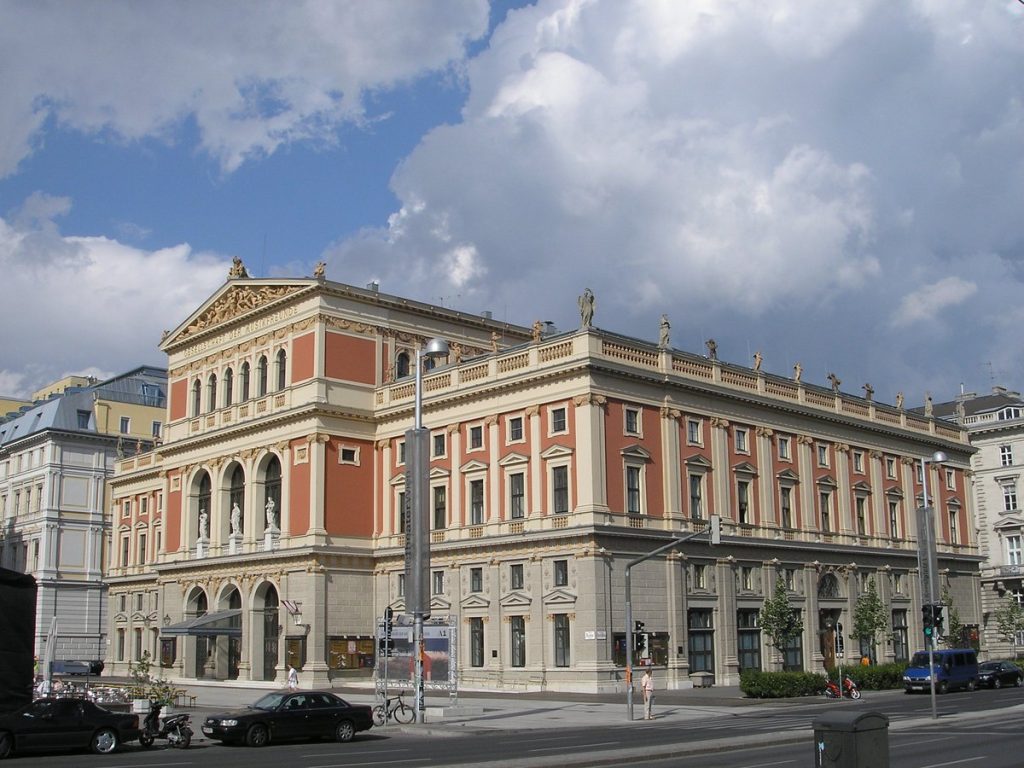
- June 26, 1912, Vienna Musikverein
Bruno Walter (conductor)
Vienna Philharmonic - Dedication
- None (published posthumously)
The sound of a heart giving out, note by note.
A Summer of Unraveling
In 1907, Gustav Mahler’s life fell apart in a rapid succession of blows. First, his five-year-old daughter, Maria, died of scarlet fever and diphtheria. The loss was absolute, a grief from which he would never fully recover. Shortly after, Mahler himself was diagnosed with a severe heart condition, forcing the avid outdoorsman to curtail the physical activity that was his mental and spiritual release. To complete the trio of disasters, a decade of artistic triumphs and political battles at the helm of the Vienna Court Opera ended in a bitter resignation, fueled by antisemitic press campaigns and professional exhaustion.
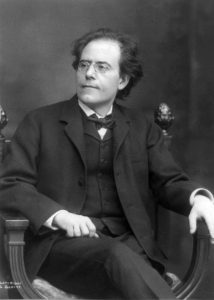
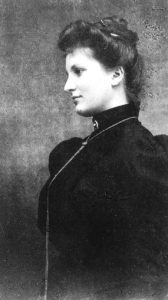
He left Vienna for New York, a celebrated conductor but a broken man. It was in this state of profound dislocation that he began composing his Ninth Symphony during the summers of 1908 and 1909 at his composing hut in Toblach, a small village in the South Tyrolean Dolomites. His wife, Alma, recalled that he would emerge from the hut looking transformed, as if the music was consuming him from the inside out. Whether the act of creation was a form of therapy or a final expenditure of a dwindling life force remains an open question. The music itself suggests it was both.
A strange superstition haunted composers of the era: the “Curse of the Ninth.” Beethoven, Schubert, and Bruckner had all died after completing their ninth symphonies. Mahler, deeply aware of this morbid tradition, tried to cheat fate. He composed a massive, six-movement symphony-cantata, Das Lied von der Erde (The Song of the Earth), but deliberately left it unnumbered. The work he titled his Ninth was, by his own count, his tenth.

The gambit failed. Mahler completed the Ninth and began sketches for a Tenth, but died in May 1911 from bacterial endocarditis, a complication of his heart condition. He never heard his Ninth Symphony performed. On a manuscript sketch, he had scribbled a haunting line: “Farewell, my lyre.” It was the conscious goodbye of an artist who knew his time was running out.
Movement I: An Unsteady Heartbeat
The symphony opens not with a grand statement, but with a faltering pulse. A fragmented, syncopated rhythm shared between cellos, harp, and horns sets a mood of profound instability. Conductor Leonard Bernstein famously identified this opening as a musical depiction of Mahler’s own arrhythmia — the sound of a diseased heart, captured on the page. The interpretation is almost universally accepted, as the rhythm uncannily mimics the skips and delays of an irregular heartbeat.
This Andante comodo (a comfortable walking pace) is anything but comfortable. Over its nearly 30-minute span, tender, nostalgic melodies try to assert themselves, only to be overwhelmed by catastrophic climaxes. In one of the most haunting passages, a flurry of woodwind calls creates what composer Alban Berg called a “vision of the hereafter.” It is a sound outside of time, like birdsong from another world.
The movement is a vast, sprawling narrative of life’s fragility, a constant struggle between serene memory and the terrifying intrusion of mortality. Funeral march rhythms intervene, melodies dissolve and reform, and the orchestral texture expands and contracts like breathing. It ends as it began: with the faltering heartbeat motif fading into near-silence.
Movements II and III: Dances of Life and Death
The symphony’s two inner movements plunge the listener into the chaos of life. The second movement is a Ländler, a rustic Austrian folk dance. What begins as a charming, earthy dance soon becomes grotesque. The rhythms stumble, the harmonies sour, and the waltzes turn into lurching, clumsy parodies. It is nostalgia curdled into something unsettling — a fond memory viewed through a lens of profound loss.
This gives way to the third movement, a Rondo-Burleske, which is a blast of manic, defiant energy. The music is a whirlwind of counterpoint, a dense web of themes chasing each other in a frantic race. Mahler inscribed this movement “To my brothers in Apollo,” a dedication that has been interpreted as both a sincere tribute to his fellow craftsmen and a sarcastic jab at his academic critics. In the midst of the frenzy, a moment of startling beauty appears: a lyrical melody that offers a brief glimpse of the peace that will arrive in the finale. The respite is short-lived, and the movement hurtles to a ferocious conclusion.
Movement IV: Dissolving into Silence
The final Adagio is the symphony’s radical destination. It begins with a hymn-like melody in the strings, saturated with a sense of profound, weary beauty. The key is D-flat major, a half step down from the symphony’s opening D major, signaling that there will be no triumphant return home. This is a one-way journey.
What follows is one of the most extraordinary conclusions in all of music. The symphony doesn’t end; it disintegrates. Over 25 minutes, the orchestral textures become thinner and more fragile. Dynamics sink to an almost inaudible pianississimo (pppp). Melodic fragments appear, hang in the air, and then vanish. Mahler’s final marking in the score is ersterbend — dying away. The last notes in the violas and cellos are barely whispers, dissolving until only silence remains.
The Premiere: A Maestro Without His Master
Bruno Walter (1876–1962), Mahler’s protégé and closest musical collaborator, conducted the premiere on June 26, 1912, at the Vienna Musikverein — more than a year after Mahler’s death. The task of bringing this profoundly personal farewell to life, in the absence of its creator, fell squarely on the shoulders of the one person who understood it most intimately.
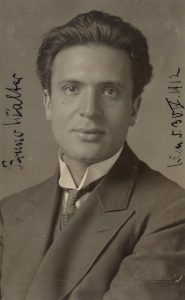
The audience was reportedly stunned into a long, breathless silence before erupting into applause. Composer Alban Berg wrote to a friend immediately after, declaring it “the greatest music I have ever heard — above Beethoven’s Ninth.” In 1938, Walter recorded the work with the same Vienna Philharmonic, creating the first commercial recording. That it was made on the eve of the Nazi Anschluss lends the recording an additional layer of historical weight.
A Legacy at the Crossroads
Mahler’s Ninth Symphony stands as a great dividing line in music history. It is both the final monumental work of late Romanticism and a prophetic piece that opened the door to the modernist revolutions of the 20th century. Composers like Arnold Schoenberg and Alban Berg saw its stretched tonality and emotional fragmentation as a direct precursor to their own atonal explorations.
In a 2016 BBC Music Magazine survey of the world’s leading conductors, Mahler’s Ninth was voted the fourth greatest symphony ever written, alongside works by Beethoven and Brahms. For conductors, it remains one of the most emotionally and technically demanding works in the repertoire. To perform it is to navigate a landscape of extreme emotional states, from bitter irony to sublime peace, and to manage the final, terrifying fade into nothing.
Recommended Recordings
The interpretation of this symphony varies dramatically, with timings ranging from 75 to over 90 minutes. A conductor’s approach to its tempo and emotional weight can fundamentally change the experience.
- Bruno Walter / Vienna Philharmonic (1938) — The first-ever commercial recording, made by Mahler’s own student. The sound is historical, but the interpretation carries the authority of a direct link to the composer. Recorded on the eve of the Nazi Anschluss, it carries an added layer of historical poignancy.
- Carlo Maria Giulini / Chicago Symphony Orchestra (1976, DG) — A famously slow, spacious, and deeply spiritual reading. Giulini allows the music to breathe, building the final Adagio with unbearable tension and transcendent beauty. For many, this is the benchmark recording.
- Herbert von Karajan / Berlin Philharmonic (1982, DG) — A controversial but undeniably powerful performance. The sheer beauty and power of the Berlin Philharmonic’s playing, especially in the ferocious Rondo-Burleske, is staggering. Karajan shapes the music with an architectural precision that reveals different facets of the score.
- Claudio Abbado / Lucerne Festival Orchestra (2010) — Filmed just a few years before Abbado’s death, this live performance is profoundly moving. Having faced his own mortality during a battle with cancer, Abbado conducts with a sense of urgent, personal insight. The final moments are almost unbearably fragile.
Listening with the Score
You can follow the full orchestral score as you listen. The score is freely available on IMSLP.
Frequently Asked Questions
Did Mahler ever hear his Ninth Symphony performed?
No. Mahler died on May 18, 1911, and the symphony was premiered over a year later on June 26, 1912, conducted by Bruno Walter. The fact that he composed this profound farewell without ever hearing it realized by an orchestra adds to its legendary status.
Why is Mahler’s Ninth often called a “farewell” symphony?
The entire work is structured as a journey toward departure. The final movement’s slow disintegration, culminating in silence and marked ersterbend (dying away), is the most explicit reason. This, combined with the biographical context of Mahler’s devastating losses and fatal illness in 1907, has solidified its reputation as his musical goodbye.
What is the “heartbeat” motif in Mahler’s Ninth?
It is the irregular, halting rhythm that opens the first movement. Conductor Leonard Bernstein proposed that this motif was a literal transcription of Mahler’s own arrhythmic heartbeat, a theory widely accepted for its musical and biographical resonance. The harp and horn figure that opens the symphony returns throughout the movement, transformed each time.
Is this Mahler’s last symphony?
It is his last completed symphony. He left behind substantial sketches for a Tenth Symphony, which have been “completed” or “realized” by several musicologists, most notably Deryck Cooke. However, the Ninth remains the final symphonic statement Mahler finished himself.