- Composer
- Anton Bruckner
(1824–1896) - Work
- Symphony No. 4 in E-flat major “Romantic”
- Composed
- 1874 (first version), 1878–1880 (revised)
- Premiere
- February 20, 1881, Vienna
- Key
- E-flat major
- Instrumentation
- 2 flutes, 2 oboes, 2 clarinets, 2 bassoons, 4 horns, 3 trumpets, 3 trombones, tuba, timpani, strings
- Movements
- 4 movements
I. Bewegt, nicht zu schnell (E-flat major)
II. Andante quasi allegretto (C minor)
III. Scherzo: Bewegt (B-flat major)
IV. Finale: Bewegt, doch nicht zu schnell (E-flat major) - Duration
- approx. 65 minutes
February 20, 1881, the Vienna Musikverein. Hans Richter raised his baton. The Vienna Philharmonic players fixed their eyes on the score. Somewhere in the audience, the composer Anton Bruckner was probably wringing his hands. He was nearing sixty, yet he had never experienced a proper performance of one of his symphonies.
This night was different. When the music ended, the hall erupted. It was the first time a Bruckner symphony had been received with genuine enthusiasm in Vienna. Symphony No. 4, the “Romantic” — the most accessible of his nine symphonies — had arrived.
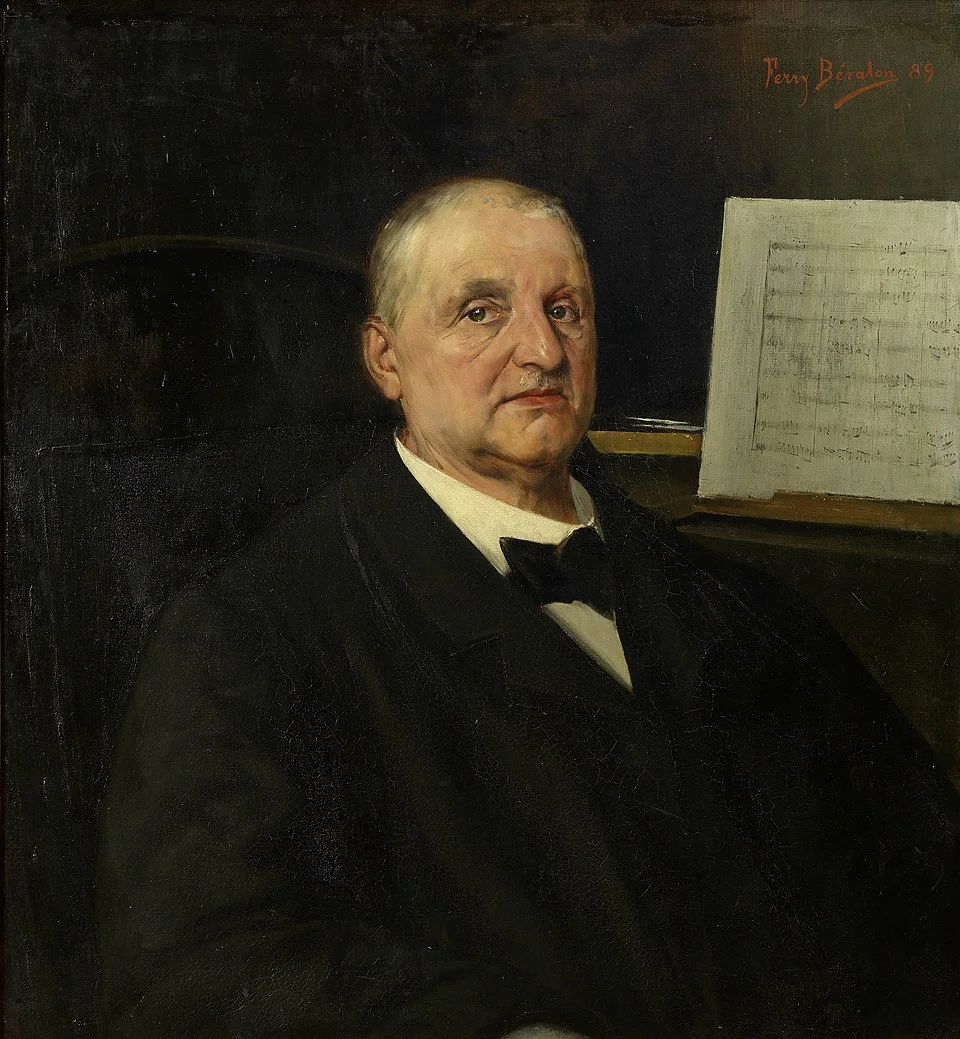
The Outsider of Viennese Musical Life
Bruckner was, in a word, a late bloomer. Born in the village of Ansfelden to a schoolteacher’s family, raised as a choirboy in a monastery, he did not write his first symphony until past forty. Compare that to Johannes Brahms, who was a star of Viennese musical life by thirty.
Worse, Bruckner was on the wrong side of Viennese musical politics. The city’s music world was split into two camps: Brahms’s party of “absolute music” — art for art’s sake, pure form — and the “New German School” devoted to Richard Wagner, who believed music should embody drama and narrative. Bruckner worshipped Wagner. Fervently.
When Bruckner personally dedicated his Third Symphony to Wagner and knelt before him, Wagner accepted. Bruckner was overjoyed. This devotion made him a target for Eduard Hanslick, the formidable critic allied with the Brahms camp. Hanslick savaged every Bruckner premiere: “a formless nightmare,” “not music but a parade of noise.” Bruckner held a professorship at the Vienna Conservatory, but as a composer he was systematically dismissed.
The Horn in the Mist — How a Symphony Begins
Symphony No. 4 was composed in 1874, the year Bruckner turned fifty. Yet the opening bars conjure not an ageing professor but a young man walking through a forest at dawn.
Over trembling strings, a single horn enters with a broad, lyrical melody — as if sounding from deep within a misty wood. This horn solo is the symphony’s emblem and one of the most beautiful openings in the entire symphonic repertoire. The horn’s natural association with the hunt and the forest is brought to perfection here.
Bruckner himself, unusually, offered a programmatic description: “A medieval town, dawn breaking. From the city gate, a trumpet call. Knights ride out into the forest. Forest murmurs, birdsong…” For a composer who almost never attached literary narratives to his music, this is a telling exception. He clearly wanted this work to carry an image.
A Symphony Revised Three Times
Bruckner had a famous habit: pulling out a completed symphony years later and rewriting it from scratch. The Fourth was no exception.
After finishing the first draft in 1874, he composed an entirely new scherzo (third movement) in 1878, discarding the original and replacing it with what is now known as the “Hunting Scherzo” — horns sounding the chase, rhythms galloping through the forest. It is the most exhilarating section of the symphony. In 1880 he rewrote the finale as well. Of the 1874 draft, only the first two movements survived. The version we hear in concert — the so-called “1878/80 version” — is in effect a composite assembled over three distinct periods.
Add to this the “revised editions” in which Bruckner’s students and colleagues helpfully retouched the orchestration, and you have a headache for scholars. Which version is the “real” Bruckner? The debate continues. Conductors choose different editions, so two recordings of the same symphony can sound remarkably different.
A Sound Like a Cathedral
What strikes first-time listeners most is the sheer scale. The Fourth runs roughly sixty-five to seventy-five minutes — as long as a Mahler symphony. But it fills that time in a completely different way.
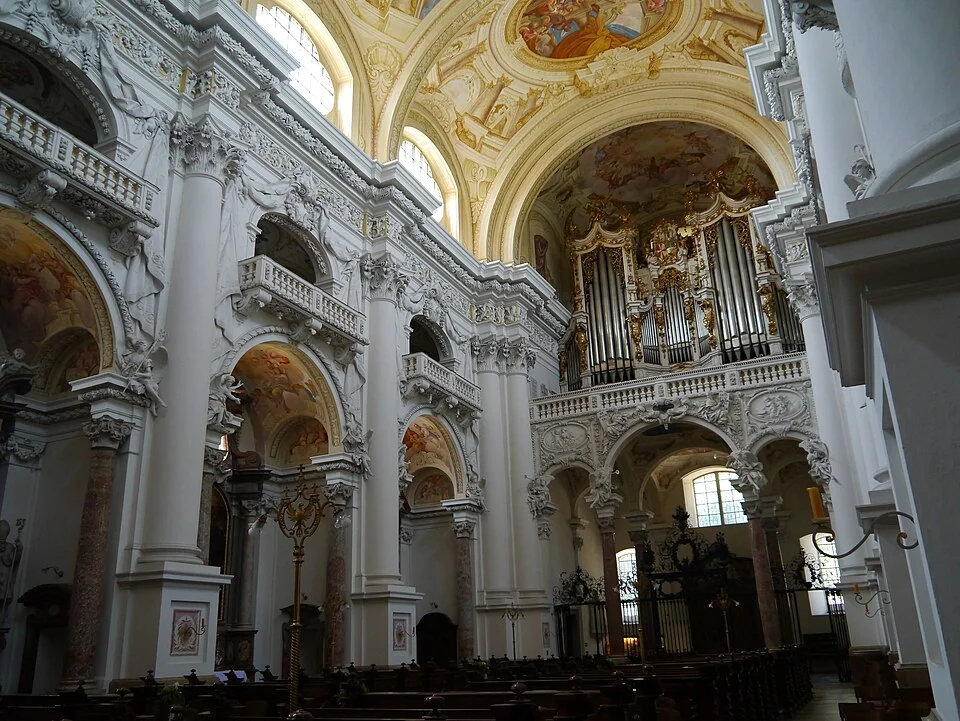
If Mahler is a novel, Bruckner is a cathedral. Mahler’s symphonies have plots, scene changes, dramatic emotional drops. Bruckner builds vast sonic blocks. A theme appears, grows, layer upon layer, until the entire orchestra becomes a single monumental resonance — like the arches of a Gothic cathedral reaching toward the sky.
Bruckner spent years as organist at the Monastery of St. Florian. The organ’s nature — press a key and the sound fills the space without stopping — permeates his orchestral writing. That is why Bruckner’s symphonies reveal their true power in a hall with fine acoustics: sound filling the space, bouncing off walls, merging with new sound.
What Mahler Learned from Bruckner
There is a direct link between the two men. As a student at the Vienna Conservatory, Mahler attended Bruckner’s lectures on harmony and counterpoint. He genuinely revered the provincial professor.
A telling anecdote: when Bruckner’s Third Symphony was premiered in Vienna in 1877, most of the audience walked out before the end. Among the handful who stayed to applaud was a seventeen-year-old Mahler. He later volunteered to make a piano reduction of the symphony — determined to bring his teacher’s work to the world.
What Mahler took from Bruckner went beyond textbook knowledge. Recall the opening of Mahler’s Symphony No. 1: sustained strings, nature sounds emerging one by one. The resemblance to Bruckner’s Fourth — tremolo strings, the horn emerging from the texture — is unmistakable. Of course, Mahler took the method and steered it in an entirely different direction. Bruckner is the cathedral; Mahler is the novel.
The essential difference: Bruckner was a composer of faith. A devout Catholic, he saw music as “a prayer offered to God.” Mahler was a composer of existence — pouring human pain, the fear of death, the beauty of nature into his orchestra. Same roots, utterly different fruit.
Movement by Movement
Movement I — The Horn Call from the Mist
A string tremolo opens the symphony like a veil of morning fog across an alpine valley. Above it, a solo horn intones a bare fifth in E-flat major. These five notes will become the genetic code of the entire work. Bruckner builds his first movement around three distinct thematic groups. The first grows directly from the horn call, expanding into a muscular unison statement for the full orchestra. The second group shifts the color entirely: violas and cellos carry a lyrical melody that feels almost private after the grandeur of the opening. The third group introduces rhythmic complexity through what scholars call the “Bruckner rhythm,” a characteristic superimposition of duple and triple subdivisions within a single bar. Far from a mere technical curiosity, this rhythmic pattern generates the movement’s forward momentum.
The development section subjects all three groups to collision and transformation. Bruckner’s method of building tension is unlike anything in Beethoven or Brahms. He does not drive toward a single explosive climax. Instead, he constructs waves — each crest higher than the last, each trough deeper — so that the listener is carried upward through stages rather than launched. When the recapitulation arrives and the horn call returns, now blazing in the trumpets, the landscape that began as fog-shrouded has become a full panorama. The coda reinforces this trajectory, closing the movement not with triumph alone but with the weight of everything that preceded it.
Movement II — A Meditation Beyond Clock-Time
The Andante begins in C minor with a cello melody that walks at the pace of a funeral cortège yet never succumbs to grief. It is closer to meditation than mourning. After the cellos have spoken, the woodwinds respond. Oboe and clarinet trade phrases above pizzicato strings in passages so transparent they resemble chamber music. Bruckner’s slow movements have a particular quality: they distort the listener’s sense of duration. Five minutes can feel like fifteen, and fifteen like five. The mechanism lies in the harmonic motion. The music departs from C minor toward the warmth of A-flat major, lingers there, then circles back to darker territory. Each cycle feels both familiar and subtly altered.
The climax arrives when the full string section seizes the cello theme at fortissimo, wrenching it into the open. It is a moment of almost painful exposure. Yet Bruckner does not sustain the intensity. The music retreats to its original stillness, and the movement dissolves into horn echoes that seem to hang in the air long after the sound itself has faded. This is not a slow movement that tells a story with a beginning and end. It creates a space — and then withdraws from it.
Movement III — The Hunt in the Forest
Bruckner composed this scherzo entirely new for the 1878 revision, replacing the original third movement with something far more vivid and immediate. Four horns trade hunting calls above a rough 2/4 rhythm, their signals bouncing off one another like echoes through dense woodland. Of all the movements in the Fourth Symphony, this is the most instinctively physical. No structural analysis is necessary to feel horses galloping between the trees.
Bruckner himself described the scherzo in programmatic terms, referencing a hunt and noting that the trio represents a dance played during the midday meal. The trio section delivers on that description with startling directness. The tempo relaxes, the brass recedes, and the strings unfold a gentle Ländler — an Austrian country dance — that carries the warmth of a rural inn. The contrast with the scherzo proper could hardly be sharper: wildness against domesticity, forest against hearth. When the hunting horns return after the trio, the effect is almost rude, a sudden gust that sweeps the pastoral calm aside and drives the movement to its blunt, exhilarating close.
Movement IV — Laying the Final Stone
The finale is the longest movement of the symphony and historically the most contested. Bruckner revised it repeatedly, and even the 1880 version does not achieve the structural equilibrium of the first movement. Yet it is precisely this restless ambition that gives the finale its power. The movement opens with a return of the first movement’s horn call, emerging once more from tremolo mist. The same notes carry a different meaning now. At the symphony’s outset, they were a point of departure. Here, they are a signal of return.
From this recalled material, Bruckner unfolds a massive sonata structure. The development section is enormous in scale: themes pile upon one another, brass chorales surge upward at intervals, and the full orchestra moves as a single body in passages of overwhelming density. The climax does not arrive in one stroke. Three successive waves build across the movement’s final pages, each receding just enough to allow the next to rise higher. In the coda, E-flat major blazes out with a radiance that gathers every thread of the symphony into a single chord. The effect is architectural — the sensation of placing the last stone at the apex of a cathedral, the structure suddenly complete beneath it.
If You’re Listening for the First Time
First movement — Focus on the opening horn melody. It dominates the entire movement. Follow it as the mist gradually lifts.
Second movement — Slow and meditative. Surrender to the cello’s song. Bruckner’s slow movements possess a beauty where time seems to stop.
Third movement — The “Hunting Scherzo.” When the horn sounds the call, you are running through the forest. The liveliest and most immediately appealing movement.
Fourth movement — The longest and most monumental climax. Patience is required, but when the horn theme from the first movement returns in blazing glory at the end, the reward is immense.
Bruckner endured decades of ridicule in Vienna’s musical circles, writing symphony after symphony in silence. He was nearly sixty when he finally heard applause. That first victory was this Fourth Symphony. The horn call rising from the mist — the sound of half a century’s patience finally reaching the world. Listen for it.
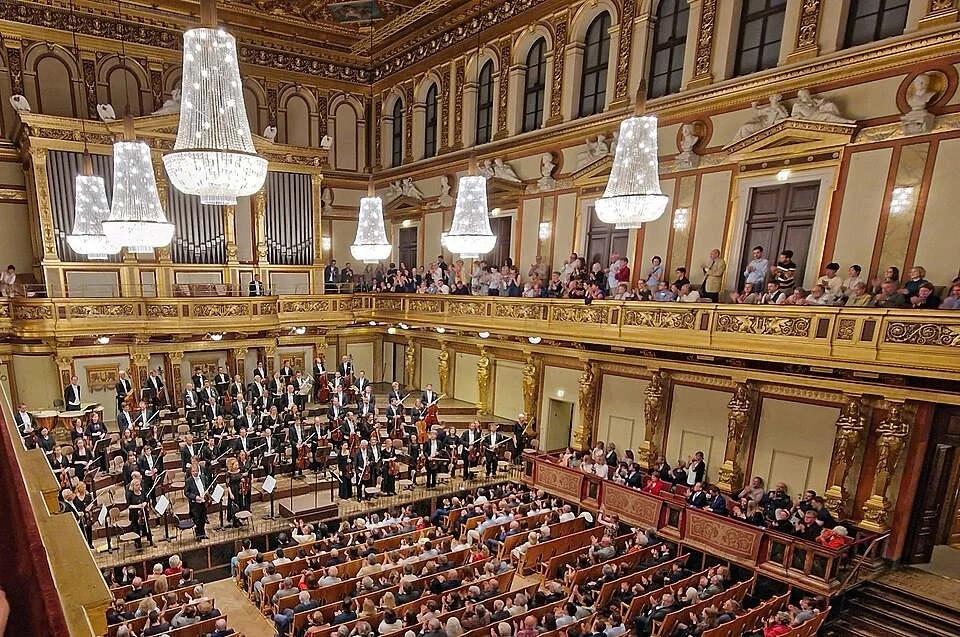
Recommended recordings: Karl Böhm / Vienna Philharmonic (Decca, 1973), Günter Wand / Berlin Philharmonic (RCA, 1998), Sergiu Celibidache / Munich Philharmonic (EMI, 1988)
🎼 View the score — Free download at IMSLP
Follow the Score
The full score is freely available at IMSLP. View the Symphony No. 4 ‘Romantic’, WAB 104 score on IMSLP