The last thing you hear in Mahler’s Sixth Symphony is a chord for full brass, a silence, and then a single pizzicato A from the strings — dry, quiet, gone in half a second. No coda. No consolation. Nothing rebuilt. Around eighty minutes of music arrives at a full stop that sounds like a door closing in an empty building.
That ending is why this piece sits apart from everything else Mahler wrote. His Second climbs out of the grave; even the Ninth, which really is about dying, dissolves rather than breaks. The Sixth breaks. If you are meeting it for the first time, the useful thing to know is not that it is dark — plenty of music is dark — but that it is built as a defeat. The finale raises three enormous climaxes and demolishes every one of them, and two of those demolitions are written into the score as a blow from a hammer.
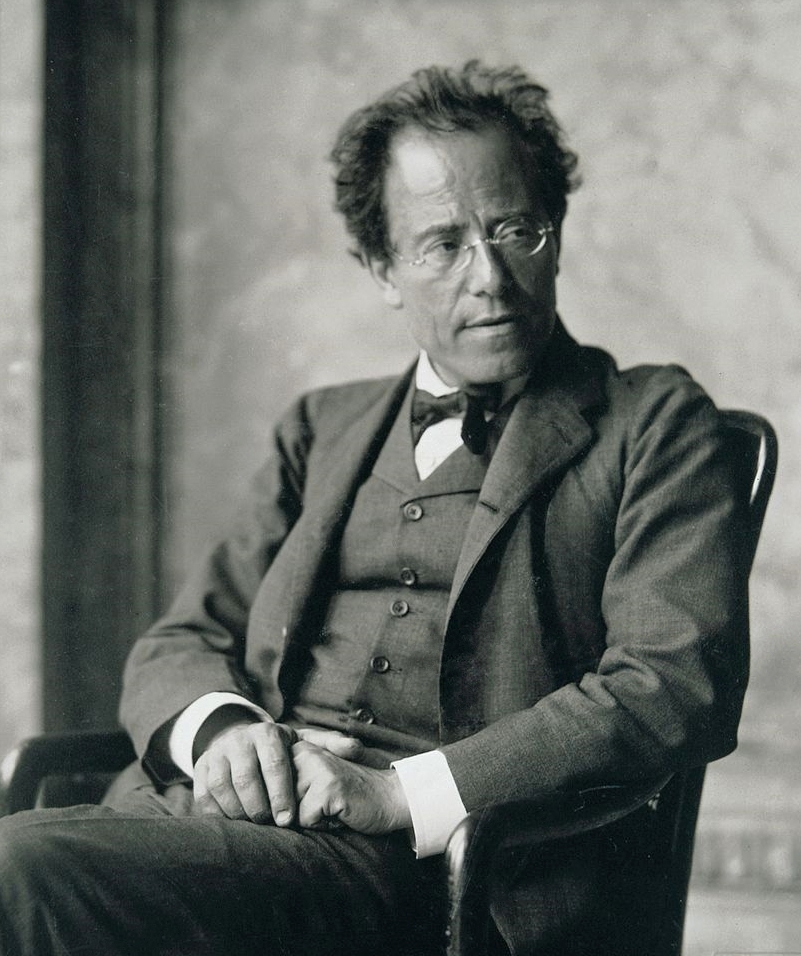
A catastrophe written at a holiday villa
Mahler composed the Sixth Symphony during the summers of 1903 and 1904 at Maiernigg, his lakeside retreat on the Wörthersee in southern Austria. He worked in a small stone hut in the woods above the house, walking up to it in the morning and back down in the evening. The rest of the year he ran the Vienna Court Opera, so the summers were the only composing time he had.
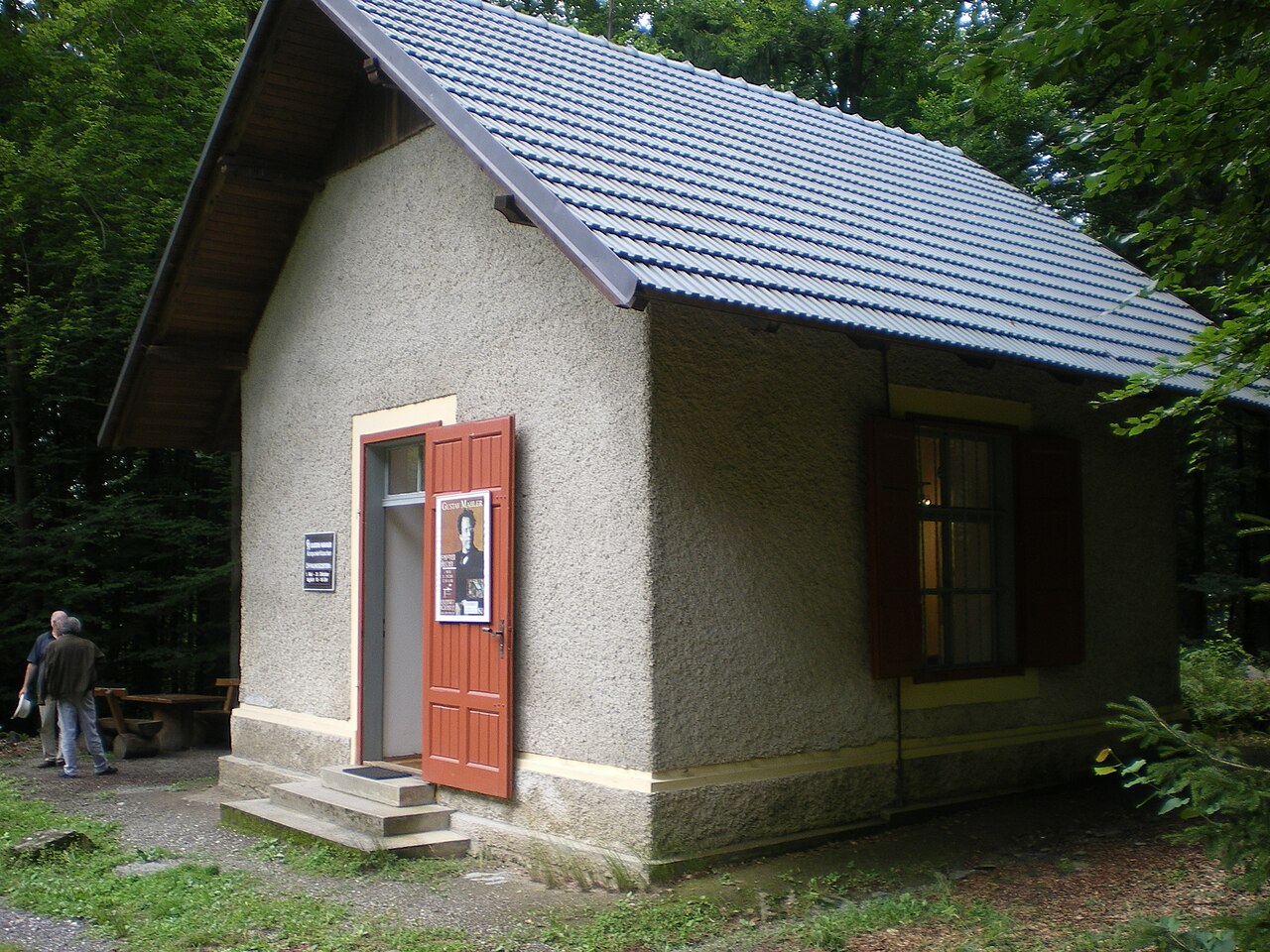
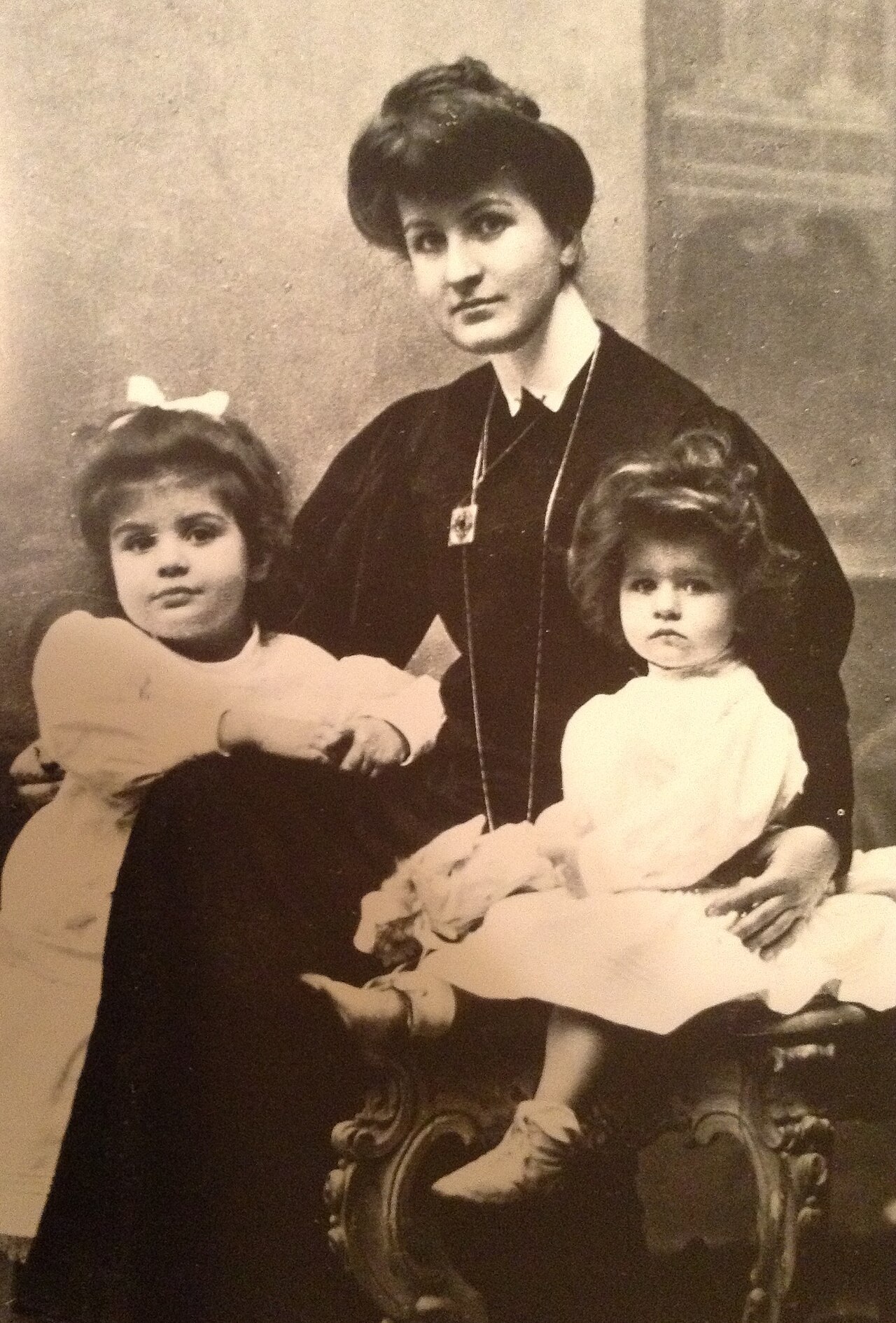
The biographical irony gets used a lot: Mahler married Alma Schindler in 1902, his second daughter was born while he was at work on this score, his career was at its height, and what came out of the hut was the bleakest symphony of the century so far. It is a genuine contrast and worth noticing. It is not an explanation — music does not track a composer’s mood at an exchange rate, and this particular reading slides very easily from coincidence into invented confession.
What is documented is more useful anyway. Mahler conducted the first performance himself on 27 May 1906 at the Saalbau in Essen. The score was published in 1906 by C. F. Kahnt, and Mahler kept revising the piece around and after its first outing — the number of hammer blows, the order of the inner movements, details of the orchestration. This is a work he was still arguing with himself about. That matters when you start comparing recordings, because conductors are picking sides in arguments Mahler himself never finished.
Four things to listen for
1. The march that never becomes triumphant. The symphony opens with low strings hammering a stiff, quick march — no introduction, no fade-in, the machine is already running. Mahler writes marches constantly, but they usually carry irony or nostalgia. This one carries neither. It is simply relentless, and its rhythm returns in every movement.
From inside a string section, this is the passage where the violas and second violins do the invisible work: the tune sits on top, but the drive comes from the inner parts chopping out the pulse, and if they drag by a hair the whole march turns to mud. Listen underneath the melody rather than at it and you can hear the engine.
2. The major-minor motto. This is the single device that defines the piece and it takes about four seconds. A bright A major triad rings out in the trumpets and oboes over a rat-tat timpani rhythm — and then the third of the chord slides down a semitone, turning it to A minor. Nothing else changes. One note falls and the light goes out. Mahler drops this in at structural joints throughout the symphony, so once you can hear it you can navigate the whole work by it.
3. Cowbells, marked to sound far away. Mahler asks for cowbells played offstage, and marks them in der Ferne — in the distance. He is not painting a postcard of the Alps. He is using distance itself as a parameter, the way a film cuts to a wide shot: the noise stops, something faint drifts in from outside the piece, and the machinery starts again. When the cowbells return in the slow movement they sound less like scenery and more like something you can no longer reach.
4. The soaring second theme. A huge, rising string melody breaks into the first movement’s march and it is the only unqualified warmth in the symphony. Alma Mahler’s memoirs identify it as her husband’s portrait of her, which is why everyone calls it the Alma theme; that attribution comes from her alone, so treat it as her account rather than fact. Its function is not in doubt: it is what the finale spends half an hour destroying.
If you want to hear all four in one sitting without paying for anything, the Frankfurt Radio Symphony under Andrés Orozco-Estrada has a complete performance on its own channel — well filmed, well engineered, and useful precisely because the camera keeps showing you which instrument is doing what.
🎧 Also on: Apple Music · Spotify
The movements, and where the drama actually sits
I. Allegro energico, ma non troppo
The march, the motto, the soaring theme, and a development section where the cowbells arrive. The movement is in a clear enough sonata shape that you can follow it on a first hearing, and Mahler writes an exposition repeat that most conductors observe — if the opening march comes back verbatim a few minutes in, you are not lost, that is the repeat. The movement ends in A major, loudly and unconvincingly, which is the joke: the symphony has just shown you how easily that chord collapses.
The two middle movements
The Scherzo is the march from the first movement seen in a warped mirror. Same key, same obsessive rhythm, but the meter keeps stumbling and the woodwind writing turns shrill and jeering. Mahler marks a contrasting section altväterisch — old-fashioned, quaint — and the effect is of a nursery tune being pulled out of shape. It is the least loved of the four movements and the one that most rewards a second hearing.
The Andante moderato is the only place in the symphony where the pressure lifts. It sits in E flat major, about as far from A minor as you can get, and its main theme is close kin to the world of Kindertotenlieder, the song cycle Mahler was finishing in the same years. Long string paragraphs, horn and oboe answering over the top, cowbells returning in the distance. It is also brutally exposed playing — the string lines sit high and slow with nowhere to hide a shift, which is why amateur orchestras that survive the Scherzo come apart here.
IV. Finale
Half an hour, and structurally the point of the whole piece. It opens with a searching, unstable introduction, then sets off on the first of three long ascents. Each ascent gathers the symphony’s material, gets faster and brighter, aims at a decisive major-key arrival — and is cut down at the summit. Two of those moments are marked with the hammer. The third catastrophe, near the end, needs no percussion at all: the music simply runs out of material and stops climbing.
Then the trombone chorale, the silence, and the pizzicato A. When it works in a hall, nobody claps for a while.
The hammer: what almost every program note gets wrong
Here is the story you have read. Mahler wrote three hammer blows into the finale, each representing a blow of fate. Then, terrified that he had cursed himself, he struck the third one out. And in 1907 the blows landed anyway: his elder daughter Maria died at Maiernigg, doctors diagnosed a serious heart defect, and he resigned from the Vienna Court Opera. The superstition was justified. He had heard his own future.
It is a wonderful story and the chronology does not support it. Mahler’s autograph originally called for five hammer blows; he reduced them to three, and the final published text has two. Two days after the Essen first performance, in a letter to Alma, he was already working through the problem in purely musical terms: “That I had to make the first stroke the loudest, the second softer, and the third — the death-blow — the weakest, should be clear to anyone who has understood the symphony… Yet perhaps I must think again about eliminating the third blow. It is so final.” By October 1906 the third blow was gone from the score — more than a year before any of the 1907 disasters that supposedly caused the cut.
So the deletion was an editorial decision about how an ending should be weighted, made by a working conductor who had just heard his piece in a hall. The prophecy narrative comes from Alma’s memoirs, written decades later, and it has outrun the documents because it is a better anecdote. Worth knowing, then, that the version of the piece you almost certainly hear was shaped by craft, not by dread.
What the hammer actually is remains gloriously unresolved. Mahler asked for a sound “brief and mighty, but dull in resonance and with a non-metallic character,” which describes what he did not want far better than what he did. Orchestras build their own: crates, wooden boxes, plywood over a packing case. Sit close enough and you feel it in the floor before you hear it, and that thump — not the volume — is the effect.
Scherzo second or Andante second? Pick a side
Mahler published the Sixth in 1906 with the Scherzo second, then reversed the inner movements during the Essen rehearsals, so the premiere on 27 May 1906 was itself conducted with the Andante second, and the revised edition printed that order from then on. Erwin Ratz’s 1963 critical edition put the Scherzo back in second place without publishing a documentary case for it, and the Kubik edition of 2010 restored Andante–Scherzo. Conductors have been choosing ever since, and both orders are defensible.
My verdict: Andante second. The Scherzo is a distortion of the first movement’s march — same key, same rhythm, same mood soured — so running them back to back gives you no exhale, and by the finale there is nothing left to lose. Put the Andante second and the Scherzo becomes the first crack in a peace that has just been established, which hands the finale something the listener actually remembers to destroy. Scherzo-second performances are grimmer. Andante-second performances are more devastating, and devastation is what this piece is for.
Five recordings, and what each one is for
Leonard Bernstein / Vienna Philharmonic (1988, Deutsche Grammophon)
The one to start with, and the one to own. Bernstein is not interested in balance; he pushes tempos around inside phrases until the march sounds like something being dragged, and the finale’s collapses land as physical events rather than structural markers. The Vienna strings give the soaring second theme a weight nobody else quite manages. The cost is control — a few transitions sag, and if you like your Mahler sober this will read as manipulation. It is manipulation. It also works.
▶ Listen on YouTube · Apple Music · Spotify
Klaus Tennstedt / London Philharmonic (1983, EMI)
The opposite temperament and the better argument. Tennstedt treats the finale as one enormous span rather than a series of shocks, so the ascents feel inevitable rather than heroic and the collapses feel administrative — which is somehow worse. The playing is less glamorous than Vienna’s and the studio sound is dry. Get this one when you want to understand how the piece is put together rather than how it feels.
▶ Listen on YouTube · Apple Music · Spotify
Pierre Boulez / Vienna Philharmonic (1994, Deutsche Grammophon)
Boulez refuses the grief entirely and conducts the Sixth as engineering, which exposes things the emotional readings bury: counter-lines in the woodwind, the exact voicing of the motto, how much of the finale is contrapuntal rather than merely loud. It will not move you. It will teach you the score.
▶ Listen on YouTube · Apple Music · Spotify
John Barbirolli / New Philharmonia Orchestra (1967, EMI)
The broadest of the five and the most divisive; Barbirolli takes the first movement at a tempo that turns the march into a funeral procession, and reviewers at the time were not kind about it. Decades on it sounds less like an error than a decision — the slowness gives the second theme room to become genuinely tender, so the finale has more to take away. Skip it as a first version, come back to it third.
▶ Listen on YouTube · Apple Music · Spotify
Iván Fischer / Budapest Festival Orchestra (2005, Channel Classics)
The one to hear if the orchestration is what draws you. Channel Classics captures the offstage cowbells with real depth of field, so in der Ferne actually sounds like distance instead of like a quiet cowbell in the same room, and the hammer has weight without turning into a bang. Fischer’s reading is disciplined and slightly cool in the outer movements; the Andante is the highlight. Best modern engineering of the five by a wide margin.
▶ Listen on YouTube · Apple Music · Spotify
The short version: Bernstein first, for the shock. Fischer if you care about sound. Boulez when you want to know what is actually written. Tennstedt when you want the architecture. Barbirolli only once the piece is already under your skin.
Follow the score, once
The Sixth is long enough that a first listen can turn into wallpaper. A score-following video fixes that faster than any amount of reading: watch the finale and you can see the hammer coming — one small mark under a page black with notes — and then see the last page, which is nearly empty.
If the Sixth is your entry point into Mahler, the natural next steps are the Fifth, which shares the funeral-march vocabulary but resolves into daylight, and the Ninth, which reaches a comparable ending by a different route. Our guide to the Mahler symphonies lays out the cycle in listening order, and the Second is the counter-argument: same scale, opposite verdict.