Beethoven is the wrong composer for studying, right up until you pick the right pieces. The problem is not that he is loud — it is that he changes volume without warning, and a sudden fortissimo pulls your eyes off the page.
So this is a curated list, not a dump of everything with his name on it. Twelve pieces that never ambush you, four famous ones that will, and a running order for a three-hour block.
The Shortlist
If you close the tab after this section, you are still covered. In order of how much work they let you get done:
- Seven Bagatelles, Op. 33 — the best single choice. Twelve minutes, seven short pieces, nothing louder than a raised voice.
- Serenade in D for flute, violin and viola, Op. 25 — the sleeper pick. Roughly half an hour of chamber music with no piano and no drama.
- Piano Sonata No. 25 in G, Op. 79 — ten minutes, cheerful, forgettable in the best way.
- Romance No. 2 in F, Op. 50 — one long violin line, eight minutes, zero surprises.
- Symphony No. 6 “Pastoral”, first movement only — the one orchestral movement that repeats itself on purpose.
Everything below explains why, and what to cue when the first hour has worn off.
Why Beethoven Is a Risky Default
Most “classical music for focus” playlists lean on Bach and Mozart for a reason. Baroque and early Classical writing tends to sit inside a narrow dynamic band — the harpsichord could not do a crescendo, so nobody wrote one. Beethoven built his reputation on doing the opposite. The whole point of the Eroica or the Fifth is that the floor drops out and then the ceiling comes down. That is thrilling in a concert hall and useless at a desk.
It is also worth being honest about what music is actually doing for you. The old claim that listening to Mozart makes you smarter has been picked apart; Thompson, Schellenberg and Husain argued in Psychological Science in 2001 that the so-called Mozart effect is an artifact of arousal and mood rather than anything special about the composer. In plain terms: pleasant, moderately energetic music puts you in a better state for a boring task. It does not upgrade your brain. That is a low bar, and it is exactly the bar the pieces below are chosen against.
So the filter here is mechanical. A piece earns a place if it keeps a stable dynamic range, avoids a single dominant tune you will end up humming, and runs long enough that you are not restarting it every four minutes. Beethoven passes that test more often than his reputation suggests — mostly in the corners of his catalogue nobody programs.
Warm-Up: The First Thirty Minutes
The opening stretch of a session is the part you are most likely to abandon. Short, familiar, low-commitment pieces work better here than anything ambitious.
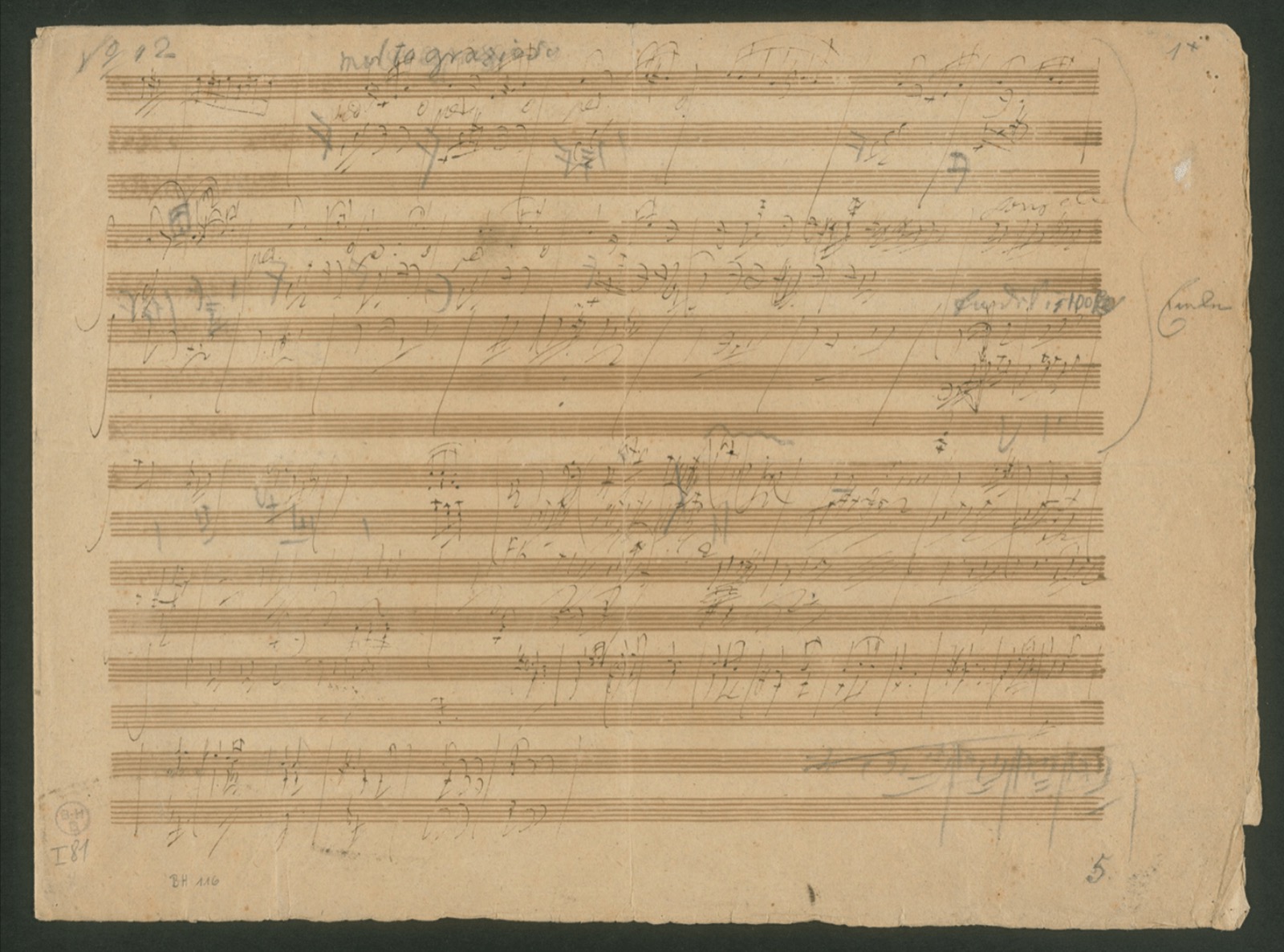
Für Elise, Bagatelle in A minor, WoO 59
Yes, it belongs on the list, and no, it will not carry you past ten minutes. Beethoven wrote it in April 1810 and never published it; Ludwig Nohl printed it in 1867, four decades after the composer’s death, and the manuscript Nohl said he worked from has since vanished. What makes it useful is exactly what makes it a cliché — the rondo theme returns in the same shape every time, so your ear stops tracking it after a minute. Use it as a starter pistol.
▶ Listen on YouTube · Apple Music · Spotify
Piano Sonata No. 20 in G, Op. 49 No. 2
Two movements, about eight minutes, and written as teaching material — the Op. 49 pair was probably composed around 1795 to 1797 and only reached print in 1805, after Beethoven’s brother Kaspar Karl gathered up unpublished odds and ends and took them to publishers. That accidental history is why it works here: there is no rhetoric in it, no argument being won. The second movement is a minuet Beethoven also used in the Septet, and it is one of the few things he wrote you can genuinely stop paying attention to.
▶ Listen on YouTube · Apple Music · Spotify
Piano Sonata No. 25 in G, Op. 79
Composed in 1809 and published by Breitkopf & Härtel in December 1810 as a “Sonatine” — Beethoven’s own suggestion, which tells you how seriously he took it. Ten minutes, three movements, and the first one runs on a bouncing third that people have heard as a cuckoo call ever since. The middle movement in G minor is the only shaded moment and it lasts under three minutes. If you want one piano work to have on while you are clearing email and organising notes, this is it.
▶ Listen on YouTube · Apple Music · Spotify
The Long Stretch: Hours One Through Three
This is where the playlist has to stop being interesting. You want pieces long enough to fill a work block, textured enough not to feel like a drone, and repetitive enough that your attention slides off them.
Seven Bagatelles, Op. 33
My single best pick for studying, and the one almost nobody suggests. Beethoven wrote these in 1801–02 and published them in Vienna in 1803 through the Bureau des arts et d’industrie. Seven miniatures, roughly twelve minutes total, each one a self-contained sketch that ends before it can develop into anything demanding. The first, in E-flat, is the famous one; the third and the sixth are the ones you will not notice at all, which is the compliment. Loop the set twice and you have covered half a session.
🎧 Also on: Apple Music · Spotify
Serenade in D for flute, violin and viola, Op. 25
The surprise entry, and the one I would defend hardest. Beethoven finished it by late 1801 and Giovanni Cappi published the parts in Vienna in March 1802. Six movements, close to half an hour, scored for three instruments that never gang up on you — no piano attack, no brass, nothing that can spike. The flute keeps the top line clear enough that the texture never turns to mush, which is the failure mode of most string-only background music. It sounds like garden music because that is what a serenade was for, and garden music is a good model for study music.
🎧 Also on: Apple Music · Spotify
Symphony No. 6 in F “Pastoral”, Op. 68 — first movement
The first movement only, and the restriction matters: the fourth movement is a literal thunderstorm and will end your concentration on the spot. But the opening movement is the most repetitive thing Beethoven ever wrote on purpose. He takes a four-bar phrase and turns it over dozens of times without escalating, and the effect is closer to a moving landscape than to an argument. Beethoven himself described the symphony as more an expression of feeling than painting, which is a fair warning that nothing dramatic is going to happen. The symphony premiered on 22 December 1808 at the Theater an der Wien, on the same monstrous four-hour programme that introduced the Fifth.
🎧 Also on: Apple Music · Spotify
Violin Sonata No. 5 in F “Spring”, Op. 24 — first movement
Published in 1801; the “Spring” nickname was attached after Beethoven’s death, which is the usual story with his nicknames. The opening movement is one long lyrical paragraph handed back and forth between violin and piano, and the handoffs are the useful part — the texture keeps shifting slightly, so the movement never settles into wallpaper, but neither instrument ever raises its voice. Ten minutes. If you like it, our full guide to Beethoven’s Spring Sonata covers the other three movements, two of which are too playful for a work block.
▶ Listen on YouTube · Apple Music · Spotify
Slow and Late: When the Work Turns Into Reading
Different task, different music. Once you are past problem sets and into reading, annotating or drafting, you can afford slower music with more expressive weight — the tempo drops below your reading pace instead of competing with it. If reading is the main event rather than the late shift, we have a separate list for Beethoven for book lovers built around longer single works.
Piano Sonata No. 14 in C-sharp minor, Op. 27 No. 2 “Moonlight” — first movement
The obvious pick, and it earns the place — but only the first movement, and you should know why. Beethoven published it in 1802 under the subtitle Sonata quasi una fantasia; the moonlight came from the poet Ludwig Rellstab in 1832, five years after Beethoven died, who compared it to a boat on Lake Lucerne. The Adagio sostenuto is built on unbroken triplets that never stop for five and a half minutes — no cadence you can hang a thought on, no dynamic event. It is one of the best pieces of concentration music ever written by accident. The finale is a Presto agitato and will take your head off. Set the movement, not the sonata, and if you want the full picture read our guide to the Moonlight Sonata.
▶ Listen on YouTube · Apple Music · Spotify
Piano Sonata No. 8 in C minor, Op. 13 “Pathétique” — second movement
The Adagio cantabile is the one everybody recognises from adverts and it is still a good choice, with one caveat: it is a tune, a proper singable one, and singable tunes compete for the same verbal channel you are using to read. It works for maths, code and anything spatial. It is a poor pick for reading dense prose. Five minutes, in A-flat, and it never leaves a comfortable middle register. Our Pathétique guide goes into what the outer movements do, both of which are off-limits here.
▶ Listen on YouTube · Apple Music · Spotify
Romance No. 2 in F, Op. 50
Eight minutes of violin over a soft orchestral bed, and structurally it is a rondo, so the opening melody keeps returning intact. That predictability is the feature. Nothing in it modulates somewhere alarming and the orchestra never does more than support. Of the two Beethoven romances this is the calmer one — the G major, Op. 40, has more spring in it and pulls slightly harder at the ear. If you only take one late-session orchestral piece, take this.
▶ Listen on YouTube · Apple Music · Spotify
String Quartet No. 1 in F, Op. 18 No. 1 — second movement
The honest one on the list: this is the most emotionally loaded thing here, and I am recommending it anyway for the last hour, when you are past new material and into revision. Beethoven marked it Adagio affettuoso ed appassionato, and when his friend Karl Amenda said it made him think of two lovers parting, Beethoven reportedly replied that he had the burial vault scene from Romeo and Juliet in mind — an account that has stuck partly because inscriptions in his sketches point the same way, though it is not a settled reading. Nine minutes of slow tread that will hold you in the chair. Skip it if you are prone to putting the pen down and just listening.
▶ Listen on YouTube · Apple Music · Spotify
Piano Concerto No. 5 in E-flat, Op. 73 “Emperor” — second movement
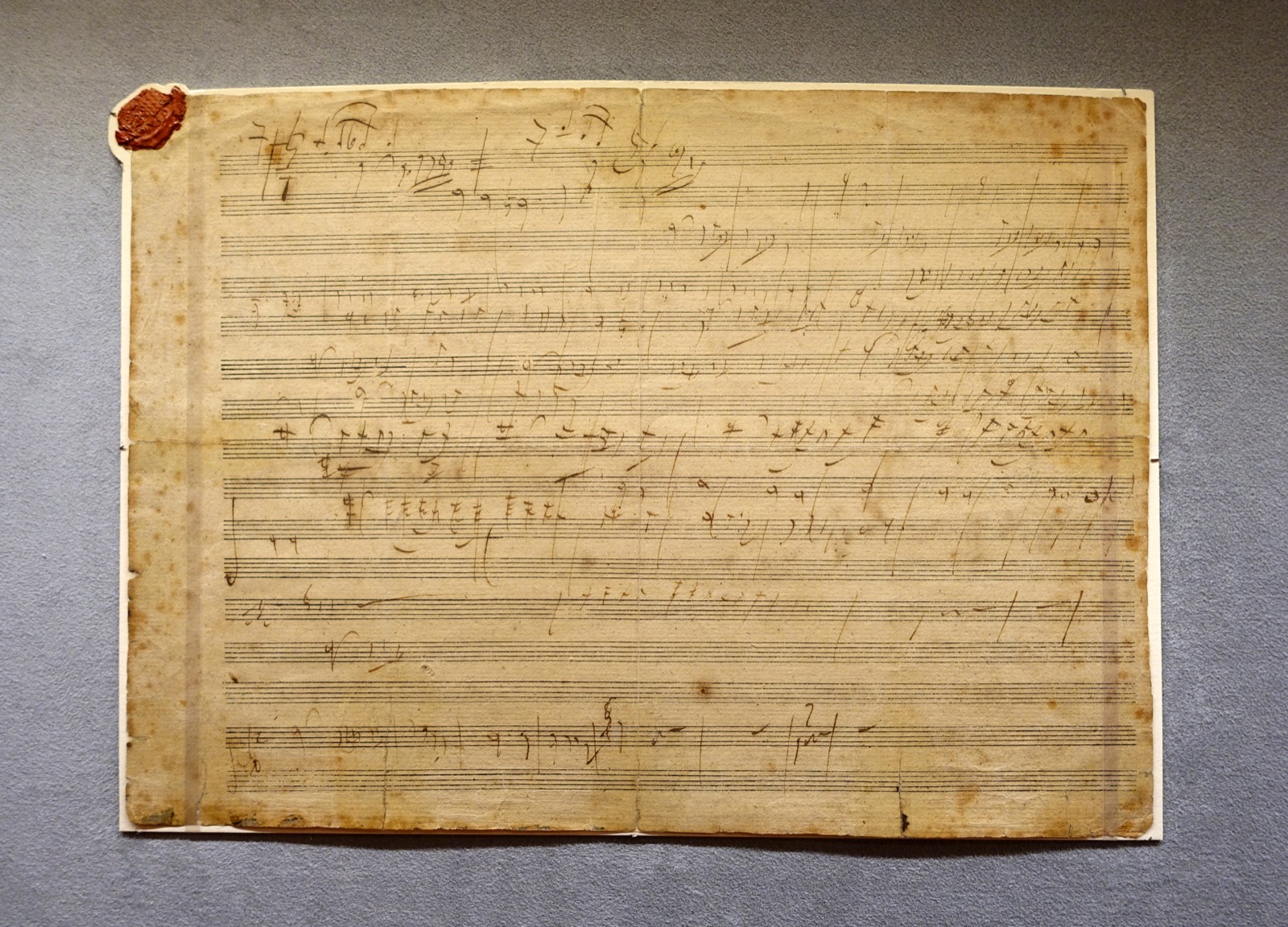
The nickname was not Beethoven’s; the London publisher Johann Baptist Cramer is generally credited with attaching it. For a study session the Adagio un poco mosso does something specific — the piano enters late, decorating a hymn the strings have already laid down, so the melodic interest is diffuse rather than pointed. Nothing grabs. Just stop the track before it slides into the finale, which it does without a break.
▶ Listen on YouTube · Apple Music · Spotify
Four Beethoven Pieces to Keep Off the Playlist
These get recommended constantly by playlists that sort by composer rather than by what the music does. All four are wonderful. All four will cost you twenty minutes of re-reading.
Symphony No. 5, Op. 67. The entire design is escalation. The transition into the finale is one of the most physically arresting moments in music, which is the opposite of what you want at minute ninety of a revision block.
Piano Sonata No. 23 “Appassionata”, Op. 57. The dynamic range runs from barely audible to violent inside a single phrase. Set your volume for the quiet parts and the loud parts will make you flinch; set it for the loud parts and you cannot hear half the piece.
Grosse Fuge, Op. 133. Harmonically demanding enough that it takes real listening effort even from people who love it. It is a piece to sit down with, not to work under.
Symphony No. 9, Op. 125. Four singers and a full chorus arrive in the finale. Words are the one thing certain to interfere with reading and writing, because they compete for the channel you are trying to use.
How to Sequence a Three-Hour Session
Running order matters more than the individual picks. A structure that has held up for me:
Minutes 0–30. Für Elise, Op. 49 No. 2, Op. 79. Short and familiar, roughly half an hour end to end. You are setting up, not concentrating yet, and familiar music lowers the cost of starting.
Minutes 30–150. Op. 33 twice, then the Op. 25 Serenade, then the Pastoral first movement. That is about two hours without a repeat, and every item stays inside a narrow volume band. Add the Spring Sonata first movement if the block runs long.
Minutes 150–180. Moonlight first movement, Romance No. 2, the Emperor slow movement. Tempos drop, attention narrows, and the session winds down instead of stopping dead.
Two practical points. Set your volume during a loud passage, not a quiet one — with Beethoven that is the difference between a playlist you leave running and one you keep reaching for. And if you find yourself listening rather than working, the piece is too good for the job; that is not a failure of taste, it is the signal to change track. For gentler options across the whole repertoire, our list of classical music for anxiety overlaps with this one more than you would guess, and the complete guide to the 32 piano sonatas is where to go if you want to build your own set.