The New Testament of the Piano — and How to Actually Get Through It
Hans von Bülow, the nineteenth-century pianist and conductor, handed classical music its most durable piece of marketing: Bach’s Well-Tempered Clavier is the Old Testament of keyboard music, and Beethoven’s thirty-two piano sonatas are the New Testament. Great line. It is also, I suspect, why plenty of people never listen to them. Scripture is something you respect. Not something you put on.
So let’s be blunt about what this cycle really is. Thirty-two sonatas, roughly ten hours of music, written across a working lifetime. Some are great. Some are minor. Two are teaching pieces he never meant to publish. And maybe six are the strangest, most private music anyone wrote before the twentieth century. Treating all thirty-two as equally sacred is how you end up bored around the third disc, convinced the problem is you.
It isn’t you. The cycle has peaks and it has filler, and knowing which is which is the whole point of a guide like this one. What follows is a map with opinions on it: what changed as Beethoven aged, what to listen for, which five sonatas to hear first, which ones to skip outright, and which complete recording is worth your money.
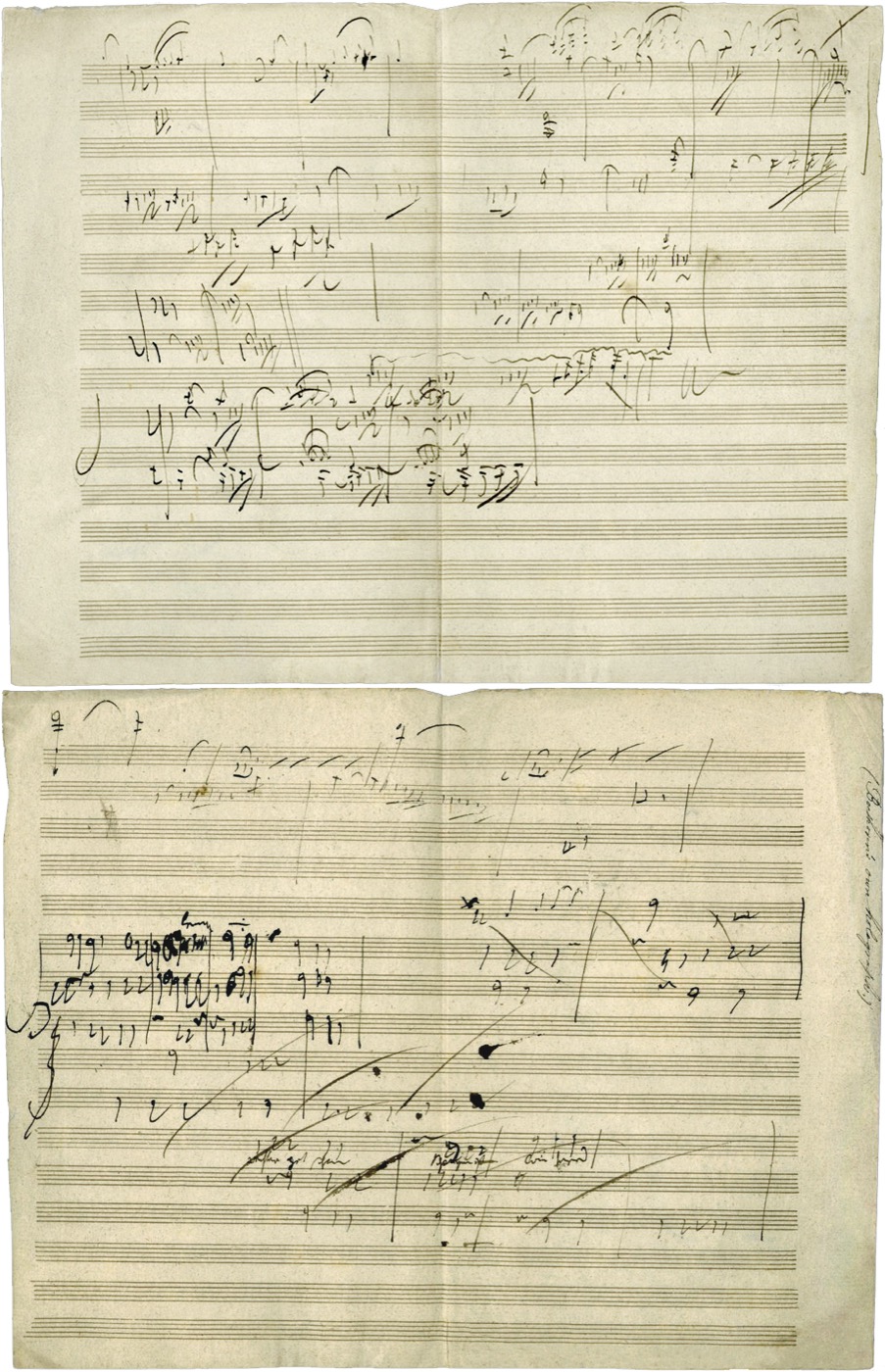
Three composers, one name
Beethoven left Bonn for Vienna in 1792 and set about becoming the most feared keyboard player in the city. The sonatas track what happened next, splitting into three stretches that barely sound like one man.
The early group runs from the Op. 2 set — published in 1796 and dedicated to Joseph Haydn, which is the musical equivalent of mailing your old teacher your best work — through Op. 22. This is Beethoven writing Classical sonatas better than anyone alive and getting visibly restless doing it. The forms are Haydn’s and Mozart’s. The rudeness is his own: sudden accents land where they shouldn’t, minor keys bite harder than the drawing room allows, and the finales run hotter than the genre asked for.
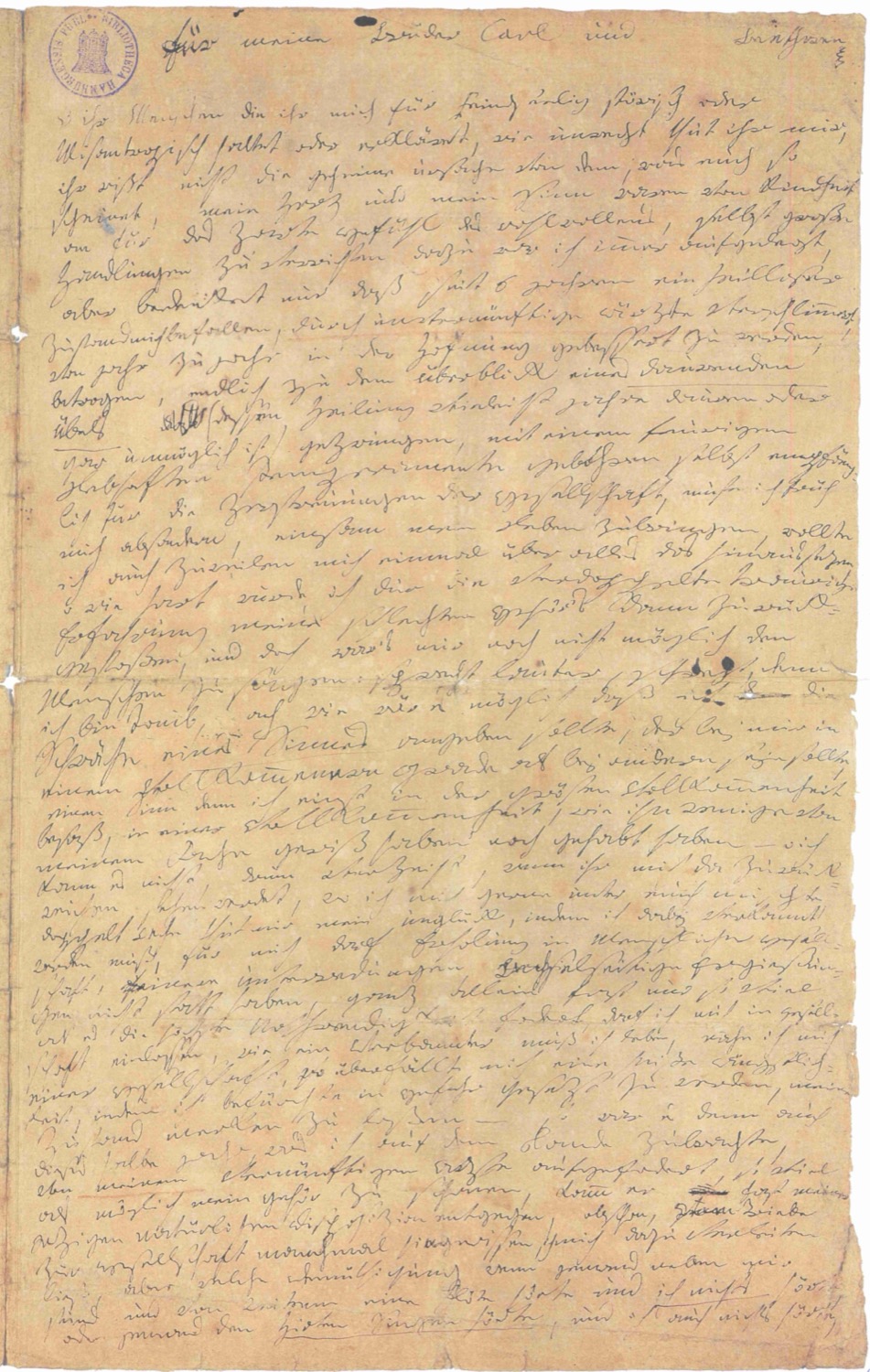
The middle group is where he breaks the furniture. His hearing was going, and the Heiligenstadt Testament of 1802 — the unsent letter to his brothers admitting how bad the deafness had become — sits at the hinge. What follows is not tidy. Op. 26 opens with variations instead of a first movement. Both Op. 27 sonatas carry Beethoven’s own heading quasi una fantasia, almost a fantasy — permission to ignore the rules. The Waldstein of 1804 and the Appassionata, published in 1807, are the sound of a man writing for a piano that does not exist yet.
The late group — Op. 101 through the final five — is a different proposition. Fugues come back, baffling contemporaries who thought fugues were Bach’s dusty business and Beethoven the future. Movements stop resolving. The music gets quieter and harder at once. If the late sonatas feel forbidding on a first pass, you are not doing it wrong; they were forbidding on arrival too.
What to actually listen for
Four things. Once you hear them, you hear them everywhere.
The silence. His most characteristic gesture is not a loud chord, it is the hole he leaves after it. He builds a phrase, cuts it off mid-thought, and lets the room ring. Count how often a movement stops dead just before its biggest moment.
The small cell. He rarely writes a long tune and decorates it. He takes a scrap — three notes, a rhythm, one interval — and refuses to let go, turning it upside down, stacking it, hammering it flat. The Appassionata opening is barely a theme. It is a shape, and the first movement is that shape under pressure.
The bass. Put headphones on and follow the left hand, not the right. His harmonic surprises almost always start underneath, in a bass note that moves somewhere it has no business going. The drama on top is the consequence, not the cause.
The trill. In the late sonatas trills stop being decoration and become the subject. By the end of Op. 111 the music has dissolved into a shimmer sitting somewhere between a note and a texture. That is not a pianist showing off. That is Beethoven writing a sound the instrument could not yet make.
Five sonatas to start with
Skip the chronological slog on a first pass. These five, in order, tell you whether the rest are for you.
No. 8 in C minor, Op. 13 — Pathétique. The obvious entry point, and obvious is correct. Published in 1799, it opens with a slow introduction of pure theatrical menace, then a first movement that never calms down, then the singing slow movement since used to sell everything from cars to insurance. One correction, since the internet keeps repeating it: the grand title came from the publisher, who was struck by the music’s tragic character, and Beethoven approved it rather than invented it. Our full guide to the Pathétique goes deeper.
No. 14 in C-sharp minor, Op. 27 No. 2 — Moonlight. Composed in 1801 and published in 1802, and the most misunderstood famous piece in music. Everyone knows the hushed first movement. Almost nobody reaches the finale, three minutes of controlled violence and the point of the sonata. The nickname is not Beethoven’s: the critic Ludwig Rellstab is credited with comparing the first movement to moonlight on Lake Lucerne, a description usually dated to 1832 and attached long after the music was written. Hear it as a three-movement argument and it stops being wallpaper. More on the Moonlight here.
No. 21 in C major, Op. 53 — Waldstein. Completed in 1804 and dedicated to Count Ferdinand von Waldstein, an early patron. The most physically exciting sonata in the set. The first movement runs on repeated chords that behave like an engine turning over, and the finale opens into a long, radiant tune that climbs until the closing trills blur the keyboard into light. If the late sonatas are why critics love this cycle, the Waldstein is why audiences do.
No. 23 in F minor, Op. 57 — Appassionata. Published in 1807, and the most uncompromising thing in the middle period. It stalks rather than sings, the slow movement lulls you deliberately, and the finale is a headlong collapse offering no comfort. The nickname was stuck on by the publisher Cranz in 1838, well after Beethoven’s death — he would probably have hated it, and it is nonetheless perfect. Our Appassionata guide has the detail.
No. 32 in C minor, Op. 111. Finished in 1822, the last one, and the strongest argument that this cycle is more than a pile of good pieces. Two movements. The first is compressed fury. The second is an Arietta with variations that take the music apart — the rhythm fragments, the pulse gets faster and stranger until it briefly sounds like a jazz pianist, then everything evaporates into trills. He never wrote another sonata. At the end of Op. 111 it is hard to see what he could have written next.
And what to skip
A guide that recommends all thirty-two is a catalogue. So here is the part nobody writes down: one pair to skip outright, two to postpone, and one that everybody else skips and you shouldn’t.
Op. 49 Nos. 1 and 2 (Nos. 19 and 20) — skip these as a listener. Beethoven composed the two Op. 49 sonatas in early to mid 1797 and then sat on them. They exist as published works only because his brother Kaspar judged them worth printing and took them to a publisher over Ludwig’s objections; they came out in 1805, a decade late. That is why two of the slightest things Beethoven wrote carry an opus number from his middle period. They are charming, and every piano student meets them for good reason — but they are teaching material that entered the canon on a technicality. Play them. Hearing them tells you nothing about why this cycle matters.
Op. 79 (No. 25) — skip it for now. Beethoven composed it in 1809, and the first editions followed in 1810 — Clementi’s in London, Breitkopf & Härtel’s in Leipzig. It runs about nine minutes and goes by Sonatine, sometimes Cuckoo. Beethoven in a good mood with nothing at stake — pleasant, brief, inessential to the cycle’s argument. Come back once you love the man. Do not use it to meet him.
Op. 106, the Hammerklavier — skip it first, not forever. This will get me letters: Op. 106 is the summit and I am not pretending otherwise. But I think the most common way people bounce off this cycle for good is being told the longest, thorniest sonata in it is the greatest, dutifully putting it on, and deciding Beethoven is not for them. Music that assumes you know what a Beethoven sonata does makes a terrible first date. Earn it. Then it is unanswerable.
And one that everyone else skips, wrongly: Op. 54. Written in 1804 and wedged between the Waldstein and the Appassionata, it has two movements, no nickname, and no constituency — it has spent two centuries in the shadow of its famous neighbours. A mistake. A stiff minuet that keeps getting interrupted, then a finale that runs like a motor and will not stop: as strange as anything around it. Pull it out when someone tells you they have heard all the Beethoven sonatas.
The piano changed underneath him
Most guides skip this, and it explains more than any biography. Beethoven did not write these sonatas for the instrument in your local concert hall. He wrote them for a series of machines that kept getting bigger while he worked.
The early sonatas were written for light Viennese fortepianos of about five octaves — quick, clear, thin in the bass, dying away fast. By the middle period he had a wider instrument and was already writing past its edges; there are passages in the Waldstein reaching for notes the keyboard did not have. The late sonatas were written for the heavier six-octave English and French instruments then arriving in Vienna — which is why the sustained singing lines and vast trills of the last five are suddenly possible.
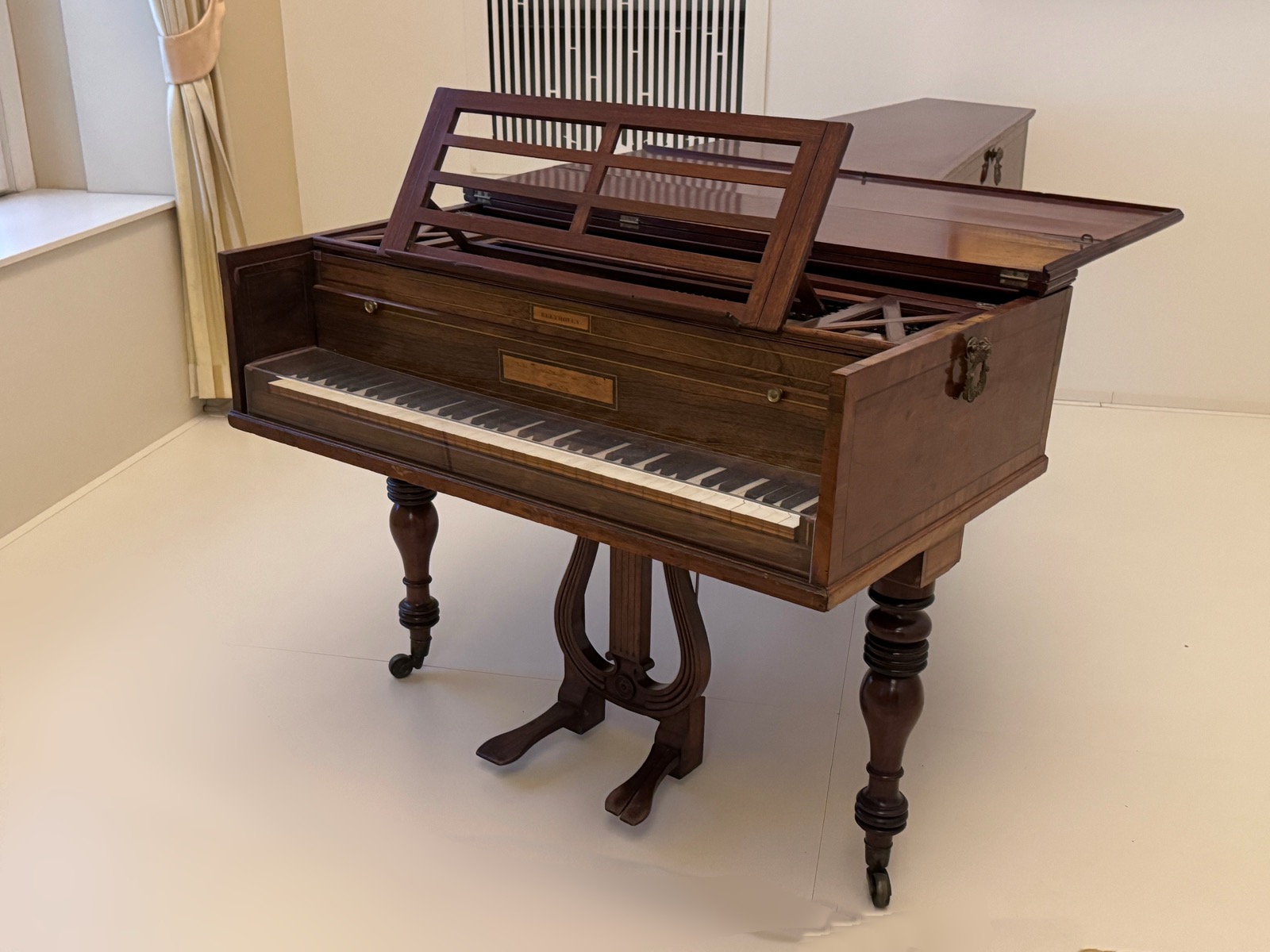
The practical payoff: hear one of these on a period instrument at least once. The modern Steinway irons out exactly the contrasts Beethoven was exploiting. On a fortepiano the bass growls instead of booming, the treble turns glassy, the balance between the hands snaps into focus. You need not prefer it — you just have to hear it once.
Which complete cycle should you actually buy?
Nearly every major pianist attempts all thirty-two. Most results are respectable and forgettable. These are the ones I would defend. Metadata below is verified; the verdicts are mine.
Wilhelm Kempff — Deutsche Grammophon, recorded 1964 and 1965 in stereo. Start here, and if you only ever own one cycle, own this one. Kempff plays Beethoven as though thinking out loud rather than delivering a verdict: light pedalling, brisk tempos, a tone staying transparent even when the music turns violent. The trade-off is real — he never gives you the physical terror the Appassionata can deliver, and anyone wanting granite will find him too civilised. He is still the most consistently musical guide through the thirty-two.
Artur Schnabel — HMV, recorded between 1932 and 1935. The first complete recorded cycle of the thirty-two sonatas, and still the most argumentative. His fingers fail him regularly, the sound is a wiry pre-war document, and there are smudges no modern producer would allow. None of it matters: nobody else makes this music feel so dangerous. Buy it second — a great record about Beethoven rather than an easy way into him.
Annie Fischer — Hungaroton, recorded between 1977 and 1992. She worked at this set for years and refused to release it while she lived; it appeared only after her death. The perfectionism shows oddly: the playing is fierce rather than polished, and the cycle is uneven. But her late sonatas and her Appassionata reach an intensity nobody else nears. For someone who knows the pieces and wants to be unsettled by them.
Alfred Brendel — Philips, recorded between 1992 and 1996. His third traversal, and the one where the thinking is fully cooked. Brendel’s Beethoven is architectural — you hear the joins, the proportions, the shape of the argument — and in the late sonatas that clarity is worth a lot. To understand how Op. 106 is built, he is the best teacher on record. To be knocked over, look elsewhere.
Paul Lewis — Harmonia Mundi, recorded and issued across 2005 to 2008. The best modern-sound entry point, and a Brendel student who sounds nothing like a copy. Warm tone, unforced tempos, exceptional clarity in the middle period. Less dramatic than the competition on purpose: it coheres as one narrative rather than thirty-two showpieces.
Igor Levit — Sony Classical, released in 2019. The contemporary pick. Levit pairs a formidable technique with a restless mind, and his Op. 111 has a controlled ferocity that stands with anything here. Know what you are buying: the late sonatas were carried over from his earlier Sony disc, the remaining twenty-seven taped later, so the cycle was assembled over several years rather than one sustained sitting.
The one to skip. Emil Gilels on Deutsche Grammophon — not because the playing is weak, but because it is not finished. Gilels died in 1985 with five of the thirty-two unrecorded, Op. 111 among them. His individual sonatas are magnificent. As a cycle it has a hole in precisely the place that matters most.
If you want one sentence: buy Kempff, then buy Schnabel the moment Kempff starts to feel too polite.