- Composer
- Ludwig van Beethoven
- Work
- Piano Sonata No. 14 in C-sharp minor, Sonata quasi una fantasia, Op. 27 No. 2
- Key
- C-sharp minor
- Composed
- 1801
- Published
- 1802, Vienna (Giovanni Cappi)
- Movements
- Three (Adagio sostenuto / Allegretto / Presto agitato)
- Instrumentation
- Piano solo
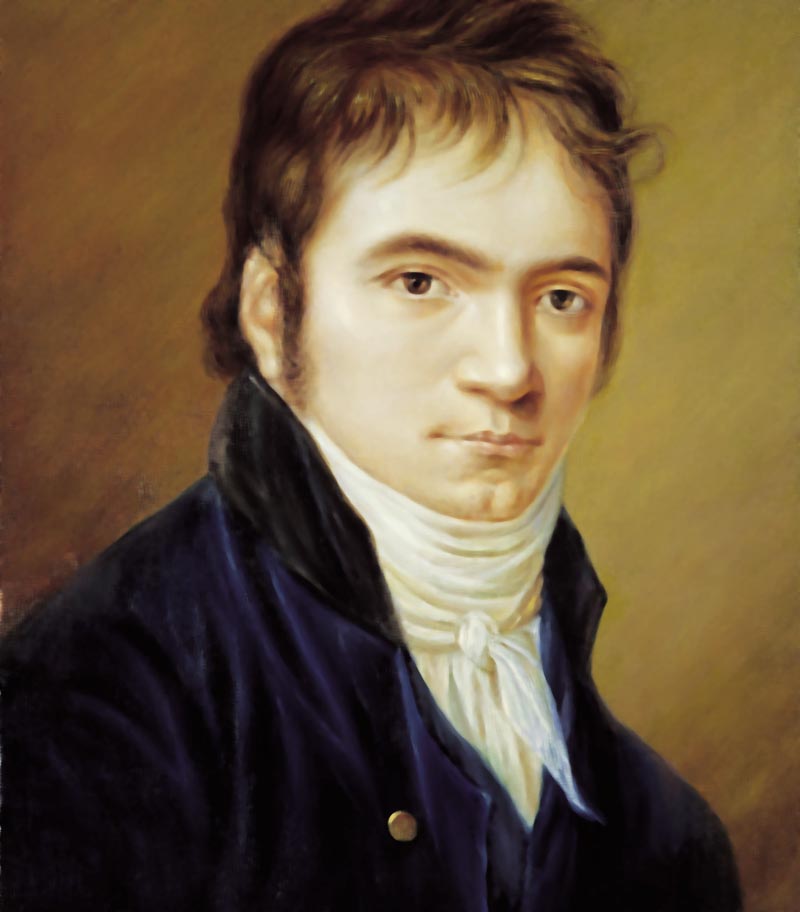
Beethoven never called this piece the Moonlight. That much you have probably heard. What almost nobody tells you is that the usual replacement story — a critic in 1832, a boat, Lake Lucerne — is wrong too, and wrong in a specific, traceable way. The nickname is the end of a chain of misremembering, and following that chain back is more interesting than the myth it replaced.
It also changes how you hear the thing. Take away the moonlight and the shape is genuinely odd: a slow movement that refuses to behave like a first movement, a dance over almost before it starts, and a finale that sounds like the argument the opening was too controlled to have. Below: what Beethoven actually wrote on the page, what to listen for in each movement, the one decision that separates every recording from every other, and four performances worth your time.
What Beethoven put on the title page
He finished the sonata in 1801, and Giovanni Cappi published it in Vienna in 1802 with a dedication to Countess Giulietta Guicciardi, a pupil of his. The printed title was Sonata quasi una fantasia — roughly, a sonata in the manner of a fantasy. Op. 27 is a pair, and both sonatas carry that heading.
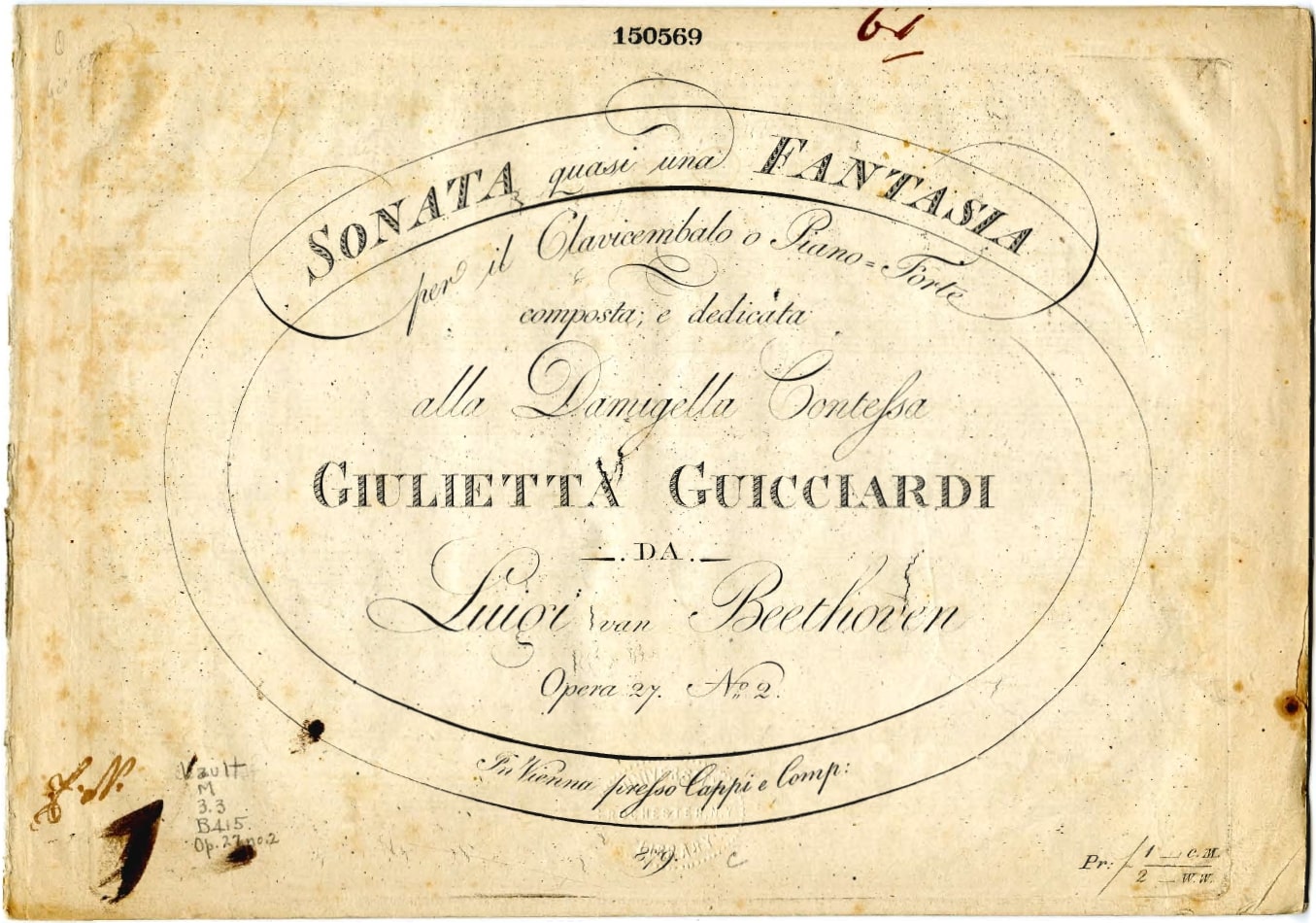
That phrase is the real clue, and it is doing more work than the nickname ever did. A fantasy, in 1801, meant music that behaved like improvisation: it could start anywhere, wander between sections, and refuse the standard fast–slow–fast layout. By labelling a sonata that way, Beethoven was giving himself permission to open slowly and to move the centre of gravity to the last movement instead of the first. Everything strange about the piece follows from that one decision on the cover.
Compare it with the Pathétique, written a couple of years earlier, where the slow introduction is dramatic but still an introduction — the fast movement arrives and takes charge. Here there is no introduction. The slow music is the movement, and it gets no resolution until the finale tears through it.
The nickname is a game of telephone
Here is the version you will find almost everywhere: in 1832, five years after Beethoven’s death, the Berlin critic Ludwig Rellstab compared the first movement to a boat on Lake Lucerne by moonlight, and the name stuck. Neat, quotable, and not quite true.
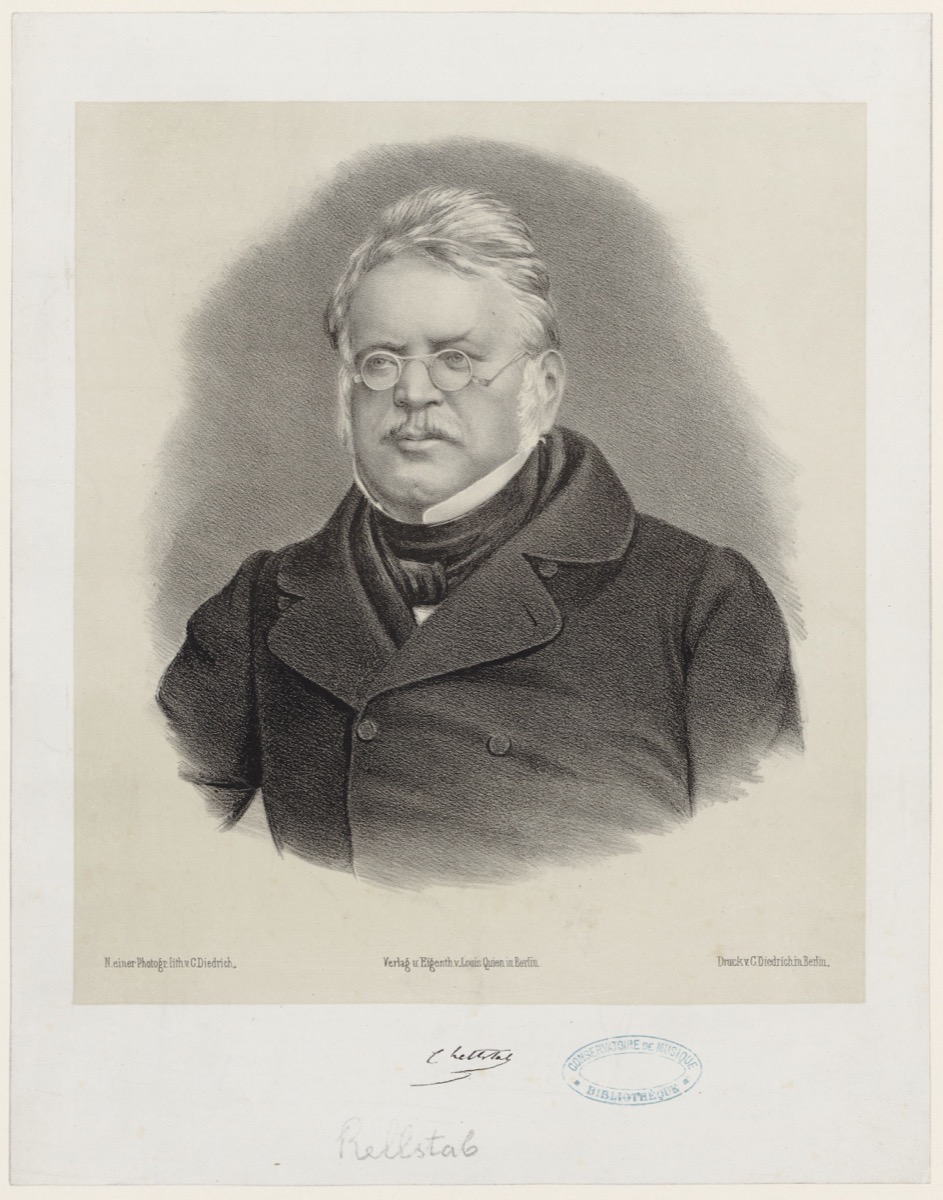
What Rellstab actually did was publish a piece of fiction. In 1824 — while Beethoven was still alive — he ran a short musical sketch called Theodor in the Berliner allgemeine musikalische Zeitung, in which a musician imagines the Adagio as a night scene over water. It is atmosphere in a story, not a verdict in a review, and Lake Lucerne is not in it.
The lake seems to enter later. Wilhelm von Lenz, in his 1852 study Beethoven et ses trois styles, credited Rellstab with the Lake Lucerne comparison and placed it roughly twenty years earlier — which is where the confident date of 1832 in modern write-ups almost certainly comes from. Meanwhile the German nickname was already in print: the earliest known printed use of Mondscheinsonate appears in Ernst Ortlepp’s 1836 book on Beethoven, before the date usually given as the nickname’s origin.
So: a novelist-critic wrote a moonlit fantasy about the piece in 1824, a biographer three decades later attached a lake to it and misdated it, and the label had already escaped into general use in the meantime. Nobody named this sonata. It got named by drift — which is exactly why the nickname fits so badly. It never described the music. It described one reader’s daydream.
Where Beethoven was when he wrote it
The biographical context is real and worth one paragraph, with a warning attached. In 1802, the year after the sonata was finished, Beethoven wrote the Heiligenstadt Testament, the unsent letter to his brothers in which he described his deafness and his despair at it. The hearing loss was already advancing while Op. 27 was on his desk.
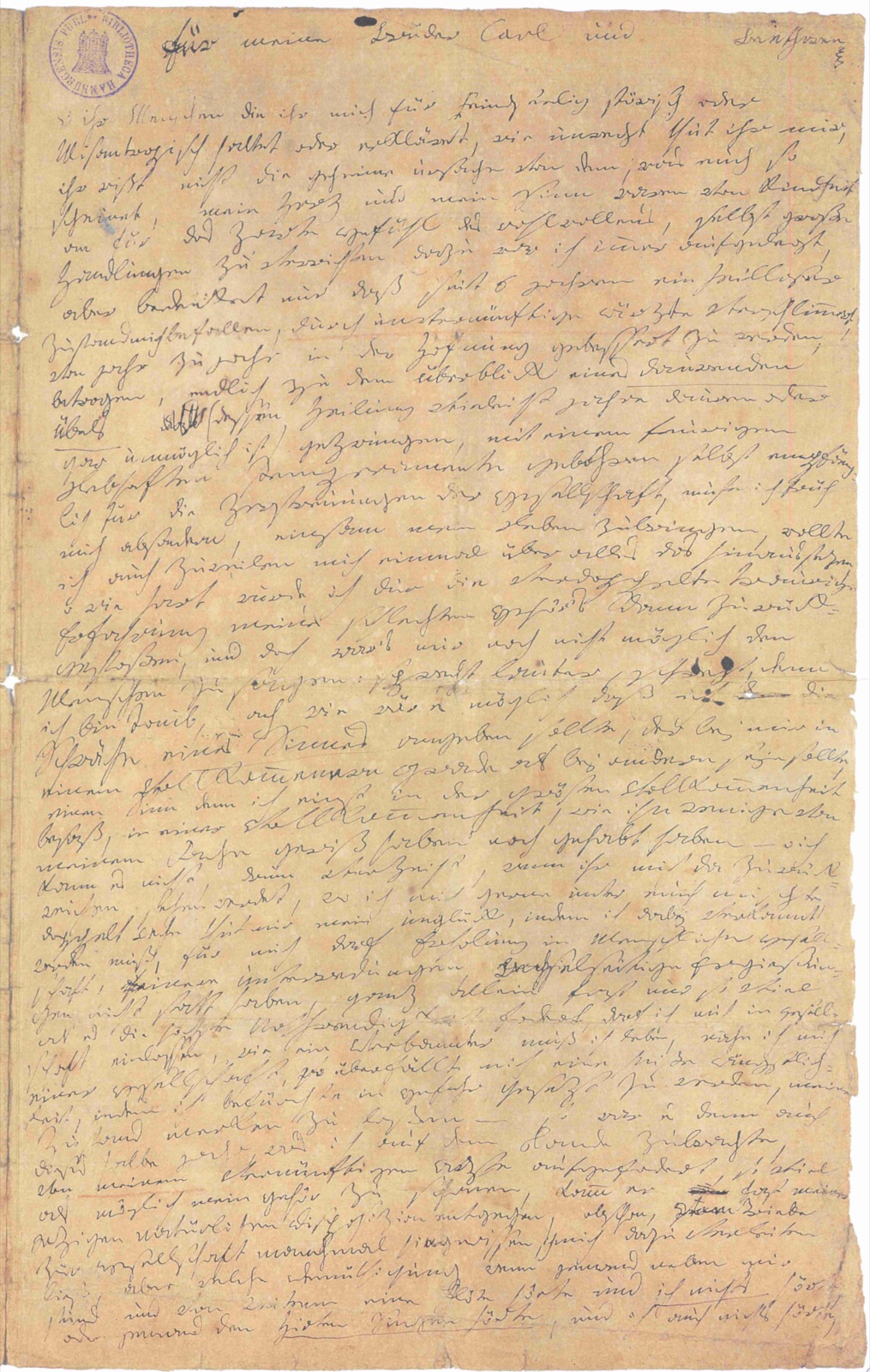
The warning: that does not make the Adagio a portrait of going deaf, and it does not make the finale a portrait of rage at a countess who married someone else. Those readings are everywhere, and they are inventions. What we can say is narrower — the piece comes from a stretch when Beethoven was pushing against inherited forms, and Op. 27 is where the pushing shows in the architecture rather than the rhetoric. Background, not a decoder ring.
What to listen for, movement by movement
I. Adagio sostenuto
The whole movement runs on one rhythmic cell: a triplet figure that starts in the first bar and essentially never stops. It is not an accompaniment in the ordinary sense — it is a surface, and the tune has to come up through it. Listen for how late the melody actually arrives, and how thin it is when it does: a few repeated notes on the same pitch, with a dotted rhythm that keeps knocking at the same door.
Two more things reward attention. First, the bass. It moves in long, slow steps underneath, and the emotional weather of the movement is really the bass changing, not the melody doing anything. Second, the instruction Beethoven wrote at the head of the score: Si deve suonare tutto questo pezzo delicatissimamente e senza sordino — play the whole piece with the utmost delicacy and without dampers. That is a direction to hold the sustain pedal down, and it causes the fight described in the next section.
Carl Czerny, who studied with Beethoven, described the movement as “a nocturnal scene, in which a mournful ghostly voice sounds from the distance.” Coming from someone in the room, that is worth more than any nickname. Note what he did not say: pretty.
II. Allegretto
Barely two minutes, and easy to treat as a palate cleanser. Don’t. Two details make it strange. It is in D-flat major, which on the keyboard uses the same physical keys as the C-sharp minor around it — the same notes, renamed, pretending to be cheerful. And the trio section is full of sforzandos placed on weak beats, so the dance keeps getting shoved off balance by something you cannot see.
Liszt is supposed to have called it a flower between two chasms, and the line has survived because it is accurate about function: this movement exists to make the finale land. Played too sweetly, it is filler. Played with the accents taken seriously, it is nervous — a smile held slightly too long.
III. Presto agitato
This is the real first movement, arriving last. It is in full sonata form, it is the longest and hardest of the three, and it inverts the Classical habit of front-loading the drama.
The main idea is a rocket: an arpeggio that rips up through two octaves and lands on two hammered chords. Beethoven repeats that shape immediately, higher, and again, so the opening thirty seconds are four strikes of the same gesture at rising pitch. Listen for the sforzandos that keep landing off the beat, and for the second theme, which is not lyrical relief — it is a hammered, repeated-note figure in the left hand that gives the right hand nothing to lean on.
The passage to wait for comes near the end. The music runs into a long trill, then stops — a bare pause, then two slow, quiet, spread chords, like someone catching their breath — before the coda drives to the finish. That hesitation is the only moment of doubt in several minutes of forward pressure, and the pianists who make it count are the ones who are actually shaping the movement rather than surviving it. It ends with no consolation offered.
Valentina Lisitsa plays all three movements, filmed close on the hands — the clearest way to see how much of the finale is one arpeggio shape repeated.
🎧 Also on: Apple Music · Spotify
The pedal problem, which is the whole interpretive argument
Senza sordino is the fork in the road. On a Viennese piano around 1801, the notes died away fast; holding the dampers off blurred the harmonies into a haze without destroying them. On a modern concert grand, the sustain is far longer and far richer, so the same instruction produces mud — a C-sharp minor chord smeared into the one that follows it.
Every pianist therefore picks one of three answers, and you can hear which one within twenty seconds:
- Take Beethoven literally. Hold the pedal, accept the wash, treat the blur as the point. Atmospheric, and in a dry room it can sound like a mistake.
- Half-pedal or flutter. Lift the damper only partway, or re-clear it many times a bar, so the resonance survives but the harmony stays legible. This is what most modern recordings do, and it is a compromise nobody quite admits to.
- Change the instrument. Play a period piano or a good copy, and the instruction stops being a problem — the haze happens on its own.
One thing production work teaches you: the room decides half of this before the pianist does. A hall with a long tail does the blurring for you, which is why the same performer’s pedalling can sound reverent in one venue and careless in another. When you A/B two versions, listen to the silence between phrases first — that tells you what the room is doing, and only then can you judge the pedal.
Four recordings worth your time
Wilhelm Kempff — Deutsche Grammophon, recorded 1964–65 (start here)
Kempff’s stereo traversal of the 32 sonatas was recorded in 1964–65, and his Op. 27 No. 2 is the version I would hand to someone hearing the piece properly for the first time. He does not linger in the Adagio; the tempo keeps moving, so the triplets stay a pulse rather than a fog, and the melody sounds spoken instead of sung. The trade-off is real: if you want the first movement to sound like grief, this is too composed for you, and the finale is more articulate than ferocious. What you get in exchange is the only reading here where all three movements sound like the same argument.
▶ Listen on YouTube · Apple Music · Spotify
Emil Gilels — Deutsche Grammophon, recorded 1980 (for the sound itself)
Gilels recorded his Op. 27 No. 2 for Deutsche Grammophon in Berlin in September 1980, and the record came out in 1981. His is the opposite instinct: weight, breadth, and a bass that you feel rather than hear. The Adagio is slower than Kempff’s and it earns the extra time, because the left hand is voiced so carefully that the slow harmonic steps become the event. His finale is heavy rather than fast, and if you like your Presto agitato hair-raising, that will read as stately. It is the one to play loud on good speakers.
▶ Listen on YouTube · Apple Music · Spotify
Ronald Brautigam — BIS, released in December 2006 (the pedal question, answered)
Brautigam’s fortepiano account of Op. 27 sits on Volume 4 of his Beethoven cycle for BIS, released in December 2006. Play this straight after Kempff and the argument in the previous section stops being theoretical: the sustained pedal produces exactly the soft-edged blend Beethoven asked for, without smearing, because the instrument’s notes decay quickly enough to clear themselves. The finale is the revelation — lighter, drier, faster off the mark, with the hammered chords sounding percussive rather than orchestral. Some listeners find the tone thin next to a Steinway. That thinness is the price of hearing the piece work as designed, and I think it is a bargain.
▶ Listen on YouTube · Apple Music · Spotify
Igor Levit — Sony Classical, 2019 (the modern reading)
Levit’s complete Beethoven piano sonatas were released by Sony Classical in 2019. His Adagio is quiet to the edge of audibility, with the dynamic floor set so low that the movement’s few small swells feel like events. It is a deliberately uncomfortable performance — he refuses to make the first movement pretty, which is the correct reading of Czerny’s ghost and the wrong one if you came for a lullaby. The finale is precise and cold rather than wild. Best on headphones; the quietest passages disappear in a noisy room.
Igor Levit’s official video of the first movement — a useful test case for how low a pianist can set the dynamic floor and still hold the line.
🎧 Also on: Apple Music · Spotify
If you only have time for two: Kempff for the shape of the whole piece, Brautigam for the sound Beethoven was writing toward. If you already know it well and want to be argued with, go to Levit.
Where to go next
The obvious next step is the Appassionata, which takes the finale-heavy design of Op. 27 No. 2 and applies it to a piece that is violent from the first bar. For the wider map — which of the 32 sonatas are worth your time and in what order — our complete guide to Beethoven’s piano sonatas lays out the route. And if you want to hear the same composer being witty rather than haunted in the same period, the First Piano Concerto is the antidote.