A baby has no idea that Beethoven wrote the Ninth. What a baby responds to is a steady pulse, a narrow dynamic range, and a melody that walks instead of lunging. Beethoven wrote a surprising amount of music that fits that description — and an enormous amount that violently does not, which is why most “Beethoven for babies” compilations are a minefield. Half of them open with a track that sits at a whisper for twelve bars and then detonates.
This list is built the other way round: quiet music that stays quiet, sorted by the moment of day you need it. Eleven pieces, one recording for each, and three famous ones I’d keep off entirely.
The five-minute answer
If you scroll no further, take these six. They cover a whole day.
| Moment | Piece | Why it works | Listen |
|---|---|---|---|
| Awake, daytime | Romance No. 2 in F, Op. 50 | One long singing line; the orchestra never rises above a murmur | ▶ Listen |
| Feeding, floor time | Für Elise, WoO 59 | Rocking left hand at roughly the tempo of a slow walk | ▶ Listen |
| Play, alert | Symphony No. 8, second movement | Four minutes of ticking; light, funny, never loud | ▶ Listen |
| Wind-down | Pathétique Sonata, Adagio cantabile | Warm middle-register tune, almost no accents | ▶ Listen |
| Wind-down | Spring Sonata, Adagio molto espressivo | Violin and piano trading a lullaby, six minutes flat | ▶ Listen |
| Lights off | Moonlight Sonata, first movement | Unbroken triplet pattern, no climax, no surprises | ▶ Listen |
The part most lists leave out: this will not make your baby smarter
The whole “classical music for babies” industry rests on one 1993 study published in Nature, in which 36 college students listened to ten minutes of a Mozart sonata and then did slightly better on a spatial-reasoning task than students who sat in silence. College students. Ten minutes. A short-lived bump on one narrow test. That is the entire foundation.
By the end of the decade, attempts to reproduce the effect had mostly failed, and a 2010 meta-analysis in the journal Intelligence pooling dozens of studies found little support for anything Mozart-specific. Frances Rauscher, the psychologist who ran the original experiment, has since put it about as bluntly as a researcher can: “I would simply say that there is no compelling evidence that children who listen to classical music are going to have any improvement in cognitive abilities. It’s really a myth, in my humble opinion.”
So why bother with any of this? Because the honest reason is better than the fake one. Music changes the state of a room. A predictable, slow, quiet piece gives a baby a stable background to settle against instead of the acoustic chaos of a flat — a fridge, a doorbell, someone’s phone. It also, and this is not a small thing, changes the state of the adult holding the baby. Nobody’s IQ moves. The 6 p.m. temperature of your living room does.
Which is why the selection criteria here are boring and physical: narrow dynamic range, no sudden entries, tempo somewhere near a resting adult pulse, and a length that fits the moment. Beethoven has to be filtered hard for this, because his signature move — the shock — is exactly what you don’t want.
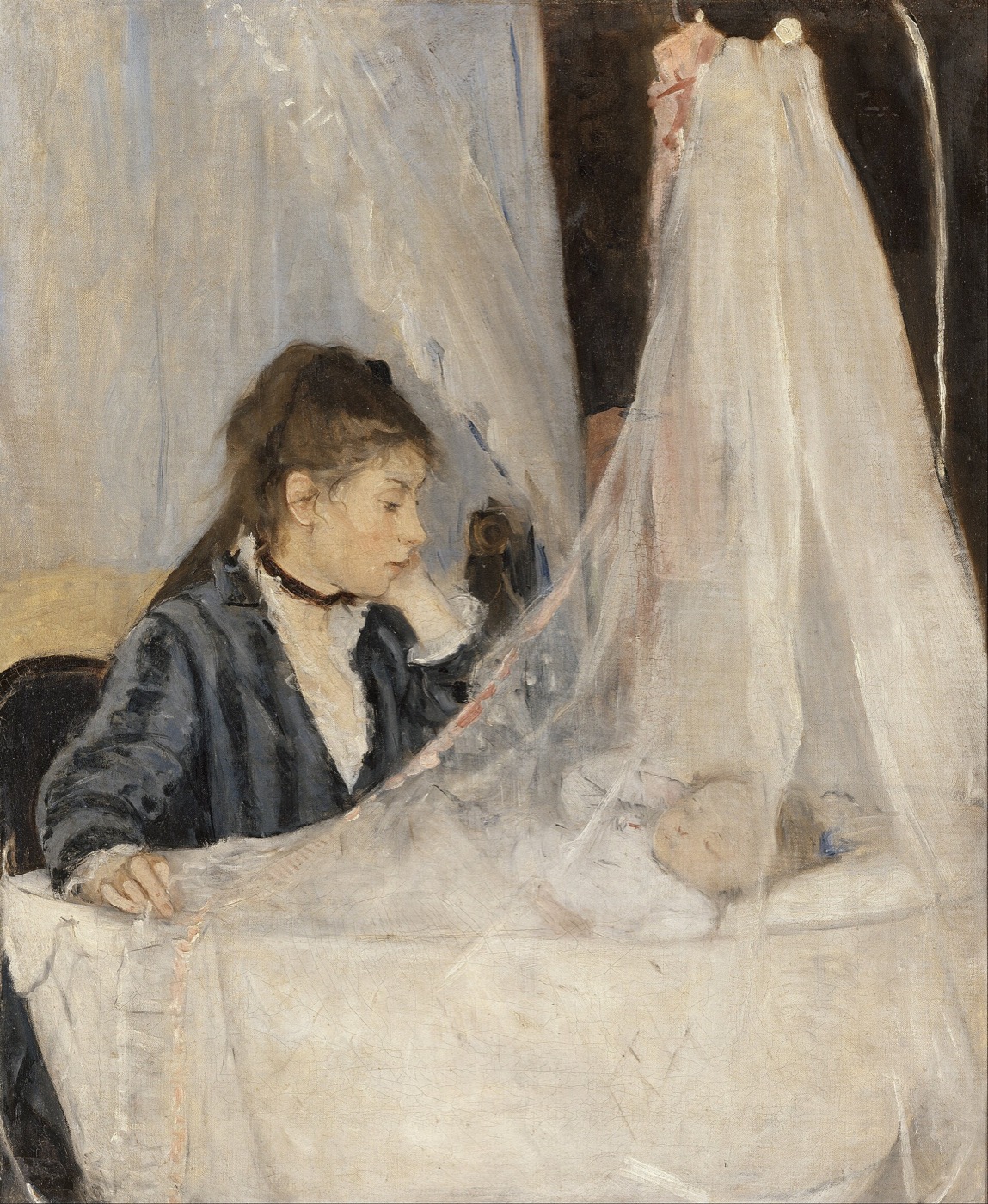
Daytime: awake, curious, not overstimulated
Romance No. 2 in F major, Op. 50
If you play one Beethoven piece to a baby, play this. It is nine minutes of violin singing a single unhurried melody over an orchestra that behaves like an accompanist and never once tries to take over. There is no development section drama, no fight — the tune simply comes back, decorated a little more each time. It works at breakfast, in the car seat, and during a nappy change that has gone badly.
The recording below is Renaud Capuçon with the Gewandhausorchester Leipzig under Kurt Masur. Capuçon plays it straight, without the syrupy portamento some violinists apply, and the orchestra stays genuinely soft rather than “orchestra soft.”
🎧 Also on: Apple Music · Spotify
Für Elise, WoO 59
Yes, the piano-lesson cliché. It earns its place: the famous opening is a rocking figure in the left hand at roughly the pace of a slow walk, and babies track that kind of regular swing well. Two warnings. The middle section gets busier, with a stormy passage before the tune returns, so this belongs to daytime rather than bedtime. And avoid the ubiquitous “10-hour loop” uploads; a repeated three-minute track becomes an irritant for the adult.
Worth knowing: Beethoven never published it. The piece was written in 1810 and only appeared in print in 1867, when the scholar Ludwig Nohl included it in a book of Beethoven letters — and the manuscript Nohl said he worked from has since vanished. (Lang Lang, for Steinway & Sons).
▶ Listen on YouTube · Apple Music · Spotify
Symphony No. 8, second movement — Allegretto scherzando
The unexpected pick of the daytime group, and my favourite thing on this list for a baby who is awake and looking around. It is barely four minutes long, built on a staccato tick-tock in the winds that runs almost the whole movement, with the strings dancing over it. It is light, slightly absurd, and never gets loud enough to startle. Adults who think Beethoven means thunder are usually surprised by it.
The story that the ticking is a joke about Johann Nepomuk Mälzel and his metronome comes from Anton Schindler, Beethoven’s assistant and biographer, whose accounts are widely distrusted — enjoy it as a legend, not a fact. More on the symphony in our guide to Beethoven’s Symphony No. 8. (Paavo Järvi, Deutsche Kammerphilharmonie Bremen).
▶ Listen on YouTube · Apple Music · Spotify
Symphony No. 6 “Pastoral”, second movement — Scene by the Brook
Twelve minutes of running water, essentially. Murmuring lower strings hold a rocking figure underneath while woodwinds drift in and out above. It has the longest attention span of anything here, which makes it good for a stretch of floor time when you want something continuous rather than a series of short tracks.
One caveat: stop before the third movement. The Pastoral goes from the brook into a peasant dance and then a full thunderstorm with timpani and piccolo, so queue this movement alone. The symphony had its first performance on 22 December 1808 at the Theater an der Wien, in the same marathon concert that introduced the Fifth. (Herbert von Karajan).
▶ Listen on YouTube · Apple Music · Spotify
The wind-down: the last half hour
Piano Sonata No. 8 “Pathétique”, Op. 13 — Adagio cantabile
The best-known slow movement Beethoven wrote, and the reason is simple: the melody sits in the warm middle of the piano, the accompaniment is an even pattern that never draws attention, and there are almost no accents to flinch at. Five minutes, self-contained, and it ends softly.
Wilhelm Kempff’s version is the one I’d start with. He plays it quite plainly, at a moving tempo, without the funeral-slow stretching that turns this movement into treacle. If you want something even more still, Maurizio Pollini’s is cooler and more distant.
🎧 Also on: Apple Music · Spotify
Violin Sonata No. 5 “Spring”, Op. 24 — Adagio molto espressivo
Six minutes in which violin and piano hand a lullaby back and forth. The reason it belongs here rather than in the daytime group is the texture: two instruments only, so there is no mass of sound building behind anything, and the dynamic ceiling is low throughout. It is also, unusually for Beethoven, a movement with no argument in it at all.
Itzhak Perlman’s reading is unhurried and very warm-toned, which is what this movement wants. We’ve written about the whole work in our guide to the “Spring” Sonata..
▶ Listen on YouTube · Apple Music · Spotify
Piano Trio in B-flat, Op. 97 “Archduke” — Andante cantabile
A theme and variations that runs about twelve minutes and gets quieter as it goes, which is exactly the shape you want at the end of an evening. Piano, violin and cello take turns with the same hymn-like tune, and each variation adds decoration without adding volume. Play it while you’re doing the last tidy-up of the day.
There’s a good story attached, too: at the trio’s first performance in Vienna in April 1814, Beethoven himself played the piano part, and his deafness had advanced far enough that it was effectively the end of his career as a public pianist. The Beaux Arts Trio’s account is the one I keep returning to — the cello line in the second variation is beautifully weighted..
▶ Listen on YouTube · Apple Music · Spotify
Piano Concerto No. 5 “Emperor”, Op. 73 — Adagio un poco mosso
Muted strings state a hymn; the piano answers with a filigree line that floats above it, mostly in the upper register. It is the most spacious thing on this list. The catch: the slow movement runs straight into the finale without a break, and that finale is a loud rondo. Cue the track on its own.
Krystian Zimerman’s is my pick — very slow, very quiet, and he resists the temptation to make the piano entry a Moment..
▶ Listen on YouTube · Apple Music · Spotify
Lights off
Piano Sonata No. 14 “Moonlight”, Op. 27 No. 2 — first movement
The first movement only, and this needs saying loudly, because the third movement is a fast, aggressive piece that will undo everything. Taken alone, the opening Adagio sostenuto is close to ideal: a triplet pattern that never stops, a melody of repeated notes above it, and no climax anywhere in seven minutes. It is one of the few pieces here that is genuinely monotonous, in the good sense.
Beethoven called it a “sonata quasi una fantasia” and published it in 1802; the moonlight label came later from the German poet Ludwig Rellstab, who compared the movement to moonlight on a lake, and it stuck in the 1830s, after the composer’s death. Daniel Barenboim’s recording is unfussy and keeps the pulse steady rather than rubato-heavy..
▶ Listen on YouTube · Apple Music · Spotify
Piano Sonata No. 28 in A, Op. 101 — first movement
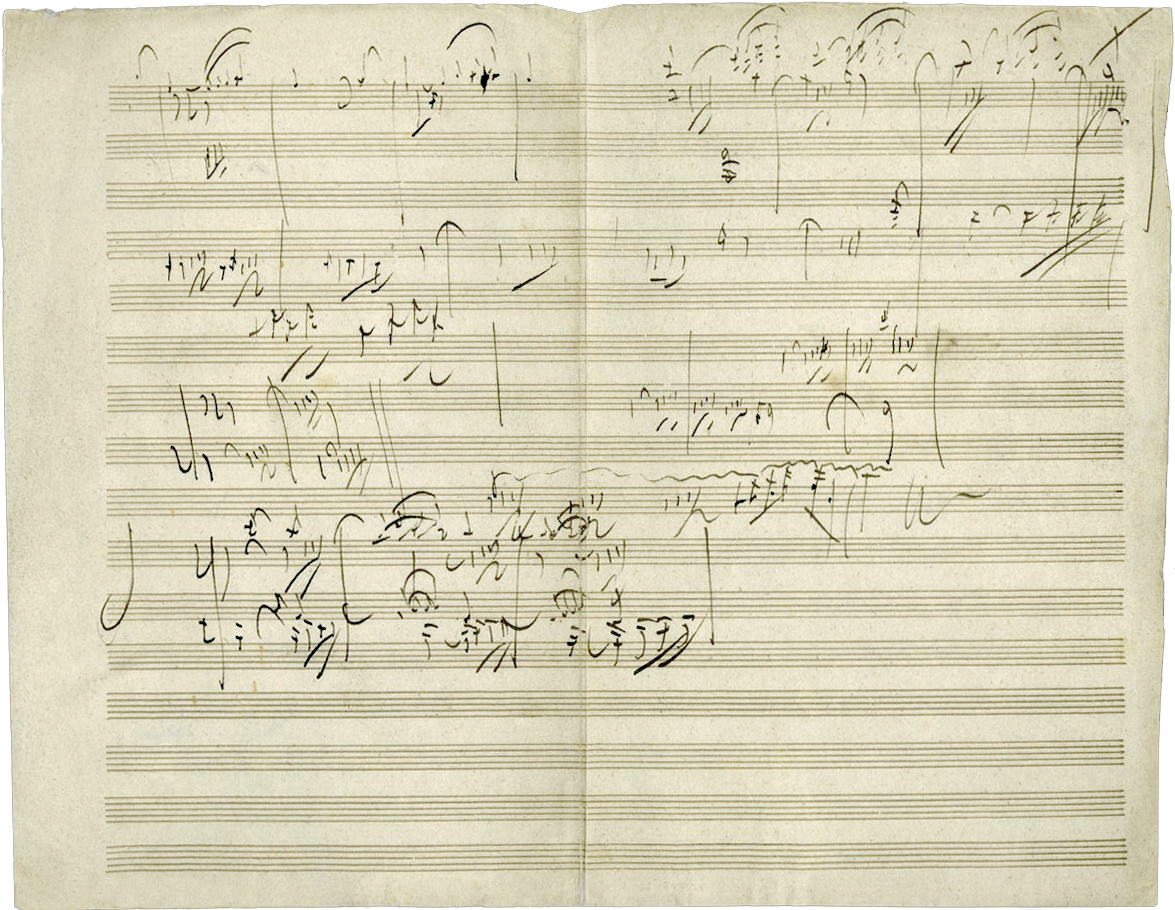
My favourite discovery to hand to parents. The first movement of Op. 101 is under five minutes, marked Allegretto ma non troppo, and it begins as if it had already been going for a while — no announcement, no theme presented in capital letters, just a line already in motion. Beethoven’s own German marking asks for it to be played “somewhat lively, and with the innermost feeling.” It has the quality of overhearing something rather than being addressed by it, which at 8 p.m. is precisely right.
Written in 1816 and published in 1817, it is the first of the late sonatas. One warning that matters here: let it run into the rest of the sonata and you will get a march and then a fugue. First movement only. Emil Gilels plays it below — stop the video at the end of the opening movement.
🎧 Also on: Apple Music · Spotify
Bagatelle in G major, Op. 126 No. 1
Three minutes, marked Andante con moto, cantabile e compiacevole — roughly, flowing, singing, and agreeable. It is the opening piece of the last set Beethoven wrote for solo piano, composed in 1824 and published the following year, and he thought well enough of the six of them to tell his publisher Schott that they were “probably the best I’ve written.” For our purposes: it is short, it is soft, and it does not resolve into anything dramatic.
Glenn Gould recorded the set, and his Op. 126 is far less eccentric than his Bach — clipped, unsentimental, and steady. If you want something rounder, Sviatoslav Richter also recorded it..
▶ Listen on YouTube · Apple Music · Spotify
Three Beethoven pieces to keep off the playlist
Skipping these is not snobbery. Each one is on some “Beethoven for babies” compilation, and each one does the same thing wrong.
Symphony No. 5, first movement. The most efficiently startling four minutes in the repertoire. Silence, then four notes at full force, and it keeps doing that. Wonderful music, catastrophic bedtime music — and worth reading about for its own sake in our piece on the myths around the Fifth.
The “Appassionata” Sonata, Op. 57. Compilers grab it because two of its three movements start quietly. They do not stay that way; the first movement’s quiet opening exists purely to make the explosion bigger, and the finale is relentless.
The Egmont Overture, Op. 84. The opening is slow and dark, which fools people. It ends in a blazing victory coda with the full orchestra. Superb concert opener, terrible thing to have playing when a baby has just gone down.
How to actually run it: volume, order, length
Volume is the only number worth memorising. The American Academy of Pediatrics has recommended that sound in neonatal intensive care units should not exceed an hourly average of 45 decibels — quieter than most people’s idea of “quiet background music,” and a useful anchor. If the music is loud enough that you’d raise your voice slightly to talk over it, it’s too loud. Play it from a speaker across the room, never from headphones or a device in the cot.
Build a 25-minute descent, not a playlist on shuffle. The order does most of the work: something with a pulse first, then something with two instruments, then something with one. A wind-down that works well: Spring Sonata slow movement → Pathétique Adagio cantabile → Moonlight first movement → Op. 126 No. 1. Roughly 22 minutes, and each step is quieter and thinner than the last. Shuffle destroys this instantly, because sooner or later it will serve you a scherzo.
Watch the seams, and don’t loop. Most of the risk in a classical playlist sits at the joins — a soft ending followed by a loud opening — so turn off autoplay, or the algorithm will follow your Moonlight first movement with the third. And ignore the standard advice to repeat one track all night. Play the sequence, then turn it off. Silence is the sleep environment; the music is the way into it.
And treat it as being partly for you. Anyone who has bounced a screaming newborn at 3 a.m. knows the adult’s nervous system is half the equation. If that’s the situation you’re in, our list of classical music for anxiety is aimed at exactly that, and for the years after infancy we have a longer guide to classical music for kids’ sleep.