- Composer
- Beethoven
- Work
- Egmont Overture, Op. 84
- Key
- F minor
- Composed
- 1809–1810
- Movements
- 1 movements
Single movement: Sostenuto, ma non troppo – Allegro – Allegro con brio (F minor → F major) - Instrumentation
- piccolo, 2 flutes, 2 oboes, 2 clarinets, 2 bassoons, 4 horns, 2 trumpets, timpani, strings
- Premiere
- June 15, 1810
Vienna Burgtheater
Conductor: Ludwig van Beethoven
In the winter of 1809, Napoleon’s army occupied Vienna for the second time. As French soldiers patrolled the silent, cannon-scarred streets, Beethoven was stuffing pillows into his windows to block out the noise. He was starting to write. The subject he threw himself into was the story of a Dutch nobleman executed for fighting for freedom: Count Egmont. A figure from over 250 years ago, but in a city under enemy control, didn’t that story feel like a headline from the morning paper?
This is precisely why the Egmont Overture is more than just incidental music. Beethoven didn’t simply describe Egmont’s tragic death. He saw the hope and victory that lay beyond it, and he told that entire story through music. It’s no surprise that today, the Egmont Overture is performed in concert halls independently of Goethe’s play. The reason is simple: the overture itself is already a complete, self-contained narrative.
Count Egmont — The Nobleman Who Became a Legend at the Scaffold
Lamoral, Count of Egmont (1522–1568). It’s a name few remember today. But Beethoven wrote an overture for him, and Goethe made him the hero of a play. That powerful artistic union is what keeps his story alive in concert halls.
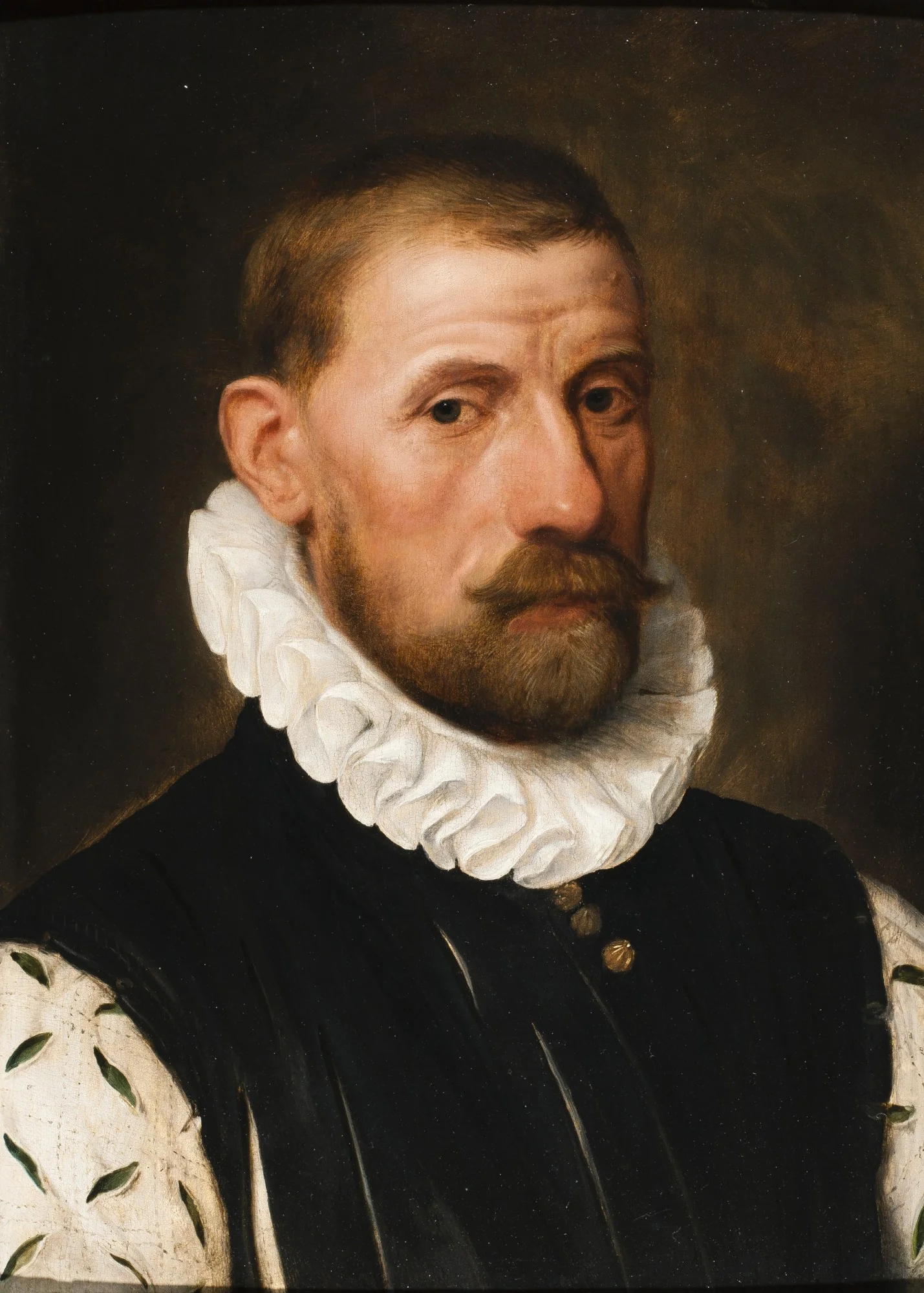
So, who was Count Egmont? In the 16th century, he was a trusted governor serving King Philip II of Spain, who ruled over Flanders (modern-day Belgium). But Egmont stood against Spain’s brutal religious inquisitions—a campaign of burning, torture, and property seizure—and tried to protect his people to the very end. Faced with the blade of power, he chose his conscience.
His fate was sealed in 1568. Arrested by the forces of the Spanish Duke of Alba, he was publicly executed in Brussels. It’s said that in his final moments, he declared that while he had been loyal to his king, his actions had always followed his conscience. His execution followed. Such tragedies are not rare in history, but Egmont’s story was destined for a different outcome.
His death ignited the Eighty Years’ War, the Dutch War of Independence. Spain tried to quell a rebellion but instead lit a wildfire of resistance. Egmont was instantly hailed as a martyr, and his death became the very symbol of Dutch independence. What looked like the defeat of one man was, in fact, the prelude to a great victory.
Goethe completed his play on this story in 1787. Beethoven set it to music in 1810, in a Vienna occupied by Napoleon. The eras were different, but the message was the same: the courage of an individual against power, and a spirit of resistance that death cannot extinguish.
There’s another layer to this story: love. Goethe’s play features a woman named Clara, who deeply loved Egmont. Upon hearing of his execution, she takes her own life with poison to follow him. Her tragic sacrifice is transformed in Egmont’s prison-cell dream; she appears to him as a vision, the Goddess of Liberty, whispering, “Your death will not be in vain.” If the overture is a powerful compression of this entire saga, the full incidental music, including a soprano soloist, unfolds that epic tale in meticulous detail.
Napoleon’s Vienna, Beethoven’s Room — Composition Background
May 1809. Napoleon’s army marches into Vienna. Beethoven, it’s told, fled to a basement, covering his ears to block out the deafening roar of cannons. The shockwaves could have destroyed what little hearing he had left.
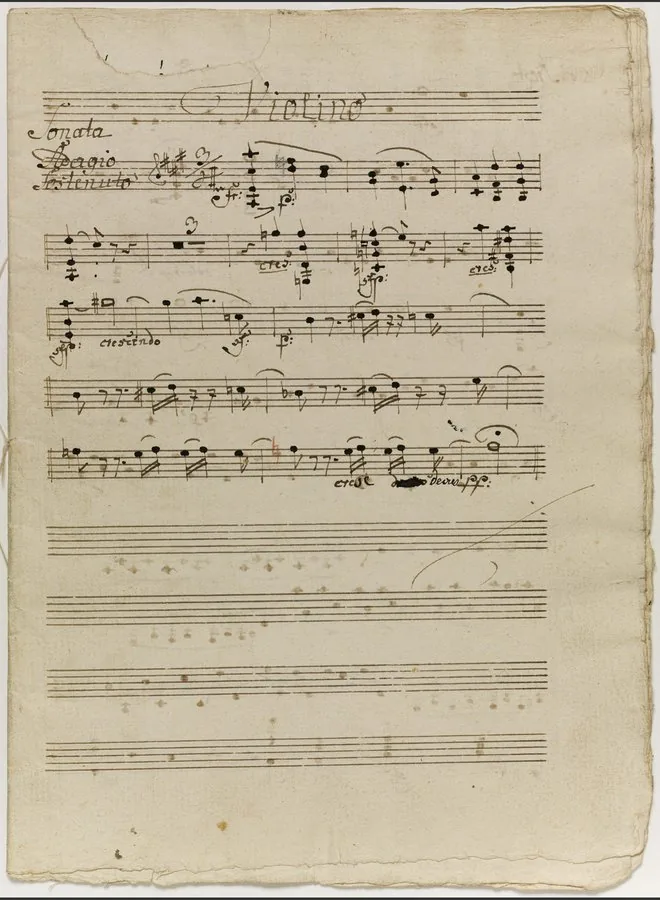
It was in the midst of this chaos that Beethoven received the commission to compose music for Egmont. The request came from the Burgtheater in Vienna. But for Beethoven, this was no ordinary job. The story of Egmont mirrored his own reality perfectly.
In an occupied city, telling the story of a hero who refused to yield to oppression—Beethoven must have poured every ounce of his emotion into this project. The complete incidental music (Op. 84) that resulted consists of nine parts for soprano and orchestra, including the overture. Today, however, the full work is rarely performed, and only the overture has secured its place in the standard concert repertoire.
Why did the overture alone survive so vividly? Because it is the most condensed and structurally complete part, telling a full story without needing the play. The other pieces only find their full meaning within the context of the drama. In just eight or nine minutes, the overture captures the entire narrative arc: oppression, resistance, execution, and finally, victory. This is the secret to its enduring appeal for over 200 years.
Beethoven and Goethe — The Awkward Meeting of Two Giants
Throughout his life, Beethoven held a deep reverence for Goethe, the undisputed titan of German literature. Beethoven desperately wanted to contribute musically to that great literary world. Besides the Egmont music, he set several of Goethe’s poems to music and even dreamed of creating a musical version of Faust.
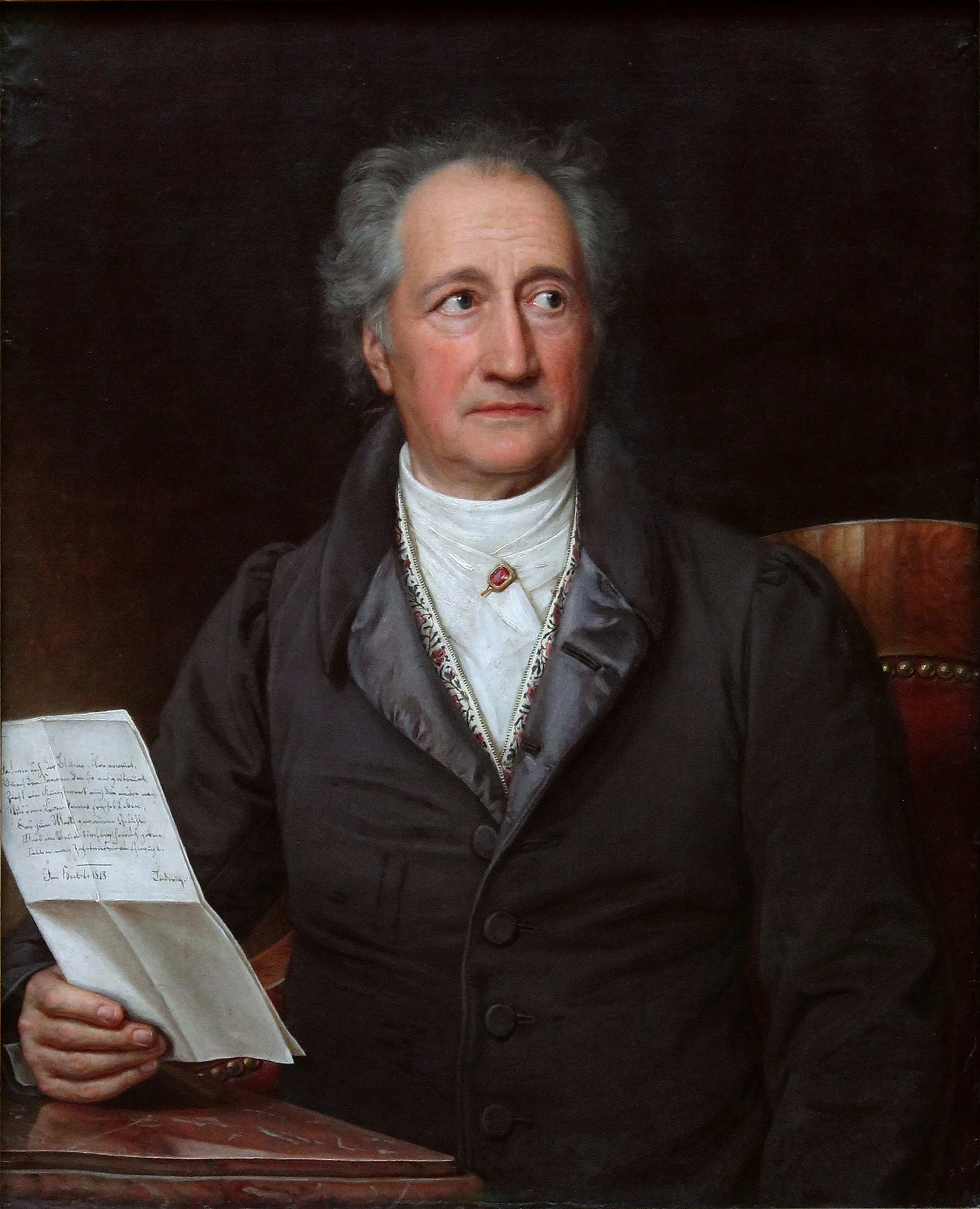
But what happened when these two giants actually met?
The year was 1812, at the spa town of Teplice in the Czech Republic, a popular resort for intellectuals and aristocrats. While walking together, they encountered the Austrian imperial family. Goethe stepped aside and bowed deeply. Beethoven, however, didn’t bother. He pulled his hat down firmly, folded his arms, and walked straight through the middle of the royal entourage.
Amazingly, it was the Empress and the nobles who recognized Beethoven first and made way for him.
Beethoven’s comment on the incident reveals everything about his character: “I admire Goethe’s talent, but it’s a shame he bows so much to the nobility. The artist should stand above the emperor.”
Goethe, for his part, described Beethoven in his diary as a “completely untamable personality.” But for admirers like Leonard Bernstein, that description sounds like the highest praise. This is the very spirit of resistance and freedom captured in the Egmont Overture. The piece is, in effect, Beethoven’s own magnificent declaration, written in music.
From F minor to F Major — A Revolutionary Structure Where Death Becomes Victory
The structure of the Egmont Overture has one defining feature: it begins in F minor and ends in F major.

In 18th and 19th-century music, minor keys symbolized sadness, tragedy, and darkness. Major keys, conversely, signified victory, light, and liberation. Egmont meets a tragic end, but his death becomes the spark for his nation’s independence. Therefore, the shift from a dark key to a bright one is not just a musical choice; it is the narrative itself—the idea that death is not defeat, but the beginning of victory.
So why was this structure so revolutionary? A look at the conventions of the time tells the story. Back then, an overture was just “mood music” for the play, a background sound that played while the audience settled into their seats. No one thought an overture should tell a story on its own.
But Beethoven shattered that old custom. The Egmont Overture tells a complete story from beginning to end. From oppression (F minor) to resistance (Allegro), through a tragic death (silence), to the final triumphant fanfare (F major). A whole drama unfolds before the curtain even rises. This is why the overture has been loved as a standalone concert piece for over two centuries.
Beethoven even went a step further, omitting the repeat of the sonata form’s exposition. At the time, repeating the opening section was standard practice. Why did he break the rule? The reason is clear. Egmont’s story was a one-way street with no turning back. It was a noble resistance that never looked back, and the music had to follow that same path.
If You’re Listening for the First Time — Just Know This
The Egmont Overture is a short piece, lasting only about eight or nine minutes. But within that brief span, a dramatic panorama of emotions unfolds. If you keep just three points in mind, your listening experience will be completely transformed.
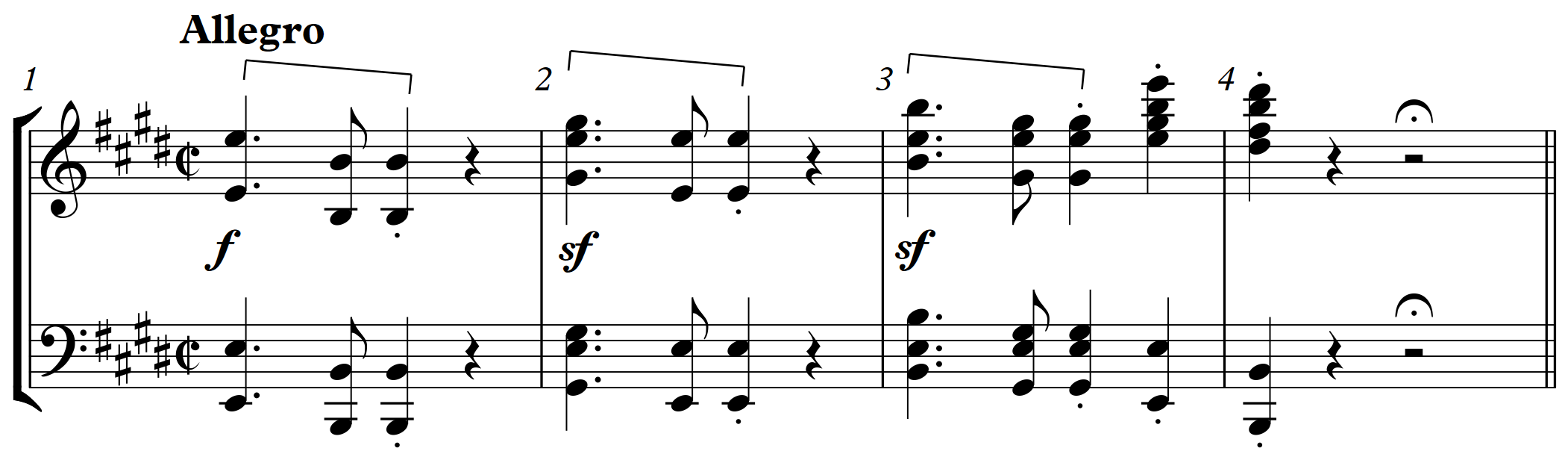
First, listen for the Spanish-style rhythm in the introduction. The piece opens with the strings striking three sudden, heavy chords. This is the rhythm of a Spanish dance called the Sarabande. Why did Beethoven use a Spanish form? Because the oppressor who crushed Egmont was the Spanish kingdom. Those first three chords represent the terrifying presence of the tyrant. Through music, Beethoven is shouting, “These are the ones who brought Egmont down!”
Second, pay attention to the “clash” in the Allegro section. When the music shifts from slow to a fast Allegro, you’ll hear a recurring pattern of strings surging upward only to be blocked. It’s a tense confrontation between a force trying to break free and a force trying to suppress it. This is Egmont’s resistance. Yet, amid this fierce struggle, a very lyrical melody briefly appears. Beethoven shows us not just the fight, but also the precious things Egmont loved and fought to protect.
Third, don’t miss the short moment of silence just before the climax. After the storm has passed, the music briefly holds its breath. This is the moment just before Egmont’s execution. Breaking this silence, the bright sound of the brass instruments erupts in F major. A victory fanfare. It’s the triumph of the executed hero. Even a first-time listener will feel a shiver down their spine at this dramatic turn.
Remember these three things, and the Egmont Overture will reveal itself as a completely new story. Are you ready to experience a drama painted entirely in sound by Beethoven? Now it’s your turn to hear it for yourself.
A Closer Look at the Musical Structure — Oppression, Resistance, Execution, and Victory
Though a single-movement work, the Egmont Overture follows a clear narrative progression.
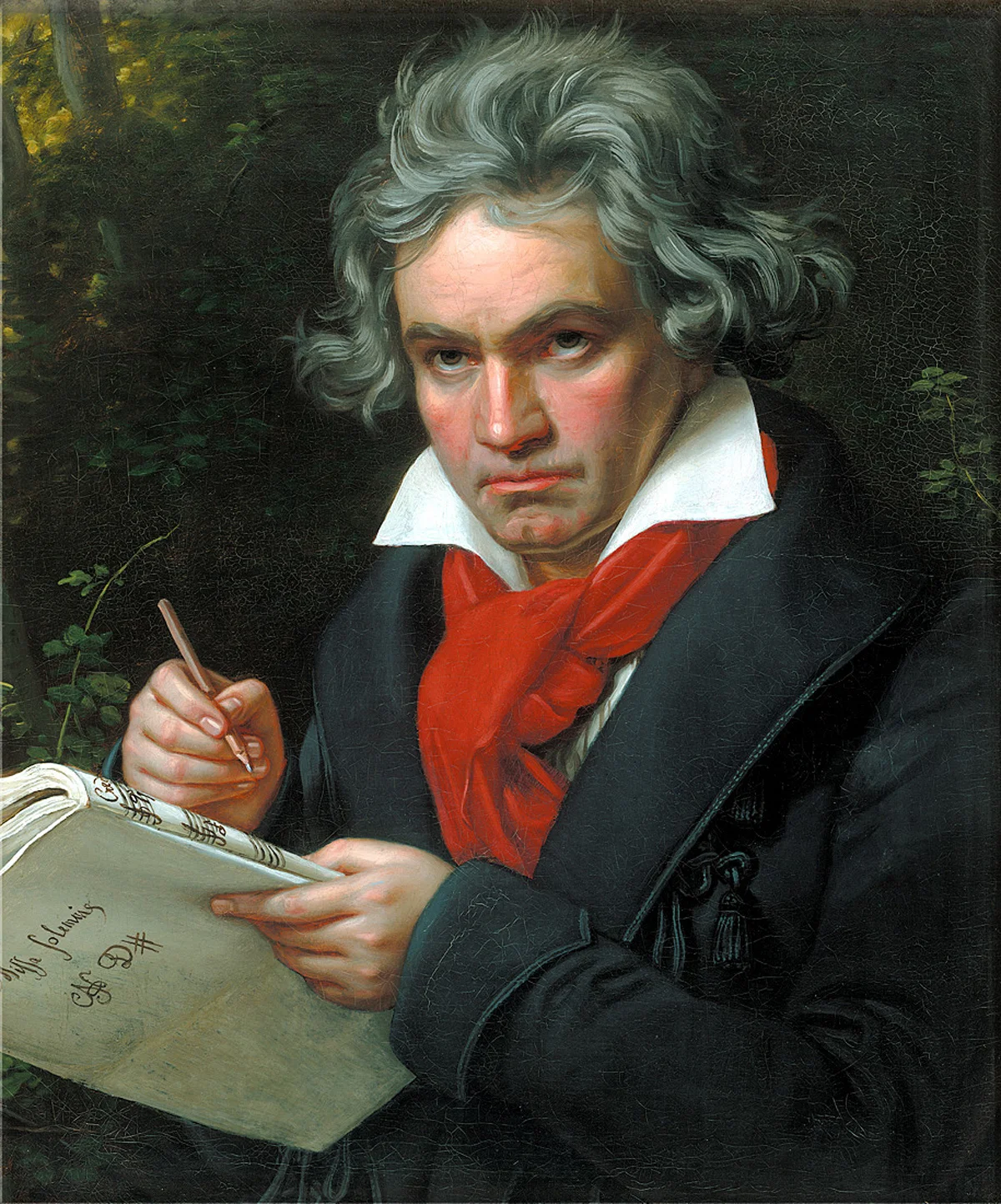
Introduction, Sostenuto, ma non troppo (Sustained, but not too much)
The piece announces its arrival with an abrupt fortississimo (fff) chord from the full orchestra. What follows is a quiet, descending melody in the strings. This stark contrast is the key.
You could call it a depiction of a coercive external force versus an unyielding inner strength. Beethoven repeats this contrast several times, building tension. The entire introduction is, in essence, “Egmont enduring under oppression.”
Main Section, Allegro (Fast)
Soon, the fast Allegro section begins. It’s a structure where the relentless drive of the strings is answered by the woodwinds—a tense standoff between a force pushing forward and a force holding it back.
This is Egmont’s “resistance.” Yet, even in the midst of this fierce struggle, a quiet moment emerges. A deeply lyrical melody appears briefly before vanishing. Was this a trace of the precious values Egmont sought to protect, or the memory of those he loved?
Recapitulation and the Dramatic Silence
The themes from the opening return as the music hurtles toward its peak. Then, suddenly, a moment of complete silence when all sound ceases. This silence is the most dramatic moment of all.
It signifies the quiet just before Egmont’s execution. Some conductors stretch this moment to maximize tension, while others pass through it quickly. How this silence is interpreted completely changes the overall feel of the piece.
Coda, Allegro con brio (Fast with brilliance)
Finally, the music shifts into the triumphant key of F major. The timpani first fires a signal of victory, and then all the instruments erupt in a glorious fanfare. For a first-time listener, the transition is nothing short of shocking.
An overture that made such a dramatic shift from minor to major was unprecedented at the time. This fanfare is not about Egmont’s personal tragic death, but a grand proclamation of the ultimate victory of the ideals he left behind. It is the end of oppression and the dawn of freedom.
The Political Life of the Egmont Overture — When Music Became a Weapon
From the very beginning, the Egmont Overture was understood as a political work. At its premiere, Vienna was under the occupation of Napoleon’s army. The audience must have sensed that Egmont’s story was not just some old tale, and they surely knew what that final fanfare meant for them.
Since then, the Egmont Overture has been performed at countless historical moments of resistance against oppression. From the nationalist movements of 19th-century Europe to the two World Wars and independence movements around the globe, this music has echoed. Though Beethoven may not have intended it, the music itself asserted its power.
Beethoven knew better than anyone that music could be a powerful political tool. The story of him dedicating his Symphony No. 3 ‘Eroica’ to Napoleon, only to tear up the title page when Napoleon declared himself emperor, is famous. The Egmont Overture, however, took the opposite path. It was a work conceived from the start with a message of resistance while watching invaders occupy his homeland.
Reception of the Egmont Overture is actually quite polarized. Some praise it as one of Beethoven’s most concise and formally perfect works. Others offer a more critical take, suggesting it’s “too short and straightforward for Beethoven.” Is it clear because it’s short, or disappointing because it’s short? Both views have merit. The overture packs everything into eight minutes. That is both its greatest strength and its unique character.
There is one point, however, that Beethoven experts consistently highlight: the unique way he handles the orchestra, especially the role of the timpani. Normally, the timpani provides a background pulse for the orchestra. But in this piece, the timpani steps into the spotlight at several crucial moments. Just before the shift to the victory fanfare, breaking the silence, the timpani sends the first signal. This is the sound of the world changing completely after the execution. A single timpani announces a massive historical turn. It’s easy to miss on a first listen, but once you know it’s there, that timpani roll will sound entirely different.
Ancestor of the Tone Poem — Egmont’s Place in Music History
The historical importance of the Egmont Overture lies in its position in music history. This piece is a pioneering work of the tone poem.
A tone poem is a genre that uses music alone to express a narrative, a painting, or a concept. After Beethoven, Franz Liszt formalized the genre, and masters like Smetana (Má vlast), Richard Strauss (Ein Heldenleben), Dvořák, and Sibelius continued to develop it. But incredibly, the prototype is right here in the Egmont Overture.
Of course, the Egmont Overture was not a pure orchestral work but an overture to incidental music for a play. Yet, the reason it could be so widely performed independently is that it already contained a complete story. With this short overture, Beethoven proved that music could possess a narrative without words.
Though not as famous as his Symphony No. 5 or No. 9, the Egmont Overture quietly made its own significant mark on history. This single overture threw open a door of new possibilities that countless composers would explore for the next century.
And there’s another feature that sets the Egmont Overture apart from Beethoven’s other works: its coda (the concluding section) is more memorable than any other part of the piece. Usually, a coda is just a wrap-up. The climax has already passed, and its job is to tie things up. But the coda of the Egmont Overture is completely different. This coda, which begins at the moment of the shift to F major, is actually the true climax of the work. The entire preceding process of oppression and resistance was just a long preparation for this brief coda.
Was this Beethoven’s way of musically depicting the theme of “victory through death”? Every tragedy was hurtling toward a single fanfare. Egmont’s life, Goethe’s play, and Beethoven’s music—all of it.
Different Egmonts for Different Conductors — The 8-Second Difference in Silence
The point in the Egmont Overture where a conductor’s interpretation diverges most dramatically is the moment of silence just before the execution. Carlos Kleiber rushes through that fleeting pause almost without taking a breath. Leonard Bernstein, on the other hand, stretches that silence to nearly eight seconds. Herbert von Karajan chooses a path somewhere in between.
Why does this difference matter so much? The longer the silence, the heavier the weight of Egmont’s impending execution feels. The shorter it is, the more the victory beyond death is emphasized. The choice completely shifts the character of the Egmont Overture between a music of tragedy and a music of triumph.
After listening to Kleiber’s breathless Egmont, I highly recommend you listen to Bernstein’s version. They are playing the same score, the same notes, yet the emotional impact is entirely different. This is the power of interpretation and the real joy of listening to classical music.
If you find yourself drawn to the Egmont Overture, listening to the complete incidental music (Op. 84) is a great next step. The nine additional pieces, featuring a soprano soloist, unfold the overture’s compressed narrative in a slower, more detailed manner. In particular, the soprano’s song ‘Die Trommel gerühret!’ (‘The drum is beaten!’) depicts the tragic scene where Egmont’s lover, Clara, hears of his execution and drinks poison. It offers a profound emotional experience, different in texture from the overture.
Recommended Recordings
Carlos Kleiber / Vienna Philharmonic Orchestra (1991, DG)
Kleiber’s Egmont is the benchmark for many. From the weighty chords of the introduction to the swift, refined movement of the Allegro and the explosive liberation of the final fanfare, every element is indispensable. Without being overly slow or grandiloquent, it precisely conveys the inner drama. You can immediately tell how well Kleiber’s characteristic precision and energy suit this piece.
Herbert von Karajan / Berlin Philharmonic Orchestra (1969, DG)
The recording by Karajan and the Berlin Philharmonic is, without a doubt, a model of perfect ensemble and tonal blend. While some find it a bit too smooth, that very quality makes it an excellent choice for those new to Egmont. Every chord in the introduction is crystal clear, and the brass tone is exceptionally beautiful. This is part of Karajan’s complete Beethoven overtures set with the Berlin Philharmonic and represents a recording from his peak.
Leonard Bernstein / Vienna Philharmonic Orchestra (1978, DG)
Under Bernstein’s baton, this piece becomes a speech. The sound truly seems to speak. The final fanfare, in particular, delivers a weight and tension incomparable to any other conductor. Bernstein’s signature wealth of emotional expression aligns perfectly with the drama of this work. This is the recording that most directly conveys the political message Beethoven embedded in the music.
Klaus Tennstedt / London Philharmonic Orchestra (1984, EMI)
Beethoven conducted by Tennstedt? It might sound a bit unfamiliar. But his Egmont Overture creates a very special kind of internal tension. While not as flashy as Kleiber or Karajan, this recording is perhaps the most persuasive in tracing the music’s logical flow. I find his handling of the silences particularly impressive.
Listen with the Score
When you follow the score while listening to music, the experience is often amplified. Seeing the flow of notes with your own eyes makes the composer’s intentions feel much clearer. Fortunately, the original score for the Egmont Overture is available for free on IMSLP. It’s time to see the epic narrative Beethoven created for yourself through the link below.
→ View the score for the Egmont Overture (IMSLP)
Frequently Asked Questions
What is the story behind Beethoven’s Egmont Overture?
The work musically depicts the story of Count Egmont, a 16th-century Flemish nobleman who was executed for resisting Spanish rule. It begins with a heavy, oppressive atmosphere in F minor and concludes with a jubilant victory fanfare in F major. This key change is the core of the piece, declaring that the hero’s execution was not a defeat but a great victory. Originally the overture to incidental music for Goethe’s play of the same name, it is now more frequently performed as a standalone orchestral work.
Why did Beethoven compose the music for Egmont?
On the surface, it was a commission from the Burgtheater in Vienna for a performance of Goethe’s play. But was that the whole story? The period of composition (1809–1810) was precisely when Napoleon had occupied Vienna. The story of Egmont, a hero fighting against foreign rule, was not some distant tale for Beethoven; it was his present reality. Combining his lifelong admiration for Goethe with the spirit of freedom and resistance depicted in the play, this overture became more than mere background music. It is a powerful expression of Beethoven’s own belief in the indomitable human spirit against tyranny.
Who was the historical Count Egmont?
Lamoral, Count of Egmont (1522–1568), was a nobleman and governor in Flanders (modern-day Belgium) under Spanish rule. He tried to protect his compatriots from Spain’s harsh oppression but was arrested by the Duke of Alba and publicly executed in 1568. His death, however, became the catalyst for the Dutch War of Independence, and he was immortalized as a hero who gave his life for freedom. His execution marked the beginning of the fight for independence, making it a symbolic event of “victory through death.” This is the point where both Goethe and Beethoven found the great, unyielding human spirit.
How long is the Egmont Overture?
The performance time is typically between 8 and 9 minutes. This can vary depending on the conductor’s interpretation. A faster tempo might bring it to just over 8 minutes, while a slower, more deliberate approach could extend it to the mid-9-minute range. Although it’s a single-movement piece, it contains several distinct stages with dramatic shifts in tempo and mood. It follows sonata form but omits the exposition repeat, which creates a feeling of forward momentum, as if the story is relentlessly pushing ahead.
Why is the Egmont Overture important in music history?
It is a pioneering work that opened the door for the “tone poem” genre, which tells a complete story through music alone. The dramatic shift from a tragic minor key to a triumphant major key, musically portraying the narrative of “victory through death,” was radical for its time. The seeds of the tone poems later developed by composers like Liszt and Richard Strauss are contained within this piece. Historically, it has also become a symbol of music’s political power, performed at moments of resistance against oppression throughout history.