Beethoven Symphony No. 8 — The One He Said Was Better

The 26-minute joke Beethoven preferred

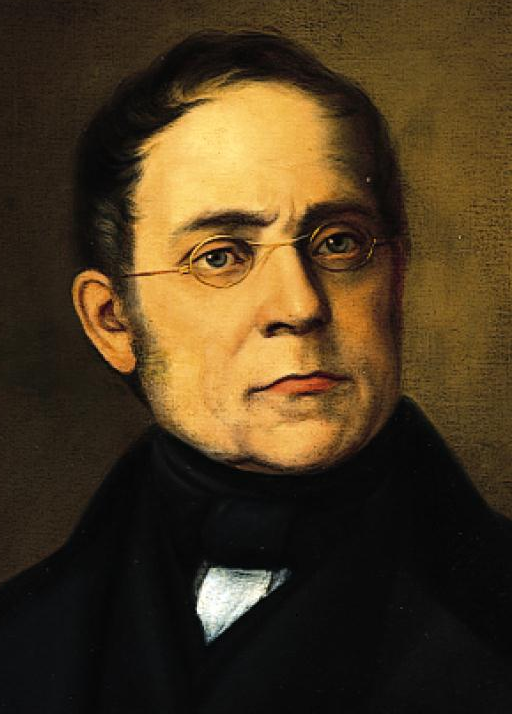
Beethoven
Joseph Karl Stieler, 1820, Public Domain
Composer
Ludwig van Beethoven
(1770–1827)
Work
Symphony No. 8 in F major, Op. 93
Composition
Summer–October 1812 (Teplitz · Linz)
Movements
Four

I. Allegro vivace e con brio (F major)
Fast, lively, and with brio

II. Allegretto scherzando (B♭ major)
Slightly fast, playful

III. Tempo di Menuetto (F major)
At the speed of a minuet

IV. Allegro vivace (F major)
Fast and lively
Orchestration
2 flutes, 2 oboes, 2 clarinets, 2 bassoons
2 horns, 2 trumpets
timpani
strings
Duration
about 26 minutes (the shortest of Beethoven’s nine symphonies)
Premiere
February 27, 1814, Vienna Redoutensaal
Conductor: Ludwig van Beethoven
The Eighth got its first performance that night; the Seventh and Wellington’s Victory were already two and a half months old, having premiered at the University of Vienna on December 8, 1813.
Publication
1817 by Steiner (Vienna). The Seventh had already gone to press in 1816.

February 27, 1814. Vienna Redoutensaal. The Seventh Symphony and Wellington’s Victory — two pieces the city had already cheered through ten weeks earlier — climbed back on the program, and tucked between them, meeting the public for the first time, was the Eighth. Backstage afterward, Beethoven’s pupil Carl Czerny worked up the nerve to say what everyone in the hall already knew. “The audience seems to like the Seventh better.”

Beethoven’s answer was one sentence. “Weil sie viel besser ist.” Because this one — the Eighth — is much better.

Vienna 1814: The Night the Applause Cooled

Three works went on that night. The Seventh Symphony, finished in May 1812. The Eighth, finished the same year in October. And Wellington’s Victory, a battle piece Beethoven had cooked up with the inventor Johann Nepomuk Mälzel to celebrate the English drubbing the French at Vitoria. Beethoven conducted. Vienna was still vibrating from Napoleon’s collapse, which meant the audience had walked into the hall already half-drunk on patriotism.

The loudest reception of the evening went to Wellington’s Victory. It is the kind of piece that would, in a different century, be scored for stadium speakers — actual cannons, simulated musket fire, the orchestra basically operating as a sound effects rig. For the Viennese it was less a concert than a victory parade with seats.

Second place went to the Seventh. The piece Wagner would later call “the apotheosis of the dance” had already won the room two and a half months earlier and was now collecting its second standing ovation in the same season. The Eighth came in third. Thayer’s Life of Beethoven, in the Forbes revision (1967, vol. 2), keeps the ranking exactly that brutal: the Eighth got applause, but the applause was tepid measured against what its older brother received in the same hall on the same night.

Think of it this way. Beethoven walked his youngest kid out on stage and put him next to his already-famous older brother. The older brother got hugs. The youngest stood there, blinking. Of all the nine symphonies, the one with the best sense of humor made the most awkward debut.

One of the Rare Times Beethoven Played Favorites

Czerny put the backstage moment into his memoir Erinnerungen aus meinem Leben when he published it in 1842, almost three decades after the event. “Weil sie viel besser ist.” Short. Final. There aren’t many places in the historical record where Beethoven ranks one of his own works above another with this much bluntness, and the few that exist are usually private and softened by qualifiers. Not this one. This one is a man telling his pupil that the audience is wrong.

In his letters, Beethoven called the Eighth “meine kleine Sinfonie in F” — my little F major symphony (Anderson, The Letters of Beethoven, 1961, letter #376). The “little” wasn’t a put-down. The Sixth, the Pastoral, was also in F major, and he needed a way to tell the two apart on the page. It is the tone you use when you give a nickname to a kid you actually like.

Nineteenth-century critics couldn’t make up their minds. Berlioz, in À travers chants (1862), dismissed the Eighth as “less a symphonic work than a fantasy in pieces” — a polite way of calling it a sketchbook. Wagner, writing about Beethoven in 1870, went the other direction entirely and called it the work in which “Beethoven let himself loose most freely.” Same piece, two diametric reads: a half-finished idea on one hand, the most Beethoven-y Beethoven on the other.

The composer himself had already settled the matter backstage. The Eighth is better. End of conversation. Two centuries later the Eighth still gets programmed less than the Seventh, and you can trace the imbalance back to the printer: the Seventh went to Steiner in 1816, the Eighth waited until 1817. Five years between completion and publication, with the older brother getting the press run first. The Eighth has been catching up ever since.

Summer 1812: Beethoven’s Noisiest Season

The year Beethoven wrote the Eighth was one of the loudest of his life — loud in the sense of personal chaos, not in the sense of fortissimos. Three different storms hit him in the space of a single season.

July 6 and 7, in the Bohemian spa town of Teplitz. Beethoven sat down and wrote a letter to a woman whose identity has never been confirmed, in three installments — Monday morning, Monday evening, and again Tuesday morning. “Mein Engel, mein alles, mein Ich” — my angel, my everything, my own self. This is the letter musicologists have been arguing about since the 1840s; this is the “Immortal Beloved” document, the one whose recipient remains one of musicology’s longest cold cases. He wrote it while he was finishing the Eighth.

That same autumn, Beethoven left Vienna for Linz. His younger brother Nikolaus Johann had moved his housekeeper Therese Obermayer into the apartment and was, by every available account, about to marry her. According to Maynard Solomon’s Beethoven (2nd ed., 1998), Beethoven tried to argue Johann out of it. When that failed, he went to the Linz police and formally asked them to prevent the marriage. The police did not prevent the marriage. Johann moved up the wedding date and married Therese faster, partly out of spite, partly because what else do you do when your composer-celebrity older brother shows up at the precinct to file paperwork against your love life.

Through all of this Beethoven finished the Eighth Symphony. The shortest of the nine. The most cheerful. The one with the most jokes. The summer that broke him produced the music that smiles the widest. That is not a coincidence; that is a thing about Beethoven worth filing away.

The naive reading — sad composer writes sad music, happy composer writes happy music — falls apart faster on the Eighth than anywhere else in the catalog. The Pastoral is serene, and Beethoven was not. The Fifth is grim, and his life that year was not categorically grimmer than other years. The Eighth is the case study that disproves the entire nineteenth-century “the music IS the man” school of interpretation. You can read a Beethoven biography from cover to cover and never predict what kind of symphony would emerge from any given week of it.

The Mälzel Metronome Myth Has a Timeline Problem

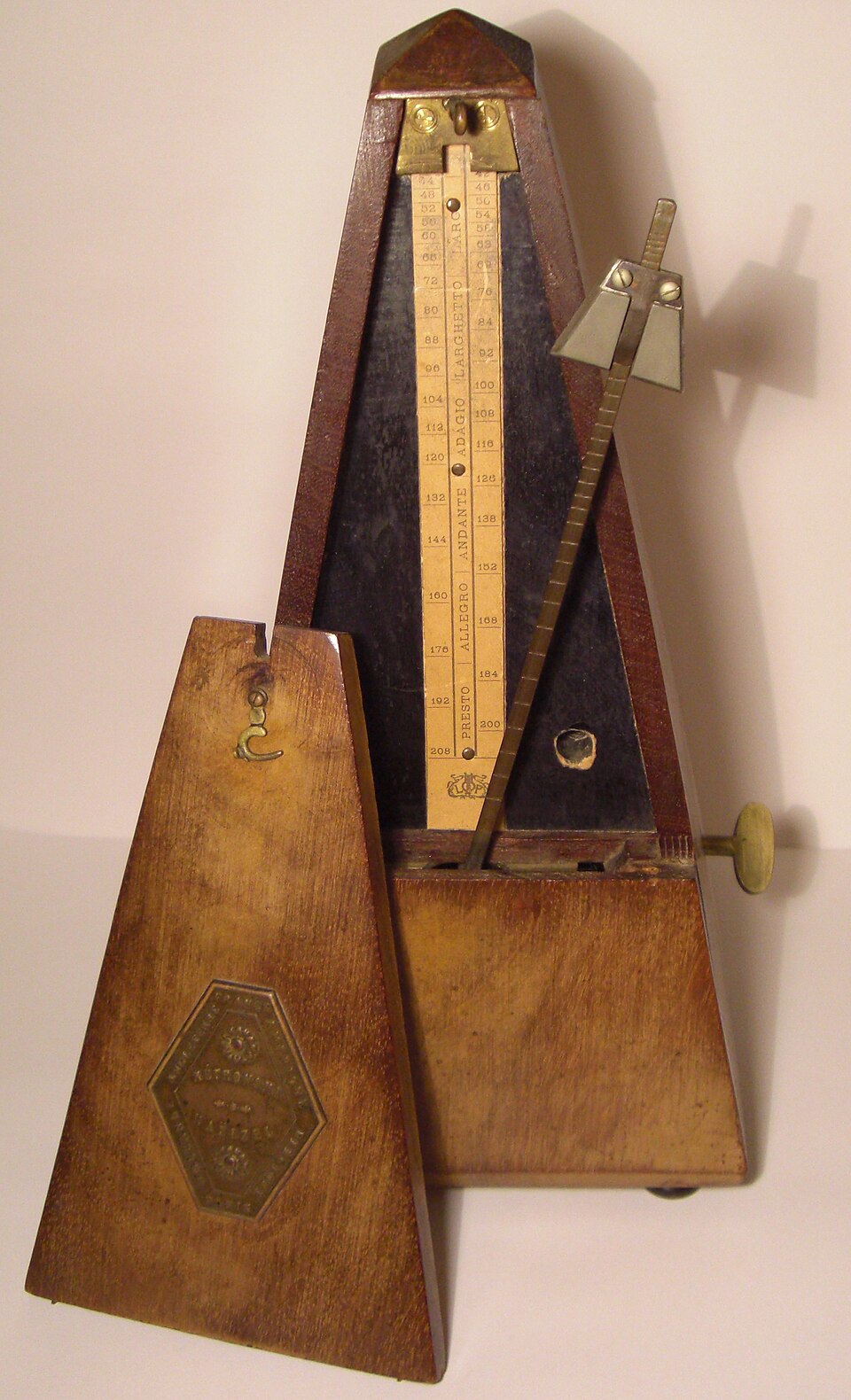
Pick up almost any program note for the Eighth and you will run into the same story. The ticking second movement, the one that sounds like a clockwork toy, is supposedly Beethoven’s joke at the expense of the metronome inventor Johann Nepomuk Mälzel. The supporting evidence is usually a canon Beethoven is said to have improvised at a dinner — “Ta-ta-ta-ta lieber Mälzel” — which then somehow seeded the Allegretto.

Trace that story back and it ends at one person. Anton Schindler. Beethoven’s secretary in his final years, his first official biographer, and — as Maynard Solomon demonstrated in his 1977 essay “Schindler and Beethoven” — a man who, after Beethoven’s death, sat down with the composer’s surviving conversation books and forged a substantial portion of them in his own hand. He inserted opinions, conversations, and clever observations that Beethoven never had, and presented them as authentic documents. The Mälzel canon story sits inside that contaminated body of evidence.

If a single shaky source were the only problem, the story might survive on charm. The bigger problem is that the timeline runs backwards.

  • Eighth Symphony composed — summer through October 1812.
  • Mälzel patented his metronome — 1815.

For Beethoven to have heard Mälzel’s metronome and translated its ticking into the second movement of the Eighth, he would have needed access to a device that did not yet exist in its recognizable form. Mälzel did own an earlier prototype he called the chronometer, but the wedge-and-pendulum metronome we now associate with his name was not patented until three years after the Eighth was finished. Rita Steblin’s A History of Key Characteristics (2002) is one of the more recent musicological works to lay the chronology out cleanly: the symphony predates the device.

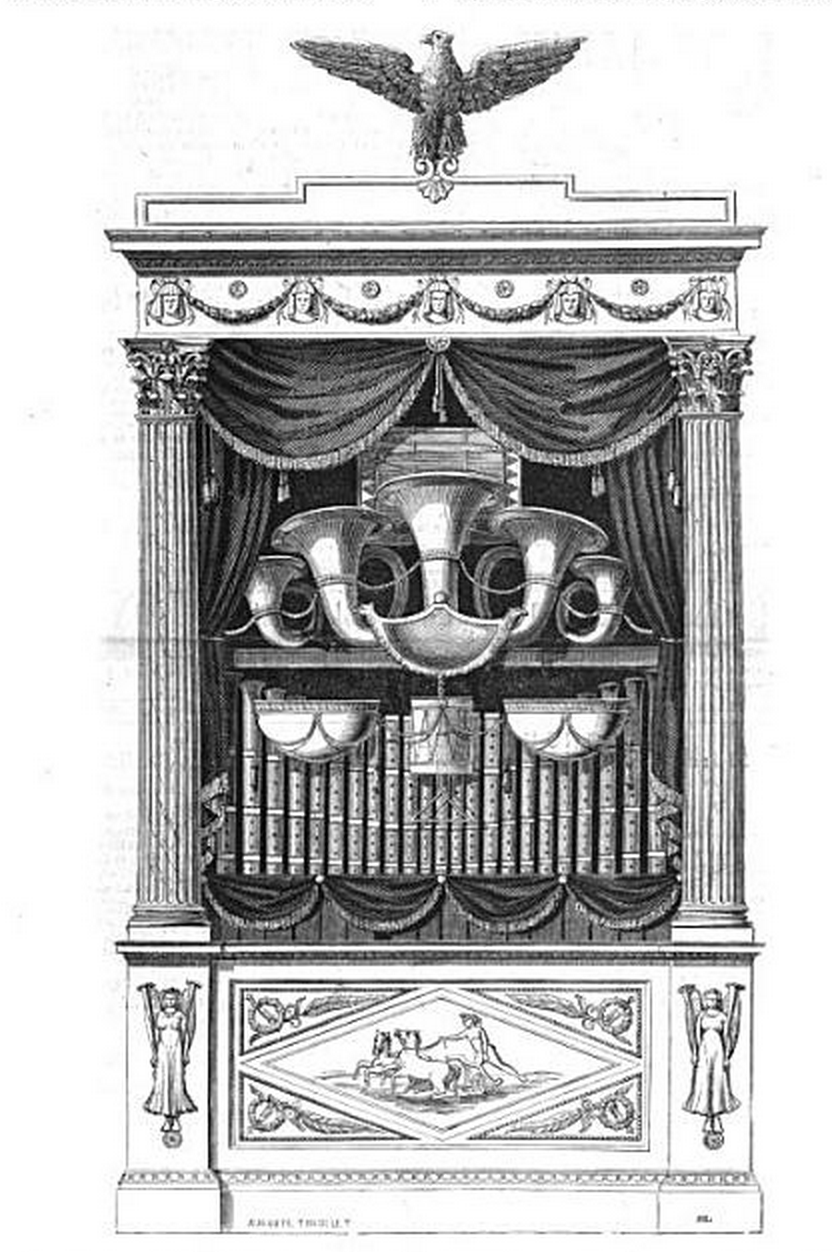
None of which means Mälzel didn’t exist or didn’t matter. He did, on both counts. He and Beethoven were friends in 1813 — they collaborated on Wellington’s Victory, which started its life as a piece for one of Mälzel’s mechanical instruments, the panharmonicon. They fell out the same year, over royalties from that very piece, and the breakup was ugly. So the door isn’t fully closed on “the second movement is somehow a joke involving Mälzel”; there’s a perfectly plausible world where the Allegretto needles Mälzel’s tinkerer-inventor brain in some general way. The door that is closed is the specific door that says the joke is about hearing the metronome. The metronome had not been heard yet. The Allegretto-as-metronome-parody line is, on inspection, a nineteenth-century urban legend that was authored by a forging biographer and then survived a hundred and fifty years of program notes because nobody bothered to check the dates.

The Only Beethoven Symphony Without a Slow Movement

Here is the second-movement tempo of every Beethoven symphony, in order:

  • No. 1 — Andante cantabile con moto
  • No. 2 — Larghetto
  • No. 3 — Marcia funebre. Adagio assai
  • No. 4 — Adagio
  • No. 5 — Andante con moto
  • No. 6 — Andante molto mosso
  • No. 7 — Allegretto
  • No. 8 — Allegretto scherzando
  • No. 9 — Molto vivace (this is the scherzo; the slow movement is pushed to the third position, an Adagio molto e cantabile)

Every symphony except the Eighth has a real slow movement somewhere in it. The Eighth doesn’t. “Allegretto scherzando” doesn’t even mean slow; it means slightly fast and playful, which is the tempo equivalent of a person refusing to sit down.

The third movement digs the hole deeper. “Tempo di Menuetto” — at the pace of a minuet. By 1812, the minuet was already an antique form. Haydn had stopped using them with any regularity decades earlier; in Beethoven’s own late symphonic output, the only place the minuet reappears is here, in the Eighth. The Seventh has a furious scherzo. The Ninth has a scherzo so weaponized it ate the slow movement’s slot and took second place. The Eighth alone reaches back to the powdered-wig dance form that Mozart’s father would have recognized.

So the design of the Eighth, on paper, is contrarian by Beethoven’s own 1812 standard. Of the two symphonies he wrote that year, the Seventh leans dionysian — that’s the dance one, the manic one, the one that needs a string section with stamina. The Eighth leans apollonian. But it’s an apollo who’s had one drink and is testing whether anyone in the room can spot what he’s doing.

Movement by Movement — A 26-Minute Joke

Twenty-six minutes. Shorter than the First. Shorter than anything else in the cycle. Here is how those twenty-six minutes unfold.

I. F major, No Introduction, Right Into Traffic

Of the first seven symphonies, only one — the Fifth — skips the slow introduction and barrels straight into the first theme. The Eighth is the second.

The contrast tells you something. The Fifth’s “da-da-da-DAH” lands like a fist on a table; it’s a piece that knocks. The Eighth’s opening also skips the foyer, but it doesn’t knock — it just walks in. There’s no hesitation, but there’s also no weight. The piece is in motion before you’ve decided whether you’re paying attention.

📜 악보 지점: Beethoven Symphony No. 8 mvt I, mm. 1-4 (IMSLP 링크 미등록)

Four bars, theme stated, off we go. If the Fifth grabs you by the collar, the Eighth slaps you on the shoulder and starts jogging. Same structural decision — no introduction — completely different posture.

II. The Ticking Allegretto, Reconsidered

The woodwinds play staccato sixteenth notes from beat one to the last bar of the movement. They tick. They are designed to tick. There is no other interpretation of what they’re doing; it sounds like a clockwork because Beethoven engineered it to sound like a clockwork.

📜 악보 지점: Beethoven Symphony No. 8 mvt II, mm. 1-8 (IMSLP 링크 미등록)

The traditional caption — “this is Beethoven imitating Mälzel’s metronome” — has already collapsed three sections up. What’s left, once you remove the metronome from the equation, is more interesting. The Allegretto is Beethoven playing with the abstract idea of mechanical regularity. The whole orchestra is locked into a clockwork pulse, and it is taking that pulse extremely seriously. The composer is the only one in the building who finds it funny, and he isn’t on stage. The performer’s job, in this movement, is to play it absolutely straight; the joke only lands if the orchestra refuses to wink.

Bernstein’s Vienna Philharmonic reading is one of the few in circulation where the orchestra hits this exact register: deadpan execution of a fundamentally silly idea. The tempo isn’t the point. The tempo’s relationship to its own absurdity is the point.

III. The One Time Beethoven Went Back to the Minuet

This is where listeners — even experienced ones — sometimes double back to the program. The minuet was supposed to be over. Haydn had been gradually retiring it, Mozart had reframed it, and by 1812 Beethoven himself had spent the better part of a decade replacing it with the scherzo. So why does it show up here, in F major, between the ticking clock and the C# bomb, in the middle of a symphony written after the Eroica, after the Pastoral, after the Seventh?

The likely answer is that Beethoven wanted the antique form precisely because it was antique. A scherzo would have continued the trajectory of his earlier work. The minuet, at this point in his career, was a deliberate stylistic regression — a costume the symphony was choosing to wear. And then he installs in the trio section a pair of hunting-call figures in the horns and clarinet, so that the polite drawing-room dance is suddenly being invaded by two huntsmen who have wandered indoors with their bugles still warm. It’s a small absurdism, but it stacks on top of everything else this symphony is doing.

Harnoncourt’s period-instrument reading is, of the standard recordings, the one most willing to let the minuet feel slightly awkward — which is the correct emotional reading, because the minuet here is supposed to feel slightly awkward. Modern symphonic readings tend to smooth it into elegance. Beethoven didn’t want elegance. He wanted a courtly dance with a thumb pressed against the back of its neck.

IV. The C# Bomb and a Two-Hundred-Year-Old Punchline

The fourth movement opens triple piano, fast, the strings on tiptoe — the orchestra sneaking down a hallway. And then, in measure 17, the entire ensemble drops a single fortissimo note that has no business being there: a C#. The wrong note, at full volume, for two beats. Then silence. Then the movement resumes as though nothing has happened.

📜 악보 지점: Beethoven Symphony No. 8 mvt IV, mm. 17-22 (IMSLP 링크 미등록)

In F major, a C# is the unwelcome cousin. It doesn’t fit. It is so harmonically misplaced that the first time a listener encounters it cold, the natural response is to assume the orchestra has made a mistake. The music suspends for two bars, gathers itself, and returns to its real theme as if the C# never happened.

Once is an accident. Twice is a thesis. The same C# erupts a second time later in the movement, in exactly the same disruptive way, and now you know it isn’t an accident — it is a setup. Beethoven is building toward something. The something arrives at the very end of the piece. Just as the music has wound down to what sounds like its final cadence, just as you’ve started to lean forward and prepare to applaud, the symphony pivots into a fake cadence in F# minor — a key one tiny semitone above the home key.

📜 악보 지점: Beethoven Symphony No. 8 mvt IV, mm. 376-382 (IMSLP 링크 미등록)

F major was about to close the door. F# minor jams its foot in. The orchestra suddenly has more business to attend to. The applauding hands come back down. And only after this entire elaborate detour does Beethoven allow the real cadence to land.

The English musicologist Donald Tovey, writing in Essays in Musical Analysis (1935, vol. 1), called this passage “one of the longest jokes in all music.” The phrasing is exact: not “one of the funniest” but “one of the longest.” The whole fourth movement, all 380-plus bars of it, is the setup. The F# minor fake cadence is the punchline. The C# intrusions in bars 17 and onward are the planted gun in the first act. The audience that arrived expecting a symphony got a comedy routine with a long premise.

Carlos Kleiber’s 1983 ORF reading is, for many listeners, the canonical version of this finale, and the reason is timing. Kleiber treats the C# intrusions and the F# minor feint as jokes with comic timing. The half-second between the orchestra dropping the wrong note and the silence that follows is what makes the bit work, and Kleiber, alone among the major conductors of the late twentieth century, treats that half-second as the most important half-second in the piece.

If This Is Your First Time — A Listening Guide

Let me be honest with you for a paragraph.

It’s twenty-six minutes long. Even if you don’t love the Seventh, give the Eighth a separate evening. If the Seventh is the Friday-night arena show — full crowd, full volume, everyone losing their minds — the Eighth is the small jazz club at one in the morning where someone you trust dragged you because the band knows what they’re doing and they don’t need to prove it to anyone. It isn’t trying to overwhelm you. It is trying to share a joke with you.

“Less famous for a reason” applies here, but the reason isn’t quality. The reason is that Beethoven didn’t write the Eighth to be loved on first hearing. He wrote it to be loved on third hearing. The C# in the finale, the ticking Allegretto, the minuet that doesn’t quite fit — these are details that only register once the surface has stopped surprising you. Audiences in 1814 didn’t have time to listen three times. We do.

Conditions that work: a Sunday morning, coffee, nothing else open in the browser. Twenty-six minutes is short enough that a second listen the same morning is reasonable. The second time through, listen for the C# in the finale. Once you hear it, the symphony becomes a different symphony. That’s when you start to understand why the composer thought it was better than the Seventh.

Recommended Recordings — Kleiber vs Karajan vs Harnoncourt

Carlos Kleiber / Vienna Philharmonic (1983 ORF live video). As close to a definitive Eighth as the discography offers. Kleiber doesn’t let the piece sit down. The first note is alert; the last note is alert; every transition in between is a deliberate piece of theater. What Kleiber understood about the Eighth — and what most of his peers missed — is that it isn’t a joke symphony, it is a symphony about Beethoven taking jokes seriously. The fourth movement’s comic timing is precise enough to land on the half-beat. The only caveat: listeners who want a placid, polished studio sound will find this performance too fast, too sharp, too in-your-face. It is a live event captured by cameras, and it sounds like one.

Herbert von Karajan / Berlin Philharmonic (1977 cycle). Perfect, but it doesn’t laugh. The sound is unimpeachable; you can pull any thirty seconds out of this recording and the Berlin Philharmonic’s saturated, even, lacquered tone makes its case. The trouble is that the C# in the finale comes across as an emphasis rather than a prank. The detail that Tovey identified as a punchline is being played as a structural accent. If Beethoven could rise from his grave and listen, he would, I suspect, frown politely and say “das ist nicht der Witz” — that isn’t the joke. For listeners who specifically love Karajan’s Berlin sound, this is a fine document of that sound. For listeners trying to hear what the Eighth is actually doing, it is the wrong door to walk through first.

Nikolaus Harnoncourt / Chamber Orchestra of Europe (period-instrument cycle). The honest one. Harnoncourt and the COE play the Eighth on instruments closer to those Beethoven knew, and the result is that the ticking woodwinds in the second movement actually tick, the minuet’s deliberate antiquarianism actually feels antiquarian, and the horns in the trio sound like the brash hunting calls Beethoven was quoting rather than the smooth modern French-horn sound that smooths the joke away. The caveat goes the other direction here: if you grew up on the Vienna Philharmonic’s plush horn section and the Berlin Philharmonic’s velvet brass, the leaner period sound can feel rough on first contact. It is rough on purpose. The roughness is part of why the Allegretto is funny.

Recommended Performance Videos

Carlos Kleiber / Vienna Philharmonic (1983 ORF live). The cameras catch Kleiber’s face at several moments during the finale, which is its own argument for watching this version rather than just listening to an audio rip. If you have time for one Eighth, take this one.

Nikolaus Harnoncourt / Chamber Orchestra of Europe (period-instrument cycle). The clean, awkward, slightly off-kilter version of the joke. Worth watching specifically for the second movement’s woodwind articulation, which on period instruments sounds noticeably more mechanical than on a modern orchestra.

Spot clip — fourth movement, the C# moment. If you want to hear the two-hundred-year-old punchline in isolation, this short clip of bars 17–22 of the finale gets you there in under a minute. Useful as a first taste before committing to a full performance.

Listening Along with the Score

Second movement, bars 1–8 — the ticking motif. Watch the woodwinds: the staccato sixteenth notes are the entire architecture of the movement, and they don’t let up. Once you strip away the metronome myth, the motif itself becomes more interesting, not less. Beethoven isn’t imitating an instrument that didn’t exist yet. He is imitating the abstract idea of regularity itself, and asking an entire orchestra to commit to it.

📜 악보 지점: Beethoven Symphony No. 8 mvt II, mm. 1-8 (IMSLP 링크 미등록)

Fourth movement, bars 17–22 — first C# intrusion. The single fortissimo C# in an F major movement. Seeing it on the page makes its absurdity more obvious than hearing it does. It is one note, written into the wrong key, played by everyone at full volume, and then ignored.

📜 악보 지점: Beethoven Symphony No. 8 mvt IV, mm. 17-22 (IMSLP 링크 미등록)

Fourth movement, bars 376–382 — the F# minor fake cadence. The punchline. The moment when the symphony pretends to end, then reaches up one semitone into the wrong key, and then resolves properly. Score-following this passage on a recording — Kleiber for preference — is one of the more satisfying acts of close listening in the entire Beethoven cycle.

📜 악보 지점: Beethoven Symphony No. 8 mvt IV, mm. 376-382 (IMSLP 링크 미등록)

Frequently Asked Questions

Why is Beethoven’s Eighth so short? 26 minutes is half the length of his other symphonies.

The compression was deliberate. The Seventh, finished the same year, runs about 36 minutes; the Eighth runs about 26. All four movements were designed short from the outset. Beethoven himself called the piece “meine kleine Sinfonie in F” — my little F major symphony — using the word “little” directly. Brevity wasn’t a defect of this piece; it was a character trait.

Should I listen to the Seventh or the Eighth first?

If you want a piece that hits hard on first contact, start with the Seventh. If you tend to listen to the same piece two or three times to let it open up, start with the Eighth. The Seventh announces itself; the Eighth reveals more on the second and third hearing. Given that the two were premiered together on February 27, 1814 at the Vienna Redoutensaal — the Seventh already two and a half months old, the Eighth brand new — the historically authentic answer is to hear them in the same sitting.

Is the second-movement ticking really a joke about Mälzel’s metronome?

Almost certainly not, at least not in the form the legend is usually told. The story has two fatal weaknesses. First, the primary source is Anton Schindler, whom Maynard Solomon’s 1977 research identified as a forger of Beethoven’s conversation books. Second, the Eighth was composed in 1812; Mälzel’s metronome wasn’t patented until 1815. The chronology runs backwards. Beethoven could not have been parodying a device that hadn’t been invented yet. What remains plausible is that the movement plays with the concept of mechanical regularity in the abstract — but it isn’t a parody of a specific instrument.

Did Beethoven really prefer the Eighth over the Seventh?

The primary evidence is in Carl Czerny’s 1842 memoir, where Beethoven is quoted backstage after the Eighth’s premiere: “Weil sie viel besser ist” — because it’s much better. Beethoven’s own letters refer to the Eighth affectionately as “meine kleine Sinfonie in F,” which is a composer’s nickname, not a put-down. The case of a composer publicly ranking one of his own works above another is rare in the historical record, and the disconnect between Beethoven’s preference and the audience’s preference is one of the unusual through-lines of this piece’s reception history.

That strange note near the end of the finale — that’s not a mistake, right?

It’s a deliberate prank. The fourth movement is in F major, but at measure 17 the orchestra erupts on a fortissimo C# for two beats, then drops it; the same C# reappears later in the movement. The decisive moment is the fake cadence in F# minor around bar 376, when the music pretends to finish and then keeps going. Donald Tovey, in his 1935 Essays in Musical Analysis, described this passage as “one of the longest jokes in all music.” The entire finale is the setup; that semitone-displaced fake ending is the punchline.

Is the Eighth really the least-famous of Beethoven’s nine?

For roughly a century after its premiere, yes — it lived in the Seventh’s shadow. The 1814 Redoutensaal concert set the pattern early: the Seventh, already cheered ten weeks earlier, got the bigger reception; the new Eighth got polite applause. The publishing schedule reinforced the imbalance — the Seventh appeared in print in 1816, the Eighth in 1817. Twentieth-century conductors, especially Kleiber and Harnoncourt, did the work of rehabilitation. The accurate way to phrase it now is not “least famous” but “most underrated” — and even that is becoming less true with each decade of programming.

If I can only buy one recording of the Eighth, which one?

Carlos Kleiber with the Vienna Philharmonic, 1983 ORF live video. The comic timing in the fourth movement — both the C# intrusions and the F# minor fake cadence — is the most precise in the catalog. If you prefer period-instrument sound, Nikolaus Harnoncourt’s Chamber Orchestra of Europe cycle is the strongest second choice; the ticking second movement actually ticks, which is the right outcome.

Further Reading

Copyright notice · The Classic Note does not permit unauthorized reproduction, reposting, redistribution, or translation of its articles. Brief quotations are allowed only with clear attribution and a link to the original page. Please contact us for reuse or collaboration requests.