- Composer
- Johannes Brahms (1833–1897)
- Work
- Piano Concerto No. 2 in B-flat major
- Key
- B-flat major
- Composed
- 1878–1881
- Movements
- 4 movements
I. Allegro non troppo (B-flat major)
II. Allegro appassionato – Scherzo (D minor)
III. Andante (B-flat major)
IV. Allegretto grazioso (B-flat major) - Instrumentation
- Solo piano, 2 flutes, 2 oboes, 2 clarinets, 2 bassoons, 4 horns, 2 trumpets, timpani, strings
- Premiere
- November 9, 1881, Vigadó Concert Hall, Budapest
Johannes Brahms (piano)
Sándor Erkel (conductor) - Duration
- approx. 45–50 minutes
The Premiere: A Giant Awakes in Budapest
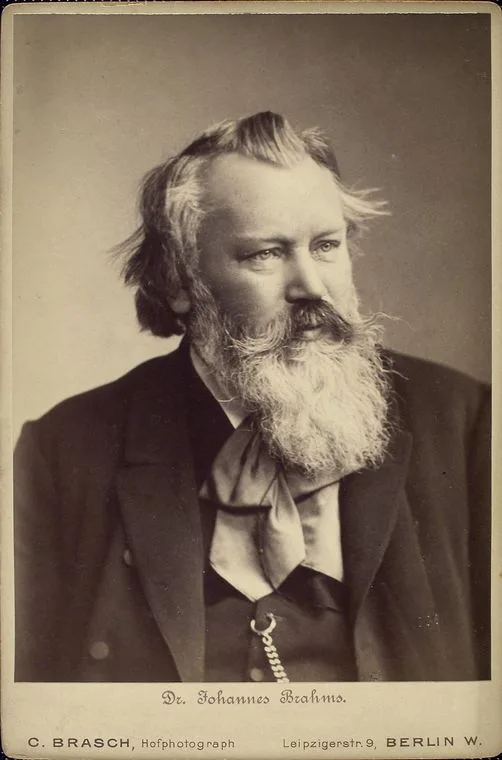
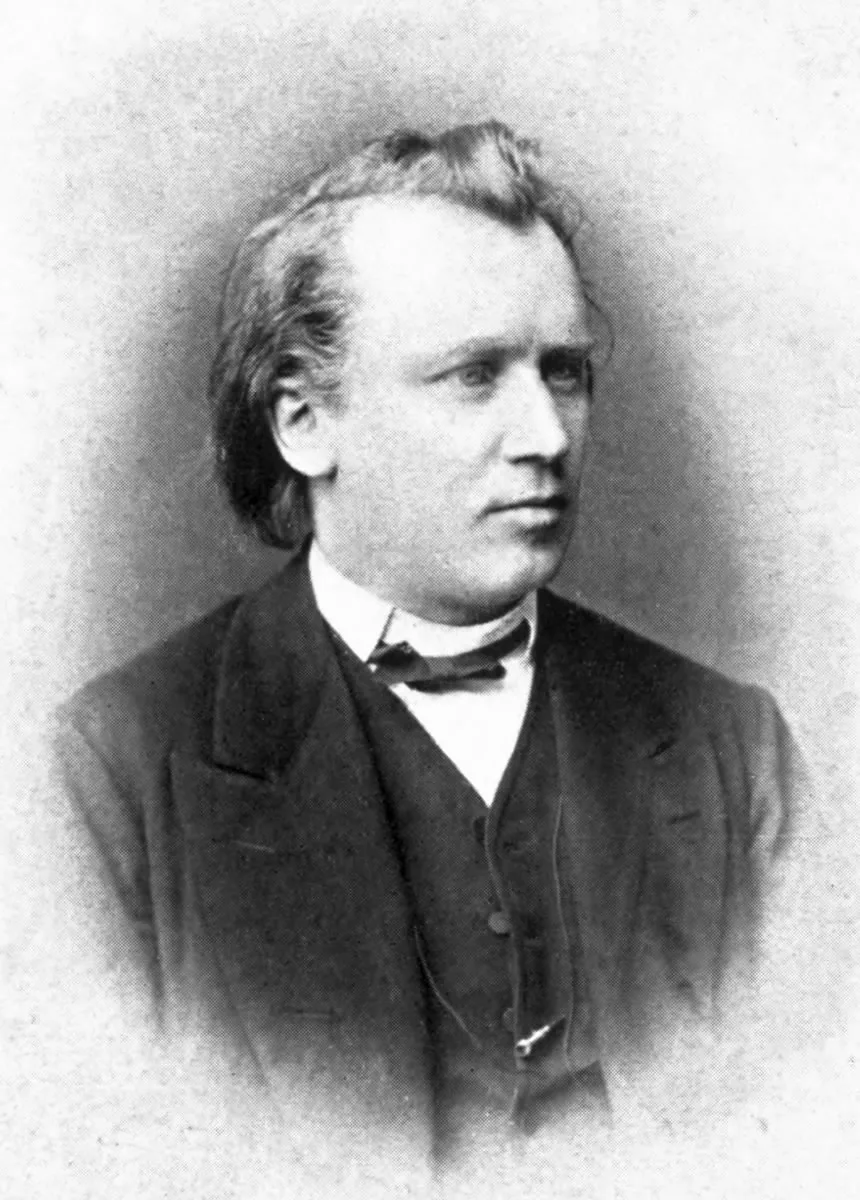
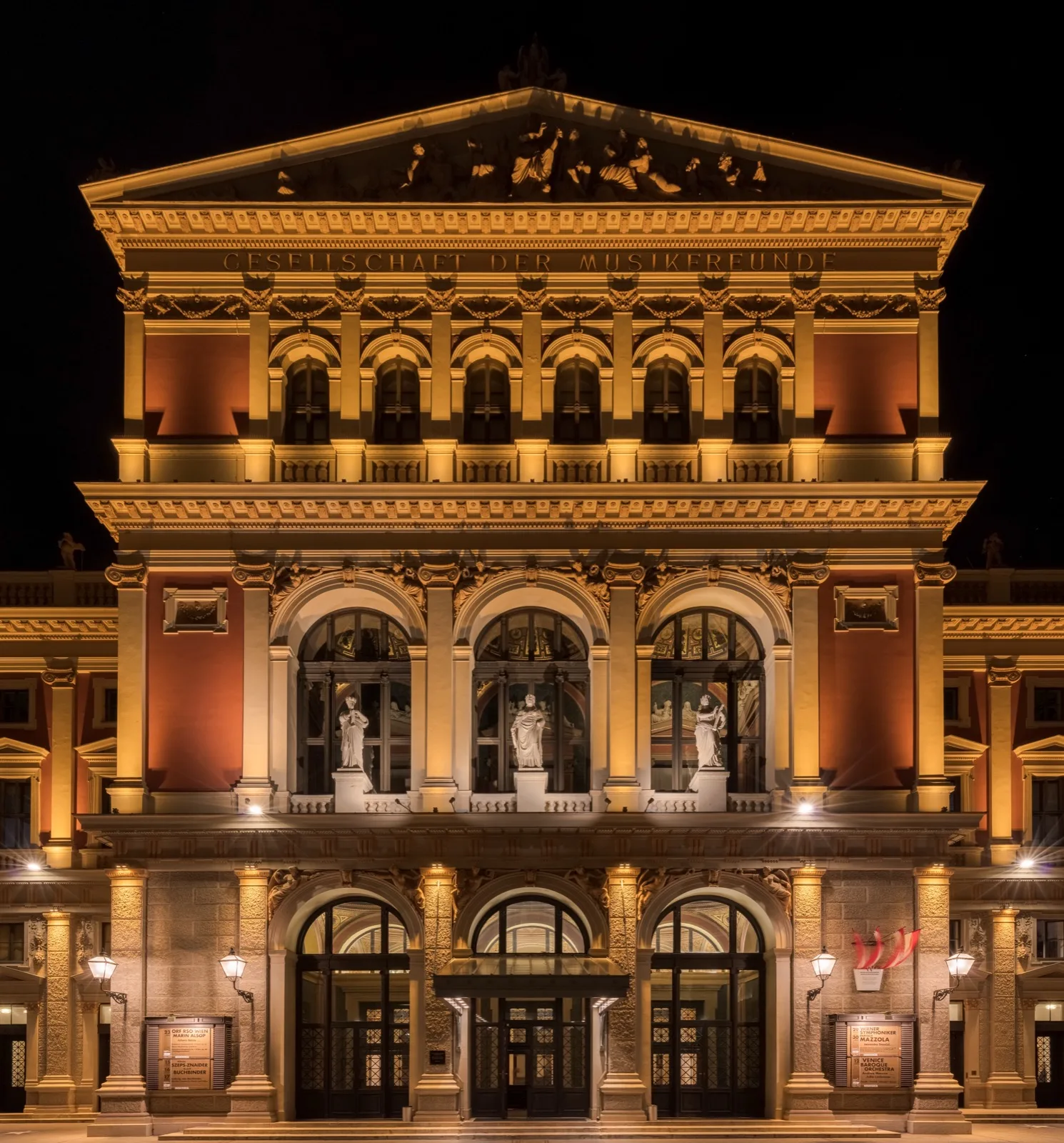
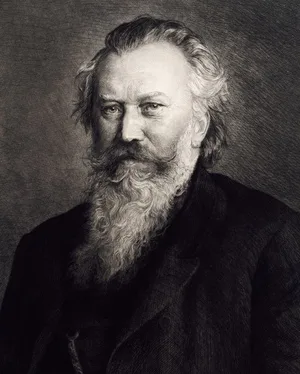
The night was November 9, 1881. The air in Budapest’s opulent Vigadó Concert Hall hummed with anticipation. At the center of the stage, flanked by the musicians of the Budapest Philharmonic Orchestra under the baton of Sándor Erkel, sat Johannes Brahms. He was forty-eight years old, sporting his famously bushy beard, looking more like a worldly philosopher than a dazzling piano virtuoso. Yet, beneath his rugged exterior, there was a palpable tension. He was about to premiere his Piano Concerto No. 2 in B-flat major, Op. 83, a work of such immense scale and punishing technical demands that it defied nearly every convention of the 19th-century concerto.
As the audience settled, they likely expected a traditional showcase: an orchestral introduction followed by the soloist storming the stage in a blaze of fireworks. What they heard instead was a single, golden horn call, answered by a gentle, rolling arpeggio from the piano. It was an intimate conversation, not a battle. But make no mistake—this quiet opening was the gateway to one of the most physically and intellectually taxing works ever written for the instrument.
The irony of this towering, fifty-minute masterpiece, which requires superhuman endurance from the soloist, is how Brahms himself described it. In a letter to his close friend and confidante, Elisabeth von Herzogenberg, he playfully announced that he had written “a tiny little piano concerto with a tiny little scherzo.” This characteristic self-deprecation masked a profound triumph. Brahms had not merely written a new concerto; he had conquered a ghost that had haunted him for twenty-two years.
Twenty-Two Years of Silence
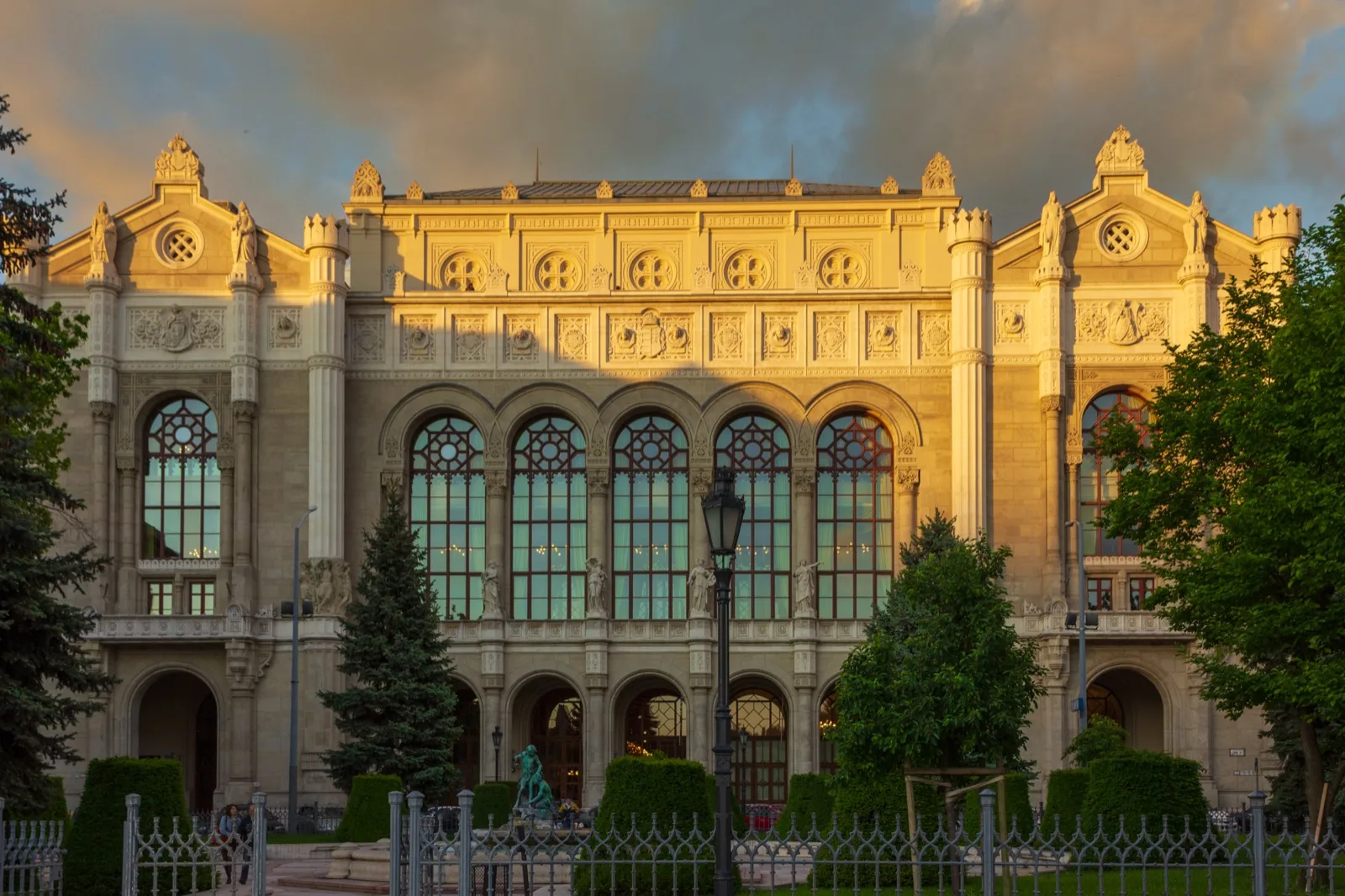
To understand the sheer magnitude of the Second Piano Concerto, you have to rewind to a cold winter evening in Hanover on January 22, 1859. A young, clean-shaven Brahms, only twenty-five at the time, stepped onto the stage to premiere his Piano Concerto No. 1 in D minor. He had poured his soul into the work, born out of the tragedy of his mentor Robert Schumann’s suicide attempt and subsequent institutionalization. It was dark, turbulent, and fiercely uncompromising.
The reception was an unmitigated disaster. The audience, expecting the glittering, superficial showpieces popularized by virtuosos like Franz Liszt, was bewildered by Brahms’s dense, symphonic textures. The critics were vicious. In a famously stoic letter to his friend, the violinist Joseph Joachim, Brahms described the humiliation of the subsequent performance in Leipzig: he noted that there were exactly “three rounds of applause, immediately drowned out by hissing.”
Though Brahms bravely brushed off the failure in his letters, claiming the experience would force him to improve, the trauma ran deep. For more than two decades, he refused to touch the piano concerto form. He composed chamber music, songs, the German Requiem, and eventually his symphonies, cementing his reputation as Beethoven’s true heir. But the idea of placing a solitary piano against the full weight of an orchestra remained an untouched, dangerous terrain.
What finally broke the spell? Springtime in Italy. In the spring of 1878, Brahms traveled south, soaking in the Mediterranean sun, the Renaissance art, and the relaxed rhythms of Italian life. The oppressive northern gloom lifted. It was during this trip that the first sketches for the B-flat major concerto began to take shape. The Italian warmth infused the music, bringing a sense of expansiveness and golden light. He would not finish the piece until the summer of 1881, working peacefully in the Austrian town of Pressbaum, but the seed planted in Italy had blossomed into something extraordinary.
Movement I: Allegro non troppo — A Golden Dialogue
Most concertos announce their soloist within the first minute. Brahms forces you to wait. The solo horn opens with a broad, unhurried melody rooted firmly in B-flat major—not the soloist, not the full orchestra, just one warm brass voice floating over silence. The piano answers with cascading arpeggios, gently expanding the horn’s phrase as if completing a thought left hanging in the air. They trade the melody back and forth in a brief, pastoral duet that feels more like late-night conversation than concert-hall grandeur.
Then the floor drops out. Without warning, the piano launches into a furious unaccompanied cadenza—thundering octaves, savage trills, massive chords hammered across the full range of the keyboard. This is not the conventional cadenza that traditionally appears near the end of a movement as a soloist’s showcase. Brahms plants it here, barely two minutes in, as a structural earthquake. It shatters the pastoral calm and signals, unmistakably, that nothing about this concerto will follow the rules.
What unfolds from there is a colossal sonata-form structure spanning roughly twenty minutes—longer than many entire concertos. Brahms builds his architecture around two contrasting thematic groups. The first, growing out of the horn’s opening call, is noble and expansive, moving through rich orchestral colors with the piano woven deeply into the texture. The second theme, arriving in the dominant key of F major, is gentler, more inward, carried initially by the strings before the piano takes it over with quiet authority. The tension between these two worlds—one outward and heroic, the other introspective and tender—drives the entire movement.
The development section is where Brahms the symphonist truly takes over. He fragments both themes, sends them through remote keys, stacks them in counterpoint, and builds enormous crescendos that crest and retreat like ocean waves. The piano never merely decorates these passages—it drives the harmonic argument forward, initiating modulations and wrestling with the orchestra on equal terms. There are stretches where the soloist vanishes entirely into the orchestral fabric, only to re-emerge with sudden, startling force. The recapitulation arrives not with a triumphant bang but almost imperceptibly, the horn theme sliding back into B-flat major as if it had never left. The movement closes with a coda of immense, quiet power—not the victorious blaze you might expect, but a kind of settled, earned calm.
Movement II: Allegro appassionato — The Fiery Scherzo
A piano concerto with four movements was, in 1881, virtually unheard of. The standard template since Mozart—fast, slow, fast—had served composers perfectly well for over a century. So why did Brahms break it? He offered a characteristically deadpan explanation: the first movement was “too simple” and needed a little something extra. Anyone who has just survived twenty minutes of that orchestral behemoth knows exactly how much salt to take with that remark.
The real reason is structural. After a first movement of such vast, sunlit breadth, dropping directly into a lyrical slow movement would have felt like a narrative non sequitur—too much warmth piled on warmth. Brahms needed a violent disruption, a tonal cold shower. He found it in the scherzo.
Marked Allegro appassionato and set in D minor, this movement slams the door on the first movement’s golden serenity. The piano attacks from the very first bar with heavy, pounding chords in a fierce triple meter. There is nothing decorative about this writing—it is pure rhythmic aggression, all fists and elbows. The orchestra matches the piano blow for blow, building up waves of sound that crash and rebuild with relentless momentum. Brahms exploits cross-rhythms constantly, setting groups of two against the underlying three-beat pulse, creating a sense of rhythmic instability that keeps the listener perpetually off balance.
The central trio section offers a brief reprieve. The key shifts to D major, the tempo loosens, and the strings unfurl a soaring, lyrical melody that could have come from one of Brahms’s songs. For a few minutes the storm clouds part. But Brahms is not writing a fairy tale—the scherzo theme returns with its full fury intact, and the movement drives to a conclusion that is abrupt, almost brutal. The pianist, who has been pounding fortissimo chords and navigating treacherous leaps for seven or eight minutes straight, emerges from this movement physically spent. And the concerto is not even half over.
Movement III: Andante — The Cello’s Confession
Something extraordinary happens at the start of the third movement: the piano does not play. In a piano concerto. Instead, the principal cellist of the orchestra rises—figuratively, if not literally—out of the ensemble and begins a long, unaccompanied solo melody of staggering beauty. It is one of the most famous passages in the entire concerto literature, and it does not belong to the pianist at all.
This cello theme, a song of profound, autumnal tenderness in B-flat major, unfolds for nearly three minutes before the piano dares to enter. And when it does, it does not take over. The piano wraps itself around the cello’s melody with delicate, filigree-like figuration—shimmering trills and gentle arpeggios that support without competing. Brahms reverses the entire power dynamic of the concerto: the soloist, who commands a nine-foot Steinway, voluntarily becomes an accompanist to a single orchestral player. It is an act of profound compositional humility, and it reveals something essential about Brahms’s character.
The middle section shifts to the remote key of F-sharp major—about as far from B-flat as you can get on the tonal map. The harmonic distance creates an otherworldly, almost dreamlike atmosphere. Here, the piano finally takes center stage, spinning out a more agitated, searching melody over restless orchestral accompaniment. Brahms quotes from his own song “Todessehnen” (Longing for Death), Op. 86 No. 6, weaving its melodic contour into the piano’s line. Whether this was a deliberate autobiographical statement or simply a case of a composer recycling good material is something Brahms never explained—but the textual association, once you know it, colors the movement with a deeper shade of melancholy.
The return of the opening cello theme feels like coming home after a long absence. The piano, chastened by whatever emotional journey the middle section represented, settles back into its supporting role. The movement fades to a close on the softest possible dynamics—the final notes dissolving into a silence so complete that, in a good performance, no one in the hall dares breathe.
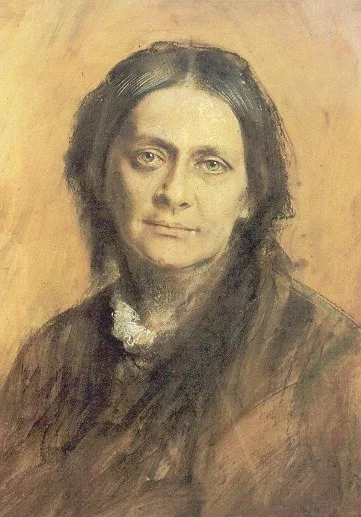
Clara Schumann, who had known Brahms’s music more intimately than perhaps anyone alive, was deeply moved when she first saw the score. She and Brahms had shared a bond that defied easy categorization—part mentor and student, part unrequited love, part lifelong artistic partnership—ever since the traumatic days of Robert Schumann’s breakdown in 1854. Whether the cello’s aching melody carried a private message meant for Clara is speculation. But when a composer quotes a song about longing for death in the most vulnerable movement of his most personal concerto, and sends the score to the woman he has loved silently for nearly thirty years, the music invites you to wonder.
Movement IV: Allegretto grazioso — A Hungarian Farewell
After forty minutes of monumental architecture, philosophical depth, and a slow movement that borders on sacred, how do you end this thing? Brahms’s solution is characteristically sly: he doesn’t try to top what came before. Instead, the finale opens with a skipping, dancing theme that is almost shockingly lightweight. Marked Allegretto grazioso—graceful, not heroic—it is the musical equivalent of a heavy thinker putting down his books, stretching, and deciding to take a walk.
The theme itself carries a distinct Hungarian flavor—short-long rhythmic snaps, ornamental turns, and a sly rubato quality that evokes the verbunkos tradition of Romani musicians. This was not an affectation. Brahms had been obsessed with Hungarian music since his teenage years, when he toured as an accompanist with the Hungarian violinist Eduard Reményi and absorbed the sounds of Romani bands firsthand. That fascination produced the wildly popular Hungarian Dances, and its fingerprints are all over this finale. Given that the concerto premiered in Budapest, the local color feels like a deliberate nod to the audience—a warm handshake rather than a formal bow.
Structurally, the movement is a rondo—the main theme returns in varied guises between contrasting episodes, each one introducing new melodic material before circling back to the dance. But “light” here does not mean “easy.” The piano part is riddled with passages of wicked technical difficulty: rapid chains of double thirds that must sound effortlessly smooth, crystalline runs in the upper register, and sudden leaps that demand absolute precision at speed. The difference from the first movement’s difficulties is one of character rather than degree—where the Allegro non troppo demands symphonic weight and stamina, the finale requires the nimble fingers and timing of a great chamber musician.
As the movement approaches its conclusion, Brahms gradually pushes the tempo higher, tightening the screws until the rondo theme spins faster and faster. The coda is a giddy, breathless sprint—the piano and orchestra racing each other to the final B-flat major chord. It arrives with an almost casual brilliance, as if this fifty-minute colossus were nothing more than a pleasant afternoon stroll. The understatement is pure Brahms.
A Symphony with a Piano in It
The sheer scale and internal logic of the Second Piano Concerto led to a famous critique by the influential music critic Eduard Hanslick, who called it a “Symphonie mit Klavier-Obbligato” (a symphony with piano obbligato). While meant as high praise for its structural integrity, the phrase touches on exactly what makes this piece so formidable.
Brahms was ideologically opposed to the hollow virtuosity that dominated the 19th-century concert stage. He despised music written merely to show off how fast a pianist could move their fingers. In this concerto, every impossibly difficult passage—the agonizing stretches, the thunderous chord progressions, the blindingly fast trills—serves a strict musical purpose.
This creates a terrifying paradox for the soloist. It is one of the hardest pieces in the repertoire to play, yet it is often invisible to hear. The pianist sweats blood navigating thick, awkward textures, but to the audience, it just sounds like a rich, seamlessly blended symphony. The pianist must act as the ultimate chamber musician, constantly weaving their sound into the fabric of the orchestra rather than floating above it. It requires an ego-less virtuosity, where the music is always greater than the performer.
Compare the orchestral writing here with Brahms’s four symphonies and the family resemblance is unmistakable. The way he voices the woodwinds in pairs, the dense string writing that favors warm middle registers over flashy high-octave shimmer, the four horns used with symphonic fullness rather than concerto-style punctuation—all of it could have been lifted wholesale from the Second or Third Symphony. Some wags have suggested that Brahms actually wrote five symphonies, and simply forgot to remove the piano from one of them. They are not entirely wrong.
“A Tiny Little Concerto”
Brahms’s famous quote to Elisabeth von Herzogenberg—describing this leviathan as “a tiny little piano concerto with a tiny little scherzo”—is one of the great understatements in music history. But it tells us a great deal about the man himself.
I want to tell you that I have written a very small piano concerto with a very small and pretty scherzo.
— Johannes Brahms
Brahms hid his deepest emotions behind a veil of gruff humor. By minimizing the work, he was protecting himself, perhaps still bearing the scars of the catastrophic reception of his First Concerto twenty-two years earlier. He didn’t need to worry.
When Clara Schumann—the great love of his life, his most trusted musical advisor, and a phenomenal pianist in her own right—finally heard the piece, her reaction was unequivocal. She recognized its profound depth, its structural majesty, and its deep humanity. The public agreed. The Budapest premiere was a resounding success, and Brahms subsequently took the concerto on a triumphant tour across Europe.
That tour, incidentally, revealed one more thing about the concerto: it aged like good wine. Unlike many Romantic showpieces that dazzle on first hearing and lose their luster on the third, Brahms’s Second grew richer with each encounter. Listeners who found it dense or impenetrable at first came back and discovered new details—a woodwind countermelody they had missed, a harmonic shift that suddenly made emotional sense, a rhythmic pattern in the finale that clicked into place. The concerto rewards patience. It does not grab you by the collar; it earns your attention, measure by measure, over a lifetime of listening.
Recordings to Start With
Navigating the vast discography of Brahms’s Second Piano Concerto can be intimidating. Because the work demands a perfect balance between raw power and chamber-music delicacy, finding the right interpretation is crucial. Here are three benchmark recordings that capture different facets of this masterpiece.
1. Krystian Zimerman / Leonard Bernstein / Vienna Philharmonic (1984)
This recording is legendary for its monumental, almost cinematic scale. Bernstein stretches the tempos, wringing every drop of Romantic agony and ecstasy from the orchestra, while Zimerman meets him with playing of terrifying clarity, power, and crystalline beauty. It is an interpretation of extremes, bursting with passion.
2. Emil Gilels / Eugen Jochum / Berlin Philharmonic (1972)
If Zimerman and Bernstein are fire, Gilels and Jochum are granite. This is a reading of immense, stoic dignity. Gilels’s famous “golden tone” ensures that even the most violently heavy passages remain musical and deeply resonant. Jochum conducts with a profound understanding of Brahms’s architectural structure. It is, quite simply, authoritative.
3. Murray Perahia / Claudio Abbado / Berlin Philharmonic (1998)
For a more transparent, lyrical approach, Perahia is unmatched. He treats this massive work like intimate chamber music. His touch in the slow movement is heart-stoppingly tender, and Abbado draws an incredibly refined, luminous sound from the Berlin Philharmonic. This recording highlights the poetry behind the muscle.
Follow the Score
The full score is freely available at IMSLP. View the Piano Concerto No. 2, Op. 83 score on IMSLP
Frequently Asked Questions
How long is Brahms’s Piano Concerto No. 2?
A typical performance runs between 48 and 50 minutes, making it one of the longest concertos in the standard repertoire. Some expansive interpretations, like Bernstein’s, push past the 52-minute mark.
How many movements are in Brahms’s Second Piano Concerto?
Four movements, which was a radical departure from the three-movement concerto norm established by Mozart. The addition of a scherzo as the second movement gives the work a symphonic scale and dramatic arc that no other Romantic concerto attempts.
When did Brahms write his Piano Concerto No. 2?
The first sketches date from Brahms’s Italian trip in 1878. He completed the concerto in the summer of 1881 in Pressbaum, Austria, and premiered it himself as the soloist in Budapest on November 9, 1881—twenty-two years after the disastrous first performance of his Piano Concerto No. 1.
Is Brahms’s Second Piano Concerto difficult?
Ferociously so. It ranks among the most technically and musically demanding works in the piano repertoire. The difficulty is compounded by the fact that much of it is “hidden”—the hardest passages are woven into the orchestral texture rather than spotlighted as showy display, so the pianist must produce enormous effort for relatively little visible glory. Stamina is a major factor: the concerto is essentially a marathon that requires the soloist to sustain intense focus for nearly fifty minutes without a single extended rest.
Why does the third movement feature a cello solo?
Brahms never explained his reasoning explicitly, but the choice serves multiple purposes. It gives the pianist a moment of physical rest after the punishing first two movements. More importantly, it shifts the emotional center of gravity away from the soloist entirely, reinforcing Brahms’s vision of the concerto as a collaborative work rather than a vehicle for individual display. The cello’s deep, vocal timbre also brings a quality of intimacy that the piano, for all its range, cannot quite match in the same register.