- Composer
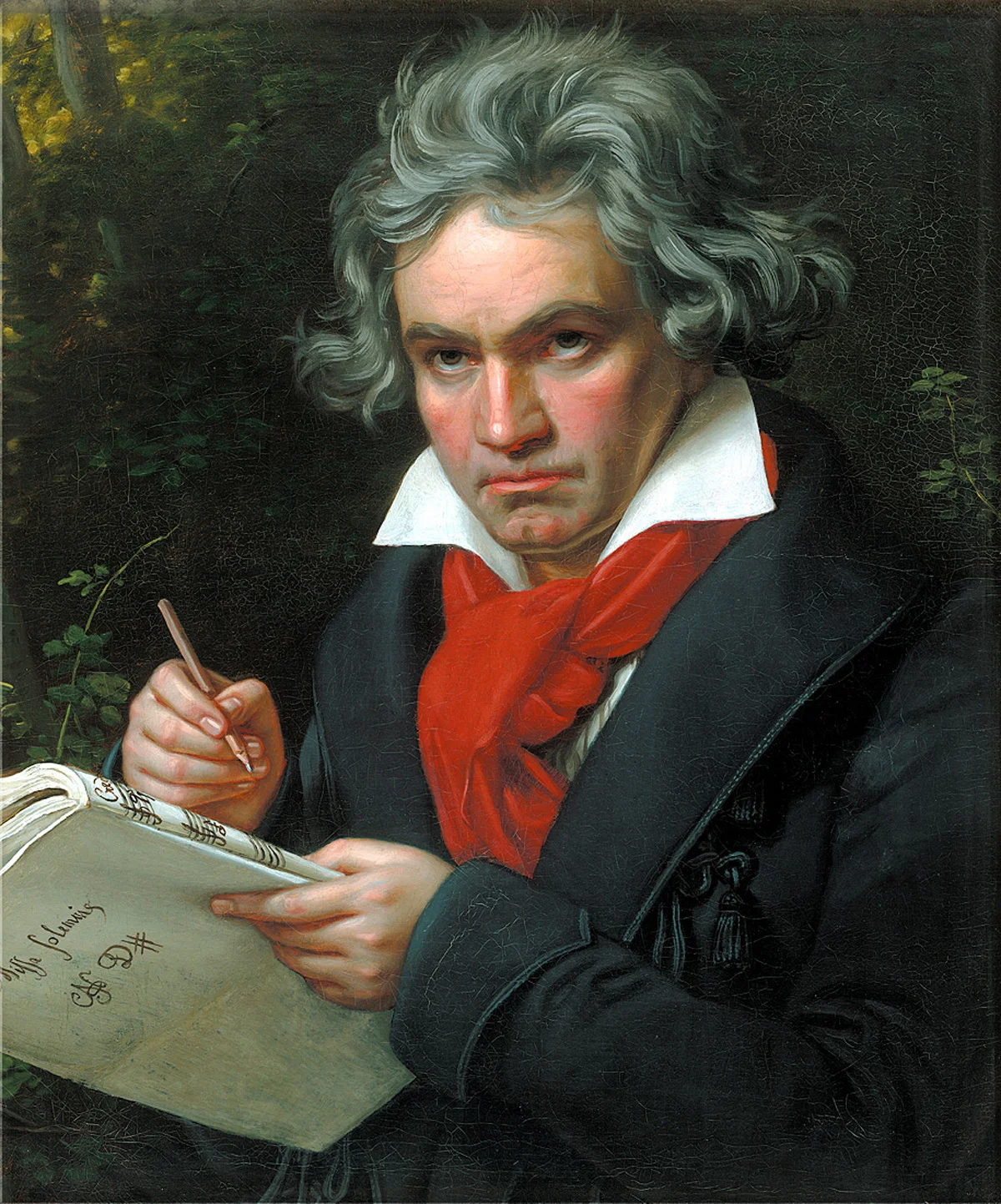
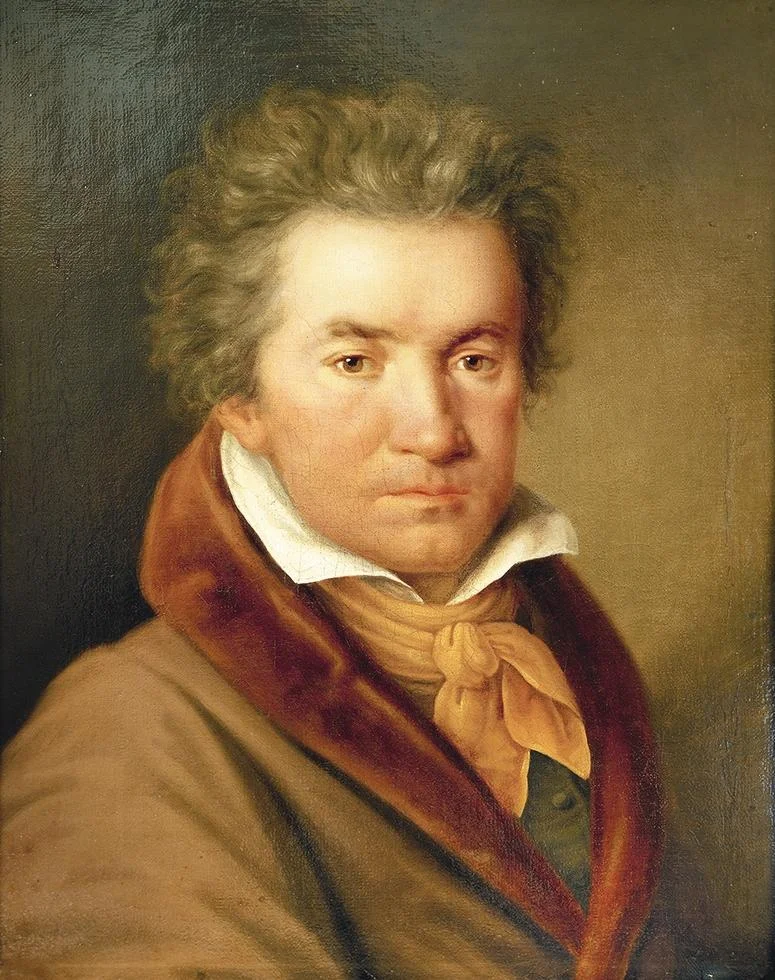
- Ludwig van Beethoven
(1770–1827) - Work
- Symphony No. 5 in C minor, Op. 67
- Composed
- 1804–1808
- Premiere
- December 22, 1808, Theater an der Wien, Vienna
- Instrumentation
- Piccolo, 2 flutes, 2 oboes, 2 clarinets, 2 bassoons, contrabassoon, 2 horns, 2 trumpets, 3 trombones (alto, tenor, bass), timpani, strings
- Movements
- 4 movements
I. Allegro con brio (C minor)
II. Andante con moto (A♭ major)
III. Allegro (C minor)
IV. Allegro (C major) - Duration
- Approx. 30–35 minutes
- Dedicated to
- Count Razumovsky & Prince Lobkowitz
Da-da-da DUM. Four notes. The most famous four notes in the history of music. Almost everyone knows this piece — but surprisingly few people really know it. Even the famous story about “Fate knocking at the door” is probably made up. It came from Beethoven’s secretary Anton Schindler, and many of Schindler’s other claims turned out to be outright fabrications.
But does that matter? The music doesn’t need a nickname to be overwhelming. Beethoven’s Symphony No. 5 in C minor, Op. 67. An entire symphony built from just four notes — the boldest experiment in the history of music. Here’s how it came to be, why its premiere was a spectacular disaster, what drama hides inside each movement, and how those four notes became a symbol of hope during a world war.
The Man Who Wrote His Will — and Chose to Live
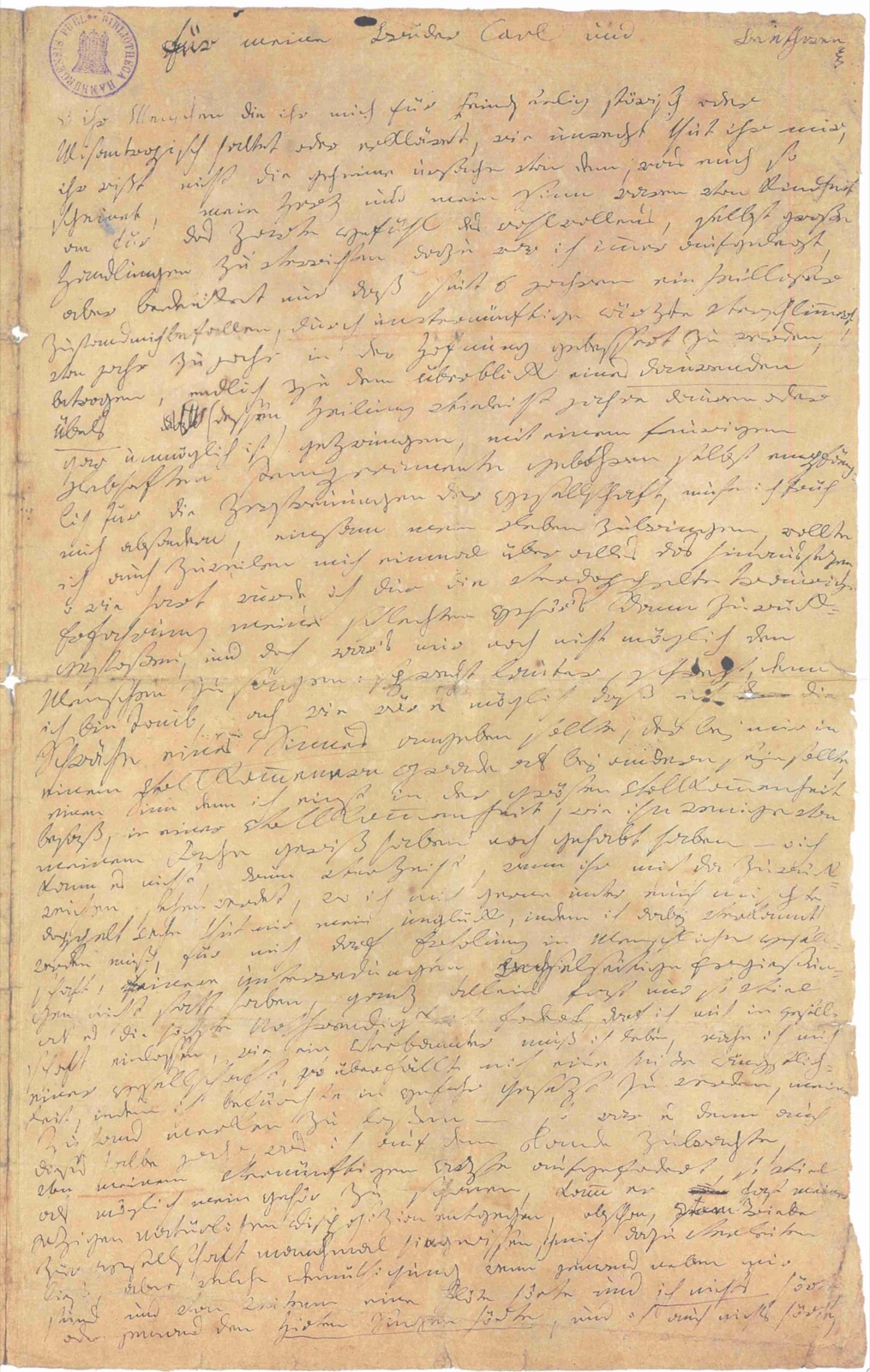
1802. Heiligenstadt. Thirty-two-year-old Beethoven wrote a letter to his brothers. It looked like a letter. It was really a will. He confessed that he was going deaf, that he was terrified of the world finding out, that he had thought about ending his life. “I was on the verge of putting an end to my existence,” he wrote.
But he didn’t die. Instead, he wrote this: “I will seize Fate by the throat. It shall never wholly overcome me.” The Fifth Symphony is that sentence turned into music.
The earliest sketches for the Fifth date to around 1804. Beethoven’s sketchbooks show just how obsessed he was with the opening rhythm. Short-short-short-long. He rewrote it dozens of times, maybe hundreds. What started as a longer, more complex motif was compressed to the extreme — until only four notes remained. That radical simplicity is the genius.
The symphony took four years to write. In the meantime, he was also working on Symphony No. 4, the Violin Concerto, Piano Concerto No. 4, and the Razumovsky Quartets — all at once. This was Beethoven’s “middle period,” when his creative energy was at its peak.
His hearing was already deteriorating badly. At the 1808 premiere, he could still hear some sounds, but he knew it was getting worse. That desperation is woven into every bar of this symphony. The Fifth doesn’t sound like other music because it wasn’t a purely musical experiment. It was a man staking his entire existence on a piece of music.
The Worst Premiere in History — and the Praise That Followed
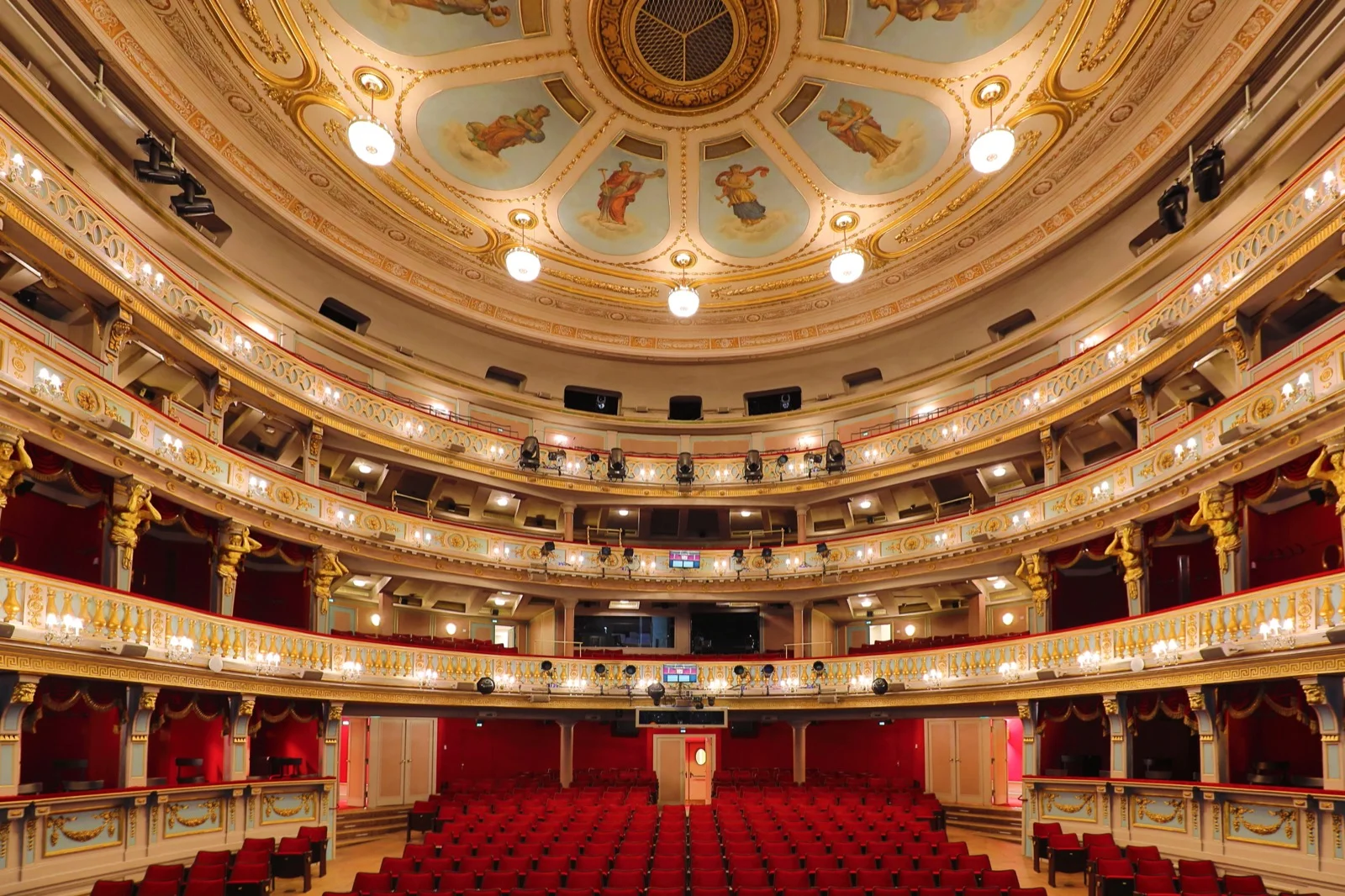
December 22, 1808. The Theater an der Wien, Vienna. This concert is one of the most infamous disasters in music history. Beethoven crammed the premieres of both Symphony No. 5 and No. 6 (“Pastoral”) into a single evening, plus the Choral Fantasy, Piano Concerto No. 4, excerpts from a mass, and an aria. The show ran over four hours.
And it was December in Vienna. The theater had no heating. The audience sat shivering in their coats. Rehearsals had been inadequate. During the Choral Fantasy, the orchestra made such a mess that Beethoven stopped and restarted from the beginning. The audience was exhausted. The performers were exhausted. The critics were divided.
But the Fifth Symphony itself? That was a different story. Some in the audience recognized its power instantly. The eighteen-year-old composer Louis Spohr later recalled: “The moment I heard those first four notes, I knew something enormous had begun.”
The real turning point came in 1810, when the writer and critic E.T.A. Hoffmann published his review: “This music opens a realm of awe and terror. Its relentlessly building climaxes draw the listener into the realm of the spirit.” That single review cemented the Fifth as a monument of Romanticism — and placed it at the summit of the classical repertoire, where it has stayed for over 200 years.
A fun fact: the Sixth Symphony, premiered the same night, actually got better reviews at the time. But over the decades, the Fifth pulled far ahead. History sided with da-da-da DUM.
From Darkness to Light — The Drama of Four Movements
First Movement: Allegro con brio, C minor. Da-da-da DUM. This four-note motif rules the entire movement. It starts in the strings, passes to the winds, gets transformed, stacked, and detonated. For seven minutes, the rhythm repeats relentlessly, building tension that never lets up.
What’s astonishing is how Beethoven draws completely different melodies from this one simple figure. Even the gentler second theme has the da-da-da DUM rhythm pulsing underneath in the bass. The development section is a battlefield — the motif crashes through key after key, the entire orchestra colliding. Then, just before the recapitulation, an oboe suddenly stands alone and plays a slow, cadenza-like phrase. Time stops in the middle of war. Those few seconds are the most heartbreaking moment in the entire movement.
Second Movement: Andante con moto, A♭ major. After the fury of the first movement, a moment of rest. The violas and cellos carefully sing a beautiful theme, which grows richer with each variation. If the first movement was a fist, the second is an open hand.
But the peace isn’t complete. Brass fanfares break in from time to time — the tension of the first movement hasn’t fully faded. When trumpets and timpani suddenly blare a C major fanfare, you can’t tell whether it’s a preview of the final movement’s triumph or just a fleeting vision.
This movement isn’t a rest break. It’s closer to tending a wound. The wound hasn’t healed, but you sing anyway. The spirit that kept Beethoven composing after writing his Heiligenstadt will — that spirit lives in every phrase of this movement.
Third Movement: Allegro, C minor. Beethoven labeled this a “scherzo” — a joke. There’s nothing funny about it. A dark, restless theme rises from the low strings like a ghost climbing out of a cellar. The horns drag back the da-da-da DUM motif from the first movement. In the trio section, cellos and basses charge forward in a fugue-like sprint. The grim energy builds and builds. And then this movement doesn’t end — it flows directly into the fourth.
This transition is one of the most famous moments in all of music. The timpani begin a soft, steady pulse. The strings tremble at the lowest possible volume. It’s like watching light appear in total darkness. The hairs on your arms stand up. A crescendo builds, slowly, slowly —
Fourth Movement: Allegro, C major. Light explodes. The trombones enter for the first time in the entire symphony. Beethoven had been saving them for exactly this moment. The piccolo and contrabassoon join in. The orchestra’s sound doubles in size. The audience is hit with a wall of sound.
In the coda, the entire orchestra hammers C major chords for twenty-nine bars straight. Too much? Beethoven needed every single one. To defeat the darkness of C minor completely, permanently, beyond any doubt. As if to say: “Never come back.”
The transition from the third movement into the fourth is one of the most powerful emotional releases you can experience in music. Beethoven wrote in his Heiligenstadt Testament, “I will seize Fate by the throat.” This is the moment that sentence becomes sound. Listen on headphones, and you’ll feel the current run down your spine.
How This Symphony Changed the World
The Fifth Symphony wasn’t just a great piece of music. It rewrote the rules of what a symphony could be.
First, it built an entire symphony from a single short motif. Before this, symphonies were collections of beautiful melodies. Beethoven unified four movements with just four notes. In architectural terms, he built a cathedral from a single brick. No symphony before or since has achieved this level of unity so radically.
Second, it broke down the walls between movements. The direct connection (attacca) from the third to the fourth movement was unheard of at the time. The symphony was no longer “four separate pieces” — it was one continuous story.
Third, the journey from C minor to C major — darkness to light, per aspera ad astra — became the model for countless symphonies after it. Brahms’s First, Mahler’s Second (“Resurrection”), Shostakovich’s Fifth — all of them live in the shadow of Beethoven’s Fifth.
During World War II, the Allies adopted the opening motif as a symbol of victory. Da-da-da DUM matches the Morse code for V (· · · −) — V for Victory. The BBC used this rhythm as a call sign at the start of its European broadcasts. In Nazi-occupied France, the Netherlands, and Belgium, people heard those four notes and remembered the will to resist. A German composer’s music, turned into a signal of defiance against Germany — one of history’s great ironies. More than a century after Beethoven’s death, his four notes became a beacon of hope in the middle of a war.
Recommended Recordings
Carlos Kleiber / Vienna Philharmonic (1974) — Some say this is the only recording you’ll ever need. Energy, structure, drama — all near-perfect. Watch Kleiber conduct, and it looks like the music is leaping from his baton.
Karajan / Berlin Philharmonic (1962) — Massive, monumental sound. If Kleiber is a blade, Karajan is a cannon. The Berlin Philharmonic brass in the fourth-movement coda is a physically overwhelming experience.
Gardiner / Orchestre Révolutionnaire et Romantique — Performed on period instruments, this is close to what Beethoven himself would have heard. The lighter, sharper sound actually heightens the first movement’s tension.
Furtwängler / Berlin Philharmonic (1947) — The audio quality is rough — it was recorded right after the war. But the desperation and emotional depth in this performance are beyond anything a modern recording can match. When musicians who lived through a real war play “from darkness to light,” the weight is different.
Listening Tips
Try tracking the da-da-da DUM rhythm throughout the whole symphony. It’s not just in the first movement. Listen for it in the second movement’s fanfares, the third movement’s horns, the fourth movement’s victory theme. Follow that rhythm, and the entire symphony starts to feel like a single story.
Hold your breath at the end of the third movement. When the timpani begin that quiet pulse and the strings tremble at the lowest possible volume — that’s where the real climax begins. Everything from there to the fourth movement’s explosion is the true peak of this symphony.
Let the fourth-movement coda wash over you. Those seemingly endless C major chords at the end might feel excessive. They’re meant to be. This is Beethoven permanently, irrevocably defeating the darkness that started in the first movement. Not a single chord is wasted.
Follow the Score
The full score is freely available at IMSLP. View the Symphony No. 5, Op. 67 score on IMSLP
Frequently Asked Questions
How long is Beethoven’s Fifth Symphony?
About 30–35 minutes, depending on the conductor. Furtwängler stretches it past 35 minutes; period-instrument performers like Gardiner finish in under 28.
Is the “Fate knocking at the door” story true?
Probably not. The story comes from Beethoven’s secretary Schindler, whose other claims have been widely discredited. What we know for certain is that Beethoven obsessively revised the opening rhythm hundreds of times in his sketchbooks.
Is this a good first piece for someone new to classical music?
One of the best. It’s short (30 minutes), the motif is impossible to miss, the story is clear, and the ending is triumphant. If you think classical music is boring, this symphony will change your mind.
Could Beethoven hear his own Fifth Symphony?
At the 1808 premiere, he could still hear to some degree. He didn’t go completely deaf until after 1814. But he knew his hearing was getting worse — and that urgency is baked into every note.
Is the Morse code V connection real?
Beethoven didn’t intend it — Morse code was invented after his death. But the da-da-da DUM rhythm happens to match the Morse code for V (· · · −), and during WWII, the BBC used it as its European broadcast call sign. In occupied Europe, it became a quiet symbol of resistance. A German composer’s music, turned against Germany — history has a dark sense of humor.
Why does the third movement flow directly into the fourth?
Beethoven designed it that way. The “darkness to light” narrative needed to unfold without interruption. This kind of direct connection between movements (attacca) was radical for its time — and went on to influence Mendelssohn, Schumann, Sibelius, and many others.
What makes the first movement of Beethoven’s Fifth so famous?
The first movement is built entirely on a powerful four-note rhythmic idea, often described as “short-short-short-long.” This single, memorable motif is relentlessly developed throughout the movement, creating a sense of urgency and drama. Premiered in 1808, its concentrated intensity was revolutionary for its time.
How does the symphony move from darkness to light?
The symphony presents a clear emotional journey from the stormy C minor of the first movement to the triumphant C major of the finale. The struggle and tension of the opening movements are ultimately resolved in the heroic and brilliant final movement. This transition from a minor to a major key was a powerful narrative device that influenced many later composers.
What is the form of the second movement?
The second movement, marked Andante con moto, is a set of double variations in the key of A-flat major. Beethoven presents two distinct themes and then creatively varies each one in turn. This structure provides a lyrical and hopeful contrast to the intensity of the opening movement.
What instruments did Beethoven add for the finale?
To create the powerful, triumphant sound of the fourth movement, Beethoven expanded the orchestra by adding three trombones, a piccolo, and a contrabassoon. These instruments, not standard in symphonies at the time, dramatically increase the music’s volume and sonic range. Their entrance marks the definitive shift from the darkness of C minor to the blazing light of C major.
You Might Also Enjoy
- Vivaldi’s Four Seasons — Listening Guide
- 7 Best First Pieces for Classical Music Beginners
- 10 Classical Symphonies to Hear Before You Die