- Composer
- Wolfgang Amadeus Mozart
(1756–1791) - Work
- Piano Concerto No. 25 in C major, K. 503
- Key
- C major
- Composed
- 1786 (completed December 4, 1786)
- Movements
- 3 movements
I. Allegro maestoso (C major)
II. Andante (F major)
III. Allegretto (C major) - Instrumentation
- solo piano, flute, 2 oboes, 2 bassoons, 2 horns (in C), 2 trumpets (in C), timpani, strings
- Premiere
- c. 1786–1787, Vienna
Wolfgang Amadeus Mozart (piano)
On December 4, 1786, Mozart finished two major works in a single day.
In the morning, he completed Piano Concerto K. 503. In the afternoon, he finished the ‘Prague’ Symphony, K. 504. Was this just a 30-year-old genius knocking out a couple of days’ work in one go? Not at all. Both pieces represent the absolute peak of his creative powers. That was just Mozart. For the record, the ‘Prague’ Symphony also failed to make much of an impression in Vienna at the time. On that one day, Mozart wrote two pieces of music that Vienna simply wasn’t ready for.
But here’s the strange part. K. 503 was then basically forgotten for almost 200 years. This happened even after Mozart himself premiered it, and even after the critic Johann Friedrich Rochlitz declared in 1798 that it was “the most magnificent of all the concertos that have ever been written, perhaps the most magnificent of all concertos whatsoever.” Vienna didn’t perform it for years after Mozart’s death, and well into the 20th century, it was dismissed as “difficult and excessive.” Even while his other piano concertos were filling concert halls, K. 503 sat quietly on the shelf.
When you listen to Mozart’s piano concertos in order, you can’t help but pause at K. 503. You get the feeling that something has changed. There’s a certain coolness, a sense that he’s no longer trying to please the crowd. That’s the first impression. At first, that coolness can feel like distance. But after two or three listens, you realize it wasn’t distance at all. It was total self-assurance. The unwavering voice of a composer who knew exactly what he was doing. That’s K. 503.
So what condemned this piece to two centuries of misunderstanding? And why should we pull it off the shelf and listen to it now?
The Choice of C Major and Mozart in 1786
When you think of a Mozart piano concerto, No. 21 (K. 467) or No. 23 (K. 488) probably come to mind first. They’re elegant, dazzling, and full of melodies you can’t forget. In comparison, K. 503 is often described as “weighty,” “symphonic,” and “hard to grasp.” This isn’t a flaw. It’s the entire point.
Think about Mozart in 1786. He’d been making a living in Vienna for four years by presenting his piano concertos. He composed them, performed them as the soloist, and organized the concerts himself. Between 1784 and 1786, he produced an incredible 12 large-scale piano concertos. Most of these were written to meet audience expectations while still maintaining his own high standards. But K. 491 in C minor and K. 503 were different. They weren’t showpieces for the audience; they were vehicles for what the composer himself wanted to say.
Nobody knows the exact date of this concerto’s premiere. The completion date is in his notebook, but the first performance records are hazy. We only know that Mozart himself performed it a few times. So, in a way, it entered the world with its own history already shrouded in mystery. It’s ironic that a work with such an unclear debut is now considered one of his greatest. Mozart probably had no idea what the future held for this piece. If he had, he might have played it more often.
C major is typically a “bright and brilliant” key. Think fanfares, military bands, royal ceremonies. It’s the sound of grandeur and clarity. But in K. 503, Mozart uses C major in a completely different way. From the very first notes, the orchestra stands like a massive structure, and the solo piano finds itself in a very peculiar position within it. It’s not the hero. The piano converses with the orchestra, persuades it, sometimes steps back, and then re-enters from a different angle. This is the core of the concerto.
Musicologist Simon P. Keefe stated there is “little dissent” that K. 503 is “one of the supreme achievements of the concerto genre.” He wrote that in the 21st century, more than 200 years after the work was completed. His contemporaries didn’t get it, the next generation forgot it, and it was only slowly rediscovered in the 20th century. Like a great book waiting for the right reader, this concerto was waiting for the right audience.
Calling K. 503 “difficult” isn’t entirely accurate. It’s more that it doesn’t offer an immediate reward. Instead of a rush of emotion on the first listen, you get a structural density that only reveals itself on the second and third. If Mozart’s other Vienna concertos were designed to make a great impression on a first date, K. 503 is the kind that only shows its true self on the second or third meeting. It’s that experience of something initially unfamiliar becoming something you treasure most. That’s this concerto.
Why It Was Forgotten: An Overstuffed Score
The reason K. 503 was overlooked for so long is, paradoxically, because it contains too much.
Just look at the first movement. The sheer amount of musical material the orchestra lays out before the second theme even appears is overwhelming. At 12 to 14 minutes, it’s one of the longest first movements in all of Mozart’s piano concertos. It’s hard to get your bearings on a single listen. And that’s not a failure of the listener’s attention span; it’s because the composer packed so much in. Where other concertos guide the audience with clear melodies, K. 503 is designed so that you have to step back and see the whole picture for the structure to emerge.
Here’s a fun fact: the march-like theme in the first movement of K. 503 sounds a lot like the French national anthem, “La Marseillaise.” K. 503 was finished in December 1786; “La Marseillaise” officially appeared in 1792. That means Mozart wrote the melody six years earlier. Of course, it could be a coincidence. But when you hear how this theme completely dominates the development section, it’s hard to dismiss it as pure chance. It’s more likely that this type of march melody was just “in the air” across Europe at the time. Mozart grabbed it first and used it as the backbone of his concerto, and a few years later, someone else pulled the same melody out of the air and turned it into an anthem. Either way, you’ll hear the resemblance.
But there’s an even more crucial connection. It’s widely accepted among musicologists that Beethoven’s Piano Concerto No. 4 directly references K. 503. And it doesn’t stop there. A motif structurally similar to the famous “fate” theme from Beethoven’s Symphony No. 5 appears in the first movement of K. 503. The reaction from people hearing it for the first time is almost always the same: “I’m listening to K. 503, but I’m thinking of Beethoven’s 5th.” It makes perfect sense once you hear it. And this discovery is the key to seeing K. 503 in a completely new light. To say Mozart planted a seed for Beethoven is no exaggeration.
By 1786, Mozart was beginning to face financial difficulties. His popularity in Vienna had peaked, and a court composer position was not yet in sight. K. 503 was written as the concluding work of his great series of piano concertos. It is, for all intents and purposes, the last of the 12 monumental piano concertos from his Vienna years. That sense of finality is embedded in the music. It’s a work written with nothing left to prove, dedicated only to his own artistic vision. That’s why K. 503 is difficult, and that’s why K. 503 is so deep.
A Movement-by-Movement Guide
Mvt. 1: Allegro maestoso — The Orchestra Builds the Framework First
“Allegro maestoso” means “fast, but majestic.” Yet, this movement doesn’t start with the full orchestra blasting away. It begins cautiously, but with a sense of profound significance.
The strings lay down a low, rumbling foundation, and the march-like theme emerges above it. This is where you’ll hear that melody reminiscent of “La Marseillaise.” This theme will be transformed and brought back in surprising ways during the development section. At around 12-14 minutes, this movement is the most symphonic in scale of all Mozart’s piano concertos. In fact, the orchestral exposition is one of the longest he ever wrote. The orchestra has a lot to say before the soloist even enters. You get the feeling that a great deal has already been “built” before the piano arrives.
Pay close attention to the piano’s entrance. It’s not a heroic declaration. The piano enters cautiously, as if surveying the scene the orchestra has set. Then, slowly, it begins to carve out its own territory. This is completely different from other concertos where the soloist acts as an adversary to the orchestra or is overwhelmed by it. In K. 503, both forces participate in the narrative as near-equals. It’s not a competition; it’s a negotiation. And this negotiation never declares a clear winner.
The development section is a showstopper. Though the piece is in C major, it repeatedly veers into minor keys. The music suddenly darkens and then returns, creating a powerful dramatic arc. This “modal mixture”—the technique of shifting between major and minor—is one of K. 503’s most distinctive features. It’s not simply a “bright C major” piece; darkness is a constant visitor. Listening to the rapid interplay of light and shadow in this section, you finally understand why the movement needed to be so long. To accommodate such dramatic departures, it needed an equally expansive stage.
Just before the cadenza, the entire orchestra cuts out, leaving the solo piano completely alone. The weight of that silence is what supports the entire movement. The soloist has to decide what to do in that moment. This is why the character of the cadenza can completely change the impression of the movement depending on the performer. Malcolm Bilson’s cadenza, for instance, leverages the unique, crystalline texture of the fortepiano to give you a real sense of the instrument for which K. 503 was originally written.
Mvt. 2: Andante — A Secret Meeting Led by the Woodwinds
The second movement is in F major. It’s in sonata form but lacks a development section. Yet, it’s never boring. Why? Because the woodwinds never stop talking.
The flute, oboes, and bassoons trade melodies as if whispering to one another. The solo piano acts as a mediator in this “conversation,” or sometimes joins in itself. This is the movement where the woodwinds are most prominent in the entire concerto. It’s stunning how Mozart strips away the grand framework of trumpets and timpani from the first movement and shifts to a soft, chamber-music texture centered on the woodwinds. Many listeners feel the woodwind parts are especially rich and satisfying here, not just accompaniment but central to the musical argument.
What makes this movement unusual is that the piano sometimes recedes completely. In many other concertos, the slow movement is a stage for the soloist’s monologue. Not here. The orchestra, especially the woodwinds, holds equal weight. The real magic of this movement lies in the textural contrast between the piano and the woodwinds, and the push-and-pull that creates. While the piano rests, the woodwinds whisper something among themselves, and when the piano returns, it seems to be responding to what they just said.
On first listen, it’s easy to hear this as just a “quiet, calm slow movement.” The second time through, try to follow what the woodwinds are doing. It will sound like a completely different piece. The writing for the woodwinds reveals just how much Mozart trusted their expressive power. This movement could almost stand on its own as a piece of chamber music without the piano. The piano then enters and adds another layer. Feeling the space between those two layers is how you truly hear this Andante.
Mvt. 3: Allegretto — Idomeneo’s Gavotte, Five Years Later
The third movement has an interesting backstory. The rondo theme is a gavotte melody taken from the ballet music of Mozart’s 1781 opera, Idomeneo. A gavotte was a popular 2-beat court dance in 17th and 18th-century Europe, known for its lively and light-footed character.
He was recycling his own opera music for a piano concerto finale. And he did it with incredible nonchalance. In late 1786, when K. 503 was completed, Mozart was preparing a revival of Idomeneo in Vienna. The gavotte melody was fresh in his mind and naturally found a home in the concerto. For Mozart, his older music wasn’t a museum piece; it was living material, ready to be used at any time.
The progression of the “sonata-rondo form” in this movement feels quite playful at first. A sonata-rondo is a hybrid structure where a main theme returns like in a rondo, but the episodes in between follow the logic of sonata form. The theme comes back, departs, and returns again, but the nature of each “departure” is different. The musicologist Cuthbert Girdlestone called this a “profoundly serious” movement, and he’s right. It’s cheerful on the surface, but its internal structure is incredibly tight. It feels like a conversation that starts as a joke but turns out to be a serious proposal. It’s amazing that an opera ballet tune could be integrated into such a complex structural logic.
This finale also has a moment where it slips into a minor key before making a brilliant return to C major. Just like in the first movement, the theme of “darkness within light, and a brighter return after darkness” is a consistent thread throughout K. 503. All three movements speak the same language. This is what transforms the concerto from a mere collection of three movements into a single, grand narrative. The “negotiation” that began in the first movement takes a brief pause in the second, and is energetically resolved in the third. K. 503 is one complete story.
The Concerto Version of the ‘Jupiter’ Symphony, and K. 503 Today
The critic Eric Blom called K. 503 “the concerto counterpart of the ‘Jupiter’ Symphony.” It’s a perfect assessment. The ‘Jupiter’ is Mozart’s final symphony, No. 41 in C major. Same key, same majestic and symphonic scale, and it also culminates in an explosion of counterpoint. The two works are a pair, each completing Mozart’s C major vision in a different form—concerto and symphony.
Only one year and eight months passed between the completion of K. 503 (December 1786) and the ‘Jupiter’ Symphony (August 1788). If you listen to them side-by-side, you can hear with startling clarity how Mozart’s use of C major evolved. Girdlestone also pointed to the String Quintet in C major, K. 515, as K. 503’s closest twin. Again, C major, and again, a symphonic density. For Mozart in 1786-1787, C major wasn’t just a bright, flashy key. It was the key he chose to contain something immense. That immensity is realized in different ways in K. 503, K. 515, and finally, the ‘Jupiter’.
So why was K. 503 neglected until the mid-20th century? The reason is simple: there were too many “friendlier and shinier” Mozart piano concertos. No. 21 (K. 467) became famous from the film Elvira Madigan, and No. 23 (K. 488) easily draws listeners in with its clear structure and emotional appeal. With those two being so popular, K. 503, by the same composer, was left with a reputation for being ‘somehow unapproachable.’ K. 503 is hard to get a handle on at first. But once you do, you can’t let it go.
The re-evaluation of K. 503 in the late 20th century is tied to advances in musicology. As analysis of tonal theory, modal mixture, and developmental structures became more sophisticated, it became clear that the complexity of K. 503 wasn’t a flaw, but an intended density. What was once dismissed as too complicated was revealed to be the very essence of the piece. It’s like looking at something you found “hard to understand” and then, with new tools, realizing “oh, it was designed with this incredible precision.” K. 503 is a perfect example of this.
Here’s one more interesting fact. Mozart’s student and friend, Johann Nepomuk Hummel, arranged K. 503 for a chamber ensemble. He included it in a project to adapt seven of Mozart’s concertos for chamber forces. The student himself arranged his master’s work to keep it alive. This is proof that even back then, K. 503 was held in special regard by a small circle of true connoisseurs. Hummel’s arrangement shows that the core music of this concerto can survive without an orchestra. The essence of K. 503 isn’t its grand instrumentation, but the musical language within.
Why is K. 503 less known than K. 467 or K. 488? One reason is that it doesn’t have a nickname. K. 467 is the ‘Elvira Madigan’ concerto, and K. 488 is famous for ‘that Adagio in the second movement.’ K. 503 has no such moniker. It’s just K. 503. Fewer people remember a concerto without a nickname. But those who have heard it, remember it. That’s why K. 503 is a concerto with a quiet but devoted following.
Today, K. 503 is considered the grand finale of Mozart’s main series of piano concertos. While No. 26 (‘Coronation’) and No. 27 follow, K. 503 is the true conclusion to the 12 great concertos of his Vienna period. Among classical fans, it’s often called “the real peak of Mozart’s piano concertos.” It’s strange at first, but after three listens, all of Mozart’s other concertos start to sound different. After passing through this work, the sweetness of K. 467 sounds a little different, and the clarity of K. 488 feels even sharper. K. 503 becomes a new benchmark.
You can’t just casually listen to K. 503. And that is precisely its virtue and its charm. The reward for a 200-year wait is now ours.
One last thing. There’s a common experience people mention when listening to K. 503: “I didn’t get it at first, but on the second listen, it sounded completely different.” This is because the concerto’s structure is designed not to be immediately obvious. The sense of relief when the recapitulation returns after the first movement’s development, the lingering resonance as the woodwinds quietly close the second movement, the feeling of release when C major is finally confirmed in the third movement’s coda—all of these things start to fall into place from the second listen onwards.
If you think you’ve heard all there is to hear in Mozart’s piano concertos, pull out K. 503. This concerto reveals something new every time you listen. This time, the minor-key detours in the first movement might feel longer. The woodwind conversation in the second might sound more specific. The gavotte theme in the third might feel like it’s on the stage of Idomeneo. K. 503 grows with the listener. And that is why it’s also one of the most honest musical diaries Mozart ever left us. If you listen with these ideas in mind, it will stop sounding like a concerto and start sounding like one long, intricate conversation. Once you start following what the orchestra and piano are talking about, the true magic of K. 503 will open up.
Recommended Recordings
Mozart’s Piano Concerto K. 503 can sound like a completely different piece depending on the recording. The interpretation hinges on how the soloist converses with the orchestra, how the development section is shaped, and how dramatically the shifts to minor keys are handled. This is a work that clearly reveals the performer’s point of view. The concerto’s character changes completely depending on whether the soloist leads the orchestra, engages in an equal dialogue, or quietly makes their points from behind the orchestral texture. See for yourself how different the results can be with these three recordings.
Piotr Anderszewski / Chamber Orchestra of Europe (2018, Warner Classics)
Anderszewski’s K. 503 is the closest you’ll get to a “modern reinterpretation” of this concerto. The solo piano doesn’t fiercely compete with the orchestra; instead, they engage in a delicate, almost chamber-like dialogue. The way the first movement’s development shifts into the minor key—so naturally, yet so dramatically—is impressive. This is a performance that persuades from within, rather than shouting from the front. The woodwind ensemble in the second movement is particularly vibrant, and the overall impression is that the orchestra and piano move as one body. This is the first recording I’d recommend to anyone new to K. 503 or looking to discover a new side of it.
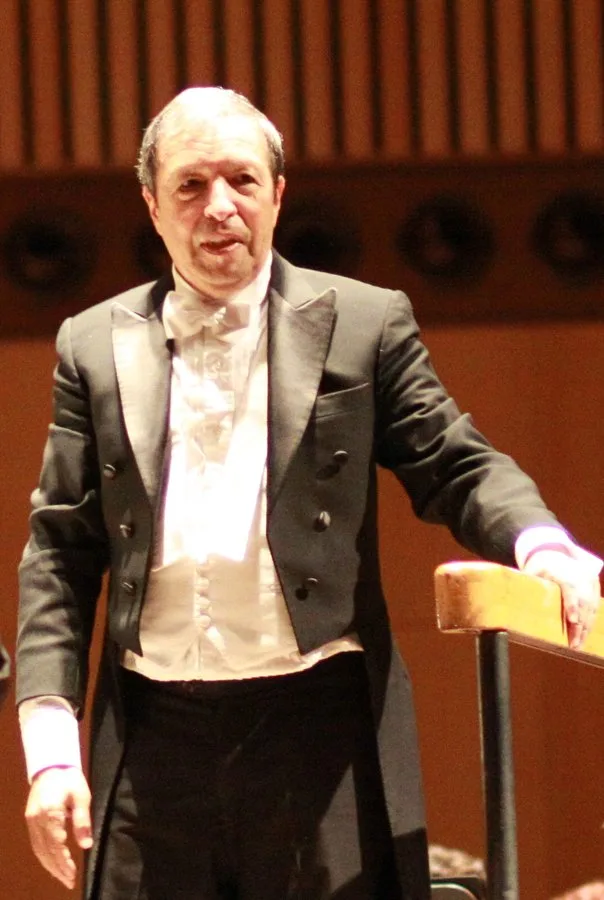
Mitsuko Uchida / Riccardo Muti / Philharmonia Orchestra (1983, Philips)
Uchida and Muti’s collaboration is often cited as the recording that most faithfully realizes the “symphonic scale” of K. 503. It was recorded in 1983, but there’s a reason it’s still considered a benchmark. The solo piano is never overwhelmed by the orchestra, yet the balance between the two forces is exquisite. The highlight is the first movement’s development, where the density of Muti’s orchestra collides with Uchida’s solo line. Uchida is a performer who understands the “symphonic seriousness” of this concerto better than anyone. Her ability to dissolve the work’s complexity into a natural flow is remarkable.
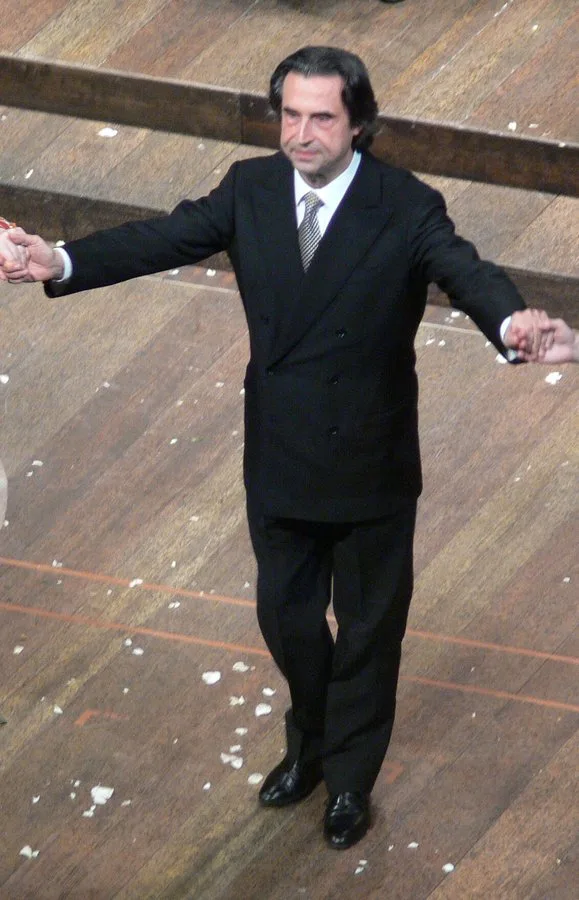
Murray Perahia / English Chamber Orchestra (1987, Sony Classical)
Perahia’s K. 503 is often described as “poised and clear.” It’s a recording that opts for structural integrity over flamboyant emotional expression. This is another great starting point for newcomers because it allows you to follow the work’s framework without getting lost. You could say it’s the recording that shows you the blueprint of the concerto most clearly. After grasping the overall structure with this version, moving on to Anderszewski or Uchida will lead to completely new discoveries. The same piece can sound entirely different. That’s the kind of concerto K. 503 is.
Listen with the Score
When you listen with the score open, the blueprint of K. 503 reveals itself. The moment in the first movement’s development where the march theme is twisted and slips into a minor key—that harmonic language becomes visible on the page. You don’t even need to read music. Just look for the parts where the notes suddenly get dense. The moment you see that page in the development, where the musical lines are woven together in layers, you’ll understand why it’s called “symphonic.”
The original score is available for free on IMSLP.
→ View the score for Piano Concerto No. 25 in C major, K. 503 (IMSLP))