- Composer
- Mozart
- Work
- Piano Concerto No. 21 in C major, K. 467
- Key
- C major
- Composed
- 1785 (completed March 9, 1785)
- Movements
- 3 movements
I. Allegro maestoso (C major)
II. Andante (F major)
III. Allegro vivace assai (C major) - Instrumentation
- Solo piano, flute, 2 oboes, 2 bassoons, 2 horns (in C), 2 trumpets (in C), timpani, strings
- Premiere
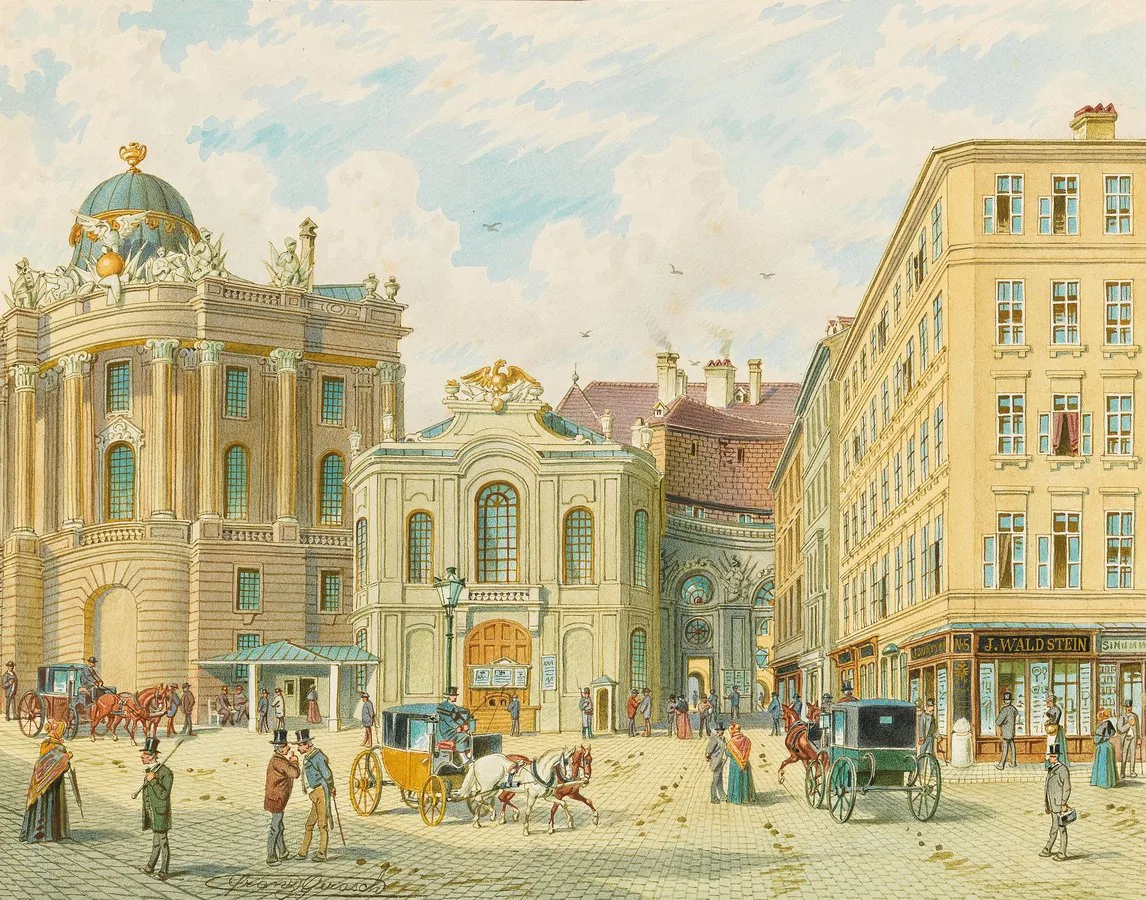
- March 10, 1785, Burgtheater, Vienna
Wolfgang Amadeus Mozart (piano solo)
Finished the Night Before the Premiere
March 9, 1785. That’s the day Mozart put the final note on the score for this concerto. The premiere was the very next day.
Let that sink in. He was scheduled to perform as the soloist, and he finished writing his own part less than 24 hours before he had to play it on stage.
This wasn’t just procrastination. You have to understand the pace he was working at. On February 10, 1785, he’d finished his Piano Concerto No. 20 in D minor, K. 466. He premiered that one on February 17. Then, barely 20 days later, on March 9, K. 467 was done. That’s two major piano concertos, back-to-back, in less than a month.
How was this even possible? Because Mozart was running a business: a subscription concert series called an “Akademie.” Think of it as an 18th-century Patreon. Subscribers paid upfront for a season of concerts, and Mozart had to deliver brand-new music for each one. His surviving subscription list shows up to 174 names—a mix of aristocrats, merchants, and serious music lovers.
This system fueled an incredible burst of productivity in 1784 and 1785. In 1784 alone, he churned out six piano concertos, from K. 449 to K. 459. A new, full-scale orchestral work every two months.
Demand creates supply. His 174 subscribers wanted new concertos, so Mozart delivered, even if it meant finishing the score the night before. That pressure is what produced a work like K. 467. And the last-minute deadline didn’t diminish its quality one bit. If anything, it shows you just who this man was.
If K. 466 in D minor is a storm, K. 467 in C major is something else entirely. It’s bright and march-like, but you get the sense it’s holding something back, suppressing some deeper emotion. This is especially true of the second movement. It’s a C major concerto, but the second movement shifts to F major, with the strings muted, repeating a hypnotic triplet rhythm. On paper, it looks simple. When you hear it, you never forget it.
We’ll get to the strange fate of that second movement in a moment.
His Father, Leopold, Was in the Audience
In the spring of 1785, Mozart’s father, Leopold, came to visit him in Vienna. It was a long stay, lasting more than three months, from February to May.
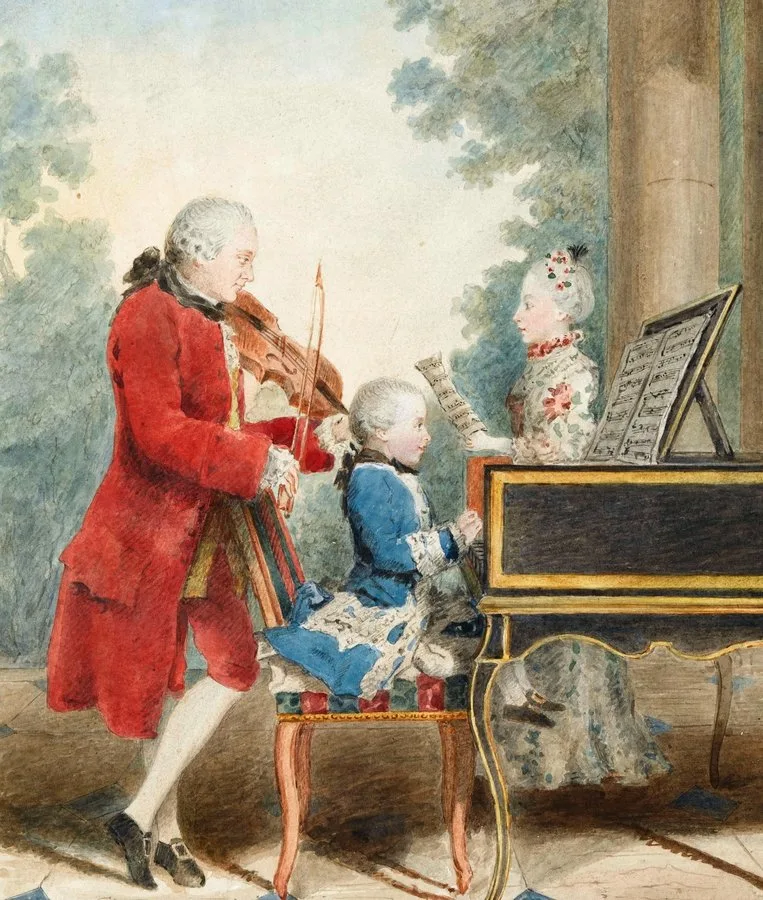
Leopold attended several of his son’s concerts. He was there for the premiere of K. 466 on February 17. He wrote to a friend back home in Salzburg: “The orchestra was magnificent and the audience was ecstatic.” It’s a rare record of Leopold frankly admitting his son’s success.
The relationship between Mozart and his father was… complicated. As a child, Mozart was paraded across Europe by Leopold, a prodigy on display for royalty. Picture it: a tiny boy playing for nobles in a palace, with his father standing beside him, a combination of manager and stage dad. Mozart was placed at a keyboard at age three, gave his first public performance at six, and then spent years on the road.
The tours were a huge success, but they were also grueling. European winters were cold, the travel was endless, and after performing, the little boy would be passed around and patted on the head by strangers. Perhaps Mozart’s intense desire to leave Salzburg as an adult stemmed from the memory of the wider world he’d seen on those childhood tours.
As an adult, that relationship became a burden. His move to Vienna, his marriage to Constanze Weber over Leopold’s strong objections—these were acts of a man fighting for his own independence. They continued to write letters, but the tension was always there. Leopold’s were full of advice and criticism; Mozart’s were a mix of excuses and self-justification.
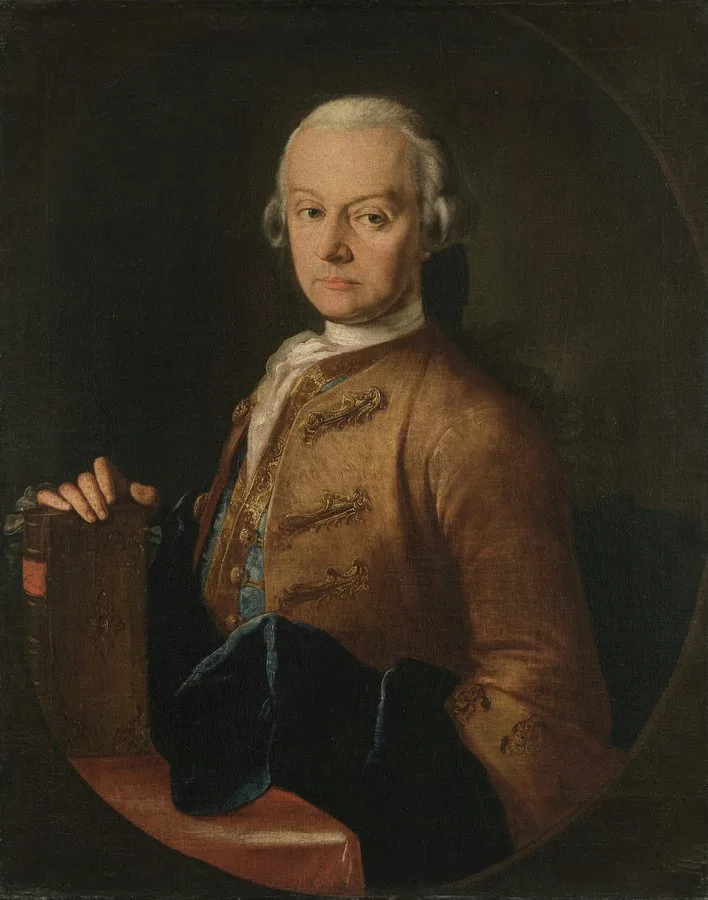
But when Leopold arrived in Vienna in 1785, he found a different man. His son was now the composer-impresario running a concert series for 174 subscribers, writing two concertos a month. This was no longer the son Leopold needed to manage. In a letter, Leopold admitted that his son’s apartment was far grander than he had imagined.
The premiere of K. 467 was on March 10. Leopold would have been in the audience. He watched his son sit at the piano and perform a concerto he had finished just the day before. We have no record of what he thought.
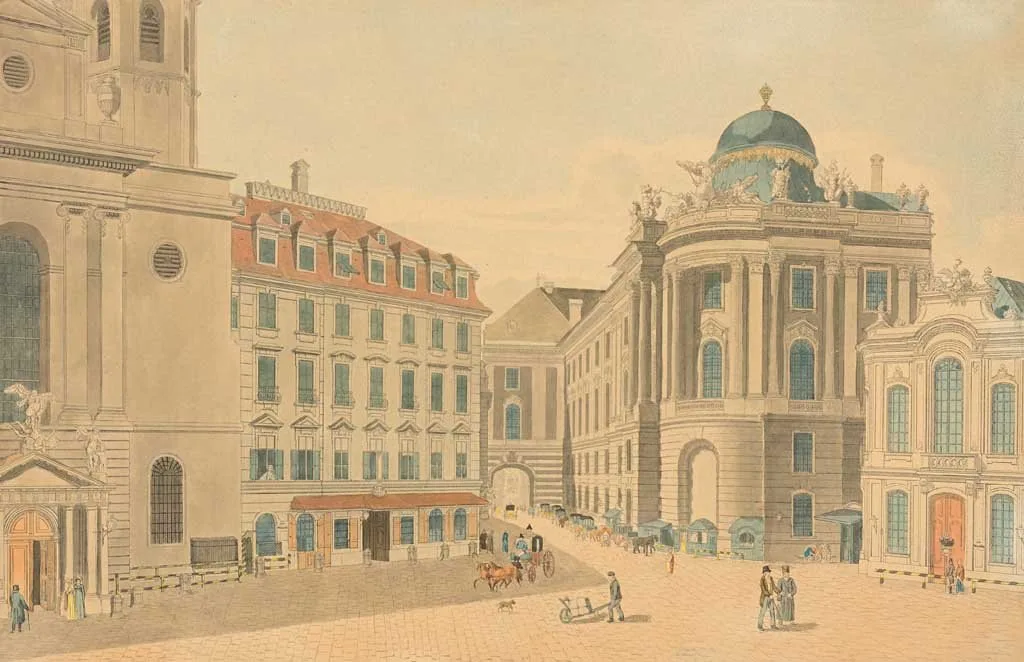
Six weeks later, Leopold returned to Salzburg. Unlike the nagging letters from before his visit, his correspondence afterward acknowledged his son’s success more openly. Leopold died two years later, in 1787. That spring visit in 1785 was the last long period of time they would spend together. K. 467 was born against the backdrop of that final, complex moment.
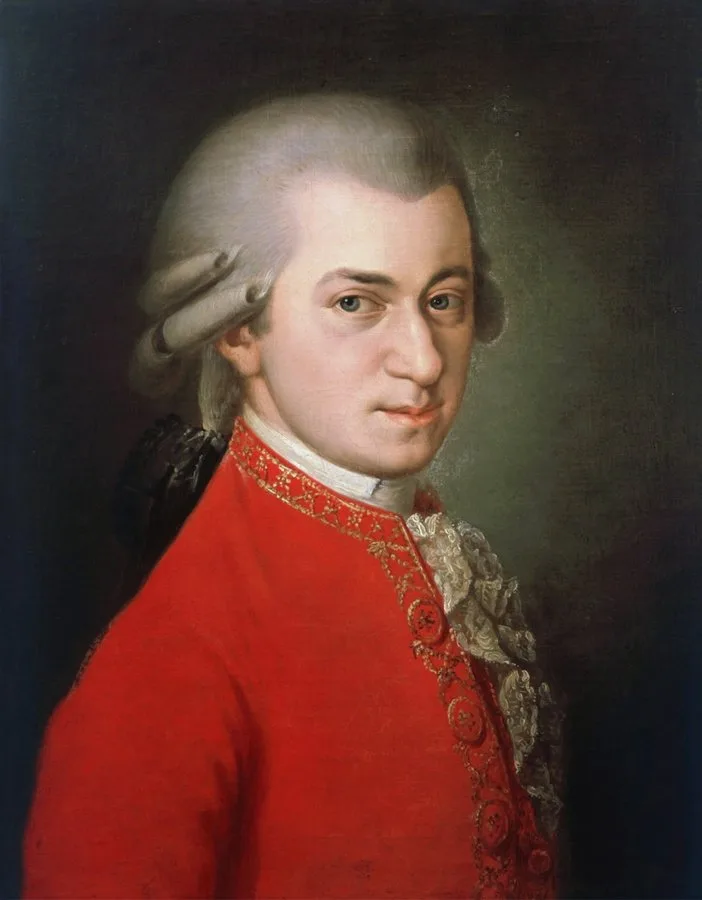
Before Listening to K. 467: What Makes Mozart’s Concertos Special?
Before we dive in, it helps to understand what a “concerto” really is, especially in Mozart’s hands.
A concerto features a solo instrument with an orchestra. Many people think of it as a showcase for the soloist, with the orchestra just playing backup. That’s not how Mozart wrote them. His concertos are dialogues. Sometimes the piano leads and the orchestra responds. Sometimes the orchestra introduces a theme, and the piano picks it up and transforms it. The two sides tell the story together.
It’s widely said that Mozart perfected this form. In the Baroque era (think Vivaldi), the soloist was front and center while the orchestra mostly accompanied. The form existed before Mozart, but he was the one who systemized the idea of the piano and orchestra as equal conversational partners. K. 467 is one of the most natural examples of this structure.
Once you know this, you can start to hear the conversation in each movement much more clearly.
K. 467 comes from the exact moment Mozart had completely mastered this “dialogue concerto” form. It came right after the stormy K. 466 in D minor, and it feels like its polar opposite. Immediately after writing a piece full of conflict and turmoil, the same hands wrote one of perfect balance and effortless conversation. Together, these two concertos show a composer who could master two extremes within the span of a single month.
A Movement-by-Movement Guide
Mvt. 1: A March That’s Strangely Heavy
You’d expect a C major concerto to start with a burst of sunshine. This one doesn’t, and it’s a little disorienting.
The first movement opens with the strings playing a quiet march rhythm. Over a pizzicato bass line, the violins tap out a steady, repeating pulse. It’s a march, but it’s not triumphant. It feels more like a determined advance than a victory parade. These first eight bars set the mood for the entire work.
The woodwinds enter with a fanfare-like theme, and you think, “Okay, here comes the bright C major.” But then the music suddenly slips into a G minor passage. Some analysts have pointed out that the melody in this G minor section is strikingly similar to the main theme of his Symphony No. 40, K. 550, which he would write three years later. Since K. 467 is from 1785 and K. 550 is from 1788, it’s possible Mozart deliberately recycled the idea. If you know Symphony No. 40, you’ll feel a flicker of recognition here. Comparing the two concertos reveals how Mozart reworked the same lyrical C-major idiom — singing woodwind dialogues, Alberti-bass textures, and operatic slow movements — to dramatically different structural ends within a span of roughly five years.
The piano’s entrance is unusual. It doesn’t make a grand, flashy entrance. After the orchestral introduction, the piano plays a short introductory phrase (an Eingang), holds a trill on a G, and quietly melts into the texture over the strings’ march theme. It’s less “I have arrived!” and more “I was here all along.” This entry sets the tone for the relationship to come: it’s a partnership, not a competition.
The piano then leads the music from C major to G major, introducing a new theme. But just as you get comfortable, the orchestra responds in G minor, reintroducing tension. This pattern of tension and release continues through the development and recapitulation. The entire 20-minute movement is a process of finding a balance between the march-like energy of the opening and the pull towards the minor key. That’s why it never feels repetitive.
The movement is in sonata form and features a cadenza near the end. A cadenza is a section where the orchestra stops and the soloist plays alone, often in an improvisatory style. It’s a chance to show off technical skill and serves as a climax. Unfortunately, Mozart’s original cadenza for this concerto is lost. Today, performers might play one written by Clara Schumann or Johannes Brahms, or even write their own. This means the cadenza can be completely different depending on the recording you’re listening to, making it a key spot where a performer’s personality shines through.
Mvt. 2: How a 1967 Swedish Film Set This Melody on Fire
In 1967, a Swedish film called Elvira Madigan, directed by Bo Widerberg, was released.
It’s a tragic love story about a tightrope walker, Elvira, and a defecting army officer, Sixten, who run away together and ultimately end their lives. The second movement of K. 467 was used as the score throughout the film. As the film gained international acclaim, this melody suddenly became known to people all over the world. It even picked up the nickname “Elvira Madigan.” For decades afterward, the entire concerto was often referred to by that name.
Mozart didn’t give it that title. A Swedish film from 1967 did. A 200-year-old concerto was rediscovered because of a movie.
The structure of the movement is simple: F major. The entire string section plays with mutes on, repeating quiet, arpeggiated triplets. The piano melody floats above them. It’s a three-part (ABA) form that briefly moves to F minor in the middle before returning. A textbook description would take three lines.
But hearing it is anything but simple. The muted strings create a constant, shimmering feeling. They are playing a very regular pattern, but it sounds like it’s wavering. Over this gentle oscillation, the piano melody finds its balance. It’s like that state just before you fall asleep, half in a dream. The line between reality and dream is blurred.
The middle section in F minor shatters that boundary for a moment. The piano descends chromatically, and the emotional weight of the music suddenly shifts. When the F major theme returns, its clarity feels even more profound than before. Because you just spent a moment in the dark, the light feels brighter.
Another detail becomes clear if you focus on the orchestra. With mutes on, the strings don’t just get quieter; their entire tone color changes. It sounds like music heard through glass. This unique texture, combined with the piano’s clear melody, creates a singular effect. The piano sounds transparent, while the orchestra envelops it like a mist.
It’s no wonder this movement resonated so perfectly with Elvira Madigan. The film’s lovers also lived on the border between dream and reality. Director Widerberg’s choice seems almost inevitable in retrospect.
This is also a movement that offers a completely different experience for first-time listeners and seasoned veterans. The first time, the beautiful melody is what sticks with you. After a few more listens, you start to notice how delicately the string accompaniment is calibrated to sustain that beauty. A few more, and you appreciate the role of the F minor section. It’s a piece that reveals more of itself with every listen, which is why it never gets old. Many performers feel a deep personal connection to this piece; it’s the kind of melody that gets under your skin.
Mvt. 3: The Restrained C Major Finally Explodes
If the second movement was a dream, the third is the moment you wake up.
The marking is Allegro vivace assai—very lively and fast. The piano kicks things off with a C major theme in rondo form. A rondo is a structure where a main theme keeps returning (A-B-A-C-A…). Even when new material is introduced, you always come back home to that main theme. For the listener, this creates a sense of familiarity and fun. Mozart often used rondo form for his final movements precisely for this effect.
The energy that was so restrained in the first movement is finally unleashed here. It’s the same key, C major, but it feels completely different. If the first movement was a resolution, the third is a liberation. The heavy march rhythm from the opening of the first movement is transformed into a skipping, joyful pulse. Same key, different gravity.
There’s a key moment to listen for. In the middle of the movement, the rondo theme briefly shifts to a minor key. The forward momentum suddenly darkens. It’s a short section, but this contrast makes the return of the C major theme feel even more brilliant, like a hero returning after a brief crisis. This technique is a recurring pattern in Mozart’s concertos.
The conversational interplay between the piano and orchestra is also a hallmark of this movement. The piano presents a melody, the orchestra picks it up and expands on it, and the piano returns with a variation. In many concertos of the time, the soloist and orchestra were in competition, or the orchestra was merely an accompanist. Mozart changed that dynamic, making them equal partners. The third movement of K. 467 is often cited as one of the most natural examples of this dialogue in action.
The music builds speed as it approaches the end. The piano and orchestra join together to declare C major one last time, bringing the work to a powerful close. The suppressed energy of the first movement finds its complete release.
A final movement in a Mozart concerto is never just an ending. It’s the homecoming for the emotional journey established in the first movement and transformed in the second. In K. 467, that return is perfectly clear. The heavy resolve of the first movement, the dreamlike drift of the second, and the joyful landing of the third. When you hear them in order, they form a single, coherent story. After the finale, you might find yourself wanting to go back and listen to the first movement again. Only after hearing the end do you start to understand where that opening march was headed all along.
The “Elvira Madigan” Legacy and K. 467 Today
Of Mozart’s 27 piano concertos, K. 467 holds a special place, and it’s almost entirely thanks to its second movement.
The Andante melody is one of the most quoted themes in classical history. It’s been used in film scores, commercials, and documentaries. The 1967 film Elvira Madigan was the most famous instance, but it wasn’t the last. For decades, this melody has been summoned whenever a scene needs something “dreamlike and beautiful.” The fact that a 200-year-old tune is still used this way means it touches on something universal.
There’s a reason K. 467 is so often recommended to classical newcomers. It’s not as dark and intense as K. 466 in D minor, nor is it as purely bright and simple as K. 488 in A major. With its balance of march-like energy, dreamlike atmosphere, and joyful return, there’s something in it for every listener, no matter their mood. Many first-time listeners feel an immediate sense of recognition—and they are right. Thanks to Elvira Madigan, they’ve likely heard the second movement somewhere before.
The piece also holds special significance for pianists. The solo part in K. 467 is technically quite difficult, especially in the first movement where the piano elaborates on the orchestra’s march theme, and in the third movement’s rapid-fire dialogue. But the difficulty is never obvious. The technique isn’t there to show off; it’s there to serve the flow of the music. This is why interpretations from top pianists can vary so widely. There’s no single “correct” way to play it, leaving enormous room for the performer’s own vision.
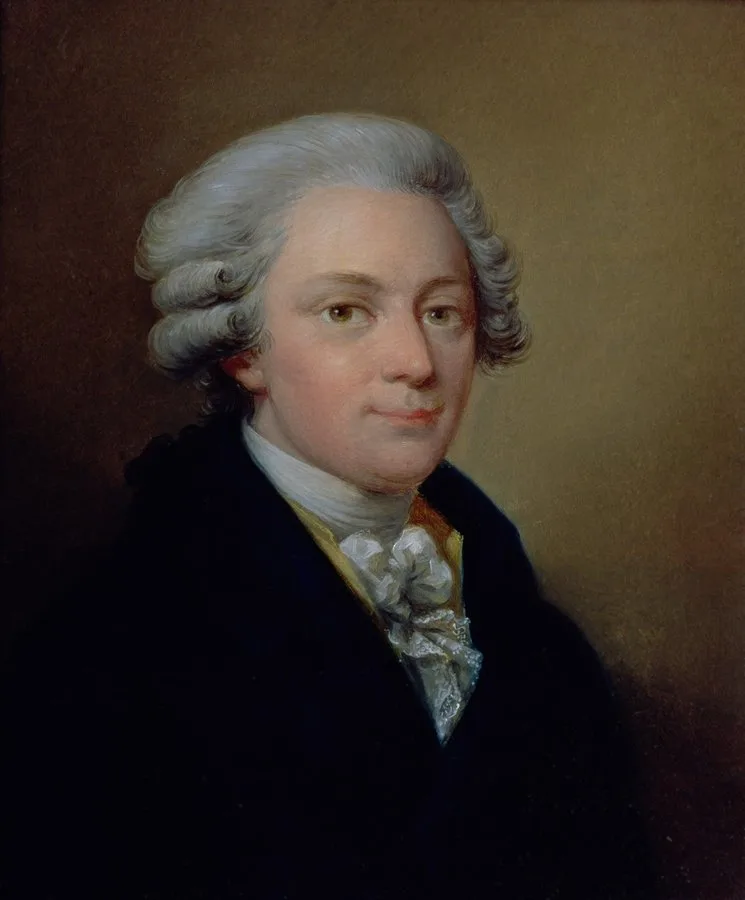
One more thing. This work was written when Mozart was at the absolute peak of his success in Vienna. He was 29 years old in 1785. Financial hardship had not yet set in, his subscription concerts were a triumph, and his father had come all the way to Vienna to witness it. The energy of that moment is baked into this concerto.
And yet… why do those wavering string arpeggios in the second movement sound so fragile? Why does the music from such a successful man sound so unsettled? It feels like the moment just before sleep, but also like a premonition that this happiness might not last. We’ll never know what Mozart was thinking when he wrote it. Maybe he was just sleep-deprived from finishing it the night before.
When people talk about the “most perfect example of the concerto form,” K. 467 often comes up. Haydn began to codify the form, but it’s said that Mozart perfected it—a true dialogue where neither soloist nor orchestra is reduced to a supporting role. K. 467 is considered one of the most natural achievements of that ideal.
After Mozart, Beethoven expanded the concerto form, and Brahms made the tension between soloist and orchestra even more dramatic. But in the process of making concertos bigger and grander, the effortless conversational balance of K. 467 became rare.
K. 467 has survived intact since its premiere on March 10, 1785. It remains a staple in concert halls around the world. It is the legacy of a man who, at 29, had already written 21 of his 27 piano concertos.
Just six years after completing K. 467, Mozart died at the age of 35. The Salzburg parish granted him a burial in a common grave with no headstone. To understand how the successful 29-year-old of 1785 arrived at that end, you can listen to the works he wrote after this one. K. 467 sits near the beginning of that final trajectory, at its brightest and sunniest point. If you like this piece, it’s a perfect launchpad for exploring the concertos that followed, like K. 466, K. 488, and K. 503. The 27 concertos are a near-perfect map of his artistic journey. K. 467 is often the first one people hear, and it’s also one they return to for the rest of their lives.
Recommended Recordings
Seong-Jin Cho / Orchestre de Paris (2017, DG)
This album was recorded shortly after Cho’s victory at the Chopin Competition. His touch is clear and precise. The balance between the muted strings and the piano in the second movement is particularly well-judged. It’s a restrained performance, neither cold nor overly sentimental, and is often recommended for those new to K. 467.
Vladimir Ashkenazy / Philharmonia Orchestra (1966, Decca)
Recorded during Ashkenazy’s prime in the 1960s, this has been a benchmark recording of K. 467 for over half a century. Despite its age, the sound quality holds up remarkably well. The texture created by the strings and piano in the second movement is still frequently cited as a reference.
Yeol Eum Son / Czech Philharmonic Orchestra (Live)
This is a live performance video of Yeol Eum Son with the Czech Philharmonic. Her technical command and the seamless flow between movements are impressive. The conversational structure between the piano and orchestra in the third movement comes through with great clarity. It’s a great example of a Korean pianist collaborating with a top European orchestra on this work.
Jan Lisiecki / Andrea Battistoni / NPO (2014)
A recording from Canadian pianist Jan Lisiecki, born in 1995. It captures the freshness and precision of his early career. His handling of the first-movement cadenza is distinctive, and the sense of dialogue with the orchestra in the third movement is very much alive. A great recording for comparing how different generations approach K. 467.
Listen with the Score
The original score is available for free on IMSLP.
→ View the score for Piano Concerto No. 21, K. 467 (IMSLP))
Frequently Asked Questions
When was Mozart’s Piano Concerto No. 21 completed?
It was completed on March 9, 1785—the day before its premiere. In the same year, Mozart also composed his Piano Concerto No. 20 in D minor, K. 466, and the two works were premiered within a month of each other. This was a product of his time running a subscription concert series in Vienna, which required a constant supply of new music.
Why is the second movement of Piano Concerto No. 21 called “Elvira Madigan”?
The nickname comes from its use as the main theme in the 1967 Swedish film *Elvira Madigan*, directed by Bo Widerberg. The film’s international success led to the entire concerto often being called the “Elvira Madigan Concerto.” This is a modern nickname and was not given by Mozart.
How many movements are in Mozart’s Piano Concerto No. 21?
It has three movements: 1. Allegro maestoso (C major), 2. Andante (F major), and 3. Allegro vivace assai (C major). The total performance time is typically between 28 and 32 minutes.
What’s a good recording for someone listening to Mozart’s Piano Concerto No. 21 for the first time?
Seong-Jin Cho’s 2017 recording with the Orchestre de Paris (on DG) is frequently recommended. It features a clear tone and beautifully captures the dreamlike atmosphere of the second movement. Vladimir Ashkenazy’s 1966 recording with the Philharmonia Orchestra (on Decca) is also a historical reference and has long been considered a benchmark performance.
Who performed at the premiere of Mozart’s Piano Concerto No. 21?
Mozart himself premiered the work as the piano soloist on March 10, 1785, at the Burgtheater in Vienna. He performed the piece on stage just one day after he finished composing it.
Who wrote the cadenza for the first movement of Mozart’s Piano Concerto No. 21?
The original cadenza written by Mozart has been lost. In modern performances, pianists often play cadenzas written by other composers, such as Clara Schumann or Johannes Brahms, or they write their own. This means the cadenza can vary significantly between different recordings, which makes for interesting comparisons.
Why is Concerto No. 21 one of Mozart’s most famous piano concertos?
Its fame is largely due to the second movement’s melody, which has been used extensively in films, commercials, and documentaries, most notably in the 1967 film *Elvira Madigan*. This widespread exposure has made the theme incredibly recognizable. Additionally, its well-balanced structure makes it an accessible and frequently recommended entry point for new listeners to classical music.