- Composer
- Carl Maria von Weber
(1786–1826) - Work
- Der Freischütz — Overture (Op. 77, J. 277)
- Key
- C minor → C major
- Composed
- 1817–1821
- Movements
- 1 movements (single-movement overture)
Adagio (c minor) → Allegro (c minor → C major) - Instrumentation
- Flutes 2, Oboes 2, Clarinets 2, Bassoons 2 · Horns 4, Trumpets 2, Trombones 3 · Timpani · Strings
- Premiere
- June 18, 1821, Schauspielhaus Berlin, conducted by Weber
A gunshot rang out. It was a Mátan, a magic bullet forged by the devil. The young man who held it didn’t yet know what he had lost. It was June 18, 1821, in Berlin. Before the curtain even rose, the orchestra told the entire story. In just nine minutes.
Carl Maria von Weber’s Overture to Der Freischütz is a complete summary of the opera it precedes. A villain appears, a hero wavers, and love ultimately triumphs. The clarinets, horns, and strings take turns foreshadowing these events. The interesting part? The overture knew the ending before the premiere audience did.
The Night Before the 1821 Berlin Premiere: National Hopes and One Composer’s Burden
Weber began writing this opera in 1817. At the time, Germany was still reeling from the Napoleonic Wars, and a wave of national sentiment was sweeping the country. There was an explosive craving for something authentically “German.” The problem was that the opera stage was completely dominated by Italians. Weber saw his opening.
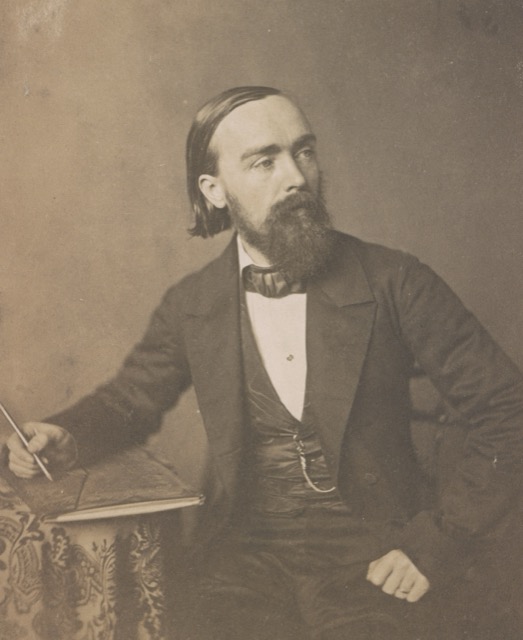
His rival was a formidable one. Gaspare Spontini, an Italian who had conquered the French stage, was the powerful director of the Berlin Royal Opera. For Weber’s new work to premiere under his nose was nothing less than the first major showdown for German national opera. A failure wouldn’t just be one composer’s loss; the very idea of “German opera” would become a laughingstock.
On the night of the premiere, the house was packed. The moment the overture ended, applause erupted, followed by demands for an encore—a rare sight in opera history. When the final curtain fell, the audience’s reaction was ecstatic. Weber himself reportedly wrote only one sentence in his diary that night: “Thanks be to God.”
But the truly astonishing story begins now.
Within the year, Der Freischütz had spread across Germany—to Vienna, Dresden, Leipzig, Hamburg, and Munich. By 1824, four different theaters in London were staging their own versions simultaneously, and it was also performed in Paris. It was an unstoppable international success. But that very success became a poison for Weber. The pressure to write a follow-up was immense. He later composed Euryanthe (1823) and Oberon (1826), but neither received the same acclaim as Der Freischütz. He died in 1826, just five years after the premiere, at the age of 39. Most people who listen to this overture today will do so without knowing this fact.
Even at the time of the premiere, Weber’s health was failing. He had suffered from tuberculosis for years. As the opera director in Dresden, he pushed himself through a grueling schedule. His struggle to create German opera in a theater dominated by Italian works was a battle fought by burning his own body for fuel. He was only 34 when his masterpiece triumphed.
The Plot of Der Freischütz: A 9-Minute Trailer
To really get the overture, you need to know the opera’s plot. It isn’t complicated.
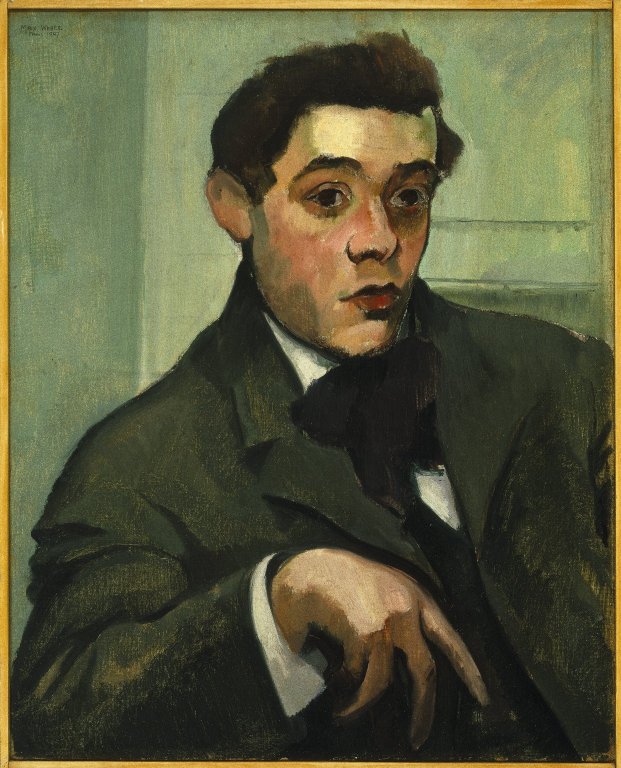
Max, a hunter in the German forest, must win a shooting contest the next day. His future father-in-law has promised him the hand of his daughter, Agathe, if he succeeds. But lately, Max can’t hit a thing. He doesn’t know if it’s a slump or a curse.
Enter the villain, Kaspar. He has already sold his soul to Samiel, the devil, and his contract is about to expire. Samiel has promised an extension if he brings in a new soul. Kaspar’s target is Max.
Kaspar makes an offer: “Let’s forge magic bullets tonight in the Wolf’s Glen. With them, you can’t lose the contest.” After some hesitation, Max follows him. A demonic ritual unfolds in a moonlit gorge. They cast seven magic bullets. The first six will go wherever Max aims, but the seventh belongs to Samiel. Max doesn’t know this. Kaspar does, but he keeps it to himself.
In the end, Agathe’s purity saves Max. As the seventh bullet flies toward her, she is miraculously spared. The bullet ricochets and strikes Kaspar instead. Samiel has claimed his prize. Max is punished but is ultimately united with Agathe.
The overture condenses this entire narrative into nine minutes. The horns create the forest, a diminished seventh chord summons Samiel, C minor portrays Max’s anxiety, and C major announces Agathe’s victory. For those who know the opera, it’s a landscape rich with foreshadowing. For first-time listeners, it’s nine minutes of pure, story-driven sensation.
Analysis of the Overture’s Structure: A 9-Minute War Between Two Worlds
The core of the overture is a battle between two keys: C minor and C major. They’re just one letter apart, but sonically, they are worlds apart. It starts with a bang. The full string section erupts in C major, followed by a sudden silence. Four horns fill the void. The horns of the huntsmen. Their sound is serene and noble, evoking the hunters of the forest. This is the opera’s setting: the German woods, the world of the hunter.
Then, the mood shifts dramatically. The strings begin an uneasy tremolo (a rapid bowing technique), and a diminished seventh chord is layered on top. A diminished seventh is the most tense, unresolved chord in Western harmony; it creates a powerful urge for resolution. You can feel the tension in your body. This is Samiel’s theme. Every time the devil appears in the opera, this chord sounds.
Weber used this specific chord as Samiel’s musical “signature.” He designed it so the audience would physically feel the devil’s presence. The way modern film scores create a theme for a villain, the reason you get chills during a horror movie—it all starts here. This was an innovation Weber had already perfected in 1821.
When the fast section begins, a theme in C minor emerges. This is Max’s theme, taken from an aria he sings in Act 1. It’s anxious, desperate, and dark. The music perfectly captures the psychology of a young man whose shots keep missing. The restless strings generate a feeling of ceaseless anxiety. The entire orchestra is playing one person’s state of mind.
Next comes a theme in C major: Agathe’s theme. The woodwinds sing it first, and the low strings respond as if with suspicion. This “question and answer” structure is important. It’s as if Agathe is saying, “Love will win,” and the violins reply, “Really?” It contains both conviction and doubt. Agathe believes in love, but the music hasn’t given its full assurance yet.
The overture builds tension in C minor for a long time before finally exploding into C major. This is the preview of the opera’s finale: love conquers the devil, Agathe saves Max, and light banishes darkness. The overture already knew everything.
This structure was a completely new idea at the time. Previous opera overtures were often just mood-setting preludes. Weber turned the overture itself into a narrative. He created the concept of the “dramatic overture,” which introduces the characters and emotions of the opera through musical themes. Richard Wagner would later develop this method into his system of leitmotifs (musical themes corresponding to specific characters or situations). This is why people say that without Weber, there would be no Wagner.
Consider this comparison: three years before this overture, in 1818, Rossini’s overture to The Barber of Seville premiered. Rossini’s overture is cheerful and light. It has no direct connection to the opera’s plot. It simply announces, “Get ready for a fun show!” Weber’s overture, on the other hand, contains the opera’s characters, conflict, and resolution. This difference illustrates a fundamental distinction between Italian and German Romantic opera. One uses music for entertainment; the other uses it for psychology and storytelling.
A Revolution in Horn Scoring: The Man Who Changed the Orchestra’s Color
In this opera, Weber uses four horns—double the standard of two at the time. And he treats them not as simple background harmony, but as protagonists in the story.

Why the horn? This opera is about German hunters in the forest. The instrument used by hunters to signal each other was the horn. Weber brought that sound directly onto the stage. As a result, the audience must have felt less like they were watching a stage and more like they were actually inside the forest.
Listen to the horn chorale in the overture’s introduction. The harmony created by the four layered horns is both majestic and tranquil. It sounds like an early morning in the German woods. The Berlin audience in 1821, hearing this for the first time, encountered something unfamiliar and new. It was a sound they had never heard in Italian opera. This horn chorale would go on to become one of the most quoted passages in the history of the orchestral overture.
There’s another point to note. Weber made active use of the clarinet’s low register. At the time, the clarinet was primarily used for its bright, high range. Weber discovered the dark, melancholic sound of the low-register clarinet and used it to express magic and darkness. This was another unfamiliar experiment for the audience. The fact that we now often hear the clarinet in dark, moody music is a convention established after Weber.
The idea of creating a “place” with music became a core tenet of later Romanticism. Mahler painting Alpine meadows with his orchestra, Sibelius expressing the Finnish snowscape, Debussy recreating the sound of the sea—all are extensions of this direction. The starting point was that moment when Weber sculpted the German forest with his horns.
Felix Mendelssohn saw the premiere of Der Freischütz in 1821. Just a few months later, the twelve-year-old Mendelssohn wrote his Overture to A Midsummer Night’s Dream. The woodwind colors at the beginning of that overture, the fairy-like atmosphere, the contrast between light and dark—it’s all influenced by Weber. The shock that young Mendelssohn felt was etched into music history.
The Night in the Wolf’s Glen: The Prototype for Horror Music
The most famous scene in the opera is the “Wolf’s Glen” in Act 2, where Kaspar and Max summon Samiel at midnight to forge the magic bullets.
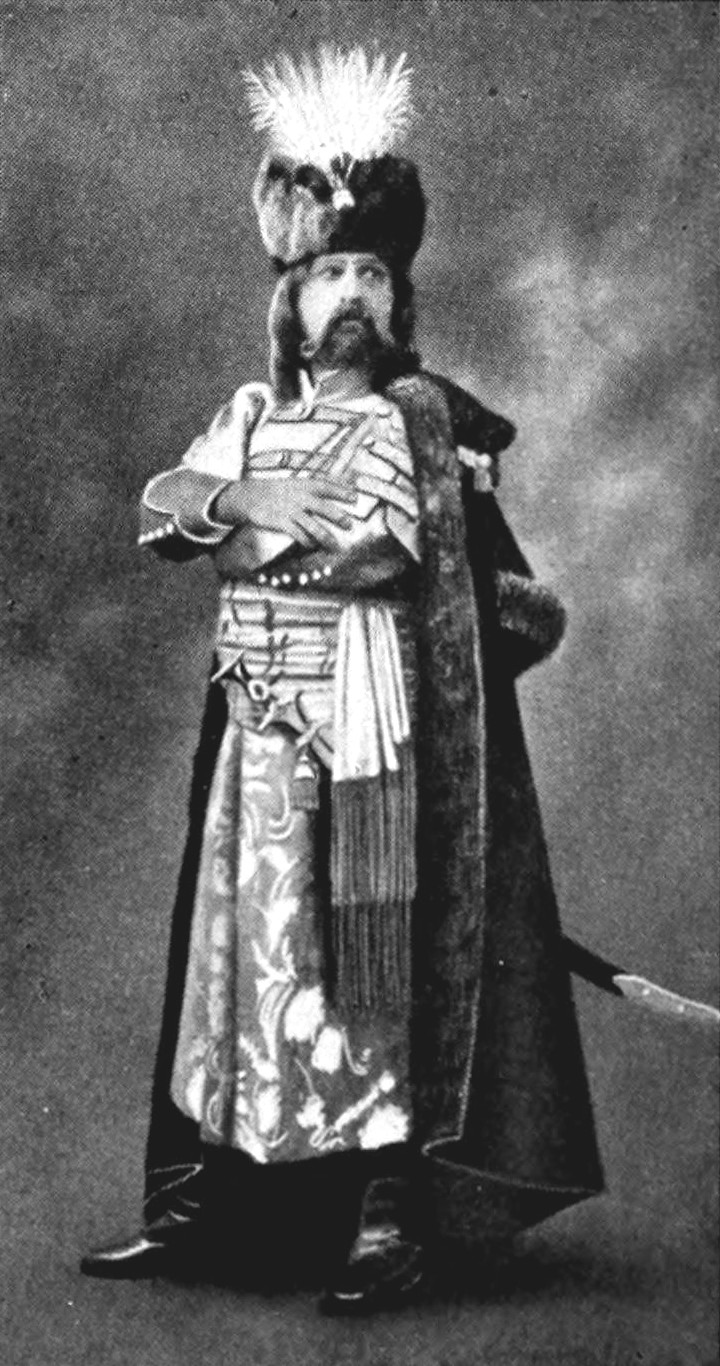
It’s no surprise that the audience was utterly shocked by this scene. It wasn’t just the stage effects (flames, smoke, ghostly lighting); the music itself was terrifying. The low clarinets slowly descend, the timpani beats irregularly, and the strings create an eerie sound by playing with the wood of the bow (col legno) near the bridge. He was making ghost sounds with an orchestra.
This scene is historically significant for a reason. In previous operas, “devils” or “supernatural beings” were depicted mainly through stagecraft. Musically, it was usually just a matter of playing fast and loud. Weber took a different approach. He fixed a specific chord (the diminished seventh), a specific timbre (low clarinet, altered bowing), and specific rhythmic patterns as the “theme of evil.” He designed it so that every time that combination appeared, the body would react.
A critic at the time described the Wolf’s Glen scene by saying, “The music devoured the stage.” He meant that the music alone was chilling, even without the stage effects. He was witnessing a shift from horror dependent on stagecraft to horror created by music itself.
The grammar of modern horror film music—the tense tremolo of low strings, the ominous low woodwinds, the shock after a sudden silence—has its roots in this very scene. Weber was essentially writing a film score in 1821. He just didn’t have a film.
When the diminished seventh chord first appears in the overture, we instinctively hold our breath. We don’t know why it sounds so unsettling, but our bodies react first. That is proof that Weber’s design still works 200 years later.
Critics of the era called this scene “the first horror scene in opera.” Of course, operas with magic or devils had existed before. Mozart’s Don Giovanni has a scene where a statue comes to life and drags the hero to hell. But Weber was the first to systematically design music itself as a tool of fear. The methodology of creating terror with music began here.
Wagner’s Debt to Weber
Without this opera, Richard Wagner would not be the composer we know today.
One of Wagner’s core techniques is the Leitmotif, a method of attaching a fixed musical theme to a specific character or situation and repeating it whenever they appear. In his Ring cycle, Siegfried’s heroic theme plays when he appears, and Wotan’s theme sounds when he is present. This technique is often credited as Wagner’s invention, but its prototype lies in Weber’s Der Freischütz.
Weber assigned the diminished seventh chord to Samiel, the C minor theme to Max, and the C major chorale to Agathe. Whenever these characters appeared or were alluded to, their respective themes were played. Wagner took this method and developed it into a much more sophisticated system of leitmotifs. Wagner himself explicitly acknowledged Weber as his forerunner.
The possibilities Weber demonstrated with Der Freischütz—the dramatic overture, the system of musical symbolism, psychological portrayal through the orchestra, and the depiction of natural landscapes—all became the grammar of subsequent German Romantic opera. Without Der Freischütz, works like Tannhäuser, Lohengrin, and The Ring of the Nibelung would not exist in the form we know them. The first link in that long chain was forged at the premiere in Berlin’s Schauspielhaus in 1821.
Berlioz, Tchaikovsky, and Jenny Lind: Unexpected Connections
The Paris Opéra had a rule: it did not stage operas with spoken dialogue (Singspiel). Der Freischütz, with its alternating song and speech, violated this regulation.
In 1841, Hector Berlioz himself stepped in. He arranged a version for Paris where the spoken dialogue was set to music — proof of how deeply he loved the opera. He was afraid another arranger would ruin it, so he insisted on doing it himself. Since ballet scenes were mandatory at the Paris Opéra at the time, he also inserted an orchestral version of another of Weber’s works, Invitation to the Dance.
Tchaikovsky, however, saw the Bolshoi Theatre’s version and scathingly criticized Berlioz’s arrangement, calling it “completely unsuitable,” “tasteless,” and “stupid.” Yet, when he saw a performance of Weber’s original in Paris, he confessed that “tears welled up in my eyes during the first act.” How could the same opera provoke such different reactions?
The opera also launched the career of Jenny Lind. In 1838, an 18-year-old Lind made her debut as Agathe at the Royal Swedish Opera in Stockholm. She would go on to become one of the greatest singers of the 19th century. The career of the “Swedish Nightingale,” who captivated Europe and America, began with Agathe.
The overture also took on a life of its own as a standalone concert piece. It was increasingly performed on its own, even when the full opera was not staged. This was rare before Weber. Overtures were simply preludes to the main event, not treated as independent works. Weber’s Der Freischütz Overture changed that custom. The fact that we enjoy opera overtures as separate pieces in orchestral concerts today stems from this trend.
Death at Thirty-Nine: The Five Years After Der Freischütz
June 1821, Berlin. The triumphant premiere. What happened to Weber next?
After Der Freischütz, Weber became a hero of German opera. But the glory was so immense it became a problem. His subsequent works struggled to meet the same standard. When he released Euryanthe two years later (1823), the reception was mixed. The plot was too convoluted, and while the music was more brilliant and expansive than Der Freischütz, it had lost its popular appeal. Weber himself lacked confidence in the work.
The final blow was his health. Weber had suffered from tuberculosis since he was young. He drove himself relentlessly, composing, conducting, and traveling. Doctors advised rest, but he wouldn’t stop. He dragged his ailing body all the way to London to complete his final opera, Oberon (1826). The premiere of Oberon in April 1826 was a success. But two months later, in June, Weber died alone in a London lodging house.
He was 39 years old. A shadow of an early death, brought on by a monumental success, hangs over this opera.
What if he had lived longer? In 1826, Wagner was 13, Schumann was 16, and Liszt was 15. If Weber had lived just 30 more years, the map of Romantic music would look very different. Sometimes, when listening to Der Freischütz, this thought comes to mind. The final C major roar of this overture feels, perhaps, like the last victory anthem Weber himself was able to hear.
Why This Overture Is Still Performed Today
Overtures that survive in the classical repertoire have something in common: they offer a complete musical experience on their own, even if you don’t know the full opera. The Der Freischütz Overture is a prime example.
Staging the entire opera is not easy. It requires German-speaking singers, a three-act running time, and a team specializing in German Romantic opera. Consequently, full performances are relatively rare. But the overture is different. Any orchestra can fit this nine-minute piece into any program.
Moreover, the overture is known to be a favorite among orchestral musicians. For horn players, the opening chorale is a highlight. For string players, the technical passages in the fast section are both a challenge and a reward. For conductors, it offers great interpretive freedom with its tempo variations. It can be driven with the urgency of Carlos Kleiber or unfolded with the grandeur of Herbert von Karajan.
From the audience’s perspective, the overture has a low barrier to entry. Even someone new to classical music can appreciate the beauty of the opening horns, the excitement of the fast section, and the cathartic explosion at the end. You don’t need to know the plot. You don’t need to know the composer’s name. You just have to listen.
That is why, 200 years later, this overture is still alive and breathing in concert halls. Good music needs no explanation.
This is also why the Der Freischütz Overture often appears on introductory orchestral programs. It’s not like Mahler’s 6th or Bruckner’s 8th, which require a certain familiarity with classical music to be fully appreciated. A first-time listener can simply listen and get it. The horns are beautiful, the diminished chord is unsettling, and the final explosion is exhilarating. That’s all there is to it. Weber didn’t overcomplicate it.
For First-Time Listeners: All You Need to Know
The Der Freischütz Overture is a single nine-minute movement, but it contains two worlds.
First, the Horn Chorale. After the initial string explosion, a horn choir emerges. This is the “peaceful German forest.” Just sitting quietly and listening to this sound is a worthwhile moment.
Second, the Diminished Seventh Chord Tremolo. Immediately after, the strings tremble, and a chilling section follows. This is the sound of the devil’s arrival. The prototype of 19th-century horror music is right here.
Third, Max’s Theme vs. Agathe’s Theme. When the fast section begins, a dark C minor theme and a bright C major theme alternate. It’s a battle between darkness and light, despair and hope. Don’t miss the thrill when C major finally wins.
Fourth, the Final Explosion. At the overture’s conclusion, the entire orchestra erupts in a C major roar. This is the moment the music shouts, “Love has won!” This final climax alone makes the piece worth hearing.
If you don’t have time for the whole opera, just listening to this overture will give you a physical sense of the story’s core. That is why Weber wrote it. And it is why, 200 years later, this overture is still a staple in the concert hall.
One more thing. Don’t listen to this on repeat. Find a quiet place, put on headphones, and listen once. If you close your eyes during the opening horn chorale, you might just get a glimpse of what the Berlin audience felt when they heard this sound for the first time in 1821.
Recommended Recordings
Carlos Kleiber / Staatskapelle Dresden (1973, EMI)
This is the benchmark recording of the overture. Several videos of Kleiber’s rehearsals exist, and the way he pushes the orchestra is as legendary as the performance itself. The chilling effect of the diminished seventh chord, the desperation in Max’s theme, and the exhilarating blast of C major—everything is captured here as if from a textbook. Kleiber recorded the entire opera, and this overture is taken from that set.
Herbert von Karajan / Berlin Philharmonic Orchestra (1975, EMI)
Karajan’s interpretation is polished and magnificent. If Kleiber is sharp and urgent, Karajan is grand and dignified. The sound of the Berlin Philharmonic’s horns in the chorale section is absolutely perfect. If the Kleiber version is a “chase through the forest,” the Karajan version is a “palace in the forest.” Listening to both back-to-back shows just how differently the same score can sound.
The original score is available for free on IMSLP.
View the score for Der Freischütz on IMSLP