- Composer
- Haydn
- Work
- String Quartet Op. 20 No. 5 ‘Sun’
- Key
- F minor
- Composed
- 1772
- Movements
- 4 movements
I. Allegro moderato (F minor)
II. Menuetto (F minor)
III. Adagio (F major)
IV. Finale: Fuga a due soggetti (F minor) - Instrumentation
- Violin I, Violin II, Viola, Cello
- Premiere
- c. 1772
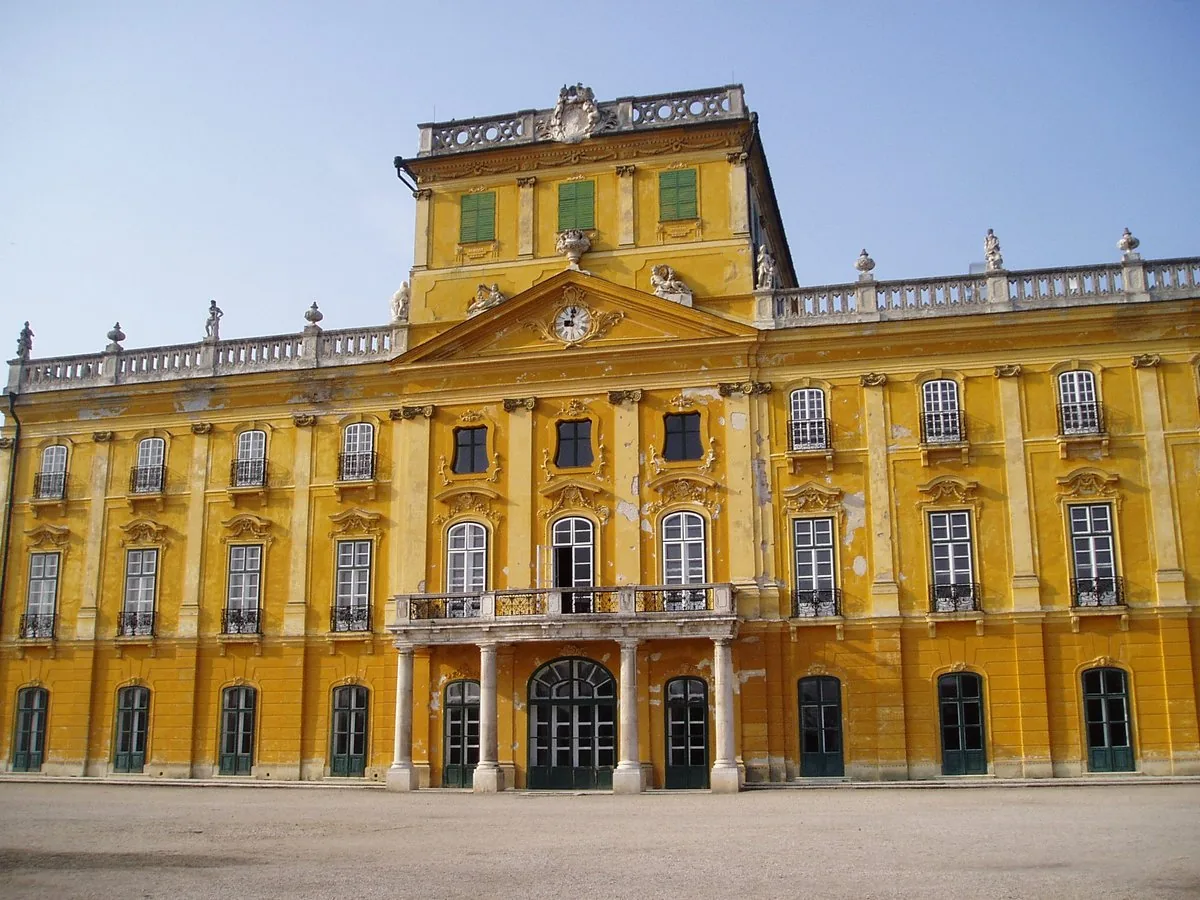
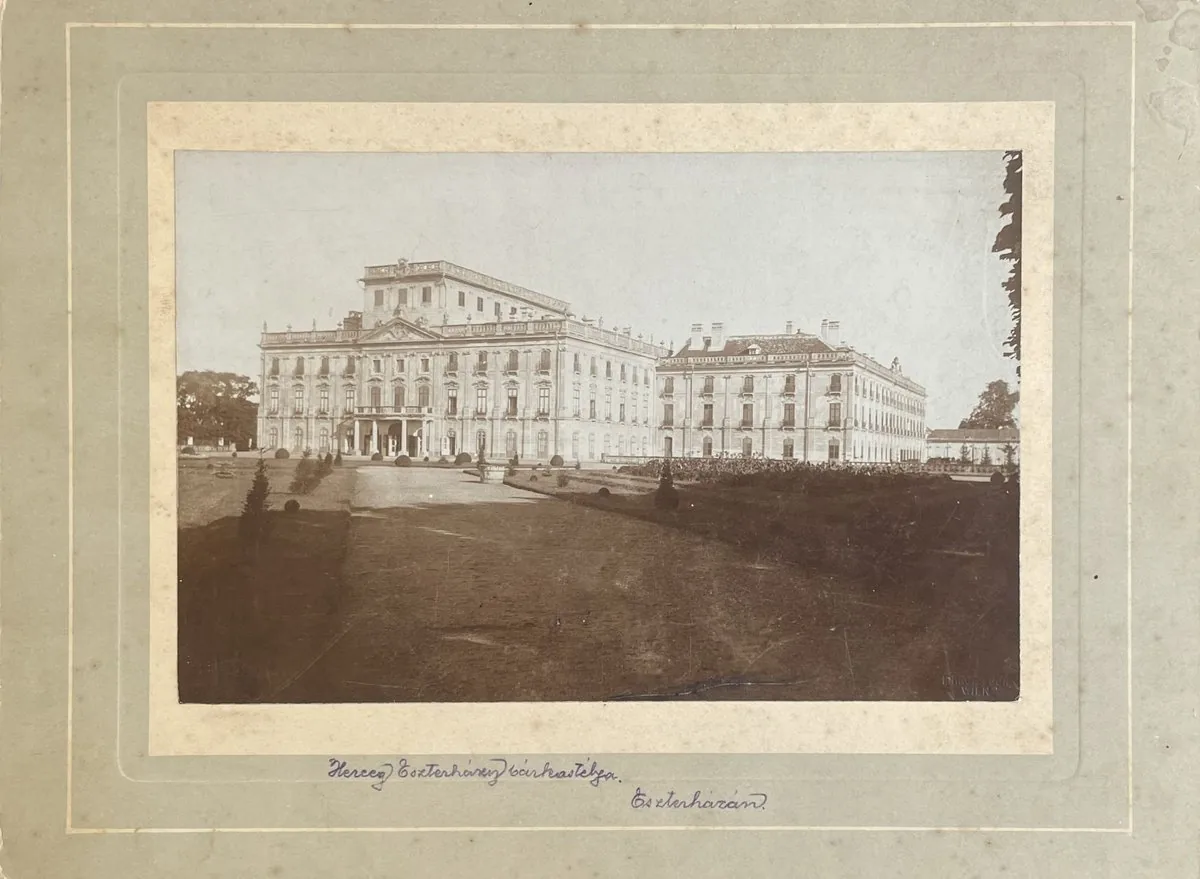
Esterházy Palace, Fertőd, Hungary
In 1772, Joseph Haydn put down his pen. He had just finished the final movement of a new string quartet, and it was a fugue. To end a string quartet with a fugue was, at the time, a deeply unconventional choice. He had thrown out the rulebook that called for a light rondo or a cheerful allegro, and instead reached back to the era of Bach and the high art of counterpoint. And he did it all in F minor—a key that is dark, sharp, and utterly uncompromising.
This is the fifth of the six quartets in Haydn’s Op. 20 set, and it’s the darkest piece in a collection ironically known as the ‘Sun’ Quartets. The nickname doesn’t come from the music itself. Around 1779, a publisher in Amsterdam named Hummel released the full Op. 20 set with an illustration of a rising sun on the cover. The name stuck to all six quartets. The irony is that the most intense and enduring work from that “sunny” collection is this grimly determined quartet in F minor.
Among classical music fans, opinions on this work are interestingly divided. Some rate the Op. 20 set even higher than Haydn’s more polished late quartets, like Op. 76. They argue that while the later works are masterpieces of craftsmanship, Op. 20 has something more raw, something that “flows naturally from the soul.” First-time listeners, however, are often taken aback by its overwhelming darkness and the severe logic of its final fugue. This quartet sets a benchmark for just how dark a string quartet can get.
Haydn in 1772: The Year of the ‘Farewell’ Symphony
When Haydn wrote this quartet in 1772, he was 40 years old. He had been the Kapellmeister at the court of the Esterházy family for over a decade. On the surface, it was a stable job with a good salary, a dedicated orchestra, and a built-in stage for his work.
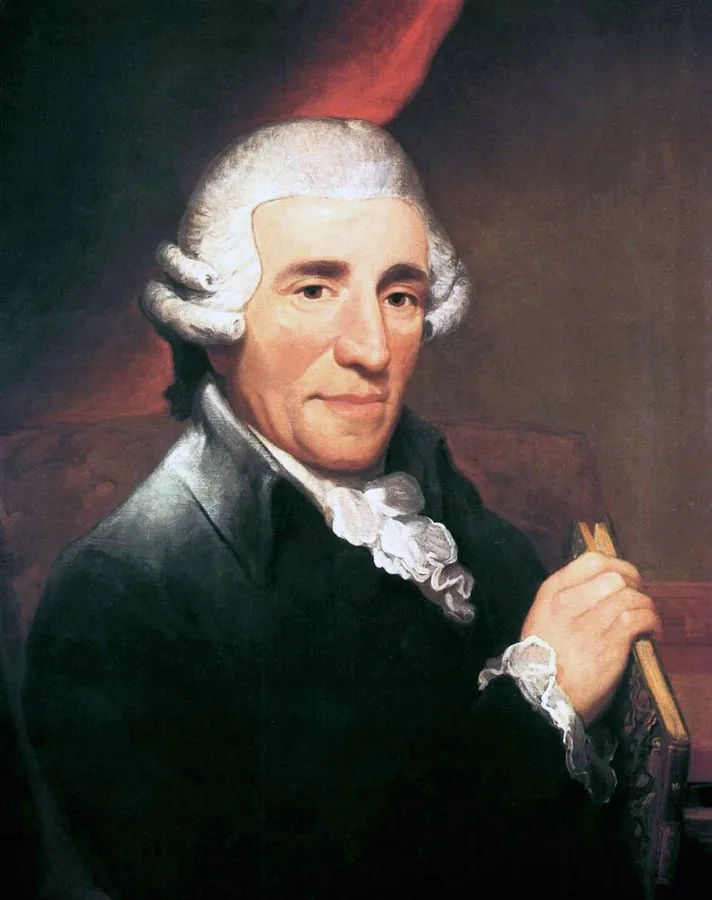
But that was only half the story. The Esterháza palace, built in the middle of the Hungarian marshes, was a long way from Vienna. Haydn was, for all intents and purposes, isolated. Contact with the outside world was limited. There was no serious music criticism and little interaction with fellow composers. Haydn himself later reflected on this, saying, “I was cut off from the world… there was no one to confuse or torment me, and I was forced to become original.”
That isolation gave birth to Op. 20. In these six string quartets, Haydn embarked on a completely different path from his earlier works in the genre. The music became more serious, more introspective. He moved away from the light, divertimento style meant as background music for aristocratic dinners and toward a serious musical conversation where four equal voices could speak.
Musicologists call this Haydn’s Sturm und Drang (Storm and Stress) period. The emotional, subjective turmoil sweeping through German literature and art at the time had found its way into his music. This was two years before Goethe wrote The Sorrows of Young Werther. Intense minor keys, sudden dynamic shifts, and restless rhythms define this era, and Op. 20 No. 5 is arguably its most extreme expression.
That same year, Haydn wrote another piece with a story to tell: the ‘Farewell’ Symphony (No. 45 in F-sharp minor). The musicians had been stuck at the Esterháza summer palace for too long and were desperate to return to their families in Vienna. Haydn composed a finale where, one by one, the musicians would blow out their candles and leave the stage. Prince Nikolaus got the message and reportedly allowed them to depart the next day.
Life at Esterháza was luxurious but also confining. The ‘Farewell’ Symphony was a stunning piece of performance art, a protest that actually worked. The fact that it did says a lot about Haydn’s authority at the court. And Op. 20 No. 5, written in the same year, is the musical internalization of that same isolation.
This context invites a pointed comparison. Many listeners feel that if you first encounter Haydn through his late Op. 76 quartets, you meet a master craftsman. But if you start with Op. 20, you meet the man behind the craft. Op. 76 is the product of mature genius; Op. 20 is the unfiltered inner world of a 40-year-old composer in isolation. And No. 5 is the rawest of them all.
The ‘Farewell’ Symphony and Op. 20 No. 5 were born in the same year, in the same place. One is a plea for home from isolated musicians; the other is an artistic crystallization of that isolation into F minor and a fugue. Placed side-by-side, they give us a clearer picture of what Esterháza was, and what Haydn was thinking while he was there.
The Meaning of Ending with a Fugue
The moment that often startles first-time listeners is the fourth movement. In the 18th century, the unwritten rule for a final movement was to provide a light, fast, and pleasant conclusion. But Haydn decided to bring back Bach.
The movement is titled ‘Fuga a due soggetti’—a fugue on two subjects. A fugue is a contrapuntal form where a melodic theme is introduced by one part and successively taken up by others. A theme starts in the cello, the viola follows with the same melody, then the second violin, and finally the first violin. This was the form perfected by J.S. Bach in the Baroque era. By Haydn’s time, in the Classical period, it was already considered old-fashioned.
So why did he use it? This wasn’t just a display of technical skill. Three of the six quartets in Op. 20 (Nos. 2, 5, and 6) end with fugues. Haydn wanted to prove that the string quartet was not just light entertainment for aristocrats but a medium for serious musical discourse. The fugue was a symbol of that seriousness. It was a declaration that music could exist on pure logic and structure, without overt emotional appeal.
Haydn knew this was a “retro” move. In the original manuscripts of the Op. 20 fugal finales, he even included technical annotations like ‘al rovescio’ (inversion) and ‘per figuram retardationis’ (by means of suspension), as if to say, “Yes, I am deliberately using these ancient techniques.” In the very act of creating the modern string quartet, he chose to cap it with the oldest, most rigorous form available. It was a paradox.
The result is chilling even today. The first theme of the finale is short, jagged, and anxious. When the second theme joins, the two melodies seem to wrestle with each other. The four instruments maintain their independence while moving within a single, relentless logic. Just when you think a resolution is near, the tension returns. The dark gravity of F minor never lets go.
Key Moments by Movement
Mvt. 1 — An Open Question and a Fierce Urgency
The first movement, Allegro moderato, feels wrong from the very first note. It opens in F minor, but in a way that sounds open-ended and unstable. The first violin presents a theme that is insistent and continuous. You don’t need to know sonata form to hear it; the opening just feels like a question mark.
What’s striking is that the tension in this movement never really lets up. In a typical Classical sonata, the second theme is supposed to offer a change of mood, often shifting to a brighter key. But Haydn keeps a tight grip on the dark atmosphere. Any brief moment of release is quickly pulled back.
In the development section, instead of “developing” the theme, Haydn seems to deconstruct and compress it, making the initial question smaller, sharper, and more piercing. Even the relief of the recapitulation is short-lived. Haydn also masterfully uses silence, placing unexpected rests within the meter. These sudden stops, like a speaker abruptly halting mid-sentence, only heighten the anxiety. The tension builds in those silences.
This movement ends without resolution. The LA Philharmonic’s program notes describe it as a piece that “deepens the somber mood,” and it’s hard to find a more accurate description.
Mvt. 2 — Beneath the Surface of the Minuet
The second movement is a Menuetto. A minuet is typically an elegant, stately court dance, a moment of relaxation in a multi-movement work.
But not here. Haydn’s minuet is still in F minor. The elegance is gone, replaced by a bitter aftertaste. On the surface, it maintains the three-beat dance form, but the emotional current running underneath is heavy.
The middle Trio section, which usually provides a pleasant contrast, offers little respite. Haydn briefly shifts away from F minor, but the moment is fleeting. When the minuet returns, its darkness feels even more profound. It’s like being offered a moment of comfort only to have it snatched away.
Someone once described this movement as “not just scary, but scary with good manners.” It’s dark without falling apart, maintaining its formal decorum. In a way, that makes it even more unsettling.
Mvt. 3 — The Only Glimmer of Light
The only moment of genuine rest in this quartet is the third movement, Adagio. For this, Haydn finally abandons F minor for F major. It’s the same root note, but the shift from minor to major feels like a dramatic, almost theatrical, transformation, especially after the relentless gloom of the first two movements.
The music is slow and unhurried. The first violin spins out a long, lyrical melody while the other three instruments provide a quiet, delicate accompaniment. The balance is exquisitely precise; no single instrument overpowers the others. It’s as if, after a tense conversation, the four speakers have fallen into a moment of respectful silence.
The music site Earsense calls this movement a “dramatic respite” in a quartet that is otherwise “dark, occasionally violent, and culminates in a fugue.” This Adagio alone reveals the work’s emotional depth. And when the fourth movement begins, the shock of realizing how temporary that F major comfort was is made possible only by the existence of this movement.
The Adagio in F major is the single ray of light in this dark quartet. And because of that light, the surrounding darkness seems even darker.
Mvt. 4 — An Argument with Two Subjects
The finale is a ‘Fuga a due soggetti’—a fugue with two themes. The first theme appears—a short, sharp melody that climbs from the cello to the viola, then to the second violin, and finally to the first. Each voice imitates the one before it.
Then, the second theme joins the fray. The two subjects move together but remain in constant, tense opposition. It’s not one voice, but two, locked in a logical argument.
The chilling part is the ending. It stays in F minor. Traditionally, a minor-key work might switch to the major at the end to signal resolution and relief, like Beethoven’s Symphony No. 5 moving from C minor to a triumphant C major. Haydn refuses. He starts in F minor and ends in F minor. The conclusion offers no solution. This quartet doesn’t provide an answer to a question; it ends as the question itself.
A key technique Haydn uses here is stretto, where a voice begins the theme before the previous voice has finished. It’s like a conversation where people start talking over each other, the pace accelerating. Haydn uses this to ratchet up the tension to its breaking point in the final section. That compressed energy is never released; it’s simply cut off by the final chords, leaving a sense of abruptness as the work’s lasting impression.
Even if you don’t know the theory, you can feel it. The music is dense, tight, almost suffocating. That’s exactly what Haydn intended. The tension he created in an isolated Hungarian palace nearly 300 years ago still works today.
How Op. 20 Changed the History of the String Quartet
Haydn is called the “Father of the String Quartet” for a reason, though the title can be a bit misleading. He didn’t invent the combination of two violins, a viola, and a cello. That existed before him.
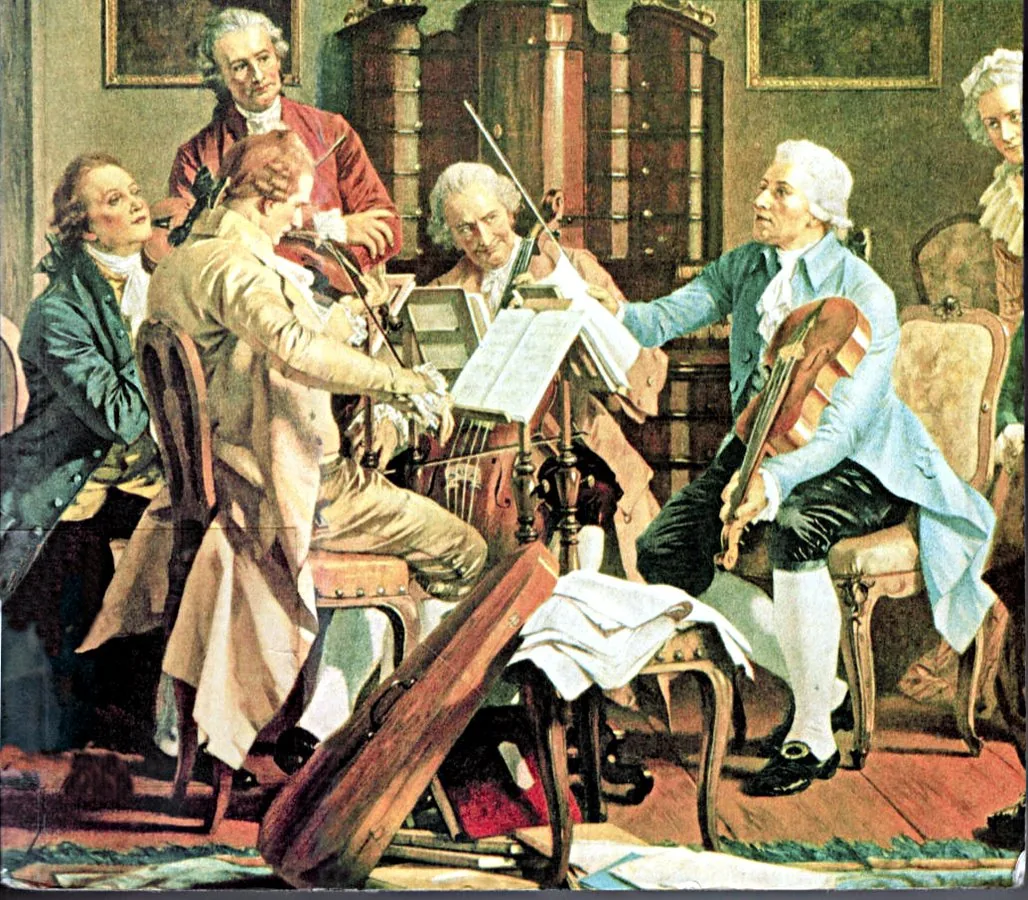
What Haydn did was create a language in which those four instruments could converse as equals. Before Op. 20, the first violin was the star and the other three were the backup band. In Op. 20, Haydn gave every instrument an independent and equally important voice. In No. 5, the cello is not just a bassline; it has its own melodies and logic. It’s the cello, in fact, that introduces the first theme of the fugue.
This was a game-changer. All the great string quartets that followed—by Mozart, Beethoven, Schubert, Brahms—were built on this foundation. Mozart was so inspired by Haydn’s Op. 33 quartets that he composed his own “Haydn” set and dedicated it to the older master. Beethoven, in the next generation, elevated the string quartet to a status even greater than the symphony. One of the starting points for that entire lineage is Op. 20 No. 5.
Wikipedia describes Op. 20 as the set where Haydn “develops the compositional techniques that were to define the medium for the next 200 years.” That’s no exaggeration. The equality of the four voices and the use of minor keys and fugues for serious musical argument became the new standard that all subsequent composers had to learn from and react to.
Op. 20 also shatters the “textbook Haydn” image. Anyone who thinks of Haydn as merely polite, predictable, and cheerful will have their mind changed by this music. The intensity of its darkness, the boldness of its formal experiments, and its stubborn refusal to resolve are a world away from the gentle image of “Papa Haydn.” Among devoted listeners, Op. 20 is often described as music that flows naturally from the soul, while Op. 76 represents the work of a greatly matured craftsman. It’s not about which is better, but which side of Haydn you connect with more deeply.
Interestingly, Op. 20 wasn’t an immediate hit. Music critics in Vienna at the time found this new direction “too serious” or “difficult.” It wasn’t the kind of comfortable music aristocrats wanted during dinner. But half a century later, after the quartets of Mozart and Beethoven had been heard, these works were rediscovered and their true value was recognized. If you listen closely to Beethoven’s early Op. 18 string quartets, you can hear echoes of Op. 20 No. 5 everywhere.
First Listen: What You Need to Know
* It doesn’t get happy. The quartet starts in F minor and ends in F minor. The brief switch to F major in the third movement is the only moment of relief. This is an experience of dark, tense music that ends without a forced “happy ending.”
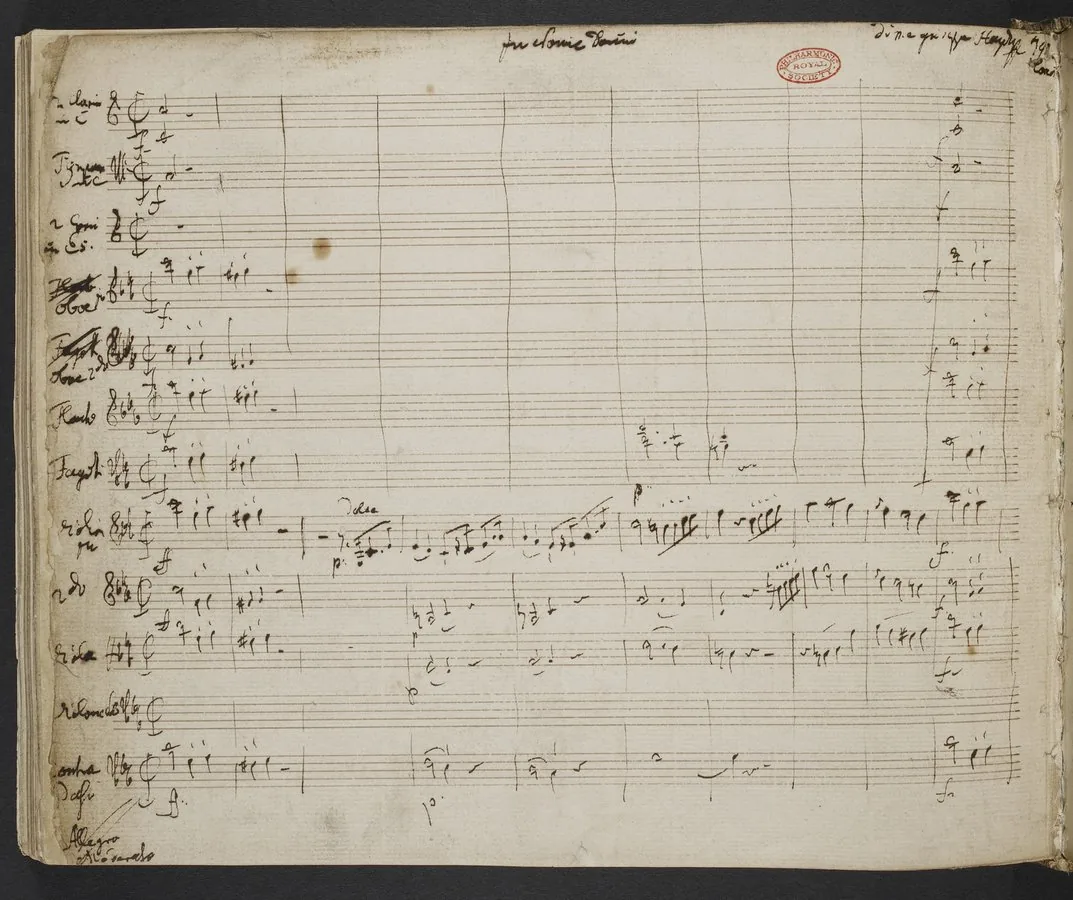
* Focus on the fourth movement fugue. It might sound complex at first, but try locking your ear onto one instrument and following its melody. The cello introduces the theme, and the viola picks it up—it’s a game of follow-the-leader. Once you hear that structure, the movement opens up.
* Listen for the contrast between movements 3 and 4. Experiencing these two back-to-back is the core of the work. The feeling you get when the F major Adagio ends and the F minor fugue begins tells you everything you need to know about why Haydn structured it this way.
* The runtime is about 23-27 minutes. That’s on the longer side for a string quartet, especially since there are no fast movements. If it feels like too much at once, try starting with the third movement Adagio. It’s a beautiful piece on its own and showcases Haydn’s incredible sense of balance.
* Try to follow one instrument. Instead of trying to hear everything at once, focus on just the cello line through the piece. You’ll notice how independent its voice is, especially in the finale, and you’ll hear for yourself why the string quartet is a conversation, not a solo with accompaniment.
Recommended Recordings
Alban Berg Quartet, EMI, 1979
For decades, this has been the reference recording. It’s precise and cool-headed. The quartet’s balance is superb, preventing the F minor darkness from becoming overly sentimental. The clarity of the individual voices in the fourth-movement fugue is particularly remarkable, all while maintaining a relentless overall tension.
Quatuor Mosaïques, Astree/Naïve, 1994
This is a period-instrument performance. The group plays on 18th-century strings with classical bows, producing a sound that is transparent, resonant, and in some ways more direct than modern instruments. The sharp edges of the F minor key come through with startling clarity.
Yellow Barn Summer Festival, 2015 Live Performance
This live recording from the Vermont chamber music festival shows how a new generation of musicians approaches this work. It has the raw tension of a live performance, and the energy in the final fugue is especially vivid.
Listen with the Score
The complete score for Haydn’s Op. 20 is available for free on IMSLP. Following along with the score, especially during the fourth-movement fugue, makes the structure of the music visually clear. You can see how each voice enters with the theme, making the complex counterpoint much easier to follow than by ear alone.
View the score for Haydn’s Op. 20 on IMSLP