- Composer
- Ravel
(Maurice Ravel, 1875–1937) - Work
- Ma mère l’Oye (Mother Goose Suite)
- Key
- Various keys (movement-dependent)
- Composed
- 1908–1910 (piano duet original); 1911 (orchestral arrangement)
- Movements
- 5 movements
I. Pavane de la Belle au bois dormant, Lent
II. Petit Poucet, Très modéré
III. Laideronnette, impératrice des pagodes, Mouvement de marche
IV. Les entretiens de la Belle et de la Bête, Mouvement de valse très modéré
V. Le jardin féerique, Lent et grave - Instrumentation
- flute, oboe, clarinet, bassoon, 2 horns, strings, harp, celesta, glockenspiel, xylophone
- Premiere
- April 20, 1910, Paris (piano duet version); 1911, Paris (orchestral version)
There’s a piece of music written for a six-year-old girl and a seven-year-old boy.
It’s a collection of piano pieces that paints scenes from fairy tales, and Ravel really did adjust the difficulty so the children could play it themselves. But as it turns out, those kids weren’t the ones to premiere it. On the day of the first performance, an eleven-year-old and a fourteen-year-old girl took the stage. The two children Ravel adored, Mimi and Jean, never got their moment.
Ravel is said to have regretted this for a long time. Because, more than anything, this music was meant just for them.
The Godebski Siblings and Ravel’s Second Family
Ravel had two families. One was his family by blood; the other was the Godebski household.
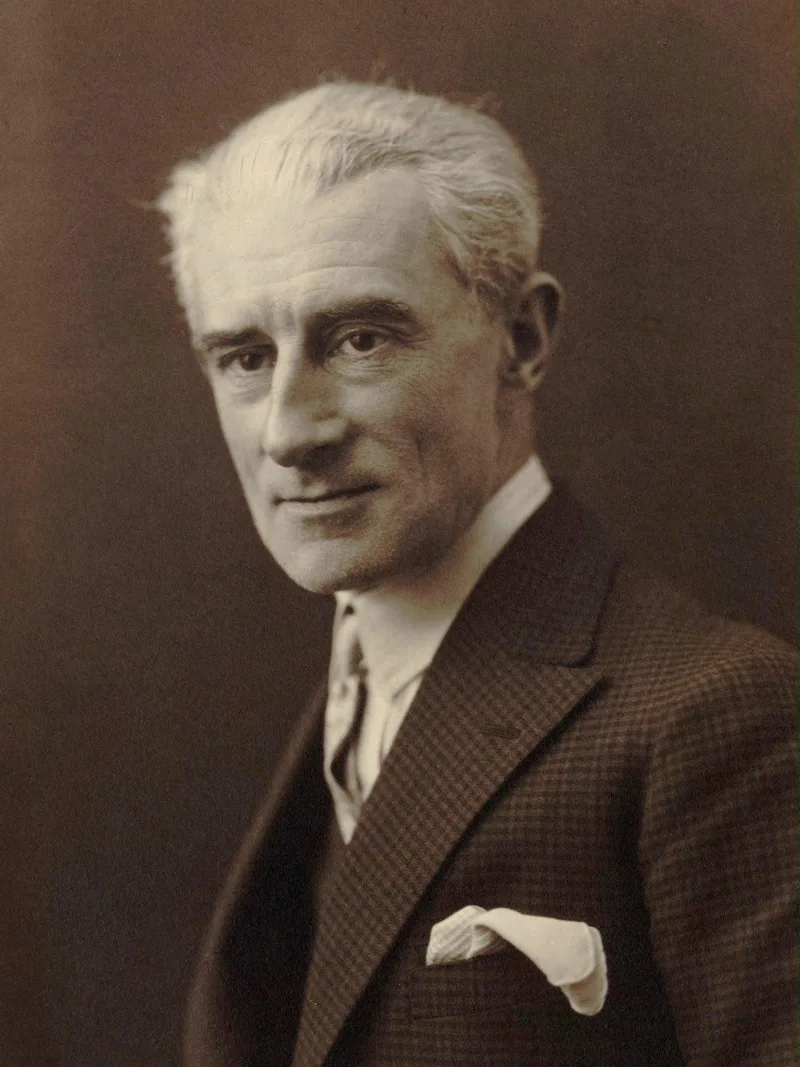
Cyprian Godebski, a sculptor and arts patron, and his wife Ida were at the center of the Parisian art world. Their salon was a regular haunt for figures like Debussy, Stravinsky, Fauré, and Ravel, who was the most frequent and longest-staying guest of them all. He had already dedicated his Sonatine to the couple, a sign of how deeply intertwined their lives were with his creative world.
In 1908, Ravel’s father, Joseph, passed away. In the aftermath, Ravel found emotional refuge at the Godebskis’ country home, “La Grangette.” Located in Valvins on the banks of the Seine southeast of Paris, this house was where Ravel spent many summers, watching Mimi and Jean grow up. It was in that same year that the first notes of Ma mère l’Oye (Mother Goose) were born.
Ravel himself left few words about the emotions behind this composition. But two things are clear. First, each movement is filled with fairy tale scenes that children would love. Second, Ravel intentionally crafted the piece to fit the small hands of children. He wanted Mimi and Jean to find joy in playing this music.
The premiere took place on April 20, 1910, at the inaugural concert of the Société musicale indépendante. Seated at the piano were eleven-year-old Jeanne Leleu and fourteen-year-old Geneviève Durony. The exact reason Ravel chose other children over Mimi and Jean is not known. Perhaps he didn’t want to burden the young siblings with the pressure of a premiere. What is recorded, however, is his long-standing regret over the decision. From start to finish, this music was for Mimi and Jean.
Ravel’s Choice of Tales: Stories That Aren’t Just Happy Endings
The subtitle for Ma mère l’Oye is cinq pièces enfantines (“five children’s pieces”). But when you actually listen to the music, it’s far from a simple nursery rhyme. A closer look at the five fairy tales Ravel chose reveals why.
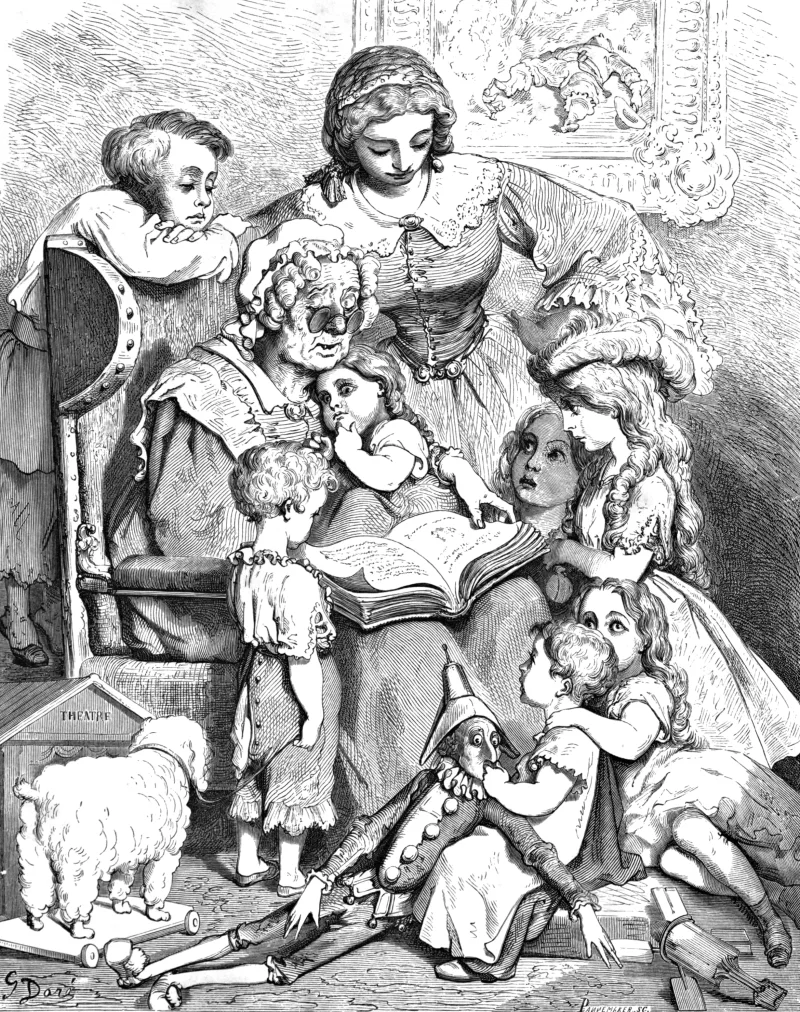
The first is Charles Perrault’s Sleeping Beauty, the story of a princess who falls into a deep sleep under a magic spell. The second, also by Perrault, is Tom Thumb (Petit Poucet), a tale of a child who gets lost in the woods, not unlike Hansel and Gretel.
The third, Laideronnette, comes from Madame d’Aulnoy’s tale “The Green Serpent,” featuring a princess cursed with ugliness. The fourth is Madame de Beaumont’s version of Beauty and the Beast. The fifth, The Fairy Garden, is the magical calm that arrives after all the stories have concluded.
Sure, they all have happy endings. But the journeys are anything but simple. A sleeping princess, a lost child, a cursed woman, a prince trapped in a beast’s form. The scenes Ravel selected all begin from a state of lack or distortion.
Ravel didn’t use simplistic, childish expressions when translating these five scenes into notes. The proof lies in the text he inscribed himself at the beginning of the second movement, “Tom Thumb,” taken directly from Perrault’s original story:
“He believed he could easily find his way by means of the breadcrumbs he had scattered wherever he had passed; but he was very surprised when he could not find a single crumb: the birds had come and eaten them all.”
It’s just a story about a child getting lost, but this passage evokes a sense of loss that goes beyond a simple case of being missing. This must have been the feeling Ravel was aiming for—the things hidden beneath the surface of the fairy tale, the things you only begin to understand once you’ve grown up.
From Piano Duet to Orchestra: Two Births
Born in 1910, this piece was completely reborn just a year later.
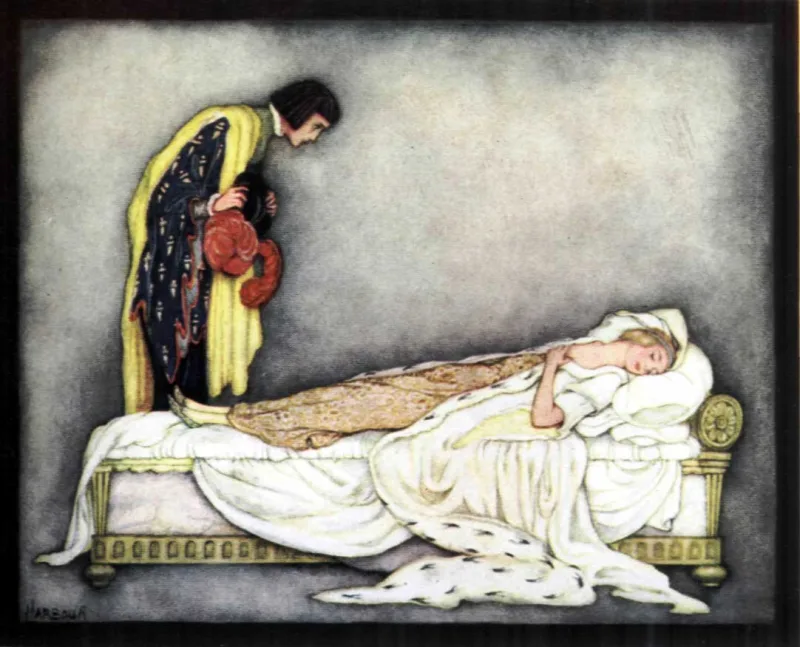
In 1911, Ravel arranged all five movements for orchestra. What began as a set of pieces for four hands on a piano was transformed into a work for a large orchestra. The result was a piece of music that feels entirely different from the piano original.
Ravel’s skill in orchestration was already well-established, with works like Rapsodie espagnole and Daphnis et Chloé as proof. In Ma mère l’Oye, that precise talent for designing timbre is put to work to fit each individual fairy tale scene.
In ‘Pavane of the Sleeping Beauty,’ a solo flute creates a languid atmosphere. In ‘Tom Thumb,’ the oboe’s thin, reedy cry paints a picture of the lost child’s confusion. In the third movement, ‘Laideronnette,’ a pentatonic melody layered with glockenspiel, xylophone, and celesta opens up an exotic world inside a pagoda.
And in the fourth movement, ‘Conversations of Beauty and the Beast,’ the contrabassoon gives voice to the Beast’s low, gruff tones. Towards the end of the movement, that sound disappears, replaced by the gentle melody of the clarinet—the moment the curse is broken. Finally, in the fifth movement, ‘The Fairy Garden,’ the entire string section slowly builds a wall of light, leading to a dazzling climax.
Ravel treated this arrangement not as a simple “instrument substitution” but as a re-creation. He redesigned the emotion and imagery of each movement from the ground up in the language of the orchestra. If you listen to the piano and orchestral versions side-by-side, they feel like completely different pieces of music, even though the melodies are the same. The difference in timbre is that dramatic.
In that same year, Ravel took it a step further. In 1912, he expanded the five-movement suite into a full-length ballet. He added four interludes between the movements and tacked on a Prelude and a ‘Danse du rouet et scène’ (Spinning Wheel Dance and Scene) at the beginning. It premiered on January 29, 1912, at the Théâtre des Arts in Paris.
A piano duet, an orchestral suite, a ballet. Ravel wasn’t content to visit this fairy tale world just once.
A Movement-by-Movement Guide: Into the Five Fairy Tales
Mvt. 1 — Pavane of the Sleeping Beauty: The Music of Frozen Time
This movement doesn’t move.
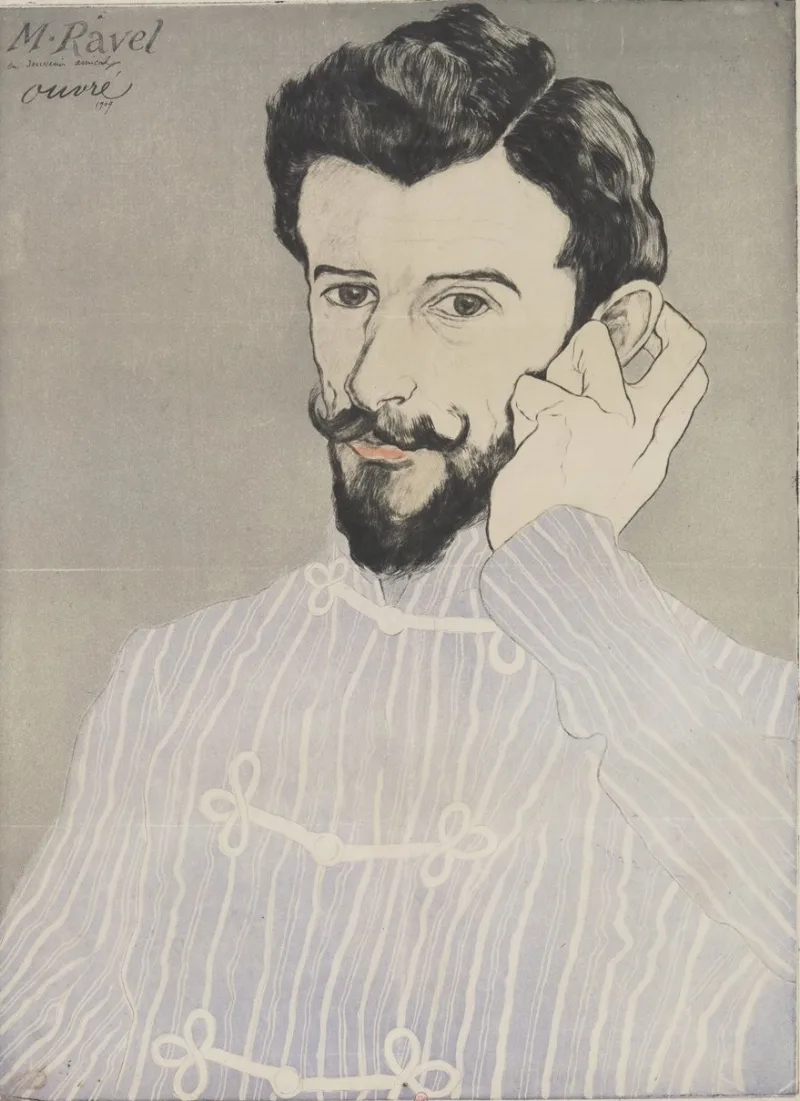
A pavane is a slow, stately court dance from the Renaissance. This is the form Ravel chose—music that feels almost frozen. Since the sleeping beauty is motionless, the time around her has stopped as well. In a movement less than two minutes long, Ravel captures that stillness completely.
The flute gently lays down the main melody. It never rushes. It doesn’t try to explain what’s happening. It feels like sitting quietly beside someone who is asleep.
There’s a reason this short movement comes first. It recalibrates your sense of time. To follow this music properly, you have to breathe much more slowly than usual. If you listen at the pace of a busy day, it’s easy to dismiss it as just a brief introduction. But once you tune your ear to the speed of this movement, the ones that follow are heard with an entirely different resolution.
Mvt. 2 — Tom Thumb: The Path Eaten by Birds
A child is looking for the path. Or rather, he’s trying to look.
The oboe repeats a small melodic fragment. It takes a step forward, then comes back. Tries another direction, then back to where it started. The melody never reaches its destination because the path itself has vanished.
When you remember the quote from Perrault that Ravel placed before this movement (“the birds had come and eaten all the breadcrumbs”), the meaning of this repetition changes. Tom Thumb isn’t just wandering; he’s trying to find a path that no longer exists. He is repeatedly confirming the fact that something that should be there is gone.
At the end of the movement, the music dissipates. The sound fades away without having arrived anywhere. It’s bittersweet, but not despairing. That’s the strength of a child. If it were an adult, the music would be far darker.
Ravel scholars are divided on its interpretation. One side reads the repeating melody as the child’s stubbornness, a search that refuses to give up. The other sees it as an expression of anxiety, of not knowing where to go. Both interpretations are correct at the same time. That’s why this short movement lingers so long in the mind.
Mvt. 3 — Laideronnette, Empress of the Pagodas: The Cursed Princess’s Splendid Kingdom
Suddenly, the mood shifts completely.
An exotic and unusual melody bursts in with a march-like rhythm. Ravel’s weapon of choice here is the pentatonic scale, a scale structure that often sounds “oriental” to Western ears. The world Laideronnette rules is a kingdom of “pagodes,” an exotic palace filled with small towers. The glockenspiel, xylophone, and celesta glitter, mimicking the strange sounds echoing from within the towers.
Laideronnette is the princess from Madame d’Aulnoy’s fairy tale “The Green Serpent.” She’s been cursed with an ugly appearance, but in this movement, she is full of confidence. She is neither miserable nor sad. Instead, the exotic world of her pagodas resounds with a unique and brilliant energy. Perhaps Ravel could write the story of a cursed woman with such spirit because he saw her world as a genuinely compelling place in its own right.
Ravel had long been fascinated by Eastern music, particularly Gamelan (traditional Indonesian percussion orchestra). This movement is where that influence is most clearly heard. After first encountering a Javanese Gamelan performance at the 1889 Paris Exposition, Ravel was deeply impressed by its sound world. Nearly two decades had passed by the time he wrote Ma mère l’Oye, but that memory is vividly alive in every percussive timbre of the pagodas.
If your first thought on hearing this piece was, “Hey, doesn’t this sound a bit Asian?” you’re exactly right. That was the effect Ravel was going for all along.
Mvt. 4 — Conversations of Beauty and the Beast: The Moment the Curse Lifts
This is the movement that contains the most concrete “narrative development” of the entire suite.
It sounds different from the very first note. The contrabassoon—a large, low-pitched woodwind with a very thick, rough sound—takes on the voice of the Beast. The clarinet answers with the melody of Beauty. The two converse with different rhythms and timbres until, in the latter half of the movement, the Beast’s low growl recedes. The strings and clarinet then transform into a gentle, soaring melody.
The curse has been broken. The Beast returns to his princely form.
The music doesn’t spell it out; it just depicts it. But at the moment the low notes disappear and the warm strings rise, even someone who doesn’t know the story can feel that something has changed. This must have been the effect Ravel intended: the music itself tells the story of the transformation, without any need for explanation.
The waltz rhythm is also an interesting touch. Two awkward beings gradually find their footing within the rhythm, eventually becoming one.
Mvt. 5 — The Fairy Garden: The Light That Remains After the Story Ends
The final movement doesn’t end. At least, that’s how it feels.
‘Le jardin féerique’ (The Fairy Garden) begins with a slow, solemn note. It gradually accumulates light until the entire string section unfolds into a radiant major-key climax. In the ballet version, this moment corresponds to Sleeping Beauty awakening to the prince’s kiss.
There’s a reason this movement is the most frequently performed piece from the suite on its own. It contains a complete, self-contained emotion. It’s the quiet, luminous moment that comes after a story has ended, after turning a page in one’s life. That’s the feeling it captures.
Director Luca Guadagnino chose this movement for his 2017 film Call Me by Your Name. The music perfectly captures the emotion that lingers after the ending, that strange afterglow where you can’t tell if it’s sadness or beauty. Could there have been a more perfect choice?
‘The Fairy Garden’ is not just a final movement. It’s the sense of the world returning to its proper place after all four stories have concluded. But it’s also the feeling that, within that return, something has been irrevocably changed. This is why a fairy tale is a fairy tale, and why this music is the Mother Goose Suite.
The Emotion Ravel Hid His Whole Life
Ravel was a genius at concealing his inner world. Boléro is an experiment in repetitive structure, La Valse is an almost cynical parody of the waltz, and the Piano Concerto in G Major is a tightrope walk between jazz and classical. Ravel’s music generally has a polished surface. It’s designed so you can’t see what’s inside.
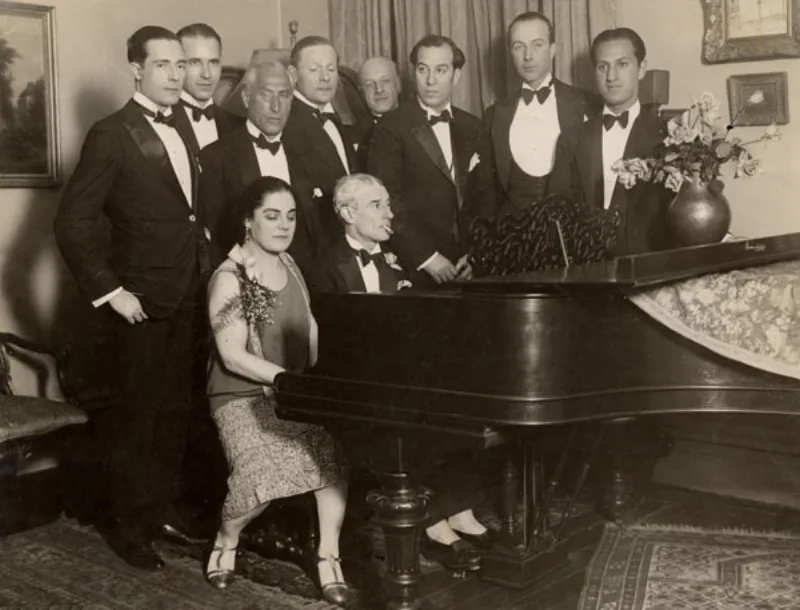
But Ma mère l’Oye is different.
When Ravel wrote this piece, the two children he loved were at the forefront of his mind. There was no political agenda, no aesthetic experiment. Just the simple wish that these children would have fun playing this music. The summers he spent at the Godebski’s country home, fresh from the loss of his own father, must have been woven into it as well.
That’s why this piece contains something rarely felt in Ravel’s other works. A sense of unhurriedness. A comfort in not having to explain everything. A music that seems to emanate a certain warmth.
Ravel passed away in 1937. The cause was a brain disease, likely frontotemporal dementia, following a car accident. In his final years, he lived in a state where he wanted to write but couldn’t. Accounts from the time say that he could hear music in his head, but his hands would not obey.
Ma mère l’Oye is music from a time when everything was still possible for Ravel, written for the people closest to him. Knowing that fact or not makes for a very different listening experience.
Four Things to Know Before Your First Listen
The entire suite runs for about 15-17 minutes. It’s not long.
Knowing just four things can make it sound like a completely different piece.
Each movement is based on a fairy tale. Mvt. 1 is the time flowing around the sleeping princess. Mvt. 2 is a child lost in the woods. Mvt. 3 is a splendid world inside an exotic pagoda. Mvt. 4 is the moment a curse is broken. Mvt. 5 is the radiant garden that appears after all the stories are over. Keeping these five scenes in mind will make the outline of each movement much clearer.
It’s normal to feel that the third movement sounds unfamiliar. That’s because Ravel intentionally used a pentatonic scale to create an “oriental” timbre. The best way to listen is to enjoy that very strangeness. You’ll quickly notice how the texture of the woodwinds and percussion is completely different from the other movements.
Listen for the moment the low notes disappear in the fourth movement. It’s the point where the thick bass of the contrabassoon recedes, and the strings rise warmly. This is the moment of transformation, when the Beast becomes a prince. It’s remarkably clear even if you’re listening without a score.
The final fifth movement doesn’t rush. The climax of this movement only fully unfolds after you’ve traveled through the preceding four stories. If you listen to the fifth movement alone, it’s a pretty piece of orchestral music. But after experiencing the full journey of the first four, it’s a completely different story.
Recommended Recordings — Three Approaches
James Gaffigan / Oslo Philharmonic Orchestra (2020s)
This recording is led by the Oslo Philharmonic’s chief conductor, James Gaffigan. The color of each movement is vivid, and the sound itself is transparent. The texture of the woodwinds and percussion in the third movement, ‘Laideronnette,’ comes through with particular clarity. If you’re new to this piece, this is a great place to start. Its clear, modern sound makes it an ideal choice for an introduction.
Alexander Shelley / Simón Bolívar Symphony Orchestra
British conductor Alexander Shelley meets Venezuela’s Simón Bolívar Symphony. The energy is on another level. The languor of the first movement, the vitality of the third, and the climax of the fifth are all distinctly drawn. This performance proves just how rich and varied the colors in Ravel’s orchestration are.
Seiji Ozawa / Boston Symphony Orchestra (1974, DG)
Ozawa and the Boston Symphony’s 1974 recording for the DG label is considered a classic reference for this work. The way Ozawa slowly builds the volume in the climax of the fifth movement, ‘The Fairy Garden,’ until the strings fully open up, is a masterclass in orchestral control that is still cited today. If you ask how Ravel’s orchestration should sound, this recording is one of the definitive answers.
Listen with the Score
The score for Ma mère l’Oye is available for free on IMSLP. Following along with the score reveals Ravel’s design at a glance—which instrument he assigned to which color, and how he constructed the entire sonic world.
→ View the score for Ma mère l’Oye (IMSLP)
Frequently Asked Questions
What is Ravel’s Mother Goose Suite about?
It is a five-movement suite originally for piano duet, composed by French composer Maurice Ravel between 1908 and 1910. He later orchestrated it in 1911. Each movement musically depicts a scene from a fairy tale by authors like Charles Perrault, Madame de Beaumont, and Madame d’Aulnoy, including Sleeping Beauty, Tom Thumb, and Beauty and the Beast. The work was dedicated to Mimi and Jean, the young children of his close friends Cipa and Ida Godebski. The orchestral version is now a staple of the concert repertoire, celebrated for Ravel’s masterful and imaginative use of instrumental color.
How many movements are in the Mother Goose Suite?
The suite consists of five movements: I. Pavane of the Sleeping Beauty, II. Tom Thumb, III. Laideronnette, Empress of the Pagodas, IV. Conversations of Beauty and the Beast, and V. The Fairy Garden. The total performance time is typically between 15 and 17 minutes. The expanded ballet version from 1912 is a much longer work, as it includes several new interludes and an opening prelude not part of the standard concert suite.
What is the difference between the piano and orchestral versions of Mother Goose?
The original piano duet version (1910) is an intimate and concise work for two players at one piano. For the 1911 orchestral arrangement, Ravel completely re-imagined the piece’s texture and color rather than simply transferring the notes. He assigned specific instruments to characters and moods: the contrabassoon growls as the Beast, the clarinet sings as Beauty, and instruments like the glockenspiel and xylophone create an exotic, shimmering world in Laideronnette. Listening to both versions back-to-back reveals how dramatically the same melody can change character depending on orchestration.
Why did Ravel dedicate the Mother Goose Suite to children?
Ravel wrote the piece for Mimi and Jean Godebski, who were six and seven years old at the time. They were the children of his close friends, Cipa and Ida Godebski. After his father’s death, Ravel considered the Godebski family his second family and found great comfort in their home. Having already dedicated his Sonatine to the parents, he composed this piano duet specifically so their children could play it. Although two other young pianists performed the premiere, Ravel reportedly always regretted that Mimi and Jean never played it in public, as the music was truly a personal gift to them.
Has the Mother Goose Suite been used in movies or TV shows?
Yes. The fifth movement, The Fairy Garden, was used memorably in the 2017 film Call Me by Your Name. The fourth movement, Conversations of Beauty and the Beast, appears in the 2021 Norwegian film The Worst Person in the World. It has also been used as background music in the Korean drama Sky Castle (2018-2019). In the 2007 Japanese anime Clannad, characters choose the second movement, Tom Thumb, as background music for a school play.