- Composer
- Pyotr Ilyich Tchaikovsky (1840–1893)
- Work
- 1812 Overture in E-flat major (Solemn Overture), Op. 49
- Key
- E-flat major
- Composed
- September–November 1880 (completed in approximately 6 weeks)
- Movements
- 1 movements (single movement, approx. 14–16 min)
Slow introduction (Orthodox hymn) → Battle depiction → La Marseillaise (French theme) → Russian folk songs (counterattack) → Finale (cannons, bells, Imperial anthem) - Instrumentation
- piccolo, 2 flutes, 2 oboes, 2 clarinets, 2 bassoons, 4 horns, 4 trumpets, 3 trombones, tuba, timpani, snare drum, bass drum, cymbals, tam-tam, church bells, cannon (or bass drum substitute), 1st & 2nd violins, violas, cellos, double basses
- Premiere
- August 20, 1882, Moscow Exhibition of Arts and Industry, conducted by Ippolit Altani
- Dedication
- Nikolai Rubinstein (commissioned by; Rubinstein died in 1881 before the premiere)
There’s a classical piece where cannons are listed as an official instrument in the score. It’s Tchaikovsky’s 1812 Overture.
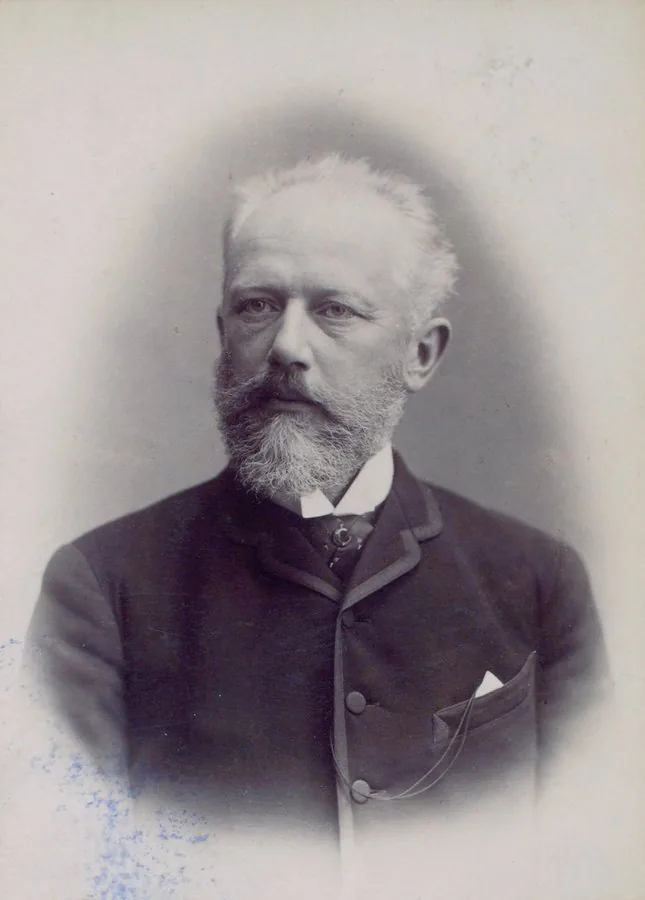
But the man who wrote it absolutely despised it.
“I wrote it without warmth or love. It has no artistic merit. It’s just very loud.” The author of that brutal critique? Tchaikovsky himself.
Fast forward 140 years. Millions of people now cheer to this music every year amid fireworks displays. During American Independence Day celebrations, they even discharge real cannons. The piece the composer was most ashamed of became his most famous.
How on earth did that happen?
A Commissioned Work Born in Six Weeks
In the summer of 1880, a commission landed on Tchaikovsky’s desk.
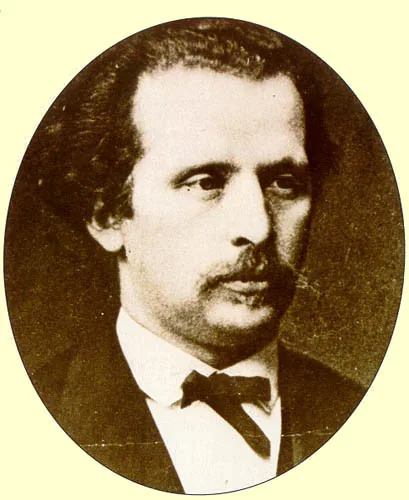
The request came from Nikolai Rubinstein, the influential conductor and director of the Moscow Conservatory. The instructions were clear: a grand, patriotic piece for a massive outdoor performance. It was for the opening of the 1882 All-Russia Arts and Industry Exhibition and the consecration of the Cathedral of Christ the Saviour, built to commemorate the victory over Napoleon. It had to be big, crowd-pleasing, and spectacular.
Tchaikovsky’s private letters reveal his true feelings. He wanted to focus on his own symphonies, ballets, and operas. Writing music for a public spectacle felt like a step in the wrong direction, far from the path he envisioned for himself as a serious artist.
But saying no to Rubinstein wasn’t an option. He wasn’t just an acquaintance; he was the man who had premiered Tchaikovsky’s Piano Concerto No. 1 and a powerful patron in Moscow’s music scene. He was a crucial ally in Tchaikovsky’s career.
So, Tchaikovsky got to work in late September 1880 and finished by early November. He completed a 170-page full orchestral score in about six weeks. While Tchaikovsky was known for working quickly, even he admitted he treated this one like a job and just pushed through it.
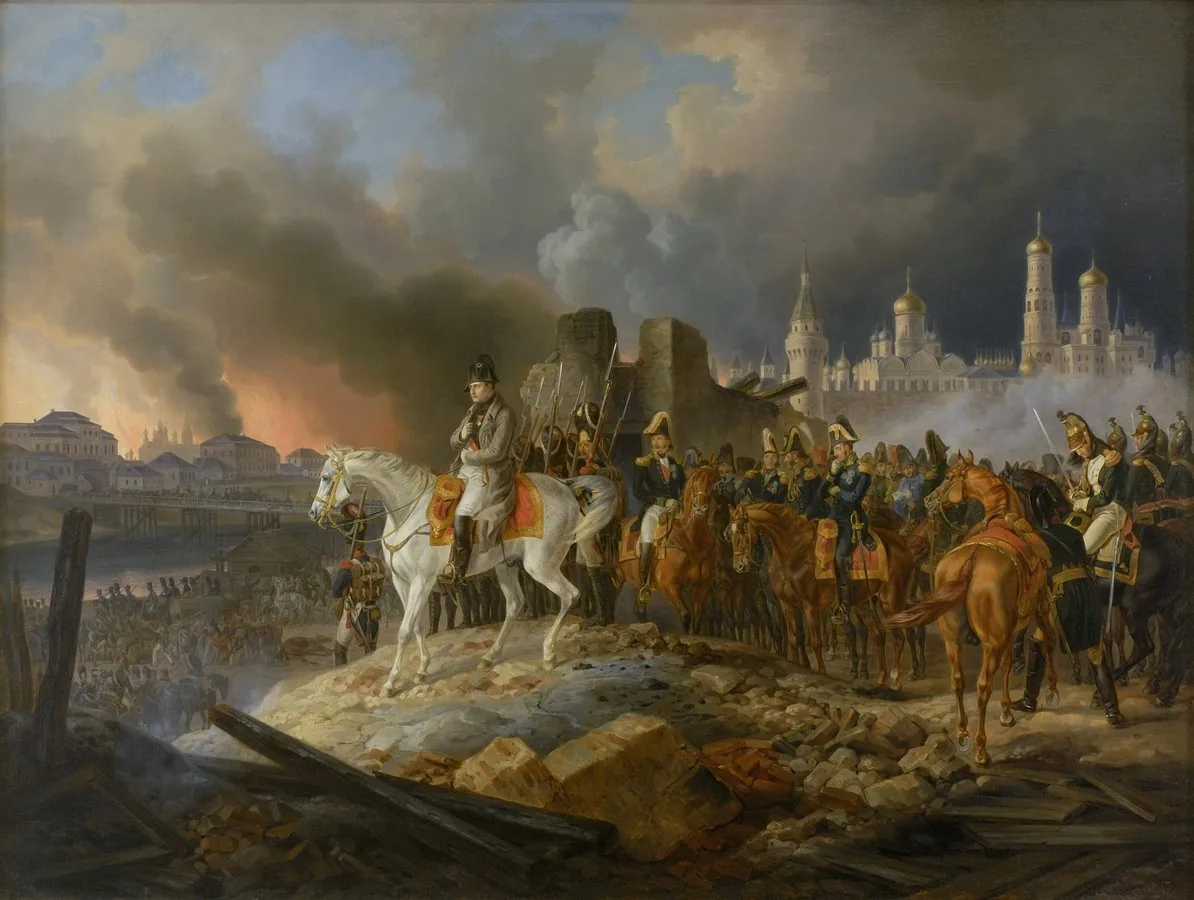
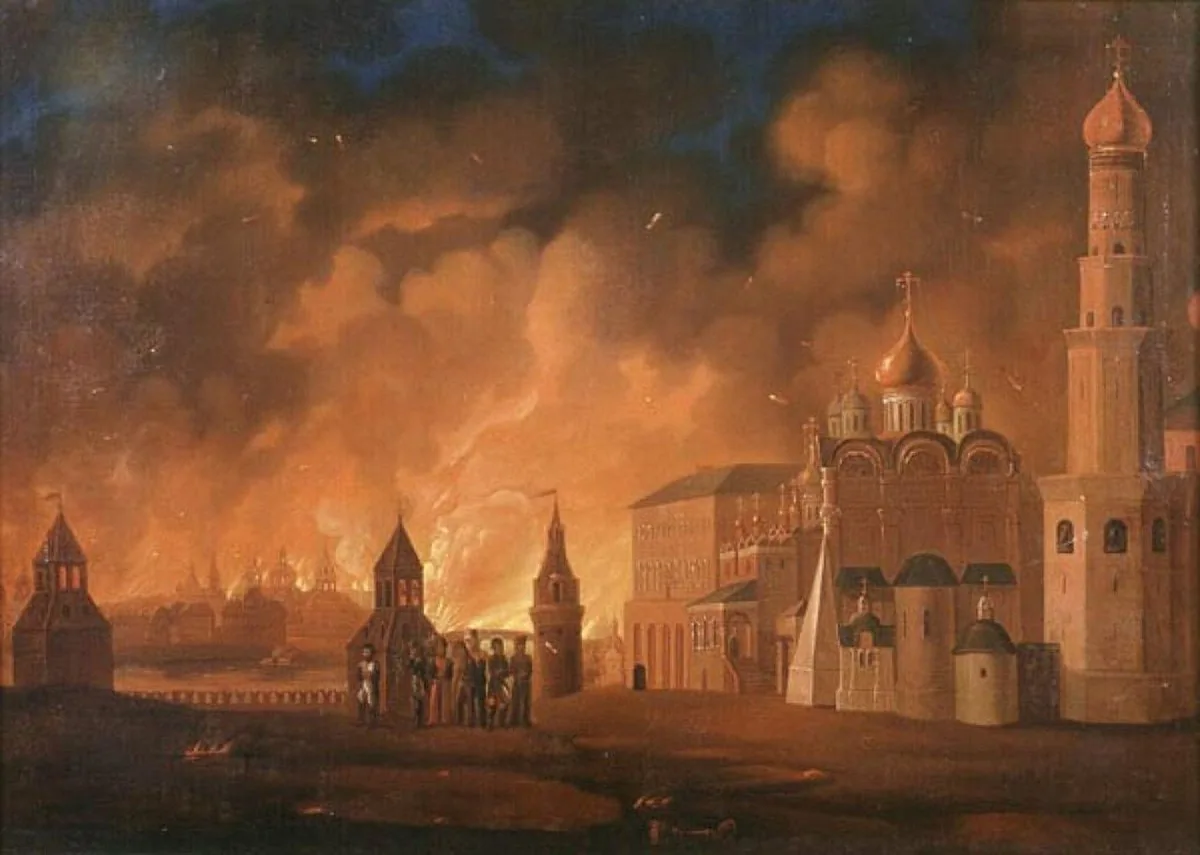
Let’s quickly recap the history this piece depicts. In 1812, Napoleon Bonaparte invaded Russia with his Grande Armée of 600,000 soldiers, the most formidable military force in Europe at the time. The Russian army avoided a direct confrontation, retreating deeper into the country. By September, Napoleon had pushed all the way to Moscow. But the Russians burned the city to the ground. The conquered city was nothing but ash. With his supply lines cut and the brutal Russian winter approaching, Napoleon was forced to retreat. Of the 600,000 soldiers who invaded, fewer than 100,000 made it back alive. It was the beginning of the end for Napoleon’s empire.
Tchaikovsky compressed this entire saga into a single orchestral piece of about 15 minutes. In just six weeks.
Then, the unexpected happened. In March 1881, Nikolai Rubinstein died. The man who commissioned the work never got to hear it. Tchaikovsky ultimately dedicated the overture to him. What began as a piece for a state ceremony became a final gift to a friend.
The premiere didn’t take place until August 20, 1882. The score sat in a drawer for nearly two years after its completion—a telling detail about how little Tchaikovsky cared for it.
Why He Wrote Cannons into the Score
The most controversial element of this piece is, of course, the cannons.
The score’s finale explicitly calls for sixteen cannon shots. The instruction reads “Cannon or bass drum,” allowing for a substitute in venues where firing artillery is impractical. But the original intent, if conditions permit, is to use actual cannons.
This wasn’t the first time a real cannon appeared in a classical score. Beethoven’s Wellington’s Victory (1813) did it first. However, that piece is rarely performed today. Beethoven himself called it “the stupidest thing I ever wrote,” and Tchaikovsky feared his overture would be lumped into the same category. The outcome, however, was the complete opposite.
There are two competing theories as to why Tchaikovsky included the cannons.
First, it was a practical choice to fulfill the commission. The request was for outdoor festival music, so he chose the most direct way to captivate a large crowd. Cannons played a decisive role in the 1812 battles, and there was no better way to sonically recreate the battlefield.
The second theory suggests it was an act of self-mockery. Tchaikovsky held a low opinion of the work’s artistic value. His thinking might have been, “If they want a spectacle, I’ll give them the most extreme spectacle imaginable.” It could have been a form of sarcasm: “If this is a show, I’ll put on a proper show.”
Whichever theory is correct, the result is the same: the cannons made this piece unforgettable.
Here’s another irony: it’s virtually impossible to perform this piece perfectly in a concert hall. Firing real cannons indoors would endanger the audience’s hearing. So, it’s replaced with digital sound effects or a bass drum, or the effect is omitted entirely. The world’s most famous “cannon piece” cannot be fully realized in a concert hall—an irony that seems to run through its entire history.
The most famous live cannon performance is the Boston Pops Orchestra’s annual Fourth of July concert in Boston. At the Charles River Esplanade, artillerymen discharge actual 105mm howitzers, synchronized with a massive fireworks display. Hundreds of thousands of people line the riverbanks, and the event is broadcast nationwide. This tradition is what cemented the 1812 Overture in American popular culture.
The Narrative of War Painted by Music
The 1812 Overture is a single-movement work, but its internal structure follows a remarkably clear narrative. Knowing what each section depicts completely transforms the listening experience.
Introduction: A Prayer on the Eve of Invasion
The piece begins with a heavy, unison melody in the cellos and violas. This is a direct quote from the Russian Orthodox hymn ‘O Lord, Save Thy People.’
It’s slow and solemn, evoking a scene of people kneeling in prayer in a church on the eve of war. When Napoleon invaded, this was the people’s first reaction—they ran to the churches. Before taking up arms, they prayed to God.
The simple but weighty melody repeats a few times before the music’s character abruptly shifts. The war has begun. Woodwinds and strings clash, painting a chaotic battle scene. A snippet of the Russian folk song ‘At the Gates’ flashes by and disappears, capturing the initial confusion and the beleaguered state of the Russian army.
Remember this tense, anxious atmosphere from the introduction. It’s the setup that makes the triumphant finale feel that much more powerful.
La Marseillaise: Napoleon’s Advance
As the battle scene unfolds, the trumpets introduce a familiar tune: the French national anthem, ‘La Marseillaise.’
At first, this feels strange. Why is the French anthem blaring so confidently in a piece celebrating a Russian victory over Napoleon?
Tchaikovsky’s intention was clear. He needed ‘La Marseillaise’ to sound strong, loud, and unstoppable. Only then would its eventual disappearance make the Russian victory feel truly dramatic. If you portray the enemy as weak, the victory over them becomes meaningless.
‘La Marseillaise’ grows stronger, with the full orchestra rallying behind it, driving towards a climax. Just when its momentum seems unbreakable, a turning point arrives. Russian folk melodies begin to emerge, gradually pushing back against the French anthem. The music slowly brightens.
This mirrors the historical turning point. When Napoleon occupied Moscow, the Russian people burned the city, leaving him with nothing but ashes. The harsh winter, starvation, and partisan guerilla tactics slowly chipped away at his 600,000-strong army. Napoleon was forced to retreat with fewer than 100,000 soldiers.
The same thing happens in the music. ‘La Marseillaise’ grows weaker, fractures, and finally vanishes without a trace.
An interesting side note: Russia and France had a tense diplomatic relationship at the time, and the Russian imperial court was uncomfortable with such a prominent use of ‘La Marseillaise.’ Tchaikovsky didn’t care. To build the necessary dramatic conflict, the enemy’s voice had to be heard.
Finale: Cannons, Bells, and the Imperial Hymn
The climax arrives with the sound of cannons.
The first cannon shot. In a live performance, the entire audience flinches. It’s an instinctive, primal reaction; humans are hardwired to respond instantly to sudden, loud explosions.
Along with the cannons, church bells ring out—the victory peal of the Russian Orthodox Church. Ringing church bells to celebrate a military victory was a long-standing Russian tradition. The original score specifies real church bells, and for large outdoor performances, actual bells are still sometimes used.
Finally, the Russian imperial anthem, ‘God Save the Tsar,’ erupts from the entire brass section. In the space where ‘La Marseillaise’ once stood, the Russian hymn now roars at fortissimo. It is a declaration of victory.
Most people listening to this finale for the first time experience a physical jolt. The sound of the cannons isn’t just heard; it’s felt throughout the body. It’s one of those rare moments where music transcends hearing and triggers a physiological response.
The Finale Censored by the Soviets for 70 Years
Here’s a historical irony for you.
During the Soviet era (1917–1991), the finale could not be performed as written. The problem was the imperial anthem. For the Bolshevik government, which had overthrown the monarchy, ‘God Save the Tsar’ was the ultimate counter-revolutionary song.
Soviet authorities created a revised version, replacing the anthem with a different Russian folk song. For decades, only this altered version was performed at official concerts.
It wasn’t until after the collapse of the Soviet Union in 1991 that the original score with the imperial anthem was restored. It took over 70 years for Tchaikovsky’s intended finale to be heard on a Russian stage.
This episode highlights another of the work’s ironies. A piece celebrating a Russian victory was itself censored in Russia for 70 years. Meanwhile, in the “enemy” United States, it was performed freely without any censorship, even becoming a patriotic staple for Independence Day. What would Tchaikovsky have made of that?
How It Became an American Independence Day Anthem
The journey of a piece written by a Russian composer to celebrate a Russian victory becoming a staple of American Independence Day is a strange one.
The turning point came in the early 1970s. Arthur Fiedler, conductor of the Boston Pops Orchestra, programmed the piece for an outdoor concert on the Charles River, complete with fireworks. It was a massive hit, broadcast nationally, and the format soon spread across the country. Today, it’s not just a Boston tradition but a standard finale for Fourth of July celebrations nationwide.
In this process, the original historical context was completely forgotten. The music became detached from Napoleon’s invasion of Russia and was repurposed as the soundtrack for “summer nights and outdoor fireworks.” It’s a classic example of music being separated from its original meaning to acquire a completely new cultural significance.
Musicologists are divided on this. Some see it as a natural phenomenon for music to travel and adapt outside its original context. Others point out that using this piece for American Independence Day is historically nonsensical, as Napoleon’s invasion of Russia has absolutely nothing to do with American independence.
The Work’s Place: A Controversial Assessment
Among classical music fans, the 1812 Overture is a surprisingly divisive work.
One camp considers it “Tchaikovsky’s worst piece,” dismissing it as shallow spectacle that chases effects over artistic depth. This is the same criticism leveled at Beethoven’s Wellington’s Victory—a view Tchaikovsky himself shared.
The other camp sees it as a masterfully constructed piece of program music. They argue that the dramatic structure—the conflict and resolution between the French and Russian themes—and the intricate weaving of folk songs, hymns, and the imperial anthem are far from simple showmanship. Indeed, the thematic development and counterpoint in the piece are quite sophisticated.
Both arguments have merit. This work certainly doesn’t contain Tchaikovsky’s deepest musical philosophy. But it is also a work that perfectly achieves its intended purpose. The goal was to captivate an audience at an outdoor commemorative event, and in that, it succeeded flawlessly.
If one of the roles of classical music is to open the door for newcomers, the 1812 Overture is one of the best gatekeepers there is. A first-time listener can immediately understand what’s happening, and the finale elicits a visceral reaction. If this piece leads someone to discover the Pathétique Symphony, the Piano Concerto No. 1, or Swan Lake, then it has served as the perfect entry point to a much larger world.
The Piece’s Place in Music History
Musicologically, the 1812 Overture belongs to the lineage of “program music”—instrumental music that depicts a specific story, event, or scene.
A famous predecessor in this lineage is Berlioz’s Symphonie fantastique (1830), a five-movement symphony that tells the story of his obsession with an actress. Smetana’s Má Vlast (1874–79) paints a picture of Bohemia’s rivers, fields, and historical heroes in six symphonic poems. While Tchaikovsky’s overture is smaller in scale, its narrative clarity is as strong as any work in this tradition.
One of its key contributions to music history is its systematic use of national anthems as tools for musical storytelling. The structure of pitting the French anthem against the Russian imperial hymn, with one ultimately consuming the other, influenced countless later compositions about war. The common film score technique of setting an enemy theme against a hero’s theme is a direct descendant of this approach.
The work is also one of the most successful examples of integrating non-instrumental sound effects into an orchestra. It demonstrated how non-musical sounds like cannons and church bells could be combined with orchestral textures. This idea was developed much more extensively in 20th-century modern music and film scores.
Tchaikovsky may have deemed it “artistically worthless,” but ironically, the narrative and structural skills he displayed here are the same ones that drive his other major works. The conflict between Odette and Rothbart in Swan Lake, the clash of darkness and hope in the Pathétique Symphony—they all rest on the same principles of dramatic construction. The paradox is that the piece Tchaikovsky hated is, in fact, one of the clearest expressions of his musical language.
Napoleon’s Invasion of Russia: The Historical Background
To fully grasp Tchaikovsky’s music, it’s essential to understand the historical event it portrays.
In June 1812, Napoleon Bonaparte led his Grande Armée of over 600,000 men into Russia. It was the largest European invasion force in history up to that point. Napoleon’s goal was to force Tsar Alexander I to submit and fully commit to the Continental System, a blockade against Great Britain.
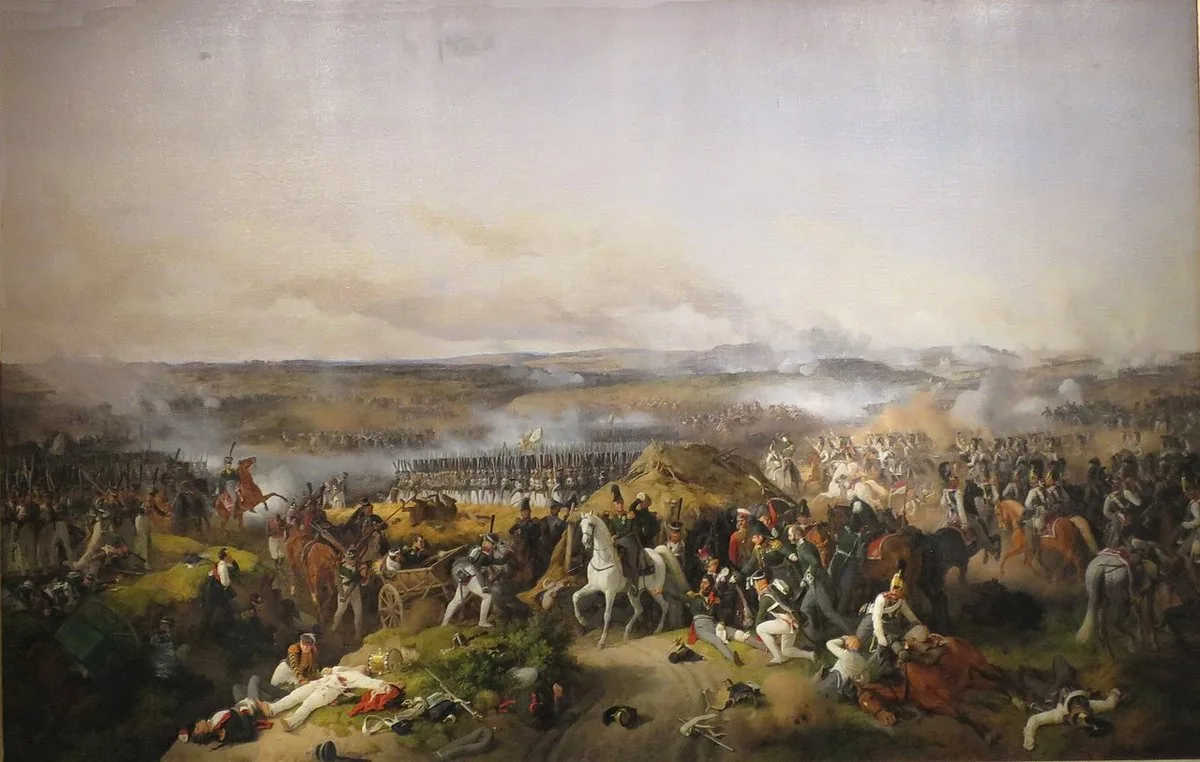
The Russian army avoided direct confrontation, employing a scorched-earth strategy of continuous retreat. They refused to give Napoleon the decisive battle he wanted. In early September, the massive Battle of Borodino resulted in over 70,000 casualties on both sides but ended in a stalemate. Napoleon pressed on, entering Moscow on September 14.
But Moscow was a ghost town. Most of its inhabitants had fled, and those who remained torched the city. He had occupied the capital, but gained nothing. Tsar Alexander refused to negotiate. The brutal Russian winter was setting in. In October, Napoleon finally ordered a retreat.
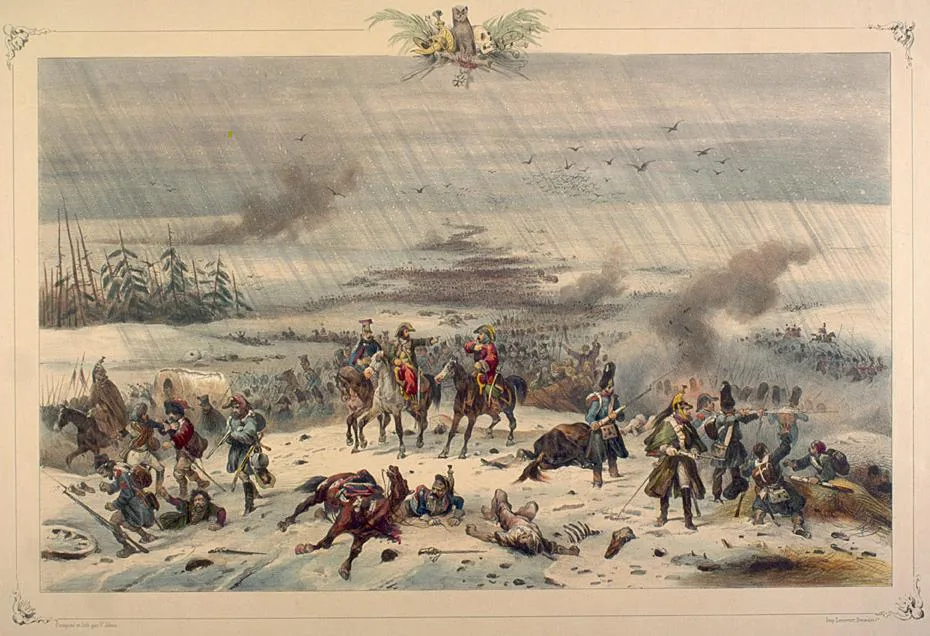
The retreat was a catastrophe for the French army. They were decimated by the cold, starvation, and relentless guerrilla attacks from Russian partisans. Tens of thousands froze to death while crossing rivers; the crossing of the Berezina River alone is estimated to have cost over 20,000 lives. Fewer than 100,000 soldiers made it back across the border. 600,000 went in; 100,000 came out.
This is the story Tchaikovsky captured in about 15 minutes of music.
If You’re Listening for the First Time, Just Know This
Here’s a practical guide for anyone new to the piece.
* Listen to ‘La Marseillaise’ beforehand. If you familiarize yourself with the French national anthem, you’ll immediately recognize it when it appears. Even if you don’t, you can’t miss it: it’s the powerful, march-like tune that the trumpets play with full force.
* Wait for the silence before the finale. Right before the climax, the music quiets down for a moment. This brief calm is a device to make the cannon blast even more shocking. When the silence falls, your body will instinctively brace itself.
* There are 16 cannon shots. The cannons discharge a total of 16 times in the finale. It’s completely normal to flinch at the first shot. It’s a common reaction even for seasoned concertgoers at live performances.
* The final theme is the Russian Imperial Anthem. The grand, explosive melody played by the full orchestra in the finale is ‘God Save the Tsar.’ When this theme rings out where ‘La Marseillaise’ used to be, the war’s outcome is musically sealed. Knowing this part was censored in the Soviet Union for 70 years adds another layer to the experience.
* Listen for the bells. The church bells that ring alongside the cannons represent the victory peal of the Russian Orthodox Church. The original score specified real bells, and for major outdoor performances, actual bell towers or dedicated bell ringers are sometimes used.
A Piece Tchaikovsky Hated but Audiences Loved: The Reason for the Disconnect
There’s a clear reason for the extreme divergence between Tchaikovsky’s assessment and the audience’s reaction.
As a composer, Tchaikovsky found no personal truth in this work. When he finished his Pathétique Symphony, he called it “the most sincere thing I have ever written.” He agonized over every note of his Piano Concerto No. 1. But the 1812 Overture was different. It was a commission with a predetermined subject, finished in six weeks. To Tchaikovsky, it simply wasn’t his music.
The audience, however, felt differently. The story was clear, the climax was unforgettable, and it produced a physical reaction. Listeners didn’t know or care how quickly it was written or how much Tchaikovsky disliked it. They just knew it was powerful, memorable, and they wanted to hear it again.
There are several cases in classical music where a composer’s most-hated work becomes their most famous. Pachelbel’s Canon is one; Mozart’s Eine kleine Nachtmusik is another. Tchaikovsky’s 1812 Overture fits perfectly into this category.
Perhaps this reveals one of the most honest truths about classical music: no matter how much the composer hates it, good music endures.
Recommended Recordings
* Erich Leinsdorf / Boston Symphony Orchestra (1954, RCA Victor)
This is a historic recording that gets to the root of the American Independence Day tradition. The mono sound quality is dated, but the energy and drive are still palpable. This performance played a key role in establishing the Boston Pops’ tradition with the overture.
* Yevgeny Mravinsky / Leningrad Philharmonic Orchestra (1960s, Melodiya/Philips)
A recording by a Russian conductor with a Russian orchestra. It has a weight and dark color that sets it apart from Western interpretations. The heavy, solemn treatment of the opening hymn is a benchmark that few other conductors have matched.
* Yuri Temirkanov / St. Petersburg Philharmonic Orchestra (1990s, BMG)
A modern Russian orchestra performance with excellent sound quality and a balanced interpretation. Temirkanov’s approach avoids dramatic exaggeration, instead focusing on clarifying the music’s internal structure.
Listen with the Score
You can enhance your listening experience by following the score. The video below synchronizes the music with the full orchestral score, allowing you to see exactly when ‘La Marseillaise’ enters and when the cannons and bells are unleashed in the finale.
The original score is available for free on IMSLP.
→ View the score for the 1812 Overture (IMSLP))
Frequently Asked Questions
Are real cannons used in the 1812 Overture?
Yes. Tchaikovsky officially included cannons in the score, with a total of 16 shots specified in the finale. For outdoor performances, actual artillery is sometimes used, most famously by the Boston Pops for their Independence Day concert. In indoor concert halls, cannons are replaced with a bass drum or digital sound effects. Some venues have even refused to program the piece because accurately reproducing the cannon blast is impossible.
Is it true that Tchaikovsky hated this piece?
Yes, it’s true. Tchaikovsky described the work as “very loud and of no artistic value,” and even wrote in a letter that he composed it “without warmth or love.” It was a commissioned piece for the 1880 Moscow exhibition, completed in about six weeks. He considered it a work of obligation rather than pure artistic inspiration. The irony is that it became one of his most famous compositions.
Why does the French national anthem, ‘La Marseillaise,’ appear in this piece?
‘La Marseillaise’ symbolizes Napoleon’s French army in the overture. To musically depict the war between Russia and France, Tchaikovsky needed distinct melodies to represent each side. The progression of ‘La Marseillaise’ growing in strength before being overwhelmed by the Russian imperial hymn musically portrays Napoleon’s invasion and subsequent retreat. The Russian imperial court expressed discomfort with the use of the French anthem, but Tchaikovsky saw it as an essential choice for the musical narrative.
When and where did the piece premiere?
The premiere took place on August 20, 1882, in Moscow, conducted by Ippolit Altan. It was commissioned for the opening of the All-Russia Arts and Industry Exhibition and the consecration of the Cathedral of Christ the Saviour, which was built to commemorate the victory over Napoleon. Although completed in 1880, it took two years for the premiere to happen. The man who commissioned it, Nikolai Rubinstein, passed away in 1881 and never heard it performed.
How long is the 1812 Overture?
As a single-movement overture, its duration is typically between 14 and 16 minutes, depending on the conductor and tempo. Outdoor performances that include live cannon blasts and fireworks can extend the total event time.