- Composer
- Pyotr Ilyich Tchaikovsky
(1840–1893) - Work
- Piano Concerto No. 2 in G major, Op. 44
- Composed
- Sketched October–December 1879; orchestration finished late April 1880
- Movements
- Three
I. Allegro brillante e molto vivace (G major)
II. Andante non troppo (D major)
III. Allegro con fuoco (G major) - Scoring
- Solo piano
2 flutes, 2 oboes, 2 clarinets, 2 bassoons
4 horns, 2 trumpets, 3 trombones
Timpani
Strings
(the slow movement adds solo violin and solo cello) - First performance
- 12 November 1881, New York Academy of Music
Madeline Schiller, piano / Theodore Thomas, conductor - Russian first performance
- 2 June 1882, Moscow Arts and Industrial Exhibition
Sergey Taneyev, piano / Anton Rubinstein, conductor - Publisher
- P. Jurgenson, Moscow
Alexander Siloti’s abridged edition, 1897 (posthumous) - Dedicatee
- Nikolai Rubinstein
A composer who finds out about the first performance of his own concerto by reading a newspaper is having a bad century, and Tchaikovsky’s Second was only getting started.
The first performance took place on 12 November 1881 at the New York Academy of Music, with Madeline Schiller as the soloist and Theodore Thomas conducting. Tchaikovsky was in Europe. He had not been consulted about the date, he did not hear it, and word reached him afterwards through the press. The Russian first performance followed on 2 June 1882 at the Moscow Arts and Industrial Exhibition, with Sergey Taneyev at the piano and Anton Rubinstein conducting — more than half a year after strangers on another continent had already given the piece away.
That is the small indignity. Here is the large one: for most of the twentieth century, the Tchaikovsky Second that audiences actually heard was not the concerto Tchaikovsky wrote. It was a shortened version assembled by a former student of his — and published four years after he was dead, over an explicit written refusal.
The concerto he ranked above the First
Start with the fact that tends to stop people mid-sentence: of his two piano concertos, Tchaikovsky preferred this one. Writing to Alexander Siloti in 1891, he described the Second as the concerto “I like far more than the first” — a sentence that has aged into one of the strangest mismatches in the repertoire, because posterity went the other way and never looked back.
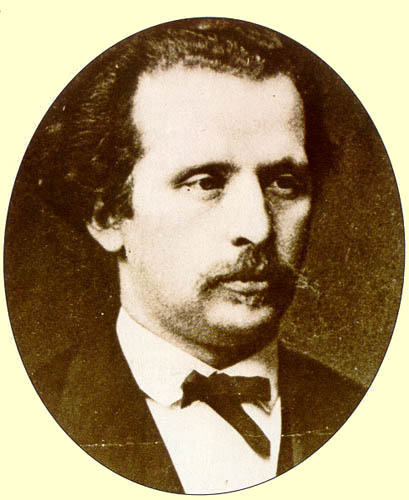
You are allowed to be suspicious of his motives. Tchaikovsky was not a neutral witness on the subject of his own First Concerto. Nikolai Rubinstein, director of the Moscow Conservatory, had savaged that piece to the composer’s face when it was new, and the wound never fully closed. So of course the next concerto had something to prove. That is human, and it does not make the preference dishonest — it just means he had a reason to want it to be true.
The dedication makes the whole thing sadder. Tchaikovsky dedicated the Second to Nikolai Rubinstein, the same man who had once demolished the First — the two had long since patched things up, and Rubinstein had become the concerto’s intended champion. Then Rubinstein died in March 1881, eight months before the first performance. The concerto lost its advocate before it had ever been played in public, which is roughly the moment the piece’s luck ran out and stayed out.
The student who rewrote it
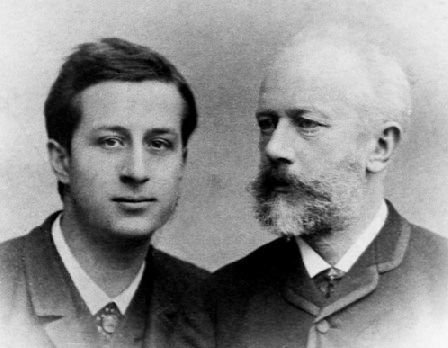
Alexander Siloti was Tchaikovsky’s piano student at the Moscow Conservatory and married one of the composer’s cousins — a pupil and family both at once. He was also, later, Rachmaninoff’s cousin and teacher, which makes him one of the more consequential middlemen in Russian music. He thought the Second Concerto was too long, too awkward, too difficult to sell, and he told Tchaikovsky so.
Tchaikovsky’s answer survives. Writing to Siloti in a letter dated 27 December 1888/8 January 1889, he was blunt: “I absolutely cannot agree to your cuts, and especially those in respect of the first movement”. He accepted a handful of adjustments to the piano writing and rejected the rest. The refusal is on paper, signed, dated, unambiguous.
Siloti’s edition was published in 1897 anyway, four years after Tchaikovsky died in 1893. It cut the concerto down, and it aimed most of its knife at the slow movement. Siloti’s version reduces the Andante non troppo from roughly thirteen minutes to about seven — and what disappears in that gap is not padding. It is the reason the piece exists.
What to listen for
The headline mechanism is a hijacking. In the Andante non troppo — 332 bars in D major in Tchaikovsky’s original — the orchestra lays down a pedal point on D, and over it a solo violin and a solo cello introduce the theme in dialogue. Not the piano. The two string soloists take the tune, trade it, and hold it. The piano, the official protagonist, comes in afterwards to decorate what they have already said, then spends long stretches in accompaniment figuration while the strings carry the line.
Concertos are hierarchies. One player is the subject, everyone else is the setting. Tchaikovsky spends a substantial part of this movement quietly inverting that: the soloist becomes the rhythm section and two orchestral principals get promoted. For a while the piece stops behaving like a piano concerto and starts behaving like a chamber work for piano trio with orchestra. Then the piano comes back to the middle of the stage and you feel the frame snap into place again — a small, genuinely disorienting moment, because you had half forgotten what you were supposed to be listening to.
That is what Siloti removed. Not minutes — the idea. Cut the violin and cello solos and you get a competent, conventional slow movement of about seven minutes, and the concerto becomes a normal concerto. Tidier. Also pointless, in the specific sense that its one structural gamble is gone.
Two other things reward attention. The first movement is enormous and front-loads its difficulty: a hail of piano octaves, then a cadenza so long and so self-contained that it works almost as a separate movement inside the movement. And the finale is startlingly brief by comparison — two Russian-flavoured themes dispatched at speed, with far less of the tempo-stretching Tchaikovsky usually indulges. I have seen that called a failure of stamina. I think it is the sanest decision in the piece: after the first two movements, a third heavyweight would have flattened everybody. He lets you leave.
The movements
I. Allegro brillante e molto vivace (G major)
A wide, striding G major theme and a piano part that arrives swinging. This movement is where the concerto’s reputation for difficulty comes from, and it earns it honestly — the octave writing is relentless, and the great cadenza sits in the middle like a second building. If you only know the First Concerto’s famous opening chords, the surprise here is how much less anxious this music sounds. It is confident to the point of swagger.
II. Andante non troppo (D major)
The reason to be here. Pedal point on D, solo violin, solo cello, and a movement that quietly becomes something other than what the title page promises. Listen for the moment the cello joins the violin: the piano has not disappeared, but it has clearly stopped being in charge. In Siloti’s edition most of this is simply not there.
III. Allegro con fuoco (G major)
Fast, rough-edged, over quickly. Two Russian themes, minimal rubato, no attempt to out-scale what came before. The comic little jolt of wait, that’s it? at the end is, I would argue, deliberate proportion rather than exhaustion — though that is my reading, not a documented intention.
Recordings: the uncut camp and the cut camp
The single most useful thing to know before you buy or stream anything: check which text you are getting. This is the rare concerto where the edition matters more than the pianist.
Stephen Hough / Osmo Vänskä / Minnesota Orchestra (Hyperion CDA67711/2, recorded live 2009, released 2010) — Start here, and it is not close. Hough plays Tchaikovsky’s original version, and Hyperion did the smartest thing anyone has done for this piece on record: they also include Siloti’s cut second movement as a separate track, so the comparison is sitting right there on the same set. You can hear the argument rather than read about it. The playing is clean and structurally lucid; the string soloists’ entries are timed so you cannot miss what is happening. The honest caveat is that Hough is a lucid, balanced player, and if you want your Tchaikovsky wild-eyed, this will read as cool. That is a taste question, not a flaw.
Peter Donohoe / Rudolf Barshai / Bournemouth Symphony Orchestra, with Nigel Kennedy and Steven Isserlis (EMI, recorded 1986) — The record that made the uncut version a live issue rather than a footnote, and it won Gramophone‘s Concerto Recording of the Year in 1988. Its masterstroke is casting: Kennedy on violin and Isserlis on cello in the slow movement means the two solo lines are played by musicians who refuse to be background, which is exactly the point of the movement. Mid-1980s EMI sound is a little boxy now and the orchestral colour is more British than Russian. Get it anyway, for the second movement.
Mikhail Pletnev / Vladimir Fedoseyev / Philharmonia Orchestra (Virgin Classics, recorded 1990) — Pletnev is the pianist who makes the structural case without saying a word: his pacing in the slow movement lets the piano recede so naturally that the hijacking sounds inevitable rather than eccentric. The balance between the two string soloists and the keyboard is calibrated more finely here than almost anywhere else. The cost is the famous Pletnev chill — if you need Tchaikovsky to grab your collar, look elsewhere.
Emil Gilels / Lorin Maazel / New Philharmonia Orchestra (EMI, released 1973) — The great document of the cut tradition, and the best evidence for why nobody complained for so long. Gilels’s octaves are iron and the pacing never sags; as playing, it is close to untouchable. But you are hearing Siloti’s concerto, not Tchaikovsky’s. Come to it second, as the comparison case, once you know what is missing — then it becomes fascinating instead of merely misleading.
The verdict: Hough first, for the original text and the built-in comparison. Donohoe second, for the best-cast slow movement on record. Gilels third, as the thing you are measuring against. Pletnev when you want the argument made by touch instead of by argument.
Why bother
Because the counter-case is thin. The Second is not obscure because it is weak; it is obscure because the version that circulated for decades had its most interesting twenty minutes shaved down to seven, and a piece judged by its edited remains was always going to lose to the First. That is a distribution problem wearing a quality problem’s coat.
And because the ethics are unusually clear-cut for classical music, a field that normally offers only murk. Tchaikovsky wrote his refusal down. The refusal was ignored after he could no longer enforce it. You can now, trivially, press play on what he actually wrote — an option most of the twentieth century did not have. Forty-five minutes, and you get to decide whether the composer or posterity had better judgement about his own work. Not many arguments let you referee them personally.
Frequently Asked Questions
Did Tchaikovsky really prefer the Second Concerto to the First?
What exactly did Siloti cut from the Piano Concerto No. 2?
Which recording should I start with?
Is the slow movement really a triple concerto?
Why did the first performance happen in New York rather than Russia?
Further reading
- Rachmaninoff Piano Concerto No. 2 — Siloti’s other famous pupil and cousin, and a concerto whose editorial fate went very differently.
- The Applause Trap Tchaikovsky Built — another Tchaikovsky work whose reception history was shaped by something other than the notes.
- Brahms Piano Concerto No. 1 — the other great Romantic concerto that got mauled early and took decades to recover.