The Essay That Weaponized a Dead Genius
In 1836, a twenty-three-year-old Richard Wagner wrapped up a musical score with trembling hands. According to his autobiography Mein Leben, the intended recipient was the most promising young composer in all of Europe: twenty-seven-year-old Felix Mendelssohn. The score was Wagner’s ambitiously completed Symphony in C major (WWV 29). For the young composer, sending this manuscript was something close to a confession. I admire your music. Would you please look at mine?
Mendelssohn lost the score. Or more precisely — he simply didn’t care. The manuscript ended up gathering dust somewhere before vanishing for good. Wagner never forgot.
Fourteen years later, Wagner published an essay that would be distributed across Europe. Its title: Das Judenthum in der Musik — “Jewishness in Music.” Mendelssohn was the primary target. By then, Mendelssohn had been dead for three years. He attacked a man who could never respond.
This was more than mere jealousy. It remains one of the most complex, most repugnant, and most consequential rivalries in the entire history of classical music.
The Crown Prince of Leipzig
In 1835, Mendelssohn became music director of the Leipzig Gewandhaus Orchestra at the age of twenty-six. A young man in his twenties leading one of Europe’s most prestigious orchestras — in today’s terms, imagine a twenty-year-old becoming CEO of a major tech company.
Mendelssohn’s credentials were extraordinary from the start. At twelve, he performed before Goethe and earned the great poet’s admiration. At sixteen, he composed his String Octet (Op. 20), whose final-movement scherzo is still regarded as the most astonishing work ever produced by a teenager in all of chamber music. Then in 1829, at twenty, he revived J.S. Bach’s St. Matthew Passion (BWV 244) after a century of neglect, fundamentally altering the course of Western music. Much of the reason Bach is called “the father of music” today traces back to Mendelssohn.
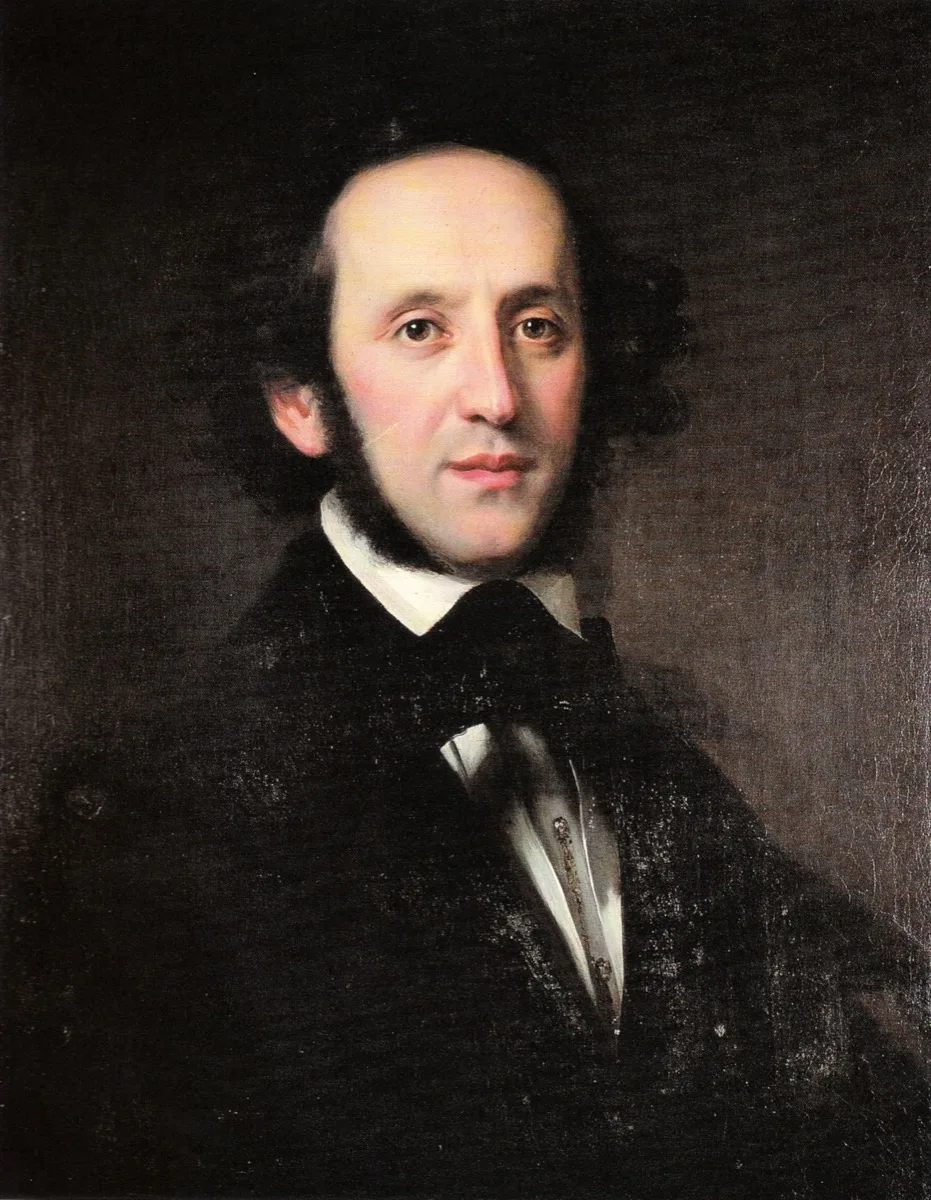
At the Gewandhaus, he became the first conductor to systematically programme the works of Beethoven, Bach, and Schubert. The modern concept of a structured concert season? Mendelssohn essentially invented it. In 1843, he founded the Leipzig Conservatory — Germany’s first dedicated institution of musical education, prestigious enough from day one that Robert Schumann joined as a professor.
As a composer, he produced one masterpiece after another: the Violin Concerto in E minor (Op. 64), the “Italian” Symphony (No. 4, Op. 90), the overture to A Midsummer Night’s Dream (Op. 21). That overture, remarkably, was written when he was seventeen — orchestration of such sophistication at that age invited comparison with Mozart. In the European musical world, Mendelssohn was untouchable.
During these very years, a young man in Leipzig was gazing upward at Mendelssohn. Richard Wagner. Born in the same city, Wagner saw Mendelssohn as his hometown hero and the summit he longed to reach.
The Snubbed Young Man and His Festering Grudge
Wagner made several attempts to approach Mendelssohn. The symphony manuscript was one of them; there were also face-to-face meetings. According to Mein Leben, Mendelssohn treated Wagner with polite but thorough indifference.
“He was kind to me, but never said a word about my music.” That was how Wagner remembered it.
In 1843, when Wagner was appointed Kapellmeister at the Dresden Court Theatre (Semperoper), the situation grew more complicated. Dresden and Leipzig were just an hour apart by train. Wagner hoped his operas Rienzi and Der fliegende Holländer might be programmed at the Gewandhaus. Mendelssohn never put them on the schedule.
Was there a reason for the coldness? At that point, Wagner had yet to produce a defining work and remained musically unproven. Mendelssohn, meanwhile, was a star courted by every court and orchestra in Europe. Dozens of letters and scores arrived at his desk daily — it would have been difficult to pay special attention to every unknown aspirant. Besides, Mendelssohn’s musical tastes leaned conservative; Wagner’s early works simply may not have aligned with his aesthetic sensibilities.
Wagner saw it differently. To him, Mendelssohn’s indifference was an insult to his talent — a slight he would nurse for decades. The fact that Mendelssohn came from a prominent Jewish banking family only poured fuel on Wagner’s sense of inferiority. Wagner himself was the son of an impoverished theatre clerk, perpetually short of money. My talent is superior, yet he sits at the top on the strength of family and connections — that, one suspects, was how Wagner framed the situation.
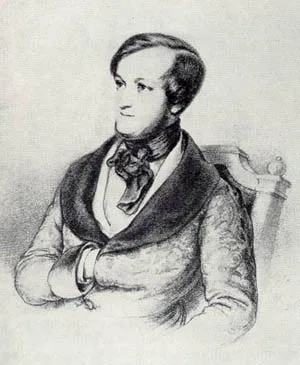
The curious thing is that Wagner actually held Mendelssohn’s music in high regard. He once praised the Hebrides Overture (Op. 26) as “the most perfect landscape painting I know.” It was a tangled mess of admiration and jealousy, inferiority and pride. Emotions like these rarely end well.
Dead at Thirty-Eight
On 4 November 1847, Mendelssohn died at the age of thirty-eight. The cause was a stroke. The prevailing theory holds that the death of his sister Fanny Mendelssohn just five months earlier was the decisive blow — he collapsed upon hearing the news and never regained his health. Fanny was not merely family; she was his musical companion and most trusted critic. A gifted composer in her own right, she had been restricted from publishing her work simply because she was a woman.
All of Europe mourned. Tens of thousands joined the funeral procession in Leipzig. In London, Queen Victoria expressed her grief. Not since Mozart had a composer’s death occasioned mourning on such a scale.
Wagner’s reaction was markedly different. Outwardly he paid his respects, but inwardly he was likely making very different calculations. The towering barrier called Mendelssohn had been removed from the German musical landscape.
Three Years After the Grave: The Most Infamous Essay in Music
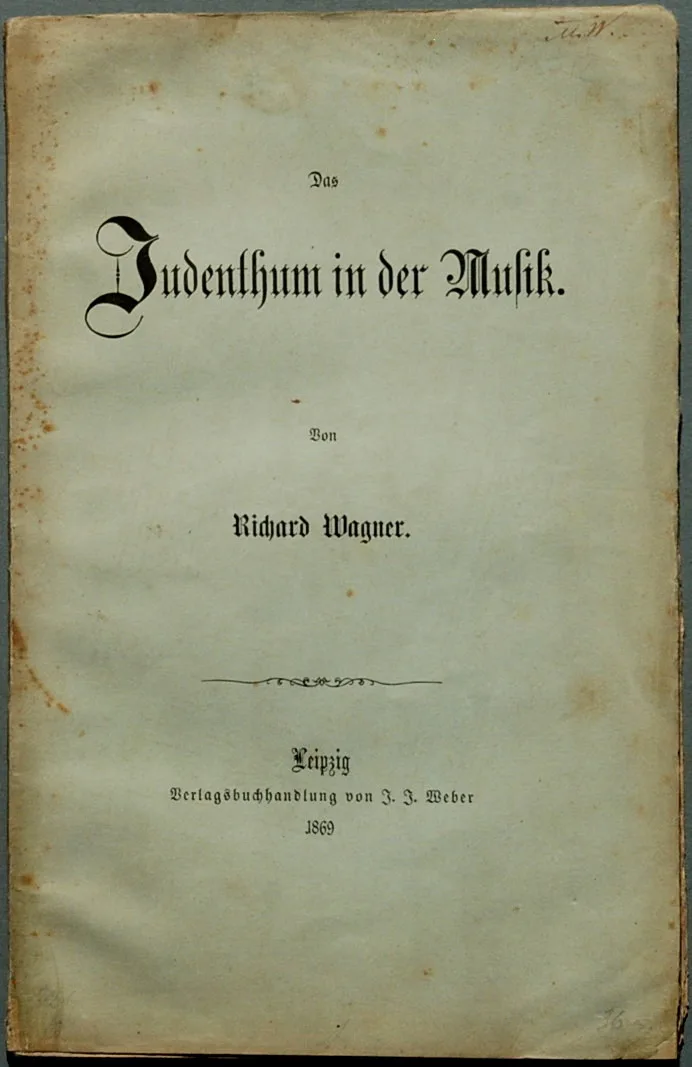
In 1850, Wagner published Das Judenthum in der Musik. He initially wrote under the pseudonym “K. Freigedank” (literally “Free Thought”) for the Neue Zeitschrift für Musik. The contents were shocking.
Wagner’s central argument ran like this: Jewish composers, no matter how technically accomplished, were incapable of expressing genuine emotion through music. Their work might be smooth on the surface, but it lacked the structural depth and thematic development Wagner valued. He named Mendelssohn and Giacomo Meyerbeer as his prime exhibits.
The attack on Meyerbeer was particularly egregious in its ingratitude. When Wagner had been starving and unknown in Paris, it was Meyerbeer who lent him money and introduced him to useful contacts. Wagner’s early operas reached the stage largely thanks to Meyerbeer’s recommendations. He plunged the knife into his benefactor’s back.
His assault on Mendelssohn was more insidious. Wagner acknowledged Mendelssohn’s craft and formal elegance, then dismissed them as nothing more than “perfection of imitation” rather than genuine originality. “Mendelssohn told us nothing new” — that was Wagner’s verdict. A one-sided attack against a man already in his grave, unable to offer a single word in his own defence.
In 1869, Wagner republished the essay under his own name, this time with an expanded preface that made his position even more explicit. By then he had already scaled the heights of European composition with Tristan und Isolde and Die Meistersinger von Nürnberg. He no longer needed to hide. If anything, it was a declaration of intent: to stamp his boot on Mendelssohn’s legacy one more time, openly and without apology.
A Musical Showdown: Who Was More Revolutionary?
Now for the most compelling question. Was Wagner right? Was Mendelssohn’s music truly “lacking in depth”?
Mendelssohn stood on the foundations laid by Mozart and Bach, refining classical forms to an extraordinary degree of elegance. Sonata form, concerto structure, the concert overture — he drew the finest beauty from existing frameworks. His Violin Concerto in E minor remains the textbook of the genre two centuries later. The innovation of opening the first movement with the solo violin rather than an orchestral introduction, the seamless attacca transitions between movements — these were genuinely novel ideas. Both Brahms and Liszt took note.
Wagner, by contrast, tore up the entire rulebook. He introduced the concept of unendliche Melodie — “endless melody” — dissolving the boundaries between aria and recitative. His Leitmotif technique gave music a narrative depth that had never existed before: each character, each emotion, each object was assigned its own musical signature, so that the orchestra told more of the story than the singers. This was no longer opera. It was Musikdrama.
And then there was the opening chord of Tristan und Isolde. The so-called “Tristan chord” cracked open the tonal system that had underpinned Western music for 350 years. It resolved into nothing, leading only to further instability, making the music ache endlessly for resolution that never arrived. Arnold Schönberg’s atonality — and, by extension, the whole of modern music — can be traced back to that single fracture. Wagner went further still, inventing the concept of Gesamtkunstwerk (total work of art) and building his own purpose-built theatre in Bayreuth: something no composer before or since has matched.
In terms of sheer revolutionary impact, Wagner wins by a mile. He changed the direction of music history.
But a crucial question remains. Does innovation automatically equal greatness?
Listen to the first movement of Mendelssohn’s “Italian” Symphony. That luminous, transparent joy is something you will never find in any work by Wagner. If Wagner shook the world with his music, Mendelssohn illuminated it. Wagner’s sound is the darkness of a deep forest; Mendelssohn’s is Mediterranean sunlight. Both were irreplaceable geniuses, and any claim that one was “inferior” to the other simply does not hold.
Wagner himself probably knew this. Perhaps that was precisely why he attacked.
Hitler’s Favourite Composer and the Erasure of Mendelssohn
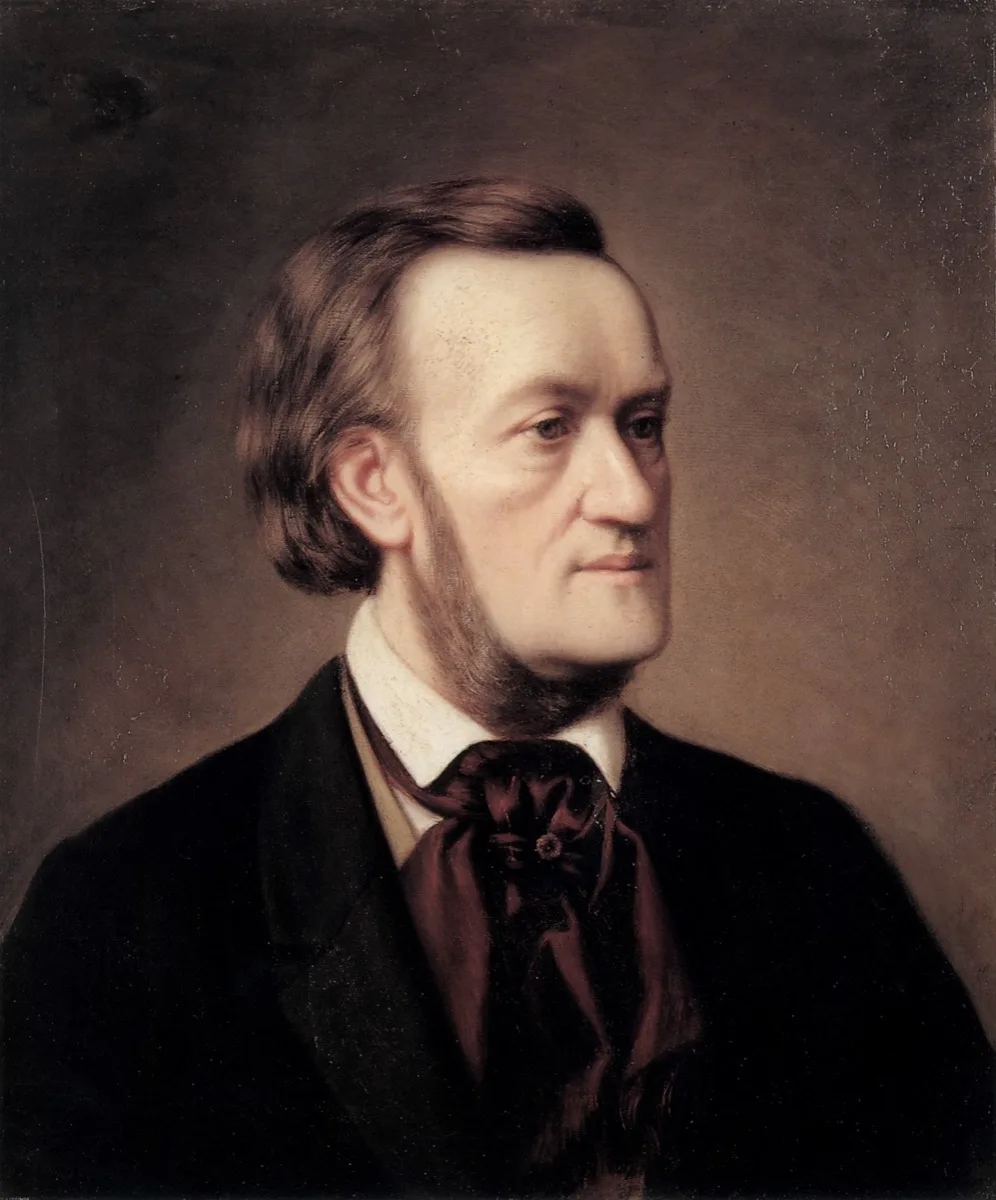
Wagner’s essay cast a long shadow even after his death. Adolf Hitler worshipped Wagner with fanatical devotion and attended the Bayreuth Festival every year. Wagner’s daughter-in-law Winifred Wagner was close friends with Hitler, and Bayreuth became a cultural shrine of Nazi ideology. Wagner’s music was the official soundtrack of the Third Reich. The overture to Die Meistersinger blared at the Nuremberg rallies, and Nazi propaganda films were saturated with his compositions.
Mendelssohn, meanwhile, was systematically erased.
The Nazis banned all performances of Mendelssohn’s music. His statue outside the Leipzig Gewandhaus was torn down in 1936. The city’s mayor, Carl Friedrich Goerdeler, vehemently opposed the demolition and ultimately resigned over the issue. Goerdeler would later join the plot to assassinate Hitler and was executed in 1945. The price of trying to protect a statue of Mendelssohn turned out to be staggeringly high.
Even the Wedding March from A Midsummer Night’s Dream — the tune that still accompanies millions of brides down the aisle worldwide — was placed on the banned list. The regime held a competition for a “pure German” replacement, but nobody managed to write anything as good as Mendelssohn’s. German brides had to make do with inferior substitutes.
Did Wagner foresee such consequences when he wrote his antisemitic essay? We cannot know. But history has made the connection between the seed he planted and the harvest reaped nearly a century later unmistakably clear.
The Statue Returns
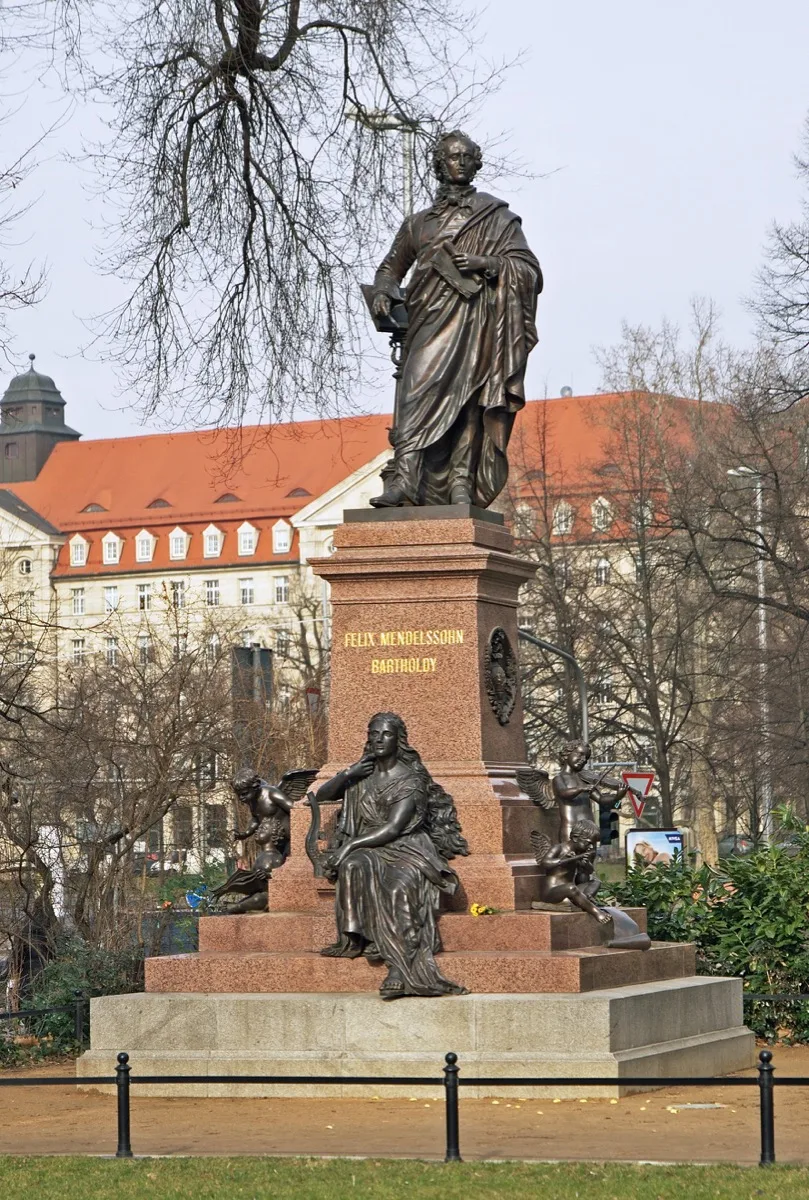
In 2008, Mendelssohn’s statue was re-erected in Leipzig — seventy-two years after its removal. Notably, it was placed not at the original site but in front of the Thomaskirche, the very church where Bach had served for twenty-seven years. Mendelssohn and the composer he rescued from oblivion now stand side by side. The symbolism could hardly be more fitting.
In Israel, meanwhile, performing Wagner’s music remains effectively taboo. There is no legal prohibition, but when Daniel Barenboim played the Prelude to Tristan und Isolde as an encore at the Israel Festival in 2001, the uproar was immense. Some audience members left the hall in tears; others gave a standing ovation. It was a vivid demonstration of how incendiary Wagner’s name remains. Barenboim continued to perform Wagner afterward, arguing that “music itself is not guilty” — yet for Holocaust survivors and their descendants, Wagner’s name remained a symbol of anguish.
In musicology, the reassessment of Mendelssohn is now well under way. Until the mid-twentieth century, the prevailing view held that his music was “technically brilliant but lacking in depth.” Scholars have traced this judgement back to Wagner’s essay and identified it for what it was: prejudice dressed up as criticism. Mendelssohn was no emotionless craftsman. He was an innovator who expanded the possibilities of music in his own distinctive way.
In the end, the story can be summed up like this: Wagner changed the course of music history; Mendelssohn safeguarded it. One broke the existing mould and carved a new path; the other unearthed a forgotten heritage and polished it until it shone. And Wagner’s essay — written to destroy Mendelssohn’s reputation — has survived as the document that most starkly reveals Wagner’s own moral failings.
That genius does not guarantee decency — few stories in all of music demonstrate this as clearly as the saga of these two men. Wagner’s music remains towering, and Mendelssohn’s remains luminous. But knowing the history that lies between them transforms the experience of listening to either.
Frequently Asked Questions
Frequently Asked Questions
Why did Wagner attack Mendelssohn only after his death?
Had he attacked during Mendelssohn’s lifetime, the backlash from Mendelssohn’s formidable reputation and network would likely have damaged Wagner himself. It was only after Mendelssohn’s death — and after Wagner’s own stature had risen — that he could strike without risk of rebuttal. This is precisely why critics have condemned the essay as a cowardly, one-sided assault on a man who could no longer defend himself.
Did Mendelssohn really ignore Wagner’s score?
There is no definitive record. According to Wagner’s autobiography Mein Leben, the score was lost — but the memoir was written from Wagner’s own subjective perspective and is not entirely reliable. What does seem clear from the circumstantial evidence is that Mendelssohn took little interest in Wagner’s early output.
Is it acceptable to listen to Wagner’s music?
That is ultimately a personal decision. Wagner’s antisemitism and the subsequent connection to Nazism are matters of historical fact, yet most of his music does not carry explicitly antisemitic content. Whether art can be separated from the artist is a debate that extends far beyond music and shows no sign of resolution. What is undeniable, however, is that listening to Wagner with an awareness of the historical context is a fundamentally different experience from listening in ignorance of it.
What did Wagner initially admire about Mendelssohn’s music?
Before his public attacks, Wagner respected Mendelssohn as a leading musical figure, especially as a conductor of the Leipzig Gewandhaus Orchestra starting in 1835. He admired the formal clarity and brilliance in works like Mendelssohn’s Symphony No. 4, the “Italian.” This admiration is reflected in the classical structure of Wagner’s own early works, such as his Symphony in C major composed in 1832.
What was the name of Wagner’s antisemitic essay attacking Mendelssohn?
Wagner’s polemic was titled “Das Judenthum in der Musik” (“Judaism in Music”). He first published it under the pseudonym K. Freigedank (“K. Freethought”) in 1850, just three years after Mendelssohn’s death. Wagner later expanded the work and republished it under his own name in 1869, cementing his antisemitic views.
How did Mendelssohn influence Wagner’s early opera “Die Feen”?
Wagner’s first completed opera, “Die Feen” (The Fairies), composed in 1833, clearly shows the musical influence of the German Romantic school that Mendelssohn helped define. The opera’s overture and ensemble scenes, with their Weber-inspired fantastical elements, are stylistically closer to Mendelssohn’s overture to “A Midsummer Night’s Dream” (1826) than Wagner’s later epic music dramas. Wagner sought to have the opera performed in Leipzig, where Mendelssohn was the established music director.