He let no one inside — not even the people who loved him
July 1925. A narrow alley in Arcueil, a working-class suburb south of Paris. Erik Satie was dead. Cirrhosis of the liver. Fifty-nine years old. After the funeral, a small group of friends gathered outside the door of his apartment. The door no one had ever opened. The door Satie had kept locked for twenty-seven years, never admitting a single visitor — not his oldest friends, not his closest collaborators, not anyone.
The door opened. And the friends stopped where they stood.
What was inside — we’ll get to that. But first, understand this: what they found in that room explained everything about Erik Satie that the living man had never let anyone see. The objects spoke for him. The silence of decades finally broke, in the form of accumulated things. To understand what they found, and why it mattered, you have to follow the path that brought him there.
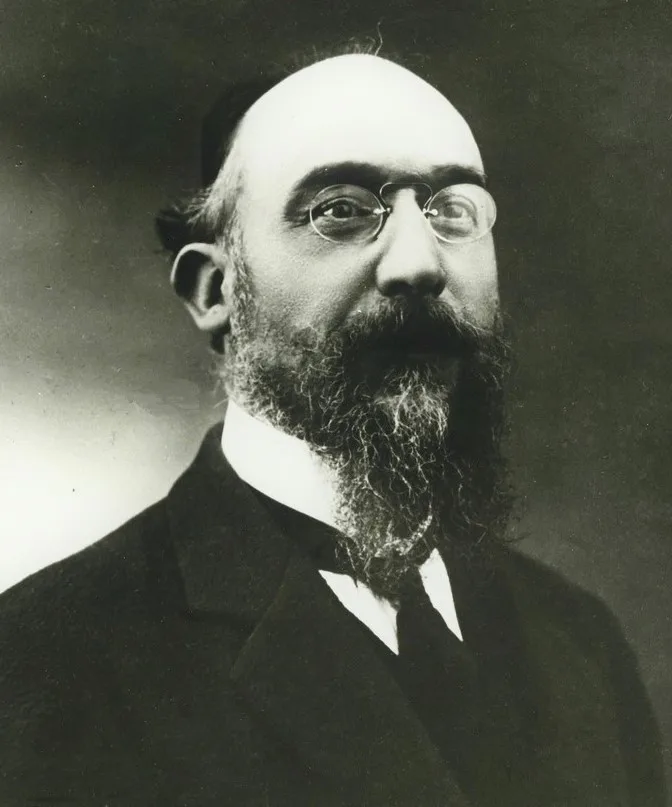
The Conservatoire and the Boy They Couldn’t Teach
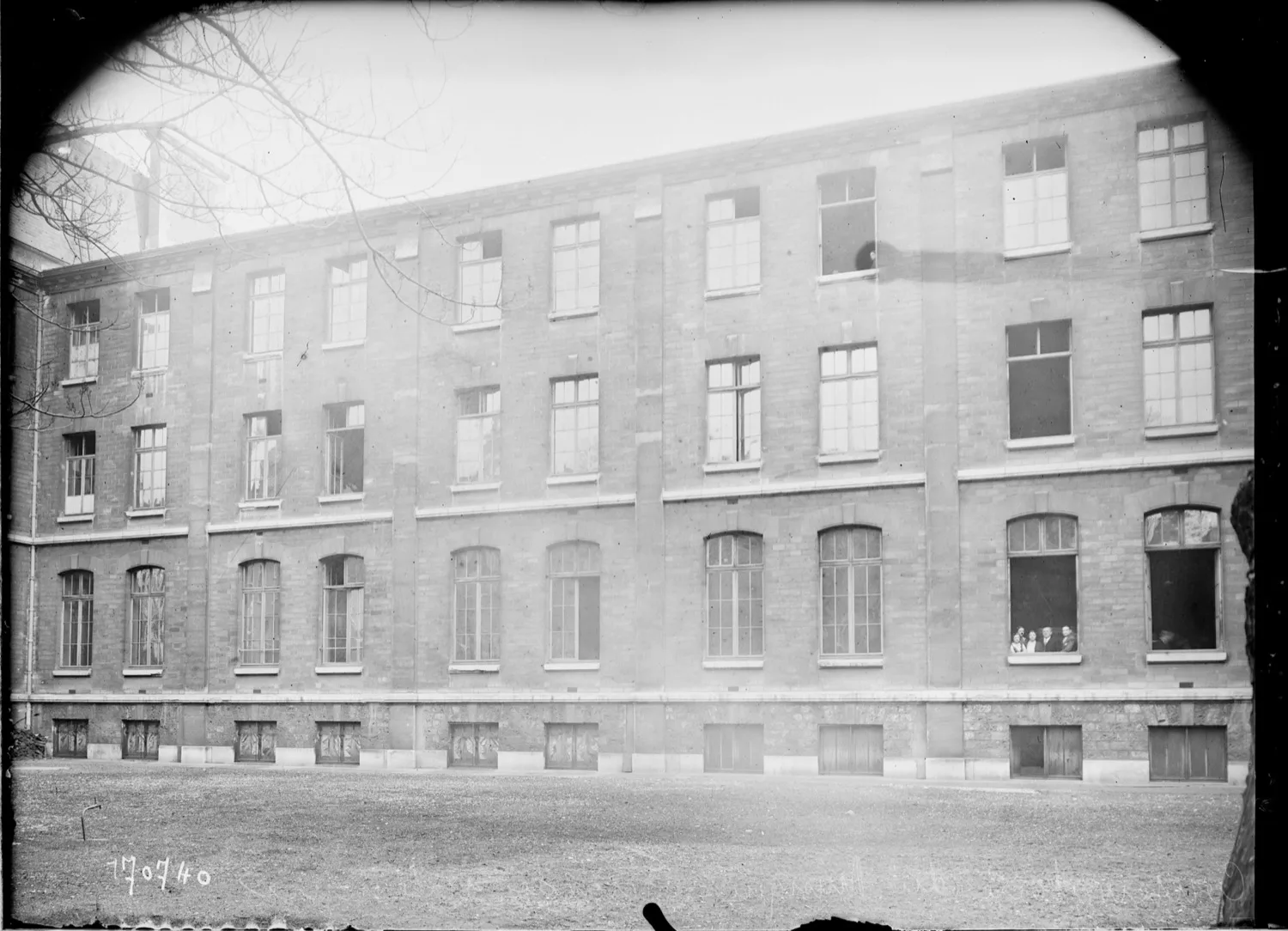
Erik Satie was born on May 17, 1866, in Honfleur, Normandy — a port town of fishing boats and sea fog. His mother died when he was six. His father, a music publisher, relocated the family to Paris. The boy who played piano was pointed, almost inevitably, toward the Paris Conservatoire. He arrived in 1879, aged thirteen. The Conservatoire’s assessment of this boy was brief and definitive.
“Gifted, but lazy.”
That verdict followed him for the rest of his life. By the measure of his professors, he was certainly a problem student. He had no patience for harmony lessons as they were taught. He submitted work irregularly. He never distinguished himself in examinations. But was he actually lazy? Consider what Satie was doing at the piano during those years. He was already moving in the opposite direction from everything the Conservatoire valued: the Wagnerian excess that dominated Parisian musical life, the vast orchestras, the ever-expanding harmonics, the epic heroism. The professors taught one thing; Satie was hearing something else entirely. Of course he looked like a slow student.
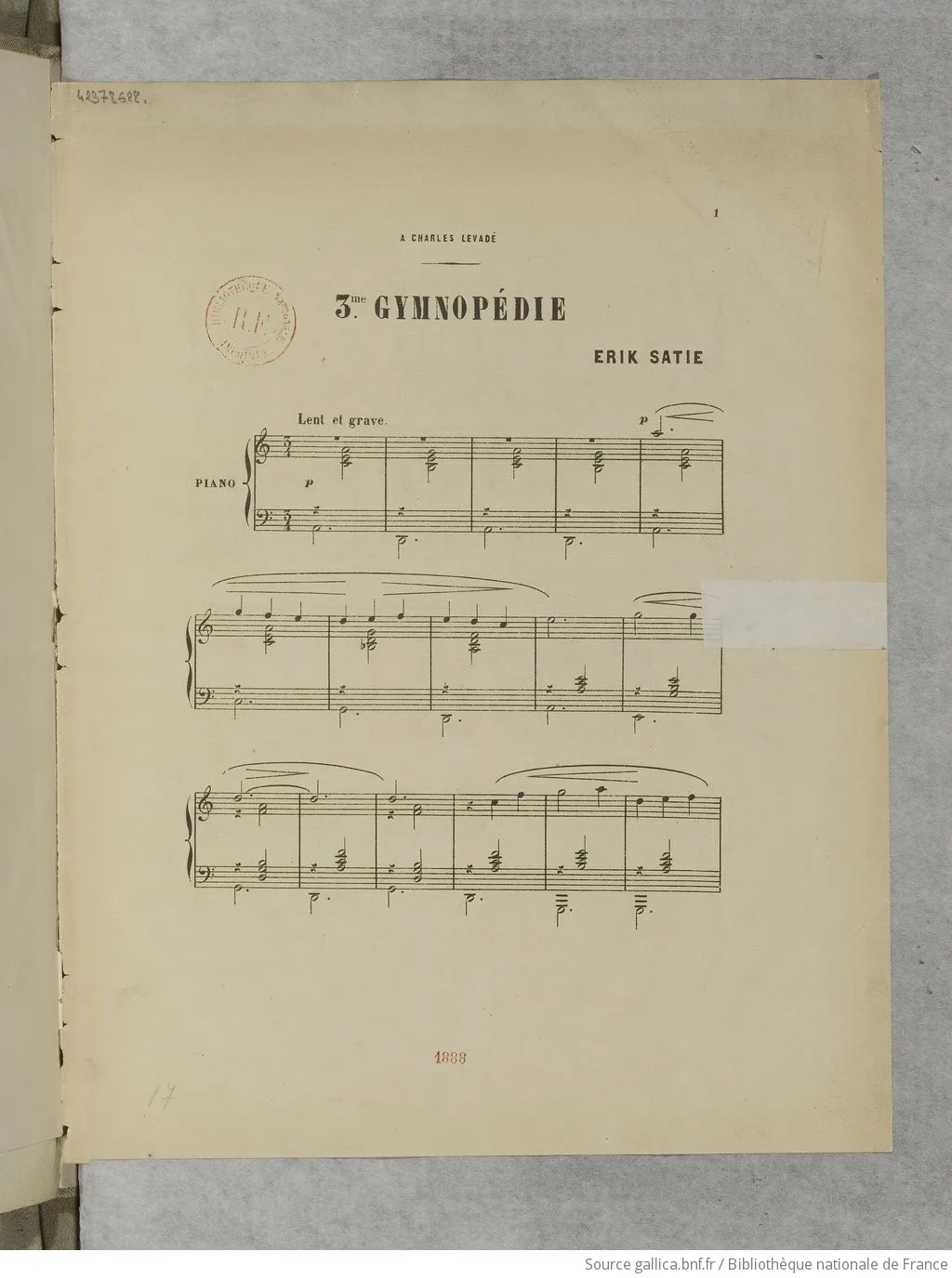
He left the Conservatoire — whether by expulsion or abandonment depends on which account you read. What happened next is what matters. In 1888, at twenty-two, Satie published three pieces. The Gymnopédies. Slow, transparent, and resolving nothing. The harmonies seem to drift toward a destination and then quietly return to where they started. The melodies float without purpose or arrival. Nothing like them had existed in nineteenth-century Paris. While Wagner was declaring that music could redeem the world, Satie sat at his piano and wrote melodies that claimed nothing at all. Music that didn’t arrive. Harmony that didn’t resolve. A completely different grammar, expressed quietly but absolutely.
Then came the Gnossiennes, composed between 1890 and 1897, and still stranger. No bar lines. No time signature. In place of tempo markings, Satie wrote instructions like: “In the light,” “With the tip of the tongue,” “Hold yourself at a distance from yourself.” The Paris music establishment had no idea what to do with them. Critics ignored them. The public hadn’t encountered them yet. But Montmartre’s nights were opening a different kind of stage.
The Pianist of the Black Cat
After the Conservatoire, Satie moved to Montmartre — the most chaotic, most liberated hill in late nineteenth-century Paris. A neighborhood where painters, poets, anarchists, performers, and swindlers occupied the same narrow streets. At its center was the cabaret known as Le Chat Noir, the Black Cat. Satie played piano there every night.
Le Chat Noir was not a bar. It was the beating heart of Parisian bohemian art. Shadow theater performances. Poets reading new work aloud. Painters filling canvases at side tables. And in the middle of it all, Satie at the piano. The money was almost nothing. The rooms were cold and cramped. But during these years, Satie had something he had never had at the Conservatoire and never quite found again in the same way: no one telling him what music was supposed to sound like. No professors. No Wagner disciples. Just the noise of the crowd and his own playing.
At Le Chat Noir, Satie met Claude Debussy. This was 1891. They became close quickly and remained friends for decades. But their musical visions eventually diverged. As Debussy built the towering wave of Impressionism and moved to the center of Parisian musical life, Satie continued insisting on small, transparent things. It was Satie who told Debussy: “Our music needs more of the French in it.” Some accounts suggest Debussy remembered that remark when he later shifted direction. But the one who planted the seed remained obscure, while the one who harvested it became famous. No money, no recognition — not from this quarter, at least. Yet without those nights in Montmartre, Satie might simply have accepted the Conservatoire’s verdict and vanished from history.
He was poor but did not stop. Unrecognized but did not change course. This was the entirety of the 1890s for Satie. And then, during that same period, a woman moved into the floor above him.
Suzanne Valadon: Six Months
In 1893, a woman named Suzanne Valadon moved into the apartment directly above Satie’s in Montmartre. She was a painter and a model — she had sat for Renoir and Toulouse-Lautrec, and she also picked up a brush herself and put marks on canvas with absolute confidence. She would later become known as the mother of Maurice Utrillo, but at this moment she was simply one of the most intensely present people on the hill.
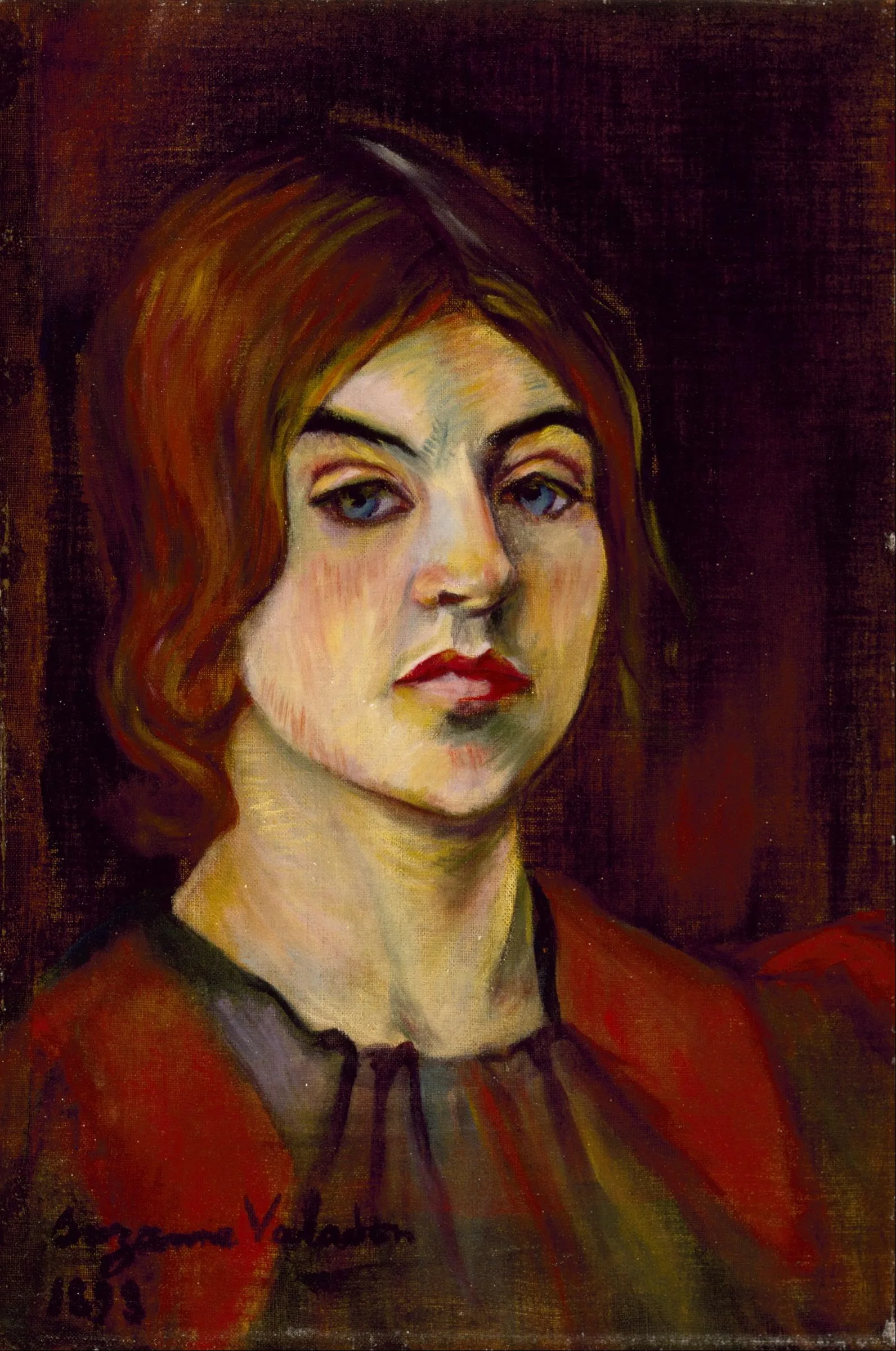
Satie fell in love. This was the first time. And the last. Some accounts say he proposed within days of meeting her. His letters to Valadon survive, and they are extraordinary documents — raw, urgent, stripped of the ironic detachment he wore everywhere else. The man who wrote the quietest music in Paris turned out to have the most violently unguarded feelings when it came to this one woman.
Six months. The relationship lasted exactly that long. Valadon ended it. No clear reason was ever recorded. She was, by nature, a free person — not someone who stayed in one place, or with one feeling. Satie’s intensity was probably not air to her. It was more likely a wall. After the break, Satie wrote of himself: “Only an icy loneliness remains with me.” Whether that was grief or diagnosis depends on what came after. What came after was thirty-two years of absolute solitude. One six-month love, carried for the rest of his life. Not another relationship. Not another person let that close.
To say the breakup ruined him is too simple. To say it completed him is too cruel. What’s certain is that after those six months, Satie’s behavior became stranger. As if all the feeling that had been aimed at one person had lost its target and was now ricocheting in every direction.
A Church of One
Shortly after the end of his relationship with Valadon, Satie became involved with the Rosicrucians — specifically the sect led by Joséphin Péladan, who called himself the “Sâr Péladan” and styled himself a mystic artist-prophet. Satie became the group’s official composer, writing music for their mystical ceremonies and immersing himself in their esoteric world.
But Péladan was a devoted Wagnerite. He believed all art should aspire toward the Wagnerian Gesamtkunstwerk — the total work of art, vast and all-consuming. Satie, who had fled precisely this idea at the Conservatoire, found himself confronting it again under different trappings. It didn’t last. The break was fierce.
What happened next is one of the more remarkable things Satie ever did — which is saying a great deal. He founded his own church. He called it the Église Métropolitaine d’Art de Jésus Conducteur — the Metropolitan Church of Art of Jesus the Conductor. Its founder was Satie. Its only member was Satie. He wrote its doctrines himself. He issued its excommunications himself. At least one music critic was formally excommunicated. You can read this as pure absurdist performance, as pointed social satire, or as the gesture of a man who desperately wanted to belong somewhere but couldn’t fit anywhere. The last reading seems most honest. A man who had just been rejected by the only person he had ever loved, founding a religion in which he was the sole worshipper.
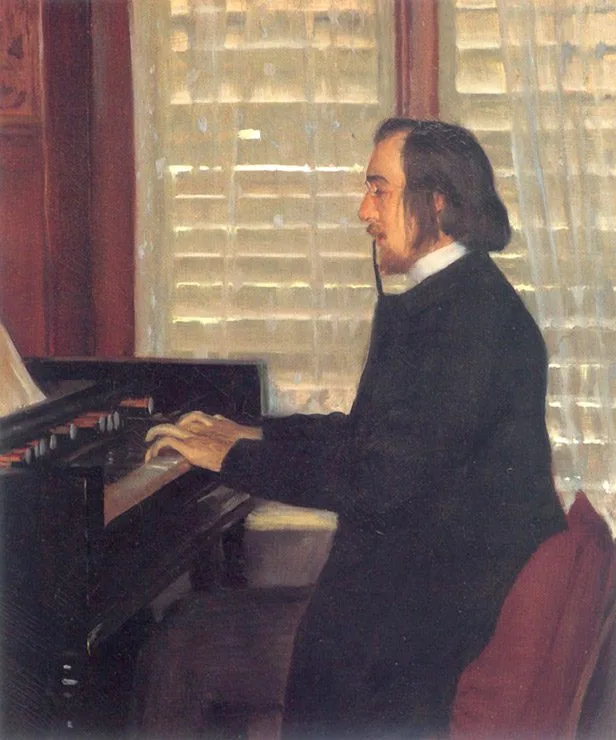
Thirty-Nine Years Old, Back in School
In 1905, Satie was thirty-nine years old. He had left the Conservatoire nearly twenty years earlier. The Gymnopédies, the Gnossiennes, the nights at Le Chat Noir — all of it felt like a different era. His position in the musical world remained ambiguous: never fully recognized, never willing to give up, stranded somewhere between the two.
And then he enrolled in the Schola Cantorum. Thirty-nine years old, sitting in music school alongside students half his age, learning counterpoint from scratch. Was he still trying to disprove the verdict — “gifted, but lazy” — that had been passed on him two decades before? Or did he simply know, with unusual clarity, what was missing from his music? Probably both.
He completed the course. Three years of study, a formal diploma in counterpoint, received with what appeared to be genuine pride. He carried it around. He showed it to people he encountered. He had it printed on the covers of his scores: “Schola Cantorum graduate.” There is something both funny and quietly devastating about a thirty-nine-year-old man proudly brandishing a diploma. Funny until you remember what he’d been carrying for twenty years — the label of gifted laziness, the institutionalized dismissal. This diploma wasn’t proof for the world. It was proof for himself.
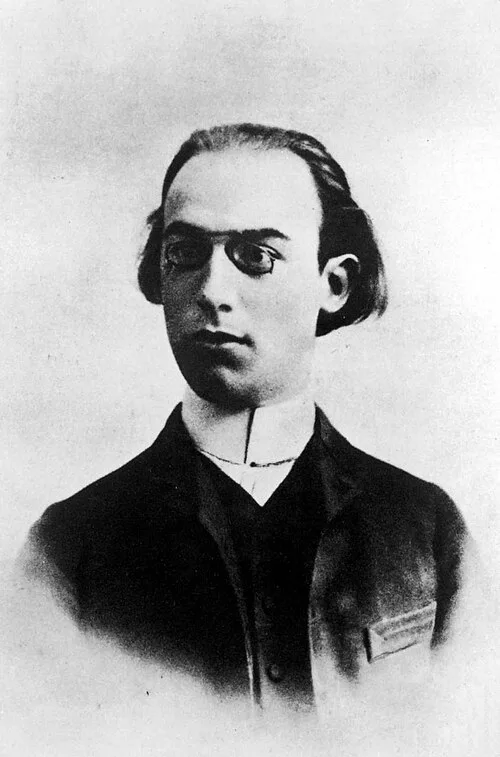
His appearance changed during this period as well. He purchased seven identical velvet suits and rotated through them daily. Bowler hat. Pince-nez spectacles. An umbrella, always. People began calling him the “Velvet Gentleman.” The penniless bohemian of Montmartre had become a fastidiously dressed figure of the boulevards. A man who armors his exterior often does so because he is closing something tighter on the inside. No one understood this yet.
The Mentor He Refused to Be
In the 1910s, a new generation arrived in the Parisian musical world. Young composers — Francis Poulenc, Darius Milhaud, Arthur Honegger, and others — who would eventually be grouped together under the name Les Six, the Six. They declared publicly that Satie was their spiritual guide.
Satie was uncomfortable. He said repeatedly that he was not a teacher, and no one listened. Les Six saw him as the figure who had resisted both Wagnerism and Impressionism — who had chosen minimalism, wit, and clarity over grandeur and sentiment. In pieces with titles like Trois Morceaux en forme de poire (Three Pieces in the Shape of a Pear), they recognized a kind of music that didn’t seek to dominate the listener but to coexist with them. A music of quiet subversion rather than heroic statement. They wanted exactly that.
Satie’s resistance to the mentor role was entirely consistent with the rest of his life. He had left every organization he had ever joined — the Conservatoire, the Rosicrucians, even his own one-man church. He had no interest in his music becoming a school or a movement. To teach is to declare that your way is the right way, and Satie had never made that declaration. He simply walked in his own direction, without inviting anyone to follow, without telling anyone to stay back. And people followed anyway.
The Room in Arcueil
In 1898, Satie left Paris. More precisely, he moved to Arcueil, a working-class suburb to the south — a world away from Montmartre in atmosphere, though only a few miles away by road. He was thirty-two. He rented a small room, cheap and quiet, among laborers and tradespeople. And there he stayed for twenty-seven years. Until he died.
He did something peculiar with this arrangement. Every day, Satie walked between Arcueil and the center of Paris. On foot. The journey took hours each way. Rain, snow, early morning, late at night — he walked. He did this for twenty-seven years.
But the truly strange thing was the room itself. Satie admitted no one into it. Not one person, ever. If a friend came to visit, they spoke through the closed door or on the step outside. The door did not open. Debussy never saw inside it. Poulenc never saw inside it. Milhaud never saw inside it. When asked why, Satie would change the subject, or make a joke. He never gave a direct answer.
Twenty-seven years. Alone in that small room in Arcueil, with the door locked. What he did there, who he was in that space, remained entirely unknown to anyone alive. The closed room is the question this entire story has been building toward. Why did he let no one in? What was inside? And what does it tell us about the person who kept it locked?
Vexations: 840 Times
Among all the strange things Satie composed, one stands at the outermost edge. He called it Vexations. A short musical phrase — dense, chromatic, unsettling — to be repeated 840 times in succession. On the score, in his own handwriting, Satie wrote this instruction:
“to play the motif 840 times in succession, it would be advisable to prepare oneself beforehand, in the deepest silence, by serious immobilities.”
The piece was probably composed around 1893 — roughly the time of the end of his relationship with Valadon. It was not performed complete during Satie’s lifetime. The first full performance came in 1963, thirty-eight years after his death, when John Cage organized a relay performance in New York with a rotating group of pianists. It lasted eighteen hours and forty minutes. Most of the audience left before it ended. Those who stayed reported strange psychological effects — a loosening of the sense of time, a kind of dissociated calm.
Vexations asks simple questions with complicated answers. Where does music begin and where does it end? When does repetition become meaning, and when does it become punishment? If a phrase is repeated 840 times, is it still music — or has it become something else, something that exists outside music’s usual categories? Satie didn’t answer. He simply wrote the number and demanded serious immobility. An extreme experiment in time, endurance, and the boundaries of the art form — conducted decades before experimental music had a name, and entirely alone.
Furniture Music: Please, Don’t Listen
In 1920, Satie proposed another experiment. He called it Musique d’ameublement — furniture music. Music that exists the way furniture exists: present in the room, part of the environment, noticed by no one. He meant it seriously. Music that was not a performance to be attended but an atmosphere to be inhabited — no more demanding of attention than a chair or a curtain.
The concept was tested in practice. During the intermission of a concert, musicians played furniture music while the audience moved around the hall. Satie’s explicit intention was that people should ignore the music completely — talk to one another, get drinks, walk around. Instead, the audience sat down and began to listen attentively. Satie panicked. He circulated through the crowd, urging them: “Talk! Move around! Don’t listen!”
The paradox is almost perfect: music designed to be ignored, listened to intently; music designed to disappear into the room, instantly commanding attention. Satie understood something that took another half-century to formalize. In 1978, Brian Eno released Ambient 1: Music for Airports and named his new genre. The first name he cited as a precursor was Erik Satie. The ambient music now flowing through cafés, hotel lobbies, and the quieter corners of streaming playlists — its intellectual ancestor is a man in a velvet suit who stood in a concert hall in 1920, begging people to stop paying attention to him.
July 1925: The Door Opens
On July 1, 1925, Erik Satie died at the Hôpital Saint-Joseph in Paris. Cirrhosis of the liver. Fifty-nine years old. Years of heavy drinking had destroyed him internally, but his friends reported that he kept making jokes from his hospital bed until close to the end. Whether that was courage or armor, no one could say with certainty. Probably both.
After the funeral, his friends traveled to Arcueil. They stood before the door of the room that had been locked to everyone for twenty-seven years.
They opened it.
There were umbrellas. Dozens of them, still in their original wrapping, never opened. Satie had walked through Paris in all weather, for twenty-seven years, without ever using an umbrella. He had been soaked in rain, cold in the winter wind, and he had never once unfurled one. Yet he had bought them. Piled them, unopened, in the corner of the room. No one ever learned why. Satie never said.
There were letters. Years of correspondence, unopened, stacked in piles. He had never read them. There were newspapers, unread, accumulated in the same way. The messages the world had sent him, he had received and never opened. The world had tried to reach him. The reach had stopped at the door.
There was a piano. Upside down. The piano belonging to the pianist, turned over on its back. Inside it — inside the body of the upended piano — his friends found unfinished scores. Music hidden inside the instrument. Sounds that had never been played. Melodies that had existed only in that room, in that silence, known only to the man who had written them and then concealed them and then died.
His friends stood in that room and must have understood something — or perhaps came away understanding less than they thought they had known before. Twenty-seven years in that room, alone. The umbrellas bought and never used. The letters received and never read. The pianist’s piano turned upside down. The scores hidden inside it. He left no explanations. No diary. No letter addressed to anyone who would outlive him. What he left were the objects. And the objects, without a single word of commentary, described him entirely.
The man who wrote the quietest music left the quietest room. The man whose harmonies never resolved left letters that were never opened. The man who said “don’t listen” left a door that said “don’t enter.” The man who called his music furniture left furniture — stacks of unopened umbrellas — in the place of furniture. He had been communicating all along, through his music, through his life, through his room. No one quite heard it while he was alive to prevent them.
The first Gymnopédie is playing somewhere right now. In a café. In a film. On a sleep playlist at three in the morning. The music Satie insisted no one should listen to has become one of the most persistently present pieces of the last hundred years. What would he make of that? He would probably laugh. He might be furious. More likely he would do what he always did — adjust his pince-nez, say something sideways and funny, and walk away without explaining himself. The door would close behind him. And we would be left, as we always are with Satie, with the music, and the silence, and the question of what exactly the two of them are telling us.