Most concertos start life as a concert piece and end up on a syllabus. Vieuxtemps’s Fifth went the other way. It was written as a test piece — the compulsory hurdle for the violin class at the Brussels Conservatory, the thing you had to get through to prove you could play. It then walked out of the exam hall and never went back. Today it turns up in the semifinals of international competitions, on debut recitals, and in the practice rooms of players who are nowhere near ready for it.
That origin explains almost everything about how the piece behaves. It is short, it is relentless, and it is engineered to expose you. Twenty minutes, three movements, no gap to catch your breath. If you want a Romantic concerto that unfolds patiently and lets you settle in, go to Brahms. This one is an audit.
The exam piece that got out
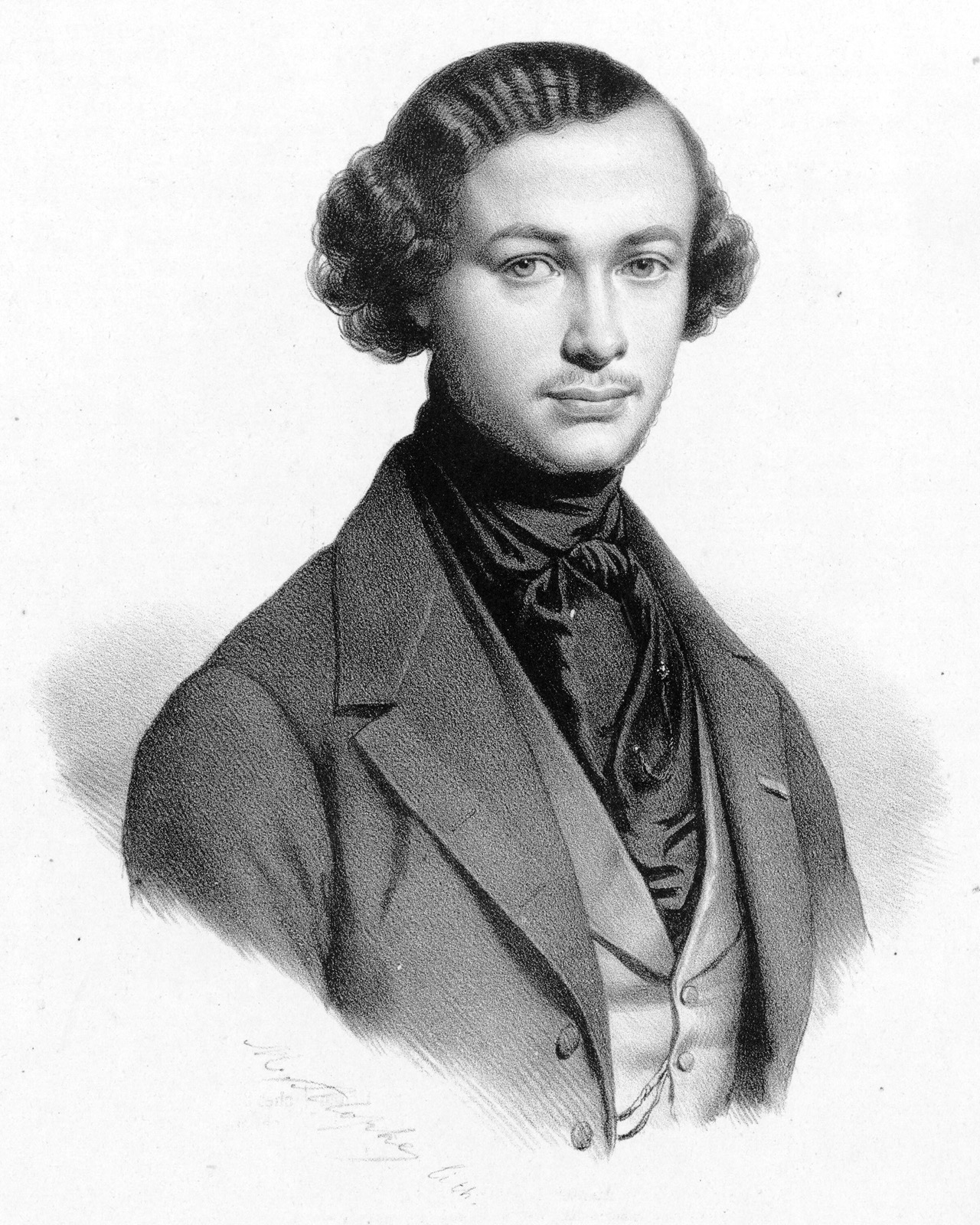
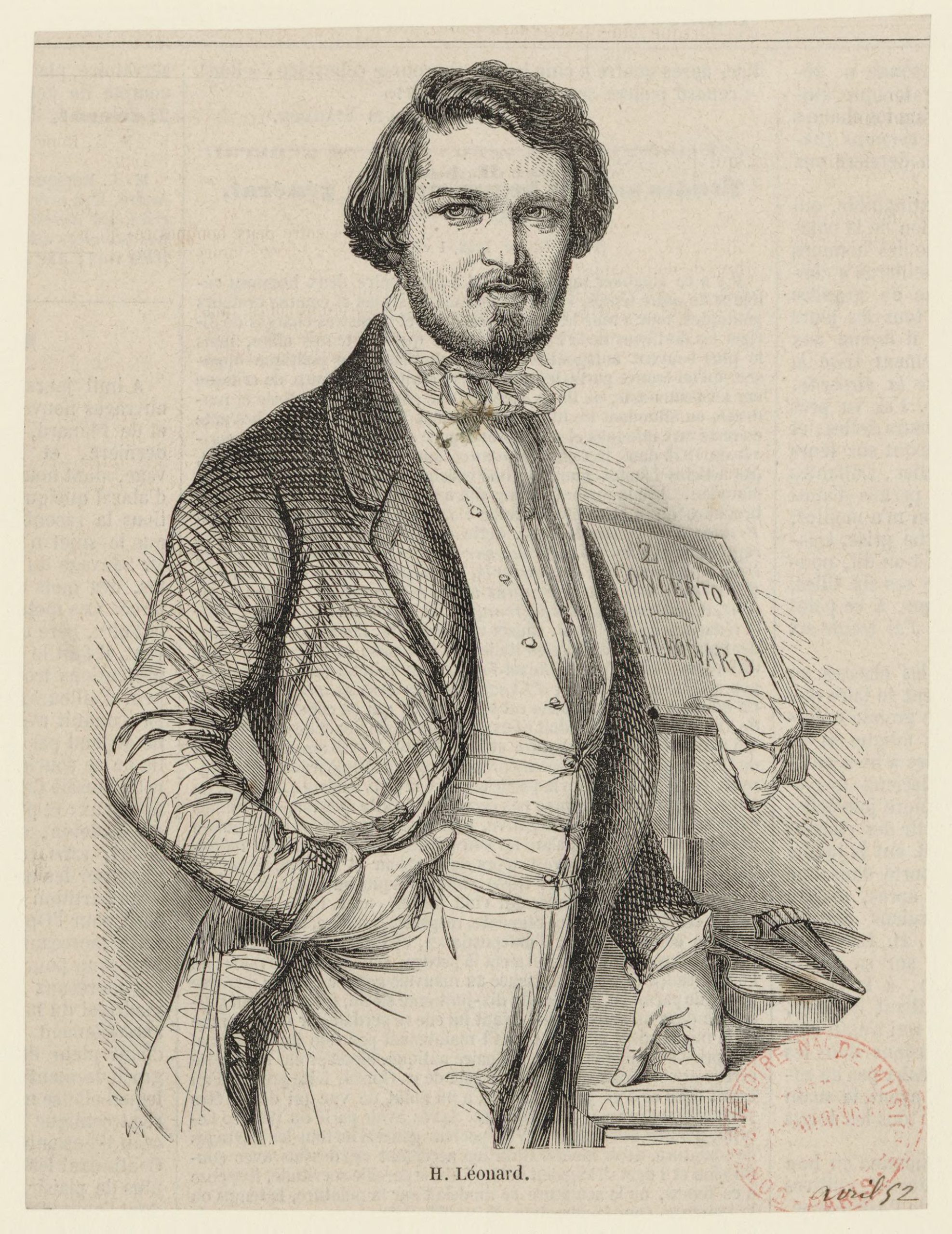
The commission came from inside the building. Hubert Léonard — a Belgian violinist, a friend, and the man running the advanced violin class at the Brussels Conservatory — asked Vieuxtemps for a competition test piece for his students. Vieuxtemps wrote the concerto in 1858–59 in response to that request, and dedicated the finished score to Léonard.
He took his time finishing it. According to the editors of the Henle edition, Vieuxtemps completed the Fifth Concerto in the spring of 1861, and premiered it himself in Brussels that year: first with piano accompaniment on 2 June, then with the Conservatory’s orchestra on 24 September. So the composer played his own exam piece in public before the students ever had to.
The manuscript has a good ending too. The 67-page autograph score stayed in the Vieuxtemps family until 2011, when the Royal Library of Belgium acquired it — which is why the modern critical edition can tell you things the old performing parts could not, including that the concerto carries two ad libitum cadenzas rather than one.
Who Vieuxtemps was, in one paragraph you’ll actually remember
Henri Vieuxtemps was born in Verviers in 1820 and died in Algeria in 1881. He was a prodigy of the genuinely alarming kind: he made his London debut in 1834, at fourteen, and Paganini heard him play there. He studied with Charles Auguste de Bériot, and he spent the most consequential stretch of his career in Russia, living there from 1846 to 1851 as a court musician to Tsar Nicholas I and laying the foundations of the Russian violin school. That last detail matters more than it sounds: the teaching line that runs out of Saint Petersburg eventually reaches Leopold Auer, and Auer’s students included Jascha Heifetz.
The ending is hard to read about. Vieuxtemps took a professorship at the Royal Conservatory of Brussels in 1871; a stroke paralysed his right arm two years later, and a second stroke in 1879 ended his playing career outright. His most famous pupil, Eugène Ysaÿe, carried the school forward, and Henryk Wieniawski took over his violin class. He spent his last years at Mustapha Supérieur in Algeria.
What to listen for
Three things make this concerto sound the way it does: how it is built, how it is scored, and what it asks of the bow arm.
It runs in one span. The three movements are linked and played without a break — roughly 18 to 20 minutes end to end. There is no applause gap, no reset, no moment where the soloist gets to stand there and shake out their bow arm. That is a structural decision with a physical consequence: the player has to budget energy across the whole arc, and you can hear when someone has budgeted badly. The final stretch is where that shows.
The orchestra is small on purpose. Vieuxtemps scores it for a flute, pairs of oboes, clarinets, bassoons, horns and trumpets, timpani and strings. No trombones. No tuba. Compare that to the wall of brass in a Tchaikovsky tutti and you can hear what the choice buys: the solo line stays audible in its lower register, and the accompaniment can stay light without going thin.
The virtuosity is diagnostic. It targets named bow techniques one after another — martelé, staccato, chains of trills, chordal arpeggios — in a sequence that reads exactly like what it originally was: a diagnostic.
I. Allegro non troppo — the entrance and the trap
The orchestra lays out the material first, in A minor, and the soloist enters over the top of it rather than out of it. It is a deliberate bit of theatre and it works: the violin arrives as an argument, cutting across material the orchestra has already committed to.
The passage players actually dread comes later, just before the cadenza — a stretch of martelé bowing that has become the piece’s calling card among violinists. Martelé means the bow is set into the string, pressed, and released in a fast stroke, so each note starts with a hard consonant and stops clean. Done well it sounds like speech with perfect diction. Done badly it sounds like scraping, and there is no way to disguise it, because the orchestra is barely playing.
Then the cadenza. Because the score offers two ad libitum cadenzas, you will hear genuinely different versions of this moment from one recording to the next — worth knowing before you assume a performer is taking liberties.
The Adagio — a borrowed tune, and why it’s there
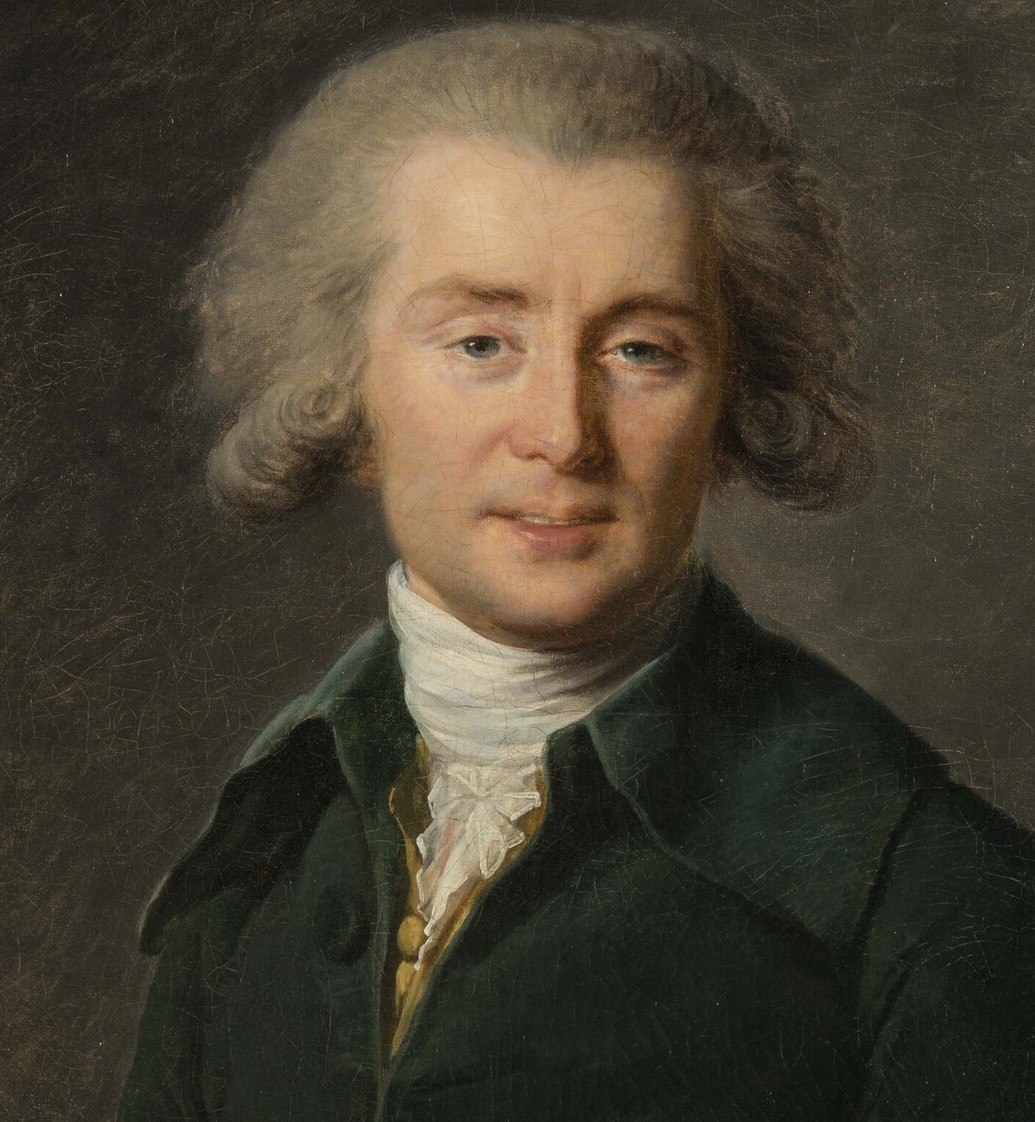
Here is the detail that turns this from a technical showcase into something with a person behind it. The slow movement’s best-known melody is borrowed. Vieuxtemps adapted it from an aria in Lucile, an opera by André Grétry — the aria whose title asks where one could possibly be better off than in the bosom of one’s own family. The borrowing is explicit enough that the concerto picked up a nickname: the Grétry Concerto.
Grétry was from Liège. Vieuxtemps was from Verviers, a short ride away, and by the time he wrote the Fifth he had spent years living in Russia and most of his adult life on tour. Reading a homesick autobiography into a quoted tune is exactly the kind of thing this site tries not to do, so treat the emotional reading as interpretation — but the compatriot connection is real, and it is why the quotation is not random.
The Adagio is hard because the violin essentially never stops singing, at a tempo slow enough that every change of bow is audible. From inside a string section you learn quickly that slow music is where intonation goes to die — there is nothing moving fast enough to cover you. Plenty of players who can survive the finale come unstuck here.
III. Allegro con fuoco — everything, again, faster
Back to A minor, and the finale takes the first movement’s technical demands and compresses them. Long staccato runs, where the player has to hold bow speed and pressure steady enough that note fifteen sounds like note one. Arpeggios across strings. A brief slackening of tempo, then the sprint.
The coda is the payoff and the reason the piece keeps its place on competition programs. The soloist climbs over the orchestra with chords and high-register passagework, after an unbroken stretch of playing with nowhere to rest. In a good performance you can hear the cost. That exhaustion is the point of a piece built to find out what someone can actually do.
How it nearly disappeared, and who dragged it back
By the early twentieth century the Fifth had slipped out of the standard repertoire. The Romantic era produced more violin concertos than the concert calendar could absorb, and Mendelssohn, Brahms and Tchaikovsky took the slots. You can read the neglect directly in Leopold Auer’s 1925 book on violin master works: Auer describes the concerto as “practically forgotten”, while insisting that played properly it “will not fail to impress the majority of its auditors”. That is a great teacher arguing with his own era’s programming, and losing.
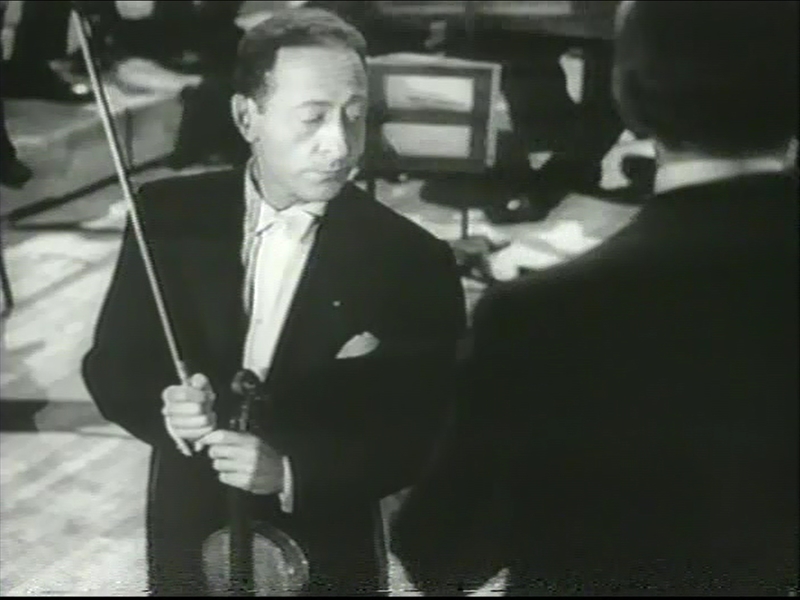
What reversed it was recording. Heifetz put the Fifth on disc and kept it in his programs, and the piece came back with his fingerprints on it — lean, fast, unsentimental. For decades afterwards it was heard as a Heifetz vehicle, which is both why it survived and why it took another generation before players felt free to do something else with it.
If you want the wider context for where this sits among Romantic violin concertos, our complete guide to the violin concerto maps the territory, and the Tchaikovsky Violin Concerto in D major makes a useful contrast — same era, opposite strategy.
Five recordings, and which one to start with
Jascha Heifetz / London Symphony Orchestra / Malcolm Sargent (recorded 1947; reissued on Naxos Historical 8.110943)
The reference, and still the fastest. Heifetz does not lean on a single phrase; the martelé is machine-clean and the finale goes past at a speed later players simply do not attempt. What you give up is the Adagio — it is beautifully controlled and emotionally closed, and the Grétry tune goes by like a well-mannered guest. Get this one for the first movement and the finale, and accept that the mono sound is exactly as narrow as you fear.
🎧 Also on: Apple Music · Spotify
Jascha Heifetz / New Symphony Orchestra of London / Malcolm Sargent (1962, RCA)
The remake, and the one to reach for if mono is a dealbreaker. Sargent conducts both, and the conception has barely moved — the tempos are recognisably the same reading — but you can finally hear the orchestra as an orchestra rather than as a smear behind the soloist. Heifetz is fifteen years older here and it does not show in the fingers. It shows slightly in the Adagio, which breathes a little more.
▶ Listen on YouTube · Apple Music · Spotify
Itzhak Perlman / Orchestre de Paris / Daniel Barenboim (1978, EMI)
Start here. Perlman is the one who makes the case that this is a piece of music rather than an obstacle course: the tone is wide, the Adagio actually sings the Grétry tune instead of presenting it, and Barenboim keeps the small orchestra warm without letting it get in the way. It is slower than Heifetz and it does not have that razor edge in the martelé. For a first listen, that trade is worth making every time.
🎧 Also on: Apple Music · Spotify
Viviane Hagner / Royal Flemish Philharmonic / Martyn Brabbins (recorded July 2009, Hyperion CDA67798)
The modern engineering pick. This is the one where you can hear the orchestration — the clarinet and bassoon lines under the solo in the first movement stop being wallpaper, and the small band finally sounds like a deliberate choice rather than a budget. Hagner plays it straighter than Perlman and with less swagger than Heifetz, which some listeners will read as cool. Pair it with the Fourth Concerto on the same disc if you want to hear how much better Vieuxtemps got at large-scale form.
▶ Listen on YouTube · Apple Music · Spotify
Misha Keylin / Slovak Radio Symphony Orchestra / Andrew Mogrelia (Naxos 8.557016)
The budget and completist pick. Keylin recorded the Vieuxtemps concertos as a series, and this disc pairs No. 5 with Nos. 6 and 7 — repertoire you will not find elsewhere without hunting. The playing is capable rather than revelatory and the orchestral sound is plainer than Hyperion’s. Buy it because you want the whole picture of what Vieuxtemps wrote, not because you want the definitive Fifth.
▶ Listen on YouTube · Apple Music · Spotify
The verdict: Perlman first, Heifetz second, and then go back to Perlman and notice how much he is not doing. If you only ever hear one, hear the Perlman; if you want to understand why violinists talk about this piece the way they do, you have to hear Heifetz take the finale.
What it looks like from the other side of the stage
Sitting in a string section behind a soloist in this concerto teaches you something the recordings flatten out. The accompaniment is mostly sparse — long held chords, light off-beats, the occasional tutti — and sparse accompaniment is the hardest kind to play cleanly. When the strings are holding a quiet sustained chord under a solo martelé passage, any unevenness in the section is audible, because there is nothing else in the texture. A small orchestra leaves the whole ensemble as exposed as the soloist.
The other thing you notice is the pacing problem the linked movements create. In a normal concerto the gaps between movements are where the ensemble resets — tuning drifts get fixed, the conductor re-establishes the tempo, everyone breathes. Here there are no gaps. Whatever the tempo relationship is going into the Adagio, you live with it, and the transition into the finale has to be negotiated on the fly. It is one of the reasons the piece rewards a conductor who has done it before.
If you like this kind of compressed, high-pressure concerto writing, the Dvořák Violin Concerto in A minor is the natural next stop — same key, very different temperament.
Frequently Asked Questions
How long is Vieuxtemps’s Violin Concerto No. 5?
Why is it called the Grétry Concerto?
Is Vieuxtemps’s Violin Concerto No. 5 harder than the Bruch or Mendelssohn?
Which recording should a first-time listener choose?
Why does the cadenza sound different on different recordings?
Further reading
- The Complete Guide to Violin Concertos
- Tchaikovsky’s Violin Concerto in D major, Op. 35
- Dvořák’s Violin Concerto in A minor, Op. 53
- Mendelssohn’s Violin Concerto in E minor, Op. 64
- Mozart’s Violin Concerto No. 5 in A major, K. 219
Sources
Composition and premiere details come from the Henle edition editors’ account of the autograph score now in the Royal Library of Belgium; the Léonard commission, dedication and instrumentation from IMSLP’s entry for Op. 37 and Hyperion’s booklet notes for CDA67798; biographical dates from standard reference sources; the Auer quotations from his 1925 volume on violin master works as cited in the work’s Wikipedia entry. Recording metadata was checked against the Naxos, Hyperion and Pristine Classical catalogue pages and the official Jascha Heifetz discography.