Start with a slow movement — the middle movement of Mendelssohn’s Violin Concerto in E minor. Put it on and let it run. It is one long tune, and it asks nothing of you structurally. Once that has landed, play the same concerto end to end. Then Tchaikovsky, then Brahms, then Beethoven, then Sibelius. Work through those and you have covered most of what people mean when they say the violin repertoire.
That order is deliberate, and the rest of this guide defends it. It follows from what the violin is physically good at, and from which concertos that gift kept alive.
The Violin Concerto Survived Because It Sings
The popular image of a violin concerto is a blur of fast fingers — the soloist as athlete, the orchestra as scoreboard. Plenty of nineteenth-century concertos were written exactly that way, and almost all of them are gone. What survived is the music that sings.
There is a physical reason for that. The violin’s working range sits right on top of the soprano voice, and the way it makes sound is closer to singing than to any other instrument in the orchestra. A piano hammer strikes and the note immediately begins dying. A violin string is dragged — the bow hair grips and releases it continuously, so as long as the arm keeps moving the player can still shape the note after it has started. Swell into it. Bend the pitch. Widen the vibrato. That is what a singer does with breath, and no other orchestral string instrument does it with the same carrying power up high.
So the genre is really one person singing in front of an orchestra that is not singing. From inside a string section that becomes obvious fast: our job is almost never to compete with the soloist but to give them something to lean on and then get out of the way at the exact right bar. When an orchestra plays a concerto badly, the usual fault is squareness: the section holds a metronomic grid while the soloist tries to phrase like a singer, and no amount of playing quieter will fix that.
The Slow Movement Is the Way In
Almost every listening guide tells you to start at the beginning, and almost every one of them is wrong about this repertoire. First movements are the longest and the most structural — they expect you to track two themes, an orchestral exposition, a development and a cadenza. That is a lot to ask of somebody who only wants to know whether they like the piece.
Slow movements ask for nothing. Mendelssohn’s Andante is a single melody handed back and forth. Brahms hands his entire slow-movement tune to the oboe before the soloist is allowed anywhere near it, and then the violin decorates it rather than repeating it. Beethoven’s Larghetto is a set of variations over a hymn-like phrase in which the orchestra barely moves. Different composers, different solutions, and every one of them absorbable on a first hearing without knowing a thing about form.
Here is the Mendelssohn complete, played by Augustin Hadelich with the Frankfurt Radio Symphony. If you only have ten minutes, skip to the Andante and start there — then come back for the rest.
🎧 Also on: Apple Music · Spotify
What Actually Changes When a Soloist Walks On
A symphony is an orchestra arguing with itself; the drama is internal. A concerto puts one person in front of that machine and makes the relationship itself the subject: the orchestra states something, the soloist answers, and the piece becomes a negotiation over who gets to finish the sentence.
Once you hear it that way, the shape of a first movement stops being homework. The orchestra usually lays out the material alone first. The soloist enters — and how they enter is a composer’s biggest single decision in the genre. Mendelssohn refuses to wait and puts the violin in almost immediately, which is why his concerto is the best entry point in the repertoire. Beethoven makes you sit through a long orchestral paragraph over a soft repeated timpani figure before the violin is allowed a note. Sibelius has the soloist emerge out of a shimmer of divided strings, as if the tune had been going on before the piece started.
Then there is the cadenza: the orchestra stops dead and the soloist plays alone. Classical-era cadenzas were often improvised, which is why Beethoven’s concerto has no authorised one and violinists still argue about whose to use. Mendelssohn wrote his out and moved it, placing it before the return of the main theme so that it drives the music forward instead of parking it.
The Big Four, and the Man Standing Behind Them
Beethoven, Mendelssohn, Brahms and Tchaikovsky are traditionally called the Big Four. Trace how that grouping hardened and one violinist keeps turning up in the paperwork.
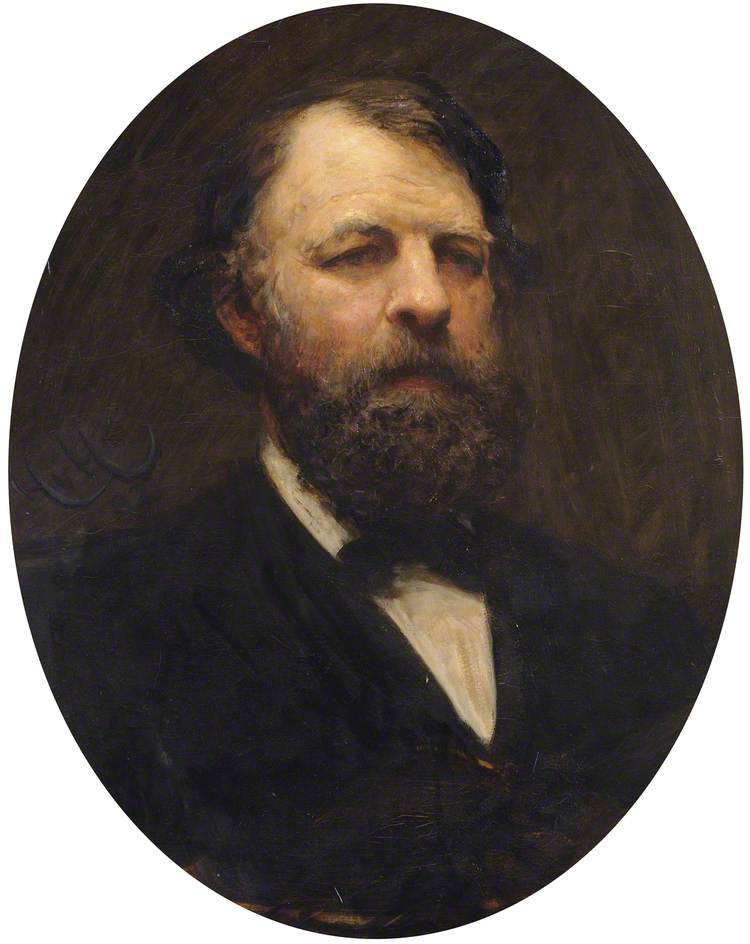
Joseph Joachim is the connective tissue of this repertoire. Beethoven’s Violin Concerto in D major, Op. 61 had its first performance on 23 December 1806 in Vienna with Franz Clement as soloist, and it did not take: the piece was written in a hurry, played nearly at sight, and then largely ignored for a generation. It was rescued in 1844, when the twelve-year-old Joachim played it in London with the Philharmonic Society orchestra conducted by Felix Mendelssohn. The concerto that now opens every list of great violin concertos was, for a long stretch, a curiosity that violinists avoided.
Beethoven — Itzhak Perlman, Philharmonia Orchestra, Carlo Maria Giulini, EMI, recorded 1980. Giulini takes the first movement broadly, which is the correct risk here: it is a concerto about patience, and a conductor who hurries it turns the timpani figure into a tic instead of a heartbeat. Perlman’s tone in the Larghetto is warm without going slack. If you want a leaner, faster, more classical Beethoven, this is not it — but as a first encounter, nothing else I know does the job better.
▶ Listen on YouTube · Apple Music · Spotify
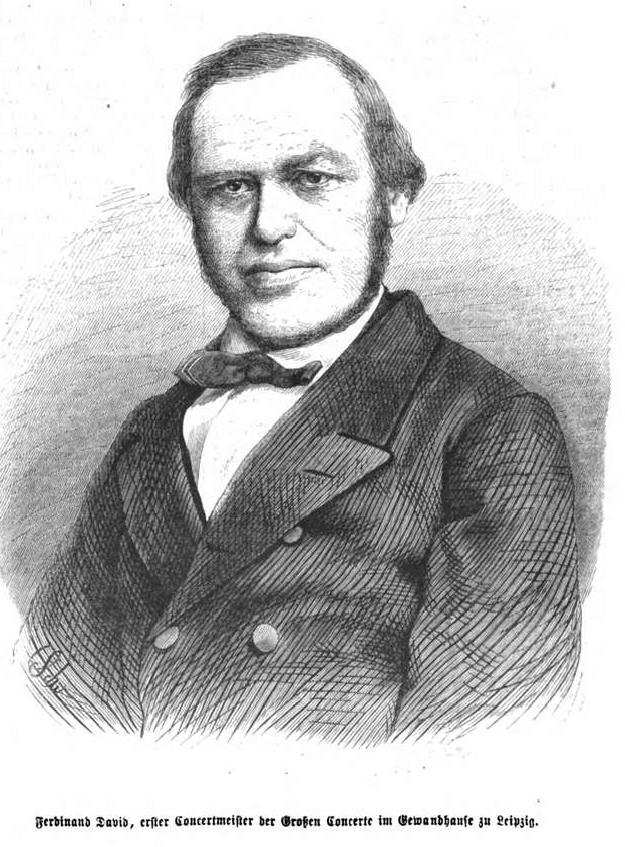
Mendelssohn’s own concerto is the exception in the Joachim story, and the exception is instructive. He wrote it for Ferdinand David, the concertmaster of the Leipzig Gewandhaus Orchestra and a friend he consulted constantly about what the violin could comfortably do. Mendelssohn’s Violin Concerto in E minor, Op. 64 received its first performance on 13 March 1845 at the Leipzig Gewandhaus, with Ferdinand David as soloist and Niels Gade conducting, because Mendelssohn was too ill to take the podium himself. The result is the most idiomatic violin writing of the century — hard, but never awkward. You hear the difference in an amateur orchestra: the Mendelssohn goes wrong in the ensemble, not in the solo part.
Mendelssohn — Hilary Hahn, Oslo Philharmonic, Hugh Wolff, Sony Classical, released 2002. Hahn plays this without a drop of sentimentality, which sounds like a criticism and is the highest praise I can give it. The opening melody is usually smeared with rubato; she keeps the line straight and lets the harmony do the pulling, and the finale comes off light rather than frantic. One reservation: the orchestra sits a little far back, so the wind writing loses presence.
▶ Listen on YouTube · Apple Music · Spotify
With Brahms, Joachim moves from advocate to co-author. Brahms did not play the violin, so he sent the solo part to Joachim for correction, asking him to mark anything difficult, awkward or impossible; Joachim went through the manuscript in detail, and Brahms then ignored a good deal of the advice. Brahms’s Violin Concerto in D major, Op. 77 was given its first performance on 1 January 1879 at the Leipzig Gewandhaus, with Joseph Joachim as soloist and Brahms conducting. Brahms dedicated the concerto to Joachim and left him to write the first-movement cadenza, which is still the one most violinists play.
That last detail is the whole Big Four in miniature. The cadenza — the moment audiences take for the soloist’s personal statement — was written by the violinist the concerto was built around, and it has outlasted almost every alternative. What looks from here like a canon was, in large part, one violinist’s calendar.
Joachim also lived long enough to be recorded. His discs were first issued on the Red Label Monarch label in October 1903, and the playing is scratchy, fast and almost vibrato-free — a direct acoustic link back to the man Brahms wrote for, and the fastest cure I know for the idea that how it has always been played means anything.
Here is the Brahms complete, with Hilary Hahn and Paavo Järvi. Watch the orchestral tutti before the solo entry — this is the concerto in which the orchestra is least willing to yield, and seeing it played makes that argument legible.
🎧 Also on: Apple Music · Spotify
Brahms — Jascha Heifetz, Chicago Symphony Orchestra, Fritz Reiner, RCA, recorded 1955. The standard complaint is that Heifetz is too fast, and the complaint is accurate. He is also right. At his speed the first movement stops sounding like a symphony with a violin obbligato and starts sounding like an argument somebody is winning, and Reiner’s Chicago brass gives him a real opponent. Skip it if you want autumnal, sepia Brahms — this reading has no interest in that.
▶ Listen on YouTube · Apple Music · Spotify
Tchaikovsky is the outsider in the group, and he got in by force. His Violin Concerto in D major, Op. 35 had its first performance on 4 December 1881 in Vienna, with Adolph Brodsky as soloist and Hans Richter conducting the Vienna Philharmonic, after the violinist it was originally intended for refused to touch it. Eduard Hanslick, the most powerful critic in the city, savaged it in print. It is now the one everybody can hum. Our full guide to the Tchaikovsky Violin Concerto goes through the movements in detail.
🎧 Also on: Apple Music · Spotify
Where the Big Four Sit in a Longer Line
The Big Four occupy roughly one century. The genre runs much wider, and the two ends are where the interesting listening is.
At the early end, Bach and Vivaldi wrote violin concertos as conversation rather than confrontation — the soloist is the best player in a small band, not a visiting celebrity. Start with the Bach Violin Concerto in E major, BWV 1042: short, with a slow movement that resets your ear before you go back to the Romantics.
At the other end, the twentieth century broke the concerto open. Sibelius got there first, and his is the one most listeners eventually rank alongside the Big Four. Its history is unusual. The original version was first performed in Helsinki in 1904 with Viktor Nováček as soloist and Sibelius conducting, went badly, and was withdrawn. The revised version — the one everybody plays — was first performed in Berlin on 19 October 1905, with Karel Halíř as soloist and Richard Strauss conducting. Sibelius cut back the display writing and folded the soloist into the orchestral texture, which is why the piece sounds like weather rather than a competition. We have a full guide to the Sibelius Violin Concerto.
Sibelius — Ginette Neveu, Philharmonia Orchestra, Walter Süsskind, EMI, recorded 1945. Mono, the oldest recording on this page, and still the performance I reach for. Neveu attacks the first movement’s double stops with a physical roughness that modern engineering sands away, and the finale has a stamp to it that later recordings turn into elegance. Caveat: the sound is narrow and the orchestral detail is buried, so make this a second listen. Learn the piece from a modern recording, then come here to find out what it can be.
▶ Listen on YouTube · Apple Music · Spotify
Three more worth knowing once the map is in place. The Dvořák Violin Concerto in A minor is the warmest of the lot and unfairly neglected. Bruch’s First Concerto in G minor is the melodic peak of the Romantic violin. And Shostakovich’s First Violin Concerto is the darkest major work in the genre: he wrote it in 1947 and 1948, then kept it in a drawer, and it had its first performance on 29 October 1955, with David Oistrakh — its dedicatee — as soloist, playing with the Leningrad Philharmonic under Yevgeny Mravinsky. The Passacaglia at its centre is the movement I would put in front of anyone who thinks the genre is about display.
If the soloist-versus-orchestra relationship is what hooks you, the step sideways is the Brahms Double Concerto in A minor, where a violin and a cello must negotiate with each other before they can take on the orchestra at all.
What to Listen For
You need no technical vocabulary to enjoy any of this, but a handful of sounds recur constantly and are more fun once you can name them.
- Double stops — two strings sounded together, so one player produces harmony. Sibelius builds his first movement’s solo writing on them, which is why that entry sounds strained in the best way.
- Harmonics — the finger touches the string without pressing it down, producing a thin, glassy tone. When a violin suddenly sounds like a flute, that is what happened.
- Pizzicato — the string plucked instead of bowed. Watch for the orchestra doing it under a soloist: it is the cheapest way to make an accompaniment disappear without silencing it.
- Spiccato — the bow bounces off the string instead of staying in contact, which produces the dry, popping articulation in fast finales. Tchaikovsky’s last movement is built on it.
The Order I Would Actually Use
- Mendelssohn in E minor — the slow movement first, then the whole thing. Nothing else in the repertoire opens this easily.
- Tchaikovsky in D major — the tunes are immediate and the finale is genuinely exciting. This is the one that converts people.
- Brahms in D major — denser, and it takes a few hearings. The oboe solo in the slow movement is the hook.
- Beethoven in D major — the longest and the most patient. Save it until slow music no longer feels like waiting.
- Sibelius in D minor — the palette-expander. After this, the Romantic four sound like one dialect among several.
Once you have all five, the most useful next move is a second recording of one you already know. Put the Heifetz Brahms next to any modern performance and listen only to the opening solo entry. The gap in speed, weight and vibrato is two people disagreeing about what the piece means, and hearing that teaches more than a sixth concerto would.