- Composer
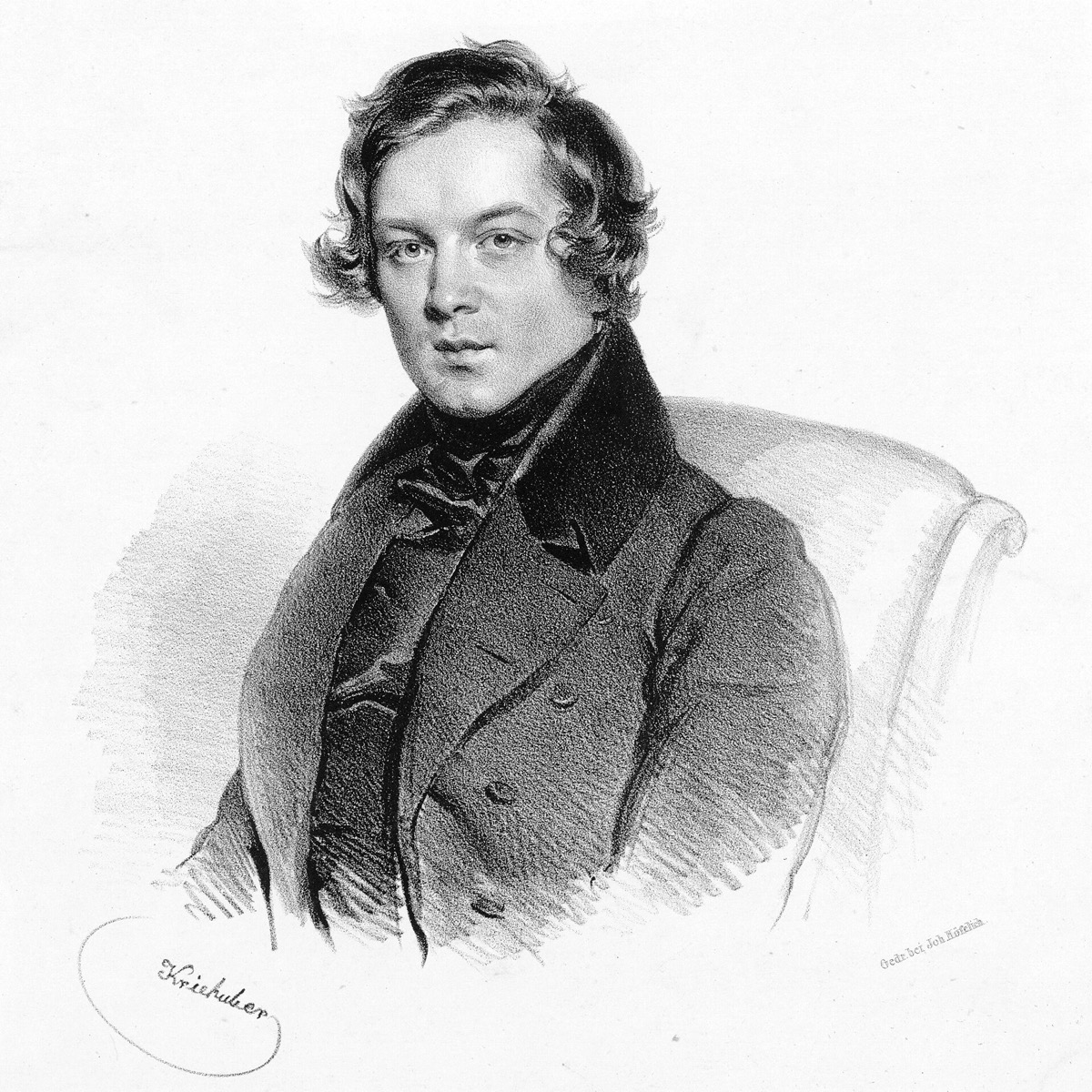
- Robert Schumann
(1810–1856) - Work
- Piano Concerto in A minor, Op. 54
- Composed
- 1841 (as a Fantasie), expanded 1845
- First performance
- 4 December 1845, Dresden
- Key
- A minor
- Scoring
- Solo piano, two flutes, two oboes, two clarinets, two bassoons, two horns, two trumpets, timpani, strings
- Movements
- I. Allegro affettuoso (A minor)
II. Intermezzo: Andantino grazioso (F major)
III. Allegro vivace (A major) - Duration
- About 30 to 35 minutes
Most concertos are built to make one person look extraordinary. Schumann’s is built to make two parties agree, and that single design decision is why it sounds unlike anything written for piano and orchestra in the decade around it.
Here is the tell. Seconds in, after the piano crashes down the keyboard in a hail of chords, the actual tune arrives — and the piano does not play it. The oboe does, over strings, while the soloist sits and waits. Then the piano takes the same tune and turns it over, and the two of them trade it for the rest of the movement. If you have only ever heard this concerto as background Romanticism, that handover is the thing to listen for. It is the whole argument of the piece in one gesture.
The Concerto That Started Out as Something Else
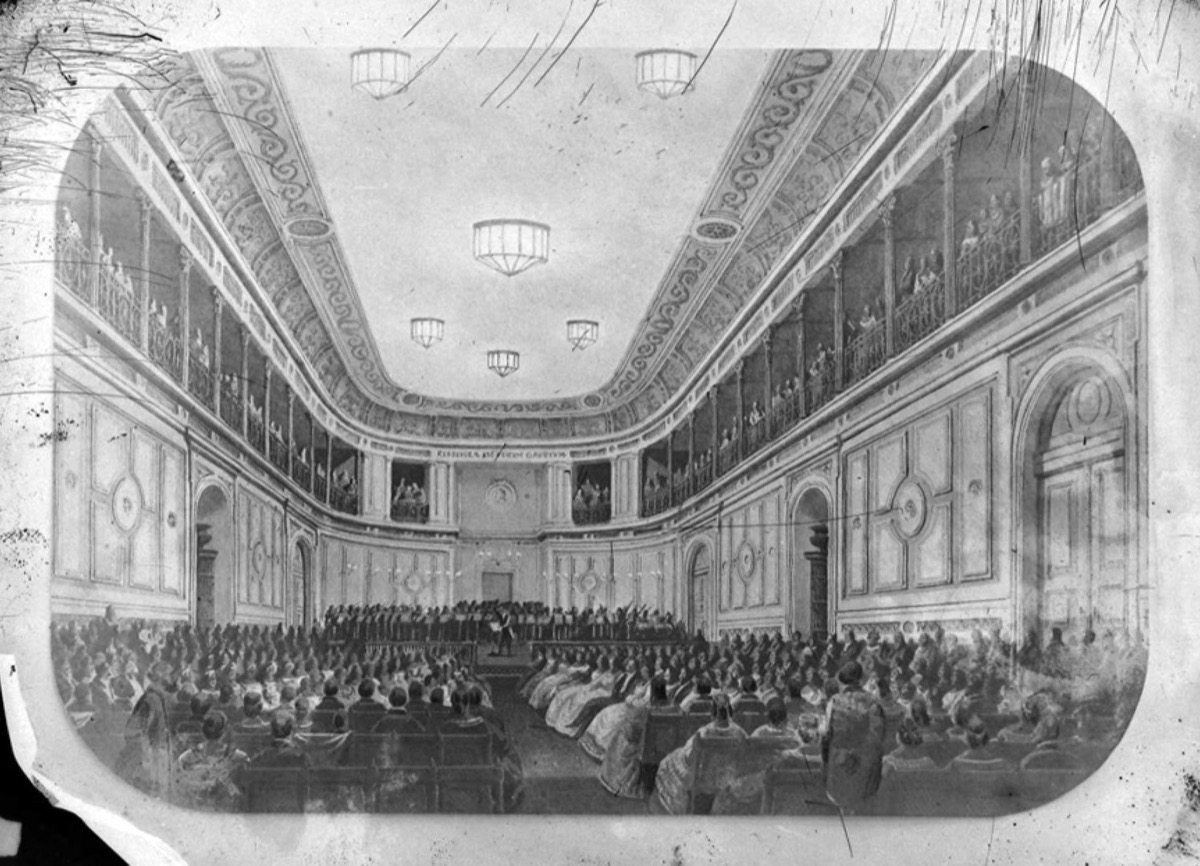
Between 17 and 20 May 1841, Schumann wrote a single-movement Fantasie in A minor for piano and orchestra. Four days of work, one movement, no plans for anything larger. Clara Schumann performed it at the Gewandhaus in Leipzig on 13 August 1841, and then it sat.
Publishers of the period wanted concertos, not orphan movements, and a stand-alone concert piece for piano and orchestra was an awkward thing to sell. In 1845 Schumann went back to it and added an Intermezzo and an Allegro vivace, and the Fantasie became the first movement of a three-movement concerto.
That history explains a proportion which puzzles first-time listeners. The first movement is enormous — roughly as long as the other two put together — because it was designed to stand alone. The Intermezzo is short, almost a breath. Once you know the opening movement was written four years earlier as a self-contained piece, the shape stops feeling lopsided and starts feeling deliberate.
The first performance of the complete concerto took place on 4 December 1845 in Dresden, with Clara Schumann as soloist and Ferdinand Hiller conducting. Schumann dedicated the concerto to Ferdinand Hiller. A month later, Felix Mendelssohn conducted the concerto in Leipzig on 1 January 1846 — back at the Gewandhaus, where the first movement had been heard on its own four years before.
What Most Retellings Get Wrong About Schumann’s Hand
Almost every programme note about this concerto tells the same story: Schumann wanted to be a virtuoso, built a mechanical contraption to strengthen one finger, wrecked his hand, and turned to composing instead. It is a tidy story. It is also far less settled than the retelling suggests.
Schumann’s right hand did fail him while he was still a student, and he never had a career as a performing pianist. Beyond that, the sources disagree. Some accounts describe a home-made finger-strengthening device; some scholars argue for a task-specific focal dystonia, the neurological condition musicians now call musician’s cramp; others point to mercury, a standard nineteenth-century treatment whose side effects include exactly the kind of hand weakness described. The accounts do not even agree on which finger went first. Wikipedia’s own biography states plainly that the cause is uncertain.
This matters because the tidy version quietly rewrites the music. If you believe the concerto exists because a broken finger forced Schumann to write instead of play, you hear the piece as compensation. Drop that assumption and a better story appears: a composer who had spent his working life as a critic arguing in print that the virtuoso concerto was a dead end, writing the piece that proved his own case. The dialogue between piano and orchestra is a thesis, not a workaround.
What to Listen For
One theme, endlessly re-lit. The descending phrase the oboe plays in the first minute is not just the first movement’s main theme — it is the seed for all three movements. Schumann keeps the notes and changes everything around them: he re-harmonises it into the major, slows it to a whisper for a clarinet solo, speeds it into a march, and finally lets the finale take off from a rhythmically squared-up version of the same shape. Learn that descending shape in the opening minute and you will spend the rest of the piece recognising an old friend in new clothes.
The Clara reading. The opening notes of that theme are commonly read as C–H–A–A, standing for the Italian spelling CHiArA of Schumann’s wife Clara — German note-naming writes B natural as H, which makes the spelling possible. Schumann demonstrably enjoyed this kind of cipher elsewhere in his output, so the reading is plausible rather than proven. Treat it as a widely repeated interpretation, not a documented fact, and it stays charming instead of becoming a crutch.
No cadenza where you expect one. The first movement does have a written-out cadenza, but Schumann composed it himself rather than leaving a blank for the soloist to fill, and he places it late, after the argument is essentially settled. There is no point in this concerto where the orchestra stops so a pianist can show off. Compare that with Beethoven’s First Piano Concerto, where the cadenza is still a genuine solo arena, and you can hear how far the genre had moved.
The orchestra is not accompaniment. From inside a string section this is immediately obvious and slightly unnerving. In a Liszt or a Kalkbrenner concerto the strings mostly hold a bed of sound under the piano and count. Here the inner parts carry actual counterpoint against the soloist, which means you cannot coast — a viola line that pulls half a beat late is audible, because there is nothing on top of it to cover the seam. It is one of the reasons this concerto sounds ragged with under-rehearsed orchestras and glorious with great ones.
Movement by Movement
I. Allegro affettuoso
The marking is the instruction: affettuoso, with feeling, not con fuoco. The movement opens with the piano’s descending chords, hands the theme to the oboe, and then refuses to settle into a fight. The most beautiful stretch is the slower middle section in A flat major, where the clarinet takes the theme and the piano weaves around it — the soloist becomes the accompanist for a long stretch, which almost no concerto of this era would allow. When the fast music returns, the transformation is done by orchestral colour rather than by piano fireworks.
II. Intermezzo: Andantino grazioso
The shortest movement by a distance, and Schumann calls it an Intermezzo rather than a slow movement, which tells you how he wanted it weighted. Piano and strings pass short phrases back and forth in F major like a conversation held deliberately below full voice. Then the cellos come in with a broad melody underneath the piano’s figuration — the emotional centre of the whole concerto arrives in the orchestra, not the solo part. At the end, the woodwinds quietly quote the first movement’s theme, the music pauses on a chord, and the finale bursts out without a break.
III. Allegro vivace
A major, and finally the release. The finale takes the same descending shape and squares it into a swinging dance. The famous difficulty is a long passage where the melodic accents pull against the notated bar line, so the music sounds as though it has changed metre when it has not. It is genuinely hard to feel rather than merely hard to play, and ensembles have come apart on that page ever since. When a performance nails it, the effect is of everyone leaning together into a new pulse and getting away with it.
Five Recordings, and What Each One Is For
Leon Fleisher / George Szell / Cleveland Orchestra (1960, Columbia, now Sony Classical) — start here. This is my first recommendation for anyone who does not know the piece, and the reason is Szell’s orchestra rather than Fleisher’s piano. The Cleveland winds are so present and so exactly balanced that the handovers I described above are simply audible; you do not have to hunt for the oboe or the clarinet, they are right there in the frame. Fleisher plays with a clean, unfussy line that never overpowers them. The trade-off: it is a 1960 studio recording and the sound is dry and close, with little hall around it. If you want atmosphere, this is not your record. If you want to hear how the piece is built, nothing else lays it out this clearly.
🎧 Also on: Apple Music · Spotify
Sviatoslav Richter / Witold Rowicki / Warsaw National Philharmonic Orchestra (1958, Deutsche Grammophon) — the one I keep going back to. Richter does something almost nobody else does: he plays the first movement as chamber music, dialling his volume down to match the woodwinds instead of projecting over them. The result is that the conversation actually sounds like a conversation between equals rather than a soloist being polite. He is also unsentimental in the Intermezzo, which some listeners will find cool. The orchestra is not the equal of Cleveland’s and the mono-era engineering shows its age. Get it for the piano playing and the sheer intelligence of the balance.
▶ Listen on YouTube · Apple Music · Spotify
Dinu Lipatti / Herbert von Karajan / Philharmonia Orchestra (1948, EMI, now Warner Classics) — the historical one worth the hiss. Recorded in April 1948 at Abbey Road, and the pairing is odd on paper: a pianist steeped in Chopin against a conductor whose instincts run classical and tight. That friction is the point. Lipatti phrases with rubato and Karajan keeps refusing to slow down for him, and the tug between them gives the first movement a nervous energy no modern studio recording gets near. The catch is real: mono sound, audible surface noise on most transfers, and woodwind detail flattened by the engineering. A supplementary listen, not a first one.
▶ Listen on YouTube · Apple Music · Spotify
Martha Argerich / Nikolaus Harnoncourt / Chamber Orchestra of Europe (live 1992, Teldec) — the risky one. Argerich has recorded this concerto many times, and this live account carries the most voltage. Harnoncourt drives the orchestra with hard accents and short, dry string articulation; Argerich answers by pushing the tempo wherever she can. The finale is thrilling and slightly out of control. It is also the version where the piano wins the argument — a legitimate reading, and precisely the opposite of what I recommend hearing first. Come to it third, and the risk-taking reads as interpretation rather than noise.
▶ Listen on YouTube · Apple Music · Spotify
Alexander Melnikov / Pablo Heras-Casado / Freiburger Barockorchester (harmonia mundi) — the one that changes the picture. Melnikov plays an 1837 model Erard, and the period instrument does something a modern Steinway physically cannot: it stops swamping the winds. The balance Schumann wrote becomes the balance you hear. The bass is drier, the fast passagework bristles rather than blurs, and the orchestral colours sit in front instead of behind. My honest reservation matches the critical split on this release: the finale is taken broadly enough that it loses some of the Allegro vivace’s spring, and reviewers divided sharply over that choice. Worth hearing anyway, because it is the closest thing on record to an answer to what this piece sounded like when it was new.
🎧 Also on: Apple Music · Spotify
The short version. Fleisher and Szell to learn the piece. Richter for the playing. Melnikov to hear it re-lit. Argerich for danger. Lipatti for the legend, hiss and all.
The Life Behind the Notes — Without the Novelisation
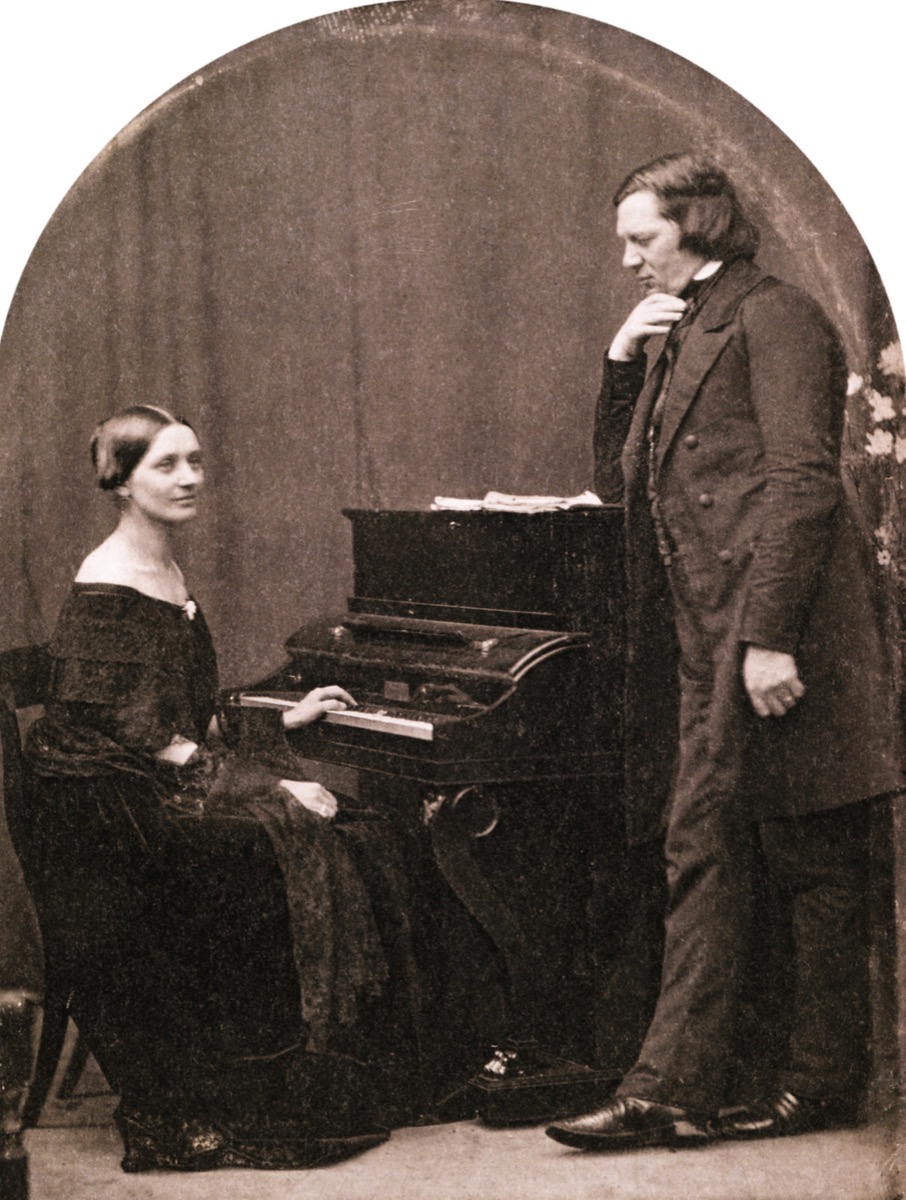
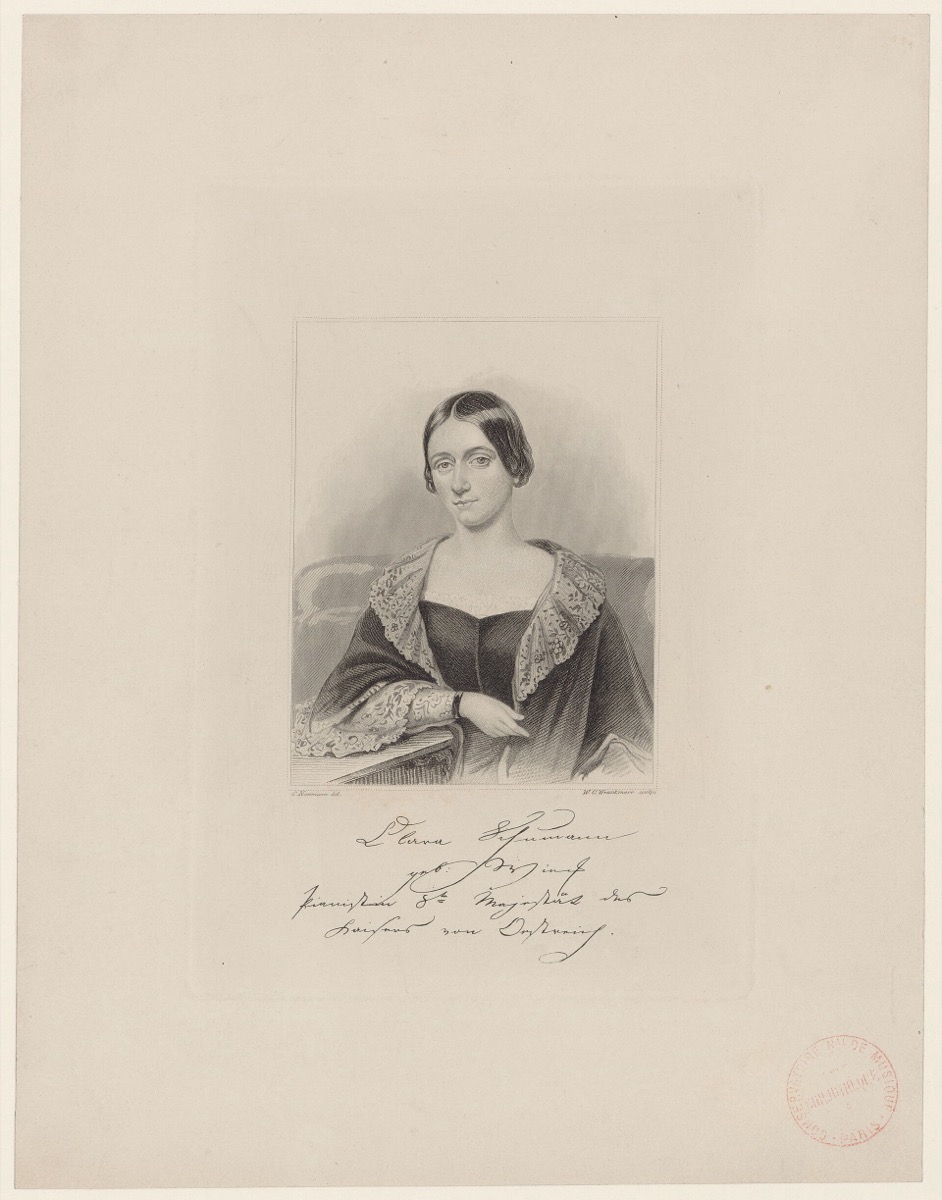
Clara Wieck made her official debut at the Gewandhaus in Leipzig on 28 October 1828, at the age of nine, and her father fought hard and publicly to keep her away from Schumann. Robert and Clara married on 12 September 1840, after a court case. The Fantasie followed within a year.
The rest of the story is often told for maximum pathos, so here it is plainly. Johannes Brahms first called on the Schumanns on 30 September 1853; Schumann’s article Neue Bahnen appeared in the Neue Zeitschrift für Musik on 28 October 1853 and made the twenty-year-old famous. On 27 February 1854 Schumann threw himself into the Rhine, and on 4 March 1854 he entered the asylum at Endenich, near Bonn. He never came home. He died on 29 July 1856, aged forty-six.
Clara outlived him by decades and kept performing. Her last public concert was on 12 March 1891 in Frankfurt, and she died on 20 May 1896. That is the part of the story which actually shows up in the music’s afterlife: the concerto entered the standard repertoire partly because one of the finest pianists in Europe played it everywhere for the rest of her career.
If Schumann’s orchestral writing interests you, his Manfred Overture is the darker companion piece, and the young man whose career this household launched wrote a symphony that took him decades to finish — see our guide to Brahms’s First Symphony. For a concerto that takes the opposite approach and puts the soloist unambiguously in charge, try Tchaikovsky’s Second Piano Concerto.
Follow the Score
If you read music at all, watching the score scroll past is the fastest way to catch the theme transformations described above — especially the Intermezzo moment where the woodwinds bring back the first movement’s tune.
The full score is free at IMSLP: Piano Concerto, Op. 54 on IMSLP.