- Composer
- Mozart
(1756~1791) - Work
- Piano Concerto No. 23 in A major, K. 488
- Key
- A major
- Composed
- 1786
- Movements
- 3 movements
I. Allegro (A major)
II. Adagio (F-sharp minor)
III. Allegro assai (A major) - Instrumentation
- solo piano, flute, 2 clarinets, 2 bassoons, 2 horns, strings
- Premiere
- March 1786
Burgtheater, Vienna
March 2, 1786. Vienna. Mozart scribbled the date at the end of the score. Records suggest it took him a single day to write down this entire concerto. Of course, the music was already fully formed in his head, and this was just the act of transcription. Still, it was just one day.
That year, Mozart churned out three piano concertos in just a few months: No. 21 (K. 467), No. 22 (K. 482), and this one, No. 23 (K. 488). In between, he also completed the opera The Marriage of Figaro. It’s the 18th-century equivalent of a pop star dropping three EPs while preparing a full-length studio album. And yet, each of the three concertos has a completely distinct personality. This wasn’t just assembly-line work.
Concerto No. 23, however, possesses a quality that seems to defy the frantic pace of its creation. It doesn’t rush. It doesn’t explode. From start to finish, it speaks to you quietly. And when it’s over, you feel a certain weight in your chest. That is the power of this concerto.
The Quietest Concerto from the Busiest Year
1786 was one of the most tumultuous years of Mozart’s career. It was the year his opera The Marriage of Figaro premiered. The story of a servant outwitting his aristocratic master was staged with the support of Emperor Joseph II, but the noble audience gave it a lukewarm reception. After just six performances in Vienna, it closed. No one could have known it would later be seen as a landmark in music history.
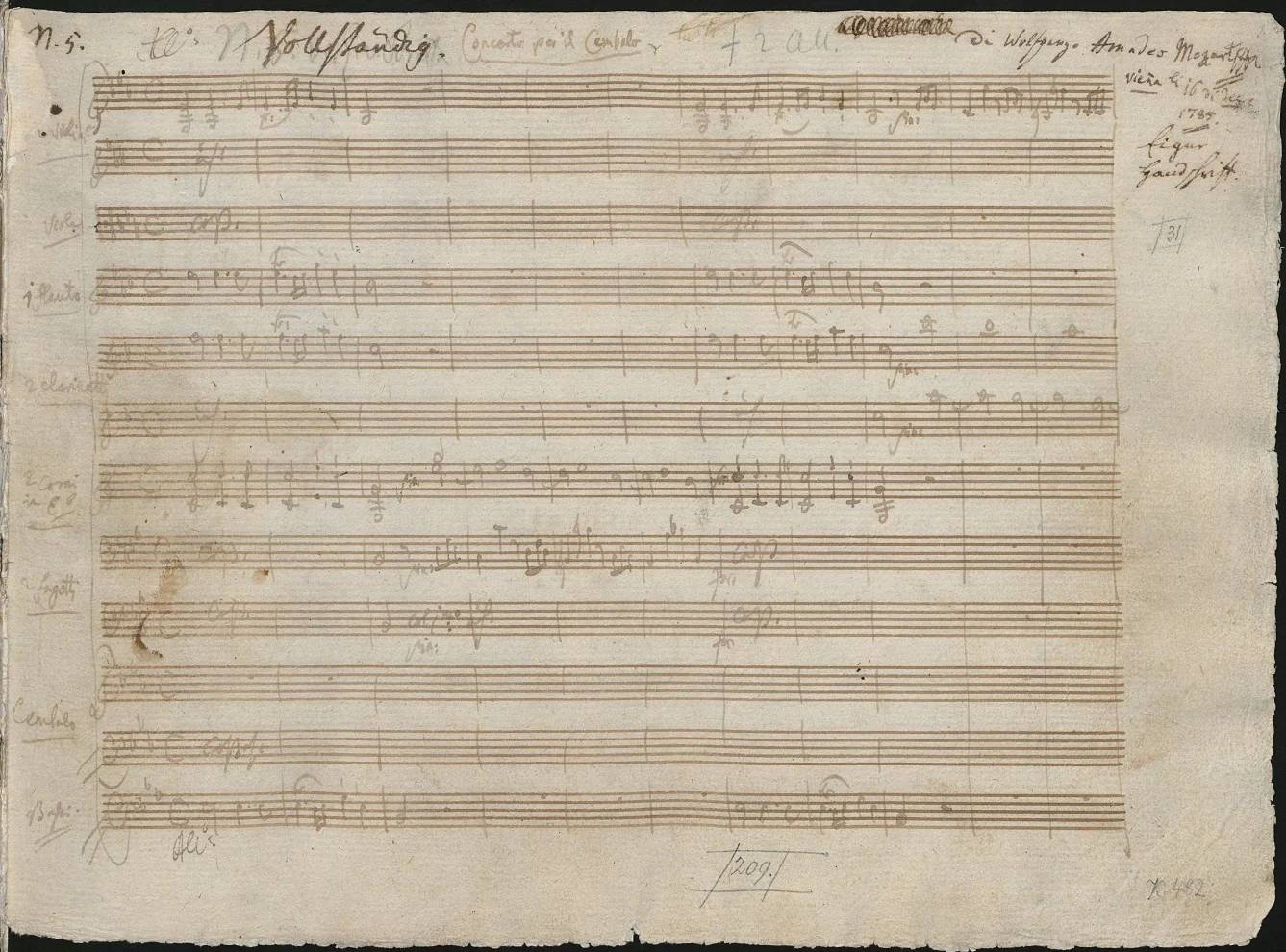
While preparing for that premiere, Mozart was also writing three more concertos. The pace is hard to comprehend for a single person.
At the time, Mozart was running his own subscription concert series in Vienna. He would rent a hall and perform for an audience of aristocrats and wealthy citizens. He sold tickets in advance to cover the costs, operating much like a small-scale concert promoter today. His piano concertos were the main attraction, and the biggest draw was Mozart himself at the keyboard.
K. 488 was born in this context. He needed to write music that would sell, music the audience would love. But the piece that emerged from this commercial demand has endured for centuries. It was clearly more than just a crowd-pleaser. That difference is what made it a classic.
One of his choices in orchestration is particularly telling. K. 488 has no oboes. Most of Mozart’s concertos feature them, but here he replaced them with two clarinets. This was a radical decision. We know Mozart had a special affection for the clarinet; his later Clarinet Concerto, K. 622, is proof enough. In K. 488, the warm, mellow timbre of the clarinets defines the entire work’s temperature. The moment he chose them over the sharper-edged oboes, the concerto’s unique atmosphere was sealed.
The Moment the Piano Enters Quietly
The opening of the first movement is, at first, what you’d expect. The orchestra presents the main theme, following the traditional concerto introduction. Then, the piano enters.
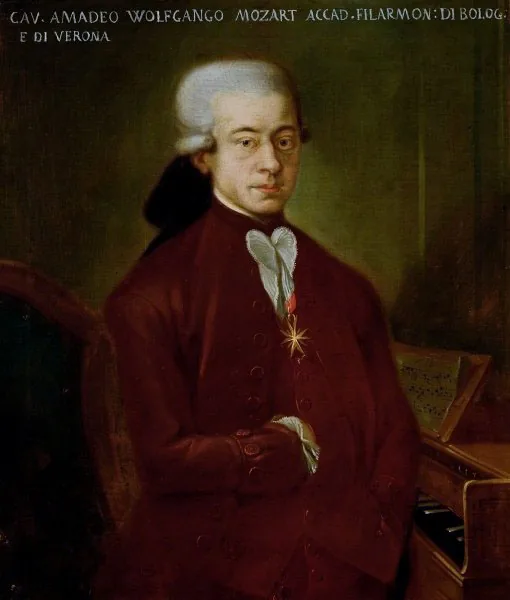
But the way it enters is strange. The orchestra steps back, and the piano comes in alone, quietly. It doesn’t leap into the spotlight. It takes a seat. Mozart frames the relationship between soloist and orchestra not as a confrontation, but as a conversation. They share a single phrase, or one finishes the other’s sentence. The quality of this dialogue is one of the things that sets K. 488 apart.
There’s a memorable moment in this movement. After the bright opening theme in A major, a fleeting hint of a minor key appears. It lasts less than half a beat. It’s just a passing shadow. But it sticks in your mind. It’s like noticing the weariness around the eyes of a person with a brilliant smile.
Mvt. 1: A Conversation Between Light and Shadow
The first movement follows sonata form—a three-part structure of exposition, development, and recapitulation—but within that framework, K. 488 feels unhurried and spacious. During the development section, when the music modulates through different keys, it doesn’t drag the listener far from home. It wanders a bit before quickly returning. The journey is gentle and natural, not dramatic.
There are passages of notable piano technique. The right hand executes rapid figures while the left hand maintains the rhythm; the two hands move in contrary motion yet sound like a single voice. These are quite challenging for the performer, but from the listener’s perspective, the effort is invisible. Making difficult things sound easy is its own kind of artistry.
Mozart wrote out his own cadenza for this concerto—the section where the orchestra falls silent and the soloist performs a virtuosic, often improvised passage. This detail suggests his particular attachment to the work. Some pianists perform this cadenza verbatim, while others create their own. Either way, that moment when the orchestra stops and the piano is left alone is always a highlight.
The second theme of the movement appears in E major. The shift from A major to E major is standard procedure in a concerto sonata form, but Mozart handles it not as an abrupt change but as a completely natural progression. When the second theme arrives, it feels as if it was always meant to be there. That’s Mozart’s magic.
Mvt. 2: F-sharp Minor, The Concerto’s Darkest Room
Stop here for a moment.
When the second movement begins, the temperature in the room changes. The key is F-sharp minor. Of Mozart’s 27 piano concertos, this is the only one with a slow movement in this key. The combination of a slow tempo and a minor key is itself unusual for him.
The piano begins alone. The orchestra is nearly silent. The strings offer the quietest support, but above them, the piano speaks as if to itself. It evokes the image of someone writing or thinking alone late at night.
Though this movement is dark, it is not despairing. It is sad, but it never collapses. Mozart strikes a peculiar balance here. The emotion doesn’t feel suppressed; rather, it sounds like the expression of someone who understands their feelings precisely. A sorrow that doesn’t overflow. That phrase, perhaps, best describes this music.
There’s a section where the clarinet enters into a dialogue with the piano. When the clarinet’s warm tone meets the piano’s somber figures, it feels like a moment of consolation. Had he used oboes, this passage would have had an entirely different emotional impact. It is here that we most strongly feel why Mozart made that choice.
Opinions on this movement are often polarized. Some consider it the most beautiful slow movement in all of Mozart’s concertos. Others argue its darkness unbalances the work as a whole. Regardless of which side you take, once you hear it, you won’t easily forget it.
The movement has a distinct three-part structure. In the first part, the piano presents the theme alone. In the middle section, the key briefly brightens. But then, it returns to the initial dark mood. This return is the core of the movement. It’s about leaving a dark place for a moment, only to come back. It’s about not running away. That’s why this music is more than just melancholy.
As the second movement ends and the third begins, you can almost hear the audience let out a collective, quiet breath. That brief silence speaks to the power of what they’ve just heard.
Mvt. 3: From Weight to a Sprint
The third movement is marked Allegro assai—very fast. It sprints forward as if to shake off the weight of the second movement. It’s a rondo, with a light, recurring theme. The piano dashes along, and the orchestra responds in kind.
What’s interesting is that even this finale has its own fleeting dark moments. The shadow of the second movement hasn’t entirely disappeared. There are passages where the theme veers toward a minor key before returning to the light, and in those instances, the feeling of the Adagio briefly returns. Then, it concludes brightly.
For a final movement of a concerto, it’s quite light. It almost seems intentionally designed to blow away the heaviness of the second movement. When you listen to the cheerful third movement while still holding the memory of the second, the contrast creates the overall impression of the entire concerto. Some say this structure mirrors life itself: there is sadness, and then you carry on.
In the final coda, the piano and orchestra race together to a powerful conclusion. For a concerto finale, it’s surprisingly straightforward. Mozart could have ended with more flash and fireworks, but he just… ends it. That directness is also part of this work’s character.
First Listen: What You Need to Know
If you’re listening to K. 488 for the first time, here are a few things to keep in mind.
The second movement is the heart of the piece. The first and third movements are wonderful, but what stays with you is the Adagio. Just follow the sound of the piano as it speaks to itself. No explanation is needed. Just be present with the music.
The key of F-sharp minor. While it’s a simplification to say that minor keys are always sad in Western music, in this movement, the formula holds true. It sounds lonely, a little desolate, and yet beautiful. You hear all three at once.
Listen for the clarinets. Pay attention to how the clarinets, positioned quietly behind the piano, engage in conversation with the soloist. That dialogue is one of the piece’s hidden pleasures. The fact that they are clarinets, not oboes, changes everything.
The third movement isn’t a betrayal of the second. The fast, light finale might feel like it erases the emotion of the Adagio. But on a second listen, you realize it provides a necessary balance. It’s like acknowledging sorrow and then moving forward.
Where This Concerto Sits Among Mozart’s Works
Mozart wrote 27 piano concertos. The most frequently performed are No. 20, 21, 24, 27, and this one, No. 23.
No. 20 in D minor, K. 466, is intense and dark. Beethoven particularly admired it and even wrote his own cadenzas for it. No. 21 in C major, K. 467, became famous after its second movement was featured in the film Elvira Madigan. No. 24 in C minor, K. 491, was composed around the same time as No. 23 and is even darker and more complex. No. 27 was the last concerto Mozart performed in public.
Among these giants, No. 23 best fits the description of “beautifully sad.” It’s not dramatic or flashy; it’s simply beautiful. And within that beauty lies a deep sadness. That combination is what keeps people coming back to it.
When introducing a newcomer to Mozart’s piano concertos, No. 21 is often the first recommendation because of its famous slow movement. But if you love No. 21, you must listen to No. 23. If the Adagio of No. 21 is a dreamlike beauty, the Adagio of No. 23 is the lingering feeling after you wake up. Both are essential experiences.
It’s interesting to consider Beethoven’s view of Mozart’s concertos. Records show he held No. 20 and No. 24—the minor-key concertos—in the highest esteem. This reflects his own preference for the dramatic. No. 23 lacks that overtly dramatic character. Yet, paradoxically, it has enjoyed a wider and more enduring popularity with the general public than the minor-key works Beethoven prized. It’s proof that music doesn’t have to be dramatic to be memorable.
A Concerto That Changes with Every Performer
One reason K. 488 is still performed so often is that it changes dramatically depending on the performer’s interpretation. The second movement, in particular, can give a completely different impression based on tempo and touch.
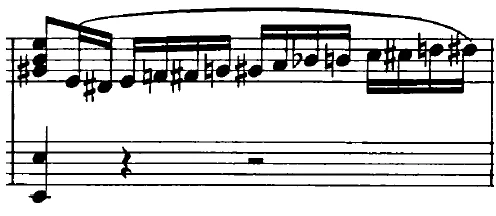
Some pianists play it with extreme restraint, approaching it as if they are merely presenting the notes without overt emotion. Others take it as slowly as possible, giving each note its full weight. There is no right answer. Both approaches can make the music utterly arresting.
Listening to a recording on a fortepiano—the instrument of Mozart’s time, which is smaller and has a more direct tone than the modern piano—can be a revelatory experience. The same score can sound like a completely different piece. Many listeners feel the vulnerability of the second movement is more apparent on the fortepiano.
The second movement is also a subject of debate among musicologists: does it reflect Mozart’s personal feelings, or is it a product of purely musical exploration? In 1786, Mozart was beginning to face financial difficulties and mounting conflicts in his life. However, there is no evidence to directly link these circumstances to the music. The fact that it feels so personal to so many listeners speaks directly to its unique power.
K. 488 is still used in modern film and television, typically with the second movement accompanying quiet, introspective scenes. That a piece born in a Vienna concert hall in 1786 can still resonate hundreds of years later means the feelings it contains are truly universal.
K. 488 in the 21st Century
There’s another reason K. 488 remains a staple of the repertoire today: it is not prohibitively difficult to learn. Compared to the concertos of Beethoven or Brahms, its technical demands are far lower. At the same time, playing it well requires profound musical depth. For some performers, this is the greater challenge. It’s not about finger dexterity; it’s about being able to make the music speak.
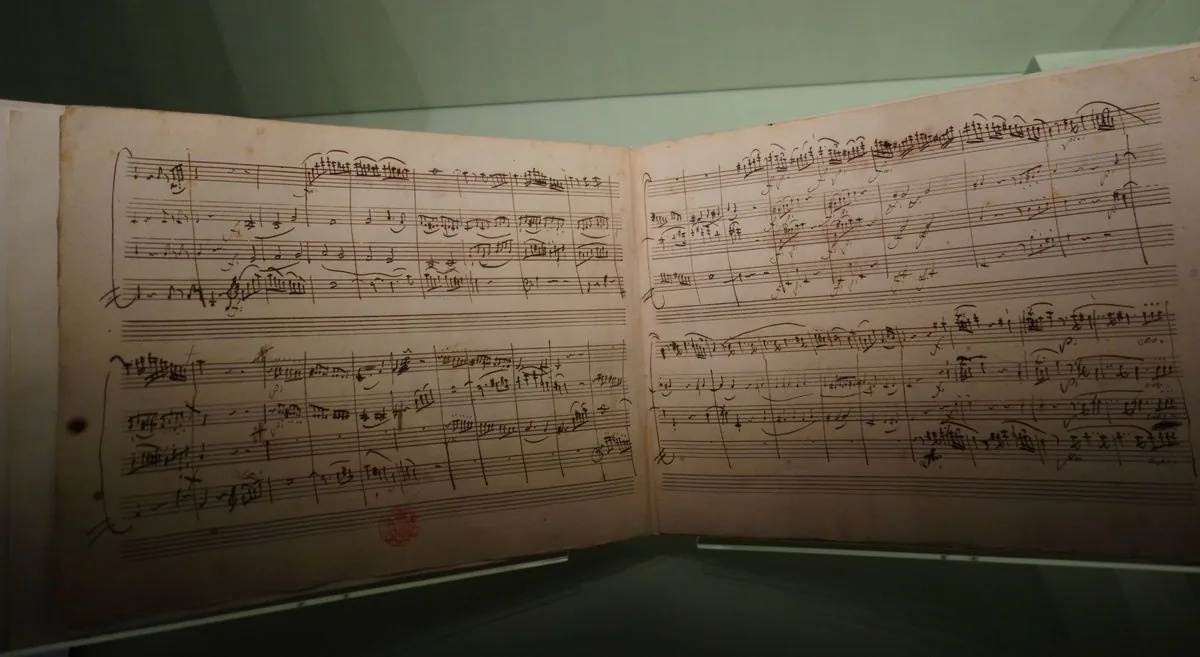
This concerto is often recommended to piano students. It is technically accessible, yet a proper performance demands considerable musical maturity. The second movement, especially, is where the difference between simply playing the notes and imbuing them with meaning becomes starkly clear.
Hearing this concerto at a student recital versus a performance by a world-renowned pianist can feel like listening to two different pieces. The score is the same, but the music is not. It’s a work that leaves so much to the performer, and that is one of the reasons it is still so alive today.
Recommended Recordings
Murray Perahia / English Chamber Orchestra (1990, Sony Classical)
Many consider this the benchmark recording. Perahia’s transparent and refined touch brings the dialogue of the first movement to life. The second movement has incredible depth within a restrained tempo. His style is to let the music speak for itself without flaunting technique. The ensemble with the English Chamber Orchestra is flawless. If you’re new to K. 488, this is the perfect place to start.
Alfred Brendel / Sir Neville Marriner / Academy of St Martin in the Fields (1971, Philips)
This is one of Brendel’s earlier recordings. He sounds younger and more direct than in his later interpretations. His approach to the second movement, with its somewhat faster tempo, is unique. It feels less sad than coolly melancholic. This album is a great example of how different interpretations can completely change the same piece of music.
Maurizio Pollini / Karl Böhm / Vienna Philharmonic Orchestra (1976, DG)
This recording by Pollini and Böhm with the Vienna Philharmonic is a classic of the Mozart concerto discography. Pollini’s brilliant articulation is matched by the seasoned accompaniment of Böhm and the orchestra. The dialogue between the piano and clarinet in the second movement is particularly memorable.
Listen with the Score
Following the score while listening can reveal the conversational structure between the piano and the orchestra more clearly. The original score is available to view and download for free from IMSLP.
→ View the score for Piano Concerto No. 23 (IMSLP)