- Composer
- Wolfgang Amadeus Mozart (1756–1791)
- Genre
- Dramma giocoso
- Full Title
- Il dissoluto punito, ossia il Don Giovanni
- Composed
- 1787
- Movements
- 2 movements (acts)
Overture (D minor → D major)
Act I (Atto primo)
Act II (Atto secondo) - Instrumentation
- Flute 2, Oboe 2, Clarinet 2, Bassoon 2, Horn 2, Trumpet 2, Trombone 3, Timpani, Strings (5 parts), Harpsichord (recitativo)
- Premiere
- October 29, 1787, Estates Theatre, Prague
- Libretto
- Lorenzo Da Ponte
- Duration
- approx. 170–180 min (incl. intermission)
Picture this: it’s the night of October 28, 1787. In a Prague tavern, Mozart is drinking with friends. The premiere of his new opera is the very next day. There’s just one problem: the overture—the very first piece of music the orchestra is supposed to play—doesn’t exist yet.
This wasn’t just a missed deadline. He was heading into opening night without the music that would set the entire tone for the opera. His wife, Constanze, kept him awake with punch and conversation while he scribbled furiously through the night. When the finished score was handed to the musicians at dawn, the ink was still wet.
The result? The Prague audience went wild. The premiere was a massive success. And if you listen to that overture today—a piece now regarded as one of Mozart’s greatest—you won’t find a single trace of that frantic, last-minute chaos. You only hear the tense, volcanic eruption of the D major Allegro.
That’s Mozart for you. And that is Don Giovanni.
The 500-Year-Old Playboy: The Origins of Don Juan
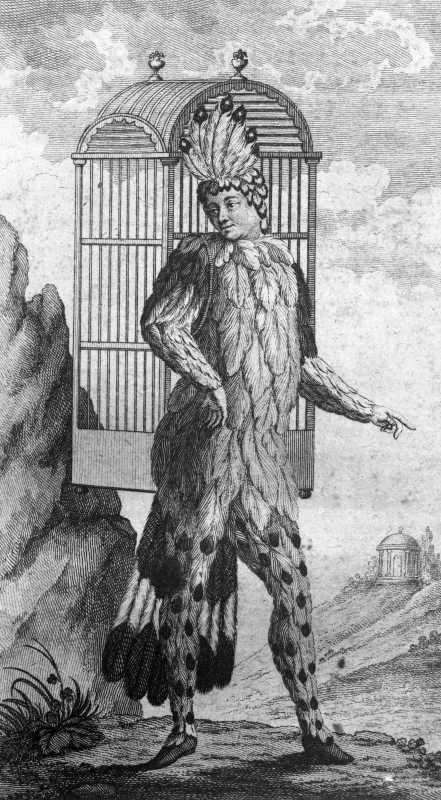
Don Giovanni isn’t a real person; he’s a fictional creation. But he’s a character who has lived in the European imagination for nearly 400 years. His first appearance was in 1630, in the play The Trickster of Seville and the Stone Guest by Spanish playwright Tirso de Molina. The story is simple: a nobleman uses his status to seduce and abandon women until he is dragged to hell by the statue of a man he murdered.
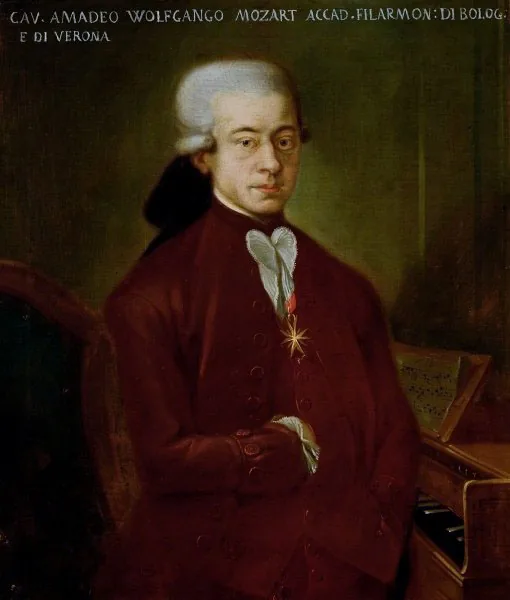 The young Mozart in Bologna, 1777 — he would compose Don Giovanni a decade later at age 31
So why did this story survive for so long? Because it’s more than a simple morality tale. Don Juan, or Don Giovanni, was never just a villain. He was charming, musically gifted, and witty. Writers knew that audiences were simultaneously repulsed and fascinated by him. This led to dozens of versions by playwrights like Molière and Goldoni, and there were even other operas based on the legend before Mozart’s.
Mozart and his librettist, Lorenzo Da Ponte, chose this subject in late 1786, right after their massive success with The Marriage of Figaro. Da Ponte envisioned their collaboration as a trilogy. The Marriage of Figaro, Don Giovanni, and Così fan tutte are all masterpieces that use the traditions of Italian comic opera (opera buffa) to dissect the deceptions and desires of European high society and the relationships between men and women.
Here’s an interesting fact: at the time, Da Ponte was juggling librettos for three different composers simultaneously. One was Mozart, another was Antonio Salieri, and the third was Vicente Martín y Soler. When a friend asked how he managed it, Da Ponte compared himself to Napoleon fighting on multiple fronts, adding that he reserved his best hours for the most brilliant composer: Mozart.
What’s even more extraordinary is who may have been involved in shaping the libretto. Giacomo Casanova — the most notorious libertine of the 18th century, and in many ways the real-life Don Juan — was living in Prague at the time of the premiere and was a close personal friend of Da Ponte’s. After Casanova’s death in 1798, fragments of the Don Giovanni Act II libretto in his own handwriting were discovered among his papers. Whether he contributed actual edits, offered suggestions, or merely copied passages as a devoted fan remains debated among scholars. But the idea that history’s most famous seducer may have quietly helped write the most famous opera about seduction is almost too perfect to resist.
Prague was a special city for Mozart. While The Marriage of Figaro had a lukewarm reception in Vienna, it was a sensation in Prague. Melodies from the opera were reportedly heard on every street corner. It was only natural, then, that Prague’s Estates Theatre commissioned Don Giovanni. Mozart returned to the city in October 1787 for the premiere.
But then, the unexpected happened. The dress rehearsal was complete, but the most crucial part—the overture—was missing. Did Mozart intentionally procrastinate, or did he genuinely forget? Whatever the reason, the outcome is history. The orchestra sight-read the score, still wet with ink from its all-night composition, and the audience was ecstatic. It’s even said that the musicians had to stifle their laughter, terrified of making a mistake.
Behind the opera’s successful premiere lies another, more personal story. Shortly before traveling to Prague, Mozart received news of his father Leopold’s death. Their relationship was complicated. As a child prodigy, he toured Europe under his father’s strict management. But after settling in Vienna and gaining independence, their bond frayed, and he never fully reconciled with his father before his death. This adds a different weight to the scenes in Don Giovanni where the Commendatore, a father figure, is killed and returns as a stone statue seeking revenge. While this is speculation, it’s a connection many musicologists have long noted.
An Invitation from the Man He Murdered: Act II Synopsis and the Stone Guest’s Revenge
The opera is in two acts. It opens with Don Giovanni’s servant, Leporello, waiting for his master and grumbling, “I want to be a gentleman myself.” It’s a comedic start, but the mood shifts instantly. Don Giovanni is caught sneaking out of Donna Anna’s room and is in the middle of an escape. As he flees, he duels with Donna Anna’s father, the Commendatore, and kills him. A murder takes place less than ten minutes into the opera.
As Leporello and Don Giovanni make their getaway, another woman appears: Donna Elvira, one of his former lovers. As his master hastily escapes her too, Leporello offers a strange sort of comfort. He pulls out the famous “Catalogue Aria” (‘Madamina, il catalogo è questo’).
> “My lady, this is the list. The list of the beauties my master has loved. In Italy, 640; in Germany, 231; 100 in France; 91 in Turkey; but in Spain, already 1,003.”
The grand total is a staggering 2,065. While surely an exaggeration, this aria perfectly summarizes the first act. Don Giovanni is no romantic lover obsessed with one person. For him, the conquest itself is the goal. While Donna Anna swears revenge, Donna Elvira clings to him, and even the soon-to-be-married Zerlina is swayed by his charm, Don Giovanni is already looking for his next target.
A detail that gets lost in the mythology: Luigi Bassi, the 22-year-old baritone who played Don Giovanni at the Prague premiere, loudly complained to Mozart that he hadn’t been given enough music. He pestered the composer until revisions were made to expand his role. Mozart — who had a well-documented sense of humor — apparently found this audacious for a singer barely out of his teens, but accommodated the request. Even Don Giovanni himself, it turns out, wanted more.
The climax of Act I is a masked ball at Don Giovanni’s mansion. Here, three different dance tunes are played simultaneously—a revolutionary experiment in opera history. A minuet (3/4 time), a contredanse (2/4 time), and a Tyrolean dance (3/8 time) all overlap. Why did Mozart do this? He was painting a musical portrait of 18th-century society, where people of different classes (nobility, bourgeoisie, and peasants) danced to their own music, even when sharing the same space.
In Act II, the pace quickens. Don Giovanni’s escapades continue, but the net is closing in. Donna Anna, Donna Elvira, and Zerlina’s fiancé, Masetto, have formed an alliance to catch him. Then comes the decisive moment. In a cemetery, the statue of the Commendatore suddenly speaks: “You once invited me to dinner. Now I invite you.”
But Don Giovanni is fearless. He mockingly invites the statue to his own dinner party. To his shock, the statue accepts and actually appears at his feast. It demands he repent, but Don Giovanni refuses. He will not yield to any threat. The moment the statue grasps his hand, the flames of hell erupt, and Don Giovanni is dragged into the abyss.
A traditional opera would have ended there. But Mozart added a final scene where the six surviving characters return to the stage to sing about their futures. Donna Anna promises to marry in a year, and Leporello sings of finding a new master. It’s like a news anchor wrapping up a story, delivering the message that “life goes on.” The interpretation of this final sextet is a major point of debate; some directors choose to omit it. Which ending is closer to Mozart’s original intention? The argument continues to this day.
First Time Listening? Here’s What You Need to Know
Opera can feel intimidating. A three-hour performance in Italian, requiring you to read subtitles while listening? But Don Giovanni is a bit different. The story is so powerful that you’ll be captivated even if you don’t follow every note of the music.
> 💡 First time? Listen to the first 16 bars of the overture. It’s a menacing fanfare in D minor. This exact melody returns in the final scene with the stone statue. Mozart was hinting at the ending from the very beginning.
Five Moments to Listen For:
1. The Overture’s D Minor Opening. The overture begins with a threatening D minor chord before abruptly shifting to a bright D major Allegro. This dramatic switch encapsulates the entire opera’s character: a world where darkness and light, death and pleasure, are intertwined. It’s a remarkably cohesive piece, especially considering it was written overnight.
2. Leporello’s “Catalogue Aria” (Act I). This bass aria, ‘Madamina, il catalogo è questo,’ is somehow both hilarious and chilling. As the bass recites the number 1,003, you can almost hear a sense of pride in his voice. Even first-time listeners will immediately grasp what’s going on.
3. ‘Là ci darem la mano’ (‘There we will give each other our hands’). This duet, where Don Giovanni seduces Zerlina, is so memorable that Beethoven was inspired to write a set of variations on it. The musical structure perfectly mirrors the text, as the seducer’s voice and the wavering voice gradually merge into one.
4. The Graveyard Scene (Act II). As Don Giovanni and Leporello walk through a cemetery, they speak to the Commendatore’s statue — and it answers. The trombone writing here is calculated brilliance: Mozart deliberately kept trombones out of the overture, even when the ominous D minor theme plays. When that identical theme returns in this scene, he finally adds them — and the sound drops into something darker, denser, unmistakably supernatural. He also packed those chords with tritones, the interval medieval theorists called diabolus in musica — “the devil in music.” The statue’s reply to the dinner invitation, a simple “Sì” (Yes), is one of the most unsettling single syllables in opera history.
5. The Finale’s Dinner Scene. As promised, the statue arrives and offers a handshake, demanding that Don Giovanni repent. He refuses. The orchestra then paints a picture of hellish chaos as Don Giovanni is consumed by flames. This scene alone makes Don Giovanni worth experiencing. It is music as cinematic as it gets.
Comedy or Tragedy? The Experiment of Dramma Giocoso
The original poster for the premiere described the work with an unfamiliar term: Dramma giocoso. Literally “jocular drama,” this was Mozart’s bold attempt to blur the lines between opera buffa (comedy) and opera seria (serious drama). It was the birth of a new genre that was neither comedy nor tragedy, but a fusion of both.
Don Giovanni truly contains both worlds. When the servant Leporello or the naive Masetto are on stage, the audience roars with laughter. But when the Commendatore is killed or his statue returns for revenge, the atmosphere is one of pure horror. This whiplash, making you laugh one moment and freeze the next, is the real magic of the opera.
The musical devices also reflect this duality. The gloomy D minor opening of the overture foreshadows the opera’s tragic conclusion. When that same melody reappears with terrifying effect in the final statue scene, we realize Mozart had planned it all from the start. This brilliant structure, beginning with laughter and ending in terror, is why the work remains so powerful even after 250 years.
Goethe famously praised the opera, saying, “it would be impossible to write a more perfect libretto.” For the intellectuals of the Romantic era, Don Giovanni was more than just an opera. E.T.A. Hoffmann called it “the opera of all operas,” and Søren Kierkegaard philosophically analyzed the sensual desire embedded in the music. Has any other piece of music been the subject of such profound philosophical discourse?
The list of admirers runs long and wonderfully strange. Gustave Flaubert ranked Don Giovanni alongside Hamlet and the ocean as one of “the three finest things God ever made.” George Bernard Shaw, in his youth, taught himself to play piano by starting with the Don Giovanni overture — his reasoning being that he already knew the music well enough to catch his own wrong notes. And Ruth Bader Ginsburg, as well-known for her passion for opera as for her landmark Supreme Court opinions, named Don Giovanni her second-favorite opera (just behind The Marriage of Figaro). When a French novelist, an Irish playwright, and an American justice all point at the same work independently, the case for its greatness becomes hard to argue with.
Its influence on later composers was immense. Beethoven wrote a set of piano variations on the theme of ‘Là ci darem la mano,’ and Chopin improvised on Leporello’s aria at his last public concert. These are just small examples of how Don Giovanni became a massive source of inspiration for the next generation of musicians.
Despite all this, Vienna’s initial reaction to this masterpiece was surprisingly cold. Emperor Joseph II famously remarked that it was “a bit too rich for the teeth of my Viennese,” to which Mozart is said to have replied, “Give them time to chew on it.” Who did time favor in the end? Today, Don Giovanni is one of the most frequently performed operas in history—an immortal classic.
Don Giovanni Today: Modern Stagings and Reinterpretations
In the 20th and 21st centuries, Don Giovanni’s vitality has not diminished at all. In fact, it remains one of the most challenging works for stage directors. A new interpretation can result in a completely different opera.
For example, director Claus Guth portrayed Don Giovanni as a man on the verge of a psychological breakdown. Some productions have even blurred the lines between Leporello and Don Giovanni, suggesting they are two sides of the same coin. The fact that there is no single “correct” way to stage it is, paradoxically, a sign of how rich the work really is.
The opera has also been adapted for the screen several times. The most famous is Joseph Losey’s 1979 film version. With Ruggero Raimondi as Don Giovanni and Lorin Maazel conducting, the film was shot on location in villas in Venice and Padua, setting a new standard for opera on film.
Today, major opera houses around the world—the Metropolitan Opera, Vienna State Opera, Covent Garden, Bavarian State Opera—continue to stage Don Giovanni season after season, each offering a new perspective. Why does this 500-year-old story of a debauched nobleman still resonate so powerfully? Perhaps it’s because the themes of desire and punishment, charisma and damnation, touch upon something fundamental about human nature itself.
One more thing worth knowing before you dive into recordings: what you hear in most modern productions is actually a hybrid. Mozart revised Don Giovanni substantially for its Vienna premiere in 1788 — adding new arias for a different cast while cutting others. Today’s performances typically combine music from both the Prague and Vienna versions, meaning the “complete” Don Giovanni you’ll find on disc is often more music than any 18th-century audience actually experienced in a single sitting. Each conductor makes different choices about what to include, which is another reason two recordings of the same opera can sound almost like different works.
Recommended Recordings
Don Giovanni has a long and storied recording history. The same opera can sound like a completely different work depending on the conductor and cast.
* Carlo Maria Giulini / Philharmonia Orchestra (1959, EMI)
Giulini’s 1959 recording is still considered a benchmark more than half a century later. The contrast between Eberhard Wächter in the title role and Giuseppe Taddei as Leporello is incredibly sharp. The incisive texture of the Philharmonia Orchestra brilliantly brings out the darker aspects of the opera.
* Georg Solti / London Philharmonic Orchestra (1990, Decca)
This is the famous recording that featured Bryn Terfel as Leporello. Solti’s grand scale and Terfel’s overwhelming presence are the highlights. And could Thomas Allen’s performance as Don Giovanni be any more perfect?
* René Jacobs / Freiburger Barockorchester (2007, Harmonia Mundi)
This album is a leading example from the historically informed performance (HIP) camp. The unique texture of period instruments provides a transparency completely different from modern orchestras. The sound of the trombones in the statue scene is intense enough to send shivers down your spine.
Listen with the Score
Following along with the score can deepen your understanding of the music. What was Mozart thinking when he composed these scenes?
Fortunately, the original score is available for free on IMSLP. Anyone can view it via the link below.
→ View the score for Don Giovanni, K. 527 on IMSLP