- Composer
- Grieg
- Work
- Peer Gynt Suite No. 1, Op. 46
- Key
- A minor and others (varies by movement)
- Composed
- 1875 (incidental music); 1888 (suite arrangement)
- Movements
- 4 movements
I. Morning Mood (E major)
II. Åse’s Death (B minor)
III. Anitra’s Dance (A minor)
IV. In the Hall of the Mountain King (B minor) - Instrumentation
- Piccolo, 2 flutes, 2 oboes, 2 clarinets, 2 bassoons, 4 horns, 2 trumpets, timpani, cymbals, bass drum, triangle, harp, strings
- Premiere
- 24 February 1876, Christiania (Oslo), at the premiere of Henrik Ibsen’s Peer Gynt
Grieg hated the letter before he even finished reading it.
In the summer of 1874, a letter arrived from the Norwegian playwright Henrik Ibsen. It was a simple request: compose incidental music for his play, Peer Gynt. That night, Grieg wrote to a friend, “I don’t know if it’s even possible. This play is just too difficult to handle.” For months after, he wrote nothing.
Who could have guessed that the music dragged out of that difficult process would become one of the most beloved orchestral works in the world? But the irony doesn’t stop there. Grieg himself never really liked these pieces.
The Story of Reluctant Music That Followed Him for a Lifetime
Ibsen’s play Peer Gynt, published in 1867, is an epic. The protagonist, Peer Gynt, is a wanderer from the Norwegian mountains who roams the world on a series of wild adventures. He enters the kingdom of the trolls only to be chased out, travels through Egypt and the desert, and finally returns home as an old man. It’s a massive, five-act production that takes over four hours to perform.
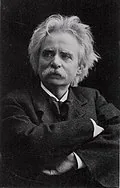
Ibsen’s choice of Grieg was obvious. By then, Grieg was famous as a composer deeply rooted in Norwegian folk songs and traditional music. Since Ibsen’s play was also based on Norwegian folklore, it was hard to imagine a better match.
The problem was, Grieg wanted to focus on his Piano Concerto and chamber music. He was trying to move beyond his folkloric style and toward a more pan-European sound. Ibsen’s commission felt like a step backward.
But Ibsen didn’t give up. He sent a second letter, then a third. He even offered a hefty fee. Grieg finally accepted and began work in the summer of 1875.
The Swedish theater company in charge of the production gave Grieg specific instructions, down to the length and order of each piece. Grieg later recalled, “I had to do patchwork. I had no opportunity to write as I wanted. That’s why the pieces are so short.” Indeed, most of the 26 pieces in the original incidental music (Op. 23) are only a few minutes long.
The original score included vocal soloists and a choir, mixing orchestral performance, songs, and short musical bridges between actors’ lines. It was a complex setup for the stage. Grieg felt he couldn’t fully develop his musical ideas within these constraints.
So, in 1888, he selected the four most striking pieces and arranged them into two orchestral suites: Peer Gynt Suite No. 1, Op. 46, and No. 2, Op. 55. These are separate, independent works from the original incidental music, Op. 23.
Crucially, he reordered the pieces. ‘Morning Mood,’ the first movement of Suite No. 1, originally appeared in the fourth act of the play. Grieg prioritized musical flow over the play’s narrative. This was the creative freedom he had wanted all along.
The Success of February 24, 1876, and Grieg’s Mixed Feelings
The premiere was a massive success. The audience at the Royal Theater in Christiania (now Oslo) on February 24, 1876, was ecstatic. Critics praised Grieg’s music for perfectly capturing the dramatic scenes of Ibsen’s play.
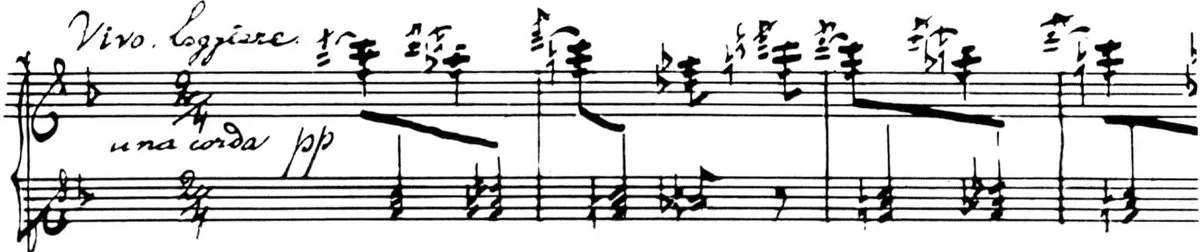
But Grieg himself was uneasy. The theater company hadn’t provided enough rehearsal time. For some pieces, the orchestra was sight-reading the music on the day of the performance. Many of the sonic effects Grieg had intended were not properly realized.
He also had a more fundamental complaint. He hated that his music was merely an accessory to the play. He felt it needed a form that would allow it to be appreciated as standalone music, separate from the stage production of Peer Gynt. The decision to arrange the suites came from this frustration.
The Stage and Music of Each Movement
‘Morning Mood’: A Norwegian Morning, Not an African One
When you think of “morning,” you might imagine something bright and energetic. This piece is different. The moment the flute and oboe introduce the quiet melody in E major, you know this isn’t a brilliant, sun-drenched morning. It’s the moment just before dawn, with mist still lingering as the sun peeks over the mountains.
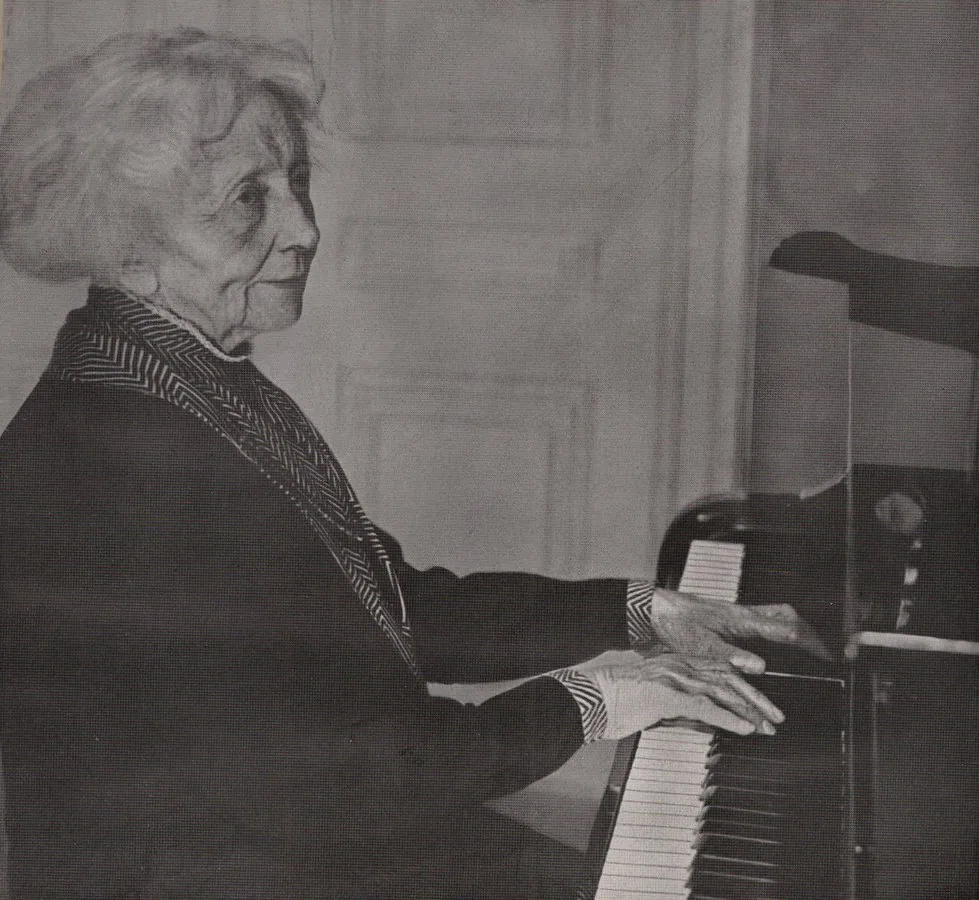
In the play, this music is used at the beginning of the fourth act. The scene is not Norway, but the coast of Morocco, where a middle-aged Peer Gynt is returning home by ship. Yet, almost no one listens to this music and pictures the African coast. It sounds, unmistakably, like the cool, tranquil dawn of the North.
That was precisely Grieg’s intention. He wanted to depict Peer Gynt’s inner state—the anticipation and anxiety of a man returning home—rather than the geographical setting.
As the strings enter, the melody grows richer but never explodes. Even the crescendos are incredibly restrained. This is the real magic of the piece: it maintains a taut sense of tension for about four minutes without ever becoming overwrought. This is why people new to classical music often respond to it immediately. It’s music that needs no explanation.
‘Åse’s Death’: A Tragedy That Ends in Three Minutes
‘Åse’s Death’ is one of the simplest pieces Grieg ever wrote. It uses only string instruments, with no technical flair. A repeating theme, a slow tempo, and a gradual decrescendo. That’s it.
Åse is Peer Gynt’s mother. In the third act, she lies dying, waiting for her son. Peer arrives just in time to be with her at the end. Grieg used no special tricks for this scene. He didn’t need to.
The piece begins with the strings presenting a theme in B minor, marked Andante doloroso—walk sorrowfully. The word “walk” is important here. You can almost feel the weight of Peer Gynt’s footsteps as he approaches his mother’s deathbed.
The most remarkable part is the ending. The music slowly fades away until the strings pluck a few final notes pizzicato—a sudden, sharp cutoff. It creates the effect of a final breath being drawn. It’s rare for a classical piece to end so abruptly and quietly. The silence itself is the tragedy.
Many consider this the most honest piece of music Grieg ever wrote. It demonstrates an incredible ability to convey emotion through pure musical force, without any flashy or complex techniques. First-time listeners often find themselves surprised by the profound, lingering feeling it leaves behind.
‘Anitra’s Dance’: The Woman Who Enchanted Peer Gynt
‘Anitra’s Dance’ is the only dance movement in the first suite. In the play, Anitra is the daughter of an Arab chieftain whom Peer Gynt meets in the desert and is briefly infatuated with. Grieg set this scene to the rhythm of a mazurka, a Polish folk dance.
This is an unexpected choice. Why not music with an Egyptian or Arabic flavor? Grieg deliberately avoided exoticism. He wanted to portray Anitra not as a real Arab woman, but as Peer Gynt’s idealized vision of one. The music is playful and charming, but also somewhat light and superficial. It implies that his infatuation is not genuine.
The music is scored for strings and the occasional triangle. The pizzicato technique, combined with a fast tempo, evokes the image of light footsteps. You can easily picture Anitra dancing before Peer Gynt.
This piece has none of the weight of the other three movements. The contrast, coming immediately after the somber ‘Åse’s Death,’ is brilliant. The lightness that follows sorrow feels like the rhythm of life itself. Grieg’s ordering of the four movements was clearly a carefully calculated musical decision.
‘In the Hall of a Mountain King’: Classical History’s Most Persistent Crescendo
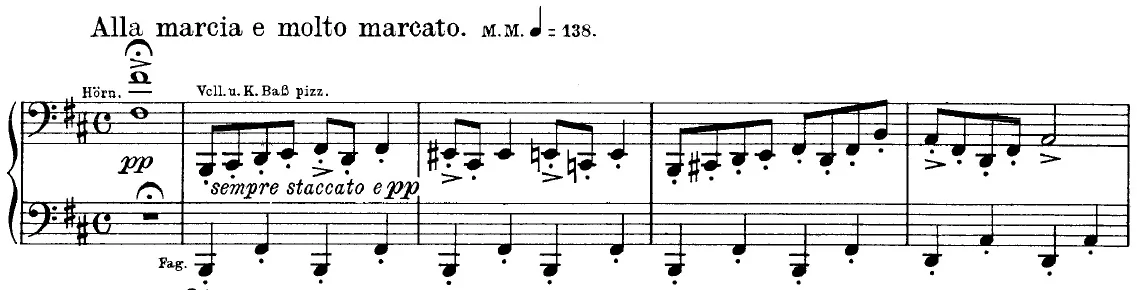
‘In the Hall of the Mountain King’ is by far the most famous piece in the suite and holds a unique place in all of classical music.
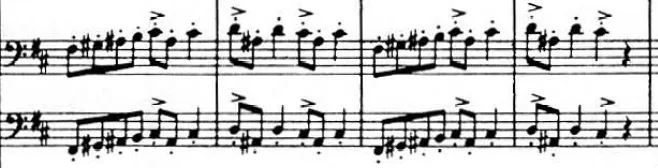
Its structure is brutally simple: a single, low, mysterious theme is repeated over and over, getting progressively faster and louder. It starts very softly with the cellos and double basses. Instruments are added one by one, the tempo accelerates, the volume swells, and it culminates in the entire orchestra exploding at a frenzied pace.
This technique of stubbornly repeating a pattern is called an ostinato. But the ostinato here is more than simple repetition. The transformation from the initial theme to the final explosion is so dramatic that you might not even realize it’s the same theme. The tempo increases by at least three times, and the dynamics rocket from pianissimo (very soft) to fortississimo (very, very loud).
In the play, this scene depicts the chaos that ensues when Peer Gynt stumbles into the mountain kingdom of the trolls. The trolls surround him, dancing with increasing frenzy. The music perfectly captures this feeling: it starts eery, becomes bizarre, and ends in a state of complete madness.
This melody is probably the most quoted piece of classical music after the opening of Beethoven’s Fifth. It has been used in countless horror movies, thrillers, commercials, and cartoons. There’s a reason it feels so familiar even if you’ve never knowingly heard it before.
Four Pointers for a First Listen
Here are a few entry points for anyone listening to these four pieces for the first time.
1. Don’t rush ‘Morning Mood’. The piece builds slowly. For the first minute, it might feel like nothing is happening. You have to endure the quiet to hear what comes next. By the three-minute mark, you’ll feel how much the music has changed.
2. Wait for the final pizzicato in ‘Åse’s Death’. The way the piece ends is unusual. The music doesn’t fade out; it’s cut off. That moment is the core of the piece.
3. Listen for the triangle in ‘Anitra’s Dance’. It’s a small sound, but it’s there. It’s one of the key elements that creates the piece’s light atmosphere.
4. Remember the opening eight-bar cello melody in ‘In the Hall of the Mountain King’. It’s fun to try and find that same melody in the explosive climax. It really is the same tune—first crawling, then sprinting.
Why the Pieces Grieg Disliked Became His Signature Works
Grieg had complicated feelings about this suite his entire life. He was grateful that it introduced his music to the world, but he also felt it overshadowed works he considered more important.
In his later years, Grieg said he was prouder of his Piano Concerto and violin sonatas. But the public continued to clamor for ‘Morning Mood’ and ‘In the Hall of the Mountain King’.
The situation is the same today. When Grieg’s name appears on a concert program, nine times out of ten it’s for the Peer Gynt suite. Performances of his Piano Concerto or String Quartet are relatively rare. It’s a classic case of a composer’s intentions diverging from public preference.
But when you think about it, it’s not so strange. ‘Morning Mood’ offers a sense of familiarity, as if you’ve already heard it. ‘In the Hall of the Mountain King’ gets stuck in your head after just one listen. In contrast, even a brilliant piano concerto requires 40 minutes of focused listening to fully appreciate. Perhaps the public’s choice was inevitable from the start.
Grieg died on September 4, 1907, at the age of 64. The Peer Gynt suite continued to be performed after his death and remains a staple in the repertoire of orchestras worldwide. The music endures because, despite Grieg’s reluctance, it contains a genuine and powerful core.
Why ‘In the Hall of the Mountain King’ Became the World’s Most Used Classical Piece
‘In the Hall of the Mountain King’ is one of the most frequently used classical pieces in visual media. Its structure explains why.
The build-up from a low, quiet beginning to a fast, furious end is ideal for creating tension. It works perfectly for heightening anticipation before a product reveal in a commercial, for a scene of impending danger in a movie, or for a comedic situation spiraling out of control. It’s an incredibly versatile structure.
The same applies to ‘Morning Mood’. Its gentle, brightening progression is perfect for expressing the start of something new or a sense of hopeful expectation. That’s why it’s beloved as background music for morning news shows and opening scenes in cooking programs.
The fact that Grieg wrote these pieces reluctantly paradoxically explains their strength. Because they were composed for a specific dramatic function, they are exceptionally good at creating a particular scene and atmosphere. It’s the same reason a great film score is compelling even when listened to as a standalone soundtrack.
How many instances are there of “reluctantly written, but turned out to be a masterpiece”? Grieg’s Peer Gynt suite proudly sits on that short list. Its unintended perfection makes the music feel all the more honest and natural.
Recommended Recordings
* Herbert von Karajan / Berlin Philharmonic Orchestra (1982, DG)
Karajan’s Peer Gynt is all about “perfect control.” In ‘Morning Mood,’ the string texture is as transparent as glass, and the climax of ‘In the Hall of the Mountain King’ is a precisely engineered explosion. It’s a great reference point for first-time listeners, though some find it too polished, lacking the raw, lively feel of folk music.
* Neeme Järvi / Gothenburg Symphony Orchestra (1986, DG)
Neeme Järvi’s interpretation is closer to Grieg’s Norwegian folk roots. The rhythm in ‘Anitra’s Dance’ is more flexible, and the string color in ‘Morning Mood’ is warmer. This is a conductor with a deep affinity for Nordic music.
* Mariss Jansons / Oslo Philharmonic Orchestra (1987, EMI/Warner Classics)
The Oslo Philharmonic playing Grieg gives the impression of being the “real deal.” It feels as if the orchestra members have the music’s cultural DNA in their very beings. The frenzy at the end of ‘In the Hall of the Mountain King’ erupts with a natural, unforced power that is hard to match.
Listen with the Score
The full score for Peer Gynt Suite No. 1 is available for free viewing and download on IMSLP.
View the score for Peer Gynt Suite No. 1 on IMSLP
Frequently Asked Questions
What is Grieg’s Peer Gynt Suite No. 1, Op. 46?
How many movements are in Peer Gynt Suite No. 1, and what do they depict?
Is it true that Grieg initially disliked writing the music for Peer Gynt?
Why did ‘Morning Mood’ become so famous?
What is the difference between the Peer Gynt incidental music (Op. 23) and the suites (Op. 46 & Op. 55)?
Related Articles
- Grieg’s Piano Concerto in A minor, Op. 16 – The concerto that made Grieg famous overnight, and the work Liszt sight-read in Rome
- Sibelius’s Symphony No. 2 in D major, Op. 43 – Another Nordic voice, Sibelius channeled Finland’s landscape into symphonic form
- Tchaikovsky’s 1812 Overture, Op. 49 – Like Peer Gynt, a piece the composer undervalued that became one of the most recognized works in classical music
- Ravel’s Ma mere l’Oye Suite – A suite drawn from storytelling, where orchestral color paints narrative scenes