- Composer
- Sibelius
- Work
- Symphony No. 2 in D major, Op. 43
- Key
- D major
- Composed
- 1901–1902
- Movements
- 4
I. Allegretto
II. Tempo andante, ma rubato
III. Vivacissimo
IV. Finale: Allegro moderato - Instrumentation
- Flutes, oboes, clarinets, bassoons, horns, trumpets, trombones, tuba, timpani, strings
- Premiere
- March 8, 1902
Helsinki, Finland
Cond. Jean Sibelius
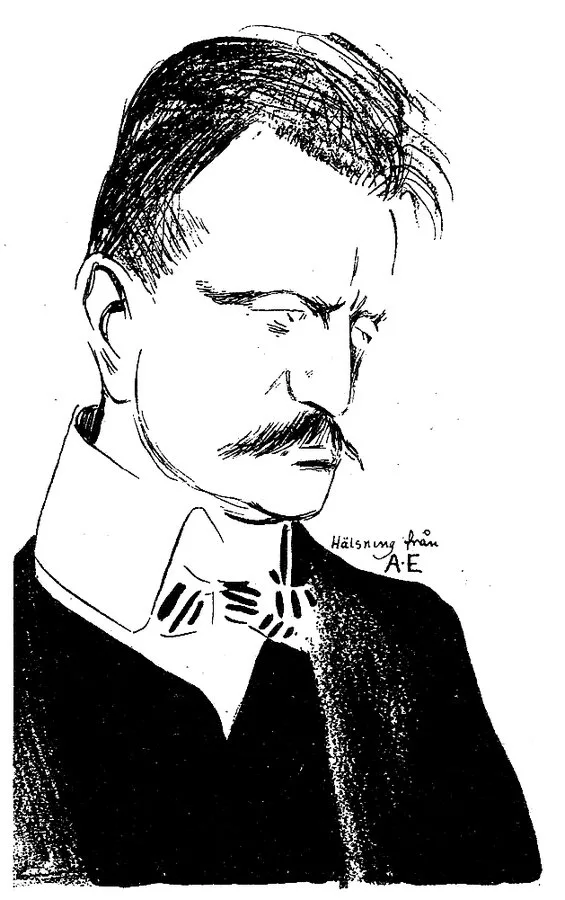
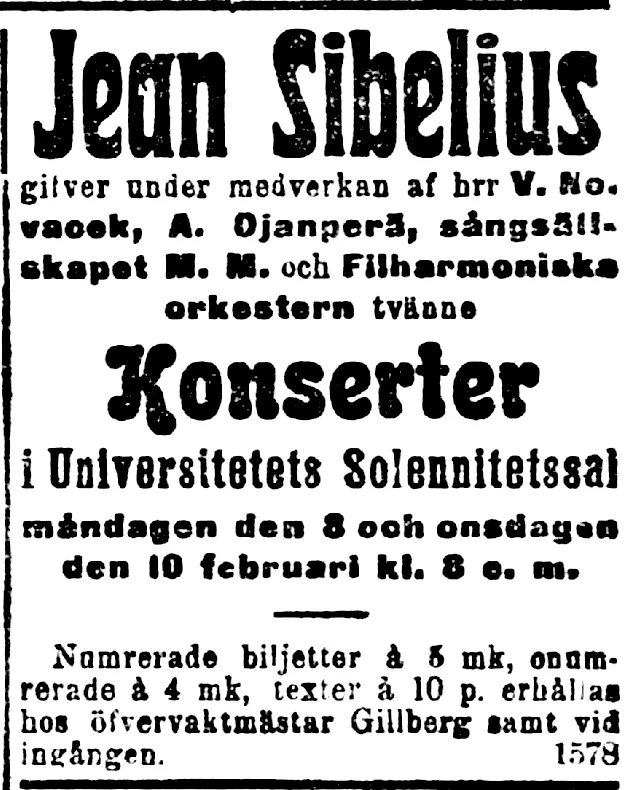
On March 8, 1902, the concert hall in Helsinki was packed to the rafters. Jean Sibelius was on the podium to conduct the premiere of his new symphony, and the atmosphere was electric. The performance was met with such overwhelming emotion that it had to be repeated three times to sold-out crowds. Audiences wept, cheered, and immediately gave the work a fiery nickname: the “Symphony of Independence.”
The composer himself, however, remained guarded. When asked if it was a nationalistic piece, Sibelius deflected. “It is a confession of the soul,” he stated, offering no further political commentary.
This deliberate ambiguity may have been the key to the symphony’s longevity. Had it been an overt political pamphlet, it might have faded into a historical artifact after Finland gained its independence in 1917. Instead, Sibelius embedded a universal narrative of struggle and liberation into the music itself. By avoiding specific slogans, he created a work that speaks to anyone who has ever moved from darkness toward light, ensuring its place as a cornerstone of the orchestral repertoire more than a century later.
The Unlikely Catalyst
The journey of this monumental symphony began not with a political rally, but with a letter from a concerned friend. In the autumn of 1900, the 35-year-old Sibelius was a national hero thanks to Finlandia, but fame had not translated into financial stability. He was struggling to support his family, and the pressure was stifling his ability to compose.
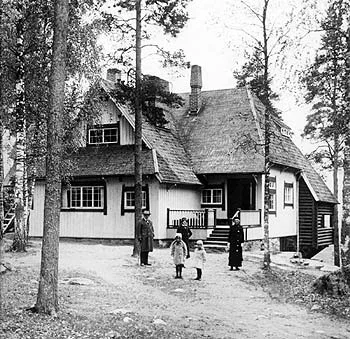
The letter came from Baron Axel Carpelan. Though he held a noble title, Carpelan was essentially penniless himself. But he was a passionate and resourceful arts advocate. He saw Sibelius stuck in a creative rut and took matters into his own hands.
“You must go to Italy,” Carpelan insisted. “Think of what Italy gave Tchaikovsky and Strauss. In the brilliant sunshine there, you will learn harmony and symmetry of line.” Carpelan didn’t just offer advice; he hustled, persuading friends and contacts to pool their money to fund the trip. With this small purse, cobbled together by his friend, Sibelius departed for a small villa on the Ligurian coast in the winter of 1901.
There, an extraordinary irony unfolded. Basking in the warmth of the Mediterranean, Sibelius began sketching the first notes of what would become one of the most rugged, windswept symphonies of the northern European tradition. It’s a classic case of distance providing clarity; away from his homeland, its essence became sharper and more potent in his mind.
A Symphony for a Nation in Crisis
To understand the audience’s tearful reaction at the 1902 premiere, one must understand the Finland of that moment. In 1899, Tsar Nicholas II of Russia had issued the “February Manifesto,” a decree that severely curtailed Finland’s autonomy and began a period of intense “Russification.” Finnish language, culture, and governance were under direct threat. The national mood was one of simmering rage and quiet despair.
In this climate of oppression, even performing patriotic music was a risk. Sibelius’s own Finlandia was often performed under innocuous fake titles like “Impromptu” to evade the Russian censors. This was a time when a nation felt its very identity being erased.
Into this darkness, the Second Symphony arrived. It contained no lyrics, no explicit program. Yet the Finnish people understood its message instantly. They heard the brooding anxiety of the first two movements as their own, and when the glorious D-major theme of the finale finally broke through, they heard the sound of a freedom they had not yet achieved. One critic wrote that Sibelius was like “a shaman beating a magic drum,” capturing the ecstatic, almost spiritual fervor of the moment.
Despite the wild success, Sibelius was not satisfied. A notorious perfectionist, he spent another year revising and tightening the score. That same exacting standard would define all his later work—including the audacious Symphony No. 5, which he rewrote three times over a decade. The version we hear today is the result of that relentless self-criticism, reflecting his consistent priority of structural cohesion over crowd-pleasing effect.
From Seed to Blossom: A Four-Movement Journey
The key to unlocking Sibelius’s Second is to hear it not as four separate pieces, but as a single, continuous process of organic growth. The symphony is a masterclass in thematic development, where small, fragmented ideas introduced at the beginning are gradually cultivated, transformed, and fused until they flower into the magnificent theme of the finale.
Where Beethoven grabs the listener by the collar and presents a clear dramatic conflict, Sibelius works more subtly. He lets the musical material evolve, almost of its own accord. You don’t need to know music theory to feel it; by the time the finale arrives, the sense of arrival is visceral and deeply satisfying. “Ah,” your body understands, “this is what we were searching for all along.”
I. Allegretto – A Journey into the Mist
The symphony opens not with a bold statement, but with a sense of quiet uncertainty. The strings present a gentle, rising three-note figure, a simple seed from which much of the symphony will grow. The mood is pastoral but unsettled, like wandering through a forest at dawn when the path ahead is still shrouded in mist. Sibelius withholds easy answers, allowing themes to appear as fragments, conversing with the woodwinds before fading away. There are moments of storm and stress, where brass and timpani threaten to erupt, but they recede without full resolution, leaving a sense of anticipation. The journey has begun, but the destination remains unknown.
II. Tempo andante, ma rubato – A Dark Night of the Soul
The atmosphere shifts dramatically, plunging from gray daylight into profound darkness. The movement begins with a grim, trudging pizzicato in the cellos and double basses, setting a funereal scene. Over this, the bassoons enter with a desolate, mournful melody. If the first movement was a question, this is a confrontation with despair. The emotional core is a long, solitary bassoon solo, a voice of pure, unadorned grief. From this quiet sorrow, the orchestra builds to terrifying climaxes of rage and anguish, only to collapse back into exhaustion. It is the symphony’s most emotionally raw and structurally complex movement.
III. Vivacissimo – The Bridge of Tension
Suddenly, the darkness is shattered by a frantic, breathless scherzo. The strings scurry with nervous energy, creating a whirlwind of sound. This is the shortest movement, and it functions as a high-stakes transition. It’s a race, a frantic buildup of energy that drives relentlessly forward.
The true magic happens at the very end. The storm of the scherzo subsides, giving way to a noble, hymn-like passage in the oboe. Without a pause—a technique called attacca—this theme swells and leads the listener directly into the finale. In the concert hall, this is a moment of pure electricity, a seamless transition from shadow to light that leaves the audience holding its breath.
IV. Finale: Allegro moderato – The Arrival
This is the moment everything has been building towards. Emerging directly from the tension of the third movement, the strings unleash a broad, majestic theme in brilliant D major. The seed planted in the first movement has finally bloomed. The feeling is not of a battle won, but of a long, arduous journey finally reaching its destination—a profound sense of liberation and arrival.
Sibelius takes his time, allowing the theme to build in waves, each one more powerful than the last. He doesn’t just give a glimpse of triumph; he lets the listener bask in it. In the final coda, as the brass proclaim the main theme over a pulsating timpani heartbeat, the symphony’s unofficial title makes perfect, emotional sense. It is the sound of victory.
Recommended Performances
As a pillar of the repertoire, the symphony has been recorded by nearly every major orchestra and conductor. Here are three exceptional interpretations that offer different perspectives on the work.
* Paavo Berglund / Helsinki Philharmonic Orchestra (1986, Finlandia): This is a benchmark recording from a Finnish conductor and orchestra who have this music in their blood. Berglund’s interpretation is rugged and direct, with a propulsive energy in the finale that feels utterly authentic. It’s a performance that captures the granite-like strength at the heart of the music.
* Sir Colin Davis / London Symphony Orchestra (1994, RCA): A master Sibelian, Sir Colin Davis brings a deep architectural understanding to the symphony. His tempi are broad and weighty, allowing the music’s emotional depth, particularly in the dark second movement, to register with immense power. This is a profound, majestic reading.
* Susanna Mälkki / Frankfurt Radio Symphony (2023, Live): Representing a new generation of Finnish conductors, Mälkki offers a fresh, vibrant take. Her interpretation is notable for its clarity, sharp rhythmic drive, and transparent textures, stripping away any hint of romantic indulgence to reveal the music’s modernistic core.
Listen with the Score
You don’t need to be a musician to appreciate the architecture of this symphony. Following a score-synchronized video can be a thrilling way to see how Sibelius weaves his fragmented motifs into a coherent and powerful whole. Watch how the small, unassuming string phrase from the opening minutes gradually gathers strength and transforms into the triumphant finale.