Imagine your 50th birthday being declared a national holiday. For Jean Sibelius in 1915, this was reality. The Finnish government, honoring its most treasured artist, paused the nation to celebrate the man whose music had become synonymous with its identity. The centerpiece of the celebration was the premiere of his new Fifth Symphony, conducted by the composer himself. The reception was ecstatic.
Yet, as the applause faded, Sibelius was consumed by doubt. The work that a nation had just embraced as a success felt unfinished to its creator. He immediately withdrew it, embarking on a painstaking, four-year process of revision. He would tear the symphony apart and rebuild it twice more before releasing the final version in 1919. Why would a composer dismantle a celebrated success? The answer reveals an artist of uncompromising vision, one who turned his back on the musical revolutions of his time to forge a path entirely his own.
A Composer Against the Current
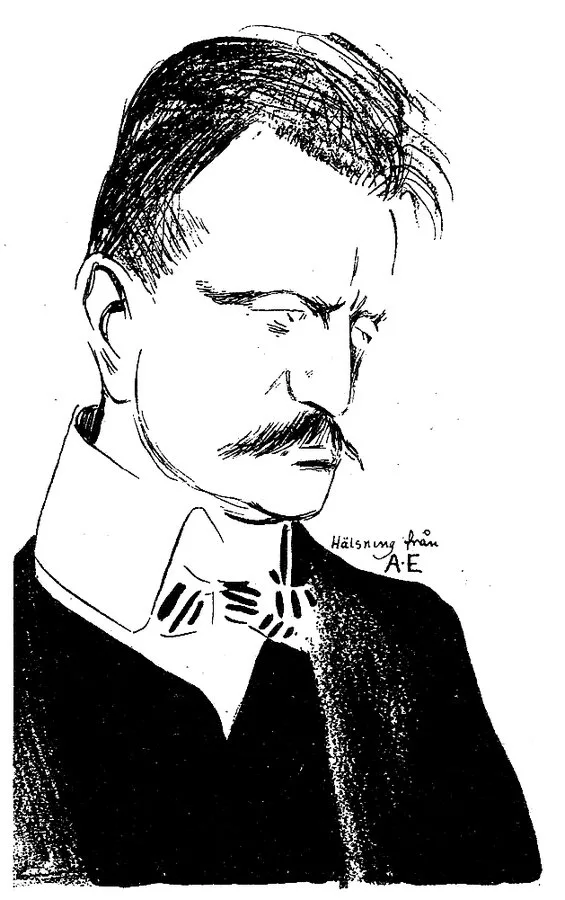
In the 1910s, the world of classical music was in a state of violent upheaval. Just a few years earlier, Stravinsky’s The Rite of Spring had caused a riot in Paris, and Arnold Schoenberg was systematically dismantling the tonal system that had governed Western music for centuries. Composers like Debussy and Ravel were exploring new, impressionistic worlds of sound. To many, this was the future.
Amid this frenzy, Sibelius seemed like a figure from another era. In his native Finland, he was a hero, but in the trend-setting circles of continental Europe, he was increasingly seen as a conservative, a holdover from the Romantic age. His austere and challenging Fourth Symphony (1911) had been met with bewilderment. The implicit question from critics was, “Are you still writing in major and minor keys?”
His personal life was equally turbulent. He was battling severe alcoholism and the lingering trauma of a throat tumor that had threatened his life. Now, under the weight of national expectation, he was tasked with producing a celebratory symphony. He faced a choice: adapt to the modernist trends or dig deeper into his own unique language. He chose the latter. As the conductor Hannu Lintu has noted, Sibelius made a conscious decision to work within the bounds of tonality but to reshape symphonic structure and texture into something no one had ever heard before. While others were inventing a new language, Sibelius was showing the world how much was left to say with the old one.
The Logic of Nature
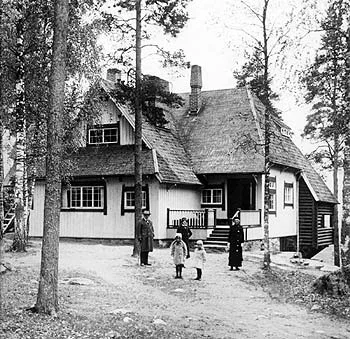
In his diary, Sibelius offered a stunning metaphor for his creative process while working on the Fifth Symphony:
> “It is as if God Almighty had thrown down pieces of a mosaic from heaven’s floor and asked me to put them together.”
This single sentence is the key to understanding the symphony. It is not a linear narrative but a process of organic assembly. The music begins with scattered fragments—a simple horn call, a rustle in the woodwinds—that slowly coalesce, gain momentum, and fuse into a structure of immense power and scale. This process mirrors the forces of nature, where vast landscapes are formed from the accumulation of tiny elements.
This compositional method is an expression of sisu, a Finnish concept that translates roughly to “stoic determination, tenacity, and courage.” The symphony embodies this idea, refusing to offer easy resolutions, instead building its world patiently and inexorably from the ground up. It is a work of profound optimism, written entirely in major keys, a stark contrast to the dark, introspective journey of the Fourth Symphony. It is the sound of sunlight breaking through clouds over a vast, northern landscape.
A Journey Through the Symphony
The final version of the Fifth Symphony is a tightly constructed three-movement work. Its architecture is as innovative as its sound, with the finale in particular containing some of the most memorable moments in the orchestral repertoire.
Movement I: Tempo molto moderato – Allegro moderato
The first movement is one of Sibelius’s most radical structural innovations. In the original 1915 version, this was two separate movements: a slow introduction and a faster scherzo. Dissatisfied with the seam between them, Sibelius fused them into a single, continuous entity.
The movement opens with a quiet, spacious horn call. This simple motif is the symphony’s DNA, a seed from which everything else will grow. Woodwinds enter with chattering, rapid notes, and the music gradually gathers energy, like a river current strengthening. Then, in a brilliant symphonic sleight of hand, the tempo seamlessly accelerates. Without any jarring transition, you find yourself in the middle of a swirling, energetic scherzo. It’s a masterful illusion, a gradual transformation that feels as natural and inevitable as a change in the weather. The movement builds to a colossal, rushing climax before abruptly cutting off.
Movement II: Andante mosso, quasi allegretto
After the storm of the first movement, the Andante offers a period of calm and reflection. It’s a set of simple, folk-like variations played primarily by pizzicato (plucked) strings, flutes, and oboes. The mood is pastoral and serene, but with an underlying tension. Sibelius’s variations don’t transform the theme so much as change the light in which it is seen, shifting the instrumental colors and textures around the steady melody. It serves as a crucial breathing space, a moment of quiet contemplation before the epic drama of the finale.
Movement III: Allegro molto – Misterioso
The finale contains the symphony’s most famous passage, inspired by a profound real-life experience. In the spring of 1915, Sibelius witnessed a flock of sixteen swans taking flight over a lake. Awed, he wrote in his diary: “One of my greatest experiences! God, how beautiful.” That vision became the heart of this movement.
The music begins with a frantic, rushing energy in the strings. But this eventually subsides, and a new instruction appears in the score: Misterioso. The strings create a shimmering, trembling backdrop, and over it, the horns intone a grand, soaring melody—the “Swan Hymn.” It is a moment of pure, majestic beauty, a sound that perfectly captures the awe of witnessing a force of nature.
Then comes the ending, one of the strangest and most powerful in all of music. Conventionally, a symphony ends with a fast, loud flourish. Sibelius does the opposite. The orchestra hurtles towards a conclusion, then suddenly stops. Out of the silence comes a massive, isolated chord. A pause. Another chord. Another pause. This happens six times, with the silences between the chords growing longer. These final chords are like granite pillars, separated by a charged, meaningful silence. The music doesn’t end with a bang, but with a series of monumental statements that hang in the air long after the final sound has died away.
Recommended Performances
Osmo Vänskä & Lahti Symphony Orchestra (1997)
Many consider this the modern benchmark. Vänskä, a Finnish conductor, has a deep understanding of Sibelius’s unique sound world. The recording is famous for its clarity, raw power, and attention to the naturalistic details of the score.
Sir Colin Davis & Boston Symphony Orchestra (1976)
A classic recording that helped solidify the symphony’s place in the international repertoire. Davis brings a weighty, noble grandeur to the work, especially in the majestic “Swan Hymn” and the powerful final chords.
Esa-Pekka Salonen & Philharmonia Orchestra (1986)
Salonen offers a more analytical yet thrilling interpretation. He highlights the symphony’s modernist-adjacent construction, revealing the intricate inner workings of the music while delivering a performance of immense rhythmic drive and excitement.
Listen with the Score
You don’t need to be a musician to appreciate seeing the music take shape on the page. Following the score can reveal the symphony’s incredible architecture, from the small fragments that open the work to the massive blocks of sound that bring it to a close. Watch how the simple horn call in the first few measures evolves and expands over the next thirty minutes.