- Composer
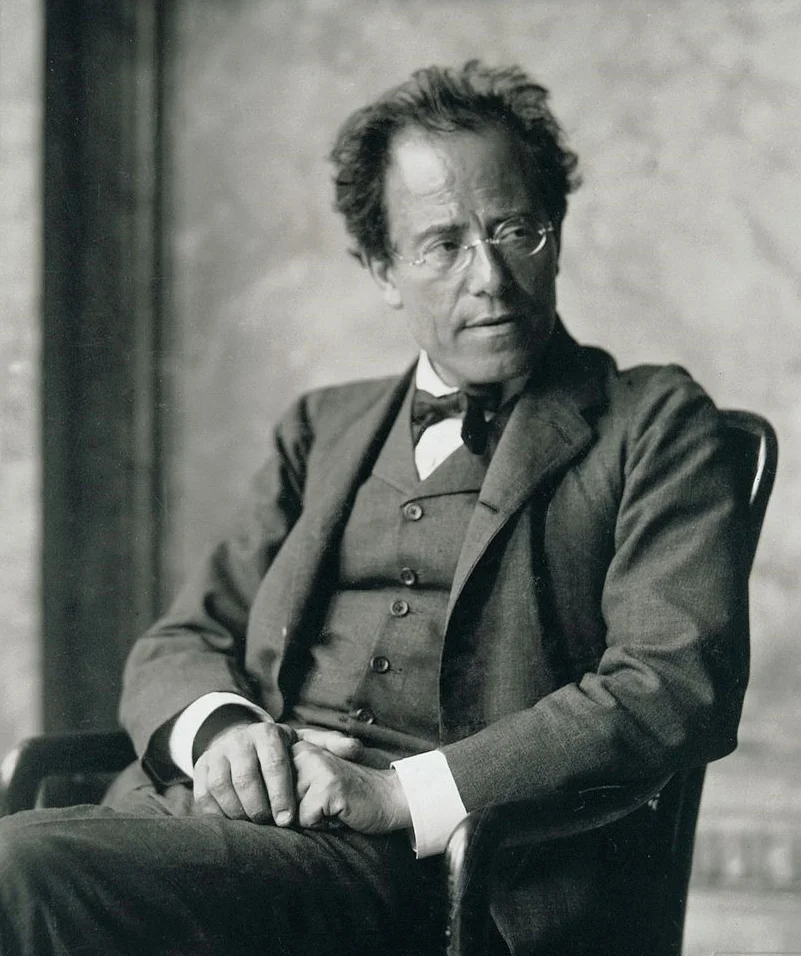
- Gustav Mahler
(1860–1911) - Work
- Symphony No. 2 in C minor “Resurrection”
- Composed
- 1888–1894
- Premiere
- December 13, 1895, Berlin
- Key
- C minor → E♭ major
- Instrumentation
- 4 flutes (2 piccolos), 4 oboes (2 cor anglais), 4 clarinets (E♭ and bass), 4 bassoons (contrabassoon), 10 horns, 10 trumpets, 4 trombones, tuba, 2 timpanists, multiple percussion, 2 harps, organ, soprano and alto soloists, chorus, strings
- Movements
- 5 movements
I. Allegro maestoso (C minor)
II. Andante con moto (A♭ major)
III. In ruhig fließender Bewegung (C minor)
IV. “Urlicht” – Sehr feierlich, aber schlicht (D♭ major)
V. Im Tempo des Scherzos (F minor → E♭ major) - Duration
- Approx. 80–90 minutes
March 29, 1894. A church in Hamburg. The funeral of Hans von Bülow, one of Europe’s greatest conductors, was underway. A choir began to sing — a hymn set to the words of Friedrich Klopstock: “Rise again, yes, rise again, my dust, after a brief rest!”
In the congregation sat a 34-year-old composer named Gustav Mahler, and in that moment he froze. The answer to a problem that had tormented him for six years struck like lightning at a funeral.
“It hit me like a bolt of lightning, and everything became clear and plain before my eyes.” So Mahler wrote to conductor Anton Seidl. At the funeral of a dead man, a symphony of resurrection was born. Here is the story behind Mahler’s Symphony No. 2 “Resurrection” — its genesis, a movement-by-movement guide, and the finest recordings.
A Funeral March and a Six-Year Obsession
The story begins six years earlier. In 1888, the 28-year-old Mahler completed a symphonic poem, shortly after finishing his Symphony No. 1 “Titan.” He called it Totenfeier — Funeral Rites. A roughly 20-minute funeral march, opening with cellos and double basses growling in the depths.
Mahler was confident in this piece. So he played it on the piano for the era’s most formidable conductor, Hans von Bülow. Bülow’s response has become the stuff of legend.
“If that is music, then I know nothing of music.”
This was not a compliment. It meant the piece was too radical, too impenetrable. Classic Bülow — never known for diplomacy. But here’s the interesting part: though Bülow couldn’t fathom the music, his trust in Mahler the person never wavered. He kept Mahler on as his deputy conductor at the Hamburg Opera and, as his own health declined, handed over more and more performances.
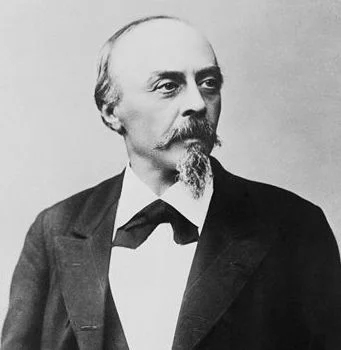
Stung by the rejection, Mahler wrestled with the problem for five years. Should Totenfeier become the first movement of a symphony, or remain a standalone piece? If he expanded it into a symphony, he’d need a finale — but what kind of ending? He wanted to use a chorus. But that was something Beethoven had already done in his Ninth.
The comparison to Beethoven. For any composer, this is both a blessing and a curse.
Opera Conductor by Day, Composer on Holiday
To understand Mahler in the 1880s and ’90s, you need to grasp his double life. During the season, he was a conductor at the Hamburg Opera — frantically busy, rehearsing multiple operas a day, battling singers, wrestling with administration. There was no time to compose.
For Mahler, composing was something that could only happen during summer holidays. Each year, he’d barricade himself in a small lakeside cabin and write in a frenzy. When the season resumed, he’d return to the podium. He repeated this pattern his entire life. Imagine a modern office worker who can only write novels on weekends — that was Mahler.
In the summer of 1893, in his composing hut near the Attersee at Steinbach, the second and third movements took shape. Following the first movement’s funeral march, the second is built on a Ländler rhythm — an Austrian folk dance — with a tender melody floating above it. In Mahler’s own words, it represents “a memory of a happy moment from the life of the departed.”
If the first movement is the funeral, the second is the moment you leaf through the photo album beside the portrait of the deceased. Warm, but sad — because you know that happiness is already gone.
The third movement is stranger still. A scherzo based on his song “St. Anthony’s Sermon to the Fish,” the music churns and spins ceaselessly — yet arrives nowhere. Endlessly busy but ultimately meaningless: a metaphor for life. Mahler called its climax “the cry of despair.”
An amusing aside: in a letter, Mahler joked that the winding melody of the third movement sounded “as if St. Anthony himself had gotten drunk and was preaching to the fish.” Genius doesn’t preclude a sense of humor about one’s own work.
That brought us to 1893. Three movements existed, but there was no ending. The symphony sat unfinished on Mahler’s desk.
Lightning at a Funeral
On February 12, 1894, Hans von Bülow died. He had been convalescing in Cairo; his remains were brought back to Hamburg. At the funeral on March 29, the musical world gathered at the Church of St. Michael.
Mahler was there. Bülow had rejected his music but championed him as a conductor — a complicated legacy. His emotions must have been tangled.
Then the choir began a hymn based on Klopstock’s verse.
“Aufersteh’n, ja aufersteh’n wirst du, mein Staub, nach kurzer Ruh’!”
(Rise again, yes, rise again, my dust, after a brief rest!)
Mahler described it as a bolt of lightning. After six years, he had his answer. Death to resurrection. A symphony that begins with a funeral march and ends with a choral declaration of rebirth. This was the perfect architecture.
Returning from the funeral, Mahler plunged into composition like a storm. He took the first two stanzas of Klopstock’s hymn and wrote the rest himself. Here Mahler’s audacity reveals itself: Klopstock’s original poem sings of Christian resurrection, but Mahler’s own lyrics transcend religious doctrine to proclaim a universal redemption. “You did not live in vain! You did not suffer in vain!” (Sterben werd’ ich, um zu leben! — “I shall die to live!”) This was not about any particular faith, but an affirmation of human existence itself.
The fourth movement, “Urlicht” (Primeval Light), was also inserted around this time. A brief, five-minute movement for solo alto — a song drawn from Des Knaben Wunderhorn, expressing an aching longing to escape the world’s suffering. Amid an orchestra of over 100 players, the most unadorned truth rings out.
Then the fifth-movement finale. A vast movement running 30 to 35 minutes. It erupts with the return of the third movement’s “cry of despair” — a near-catastrophic orchestral collision. An uneasy silence follows. Then, from somewhere behind the stage — Mahler’s Fernorchester (distant orchestra), a brass ensemble positioned offstage — sounds out.
In a stillness that seems to halt time itself, the choir begins “Aufersteh’n” almost in a whisper. From there, the music grows slowly, inexorably. Soprano soloist, alto soloist, chorus, organ, 10 horns, 10 trumpets — every sound Mahler could summon forms a single immense arch and closes.
This is not simply a crescendo. It is the answer to 90 minutes of questions, arriving in sound.
By the end of 1894, the Second Symphony was complete. Six years from start to finish — the product of a mind that refused to let go until it found the answer.
Berlin, 1895: A Contentious Premiere
December 13, 1895, Berlin. Mahler personally conducted the Berlin Philharmonic in the complete premiere. There had been earlier partial performances — the first movement alone in March 1895, movements one through three shortly after — but this was the first time all five movements, chorus included, were heard together.
The response was divided. Some in the audience were overwhelmed; critics dismissed it as “excessively long and speculative.” The very idea of putting a chorus in a symphony was radical — almost no one had attempted it since Beethoven.
But one thing was clear: nobody called it “just another symphony.” It was controversial, but its sheer presence was undeniable. After the premiere, the work rapidly became central to Mahler’s repertoire and one of his most popular pieces during his lifetime.
A surprising detail: Mahler paid for the premiere out of his own pocket. Orchestra rental, choir fees, rehearsal costs — all on a conductor’s salary that could barely cover it. To bring his symphony into the world, he had to open his wallet. The genius’s vanity press, 19th-century edition.
One more thing. Mahler’s score instructs a pause of “at least five minutes” after the first movement. He wanted the weight of the funeral to be fully absorbed before moving on. At a 1903 Düsseldorf performance, conductor Julius Buths placed this long pause between the fourth and fifth movements instead — technically defying the composer’s instruction. Mahler was delighted, praising “your insight, your sensitivity, and your courage to go against my directions.”
A conductor praised for disobeying the composer. That was Mahler — someone who valued musical truth over rules.
Ten Trumpets, Ten Horns — Why So Enormous?
The first time you see the scoring for Mahler’s Second, it takes your breath away. Ten horns, ten trumpets (some offstage), two timpanists, organ, soprano and alto soloists, mixed chorus — plus the Fernorchester, a separate brass and percussion ensemble playing from beyond the stage.
But these titanic forces don’t appear all at once. Most are reserved for the fifth movement alone. The first four movements proceed on a relatively standard scale; in the fifth, everything detonates. Ninety minutes of accumulated tension released in a single eruption. The point isn’t that the forces are large — it’s that their size is deployed with devastating dramatic purpose.
The Fernorchester effect, in particular, can only be fully experienced in a live performance. When brass sounds from somewhere behind the stage, or from a balcony above the audience, the delay and resonance of sound traveling through space is something Mahler called Klang der Ferne — “sound from afar.” No recording can reproduce this spatial experience. This is the strongest reason to hear Mahler’s Second in a concert hall.
For Mahler, the symphony was not a vessel for sonata form. “A symphony must contain the whole world,” he famously declared — life and death, memory and redemption, all of it. To realize that world, he needed forces on this scale.
From Bülow to Bernstein: 130 Years of Resurrection
The birth story of this symphony contains a delicious irony. The very man who told Mahler “if that is music, I know nothing of music” — it was at his funeral that the symphony found its ending. No screenwriter could have written it better.
After its premiere, the symphony’s own fate mirrored its title. During Mahler’s lifetime it was a hit, but after his death it vanished from concert stages. The reason? Two world wars, and the Nazis. The Nazi regime banned Mahler’s music entirely because he was Jewish. Even after the war ended, no one picked it up for years.
Then, in the 1960s, one man changed everything. Leonard Bernstein — the 20th century’s greatest star conductor. By recording Mahler’s complete symphonies with the New York Philharmonic, he ignited what became known as the “Mahler Renaissance.” Why was Bernstein so drawn to Mahler? Because he saw himself. Jewish, conductor and composer, obsessed with life and death. For Bernstein, performing Mahler wasn’t analysis — it was confession.
The result? In a BBC Music Magazine poll of conductors, the Resurrection Symphony ranked fifth among all symphonies ever written — shoulder to shoulder with Beethoven, Mozart, and Brahms. Not bad for an idea that came to a man at a funeral 130 years ago.
In 2016, the autograph manuscript went to auction. The hammer price: approximately $5.36 million. One of the highest sums ever paid for a musical manuscript. The buyer was a Chinese collector. A 19th-century Austrian composer’s anguish, crossing into 21st-century Asia.
But the person most consumed by this symphony was someone else entirely. Gilbert Kaplan — a Wall Street magazine publisher. A finance man. He heard the piece at Carnegie Hall in 1965, and his life changed completely. He taught himself to conduct and eventually became someone who conducted only this one symphony, professionally, over 100 times. He even published a facsimile of the autograph score. One work, an entire life. The most extreme proof of what this symphony does to people.
The Shadow of Hans Rott
Here is a fact almost no one knows. The scherzo of the third movement and the opening of the fifth bear the musical fingerprints of Hans Rott’s Symphony No. 1 in E major. Hans Rott — a name few classical fans will recognize.
Rott was Mahler’s classmate at the Vienna Conservatory. Both studied composition under Anton Bruckner, and each recognized the other’s talent. Rott was brilliantly gifted but catastrophically unlucky. After showing his work to Brahms and receiving a devastating critique, his mental health collapsed. He was committed to a psychiatric hospital at 25. He died there of tuberculosis. Twenty-five years old.
Mahler later said: “It is impossible to estimate what music has lost in him. His Symphony No. 1 — since it laid the groundwork for what was to come — amounts to the founding of the New Symphony.” And within his own symphonies, Mahler kept Rott’s musical ideas alive.
He resurrected a dead friend’s music. Inside a symphony called “Resurrection.”
Recommended Recordings
Claudio Abbado / Lucerne Festival Orchestra (2003) — Transparent and luminous. If you want to hear how the music builds, layer by layer, start here.
Mariss Jansons / Royal Concertgebouw Orchestra (2009) — Overwhelming density and forward momentum. The dramatic arc is razor-sharp. Ideal for listeners who want to feel this work in their bones.
Leonard Bernstein / New York Philharmonic (1987, DG) — The architect of the Mahler Renaissance. The emotional range is the widest of any recording. A legendary live performance in which Bernstein himself was visibly moved to tears during the finale.
Gustavo Dudamel / Simón Bolívar Youth Orchestra (2007) — Young musicians’ energy, unleashed. The heat of the finale is extraordinary.
Follow the Score
The full score is freely available at IMSLP. View the Symphony No. 2 ‘Resurrection’ score on IMSLP
Frequently Asked Questions
How long is Mahler’s Symphony No. 2?
Typically 80 to 90 minutes, depending on the conductor’s tempo and the acoustics of the hall.
Where should a first-time listener begin?
Start with the second half of the fifth movement, where the chorus sings “Aufersteh’n.” Once you’ve absorbed that feeling, go back and listen to the whole symphony from the start — the structure will make far more sense.
Did Mahler himself give it the subtitle “Resurrection”?
Not as an official title. But the word “Aufersteh’n” (resurrection) at the heart of the fifth-movement chorus gave rise to the nickname, which was already in use during Mahler’s lifetime.
What role does the fourth movement, “Urlicht,” play?
It breaks the cynical cycle of the third movement and, through an intimate confession, pivots the narrative toward the fifth movement’s resurrection. Only five minutes long, yet it shifts the center of gravity of the entire work.
Why is this work still performed so frequently today?
Because it frames the universal questions of life and death within a structure that is utterly convincing. Those questions don’t age. And the catharsis of the choral finale is something no other symphony can quite match.
Final Thoughts
A symphony born at a funeral. A symphony that carries a dead friend’s music inside it. A symphony that, after six years of searching, declares its answer in a chorus of voices.
Mahler’s Second confronts death head-on for 90 minutes, then arrives — through the collective sound of voices raised together — at something that feels like an answer. 130 years later, it still shakes concert halls, because the question it asks is still ours.
Give it a listen. Ninety minutes too long? This is one piece that earns every second. Rise again. Rise again.
🎼 View the Score — Free score download at IMSLP
How long is Mahler’s “Resurrection” Symphony?
Mahler’s Symphony No. 2 is a massive work, typically lasting between 80 and 95 minutes in performance. Composed between 1888 and 1894, its epic scale requires a very large orchestra, chorus, and soloists.
What is the “Resurrection” theme in Mahler’s 2nd about?
The theme traces a journey from death and despair to a triumphant affirmation of eternal life. The symphony’s first movement is a somber funeral march, while the finale uses a chorus singing Friedrich Gottlieb Klopstock’s ode “Die Auferstehung” (The Resurrection) to depict a powerful vision of rebirth and transcendence.
How many movements are in Mahler’s Symphony No. 2?
The symphony is structured in five distinct movements. It begins in the key of C minor with a dramatic movement titled “Totenfeier” (Funeral Rites) and concludes in E-flat major with a vast choral finale that brings the thematic journey to its powerful conclusion.
What makes the final movement of Mahler’s 2nd Symphony so famous?
The finale is renowned for its immense scale and dramatic power, lasting over 30 minutes and bringing in soprano and alto soloists along with a full choir. It creates an overwhelming “last judgment” atmosphere with offstage brass, organ, and thunderous percussion, building from a whisper to one of the most glorious climaxes in all of classical music.