- Composer
- Frédéric Chopin
(1810–1849) - Work
- Prelude No. 15 in D♭ major, Op. 28-15 “Raindrop”
- Composed
- 1838–1839
- Key
- D♭ major
- Scoring
- Solo piano
- Duration
- Approx. 5 minutes
One evening in December 1838, in Valldemossa, Majorca.
George Sand and her son Maurice had not returned from Palma. A storm was raging. Rain hammered the roof, and wind rattled the old monastery windows.
Inside Cell No. 4 of the Valldemossa Charterhouse, Chopin was alone.
He sat at the piano. In that cold, dark cell, the fingers of a consumptive man fumbled across worn keys. He lost track of time. The rain kept falling. It had a rhythm. Steady. Pounding against his chest.
When Sand finally opened the door, Chopin looked up, dazed.
“I thought you were dead.”
He told her he had dreamed of sinking into a lake. Beneath the surface, cold, heavy drops fell with merciless regularity — endlessly.
Sand laughed. “That was just the rain on the roof.”
Chopin shook his head. Firmly.
“Don’t reduce music to an imitation of raindrops.”
What Chopin had been playing at that piano, we now know. Prelude Op. 28 No. 15 — the piece that would come to be called the “Raindrop Prelude.” Despite the composer’s vehement objections, the name has survived for over 180 years.
A Consumptive and a Novelist Head for the Mediterranean
To understand this story properly, we need to return to Paris in the autumn of 1838.
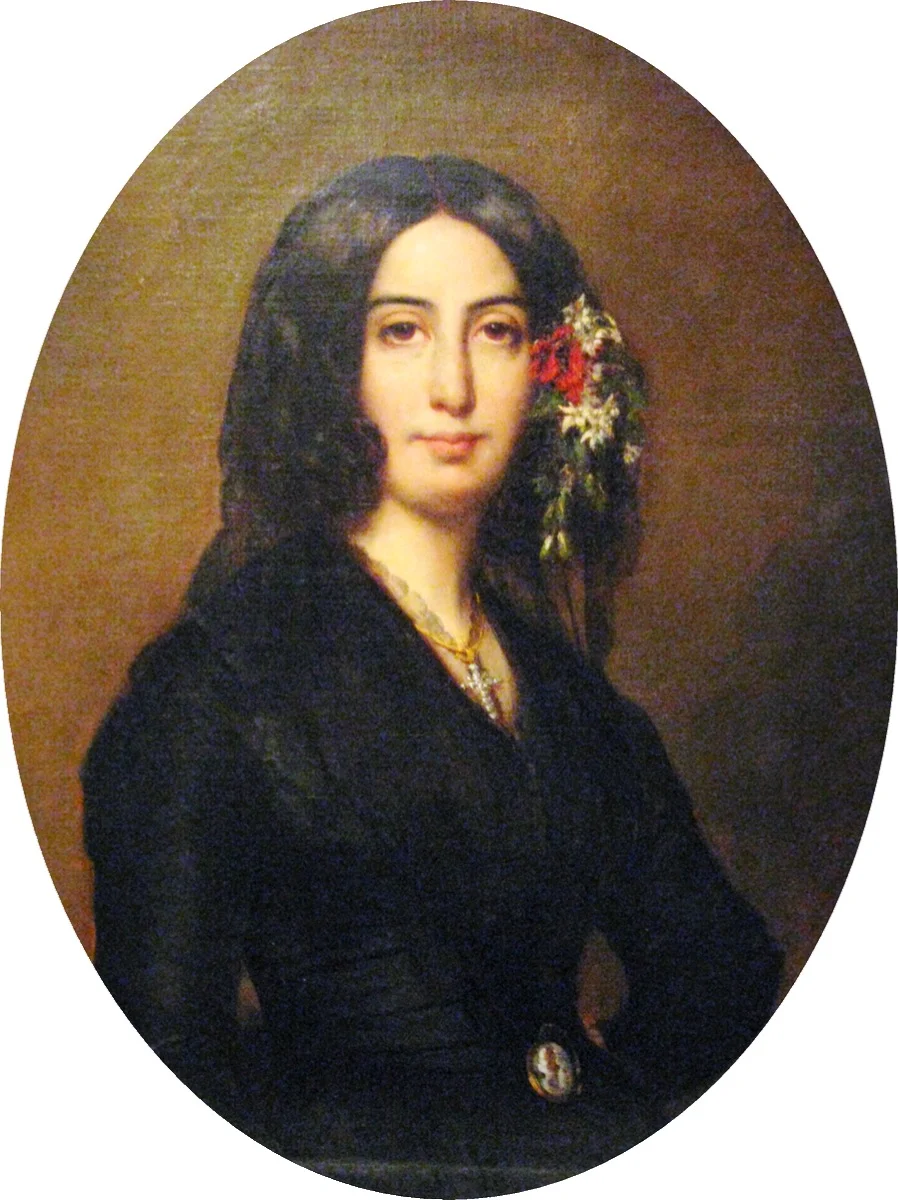
Chopin (Frédéric Chopin, 1810–1849) was twenty-eight years old. Born in Poland, he had settled in Paris in 1831 and become a darling of high society. He performed in aristocratic salons, published piano works, and built a formidable reputation. But he was constitutionally fragile, and that autumn brought chills, a persistent cough, and blood-streaked sputum. His Parisian doctors suspected tuberculosis. They prescribed a dry, warm climate.
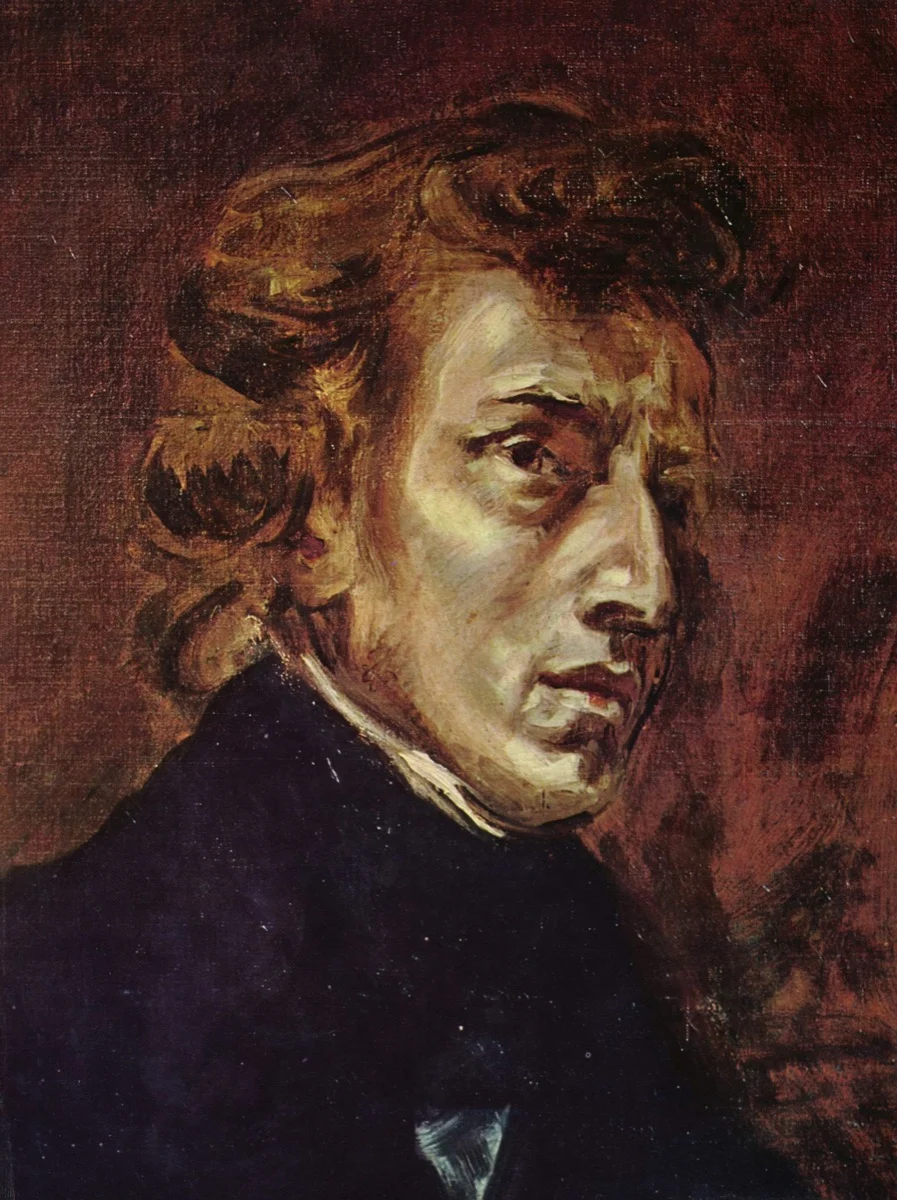
George Sand (born Amantine-Lucile-Aurore Dupin, 1804–1876) was the most famous female novelist in Paris. She smoked, wore men’s clothing, and lived free of social convention. Through a series of love affairs, she maintained an unflinching independence. When Chopin first met her, he reportedly said, “She’s not my type.” By 1838, they were lovers.
When Chopin’s health deteriorated, Sand took charge. Her plan was to take him to the warm Mediterranean for convalescence — a remedy doctors commonly prescribed for tuberculosis, and a convenient escape from Parisian scandal.
On 8 November 1838, Chopin, Sand, and her two children Maurice and Solange arrived in Palma de Mallorca after a seven-day journey. Chopin was enchanted at first sight of the island — golden orange groves, palm trees, cacti, olive trees. In a letter to Camille Pleyel, he wrote:
“Majorca is paradise.”
For now, it was.
The Island Drove Them Out
Their first lodging was Son Vent, a villa in the Establiments district. Orange blossom and Mediterranean views. Chopin described it in letters as “aristocratic, quiet, and pleasant.”
But trouble came swiftly.
That winter, Majorca’s climate was unusually harsh. Rain fell frequently and temperatures plummeted. Chopin’s cough showed no sign of abating. The landlord grew anxious at the sound of it. Word spread through the island that a consumptive had arrived.
Three Palma physicians visited and issued a formal diagnosis. The landlord evicted his tenants. Neighbours avoided all contact. To the Majorcans, tuberculosis was a disease of terrifying contagion. No one would take in a party suspected of carrying it.
Their refuge turned out to be the Valldemossa Charterhouse.
A Carthusian monastery founded in 1399, it had stood empty since the Mendizábal decrees of 1835 confiscated monastic property and expelled the monks. The building was available for rent. Chopin’s party took Cell No. 4 — a room with a parlour, bedroom, and terrace. It sat deep in the mountains, a ninety-minute horse ride from Palma.
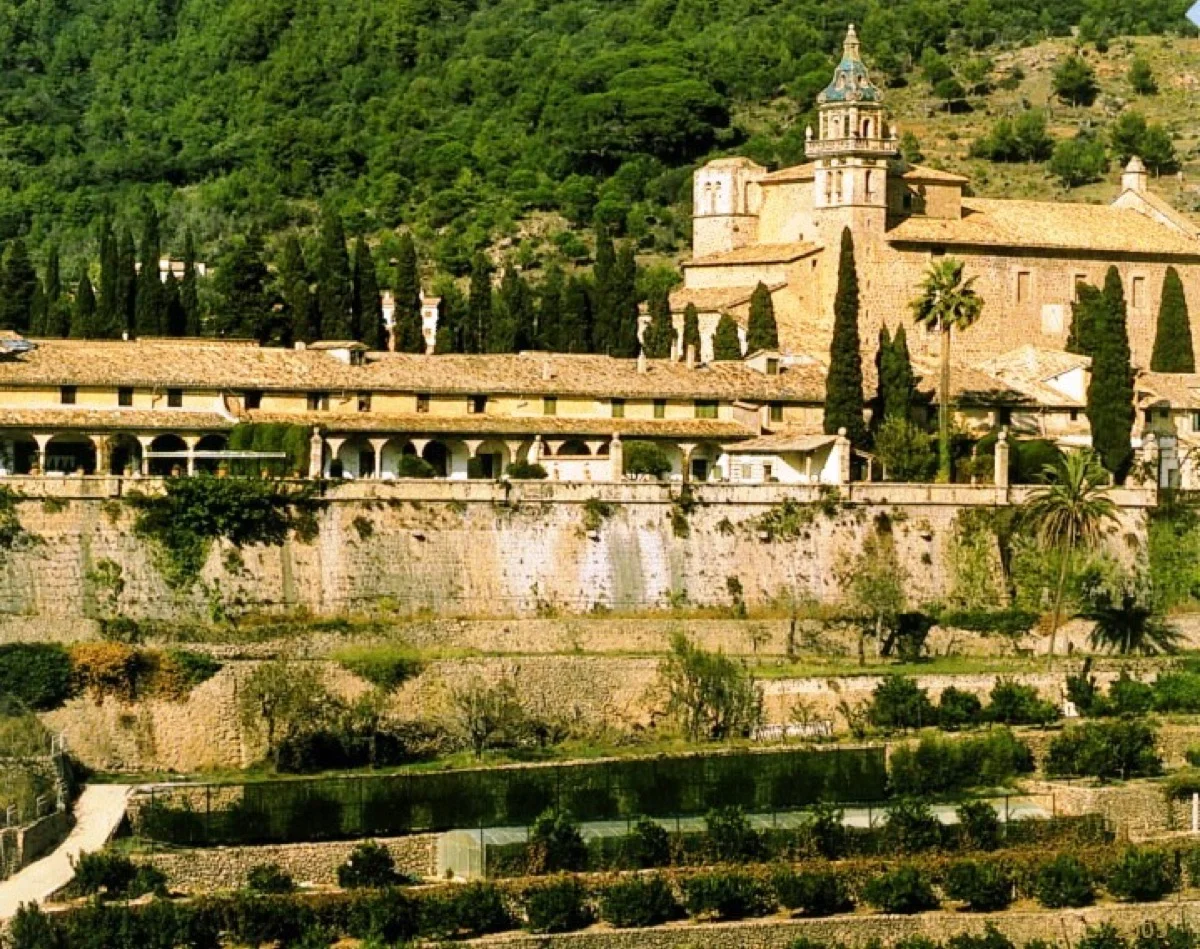
The monastery was beautiful — olive groves on the slopes below, ancient stone walls, deep silence. But there was no heating whatsoever. That winter proved far colder and wetter than expected. Chopin’s tuberculosis worsened in the draughty monastic cell.
And there was no piano.
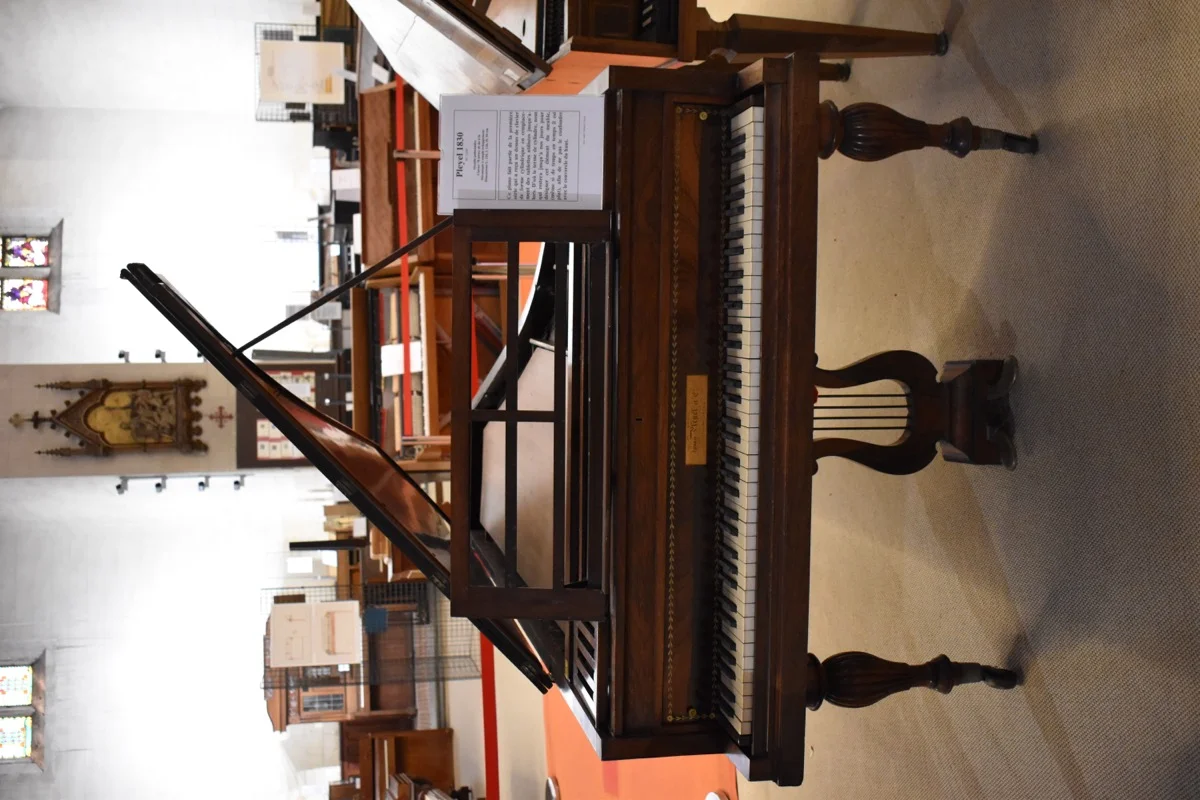
The Pleyel instrument Chopin had purchased in Paris (serial number 6668, price 1,200 francs) had shipped by sea but was stuck in Palma customs. Quarantine formalities and paperwork dragged on. The piano arrived only in the latter part of his stay.
In the meantime, Chopin used a crude instrument built by Juan Bauza, a carpenter from the village of Valldemossa. Its touch and tone bore no comparison to a Pleyel. On that piano, Chopin pressed on with his preludes.
Born in a Monastic Cell — The Preludes, Op. 28
The word “prelude” originally meant “something that comes before.” Since the Baroque era, preludes had served as improvisatory introductions played before a main work.
Chopin’s Preludes, Op. 28 upended that tradition entirely.
None of the twenty-four pieces introduces anything. Each stands alone, a self-contained poem. The shortest lasts thirty seconds; the longest, seven minutes. Some are translucently bright (No. 1 in C major), others heavy as storm clouds (No. 4 in E minor). One whispers like rain through a forest canopy (No. 15 in D♭ major), another hurtles forward like a tempest (No. 16 in B♭ minor).
In arranging the set, Chopin had Johann Sebastian Bach’s Well-Tempered Clavier in mind. Bach’s collection cycles chromatically through all twenty-four keys from C major to B minor. Chopin borrowed the concept but changed the order. His preludes follow the circle of fifths — C major paired with A minor, G major with E minor, D major with B minor, and so on. Each major key is coupled with its relative minor. The result is a more organic harmonic flow, with smoother transitions between pieces.
The commission came from the piano manufacturer Camille Pleyel, for a fee of 2,000 francs. Chopin had been planning the twenty-four-piece framework before leaving for Majorca, and several preludes were already composed in Paris. Those known to have been completed in Majorca include Nos. 1, 2, 4, 10, 15, and 21.
Chopin later wrote to Pleyel: “I have finished the preludes on your piano.” In fact, the Pleyel instrument was still trapped in customs at the time — so “your piano” was, ironically, Bauza’s rough village instrument.
Some of the twenty-four preludes are startlingly brief. No. 7 in A major runs just sixteen bars and lasts under a minute. No. 20 in C minor is only thirteen bars, yet its solemn chords descend like a funeral procession, crushing the listener step by step. No. 24 in D minor, the final piece, drives its theme over furious left-hand tremolos before ending on three low D notes. There is no brilliant flourish. It simply stops.
Eugène Delacroix described Chopin’s music in his journal as “a kind of poetry.” Schumann reviewed the preludes and recorded his deep admiration.
A collection completed in a monastic cell, by a consumptive, on a battered piano.
Raindrops and Chopin’s Objection
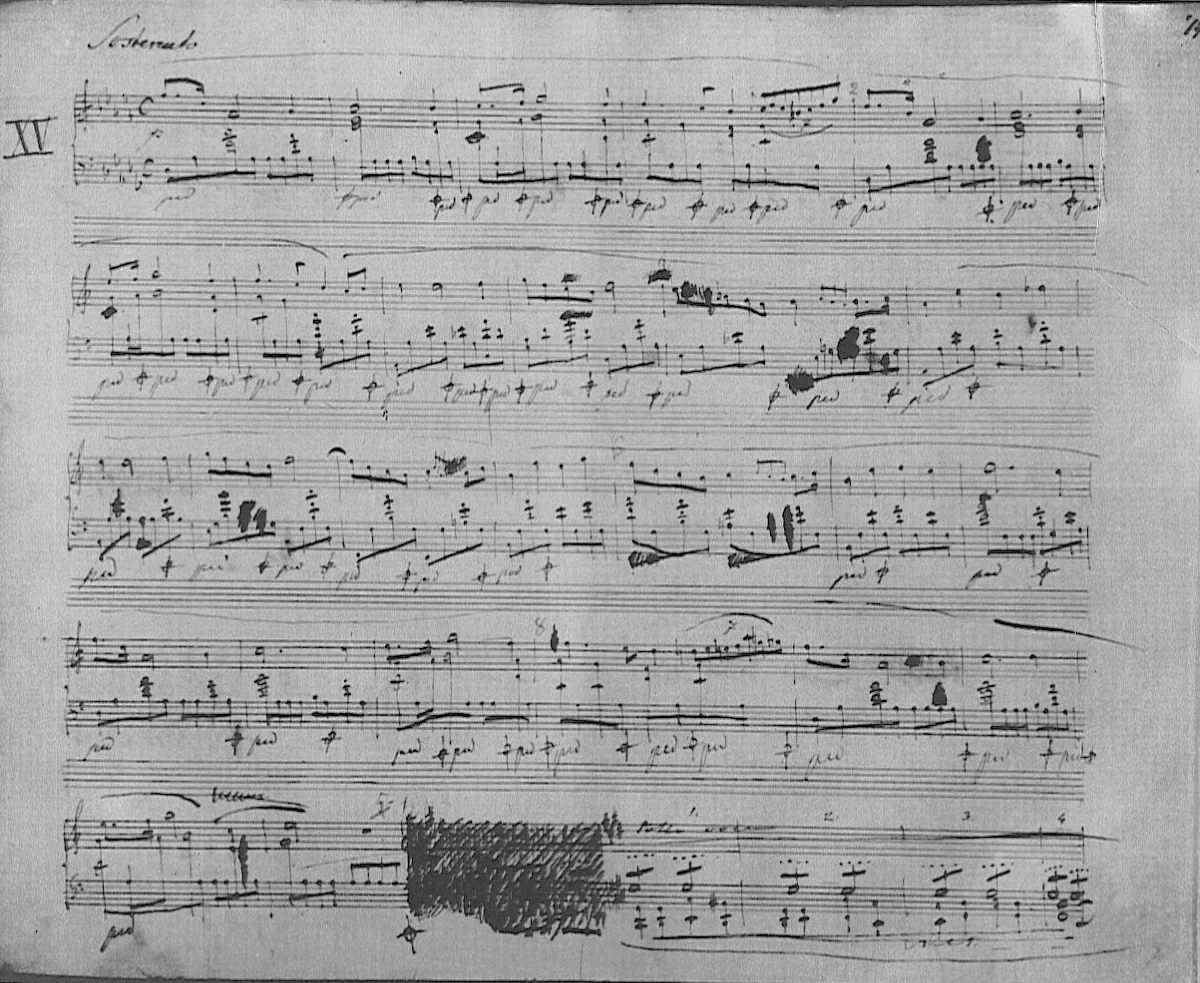
Prelude No. 15 in D♭ major is the longest of the twenty-four (five to seven minutes) and the most structurally unusual.
From first note to last, a single pitch never disappears. While the right hand sings a lyrical melody in D♭ major, the left hand strikes A♭ — steadily, monotonously, ceaselessly. Thud. Thud. Thud. The melody flows on, the harmony shifts, but that repeating note never stops.
In the middle section, the music darkens abruptly. D♭ major gives way to C♯ minor. Enharmonically the same pitch — A♭ becomes G♯ — but the atmosphere transforms completely. Heavy, growling, stripped of its earlier lyricism. The right hand sinks, the left hand rises, and their roles reverse. The same repeating note now sounds menacing.
Then, another shift. D♭ major returns, and the opening melody begins again — as though nothing had happened.
The nickname “Raindrop” came later. Chopin gave it no title. When Sand recalled that stormy night and drew a connection with the sound of rain, Chopin rejected the idea outright.
Yet Sand’s memoir, Un hiver à Majorque (A Winter in Majorca), paints the scene in vivid detail. When she and Maurice failed to return from Palma through the downpour, Chopin sat at the piano in his cell, playing in a trance, the line between dream and reality dissolving.
Whether the music was a conscious rendering of rain, or whether the rain seeped into his unconscious and emerged as music — Chopin himself firmly resisted any programmatic reading of his work. Yet it is hard to argue that the sound of raindrops on the roof overhead had nothing at all to do with the A♭ that pulses across those keys.
Today the piece is performed by countless pianists worldwide. The name “Raindrop” has outlived Chopin’s objections.
Escape from the Island
On 11 February 1839, Chopin’s party left Majorca.
Even the departure was an ordeal. Passenger ships either refused to take a consumptive or demanded surcharges. In the end, they found passage on a pig-transport vessel. They sailed to Barcelona in an unpartitioned hold, surrounded by swine. During the crossing, Chopin vomited blood. By the time they reached Barcelona, he was desperately weak.
After several weeks of rest in Marseille, they returned to Paris. Majorca had been not a cure but a catalyst for decline. In three months, Chopin came away with worsened tuberculosis, the hostility of the islanders, and the Preludes, Op. 28.
Back in Paris, he finalized the collection. The German edition was dedicated to Joseph Christoph Kessler; the French and English editions to Camille Pleyel. The set was published in 1839.
The Pleyel piano (#6668) left behind in Valldemossa was sold to the Canut family. From 1932 they placed it on public display in Cell No. 4. Visitors to Valldemossa can still see Chopin’s room and that instrument today.
What became of the crude Bauza piano? In 1917, the legendary harpsichordist Wanda Landowska purchased it — the very instrument on which Chopin had completed much of the Preludes, Op. 28.
Chopin the Piano — Poet of the Salon
Chopin lived another ten years after Majorca.
His relationship with Sand ended in 1847. The tensions and rupture between them form a chapter of French literary history in their own right. Sand continued writing long after their separation and lived many years more. Chopin’s health collapsed rapidly once they parted. On 17 October 1849, he died in Paris at the age of thirty-nine. In accordance with his dying wish, his heart was removed and carried to Warsaw, where it was interred at the Church of the Holy Cross. It remains there still.
Chopin’s music mirrors the way he lived. He gave roughly thirty public concerts in his entire life. In an era when Franz Liszt staged pyrotechnic spectacles before audiences of thousands, Chopin did not. His stage was a Parisian salon seating perhaps twenty, with candles turned low and heavy curtains drawn. His playing was quiet — subtle nuance, hands barely visible in motion. The audience held its breath.
Liszt had helped launch Chopin’s early career in 1830s Paris. They were friends but opposites. If Liszt was the lion on stage, Chopin was the feral cat of the drawing room. While Berlioz was engineering orchestral descents into hell in the same era, Chopin sat alone at the piano. Where Berlioz’s music struck the collective nerve, Chopin’s seeped quietly into the individual soul.
Just as Rachmaninoff spent three years unable to write a single note before rising again, suffering forged Chopin’s masterpieces too. The monastic cell in Valldemossa, the battered Bauza piano, the coughing fits, the rain on the roof — all of it flowed into the Preludes, Op. 28.
He refused to call it “the sound of rain.” But that is what the world chose to hear.
Follow the Score
The full score is freely available at IMSLP. View the Prelude in D-flat major, Op. 28 No. 15 score on IMSLP
Frequently Asked Questions
Were all of Chopin’s Preludes, Op. 28 composed in Majorca?
No. The twenty-four preludes were written between 1835 and 1839, and most were completed in Paris. Those known to have been finished during the Majorca stay (winter 1838–1839) include Nos. 1, 2, 4, 10, 15, and 21. Chopin brought preludes he had already sketched and refined them on the island.
Did Chopin himself coin the name “Raindrop Prelude”?
He did not — in fact, he rejected it. When Sand drew a link between the piece and the sound of rain, Chopin told her not to reduce music to the imitation of nature. The nickname was bestowed by later audiences and performers, and it stuck.
When did Chopin’s tuberculosis prove fatal?
Chopin survived another ten years after Majorca. His health deteriorated sharply following his separation from Sand in 1847, and he died on 17 October 1849 in Paris at the age of thirty-nine. The cause of death is believed to be tuberculosis. His heart, in accordance with his last wishes, rests at the Church of the Holy Cross in Warsaw, where admirers visit to this day.
Why is Chopin’s Prelude Op. 28 No. 15 called the “Raindrop”?
The nickname comes from the persistent, repeating A-flat note that sounds like pattering raindrops. Chopin composed the piece in D-flat major between 1838 and 1839. While the nickname is widely used, it is believed that Chopin himself did not give it this title and may have even disliked it.
What is the story behind the “Raindrop” Prelude?
Chopin composed this prelude while staying at a monastery in Valldemossa, Majorca, with the writer George Sand. Sand wrote that Chopin was inspired by a dream he had during a storm, where he envisioned himself drowned in a lake with raindrops falling on his chest. This story aligns with the dark and somber middle section of the piece.
Is the “Raindrop” Prelude difficult to play?
The piece is considered to be of intermediate difficulty for pianists. The main challenge lies not in fast passages, but in maintaining the steady rhythm of the “raindrop” note while expressing the lyrical melody and dramatic mood shifts. A complete performance typically lasts between five and seven minutes.
What key is the “Raindrop” Prelude in?
The “Raindrop” Prelude begins and ends in D-flat major, providing a warm and lyrical character. The middle section, often described as stormy or ominous, shifts to the enharmonically equivalent key of C-sharp minor. This dramatic key change is central to the piece’s emotional journey.
Further Reading
- Beethoven – Piano Sonata No. 23 in F minor ‘Appassionata’, Op. 57
- Beethoven Piano Sonatas: A Guide to the Essential Works
- Beethoven Piano Sonatas: The Complete Guide to All 32 Works
- Beethoven’s Piano Sonata No. 8 in C minor, Op. 13 ‘Pathétique’
- Beethoven’s Piano Sonata No. 14 in C-sharp minor ‘Moonlight’, Op. 27 No. 2