- Composer
- Ludwig van Beethoven (1770–1827)
- Work
- Piano Concerto No. 5 in E♭ major, Op. 73 “Emperor”
- Key
- E♭ major
- Composed
- 1809
- Premiere
- November 28, 1811 — Leipzig Gewandhaus
Friedrich Schneider (piano) / Johann Philipp Christian Schulz (conductor) - Movements
- I. Allegro (E♭ major)
II. Adagio un poco mosso (B major)
III. Rondo: Allegro (E♭ major) - Instrumentation
- Solo piano, strings, 2 flutes, 2 oboes, 2 clarinets, 2 bassoons, 2 horns, 2 trumpets, timpani
- Dedication
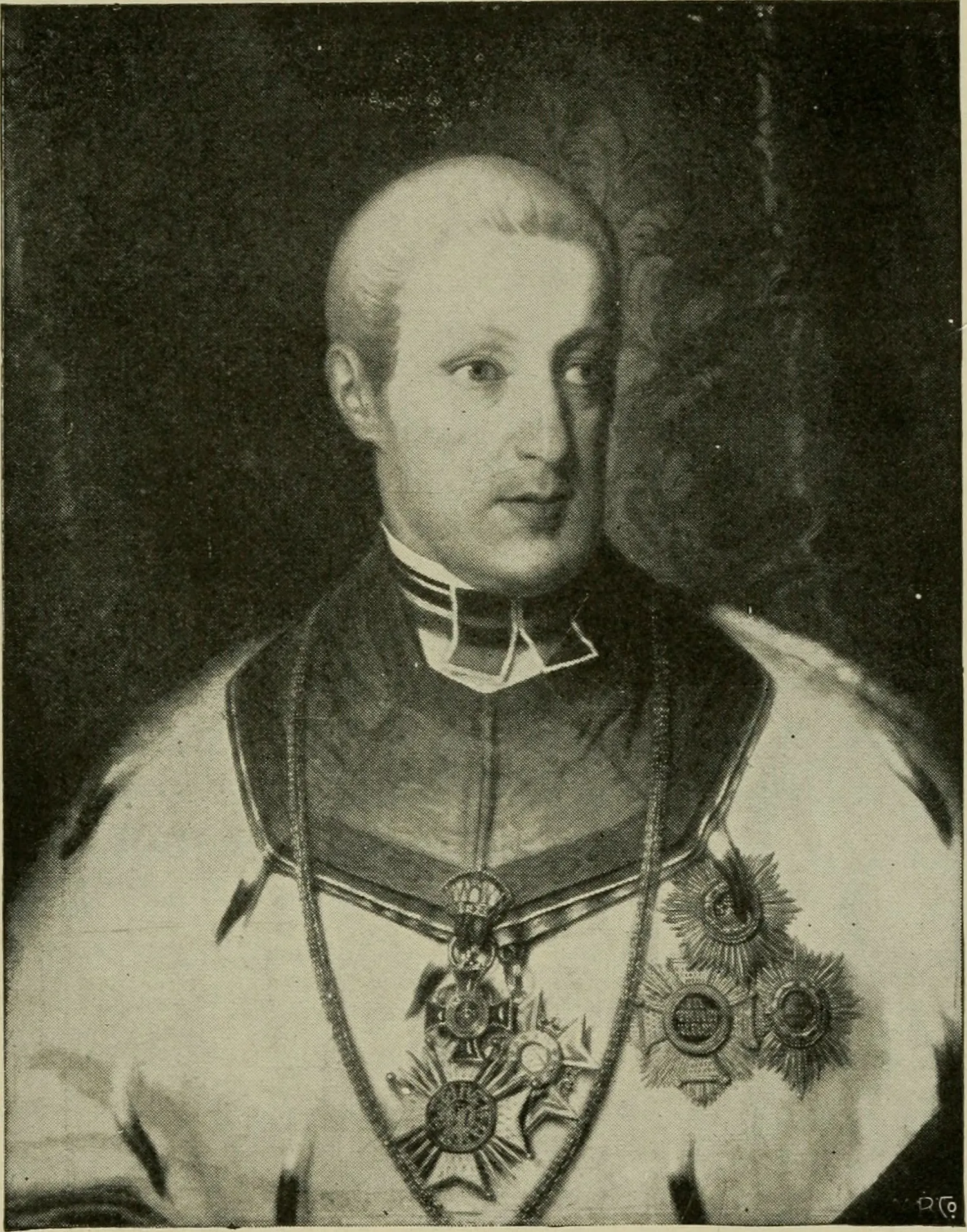
- Archduke Rudolf of Austria
- Duration
- approx. 38–40 minutes
The piano erupts before the conductor has finished the opening chord. Three massive E-flat major chords from the orchestra — and after each one, the soloist tears through a cascading cadenza, alone, as if refusing to wait for permission. No piano concerto had ever begun this way. Beethoven was not asking the soloist to introduce himself politely. He was making an entrance by force.
This is the Piano Concerto No. 5 in E-flat major, Op. 73 — the “Emperor.” Beethoven composed it while French artillery shells fell on Vienna, in a year that cost him his patron, his hearing, and any remaining comfort. What emerged was not despair but defiance made audible: the largest, most ambitious piano concerto anyone had written, and the last he would ever compose.
Follow the Score
Work Information
| Full Title | Piano Concerto No. 5 in E-flat major, Op. 73 |
| Nickname | “Emperor” (not given by Beethoven) |
| Composer | Ludwig van Beethoven (1770–1827) |
| Composed | 1809, Vienna |
| Dedication | Archduke Rudolf of Austria |
| Premiere | 28 November 1811, Gewandhaus, Leipzig (Friedrich Schneider, piano) |
| Vienna Premiere | 12 February 1812, Großer Redoutensaal (Carl Czerny, piano) |
| Duration | Approximately 38–42 minutes |
| Movements | I. Allegro · II. Adagio un poco mosso · III. Rondo: Allegro ma non troppo |
| Key | E-flat major |
| Scoring | Solo piano, 2 flutes, 2 oboes, 2 clarinets, 2 bassoons, 2 horns, 2 trumpets, timpani, strings |
Vienna Under Fire: 1809
To understand why the Emperor Concerto sounds the way it does, you need to know what Beethoven endured in the months surrounding its composition.
The 1808 Akademie: A Public Humiliation
On December 22, 1808, Beethoven staged an Akademie at the Theater an der Wien — premiering the Fifth and Sixth Symphonies, the Fourth Piano Concerto, and the Choral Fantasy. Four hours in an unheated theater. By the finale, the performance collapsed: the Choral Fantasy fell apart mid-movement, and Beethoven stopped the orchestra to restart in full view of the audience. This was his last significant public performance as a pianist.
Cannons Over Vienna
Five months later, Napoleon’s army besieged Vienna. On the night of May 11, 1809, French artillery began bombarding the city. Beethoven — whose hearing loss amplified low-frequency concussions — retreated to his brother’s cellar and pressed pillows against his ears.
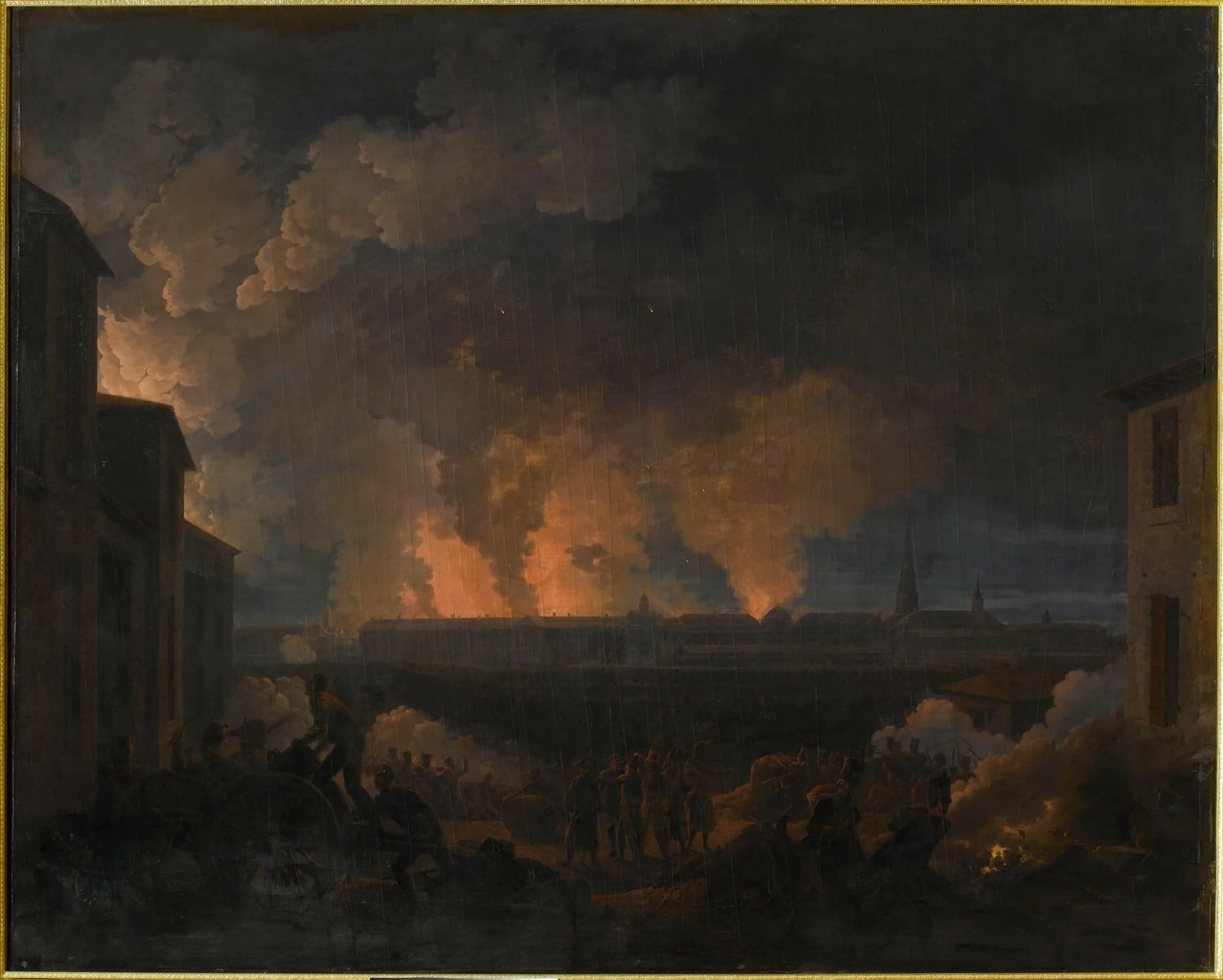
Vienna fell on May 13. Inflation soared, patrons scattered. Archduke Rudolf — Beethoven’s student, patron, and the concerto’s dedicatee — fled with the imperial family. Beethoven wrote: “Nothing but drums, cannons, and human misery in every form.”
Between the catastrophe of December and the bombardment of May, Beethoven composed his Fifth Piano Concerto. Its overwhelming confidence did not emerge from comfort. It emerged from its opposite.
The “Emperor” Name: What Beethoven Never Said
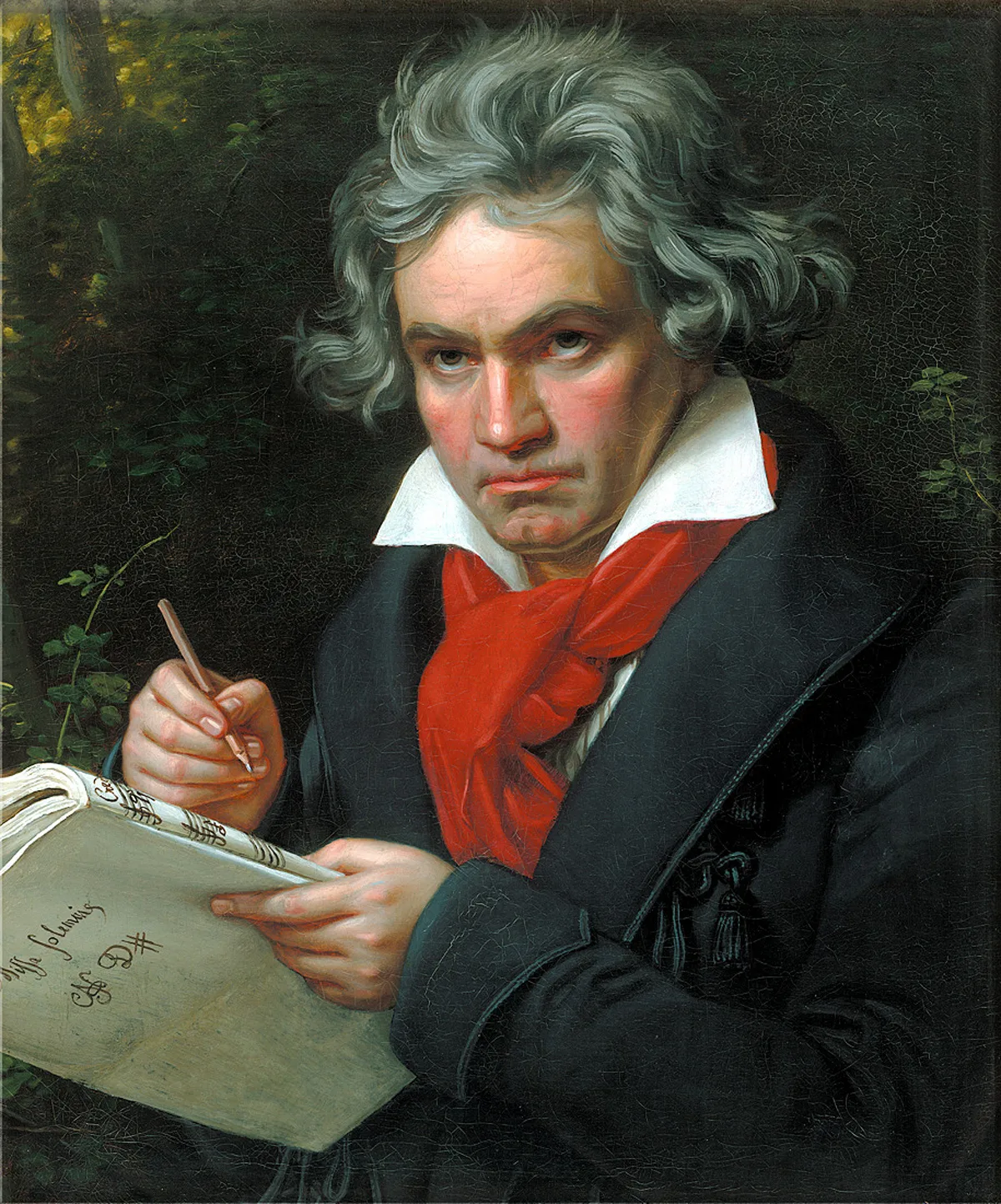
Beethoven did not call this concerto “Emperor.” The nickname appears nowhere in his manuscripts, letters, or documented conversations. In German-speaking countries, the work is simply Klavierkonzert Nr. 5. The imperial title is an English-language phenomenon.
The most cited origin involves Johann Baptist Cramer, the London pianist who championed Beethoven in England. Cramer reportedly declared it “an emperor among concertos.” The attribution relies on secondhand accounts, but his name is consistently attached to the story.
The irony is sharp. In 1804, upon learning Napoleon had crowned himself Emperor, Beethoven tore the dedication from his Third Symphony (the Eroica), scratching out Napoleon’s name so violently he ripped the paper. Five years later, that same Napoleon’s cannons were destroying his city. The “Emperor” label is either marketing or historical irony. Either way, it stuck.
A Deaf Man’s Piano Concerto
This is the last piano concerto Beethoven completed. By 1809 his deafness had ended his performing career; the 1808 Akademie made that brutally clear. He would compose piano music for another fifteen years but never perform a concerto in public again.
Yet the Emperor does not sound like a farewell. It is aggressive, extroverted, enormous. Beethoven wrote it knowing he could not play it, making no concessions to that fact. Freed from the constraints of his own declining ability, he composed a piano part of unlimited ambition — a final declaration for an instrument he could no longer play.
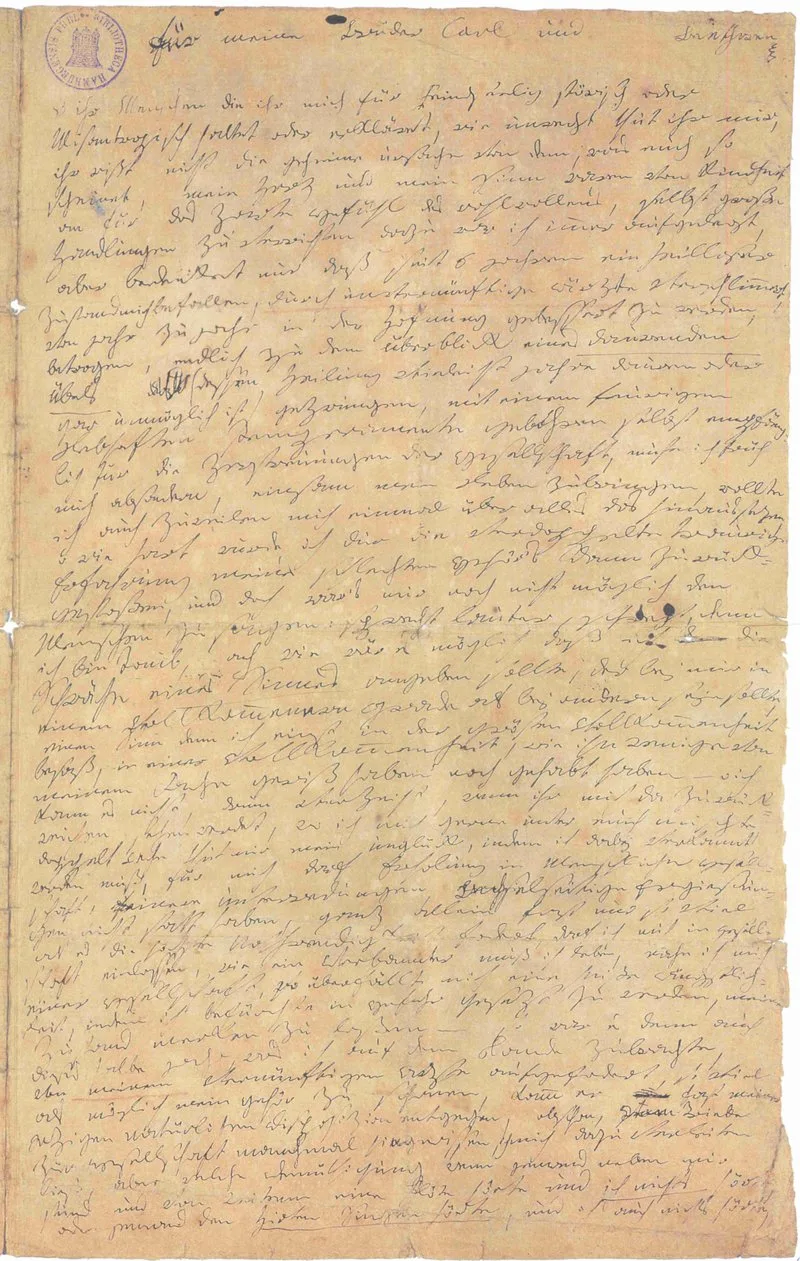
His letter — “nothing but drums, cannons, and human misery” — gains another dimension considering his hearing. He could still perceive low-frequency vibrations: artillery thuds, collapsing masonry. The high frequencies of speech and orchestral detail were fading or gone. The Emperor’s opening — those three massive chords — is the kind of sound a deaf man could still feel in his body.
Movement Guide: Listening Along
I. Allegro (E-flat major)
The orchestra strikes an E-flat major chord; the piano responds with a solo cadenza. This happens three times — tonic, subdominant, dominant — the piano cascading differently through each. Only then does the orchestra begin the exposition proper. The gesture establishes the piano’s authority before the musical argument has begun.
The revolutionary moment comes near the end. Classical concertos traditionally included a cadenza — an extended solo passage, usually improvised, showcasing the performer’s virtuosity. Beethoven wrote: “Non si fa una Cadenza, ma s’attacca subito il seguente” — “Do not play a cadenza; proceed immediately to what follows.” He composed a brief, integrated passage instead.
This was a statement of absolute control. The cadenza had been the soloist’s domain for generations — a moment of personal freedom within the composer’s framework. Beethoven abolished it. Virtually every major piano concerto written afterward follows his precedent: the composer writes the cadenza.
II. Adagio un poco mosso (B major)
The slow movement is written in B major — an extraordinary choice, as remote from E-flat as possible while maintaining an enharmonic connection (B major = C-flat major, the lowered sixth degree). The effect is immediate: we are transported to a different emotional world entirely. The piano enters pianissimo with a decorated version of the orchestral hymn, and the movement never becomes dramatic. Its power lies in restraint.
Listen carefully to the final moments. The piano descends to a low B natural, then repeats a single note — B, B, B — which quietly becomes B-flat. That half-step shift transforms the harmonic landscape, pivoting toward E-flat major. The movement does not end. It dissolves into the third without pause.
III. Rondo: Allegro ma non troppo (E-flat major)
The Adagio’s whispered B-flat hangs in the air — then the piano launches into the rondo theme, forte, with an almost physical sense of arrival. The emotional whiplash is deliberate: Beethoven collapses the distance between contemplation and exhilaration into a single breath. Any pause between movements destroys the effect.
The rondo theme is rhythmically distinctive — stamping, dance-like, contrasting with the first movement’s grandeur and the second’s calm. The coda brings a timpani solo before the piano’s final statement, and the concerto ends in a blaze that fully earns the “Emperor” title, whatever its origins.
Two Premieres: Leipzig and Vienna
The Emperor did not premiere in Vienna. The city was still recovering from the French occupation. The first performance took place on November 28, 1811, at the Gewandhaus in Leipzig, with Friedrich Schneider as soloist.
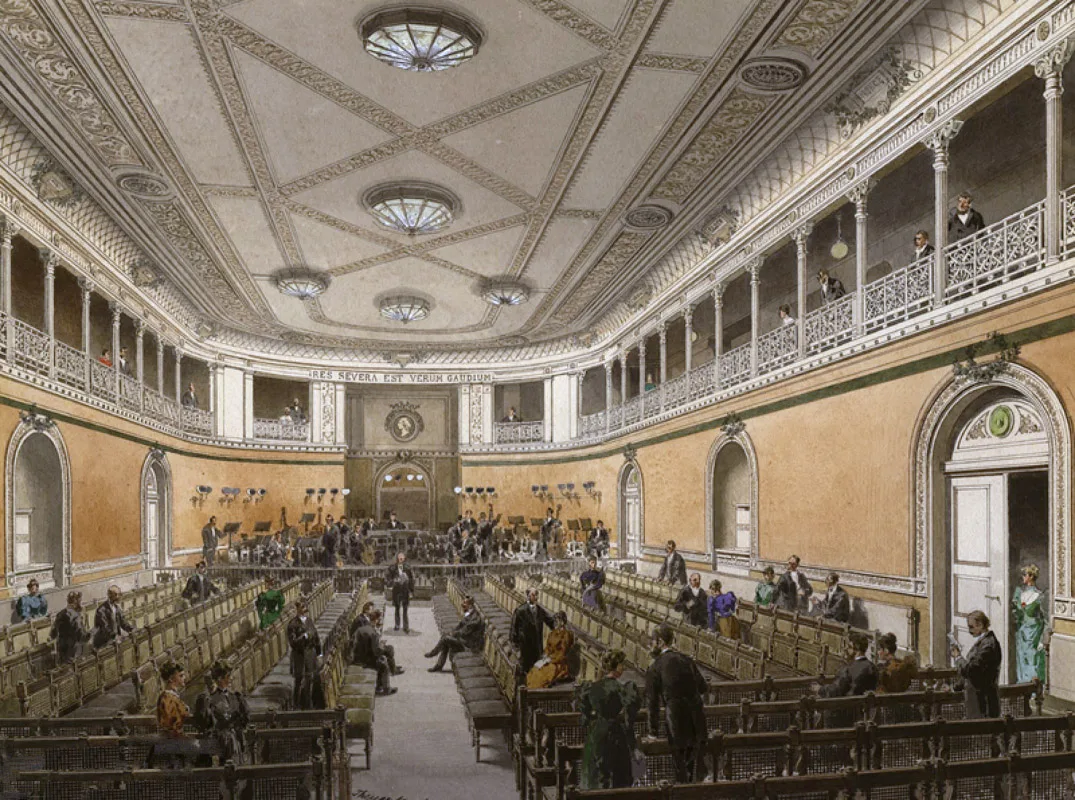
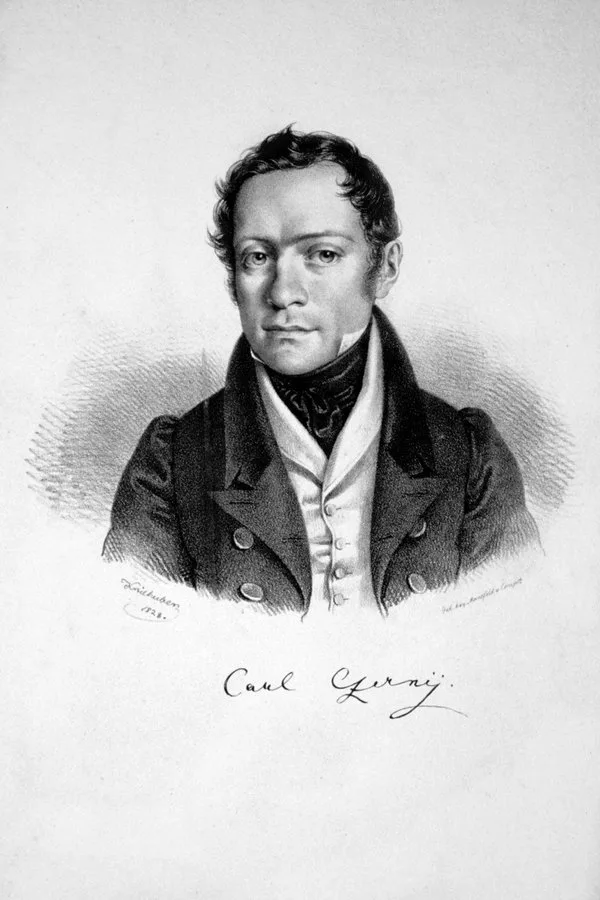
The Vienna premiere followed on February 12, 1812, with Carl Czerny — Beethoven’s twenty-year-old student. Czerny’s account of learning the concerto directly from the composer provides rare insight into Beethoven’s interpretive intentions.
The Vienna performance was not a triumph — one critic called it excessively long and bombastic. The concerto’s stature grew steadily after Beethoven’s death, assuming by mid-century the central position it still holds.
Recommended Recordings
Emil Gilels / George Szell / Cleveland Orchestra (1968)
Granite solidity — immense power without showmanship. Szell and Cleveland match Gilels with disciplined, transparent orchestral playing. The Emperor as structural monument: vast, immovable, deeply satisfying.
Krystian Zimerman / Leonard Bernstein / Vienna Philharmonic (1989)
Two perfectionists from opposite directions: Zimerman, obsessive about tonal color; Bernstein, incapable of conducting without dramatic narrative. The slow movement achieves a hymnal stillness few versions match, and the attacca transition hits with genuine physical impact. Frequently called the definitive modern recording — the claim is defensible.
Leon Fleisher / George Szell / Cleveland Orchestra (1961)
Recorded before the focal dystonia that would rob Fleisher of his right hand in 1965. His playing is powerful, rhythmically incisive, structurally lucid. Where Gilels’s later recording with Szell has monumental weight, Fleisher’s has forward momentum — unstoppable propulsion through the first movement that is unique in the discography.
Maurizio Pollini / Karl Böhm / Vienna Philharmonic (1976)
Pollini’s flawless technique paired with Böhm’s warmly Viennese orchestral backdrop — broader tempos, richer string tone. The slow movement is particularly fine: Pollini’s crystalline touch over the Vienna strings’ pianissimo creates a texture of rare beauty.
Mitsuko Uchida / Kurt Sanderling / Royal Concertgebouw Orchestra (1998)
Something different from the monumental tradition. Uchida’s approach is more inward, attentive to harmonic subtleties. The opening cadenzas sound improvisatory rather than powerful. Sanderling, in his late eighties, conducts with a lifetime’s patience. An Emperor that prioritizes beauty over force.
If You’re Hearing This for the First Time
Start with the opening. Those first thirty seconds — the three orchestral chords and the piano’s cascading responses — will tell you whether you want to continue. If the sound of a piano refusing to wait its turn excites you, you are in the right place.
Do not worry about structure on a first listen. The first movement is grand and driving; the second quiet and hymn-like; the third fast and joyful. That arc — power, stillness, release — is all you need to know in advance.
One thing to listen for: the transition between the second and third movements. The slow movement fades to near-silence, a single repeated note — then the finale erupts. On headphones, you will feel it physically. This is one of the most carefully engineered surprises in the repertoire, and it works best the first time.
How Listeners Respond to This Concerto
People who know nothing about classical music almost always respond to the opening. The gesture needs no training to read — a solo instrument asserting itself against a full orchestra is a drama anyone understands.
Experienced listeners tend to fixate on the second movement. Its harmonic remoteness — that shift to B major, so far from home — creates a sensation of suspension that rewards repeated listening most deeply.
Pianists hear things other listeners do not: the physical difficulty, the wide leaps, the endurance the first movement demands. They also understand what “Do not play a cadenza” meant in 1809 — a composer wresting control from the performer. Some find it liberating; others, constraining. Both reactions confirm the instruction still carries its original charge.
The most consistent response, across all levels, is to the attacca. Everyone feels it. The shift from whisper to shout produces an involuntary physical reaction. You can hear it a hundred times and still feel the jolt.
Frequently Asked Questions
Who gave Beethoven’s Piano Concerto No. 5 the nickname “Emperor”?
Why didn’t Beethoven perform the Emperor Concerto himself?
What does “Do not play a cadenza” mean in the first movement?
Why does the second movement flow directly into the third?
Which recording of the Emperor Concerto should I listen to first?
The Emperor Concerto’s Enduring Place
More than two centuries later, the Emperor remains the most performed piano concerto in the standard repertoire. Every major pianist records it. Every major orchestra programs it.
It works on every level: spectacular enough to thrill a first-time listener, complex enough to reward a musicologist, demanding enough to test any pianist alive. Its emotional arc — confidence, suspended beauty, release — maps onto something fundamental in human experience.
But the concerto’s deepest power lies in its circumstances. A deaf composer, in a cellar during a bombardment, wrote the most commanding piano concerto in existence — for an instrument he could no longer play, dedicated to a patron who had fled, premiered in a city that was not his own. The music acknowledges none of this.
When the piano enters after those three opening chords, it is not introducing itself. It is announcing that it has already arrived.
Further Reading
- Beethoven’s Piano Concerto No. 1 in C major, Op. 15
- Beethoven – Piano Sonata No. 23 in F minor ‘Appassionata’, Op. 57
- Beethoven Piano Sonatas: A Guide to the Essential Works
- Beethoven Piano Sonatas: The Complete Guide to All 32 Works
- Beethoven’s Piano Sonata No. 8 in C minor, Op. 13 ‘Pathétique’