- Composer
- Gustav Mahler (1860–1911)
- Work
- Symphony No. 5 in C-sharp minor
- Key
- C-sharp minor (concluding in D major)
- Composed
- 1901–1902
- Movements
- 5 movements (3-part structure)
I. Trauermarsch (C-sharp minor)
II. Stürmisch bewegt (A minor)
III. Scherzo (D major)
IV. Adagietto — Sehr langsam (F major)
V. Rondo-Finale (D major) - Instrumentation
- Quadruple winds, 6 horns, 4 trumpets, 3 trombones, tuba, harp, timpani and percussion, strings
- Premiere
- October 18, 1904, Gürzenich Hall, Cologne
Gustav Mahler, conductor - Duration
- approx. 70–75 minutes
A single trumpet call shatters the silence. It’s not a heraldic fanfare announcing a king, but a military tattoo, stark and alone. It carries the rhythm of fate, a summons to attention that feels both ancient and chillingly modern. This is the sound that opens Gustav Mahler’s Symphony No. 5, and it’s a declaration of intent. Over the next seventy minutes, we will be dragged through a world of grief, rage, manic joy, and transcendent love.
Completed in 1902, the Fifth Symphony is a hinge point in Mahler’s career and, it could be argued, in the history of the symphony itself. It’s the work where he sheds the explicit literary and vocal programs of his earlier “Wunderhorn” symphonies and creates a purely instrumental universe, a vast novel in sound. The journey from the C-sharp minor of that opening funeral march to the blazing D major of the finale is more than a technical shift in key; it is a psychological odyssey from trauma to triumph.
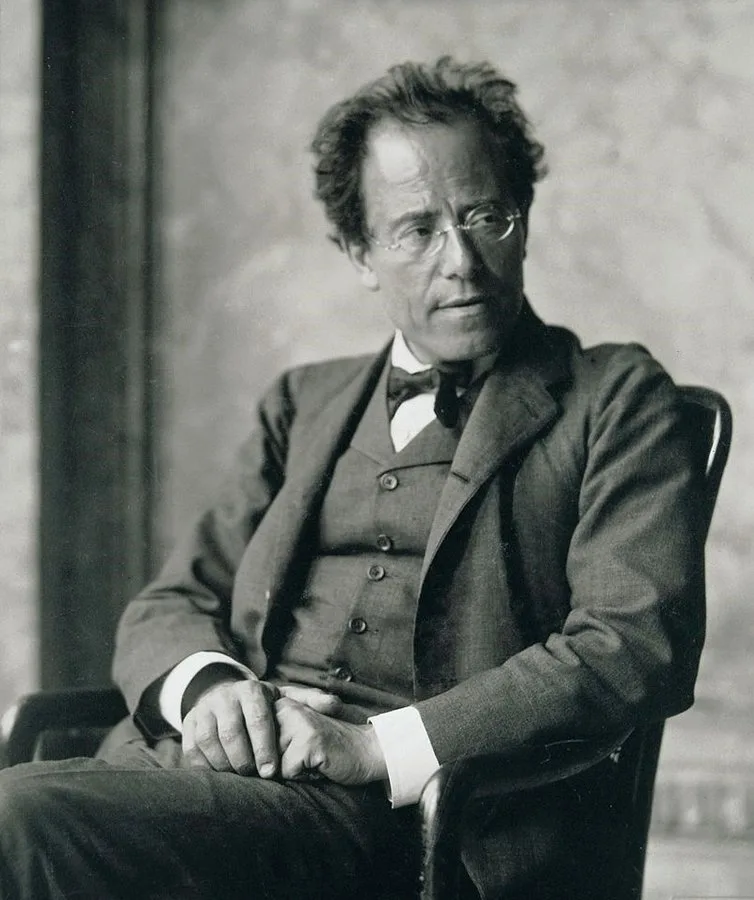
The Man Who Composed Death from the Inside
To understand the Fifth Symphony, you must first understand the state of the man who wrote it in the first years of the 20th century. Gustav Mahler was, by 1901, the all-powerful director of the Vienna Court Opera, the most prestigious musical post in Europe. But he was also a man living on a knife’s edge.
In February of that year, Mahler suffered a massive intestinal hemorrhage. He nearly bled to death on his own floor. A doctor who was summoned by chance saved his life, but the experience was profoundly scarring. Mahler later said he felt he had been on the verge of “giving up the ghost.” This was not a metaphorical brush with mortality; it was a cold, clinical, and terrifying reality.
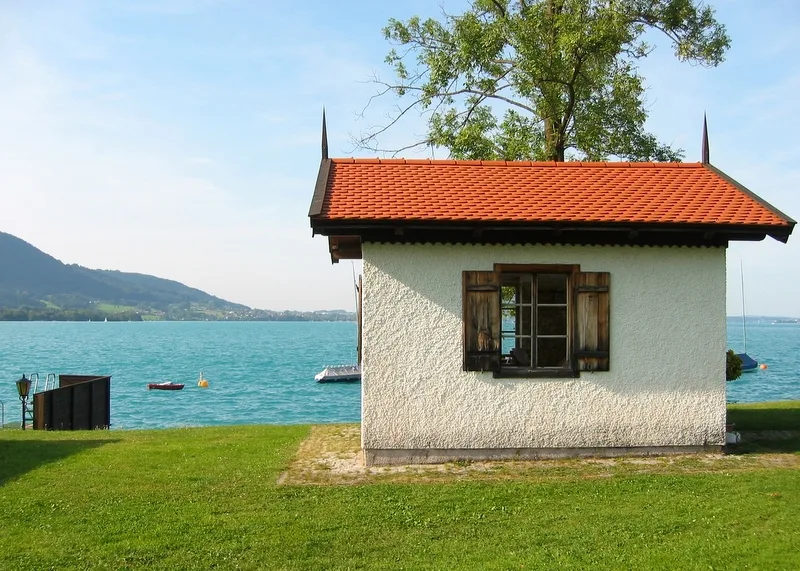
Then, everything changed. In November 1901, he met Alma Schindler. She was 22, widely considered the most beautiful woman in Vienna, a talented composer in her own right. For the 41-year-old Mahler, it was a lightning strike. By January 1902, they were married. He spent the summer of 1902 completing the symphony, his head and heart now filled not with the memory of his near-death, but with his all-consuming love for his new wife.
This biographical whiplash — from the brink of extinction to the pinnacle of romantic fulfillment — is the engine of the Fifth Symphony. It begins in the shadow of the grave and ends in the blinding sunlight of love. The symphony is the musical document of that transformation.
Five Movements, Three Worlds: The Architecture
Mahler was an architect as much as a composer. Though it has five distinct movements, Mahler grouped them into three larger parts, creating a dramatic arc that is both emotionally satisfying and structurally sound.
- Part I: The Abyss (Movements 1 and 2) — The funeral march sets the scene of public mourning and private despair; the violent Allegro is the psychological explosion that follows.
- Part II: The World (Movement 3) — The colossal Scherzo is a vast landscape of waltzes and rustic Lándler dances, filled with complex counterpoint that suggests the dizzying energy of existence itself.
- Part III: The Ascent to Light (Movements 4 and 5) — The Adagietto, a sublimely intimate love letter for strings and harp alone, leads into a triumphant D major finale.
Movement I: The Funeral March That Starts Everything
The instructions are explicit: Trauermarsch. In gemessenem Schritt. Streng. Wie ein Kondukt. (Funeral March. At a measured pace. Strict. Like a procession.) The symphony does not begin with a melody, but with a rhythm tapped out by a solo trumpet — the Austrian military signal for ‘General Assembly,’ twisted into something ominous.
But Mahler is never content with a single emotion. The march is soon torn apart by the first of two trios — faster, contrasting sections that reveal the turmoil beneath the solemn facade. The first trio is a blast of raw pain: the trumpet screams, the violins lash out in a frenzy of triplets, and the orchestra convulses with wild, almost animalistic grief.
The movement ends as it began, with the funereal rhythm fading into a final, pizzicato pluck from the cellos and basses. It’s the sound of a coffin lid closing. The key of C-sharp minor has been firmly established as the home of this darkness.
Movement II: Storm Without End
Stürmisch bewegt, mit grösster Vehemenz. (Stormily agitated, with the greatest vehemence.) There is no pause. The second movement erupts from the embers of the first with terrifying violence. This is the grief unleashed — a psychological tempest.
And then, in the eye of the storm, a miracle occurs. The chaos subsides, the tempo slows, and the key shifts to a radiant D major. The brass intone a noble, triumphant chorale. It is a vision of hope, a glimpse of a different world. This chorale is the most important thematic seed in the entire symphony — the destination that the rest of the work will strive to reach. But here, it is only a vision. The storm returns.
Movement III: The Scherzo — Heart of the Symphony
This is the center of the symphony, and its longest and most ambitious movement. The key signature shifts to D major — the key of the hopeful chorale from the previous movement — and the mood is one of vigorous, complex life.
The dominant voice of this movement is the solo horn, a part so demanding and central that Mahler marks it corno obligato (obligatory horn). Mahler masterfully weaves together two distinct types of Austrian dance: the Lándler, a rough-hewn, earthy peasant dance, and the more sophisticated, urbane waltz. The question is no longer ‘How do I deal with death?’ but ‘How do I choose to live?’
Movement IV: The Adagietto — A Love Letter in Sound
After the orchestral tumult of the Scherzo, Mahler creates a moment of radical intimacy. The Adagietto is scored for only strings and harp. The effect is of stepping out of a crowded ballroom into a moonlit garden.
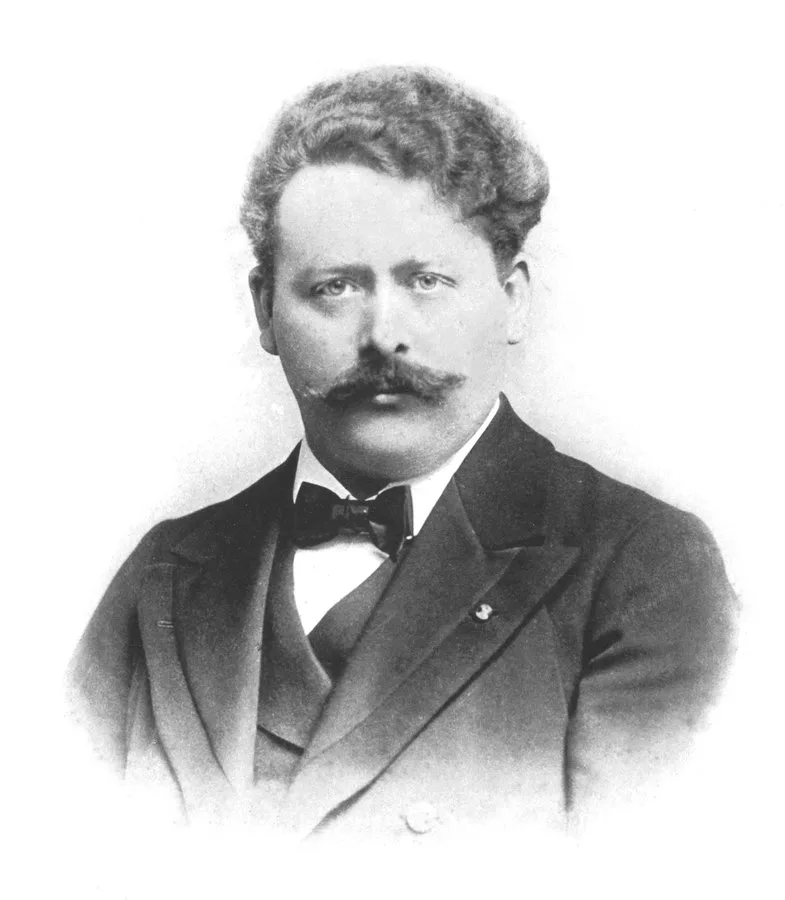
For decades, the Adagietto has been associated with death and mourning — almost entirely the legacy of Luchino Visconti’s 1971 film, Death in Venice. The reality could not be more different. Mahler’s friend, the conductor Willem Mengelberg, wrote in his conducting score that Mahler had sent the manuscript of the Adagietto to Alma before their marriage as a wordless proposal: “This Adagietto was Gustav Mahler’s declaration of love for Alma! Instead of a letter, he sent her this in manuscript form; no other words were needed.”
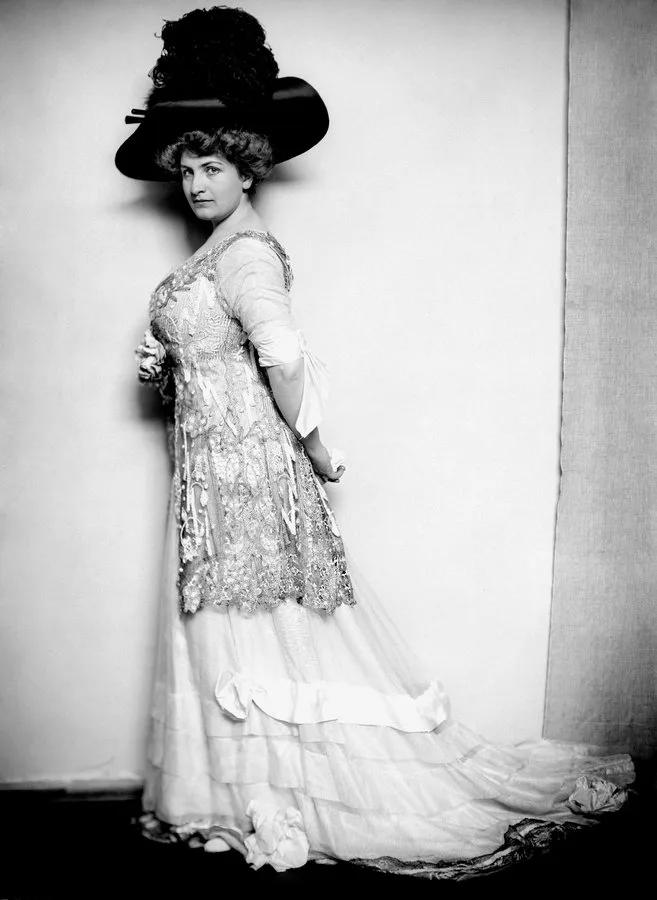
Movement V: The Rondo Finale — Arriving at Light
The Adagietto ends on a note of unresolved suspension. The Finale shatters the quiet with a horn call — recalling the opening of the first movement, but transformed. What was a dark summons is now a morning call to a bright new day. We have arrived, definitively, in D major.
The masterstroke of the finale is how Mahler ties the entire symphony together. The brass intone the glorious D major chorale that first appeared as a fleeting vision in the second movement. Back then, it was an unattainable dream swallowed by the storm. Here, at the symphony’s climax, it returns in its full, blazing glory. This is not a simple happy ending; it is an earned triumph.
Why This Symphony Changed Everything
Mahler’s Fifth marks his turn to a purely instrumental symphonic form — his first four symphonies all rely on the human voice or explicit song-based programs. The dense, polyphonic textures of the Fifth, especially in the Scherzo and Finale, were unlike anything being written at the time.
It is no coincidence that Arnold Schoenberg and Alban Berg, Mahler’s younger Viennese contemporaries, saw him as a prophet. While the Fifth is still a tonal work, its intense chromaticism pushed the boundaries of the traditional harmonic system. It stands with one foot in the Romantic tradition of the 19th century and the other stepping boldly into the anxieties and innovations of the 20th.
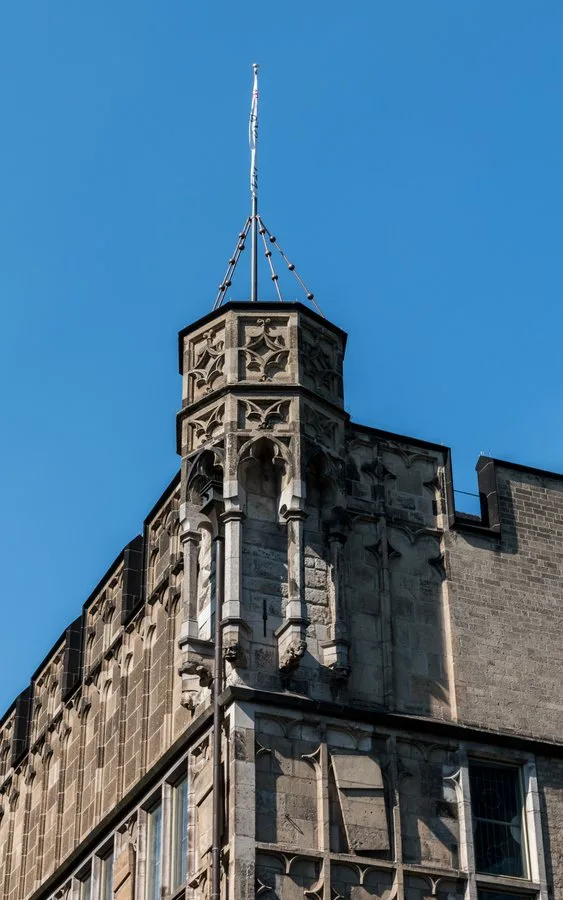
The world premiere at Cologne’s Gürzenich Hall on October 18, 1904, conducted by Mahler himself, received a mixed reception. Critics found it complex and unwieldy. Yet 120 years later, Symphony No. 5 has become one of the most frequently performed works in the orchestral canon. For a broader guide to the symphonic form, see our symphony guide.
Recommended Recordings
- Claudio Abbado with the Lucerne Festival Orchestra (2004, Deutsche Grammophon) — For many, this is the modern reference recording. Abbado’s interpretation is architectural and clear-headed without sacrificing emotion. His Adagietto is a flowing, tender love song.
- Leonard Bernstein with the Vienna Philharmonic (1973, Deutsche Grammophon) — Bernstein conducts with his heart on his sleeve. His famously slow Adagietto is a piece of high tragedy, a landmark interpretation that has defined the movement for generations.
- Herbert von Karajan with the Berlin Philharmonic (1973, Deutsche Grammophon) — If Abbado is about clarity and Bernstein is about raw emotion, Karajan is about sheer sonic beauty. As a display of orchestral virtuosity and epic sweep, it is undeniably compelling.
- Riccardo Chailly with the Royal Concertgebouw Orchestra (1997, Decca) — A superb modern recording that strikes a fine balance between structural integrity and emotional impact.
Listen Along with the Score
Frequently Asked Questions
What key is Mahler’s Symphony No. 5 in?
The symphony is officially designated as being in C-sharp minor, the key of the opening Funeral March. However, a central theme of the work is its journey away from this dark key. The symphony concludes in a triumphant D major — a symbolic step up into the light.
How long is Mahler Symphony No. 5?
A typical performance lasts between 70 and 75 minutes. The duration varies significantly based on the conductor’s chosen tempos, especially in the Adagietto movement, which can range from under 8 minutes to over 12.
What is the Adagietto movement and why is it famous?
The Adagietto is the fourth movement, scored only for strings and harp. It became world-famous after its prominent use in Luchino Visconti’s 1971 film Death in Venice. Despite its association with mortality in popular culture, Mahler wrote it as a love letter to his future wife, Alma.
Did Mahler write Symphony No. 5 as a love letter to Alma?
The Adagietto, its emotional core, is widely believed to be one. According to conductor Willem Mengelberg, Mahler sent the Adagietto manuscript to Alma as a wordless declaration of love. The symphony’s overall journey from darkness to light reflects the profound, life-changing impact she had on him.
What movie used Mahler’s Adagietto from Symphony No. 5?
Luchino Visconti’s 1971 film Death in Venice, based on Thomas Mann’s novella, used the Adagietto extensively as its leitmotif. The film’s association of the music with tragedy and mortality has permanently colored its public perception.
How many movements does Mahler Symphony No. 5 have?
Five movements, structured into three larger parts: Part I (Movements 1–2), Part II (the central Scherzo), and Part III (the Adagietto and Rondo-Finale).