- Composer
- Ludwig van Beethoven (1770–1827)
- Work
- Mass in C major, Op. 86
- Composed
- 1807, on commission from Prince Nikolaus II Esterházy
- First performance
- 13 September 1807, Eisenstadt, Beethoven conducting
- Movements
- Five: Kyrie · Gloria · Credo · Sanctus (with Benedictus) · Agnus Dei
- Scoring
- Soprano, alto, tenor and bass soloists, four-part chorus, orchestra with organ
- Playing time
- About 42 minutes
- Published
- 1812, Breitkopf & Härtel, Leipzig — dedicated to Prince Ferdinand Kinsky
The man who paid for this piece heard it once and decided it was a mistake.
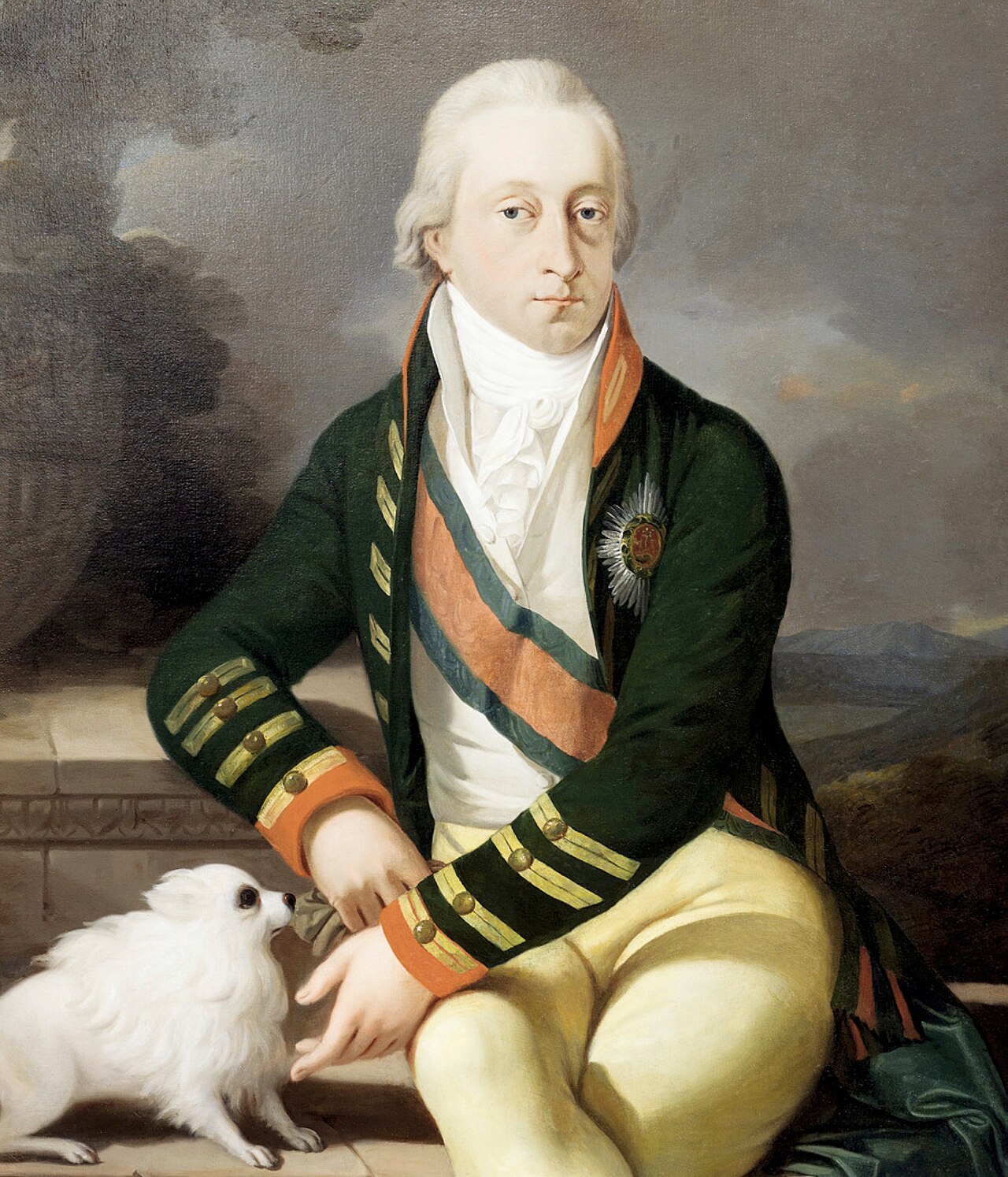
On 13 September 1807, in Eisenstadt, Beethoven conducted the first performance of his Mass in C major, Op. 86, for Prince Nikolaus II Esterházy. The anecdote that has followed the work ever since has the Prince turning to the composer afterwards and asking: “But, my dear Beethoven, what is that you have done again?” Johann Nepomuk Hummel, the court’s music director, is reported to have laughed. Beethoven went back to Vienna.
Here is the part that usually gets left out. The Prince was not simply being a philistine. He had spent a decade hearing Haydn deliver exactly what a name-day Mass was supposed to be, and Beethoven handed him something that behaved differently at almost every turn. The Prince’s confusion is evidence, not just a punchline — and once you know what he was confused by, the piece stops being a footnote and starts being one of the most rewarding hours in Beethoven’s catalogue.
This guide is for that. What the fuss was about, what to listen for, and which three recordings are worth your money.
What actually went wrong in Eisenstadt
The commission came out of a routine. Between 1796 and 1802, Haydn composed six masses to celebrate the name-day of Princess Maria Josepha Hermenegilde, the Prince’s wife. By the time the Prince needed a new one, Haydn was in his seventies and had stopped composing. Beethoven got the job.
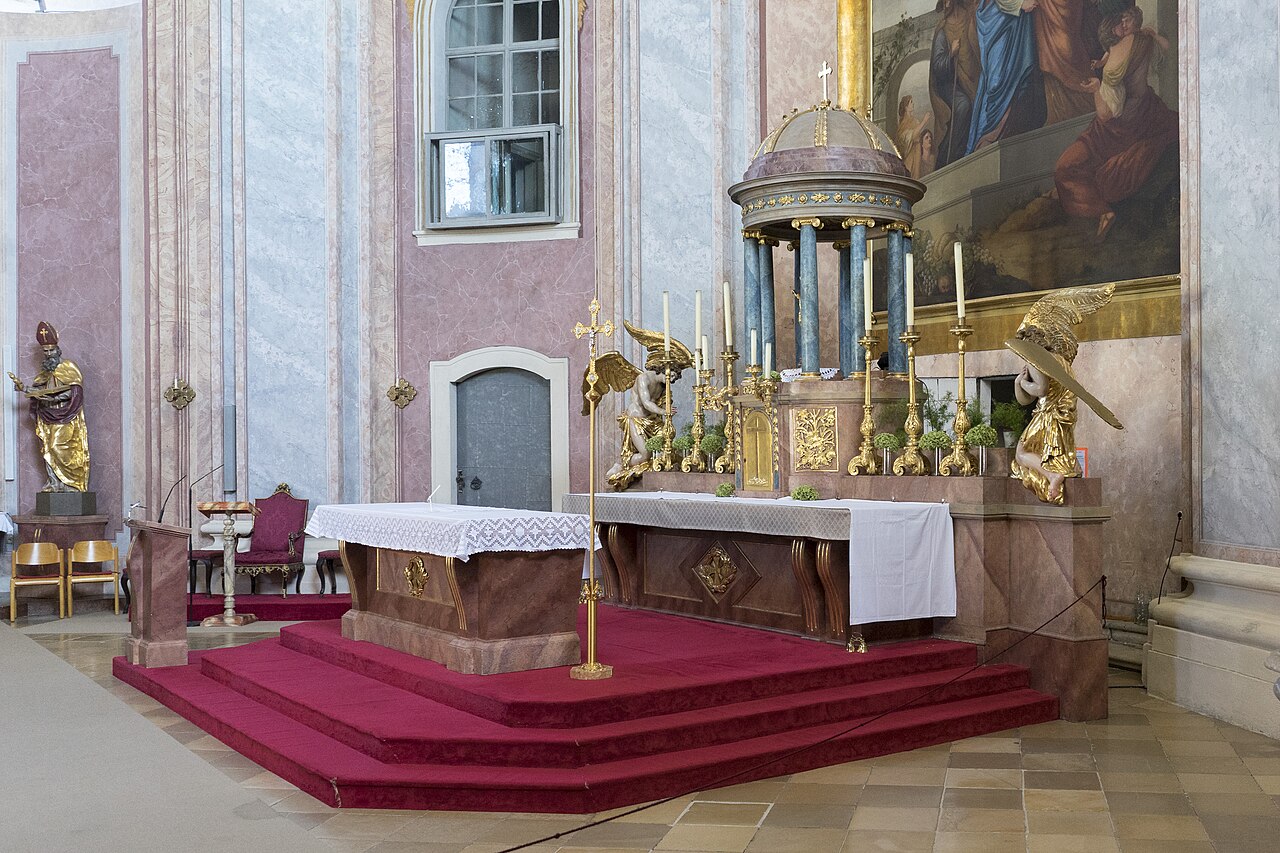
So the audience arrived with a very specific set of expectations, formed by one composer, in one place, at the same point in the calendar year after year. That is a brutal room to walk into with something new. We do not even know for certain which room it was: the site of the first performance is usually given as either the Bergkirche or the chapel of Schloss Esterházy, and the sources do not settle it.
It also went in badly prepared. The musicologist Fred Stoltzfus has described the dress rehearsal as unsatisfactory, noting that only one of the five altos in the chorus turned up. Anyone who has sung or played in a choral performance knows what that means: the inner parts — which in this piece carry most of the argument — would have been guesswork right up to the day.
The Prince did not soften afterwards, either. In a letter he wrote that Beethoven’s Mass was unbearably ridiculous and detestable, and said he was not convinced it could ever be performed properly. That is not the reaction of a man who missed a subtlety. That is a man who heard something he genuinely did not want.
What to listen for
Four things make this Mass sound unlike the ones the Eisenstadt crowd knew.
One: it starts from the voices, not the orchestra. Most festive masses of the period open by announcing themselves — trumpets, timpani, a bright orchestral gesture that tells the room the service has begun. Beethoven opens the Kyrie quietly with the chorus, low and unhurried, and lets the orchestra arrive underneath. The effect is closer to someone starting to speak than to a fanfare.
Two: he treats the Latin like a dramatic text, not a fixed frame. Where Haydn keeps the liturgical rhythm moving, Beethoven stops on individual phrases and reweights them. The Et incarnatus est in the Credo darkens abruptly. The Crucifixus sinks. Then Et resurrexit snaps back into the light so fast that first-time listeners often think something has been edited.
Three: the chorus works like a symphonic development section. This is the part that would have cost the Eisenstadt singers most dearly. Beethoven builds the big choral paragraphs the way he builds a symphony — short motifs, overlapping entries, harmony that keeps refusing to settle. From inside an orchestra you feel this as the moment the string parts stop accompanying and start arguing with the voices; there is no coasting anywhere in the Gloria.
Four: the ending returns to the beginning. The Dona nobis pacem that closes the Agnus Dei brings back the Kyrie material. It rounds the work off as a single arch rather than six separate liturgical panels, and it is the clearest sign that Beethoven was thinking about the Mass as one continuous piece of music.
Beethoven’s own description is worth holding onto, because it contradicts the caricature of him. Writing about this Mass he said that “gentleness is the fundamental characteristic” of it. He also told his publisher, with typical modesty, “I believe that I have treated the text as it has seldom been treated before.” He was right on both counts, which is a rare combination.
Movement by movement
Timings below follow the complete performance embedded here — John Eliot Gardiner with the Monteverdi Choir and the Orchestre Révolutionnaire et Romantique, with Charlotte Margiono, Catherine Robbin, William Kendall and Alastair Miles. It is also my top recommendation, so you can use it as both map and verdict.
🎧 Also on: Apple Music · Spotify
Kyrie (from 0:00)
Five and a half minutes, and the whole argument of the piece is already on the table. The chorus enters first, softly; the plea is stated rather than performed. The middle section hands the Christe eleison to the soloists, who thin the texture down to something conversational before the full chorus comes back.
What is unusual is the poise. There is no grovelling here and no grandstanding either. If you want a single test of whether this Mass is for you, play the first ninety seconds. If that restraint reads as boring, the rest will too. If it reads as someone choosing their words carefully, you are in.
Gloria (from 5:35)
The longest movement and the one that broke the Eisenstadt choir. It opens at full force, then almost immediately drops to the four soloists at Laudamus te, then rebuilds. Beethoven keeps flipping between mass-scale and chamber-scale, and every flip is a hard entry for the singers.
The closing fugue on In gloria Dei Patris. Amen is where the movement earns its reputation. Beethoven’s fugues are not academic exercises; they accelerate. Listen to how the choral parts pile up without ever quite landing until the final bars. This is a symphony finale wearing liturgical clothing, and it is the passage where a modern professional choir sounds effortless and a small court chapel choir in 1807 would have been hanging on.
Credo (from 14:25)
The most argumentative movement, and the reason serious listeners keep coming back. The text is a list of doctrinal statements, and most settings deliver it as a list. Beethoven does not.
Three moments to catch. At Et incarnatus est the harmony goes strange and the music slows into something almost uneasy. At Crucifixus it drops to its lowest, most compressed point in the whole Mass. Then Et resurrexit arrives with no transition at all — a cut, not a fade. Some listeners find that abrupt. I think it is the single most convincing bar in the piece, because a resurrection that is eased into is not a resurrection.
The movement ends with a second fugue, tighter and more pressed than the Gloria’s. If you have heard the Fifth Symphony, the rhythmic insistence will feel familiar. These works come from the same stretch of Beethoven’s life.
Sanctus and Benedictus (from 24:54)
The Sanctus is short and, by this Mass’s standards, conventional — a proper festive acclamation with the chorus at full stretch on Osanna in excelsis.
Then the Benedictus, which is the reason to hear this piece even if you skip everything else. The four soloists carry it largely on their own, the chorus held back, the orchestra doing very little. It is the one stretch where Beethoven stops arguing and simply writes something beautiful, and it is the passage I use on people who insist they do not like choral music.
That is also the answer to the Prince’s complaint, if he had stayed for it. Whatever else this Mass is, it is not a composer showing off.
Agnus Dei (from 35:40)
The ending is quiet, and that surprises almost everyone. After the Credo and the Gloria you expect a blazing finish. Instead the soloists and chorus alternate the plea for peace and the music settles, with the Kyrie material returning to close the arch.
It is a deliberate anticlimax, and it works because everything before it was so strenuous. The Dona nobis pacem of the later Missa Solemnis would go the other way entirely — interrupted by military noise, peace treated as something under threat. Here, peace just arrives.
Haydn’s shadow, and why the comparison is unfair
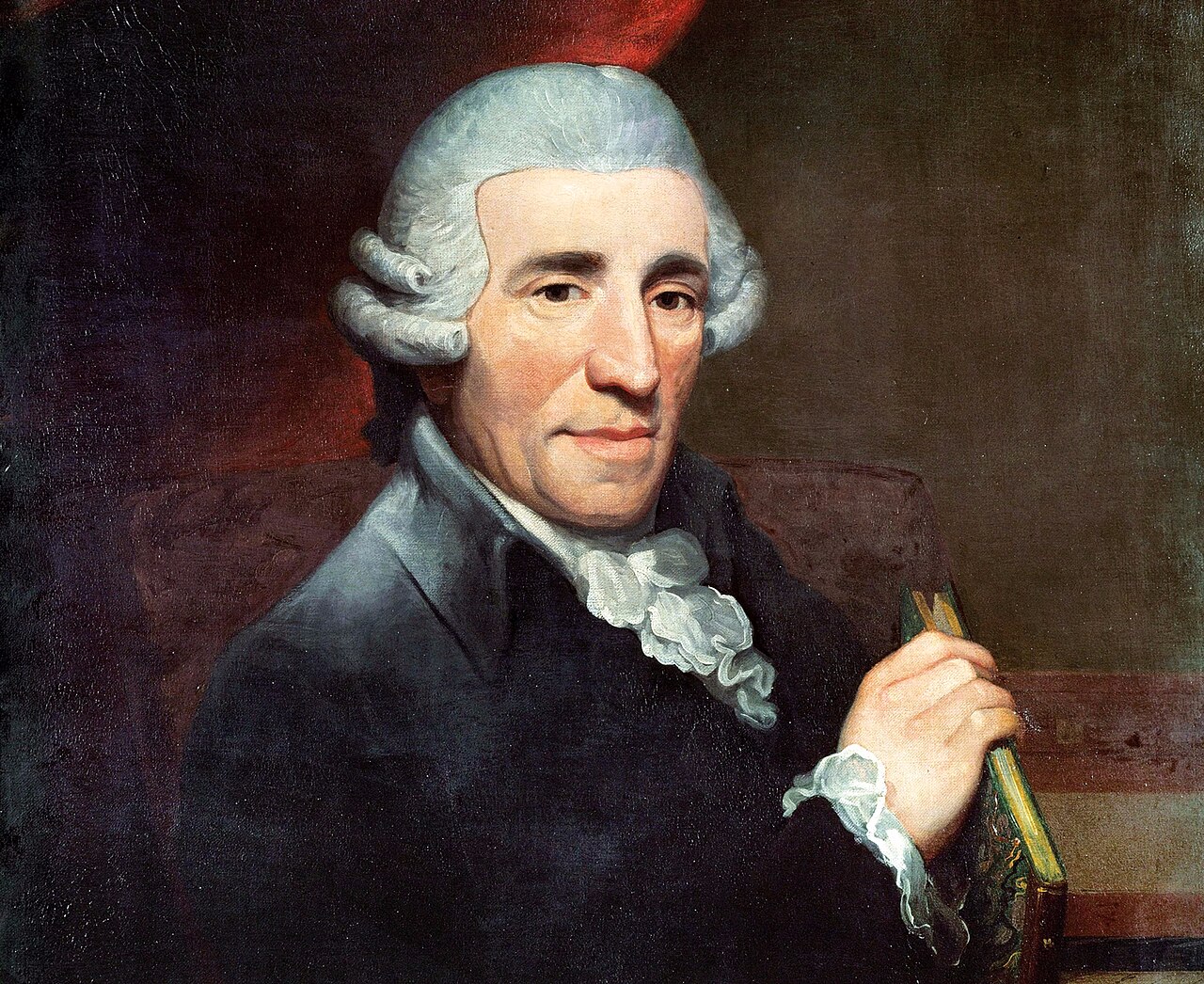
Haydn’s late masses are magnificent and they are also built for the room they were performed in. The choral writing sits well under the voice. The orchestral commentary supports rather than competes. Everything is scaled to a court chapel and a chorus the Prince actually employed.
Beethoven wrote for a choir that did not exist yet. That is not a criticism of him or of Haydn — it is a straightforward description of what happened. The Mass in C is harder to sing, harder to balance, and far less forgiving of an under-rehearsed alto section. Judged as a functional name-day Mass for the Esterházy court, it failed. Judged as a piece of music, it does things Haydn never attempted.
The vindication came the following year in Vienna. Beethoven conducted the Gloria and Sanctus on 22 December 1808, in the enormous concert that also gave the first performances of his Fifth and Sixth Symphonies. He put this Mass in the same programme as the two works that would define him. That tells you what he thought of it. If you want the other half of that legendary evening, our guide to the Pastoral Symphony covers it.
Critical opinion came around, slowly. E. T. A. Hoffmann reviewed the work in 1813 and praised its expression of a childlike serene mind — a reading that lines up almost exactly with what Beethoven himself said about gentleness being the fundamental characteristic.
Against the Missa Solemnis
The honest reason this Mass is under-recorded is that Beethoven wrote another one. The Missa Solemnis, Op. 123, occupied him from 1819 to 1823, runs seventy to eighty minutes, and is one of the most difficult works in the choral repertoire. It swallows everything near it.
But the two are not competing for the same listener. The Missa Solemnis is a summit assault: enormous, exhausting, sometimes deliberately ugly. The Mass in C is about forty-two minutes long and asks far less of you. The ideas that the later work pushes to their limit — the Credo as psychological drama, the soloist quartet as a still centre, the cyclic return at the close — are all here first, in a form you can actually take in on a first hearing.
My advice: hear this one first. Going the other direction makes the Mass in C sound like a sketch, which it is not. It is a complete work that happens to share a workshop with a more famous one.
Three recordings worth your time
John Eliot Gardiner — Monteverdi Choir, Orchestre Révolutionnaire et Romantique (Archiv Produktion)
Start here. The period instruments and the small, expert choir do exactly what this piece needs: you can hear the individual choral lines, so the overlapping entries in the Gloria fugue read as counterpoint instead of a wall. Gardiner’s tempos are quick without sounding rushed, and the soloists — Margiono, Robbin, Kendall, Miles — blend rather than compete in the Benedictus, which is the correct choice. The one trade-off is scale: if you want the Gloria to overwhelm you, this will feel lean.
🎧 Also on: Apple Music · Spotify
Richard Hickox — Collegium Musicum 90 (Chandos Chaconne, recorded September 2002)
The warmer period-instrument option, and the one I reach for when I want the piece to sound like a service rather than a concert. Hickox lets the phrases breathe more than Gardiner does, and the woodwind detail in the Kyrie comes through beautifully. Rebecca Evans, Pamela Helen Stephen, Mark Padmore and Stephen Varcoe make an unusually well-matched quartet. Where it gives ground is the Credo — the darkening at Et incarnatus est lands harder in Gardiner’s hands.
▶ Listen on YouTube · Apple Music · Spotify
Matthew Best — Corydon Singers and Corydon Orchestra (Hyperion CDA66830, recorded September 1995)
The modern-instrument alternative, and the budget pick, since it has been reissued on Hyperion’s Helios line as CDH55263. Best takes a more devotional view than either period-instrument version: the Kyrie is genuinely prayerful, the Gloria and Credo fiercely done, and the chorus is incisive enough that Beethoven’s woodwind writing stays audible. If you find historically informed choral sound thin or wiry, this is your version.
▶ Listen on YouTube · Apple Music · Spotify
Follow it with the score
If you read music even a little, this is the fastest way to hear what the Eisenstadt choir was up against. Watch the choral entries stack up in the Gloria fugue and the reason for that disastrous dress rehearsal becomes obvious on sight.
The full score is also free on IMSLP. And if you want more of Beethoven at this stage of his life, our guide to the piano sonatas covers the works he was writing on either side of it.