- Composer
- Haydn
- Work
- Cello Concerto No. 2 in D major, Hob. VIIb:2
- Key
- D major
- Composed
- c. 1783
- Movements
- 3 movements (Allegro moderato / Adagio / Rondo: Allegro)
- Instrumentation
- 2 oboes, 2 horns, solo cello, string orchestra
- Premiere
- 1783, Esterházy court; 1787, London (James Cervetto, soloist)
For a while, people thought this concerto was stolen. The accused thief? None other than Haydn’s own student.
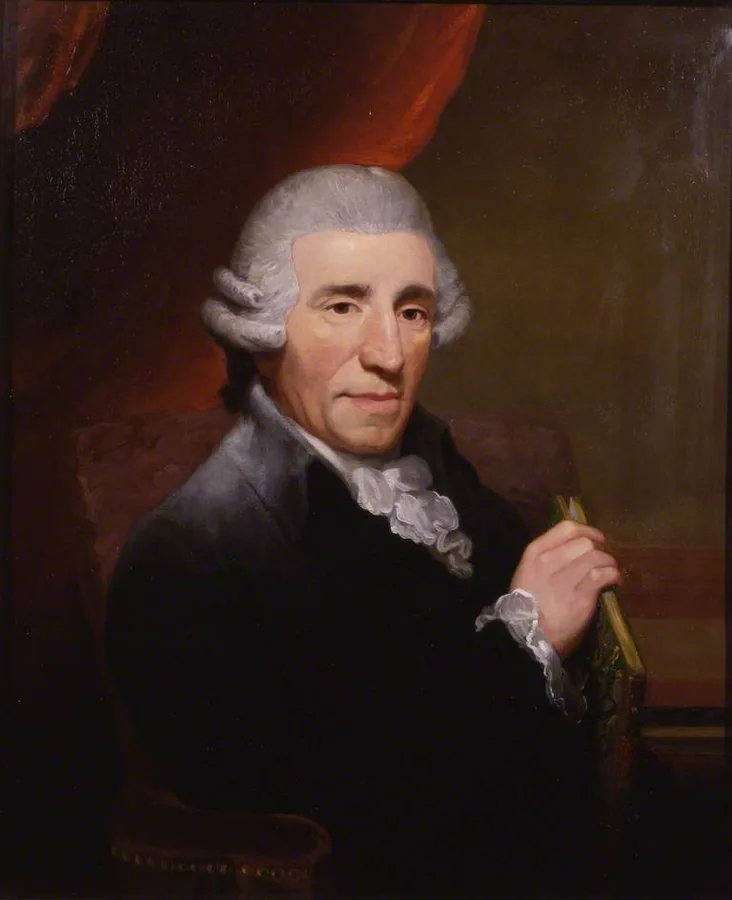
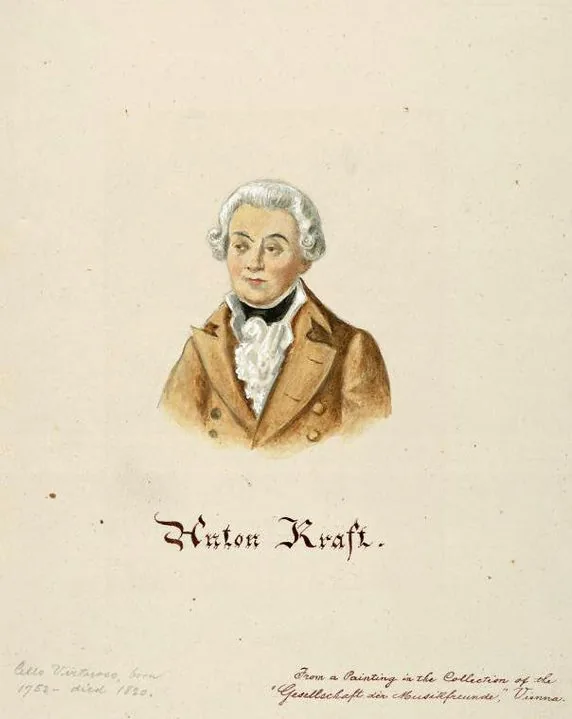
In 1783, Haydn wrote this concerto for Anton Kraft, the principal cellist at the Esterháza court. Kraft was one of the best cellists of his time, and Haydn knew his abilities inside and out. The problem was, Kraft also composed. For over a century, the music world debated whether this piece was Haydn’s or Kraft’s. Musicologists fought over its true authorship, and the mystery wasn’t solved until the 1950s.
We’ll get to that conclusion in a moment.
A Genius Trapped in Esterháza
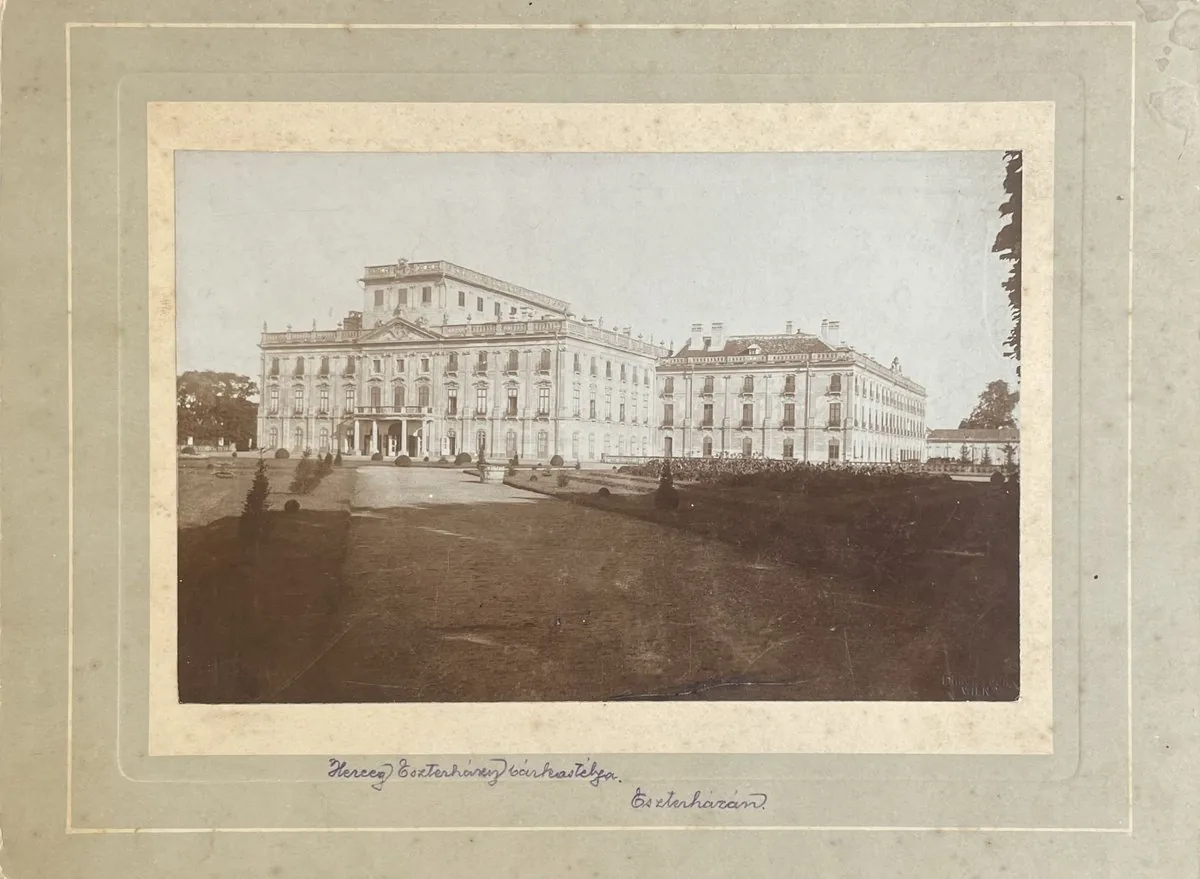
By the time Haydn wrote his second cello concerto in 1783, he was 51 years old and had been employed by the Esterházy family for over two decades. Tucked away in the Esterháza palace near the Hungarian-Austrian border, Haydn was a content machine, churning out new music every week: operas, symphonies, chamber pieces, concertos, and dance music. There was always a performance, and as music director, he also had to manage the orchestra. It was a relentless job.
But Haydn’s own take on this situation reveals how deliberately he shaped the concerto’s identity. “I was forced to become original,” he later said. He confessed that his isolation from the world actually set him free. Cut off from trends and the opinions of others, he could follow nothing but his own musical instincts.
This cello concerto was born in that very environment. Anton Kraft had joined the Esterháza orchestra in 1778. Haydn personally mentored him and knew the exact limits of his technique. The demands this concerto places on the cello—especially the brilliant virtuosity in the high register and the delicate dialogue with the orchestra—were things only Kraft could handle. It was a concerto tailored to him like a bespoke suit.
So, why the suspicion that Kraft wrote it? Because Kraft composed the cadenza for the piece himself. That cadenza was so brilliant, and some surviving copies of the score were in Kraft’s handwriting, that musicologists spent nearly 150 years believing the entire work was his. The debate only ended in 1953 when Haydn’s original manuscript was finally discovered.
London Heard It First
The first performance of this work might not have even been at the Esterháza court. The earliest official record we have is from a premiere in London in 1787.
The soloist was James Cervetto, son of the famous Italian-born cellist Giacobbe Cervetto. James was the principal cellist of the Italian Opera in London and one of England’s top soloists. A week after the premiere, the same concert was advertised again, this time explicitly stating it was a “Concerto Violoncello, composed by Haydn.” This record later became crucial evidence in settling the authorship dispute.
In 1787, Haydn was still working at Esterháza. His name was already famous across Europe, and music lovers in London were always hungry for his latest work. That’s how this concerto made its way across the channel. Haydn himself wouldn’t visit London until the 1790s, so he likely never heard his own concerto performed there. Unbeknownst to him, his music was already drawing sold-out crowds at the Concert Spirituel in Paris.
Movement by Movement: Three Conversations Between Cello and Orchestra
The three movements of this concerto are like three entirely different conversations. The first is an exchange, the second a monologue, and the third a race. It’s a simple way to remember the structure.
Mvt. 1: Allegro moderato, The Orchestra Opens the Door
When the first movement begins, the orchestra takes the lead. The strings present the theme, and the winds respond, setting the mood. About a minute in, the solo cello makes its entrance, but its arrival is anything but ordinary. The orchestra quiets down, making space for the cello to slip in gently. It doesn’t announce itself with a grand flourish; it simply joins the conversation.
This is the first thing that sets this piece apart from other Classical concertos. From the very beginning, there’s a sense that the soloist isn’t there to “defeat” the orchestra, but to talk with it. The cello doesn’t make declarations; it asks questions.
The movement follows the classic sonata form—a theme is introduced, developed, and then returns—but Haydn plays some clever games within that structure. As the theme transforms, the cello’s role constantly shifts. Sometimes it plays the same melody as the orchestra, other times it offers a completely different response, and at other moments, it takes off on its own.
The moment not to miss is just before the cadenza. The orchestra gradually fades, elegantly handing the stage over to the cello. In the cadenza, the cello is finally alone. This is where the instrument shows its full range, from deep, resonant lows to sparkling highs. The cadenza is marked in the score, and different performers often use their own versions. It’s the part of the concerto where the cellist’s individual personality comes through most clearly.
Mvt. 2: Adagio, A World of Strings
As the second movement begins, many listeners find themselves holding their breath. It feels like stepping into a different universe.
The lively dialogue of the first movement is gone, replaced by a quiet, lyrical introspection. The cello’s melody doesn’t interact with the orchestra; it floats above it. Where the first movement was a back-and-forth, this is almost a monologue. The orchestra provides a soft, gentle cushion of sound while the cello tells its story alone.
The instrumentation here is unique: Haydn uses only the string orchestra. The oboes and horns that were active in the first and third movements are silent. This completely changes the texture of the sound. Instead of a thick, full-bodied sonority, you get a thin, transparent string texture that makes the cello’s tone stand out in sharp relief.
Midway through the movement, the cello suddenly soars into its high register. After speaking in its comfortable mid-to-low range, it unexpectedly climbs into violin territory, and for a moment, it sounds like a completely different instrument. It’s as if a person who had been speaking suddenly starts to sing. Then, just as quietly, it descends back to its original range to conclude the movement.
The cello is, by nature, a low-voiced instrument. It holds down the bass line in a string quartet and anchors the low end of the orchestra. But in this movement, Haydn pulls it out of its traditional role and places it firmly in the spotlight as a soloist. By using the cello’s entire range, he shows just how vast the expressive potential of this single instrument is.
Mvt. 3: Rondo, A Race Across the Hungarian Plains
The finale is a rondo, a form Haydn often used where a main theme returns several times between contrasting episodes. But the feel of this rondo is special—it’s saturated with the colors of Hungarian folk music.
Haydn lived at Esterháza for nearly 30 years. It would be stranger if the music of the Hungarian plains and its people hadn’t seeped into his subconscious. The rhythms and melodies of this movement feel less like the elegant classicism of Vienna and more like the rustic energy of Hungary. This is why the concerto is often nicknamed ‘Rondo all’Ungarese’ (Rondo in the Hungarian style).
The rondo structure works like this: A-B-A-C-A. The main theme (A) comes back three times, with two different episodes (B and C) in between. Episode B is in A major, and episode C shifts to D minor, changing the mood. The D minor section is briefly somber, sounding like a sad Hungarian folk song, before the cheerful D major theme returns for a lively finish.
The third movement is the shortest of the three, but it has the highest energy density. The cello barely gets a moment’s rest, darting from high to low registers and trading the theme back and forth with the orchestra. As it nears the end, the notes become more compact, and the perceived tempo accelerates. That’s why you might feel a little out of breath when it’s over.
The Story of Anton Kraft, the Student Accused of Theft
Before Haydn’s original manuscript was found in 1953, this concerto had a rather dramatic history.
As mentioned, Kraft was not only a brilliant cellist but also a composer. And for a long time, the only known copies of the score were in his handwriting. With the original lost, some musicologists proposed a theory: Kraft wrote it, and Haydn merely supervised. After the German musicologist C.F. Pohl publicly made this claim in 1875, the piece was sometimes even cataloged as “Kraft’s Concerto.”
What did Kraft himself think? There’s no record of him speaking on the matter. His son later testified that his father wrote the cadenza, not the concerto, but that didn’t entirely quell the debate.
Finally, in 1953, the discovery of Haydn’s autograph manuscript ended the controversy. On the score, in Haydn’s own hand, were the words “Violoncello-Konzert von mir” (“Cello Concerto by me”). A 150-year-old argument was settled in an instant.
This episode remains one of music history’s more famous cases of misattribution. While similar disputes have surrounded Beethoven’s works, it’s rare for a student to be suspected of writing one of their master’s pieces. Knowing this story changes how you hear the concerto. You realize the technical demands of the cello part weren’t just tailored for a soloist; they were intentionally designed by Haydn as part of the work’s very structure.
The Birth of the ‘Symphonic Concerto’ and the Roots of Romanticism
In the Classical era, concertos usually followed a predictable formula. The orchestra would play a grand introduction, the soloist would enter to show off their skills, and the orchestra would pop in between to keep time. The soloist was the star, and the orchestra was the backdrop.
Haydn’s second concerto is different. The orchestra and cello are in conversation from start to finish. The cello doesn’t dominate the orchestra; it weaves in and out of it. This approach was a direct application of the techniques Haydn had been developing in his symphonies, where different instruments are woven together into an organic whole.
In this respect, Haydn’s Concerto No. 2 is a direct ancestor of the great Romantic cello concertos that followed: Dvořák’s (1895), Elgar’s (1919), and Shostakovich’s First (1959). It’s no coincidence that all these masterworks feature the cello and orchestra as equal partners in storytelling. Haydn opened that door back in 1783.
Of course, Haydn wasn’t thinking, “I am paving the way for Romanticism.” He needed a practical piece for Anton Kraft, and the result happened to change music history. It was the product of his isolated experiments at Esterháza. That quote, “I was forced to become original,” echoes with profound weight here.
Furthermore, this concerto was one of the first serious explorations of what the cello could do in its upper register. The range and technique Haydn demanded in the second and third movements were radical for the time. Without a virtuoso like Kraft, this piece likely wouldn’t exist in its current form. It’s a perfect example of how collaboration between composer and performer can enrich the music itself.
First-Time Listeners: Here’s What to Listen For
If this is your first time hearing this concerto, just remember these three things.
First, catch the cello’s entrance in the first movement. The key is the timing—the orchestra quiets down, and the cello slips in. It’s like a quiet person joining a loud party and suddenly everyone leans in to listen. This happens about a minute to a minute and a half into the piece.
Second, wait for the moment in the second movement when the cello suddenly leaps into its high register. It arrives about halfway through the movement. Without warning, the cello shifts to a completely different range. The sound of a low instrument singing like a violin is one of the most striking moments in the entire concerto.
Third, pay attention to the rhythm of the third movement. It’s European classical music, but it has a distinct folk flavor. This is the mark of Haydn’s 30 years in Hungary. It starts like a cheerful ballroom dance but then takes a sudden dark turn in the middle. Don’t miss that shift.
If you keep these three points in mind, the 27 minutes will fly by, even if you’re new to classical music.
More Mature, Though Not His First
Haydn wrote two cello concertos, No. 1 in C major and No. 2 in D major, and history has treated them quite differently.
The C major concerto was thought to be lost for centuries and was only rediscovered in 1961. The D major, on the other hand, has performance records dating back to Haydn’s lifetime (despite the Kraft controversy), including the London performance in 1787.
Listen to them back-to-back, and you’ll hear two very different personalities. No. 1 is lighter, more cheerful, with a touch of the Baroque. No. 2 is far more symphonic. The relationship between the cello and orchestra is more complex, and the harmonic structure is bolder. It’s hard to believe they were written by the same person. The C major concerto is the work of a Haydn in his early thirties, while the D major is the creation of a 51-year-old master. Twenty years of experience made all the difference.
For the performer, No. 2 is also much more difficult. The high-register work, rapid passages, and intricate interplay with the orchestra all demand a higher level of technique. It was written for a cellist of Anton Kraft’s caliber. That’s why it remains a staple of the professional repertoire and a frequent choice for music school graduation recitals. For many young cellists, mastering this concerto is a major milestone.
Comparing the two reveals how much Haydn’s concerto writing evolved over two decades. When you move from No. 1 to No. 2, you can hear exactly how much Haydn grew as a composer over two decades. The journey from the bright, elegant simplicity of the first to the complex, profound dialogue of the second is a miniature portrait of Haydn’s musical life. There’s a reason these two pieces are so often paired together.
Why the Small Orchestra? The Unique Sound of Haydn’s Concerto
The orchestra for Haydn’s Cello Concerto No. 2 is remarkably modest: two oboes, two horns, and strings. Compared to the massive symphony orchestras of today, it’s less than a tenth of the size.
This instrumentation reflects the size of the orchestra at the Esterháza court, but the sound Haydn coaxes from this small group makes you forget its size. The advantage of a small ensemble is transparency. You can hear each instrumental line clearly, without them blurring together. This is also why the solo cello can be heard as an equal partner, never getting buried by the orchestra.
The decision to remove the oboes and horns entirely in the second movement is even more daring. With only strings remaining, the sonic density drops dramatically. This empty space allows the cello’s monologue to stand out with even greater clarity. It’s a paradox where taking instruments away creates a richer expressive result. This was the kind of wisdom Haydn gained from over 30 years of experimenting with different ensembles at Esterháza.
Even today, this concerto shines brightest when performed with a smaller ensemble rather than a full symphony orchestra. It’s a favorite of modern period-instrument groups for this very reason: the delicate dialogue of a Classical concerto is best heard in an intimate setting.
A Few More Interesting Facts
Here are answers to a few questions that often come up for those new to classical music.
Who wrote the cadenza?
The cadenza most commonly performed today is attributed to Anton Kraft. As the original soloist, he composed his own. However, some cellists write their own new cadenzas. When you listen to different recordings of the same concerto, the cadenza is where you’ll hear the strongest stamp of each performer’s personality.
Why does it take a minute for the cello to enter?
This was a convention of the Classical concerto. The structure, known as a “double exposition,” had the orchestra introduce the main themes first. The orchestra would set the stage, and then the soloist would make their entrance. This structure also had the benefit of making the soloist’s arrival more dramatic.
Does the key of D major have a special meaning?
For string instruments like the violin and cello, D major is a very resonant key. The open strings of the cello are C, G, D, and A. In the key of D major, these open strings vibrate sympathetically, making the instrument’s tone brighter and richer. Haydn likely chose D major to bring out the best possible sound from Kraft’s cello.
Is this a good piece for a beginner to learn?
For cello students, this concerto sits at the transition from intermediate to advanced level. It’s a goal for students who have built a solid foundation. While it requires professional-level technique, it’s more approachable than the massive Romantic concertos. It’s common for students to tackle Haydn’s Concerto No. 1 before setting their sights on No. 2.
What Was Haydn Experimenting With?
Haydn’s Cello Concerto No. 2 is more than just a well-crafted piece; it’s a laboratory of formal experimentation. Two things, in particular, stand out.
The first is the expansion of the cello’s range. At the time, the cello was primarily seen as a bass instrument, holding down the bottom line in the orchestra and string quartet. But in this concerto, Haydn pulls the cello into the upper registers. The moments in the second movement where it soars into high notes and the relentless rapid passages in the third were quite radical by the standards of the day. Without a player like Kraft, they would have been nearly impossible to perform.
The second is the redefinition of the relationship between soloist and orchestra. As noted earlier, the orchestra here is not mere accompaniment. It presents themes, picks up melodic lines from the cello, and sometimes even stands in opposition to it. This was a structure also seen in Mozart’s piano concertos, but Haydn pioneered its application to the cello concerto.
The importance of this experiment is clear from the cello concertos that came later: Schumann’s (1850), Dvořák’s (1895), and Elgar’s (1919). All of these works treat the cello as a soloist in an equal dialogue with the orchestra. Haydn’s Concerto No. 2 stands at the beginning of that lineage.
This wasn’t necessarily a conscious revolutionary statement from Haydn. He needed a custom piece for Kraft, and his creative instincts took over. But in the end, this concerto offered a new answer to the question of what a concerto could be.
Recommended Recordings
Here are three excellent recordings. You can’t go wrong with any of them, but they each have a slightly different character.
Jacqueline du Pré / London Symphony Orchestra, Sir John Barbirolli (1969, HMV)
Jacqueline du Pré frequently performed this concerto. This 1969 recording captures her at the peak of her powers, and her rapport with Sir John Barbirolli is exceptional. If you’re looking for a performance that feels less about technical perfection and more about the cello singing with human breath, this is the first choice. Tragically, du Pré was diagnosed with multiple sclerosis in 1971 and forced to stop playing in 1973, making this one of the last great documents of her artistry.
Mischa Maisky / Chamber Orchestra of Europe (1987, DG)
Mischa Maisky’s 1987 recording is still considered a benchmark for this work. The pairing with the Chamber Orchestra of Europe perfectly demonstrates how a smaller ensemble can create a transparent and delicate sound. Maisky’s playing is warm yet incisive, and he particularly shines in the lyrical passages of the second movement. This recording makes it clear why Haydn chose a small orchestra.
Mstislav Rostropovich / Academy of St Martin in the Fields (1976)
Mstislav Rostropovich is the history of the 20th-century cello. In this 1976 recording, he performs with the Academy of St Martin in the Fields. Compared to other versions, his interpretation is grander in scale with a richer, broader tone. If you’re less interested in a chamber-music feel and want to experience the work’s symphonic scope, this is the recording to hear.
Listen with the Score
You can follow along with the score while listening. The original score is available for free on IMSLP. → View the score for Cello Concerto No. 2 in D major (IMSLP))