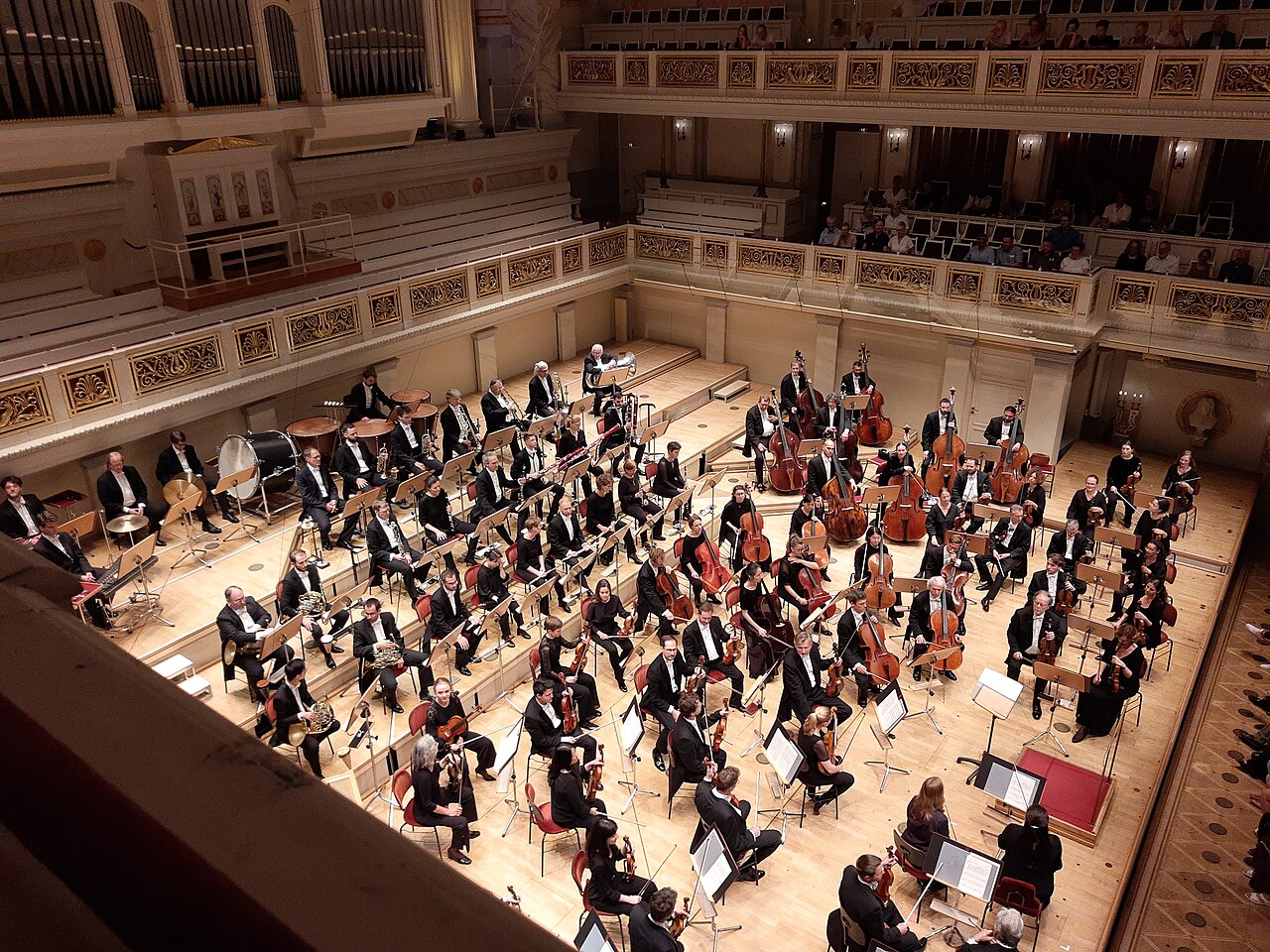
Orchestras tune to the oboe for three reasons that stack. Its double reed cuts through a stage full of instruments, so everyone can actually hear the pitch. A professional oboist can deliver that pitch, to the cent, night after night. And the oboe has been sitting in the orchestra longer than almost anything around it, which means the habit had a two-century head start. Tradition does more of the work here than program notes like to admit.
What the oboist is actually handing out
The note is the A above middle C, and its modern definition is a number: 440 vibrations per second. That figure was recommended at an international conference held in London in 1939. It was taken up by the International Organization for Standardization in 1955 as Recommendation R 16, then formalised in 1975 as ISO 16.
Before that, A meant whatever your city said it meant, and cities disagreed loudly. France fixed A at 435 by law in 1859, the diapason normal, largely because pitch had crept upward far enough to strain singers’ voices. Go the other direction and you find the period-instrument world, where many ensembles specialising in baroque repertoire have agreed on a standard of A = 415, roughly a semitone below modern pitch. None of these numbers is more correct than the others. They are agreements, and agreements move.
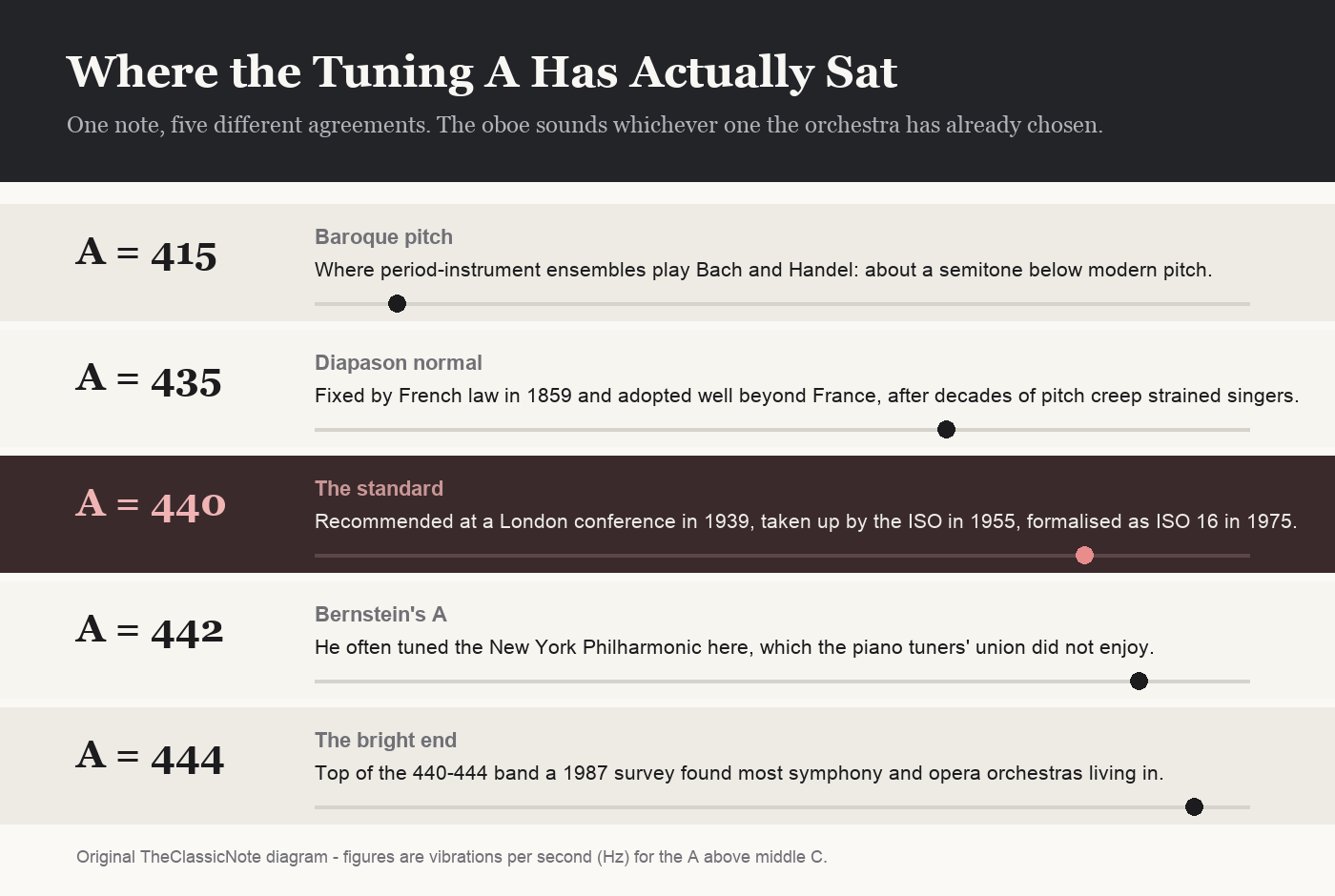
Even now the standard is not quite standard. A 1987 survey found the A of most symphony and opera orchestras ranging between 440 and 444. Leonard Bernstein often tuned the New York Philharmonic to A442, which drew complaints from the piano tuners’ union, and he maintained that both the New York and Boston orchestras had been playing at that higher pitch for years. Tuning higher buys a touch more brilliance from the strings, and each institution decides for itself how much of that brightness it wants.
Which is the first thing worth taking away. When the oboist sounds that A, they are re-issuing a decision their orchestra has already made, and a few dozen instruments — each drifted a little with the temperature and the last hour of warming up — converge on it before any music happens.
Why the oboe and not the flute, the trumpet, or the concertmaster
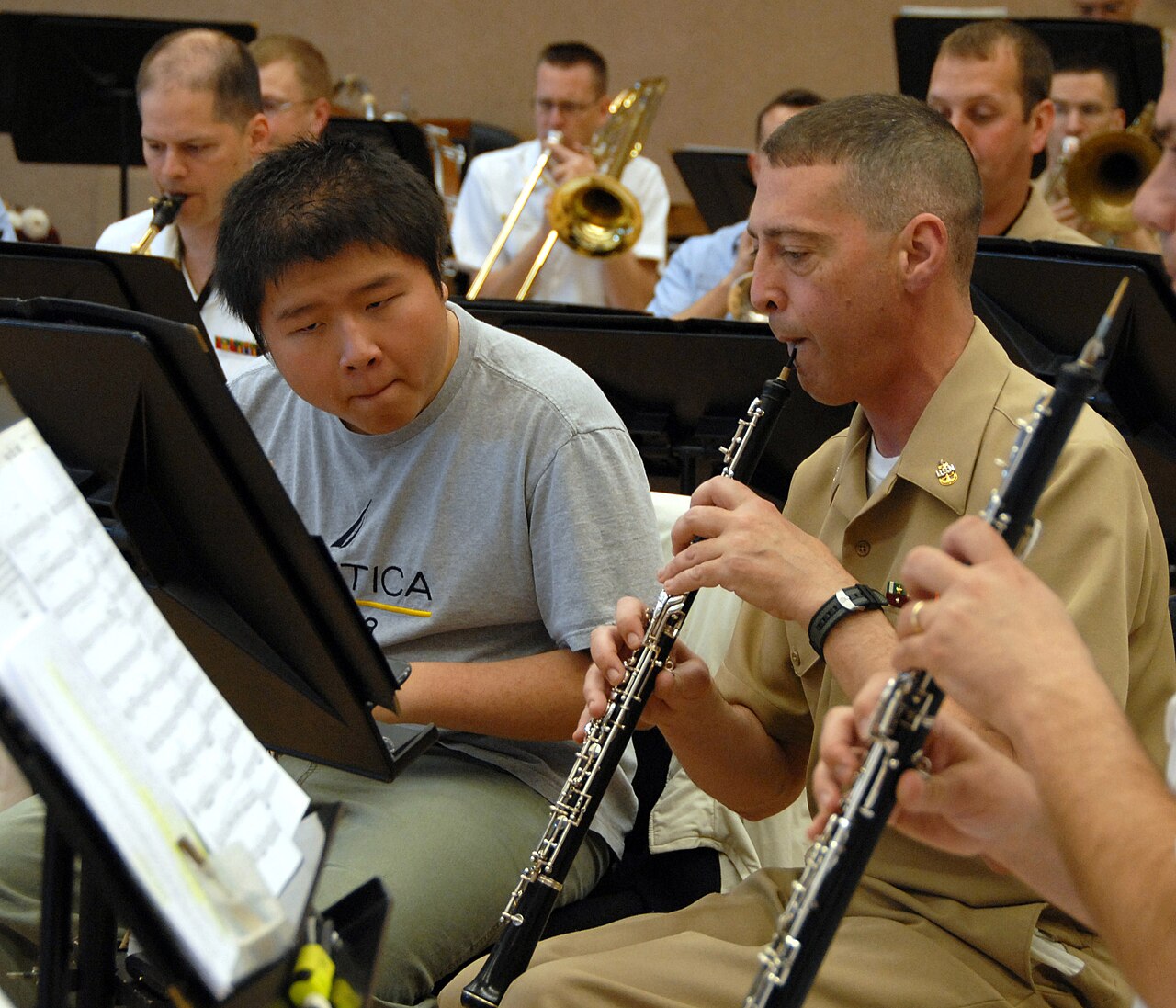
Start with sound. The oboe is a conical-bore instrument driven by a double reed, and that combination produces a tone unusually rich in upper harmonics: bright, slightly nasal, and able to reach the back of a hall without being loud. When an entire stage needs to match one pitch, the pitch that is easiest to pick out of a crowded stage wins. The League of American Orchestras gives exactly this rationale, describing the oboe’s pitch as secure and its penetrating sound as ideal for tuning. A flute’s A goes soft and vague at distance. A violin’s A is one more string in a section already full of them. The oboe’s A is unmistakable, and you can test that yourself the next time you sit down in a hall: close your eyes during the tuning and try to lose the note. You can’t.
Then history, which is where the real weight sits. Woodwind sections were unsettled for a long stretch of the orchestra’s early life. Flutes, bassoons, horns and clarinets drifted in and out of the ensemble depending on the composer, the court, and who happened to be available. Oboes were nearly always written into the scores. By the time the orchestra hardened into the shape we recognise, the oboe was the one wind you could count on being present, in tune, and warmed up. The job went to the instrument that never left the room.
The explanation almost everyone repeats, and why it falls apart
Here is the version you will find in a thousand program notes and concert-hall FAQs: the oboe cannot adjust its pitch, so everyone else has to adjust to the oboe. It is tidy, it sounds mechanical rather than arbitrary, and it is mostly wrong.
Bret Pimentel, a woodwind professor who plays the whole family, calls that explanation “hogwash” — oboists shift pitch with reed choice and embouchure exactly as other wind players do. He works through the rest of the stock justifications and finds them equally soft. If carrying power were really the criterion, he points out, the trumpet or the piccolo would be the obvious candidates. If it were about pitch reliability, he asks why a trained oboist on a good instrument should be more reliable than a trained anyone-else. His conclusion is that the practice survives because it is tradition, which is a less satisfying answer and a more honest one.
What remains true after that demolition is a weaker, more interesting asymmetry. The oboist’s coarse pitch adjustment lives in the reed, which is usually handmade and finished days before the concert, and which then reacts to heat, humidity and its own short working life. A clarinettist pulls the barrel out a fraction on the spot. A trombonist moves a slide. A violinist turns a peg. The oboist has already made their big decision by the time they walk on stage, and everything after that is lip, air and nerve. So the direction of accommodation does lean toward the oboe. It just isn’t the brick wall the tidy version describes.
There is a nice irony buried in this. The instrument sold to audiences as the one that cannot go out of tune is in fact the one whose pitch is most at the mercy of the weather. The steadiness you hear is something the player manufactures fresh every night, out of a reed that is already changing under the lights. That is also why most oboists check the A on an electronic tuning device before they give it. Modern practice trusts the ear and verifies the number.
Hear the ritual, then hear why the oboe earns it
Carnegie Hall’s National Youth Orchestra programme made a short film about this exact note: what it has to be, who is responsible for it, and what everyone on stage is doing while it sounds. It is the best few minutes you can spend on the subject.
What the players are listening for is a physical effect you can hear without any training. When two pitches sit close but not identical, the combined sound pulses. Those pulses are beats, they slow down as the two pitches converge, and they vanish at unison. Tuning is the act of steering the beats to zero. Once you know that sound you cannot un-hear it, and the whole tuning ritual turns into an orchestra collectively erasing beats against one reed.
The other half of the case for the oboe only shows up after the concert starts. Listen to what Richard Strauss, in his eighties, wrote for the instrument: a concerto that treats the oboe’s singing register as one of the great melodic voices in music, with long phrases that ask the soloist to breathe like a cellist bows. François Leleux and the Aurora Orchestra play it from memory, standing, which makes the sheer stamina of the solo part visible as well as audible.
🎧 Also on: Apple Music · Spotify
The concerto exists because of an oboist, which is the detail that makes it worth bringing into an article about tuning. The American oboist John de Lancie, then a soldier in the unit that reached Strauss’s Bavarian home in 1945, visited the composer and asked him whether he had ever considered writing an oboe concerto. Strauss said no. He then finished the short score on 14 September 1945 and completed the orchestration on 25 October 1945. The first performance took place on 26 February 1946 in Zürich, with Marcel Saillet as soloist and the Tonhalle Orchester conducted by Volkmar Andreae. De Lancie became principal oboe of the Philadelphia Orchestra in 1954 and held the post until 1977, and in 1987 he finally recorded the piece he had prompted, with a chamber orchestra conducted by Max Wilcox for RCA.
That de Lancie recording is my pick if you want the piece with its origin story attached. It is not the most immaculate version on record — the tone has a slightly reedy, old-school Philadelphia edge and the orchestra is anonymous and politely balanced — but the phrasing is unhurried in a way almost nobody dares now, and knowing whose question started the whole thing changes how the opening sounds. Go to Leleux for brilliance and to de Lancie for the story.
▶ Listen on YouTube · Apple Music · Spotify
How the ritual runs, and what it looks like from inside the section
The mechanics vary a little between orchestras, but the shape is consistent. The concertmaster stands and signals for the A. The oboe sounds it, usually twice: once for the winds and brass, who tune first, then again for the strings. Brass players nudge tuning slides. Flutes and clarinets adjust headjoints and barrels. Then the strings match their A string to the reference and tune the remaining strings in perfect fifths from that one anchor, which is why the section fills with those little rippling double-stops rather than four separate notes per player.
From inside a string section that last part is the whole job, and it is less serene than it looks from row F. You are matching an A you can barely hear over your own stand partner, then trusting a chain of fifths to place three more strings you will not get to check against anything until the music starts. Tune the A a hair flat and your C or G string inherits the error, amplified. This is also why string players keep quietly correcting all evening: a peg that slips half a degree in the first movement is an ordinary Tuesday, and the fix happens between phrases, under cover of everyone else’s sound. It is the same background vigilance that a piece like the Bruch Violin Concerto demands from a soloist for the whole length of a concerto.
Two practical wrinkles are worth knowing. When a piano is on the programme, the orchestra tunes to the piano instead of the oboe: the instrument was tuned that afternoon, cannot be adjusted on stage, and so becomes the fixed point everyone accommodates. The same logic used to apply with an organ, where the oboe would be tuned to the organ before the ritual began. And the tuning A only fixes one note. Every other pitch of the evening gets negotiated in real time, by ear, against whoever else is sounding: wind chords bent so the thirds sit sweetly, string unisons pulled into focus, the whole ensemble creeping sharp together as the hall warms and correcting together at the interval.
That is the part the ceremony quietly conceals. Professional intonation is continuous work dressed up as a single event, and the tuning ritual exists to make the continuous version possible: a hundred private opinions about A reduced to one, in under two minutes, in front of witnesses. If you like this sort of question, the same instinct drives our explainer on why Tchaikovsky’s Pathétique ends in silence, where the answer also turns out to be less mystical than the concert-hall version.
One last reason to pay attention to that opening A: the instrument playing it will spend the rest of the evening as one of the orchestra’s great singers. The slow movement of Brahms’s First Symphony gives the oboe a long lyrical line that is among the most exposed writing in the repertoire, and if you want to hear it done with real breadth, our guide to the best recording of Brahms’s First makes the case for one particular reading. The measuring device becomes the melody.
Sources and notes
The pitch-standard history comes from the reference literature on concert pitch: the 1939 London conference recommendation, adoption by the ISO in 1955 as Recommendation R 16 and formalisation as ISO 16 in 1975, the French law of 1859 setting A at 435, the A = 415 convention among baroque ensembles, the 1987 survey finding a 440 to 444 range, and Bernstein’s A442 with the New York Philharmonic. The rationale for tuning to the oboe, described as secure in pitch and penetrating in sound, is the League of American Orchestras’ own explanation; the historical account of oboes being written into scores while other winds came and went follows the standard popular music-history sources. The counter-argument is Bret Pimentel’s, published on his own site and quoted directly. Strauss concerto dates, the de Lancie meeting, the first performance details and the 1987 RCA recording are drawn from the reference entry on the work and on de Lancie. Descriptions of what tuning feels like from inside a string section, and of how intonation is maintained during a performance, are craft observations rather than sourced claims, and are marked as such. Nothing here was verified by measuring an actual orchestra’s pitch, so treat the specific frequencies as documented practice rather than a survey we ran.