- Composer
- Rachmaninoff
- Work
- Rhapsody on a Theme of Paganini, Op. 43
- Key
- A minor
- Composed
- 1934
- Movements
- 1 movements (single-movement, 24 variations total)
Introduction: Allegro vivace (A minor)
Variations 1–10: Part I — virtuosic momentum (A minor)
Variations 11–18: Part II — lyrical center (Var. 18: Andante cantabile, D♭ major)
Variations 19–24: Part III — coda and final sprint - Instrumentation
- Solo piano, 2 flutes, piccolo, 2 oboes, 2 clarinets, 2 bassoons, 4 horns, 2 trumpets, 3 trombones, tuba, timpani, percussion, strings
- Premiere
- 1934-11-07
Lyric Opera House, Baltimore
Conductor: Leopold Stokowski
Here is an unusual structural detail most program notes skip over: the piano enters in the very first bar of this piece — but it plays a variation before the theme has ever been stated. The audience hears Rachmaninoff elaborate on something they haven’t heard yet. The answer arrives before the question.
That opening sleight-of-hand is not a gimmick. It announces what kind of piece this is: one where the composer is one move ahead of the listener at all times. Rachmaninoff’s Rhapsody on a Theme of Paganini, Op. 43, is 24 variations on Niccolò Paganini’s Caprice No. 24 for solo violin, scored for piano and full orchestra. It runs around 22 minutes in a single unbroken movement. It contains what many listeners come to regard as the most purely beautiful melody Rachmaninoff ever wrote — buried in Variation 18, generated by flipping the original Paganini theme completely upside down.
Two wizards, one piece. That’s the short version.
The Last Major Work of a Self-Exiled Composer
By the summer of 1934, Rachmaninoff had not lived in Russia for sixteen years.
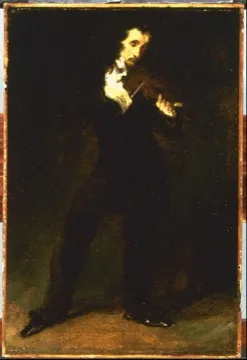
He left in December 1917, ostensibly for a short concert tour in Scandinavia. The timing — weeks after the Bolshevik Revolution — made the “short tour” a fiction from the start. He knew it. He packed manuscripts, took his family, and never came back. The composer who had been one of the most celebrated figures in Russian musical life arrived in the West with his technique, his name, and — for the first several years — almost no new music.
The exile silenced him as a composer in a way that his earlier crisis never had. Rachmaninoff had famously produced nothing for three years following the catastrophic premiere of his First Symphony in 1897, and had recovered with hypnotherapy and the Second Piano Concerto. But the compositional block of the exile years was different in kind. Between leaving Russia in 1917 and his death in 1943, he completed only six major works. Six, across 26 years. His pre-emigration output runs to 44 opus numbers. The contrast tells you something about what displacement cost him.
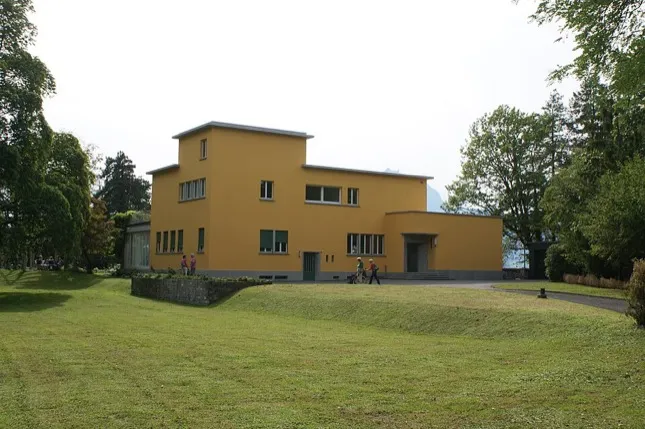
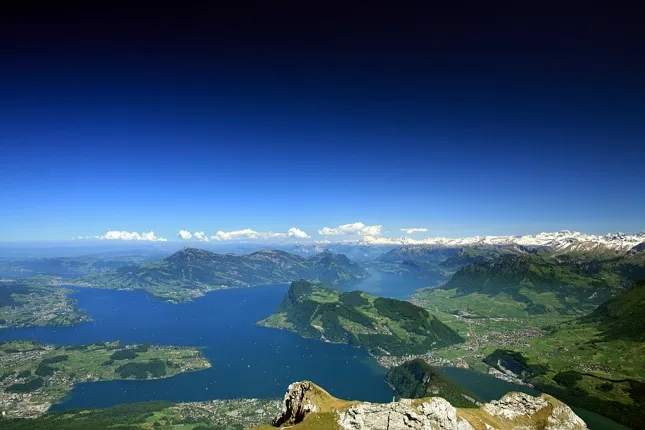
The Rhapsody came as a relative burst. Rachmaninoff rented a villa on Lake Lucerne in the summer of 1934 and completed the work in approximately six weeks — a sprint by the standards of his long compositional silences. He was 61 years old. He described the writing process to a friend as unusually smooth, noting that the variations seemed to organize themselves almost without his having to force anything. Whether this was relief, confidence, or simply the relief of working with an established theme rather than generating original material from nothing — probably some mixture of all three.
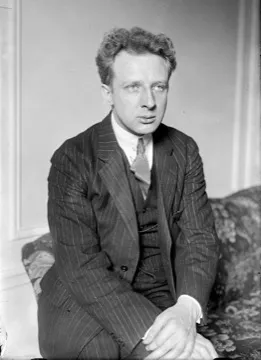
What is certain is that the premiere, on November 7, 1934, in Baltimore with the Philadelphia Orchestra under Leopold Stokowski, went well immediately. Rachmaninoff himself was at the piano. Stokowski’s response was reportedly enthusiastic — striking from a conductor not known for generosity toward others’ egos. American critics noted the wit, the lightness of touch, the accessibility that Rachmaninoff’s more inward works didn’t always project. Something in the writing had relaxed. The composer who had brooded over his symphonies and concertos for years produced this piece, in this very different late career moment, with something approaching ease.
That ease, and that wit, make more sense when you understand the Paganini problem.
The Paganini Obsession — and the Other Theme
Niccolò Paganini died in 1840 leaving his estate in disorder and his reputation complicated enough that the Catholic Church initially refused him a church burial. The charge was essentially that he had conducted himself in life too scandalously — and that his supernatural technique was suspicious. The rumor that he had sold his soul to the Devil in exchange for his violin abilities had followed him since his early career and proved unkillable. The Church eventually reversed its decision five years after his death and allowed proper burial. The legend, however, did not reverse.
Rachmaninoff was well aware of the legend. And he worked it into the structure of his variations deliberately, at the score level.
Threaded throughout the Rhapsody — appearing in Variations 7, 10, 24, and elsewhere — is a plainsong melody called the Dies Irae: the medieval chant for the Day of Wrath, drawn from the Requiem Mass. It’s the same theme Rachmaninoff had used in his symphonic poem The Isle of the Dead (1909) and which appears in his Second and Third Symphonies. He was drawn to it throughout his career. But in the Paganini piece, it serves a specific dramatic function: every time the Dies Irae surfaces, it comments on the Faustian legend surrounding Paganini. The two themes — the Caprice and the chant — are in dialogue throughout the work. The piece is not just a set of virtuosic variations. It’s also a meditation on artistic greatness, mortality, and whatever price Paganini may or may not have paid.
Rachmaninoff called Paganini “a kind of wizard.” The description is accurate in multiple senses. Paganini’s Caprice No. 24 is not a lyrical melody — it’s a gymnastic theme, angular and rhythmically aggressive, designed to show off a violinist’s range of technical capabilities. Rachmaninoff strips it to its structural skeleton and rebuilds it 24 times, finding something different in the same 12-bar sequence each time. Some variations are combative. Some are spare. One — Variation 18 — does something that, on paper, sounds impossible.
24 Variations, Three Faces
The Rhapsody is technically a single movement, but in practice it divides clearly into three sections: a fast, aggressive opening; a slow, lyrical center; and a fast finale. Most listeners experience it as something like a three-movement concerto with the formal divisions removed. That’s not an accident of structure — it’s deliberate architecture. Rachmaninoff understood concerto form thoroughly, and building the three-part structure into a single continuous movement allows the transitions between sections to carry real dramatic weight that a conventional multi-movement form would dissipate with applause breaks.
Variations 1–10: The Setup
The piece opens with a brief orchestral introduction — ten bars, no more — and then the piano enters with Variation 1, before the theme has been stated. This is the structural joke: Rachmaninoff introduces the elaboration before the source material. After that compressed preview, the actual Paganini Caprice appears in the orchestra, as if catching up with the pianist who jumped ahead.
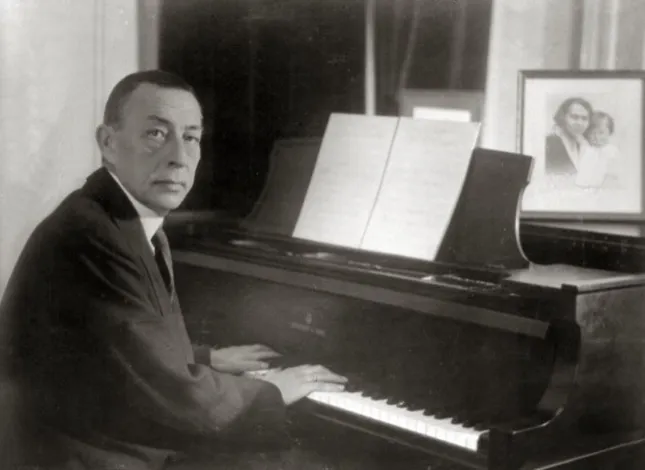
Variations 2 through 10 establish the aggressive character of the opening section with escalating intensity. The piano writing here is extreme — Rachmaninoff was one of the very few pianists of his era capable of playing it without it sounding like carpentry. The hands cross repeatedly, the rhythms syncopate against the orchestra, and the Caprice theme reveals itself as something angular and combative rather than decorative. In Variation 7, the Dies Irae makes its first appearance: quiet, in the brass, but unmistakable if you know what to listen for. In Variation 10, it recurs more prominently.
What the opening variations are actually doing — beneath the virtuosity — is accumulating tension without releasing it. The music advances without a moment of genuine lyrical relief, which makes the turn that arrives in the middle section genuinely disorienting. You realize you’ve been holding a kind of musical breath without knowing it.
Variations 11–18: The Heart of the Matter
Variation 11 marks a shift in texture. The forward drive relaxes. Variation 12 slows further. By Variation 14 — marked Andante — the work has found a completely different temperature. The piano writing opens up, becomes transparent and chamber-like, the thick double-note passages of the opening replaced by single lines and delicate figuration. The Dies Irae hovers but doesn’t dominate.
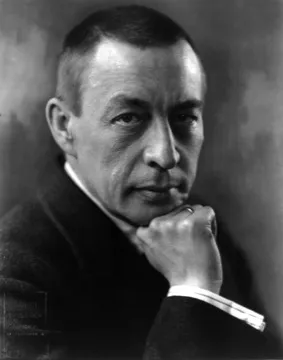
And then Variation 18 arrives.
What Rachmaninoff did in Variation 18 is technically called melodic inversion: he took the intervals of the Paganini theme and flipped them upside down. Where the original Caprice moved downward, the inverted melody moves upward. The angular, gymnastic character of the source becomes, when inverted, a soaring, long-lined melody in D-flat major — the key as distant from the home key of A minor as you can travel within the Western tonal system.
The result has baffled music theorists who understand the technique perfectly and still can’t fully account for the effect. The same raw material — the same twelve bars, the same structural intervals — produces something that sounds like it was composed from scratch in a completely different emotional world. People who know the Paganini Caprice find the transformation genuinely shocking on first encounter. People who don’t know it simply hear the most beautiful moment in the piece.
Variation 18 has been extracted and used in film scores, figure skating programs, television commercials, and ringtones. That extraction is partly a function of its self-containedness — it works perfectly as a two-minute standalone piece — but it also reflects something genuinely unusual in the writing. There are melodies that sound romantic. Rachmaninoff, in Variation 18, found the melody that the Paganini Caprice was secretly hiding from everyone, including its composer.
First-time listeners often pull back physically when Variation 18 begins. The contrast with what came before is that sudden.
Variations 19–24: The Exit
After Variation 18, the slow center cannot hold. The finale begins with a controlled return of the earlier energy — the Paganini character reasserts, but now with greater integration between piano and orchestra, as if the lyrical detour has clarified something about how the two are meant to work together. Variation 22 contains an unexpected waltz — light, slightly ironic, the kind of moment that suggests Rachmaninoff was aware of his own reputation for portentousness and was deliberately undercutting it. He did have a dry wit; contemporaries remarked on it often, and it surfaces in his music more than his public image would suggest.
The final variations push toward an ending that arrives with deliberate abruptness. There is no grand peroration, no extended climactic buildup. The Rhapsody simply ends — quickly, a little crisply, in three decisive bars. After 24 variations and 22 minutes of continuous music, the conclusion passes in seconds.
This ending surprises first-time listeners who have been primed by Rachmaninoff’s other large-scale works. The Second Piano Concerto builds to a cathartic release over pages of score. The Second Symphony ends with accumulated weight. The Rhapsody does neither. It exits cleanly, the way a performer steps off stage without looking back.
For First-Time Listeners
The single most important thing to know before a first listening: the famous melody — the one you may already recognize from films or figure skating — does not arrive until about two-thirds of the way through. This is Variation 18, and it takes roughly 14 to 15 minutes of music to reach it from the opening bars.
The journey to Variation 18 is not filler. But it is demanding on first contact, and knowing what you’re moving through helps considerably.
In the opening section (Variations 1–10): don’t try to follow every theme. The music will seem relentless and technically dazzling without being immediately emotionally accessible. What to track is the relationship between the piano and the orchestra — they alternate between collaboration and competition, and the balance shifts in ways that become clearer with repeat listening. When the Dies Irae appears in Variation 7 (a stately figure in the brass), you’ll know it if you’ve heard the Requiem chant before. If not, you’ll still feel a slight change of atmosphere.
In the middle section (Variations 11–18): the music begins to breathe differently. The texture thins, the tempo slows across several variations, and the piano writing becomes spacious. This is Rachmaninoff building a long sustained contrast before Variation 18 arrives. Resist the urge to skip ahead. The slower middle variations make the 18th feel earned rather than arbitrary.
When Variation 18 begins: the strings lead, in D-flat major. The melody rises. If you’ve been listening to the opening section, the sudden shift in character hits differently than it would in isolation — the contrast is part of the impact. People who come in cold at Variation 18 hear a beautiful melody. People who’ve listened from bar one hear a revelation.
After Variation 18: the pace returns, the finale builds, and the ending arrives faster than you expect. The waltz in Variation 22 catches most listeners off guard. The final three bars feel almost rude in their brevity. On second listening, that quickness reads as confidence.
If time is limited, Variation 18 in isolation is a legitimate starting point. There’s no obligation to front-load the full 22 minutes on a first encounter. But the full arc of the Rhapsody — from Variation 1’s upside-down introduction through the Dies Irae appearances to the inverted melody and the abrupt close — is a different and more complete experience than any highlight can provide.
Why This Work Keeps Its Place in the Repertoire
The Rhapsody occupies an unusual position in the concerto literature. It isn’t technically a concerto — it’s a variation set — but in practical terms it functions exactly like one: a pianist performs it with orchestra, it runs the correct length for a concert half, and it gives the soloist ample room to demonstrate both technique and interpretive intelligence. For program directors, it’s reliable.
For pianists, it’s a more complicated proposition. The technical demands in the outer sections are genuinely severe — the double notes, hand crossings, and rhythmic precision required in Variations 5 through 10 separate the technically secure from everyone else. But the work also demands something that pure facility cannot produce: the ability to move between radically different expressive registers within a single continuous arc. A pianist who plays the opening variations brilliantly but misses the chamber-music transparency of the middle section produces a lopsided performance. The piece is unforgiving because it is indivisible — there are no formal movement breaks where a weaker section can be partially isolated.
The Dies Irae thread also gives the Rhapsody a philosophical weight that listeners feel even without consciously identifying the theme. The recurring figure creates structural coherence — a sense that the music returns to a fixed point across its variations — and that coherence distinguishes the work from a conventional virtuoso display piece. The hidden architecture is part of what keeps it in the serious repertoire.
It also sits at an intersection that is rare in 20th-century concert music: it is genuinely difficult to perform, genuinely accessible to an unprepared audience, and genuinely complex in its formal and thematic design. Pieces that satisfy all three criteria are uncommon. Most 20th-century music trades at least one of those qualities for another.
Recommended Recordings
Sergei Rachmaninoff / Philadelphia Orchestra, cond. Leopold Stokowski (recorded 1934)
The historic recording from the premiere year, Rachmaninoff’s own document of the work. His piano sound — dry, percussive, without much pedal sustain — is strikingly different from the lush Romantic approach that later Russian pianists brought to his music. He treats Variation 18 with less sentimentality than almost any subsequent interpreter, which is either clarifying or jarring depending on your expectations. Essential as a reference point.
Vladimir Ashkenazy / Amsterdam Concertgebouw Orchestra, cond. Bernard Haitink (1984)
Recorded on the 50th anniversary of the premiere, this version set a benchmark. Ashkenazy brings warmth and rhetorical persuasiveness to the middle variations that Rachmaninoff himself withheld, and the Concertgebouw acoustics fill out the orchestral texture without obscuring the piano. The balance between soloist and orchestra is close to ideal throughout.
Martha Argerich / Berlin Radio Symphony Orchestra, cond. Riccardo Chailly (1982)
Argerich’s version is faster than most in the outer sections — frankly reckless in passages where other pianists measure themselves carefully — and the danger is audible. Where conventional interpretations treat the finale as a controlled escalation, Argerich treats it as something closer to an emergency. Her Variation 18, taken at a noticeably slower tempo than the surrounding material, lands with corresponding force.
Score and Full Performance
The full orchestral score for the Rhapsody is available through IMSLP in the original edition. Following the score during a first listening makes the Dies Irae appearances — which can be easy to miss aurally in the dense orchestral texture — immediately visible, and the mechanics of Variation 18’s inversion become legible on the page in a way that’s harder to grasp by ear alone.
Frequently Asked Questions
What exactly is Rachmaninoff’s Rhapsody on a Theme of Paganini?
The Rhapsody on a Theme of Paganini, Op. 43, is a single-movement work for solo piano and orchestra, composed by Sergei Rachmaninoff in 1934. It consists of 24 continuous variations on the theme from Paganini’s Caprice No. 24 for solo violin. While it is technically a variation set rather than a concerto, in practice it functions like one — a virtuosic solo part, orchestral support, and a running time of around 22 minutes make it a standard concerto-slot piece in orchestral programming. Rachmaninoff himself performed the solo part at its premiere with the Philadelphia Orchestra under Leopold Stokowski in Baltimore on November 7, 1934.
Why does Variation 18 sound so different from the rest of the piece?
Variation 18 uses a technique called melodic inversion: Rachmaninoff took the intervals of the original Paganini Caprice theme and reversed their direction. Where the original theme moved downward, the inverted version moves upward. The result — in the remote key of D-flat major — is a long-lined, lyrical melody that sounds completely unlike the angular, aggressive source material. This is the structural and emotional center of the Rhapsody. The transformation is formally audacious because it generates maximum contrast from identical raw material, and emotionally effective because the slow lyrical buildup of Variations 11–17 makes the arrival of Variation 18 feel like a sudden change in light. The melody has been widely extracted for film scores and other media, often without listeners knowing its origin.
What is the Dies Irae, and why does it appear in this piece?
The Dies Irae (Day of Wrath) is a medieval plainsong chant from the Catholic Requiem Mass, describing the Last Judgment. Rachmaninoff was drawn to it throughout his career — it appears in The Isle of the Dead, the Second Symphony, and elsewhere. In the Rhapsody, it serves a specific dramatic function related to the Paganini legend: Paganini was widely rumored in his lifetime to have sold his soul to the Devil in exchange for his supernatural violin technique, a rumor the Catholic Church took seriously enough to delay his burial. By weaving the Dies Irae — a chant about divine judgment and mortality — into a set of variations on Paganini’s theme, Rachmaninoff embedded the Faustian legend directly into the musical structure. The chant appears in Variations 7, 10, 24, and other points, each time as a quiet comment on what the Paganini theme carries with it beyond notes.
Is the Rhapsody on a Theme of Paganini a piano concerto?
Technically, no — it is a set of variations rather than a concerto in the formal sense. A concerto traditionally has three or four separate movements with defined formal structures (sonata form, rondo, etc.). The Rhapsody is a single continuous movement organized around the variation principle. In practical terms, however, the distinction matters less than it might seem. The work is performed in concert exactly like a piano concerto: a soloist with orchestra, in a concerto-length program slot, with the same demands on the pianist’s technique and interpretive range. Rachmaninoff himself acknowledged the concerto-like character, noting that the 24 variations naturally grouped into three sections — fast, slow, fast — that broadly corresponded to a three-movement concerto form.
Which recordings of the Rhapsody on a Theme of Paganini are worth starting with?
Three recordings cover distinct approaches: Rachmaninoff’s own 1934 recording with the Philadelphia Orchestra under Leopold Stokowski is the essential historical document — dry, unsentimental, and faster than most modern interpretations. Vladimir Ashkenazy’s 1984 recording with the Amsterdam Concertgebouw Orchestra under Bernard Haitink offers warm sound and near-ideal balance between piano and orchestra. Martha Argerich’s 1982 recording with the Berlin Radio Symphony under Riccardo Chailly is the most viscerally exciting — faster and more physically urgent in the outer variations, with a Variation 18 that lands harder for the contrast with the surrounding tempo. For a first listening, Ashkenazy is the most accessible entry point. For listeners who already know the piece, Argerich’s version is the one that makes you hear it differently.