- Composer
- Rachmaninoff
- Work
- Symphony No. 2 in E minor, Op. 27
- Key
- E minor
- Composed
- 1906-1907
- Movements
- 4 movements
I. Largo – Allegro moderato (E minor)
II. Allegro molto (A minor)
III. Adagio (A major)
IV. Allegro vivace (E major) - Instrumentation
- 3 flutes (3rd doubling piccolo), 3 oboes (3rd doubling cor anglais), 2 clarinets, bass clarinet, 2 bassoons, 4 horns, 3 trumpets, 3 trombones, tuba, timpani, snare drum, bass drum, cymbals, strings, glockenspiel
- Premiere
- 1908-01-26
Mariinsky Theatre, Saint Petersburg
Conductor: Sergei Rachmaninoff
In March 1897, a 24-year-old Sergei Rachmaninoff sat in the audience of a Saint Petersburg concert hall and watched his First Symphony get destroyed. The conductor, Alexander Glazunov, reportedly arrived drunk. The orchestra had barely rehearsed. The premiere was a catastrophe. The next morning, critic César Cui wrote what remains one of the most savage reviews in music history: “If there were a conservatory in Hell, and one of its talented pupils composed a programmatic symphony based on the Seven Plagues of Egypt, and if he wrote something like Rachmaninoff’s symphony, he would have fulfilled the task brilliantly.”
Rachmaninoff didn’t write another major work for three years.
The Dresden Exile — How the Symphony Was Born
What followed that disaster was a creative collapse so complete that Rachmaninoff sought treatment from a psychiatrist. Dr. Nikolai Dahl used hypnotic suggestion, repeating phrases like “You will compose a piano concerto. It will be excellent.” The therapy worked. The Piano Concerto No. 2 in 1901 was an immediate triumph. But symphonies still made Rachmaninoff flinch.
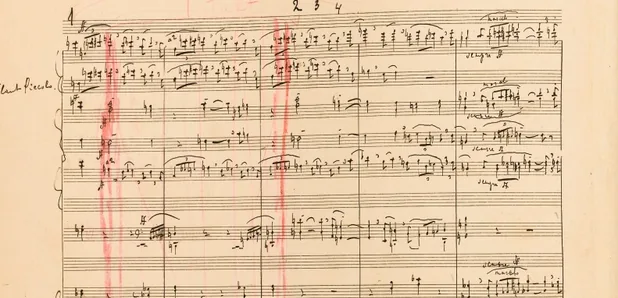
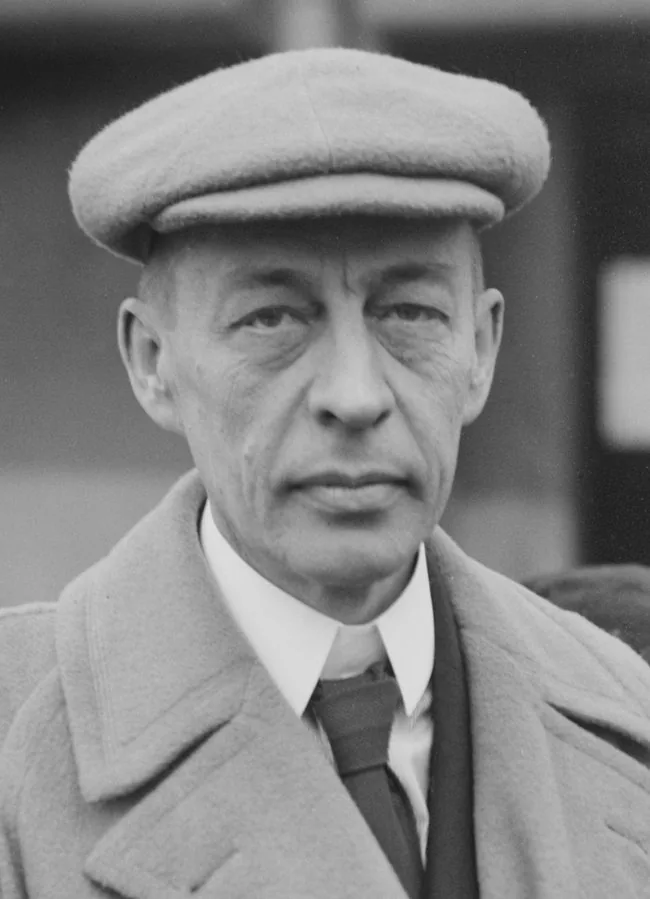
By 1906, feeling suffocated by his schedule as chief conductor at the Bolshoi Theatre, he made a drastic decision. He moved with his wife and infant daughter to Dresden, Germany — away from Moscow’s noise, away from the political turmoil of the first Russian Revolution, away from everything except blank manuscript paper. He spent three years there.
He was miserable in Dresden. His German was poor. He hated the food. But he wrote. In a letter to a friend from April 1907, while deep in the symphony’s composition: “When I finish it, I solemnly swear — no more symphonies. Damn them. I don’t know how to write them, and I don’t want to.” Then in August of the same year: “The work proceeds very laboriously and sluggishly. If I don’t speed up, the symphony won’t be complete in less than six months.” He kept writing anyway.
His first draft, he called “the worst of all his works.” After months of revision, he changed his mind. On January 26, 1908, at the Mariinsky Theatre in Saint Petersburg, Rachmaninoff himself conducted the premiere. The reception was the opposite of 1897. Audiences gave him a standing ovation. Critics called him “a worthy successor to Tchaikovsky.” A Moscow critic noted afterward: “After listening to its four movements, one notes with surprise that the watch has moved sixty-five minutes forward.” He won another Glinka Award ten months later.
Thirty-Five Minutes — The Missing Half of the Symphony
Here is something most listeners don’t know: for several decades in the mid-twentieth century, people who thought they’d heard Rachmaninoff’s Second Symphony probably hadn’t — not really.
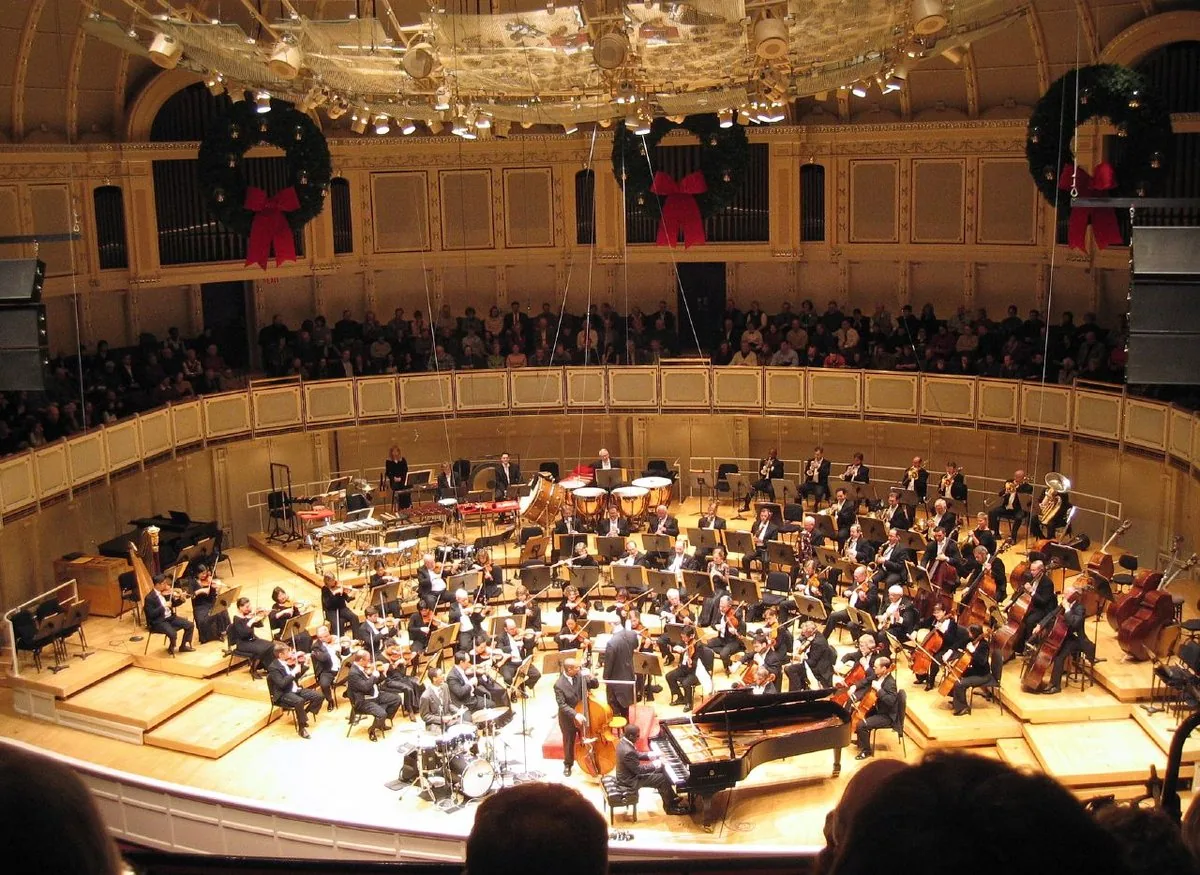
The symphony runs nearly 60 minutes in its complete version. That was considered commercially impractical. Starting in the 1940s and continuing through the 1950s and 60s, conductors routinely made deep cuts — removing repeated expositions, trimming slow passages, excising anything that seemed to drag. Some performances clocked in at 35 minutes. Record labels preferred it shorter. Audiences didn’t object, because they didn’t know what was missing.
André Previn’s 1973 recording with the London Symphony Orchestra on EMI is widely credited as the turning point. He restored the complete score and insisted on performing it uncut. “The cuts destroy the symphony’s architecture,” he argued. The argument won. Since the 1970s, virtually every performance uses the complete score. The 60-minute version is now the normal one.
The irony is acute. This symphony gets criticized for its romantic excess — its sprawling length, its unapologetic emotion. But for thirty years, audiences were criticizing a truncated phantom. The full version is something else entirely.
The Motto Theme — One Idea Holding Four Movements Together
A structural feature that rewards attention: this symphony is built around a single recurring melodic idea, introduced in the opening pages of the first movement. Musicologists call it the “motto theme” — a 22-note phrase that appears in all four movements, transformed each time.
In the first movement, it is heavy and shadowed. In the second, it becomes angular and aggressive. In the third, it dissolves into lyrical warmth. By the fourth, it returns triumphant, certain of itself. The same notes, but unrecognizable from their first appearance.
This technique — a single theme that evolves over an entire symphony — connects Rachmaninoff to the traditions of Berlioz (the idée fixe in Symphonie fantastique) and Brahms (where an entire symphony can emerge from a single motivic seed). Rachmaninoff takes the method and fills it with a specifically Russian kind of warmth and longing. For a composer who once said he didn’t know how to write symphonies, this is a structurally sophisticated answer to his own self-doubt.
A Movement-by-Movement Listen
> 💡 For first-time listeners: focus on the third movement’s clarinet melody — that’s the heart of this symphony. In the first movement, notice how long the dark introduction holds you before releasing into speed and light. The patience the symphony asks of you in movements one and two is repaid, with interest, in movement three.
First Movement — The Long Wait for Light
The first movement begins with a slow introduction marked Largo — broad, unhurried, almost reluctant. The motto theme emerges from low strings, heavy and brooding. Then a cor anglais solo arrives, briefly, and everything shifts: the tempo accelerates to Allegro moderato, the strings begin a soft pizzicato pattern, and a new singing melody enters in the upper strings over a simple harmonic progression.
What follows is a 20-something-minute movement that alternates between dark material and bright, between the opening’s gravity and something more open. The dual nature is the point. This is not a movement that resolves — it circles. The uncut version, with the exposition repeated, deepens the sense of accumulated weight before the movement finally closes.
Second Movement — The Scherzo That Doesn’t Let Up
The second movement is the shock. After the first movement’s weight, this one is fast, sharp, and almost frantic — Allegro molto, “very fast.” The strings launch immediately into a propulsive, angular theme.
Halfway through, the mood briefly darkens as the horns re-introduce the motto theme in altered form. Then the rush resumes. At approximately 12 minutes, this is the shortest movement, but the most concentrated in energy. Some critics find it unnecessary. Others argue that without this sprint, the stillness of what follows wouldn’t land the same way. Both positions are defensible.
Third Movement — The Clarinet Alone
This is the movement. The third movement Adagio.
It begins quietly: strings lay down a soft A-major chord, and then a solo clarinet steps forward. The melody that follows is arguably the most famous in all of Rachmaninoff’s orchestral output — long-breathed, unhurried, reaching across the register with something that sounds like irretrievable memory. This is the melody that appears in films, in commercials, in concert halls where it makes people unexpectedly cry.
The clarinet passes the theme to the strings. The strings pass it to the winds. The orchestra builds, incrementally, toward a full-scale climax that arrives after roughly 34 minutes of accumulated tension. When it breaks, it is one of the most earned emotional releases in the romantic orchestral canon.
A detail worth knowing: Rachmaninoff himself was reportedly uncomfortable with this movement. He thought it too sentimental. The composer of the most beloved movement in the symphony was embarrassed by it. That particular irony is very much in character for him.
Fourth Movement — The Answer to the First
The finale is fast and bright — Allegro vivace in E major, reversing the E minor of the opening. The narrative arc of the four-movement symphony has always promised this: darkness resolved into light, uncertainty resolved into confidence.
But it’s not simply cheerful. The motto theme returns one final time, transformed from its first appearance in every way except its notes. In the first movement it was shadowed and anxious. Here it is certain and expansive. Then the coda arrives: the full orchestra at full speed, a sustained rush to the finish line that makes audiences want to applaud before it’s technically over.
Last of the Romantics — The Symphony’s Place in Music History
Rachmaninoff’s Second Symphony was completed in 1907 and premiered in 1908. Consider what was happening simultaneously: Mahler was finishing his Seventh Symphony; Schoenberg was beginning to dismantle the tonal system entirely; Stravinsky was two years away from The Firebird. The musical world was accelerating toward modernism.
In that context, this symphony occupies an unusual position — a large-scale, tonally conservative, melodically lavish work made at the exact moment when such works were becoming unfashionable. The modernists — Stravinsky and Prokofiev most vocally — dismissed Rachmaninoff as hopelessly behind the times. His response, essentially, was to keep writing.
What’s happened since is interesting. Rachmaninoff’s music was considered somewhat déclassé in academic circles through much of the twentieth century. Too popular, too emotional, too obvious. But popular audiences never stopped coming to hear it. And since the 2000s, with film scores and game soundtracks returning to lush harmonic writing, Rachmaninoff’s musical language has become more, not less, accessible to younger listeners. His rehabilitation — from embarrassing anachronism to neglected master — is largely complete.
This symphony, specifically, endures because it does what it sets out to do with complete conviction. It is not interested in being difficult or ironic. It wants to take you somewhere specific. Conductors keep recording it because audiences keep responding to it. Every year, someone hears the third movement for the first time and is stopped cold.
How Listeners Actually Encounter This Symphony
This symphony has a specific discovery pipeline that classical music communities have mapped out thoroughly. The most common path: someone hears the third movement in a film, a trailer, or a commercial without knowing what it is. Then they spend a frustrating twenty minutes searching before landing on the correct title. Then they listen to the full 16-minute movement in one sitting and don’t move. This experience is common enough that it comes up in virtually every online discussion about the piece.
A recurring debate in classical forums: should you warn first-time listeners that the adagio might make them cry, or does the warning drain something from the experience? The consensus, such as it is, leans toward saying nothing and letting the clarinet melody arrive unannounced.
A more technical argument surfaces around the completeness question. Listeners who first fell in love with cut recordings — the 35–45 minute versions — sometimes find the full score overwhelming. The uncut first movement, in particular, demands a patience that the cuts had quietly trained people to skip. The usual advice from experienced listeners is to start with Previn’s 1973 recording specifically because he makes the full score feel inevitable rather than overlong.
The second movement generates a polarized response. Some listeners find the scherzo’s controlled aggression exactly right — a necessary jolt before the adagio’s stillness. Others skip it entirely on repeat listens, jumping from the first movement directly to the third. Both positions get defended vigorously. What’s interesting is that even those who skip it agree the symphony would collapse without it: the adagio lands harder because of what precedes it.
For First-Time Listeners
– You can start with the third movement. The Adagio (approximately 15–16 minutes) stands completely on its own. If the clarinet melody stays with you, go back to the beginning.
– The first movement requires patience. The slow introduction is deliberately heavy — roughly 5 minutes before the tempo changes. Staying with it makes the transition more satisfying.
– Check whether your recording is complete. Recordings from before 1970 may use cut versions running 35–45 minutes. Modern recordings are almost exclusively uncut.
– There’s a genuinely heated critical debate about this symphony. Some serious musicians consider it indulgent or structurally loose. That’s worth knowing, not to dismiss the work, but because engaging with that argument — and deciding where you stand — is genuinely worthwhile.
Recommended Recordings
André Previn / London Symphony Orchestra (1973, EMI)
The recording that restored the complete score to regular performance. Previn’s tempos are balanced and his attention to the inner voices is exceptional. The third movement clarinet playing is especially beautiful. This is the natural first choice.
Evgeny Svetlanov / USSR State Symphony Orchestra (1971)
A distinctly Russian reading — heavy, sorrowful, with a quality of national mourning that Western conductors rarely capture. Where Previn illuminates the melody, Svetlanov carries the weight underneath it. Recommended as a second listen.
Mariss Jansons / Oslo Philharmonic Orchestra (1989, EMI)
A younger, more energetic interpretation. The finale is particularly alive. Precise without being clinical, and emotionally present throughout. An excellent alternative to the other two.
Vladimir Ashkenazy / Concertgebouw Orchestra (1982, Decca)
Ashkenazy conducts here rather than plays, and the result is one of the most naturally lyrical readings in the catalogue. Less architecturally deliberate than Previn, less heavy than Svetlanov — what Ashkenazy brings is an intimacy that makes the symphony feel like a private emotion performed at grand scale. The second movement’s propulsive energy is exceptional, and the Concertgebouw’s string sound in the third movement has a warmth that few orchestras match. Ashkenazy recorded this symphony multiple times; the 1982 Decca version is the most consistently praised.
Listening with the Score
The full score is available to follow along.
The full score is freely available at IMSLP.