- Composer
- Sergei Rachmaninoff
(1873–1943) - Work
- Études-Tableaux, Op. 39
- Genre
- Piano études collection
- Composed
- 1916–1917
- Published
- 1920, Editions Russes de Musique
- Instrumentation
- Solo piano
- Number of Pieces
- 9 (Nos. 1–9)
- Movements
- 9 movements
No. 1 Allegro agitato (C minor)
No. 2 Lento assai (A minor)
No. 3 Allegro molto (F♯ minor)
No. 4 Allegro assai (B minor)
No. 5 Appassionato (E♭ minor)
No. 6 Allegro (A minor)
No. 7 Lento lugubre (C minor)
No. 8 Allegro moderato (D minor)
No. 9 Allegro moderato, Tempo di marcia (D major)
In the spring of 1917, Sergei Rachmaninoff sat at his piano and wrote the final notes of the ninth piece of his Études-Tableaux, Op. 39. That winter, the Russian Revolution erupted, and he packed his bags. He would never set foot in his homeland again.
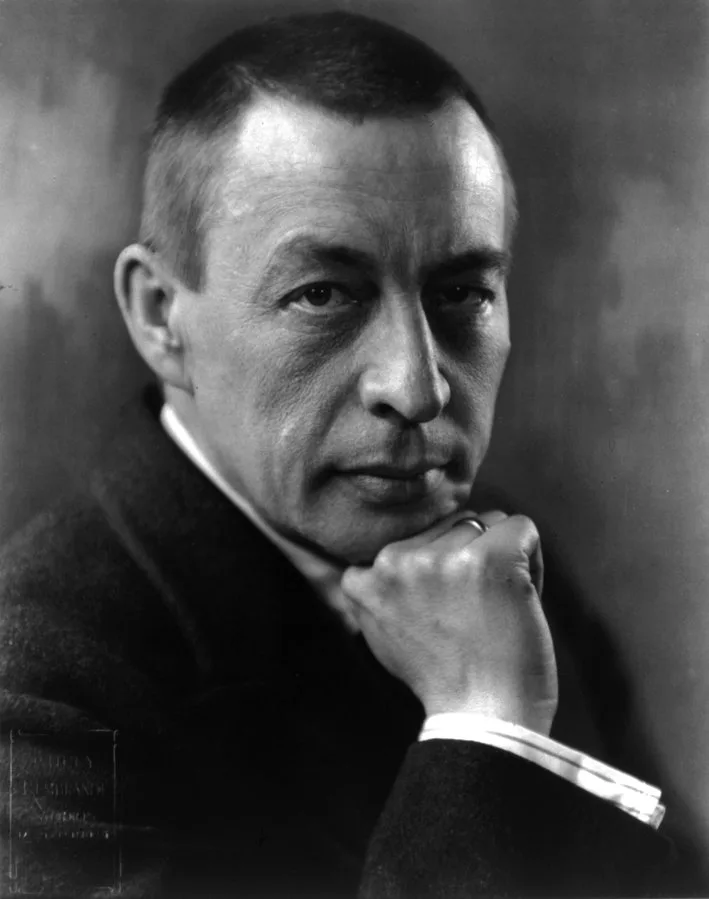
This is why this set of études became his last solo piano work written in Russia. Though he lived for another 26 years and composed several more major works, he never again wrote a collection of solo piano pieces.
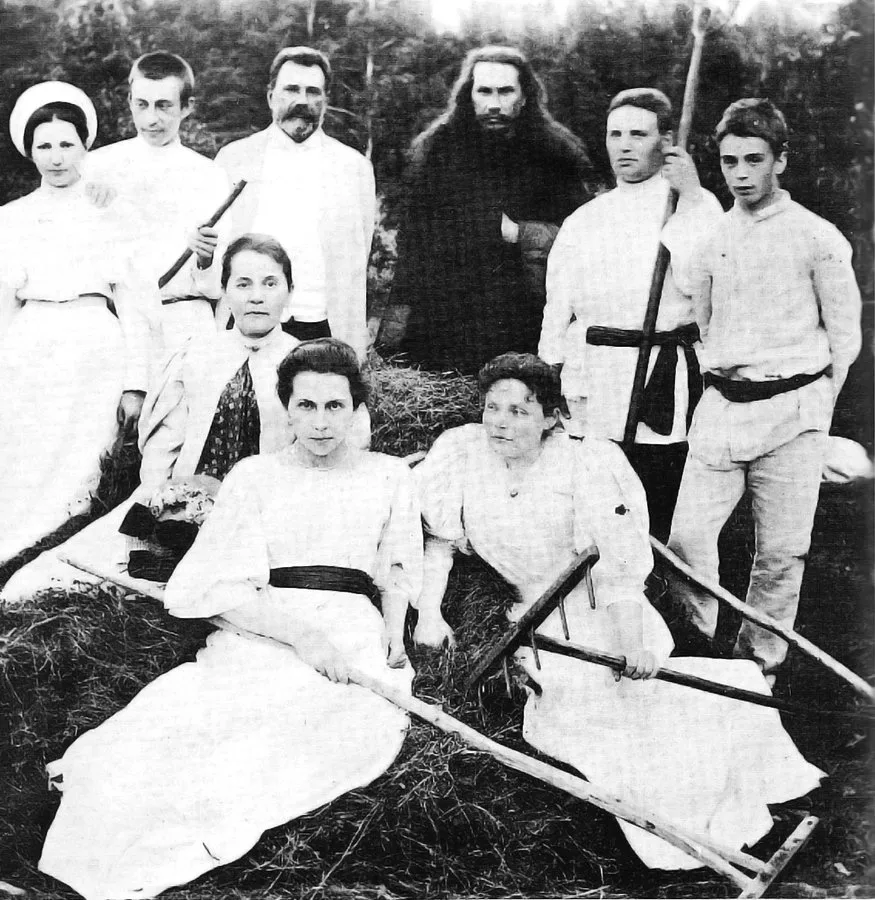
But here’s something even more intriguing. Rachmaninoff never told anyone what “pictures” inspired these pieces. He gave them the title “picture-studies” but kept the actual images a secret. When audiences asked, his response was basically, “Imagine it for yourself.” It was only when the Italian composer Ottorino Respighi persistently questioned him while arranging the work for orchestra that Rachmaninoff dropped a few hints: ‘The Sea,’ ‘Seagulls,’ ‘Dies irae,’ ‘Dying Birds,’ ‘Little Red Riding Hood and the Wolf.’ We have this list, but which piece corresponds to which picture is still a matter of debate.
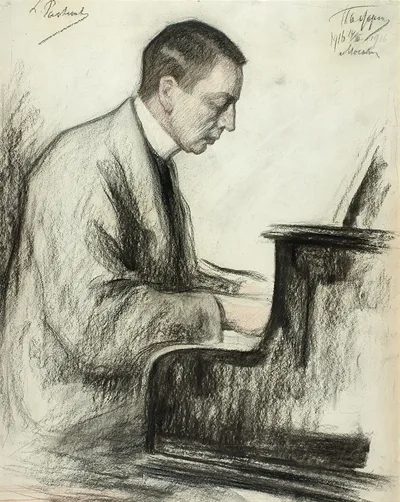
Whether this was a calculated strategy or just a desire to keep a secret, we’ll never know. But thanks to his silence, Op. 39 has remained a work where, for over a century, each listener gets to paint their own picture.
Russia in 1916: An Empire on the Brink
When Rachmaninoff began writing Op. 39 in 1916, the Russian Empire was cracking at its foundations. The First World War was raging, Rasputin held sway over the Empress in the palace, and the streets hummed with revolutionary fervor. Rachmaninoff escaped this chaos by retreating to his Ivanovka estate, where he immersed himself in composition.
There was a nearly six-year gap between his Op. 33 (1910–1911) and Op. 39. In that time, Rachmaninoff had solidified his global reputation with his Second and Third Piano Concertos, but he had written few solo piano miniatures. He was in his mid-40s, at the absolute peak of his powers as both a composer and a performer.
So why did he return to the piano miniature? One theory is that Rachmaninoff wrote these pieces to train his own hands. Indeed, the fifth étude is a relentless barrage of octaves, while the third is an exercise designed to strengthen the weaker fourth and fifth fingers. Rachmaninoff’s hand size was legendary; he could span a 12th (a key and a half over an octave), about 1.5 times the reach of an average adult hand. This work, it’s argued, was partly a tool for maintaining and honing that extraordinary physical gift.
But that can’t be the whole story. The overall mood of Op. 39 is far heavier, at times even more violent, than Op. 33. It feels as if the very air of pre-revolutionary Russia seeped into the music. Because, in a very real sense, the world was ending.
Music critics still debate the character difference between the two sets. Some find Op. 33 more refined and pianistic, while seeing Op. 39 as possessing a raw, untamed energy. Others argue vehemently that Op. 39 is the true pinnacle of Rachmaninoff’s piano writing. Either way, listening to the two sets back-to-back makes it clear how much the intervening six years had changed the composer.
Why Hide the Pictures? The Secrets Respighi Dug Up
In 1930, the Italian composer Ottorino Respighi received a special commission from Rachmaninoff: to orchestrate five pieces from Op. 39. Respighi was a master of orchestral color, famous for his Fountains of Rome and Pines of Rome.
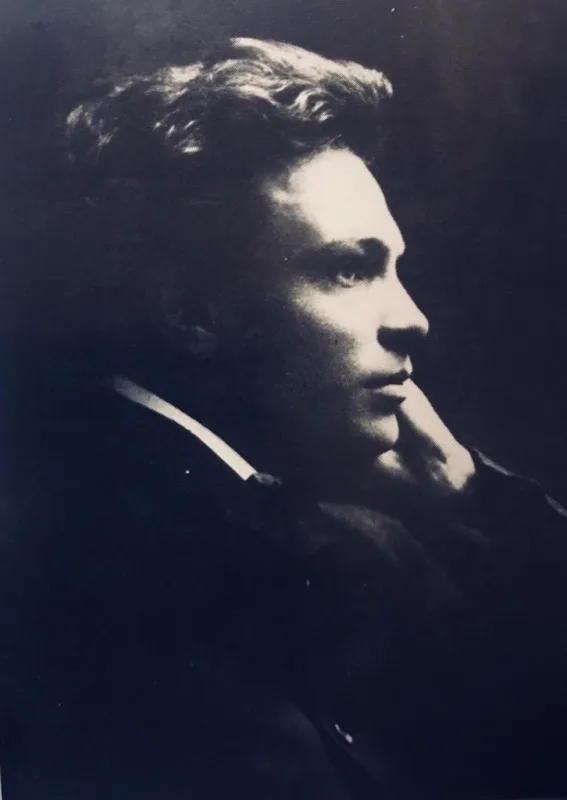
Respighi accepted, but with one condition. “Please tell me the images behind these pieces. I need them as a reference for the arrangement.” Reluctantly, Rachmaninoff shared a few details. No. 1: The sea (with its wave-like arpeggios). No. 2: The sea and seagulls. No. 3: The Day of Wrath (Dies irae, from the medieval Requiem Mass). No. 4: Dying birds. No. 6: Little Red Riding Hood and the Wolf.
Researchers have dug into how this list was revealed, but the images for Nos. 5, 7, 8, and 9 remain unclear. There’s a theory that No. 7 was inspired by the Russian painter Grigory Myasoyedov’s painting Self-Immolation, and that No. 8 is connected to the same artist’s A Road in the Rye.
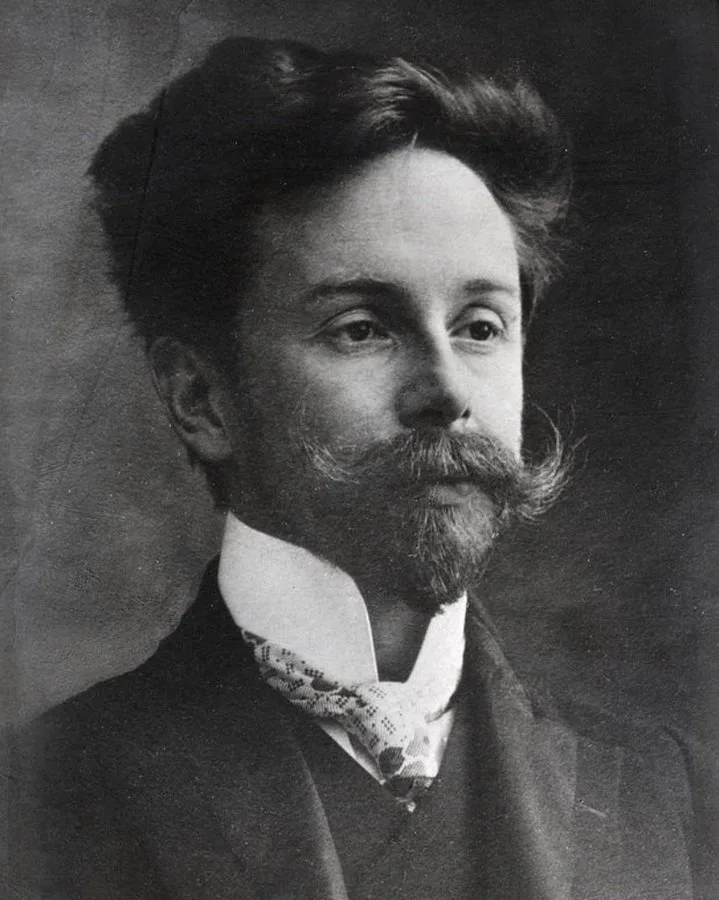
And then there’s one more astonishing secret. Tucked away in the eighth étude is a subtle quote of the opening theme from Alexander Scriabin’s Piano Sonata No. 5. Rachmaninoff was quoting his rival’s melody in his own work.
Rachmaninoff and Scriabin were classmates at the Moscow Conservatory. They were friendly as students, but their musical paths diverged completely. Scriabin veered into mysticism and avant-garde music, while Rachmaninoff remained steadfast in the Romantic tradition. Scriabin died suddenly in 1915. The very next year, while writing Op. 39, Rachmaninoff wove a thread of his melody into the eighth étude. Was it an homage? A quiet gesture of reconciliation? This small quotation has puzzled researchers for decades.
Nine Pictures: A Guide to Each Étude
While Op. 39 is conceived as a cycle, each piece creates a completely self-contained world. Listening to all nine is like walking through an art exhibition. By the end, you’re left with nine starkly different scenes burned into your memory.
Mvt. 1: Waves in a Storm, C minor
From the very first note, a storm breaks. The left hand unleashes a relentless torrent of massive arpeggios while the right hand hurls a melody over the top. The associated image is ‘The Sea,’ but this is no calm ocean. It’s a tempest, with waves crashing down without pause.
Technically, it’s an endurance test for the left hand’s arpeggios. For the listener, it feels like being swept away by the current for three minutes straight. A brief, quiet section in the middle is like the eye of the storm. That stillness is almost more unsettling. Just as you catch your breath, the waves surge back with even greater force.
This is why I recommend starting with No. 1. In just three minutes, it makes you feel the essence of this music in your bones.
Mvt. 2: The Flight of Seagulls, A minor
After the storm of No. 1 passes, this piece transports you to an entirely different world. True to its image, ‘The Sea and Seagulls,’ the melody soars and dips gently on the wind. It’s one of the most lyrical moments in all of Rachmaninoff’s piano music.
On a first listen, it’s easy to forget this is an étude. It sounds too much like a beautiful song. In fact, many pianists perform this piece as a standalone encore. The technical challenges lie in separating the right-hand melody from the left-hand accompaniment and in subtle pedal control, but the goal is to make all that technique disappear behind a natural, singing line.
The key moment to listen for is the climax in the middle section. The melody surges upward, like a seagull soaring over a wave. The subsequent descent is so achingly beautiful it can leave a first-time listener breathless.
Mvt. 3: The Day of Judgment, F-sharp minor
Knowing this piece is associated with the ‘Dies irae’ (Day of Wrath) is chilling. The Dies irae is the core melody of the medieval Catholic Requiem Mass, depicting the Last Judgment. Rachmaninoff was obsessed with this theme his entire life; it appears in various forms in many of his works, from the First Symphony to the Rhapsody on a Theme of Paganini.
Technically, this is an exercise for strengthening the fourth and fifth fingers. These weak fingers are required to hammer out heavy, explosive chords. It’s difficult even for someone with large hands like Rachmaninoff; for a pianist with average-sized hands, it’s borderline torture. As a listener, you quickly understand why it’s called the Day of Judgment. The relentless rhythm and ever-increasing tension create a feeling of being pursued.
Mvt. 5: The Hell of Octaves, E-flat minor
This is the most notorious piece in Op. 39. It’s an endless onslaught of octaves. The hands alternate, and sometimes combine, to hammer out octave after octave. It’s a piece infamous for causing wrist injuries and forcing pianists to give up.
Playing piano octaves requires two to three times the muscle power of single notes. To do that for over three minutes without a break is like asking a weightlifter to sprint a marathon. People who heard Rachmaninoff play it himself were reportedly stunned by the sheer volume he produced. This piece tests the absolute limits of the piano’s sound.
Mvt. 6: The Chase, A minor
It’s hard to believe this is based on a fairy tale. The image is ‘Little Red Riding Hood and the Wolf,’ but this isn’t the storybook version. You can feel the raw terror of a child being chased by a real wolf.
At high speed, the two hands play in different rhythms, creating a frantic pursuit. It genuinely feels like something is right behind you. Evgeny Kissin’s recording of this piece, made when he was just 15 in 1988, is still legendary. The fact that a teenager could master technique that overwhelms most adults is simply astounding.
Mvt. 7: Bells and Flames, C minor
Thick chords and bell-like sonorities alternate in a piece sometimes nicknamed ‘Funeral March.’ This is the heaviest, most somber movement in Op. 39. The bell effect holds special significance in the Russian musical tradition. Rachmaninoff himself mentioned being fascinated by the church bells of Novgorod in his childhood. This isn’t just about mimicking bells on a piano; it’s a moment where the piano itself transforms into a colossal bell.
Mvt. 8: A Road in the Rye, D minor
This is the lyrical étude where Scriabin’s melody makes its appearance. A characteristically expansive Rachmaninoff melody unfolds in two voices, and somewhere in the middle, Scriabin’s voice subtly blends in. Once you know it’s there, you can hear it with startling clarity.
Mvt. 9: A March to the Finish, D major
This is the only one of the nine études that ends in a major key, and with a march rhythm no less. It’s a surprising conclusion to a predominantly dark set. Some performers feel this ending isn’t one of genuine hope, but rather a final, defiant stand against fate. Heard in the context of music written just before leaving a revolutionary Russia, this march doesn’t sound lighthearted at all. Shortly after completing it, Rachmaninoff left his homeland forever.
The Difficulty: Music That Demands the Hands
Op. 39 ranks among the most difficult works in the early 20th-century piano repertoire, and not just because it has a lot of notes. Each étude pushes a different aspect of piano technique to its absolute limit.
No. 1 demands sustained arpeggio stamina. No. 3 tests the power of weak fingers. No. 4 focuses on repeated notes. No. 5 is about octave strength. No. 6 requires speed and leaps. No. 7 is about controlling the color of thick chords. And No. 9 is a synthesis of all these skills. All of these challenges are packed into a single collection.
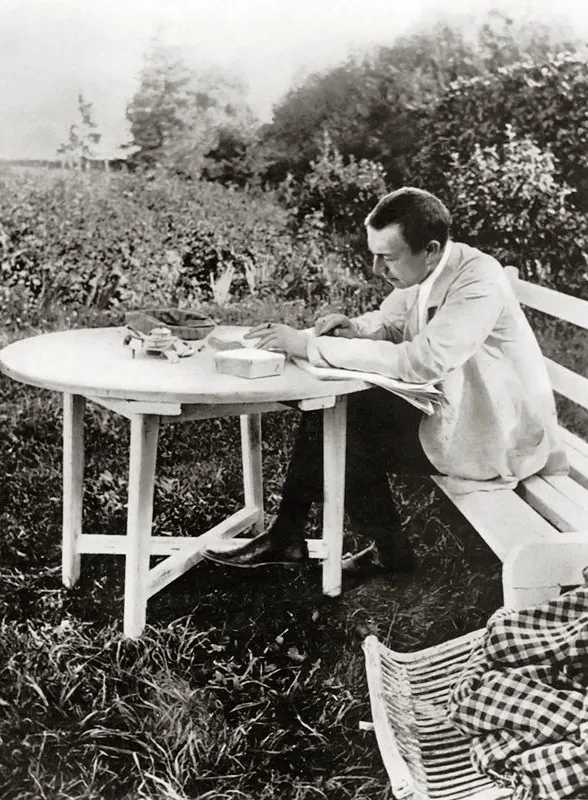
When piano students first encounter these pieces, it often takes months to master just one. The number of pianists who program the entire set for a concert is very small, even on the world stage. This lends credence to the theory that Rachmaninoff wrote them for his own hands. This is music that feels unreachable with ordinary hands and an ordinary amount of practice.
That’s why seeing this music performed live is a completely different experience. Unlike a recording, when you can see the pianist’s hands move across the keyboard and witness the physical strain, the music’s raw power becomes visceral. If you can, watching a video with a synchronized score is also an excellent way to appreciate it.
First Listen? Start Here
Listening to all nine pieces takes close to 40 minutes. For a first encounter, this approach might be more effective.
Start with No. 1. This stormy piece will pull you into the world of Op. 39 in an instant. The three minutes will fly by.
Don’t skip No. 2. The complete change of mood—a lyricism like a seagull spreading its wings—reveals another side of Rachmaninoff’s genius.
How about finishing with No. 6? The chase scene in ‘Little Red Riding Hood’ is a masterclass in how music can manipulate your heart rate.
And remember one thing: this music has “pictures.” Rachmaninoff gave us hints, but not the whole story. The real magic of this work lies in the joy of creating your own images as you listen.
If the full set feels daunting, a great starting point is to find a performance of No. 2 by Kissin or Lugansky on YouTube. Just three minutes of that seagull’s flight is enough to give you a sense of what Op. 39 is all about.
Why End with No. 9?
The conclusion with No. 9 is likely no accident. Op. 33 was originally eight pieces, but the final publication was reduced to six after Rachmaninoff withdrew some. Whether Op. 39 was planned as nine from the start or simply ended up that way is unknown. But the finale—a march in D major—feels like a deliberate conclusion.
The entire set moves from C minor to D major. It seems to progress from darkness to light, but the light isn’t entirely cheerful. The march is full of energy, but it’s unclear where that energy is directed. It’s similar to how Chopin’s minor-key works can end in a major key yet leave a profound, lingering sadness.
As the final chord of No. 9 rings out, a brief silence follows. When, in that silence, you feel the scenes of the previous eight pieces flash through your mind, you’ve truly heard the music.
The Weight of Music Written on Leaving Russia
Less than a year after completing Op. 39, Rachmaninoff left Russia. In December 1917, he crossed into Finland and eventually settled in the United States. The Bolshevik Revolution confiscated all his property, including his beloved Ivanovka estate.
He lived for another 26 years, composing major works like the Third Symphony, the Fourth Piano Concerto, the Rhapsody on a Theme of Paganini, and the Symphonic Dances. But he never wrote another collection of solo piano pieces. Op. 39 was, quite literally, the last of its kind.
Rachmaninoff himself never explained why. He barely composed anything for nearly a decade after his exile, surviving solely as a concert pianist. Some scholars believe the trauma of losing his homeland damaged his creative source. Others suggest that life in America simply didn’t suit his compositional process. It’s known that Rachmaninoff never felt at home in the United States.
Because of this, many listeners sense an air of “farewell” in Op. 39. Perhaps that’s why the final march of No. 9 sounds so bittersweet. Did Rachmaninoff know this would be his last work of this kind? We can’t know. But the music remains. Many listeners feel this collection tells a story of escape, with each piece representing a distinct part of that narrative, and the devastating No. 5 as a vision of the destruction of one’s home.
Op. 39 and the Russian Revolution: Where Music and History Collide
1917 was a strange year in classical music history. The Russian Revolution shook the entire culture, and countless artists faced a choice: stay or leave. Rachmaninoff chose to leave.
Interestingly, this decision was not impulsive. In late 1917, Rachmaninoff obtained an exit visa under the pretext of a concert tour in Scandinavia and left Russia with his family. Did he think it was a temporary measure, or did he plan from the start never to return? In the end, it was his last time in Russia.
Op. 39 was completed just before this decision, a few months before the revolutionary storm truly broke. Did Rachmaninoff know how his era would end? In 1916, as he wrote these études at his Ivanovka estate, the world outside was already collapsing with a deafening roar.
This is where the interpretation that Op. 39‘s dark atmosphere is tied to the anxiety of the entire era, not just personal feelings, comes from. It’s not often that music directly reflects history. But it’s also true that an unusual number of listeners feel that connection in Op. 39.
What if he hadn’t left Russia? Would he have struggled to survive within the Soviet system like Shostakovich, or would he have resisted in some other way? Instead of answering that question, Rachmaninoff left. And he left Op. 39 behind.
The Legendary Performances of Sviatoslav Richter
No discussion of Op. 39 performances is complete without Sviatoslav Richter. Richter performed the entire set multiple times, and some of his live recordings survive. Compared to recordings by Lugansky or Ashkenazy, Richter’s interpretation is from another universe.
It’s raw, unpolished. But many believe that rough texture gets closer to the music’s true essence. When Richter plays the fifth étude, the music becomes a physical assault. Even on a recording, the impact is immense; it’s hard to imagine what it was like in a concert hall.
Throughout his life, Richter considered Rachmaninoff one of his most important composers. His attachment to Rachmaninoff’s late piano music was particularly strong, and that love is palpable in his performances of Op. 39.
Comparing Lugansky’s 2015 Harmonia Mundi recording with Richter’s 1983 Moscow live performance reveals starkly different interpretive priorities. It’s a stark reminder of how two performances, separated by nearly half a century, can be so different despite starting from the same notes. The old cliché that there is one score but many musics feels freshly true.
The Story Behind the Name ‘Études-Tableaux’
The name ‘Études-Tableaux’ is itself interesting. ‘Étude’ is French for ‘study,’ and ‘tableau’ means ‘picture’ or ‘scene.’ The combination was Rachmaninoff’s own choice. It signifies a piece that is both a technical exercise and a depiction of a pictorial scene.
While the études of Chopin or Liszt are structured to solve purely technical problems, in Rachmaninoff’s Études-Tableaux, technique becomes the vessel for a story. You’re not just practicing arpeggios; you’re painting waves with them. You’re not just practicing repeated notes; you’re creating a chase scene with them.
This duality is the key to what makes Op. 39 different from a simple collection of studies. It is technically supreme and artistically profound. It is not one or the other, but both.
This combination is not common in piano literature. Chopin’s études are artistically brilliant but abstract. Liszt’s Transcendental Études often make technique an end in itself. Rachmaninoff managed to achieve both, and then added a specific ‘scene’ on top. This is why Op. 39 occupies a unique place in the étude genre.
Rachmaninoff had already tried this approach with Op. 33, but at that time, he revealed none of the images. With Op. 39, he whispered a few to Respighi but still kept the full set secret. Perhaps that was his intention all along: to give the listener only the music and let them find their own pictures within it.
The Place of Rachmaninoff’s Op. 39 in Music History
It is often said that the étude genre was perfected by Chopin. His études (Op. 10, Op. 25) simultaneously achieved technical training and high artistry. Liszt followed with his Transcendental Études, pushing virtuosity to its limits. As the 20th century began, Debussy once again renewed the genre with his Études (1915).
Rachmaninoff’s Op. 39 is one of the last great peaks in this lineage. After him, the 20th-century piano étude moved in entirely different directions in the hands of modern composers like Ligeti and Messiaen. Rachmaninoff’s language—a combination of highly developed late-Romantic harmony and supremely pianistic technique—finds its last grand monument in Op. 39.
The irony is that Rachmaninoff himself didn’t seem to understand the direction pianism was heading after his time. He was not fond of the 20th-century music of Stravinsky, Prokofiev, and Bartók. This was one reason his own music was criticized as “outdated Romanticism.” But looking back now, it’s clear which music has survived. Today, Rachmaninoff’s works are among the most-streamed pieces in the classical repertoire.
Two Ways to Interpret Op. 39
Even among performers, there are differing opinions on how to approach this music.
The first approach is as ‘picture music.’ This involves listening while actively imagining the images attached to each étude: the sea and seagulls, the Day of Wrath, Little Red Riding Hood and the Wolf. For the pieces where Rachmaninoff provided a clue, this can greatly enhance the listening experience. When you imagine the chase between the wolf and the child while listening to No. 6, the music’s structure becomes immediately clear.
The second approach is as ‘absolute music.’ This means setting aside the images and focusing on the flow of harmony, the changes in rhythm, and the pianism itself. From this perspective, Op. 39 is the quintessence of late 19th-century Romantic piano music. Harmonically, Op. 39 is bold. Its chromatic progressions, unexpected modulations, and methods of resolving dissonance stand on their own as pure musical language, beyond their function as mere picture-painting tools.
Rachmaninoff himself refused to answer which approach was correct. Perhaps the reason he never revealed all the pictures lies here. Was it an expression of confidence that the music is rich enough to be heard in any way?
Why Is It Still Performed? Op. 39 Today
More than 80 years after Rachmaninoff’s death, Op. 39 remains a core part of the repertoire for the world’s leading pianists. There are clear reasons for this.
First, its value as a technical challenge. Op. 39 covers almost every advanced piano technique, serving as the ultimate test of a performer’s skill. It frequently appears in major international piano competitions.
Second, the density of its musical content. Each of the nine pieces contains a different story, and depending on how the performer tells that story, the music can sound completely different. Comparing the recordings of Lugansky, Ashkenazy, and Kissin makes you realize how varied the same notes can sound.
Finally, its ability to communicate directly with the audience. Op. 39 elicits an immediate reaction even from people unfamiliar with classical music. The storm of No. 1, the lyricism of No. 2, and the chase of No. 6 paint vivid pictures in the mind without any prior knowledge. This is perhaps the most fundamental reason why Op. 39 continues to be performed across generations.
Recommended Recordings
Nikolai Lugansky (Naxos, 2001)
This is arguably the benchmark recording of the complete Op. 39 today. As a Rachmaninoff specialist, Lugansky captures the character of each étude with precision. Even in the most explosive passages, the sound remains clear, and in the lyrical No. 2, he truly makes the piano sing. This is the most recommended recording for both newcomers and for comparative listening.
Play
Vladimir Ashkenazy (Decca, 1983)
Ashkenazy is a master who recorded the complete solo piano works of Rachmaninoff. His Op. 39, part of that set, is astonishingly clean and refined. It’s more emotionally restrained than Lugansky’s, which some might find “cold.” However, this cool-headedness has its own appeal, making the dark atmosphere of Op. 39 even more chilling. The darker pieces come across not as flashy, but as quiet and weighty.
Evgeny Kissin (RCA Victor, 1988, selections)
Kissin made this recording at the age of 15. It’s not the complete set (it includes Nos. 1, 2, 4, 5, 6, and 9), but his performance of No. 6, ‘Little Red Riding Hood and the Wolf,’ is still considered one of the greatest ever recorded. The fact that a teenager played with such mastery of technique that challenges seasoned adults is the stuff of legend. The explosive power of No. 1 and the delicacy of No. 2 are also hard to believe from a 15-year-old.
Listen with the Score
Play
Following along with the score can be a revelatory experience, showing the sheer density and complexity of the music on the page. The original score is available for free on IMSLP.
→ View the score for Études-Tableaux, Op. 39 on IMSLP)
Frequently Asked Questions
What are Rachmaninoff’s Études-Tableaux, Op. 39?
This is a set of nine solo piano études (studies) composed by Sergei Rachmaninoff between 1916 and 1917. The title ‘Étude-tableau’ means ‘study-picture,’ signifying pieces that are both technically demanding exercises and evocative musical paintings. They are considered among the most difficult and artistically profound works in Rachmaninoff’s piano repertoire. It was also the last collection of solo piano works he completed before leaving Russia for good.
What paintings were the Études-Tableaux, Op. 39 inspired by?
Rachmaninoff himself never publicly revealed the specific images for each piece. According to information he privately gave to the Italian composer Ottorino Respighi, who orchestrated some of them, No. 1 is ‘The Sea,’ No. 2 is ‘The Sea and Seagulls,’ No. 3 is ‘Dies irae’ (Day of Wrath), No. 4 is ‘Dying Birds,’ and No. 6 is ‘Little Red Riding Hood and the Wolf.’ The images for the remaining pieces are not officially known, making it a work where listeners are encouraged to imagine their own scenes.
If I’m new to Études-Tableaux, Op. 39, where should I start?
A great place to start is with No. 1 in C minor (Allegro agitato). Its stormy, wave-like texture immediately pulls you into the world of Op. 39. Follow that with No. 2 in A minor (Lento assai) to experience the sudden and stunning lyrical contrast. Don’t miss the technically famous No. 6, ‘Little Red Riding Hood and the Wolf.’ Listening to the entire set takes about 40 minutes, so trying Nos. 1, 2, and 6 first is a good way to get acquainted before tackling the whole cycle.
Why was Op. 39 Rachmaninoff’s last collection of solo piano pieces?
Shortly after completing Op. 39 in late 1917, the Russian Revolution broke out, and Rachmaninoff left Russia permanently. While he continued to compose symphonies, concertos, and variations in the United States, he never wrote another collection of solo piano miniatures. He never gave a specific reason, but researchers believe that the trauma of losing his homeland and financial stability in exile shifted his creative focus. Many see Op. 39 as a condensed expression of his final creative energy in Russia.
What are the recommended recordings of Rachmaninoff’s Études-Tableaux, Op. 39?
For a complete cycle, Nikolai Lugansky’s 2001 recording on Naxos is currently the most balanced and recommended choice. For a cleaner, more precise interpretation, Vladimir Ashkenazy’s 1983 recording on Decca is also excellent. Among selected recordings, Evgeny Kissin’s 1988 RCA recording is overwhelming, especially his legendary performance of No. 6, ‘Little Red Riding Hood and the Wolf.’ Comparing these three reveals how differently the same music can sound in the hands of different artists.
Further Reading
Copyright notice · The Classic Note does not permit unauthorized reproduction, reposting, redistribution, or translation of its articles. Brief quotations are allowed only with clear attribution and a link to the original page. Please contact us for reuse or collaboration requests.