- Composer
- Sergei Rachmaninoff
- Work
- Symphonic Dances, Op. 45
- Key
- C minor
- Composed
- Summer and autumn of 1940
- Movements
- 3 movements
I. Non allegro (C minor – C major)
II. Andante con moto. Tempo di valse (G minor)
III. Lento assai / Allegro vivace (D minor – D major) - Instrumentation
- piccolo, 2 flutes, 2 oboes, English horn, 2 clarinets, bass clarinet, alto saxophone, 2 bassoons, contrabassoon, 4 horns, 3 trumpets, 3 trombones, tuba, timpani, triangle, tambourine, snare drum, cymbals, bass drum, tam-tam, xylophone, glockenspiel, tubular bells, harp, piano, strings
- First performance
- January 3, 1941. Eugene Ormandy and the Philadelphia Orchestra
- Dedication
- Eugene Ormandy and the Philadelphia Orchestra
- Duration
- about 35 minutes
On December 21, 1940, in Philadelphia, someone left a disc recorder running while Sergei Rachmaninoff sat at Eugene Ormandy’s piano and played the conductor through his brand-new score. The composer had a standing policy against recordings of live playing. This one was made off-microphone anyway, apparently without his knowledge, and it stayed buried in the Ormandy archive at the University of Pennsylvania for decades before Marston Records restored and issued it.
What survives on that disc is a man jumping from passage to passage, singing the orchestration at his conductor, and pulling the beat around wherever he feels like it. It is also the single most useful piece of evidence we have about this music, because for most of its life the Symphonic Dances has been played hard, fast and metallic, and the composer’s own demonstration is looser and more elastic than almost anything you will hear in a concert hall.
Here is my position, and the rest of this guide argues it: the Symphonic Dances is the best music Rachmaninoff ever wrote. Better than the Second Piano Concerto, which is a great tune machine with a soft middle. Better than the Second Symphony, which sprawls. This one has no fat on it at all.
The Score He Wrote Instead of Retiring
Rachmaninoff wrote the piece during the summer and autumn of 1940, mostly at Orchard Point on Long Island, and completed the orchestral score in October 1940. He was sixty-seven. He had been out of Russia since 1917, and he had spent the intervening years earning a living as one of the most bankable pianists alive, which left almost no time for composing. After leaving Russia he completed only six compositions in total.
So the interesting question is why he started again at all. One likely answer is the theatre. Rachmaninoff corresponded with the choreographer Michel Fokine about turning the music into a ballet, and Fokine was interested; Fokine died in August 1942 and the plan died with him. The dance impulse is there in the title, in the metre, and in the way whole paragraphs of this music move in step rather than in phrase.
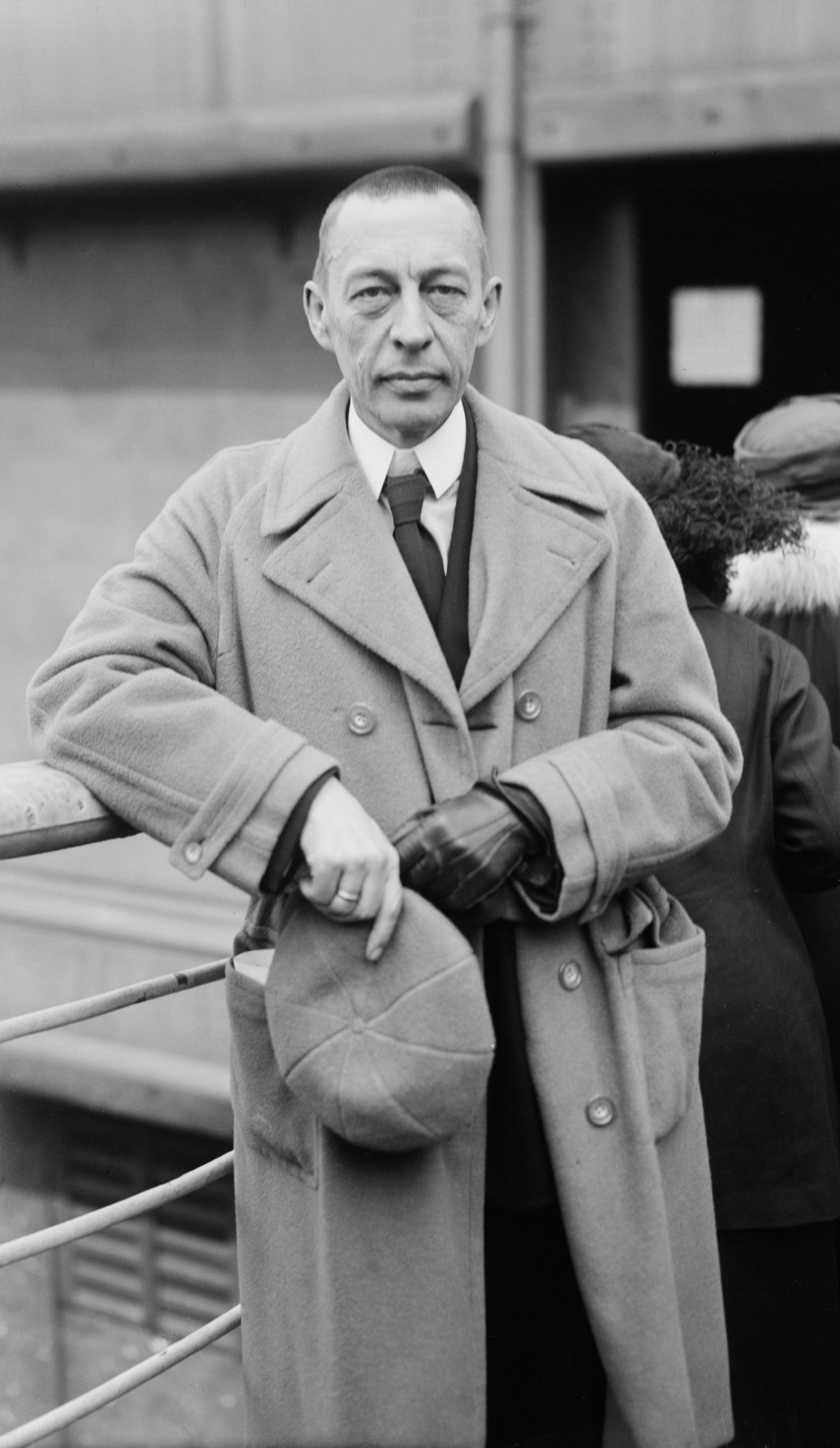
His working title for the two-piano version was Fantastic Dances, and he initially thought of the three movements as Noon, Twilight and Midnight. He threw the subtitles out before the first performance, and he was right to: they are too tidy for what actually happens. But they do tell you what he had in his head, and the arc from glare to dusk to darkness is audible whether or not you know the labels were ever there.
The two-piano version came first, finished in August 1940. The music was conceived at two keyboards, which is why it works so well as a duo. Rachmaninoff and Vladimir Horowitz played it through at a private party in Beverly Hills in August 1942, which appears to be its earliest known performance and, as far as anyone knows, was never recorded.
What to Listen For: Four Mechanisms
1. The rhythm is nailed down. Open any of the piano concertos and the music arrives on a wave. Open the Symphonic Dances and it arrives on a grid. The first movement is built from short, clipped, off-the-string chords with hard accents, repeated obsessively; the strings spend long stretches playing what is essentially percussion. From inside a string section this is a genuinely uncomfortable way to play, because there is nothing to hide behind: everybody’s bow has to leave the string at the same millisecond or the chord turns to mush. It is why the opening separates good orchestras from great ones.
2. The alto saxophone. Rachmaninoff had never written for one. He asked the Broadway orchestrator Robert Russell Bennett for advice about how to use it, which is a startlingly humble thing for a composer of his stature to do at sixty-seven, and then he handed the instrument the best tune in the movement. When the hammering stops and the saxophone comes in over low strings, the effect is of a completely different piece breaking through the floor. It is a risky piece of scoring. Woodwind players will tell you the blend is a nightmare, because a saxophone sitting inside a classical wind section is either invisible or far too loud. That risk is the point: the tune sounds like it wandered in from another country, which is exactly what its composer had done.
3. Bells everywhere, in disguise. Rachmaninoff was the great bell composer, and once you have heard The Bells you start finding them in every score he wrote. Here they are dismantled and spread around: glockenspiel, xylophone, tubular bells, harp and piano all doubling fragments of line so that the orchestra rings rather than sings. The piano here is a hammer used to sharpen the attack of other instruments.
4. Self-quotation, used as argument. Near the end of the first movement a broad melody appears in the strings that most first-time listeners hear simply as the arrival of the big tune. It is the main theme of his Symphony No. 1, a work whose disastrous first performance in 1897 stopped him composing for three years. He brings it back transformed into the major. That is the hinge of the whole piece, and it deserves its own section.
The Buried Symphony, and the Chant That Wins
The story behind that quotation is the worst night of Rachmaninoff’s professional life. His Symphony No. 1 had its first performance on 28 March 1897 in St Petersburg, conducted by Alexander Glazunov, under-rehearsed and, by several contemporary accounts, drunk on the podium. One of those accounts came from his cousin Natalia Satina, whom he married in 1902. César Cui reviewed it by imagining a conservatory in Hell whose star pupil had written a programme symphony on the plagues of Egypt, concluding that such a piece “would delight the inhabitants of Hell.” Rachmaninoff withdrew the score, fell into a three-year silence, and only came out of it after treatment with the physician Nikolai Dahl.
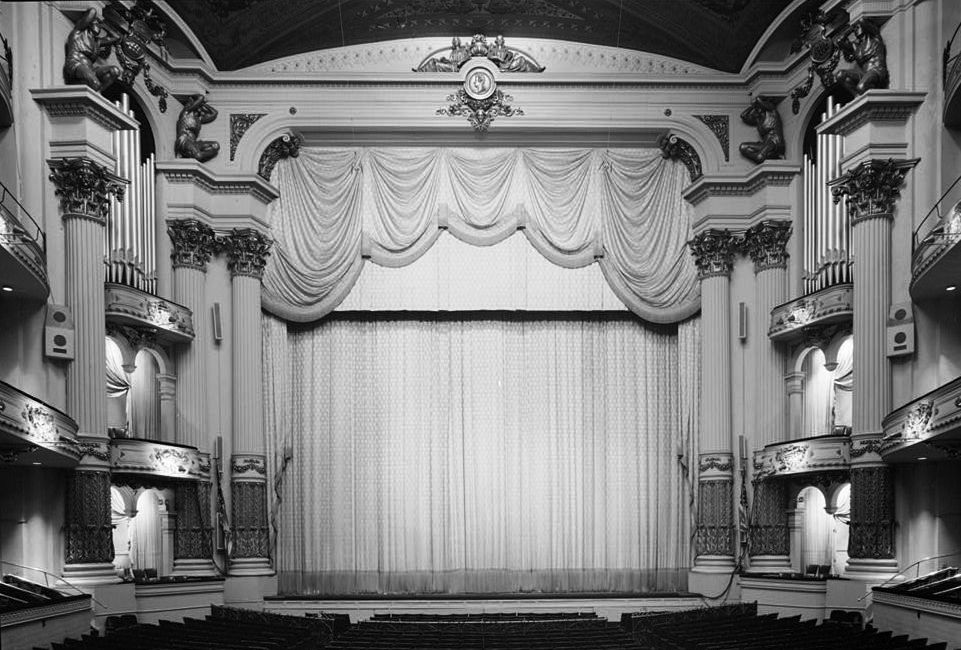
Forty-three years later he took the theme out again, put it in the major, and gave it to the orchestra the score is dedicated to. Nobody can tell you what he meant by it, and any writer who tells you he was making peace with his past is guessing. The documented part is narrower: he did it deliberately, the First Symphony was unpublished and unperformed at the time, and essentially nobody in the hall on the first night could have recognised the reference. He wrote it for an audience of one.
The finale runs the same trick at much higher stakes. Two chants fight. One is the Dies irae, the medieval sequence about the day of judgement that Rachmaninoff quoted compulsively across his career, most famously in the Rhapsody on a Theme of Paganini. The other is Blagosloven yesi, Gospodi, a resurrection chant from his own All-Night Vigil. They alternate, interrupt each other, and get progressively more violent, and the resurrection chant takes the last word. At that point in the score Rachmaninoff wrote “Hallelujah.”
Then the tam-tam. It has been sitting there for the entire piece doing nothing. It gets one stroke, at the very end, and the composer marks it to ring on after everything else has stopped. Conductors treat that decay as part of the music, which is why audiences who applaud into it are, technically, wrong.
Movement by Movement
I. Non allegro
Not fast. That marking is a warning, and the composer’s own playthrough for Ormandy takes it seriously: the first movement is a march that refuses to hurry. A few bare notes in the strings, then the machinery starts. The middle section drops the volume to almost nothing and the saxophone sings at length, accompanied by clarinets and low strings, and then the machinery returns and grinds toward the transformed First Symphony theme. If a performance makes this movement sound merely energetic, it has missed it; the tempo needs to feel deliberately, slightly held back.
II. Andante con moto (Tempo di valse)
A waltz in G minor that keeps getting interrupted by muted brass. The tune is passed around the winds and then to a solo violin, and the accompaniment never quite settles into a comfortable one-two-three: the harmony leans somewhere it should not on almost every phrase. Playing the inner parts here is an exercise in never being allowed to relax. The unease is the movement, and a conductor who smooths it out is left conducting a pleasant waltz.
Tempo is where conductors split. Taken slowly, it becomes a memory of a waltz, half-heard through a wall. Taken at a real dance tempo, it becomes sinister, because you can hear how badly the harmony wants to fall over. I prefer the faster reading, but the slow one is defensible and has better recordings behind it than people admit.
III. Lento assai, then Allegro vivace
The slow introduction is the darkest music Rachmaninoff wrote, and it is short. Then the Allegro vivace, and from there the piece is a fight. Rhythms in this movement are deliberately unstable, with bars of different lengths shoved against each other so that the pulse keeps slipping; the orchestra sounds like it is being pushed rather than driving. The Dies irae appears in the brass, the resurrection chant answers in the strings and bells, and the argument is settled on the final pages with a hammered cadence and the tam-tam.
This is a genuinely hard movement to bring off. The tempo relations are brutal, the percussion writing is exposed, and there is a stretch near the end marked to die away almost to nothing before the final surge, which is the moment most performances fumble. Listen for it: if the conductor really lets the sound drop out, the ending lands twice as hard.
Three Recordings, and Which One to Get First
Vladimir Ashkenazy / Royal Concertgebouw Orchestra / 1983 / Decca
Start here. Ashkenazy takes the second movement at a real waltz tempo instead of embalming it, the Concertgebouw strings articulate the first movement’s staccato writing cleanly enough that you hear individual chords rather than a blur, and Decca’s early digital sound puts genuine air around the percussion, which matters in a score this bell-heavy. The one reservation: the finale is exciting rather than frightening. Ashkenazy is a conductor of clarity, and there are readings with more menace.
🎧 Also on: Apple Music · Spotify
Vasily Petrenko / Royal Liverpool Philharmonic Orchestra / 2010 / Avie
The one to get if you want the saxophone solo done properly. Petrenko’s soloist plays it with actual rubato instead of treating it as a metronomic wind cameo, and the whole first movement is drier and more clipped than Ashkenazy’s, which suits the writing. The recorded sound is the best of the three by a wide margin: you can hear the xylophone as a distinct instrument rather than as glitter on top of the tutti. The Liverpool brass do not have the sheer weight of Philadelphia or Amsterdam, and in the finale you notice it.
▶ Listen on YouTube · Apple Music · Spotify
Eugene Ormandy / The Philadelphia Orchestra / 1960 / Columbia
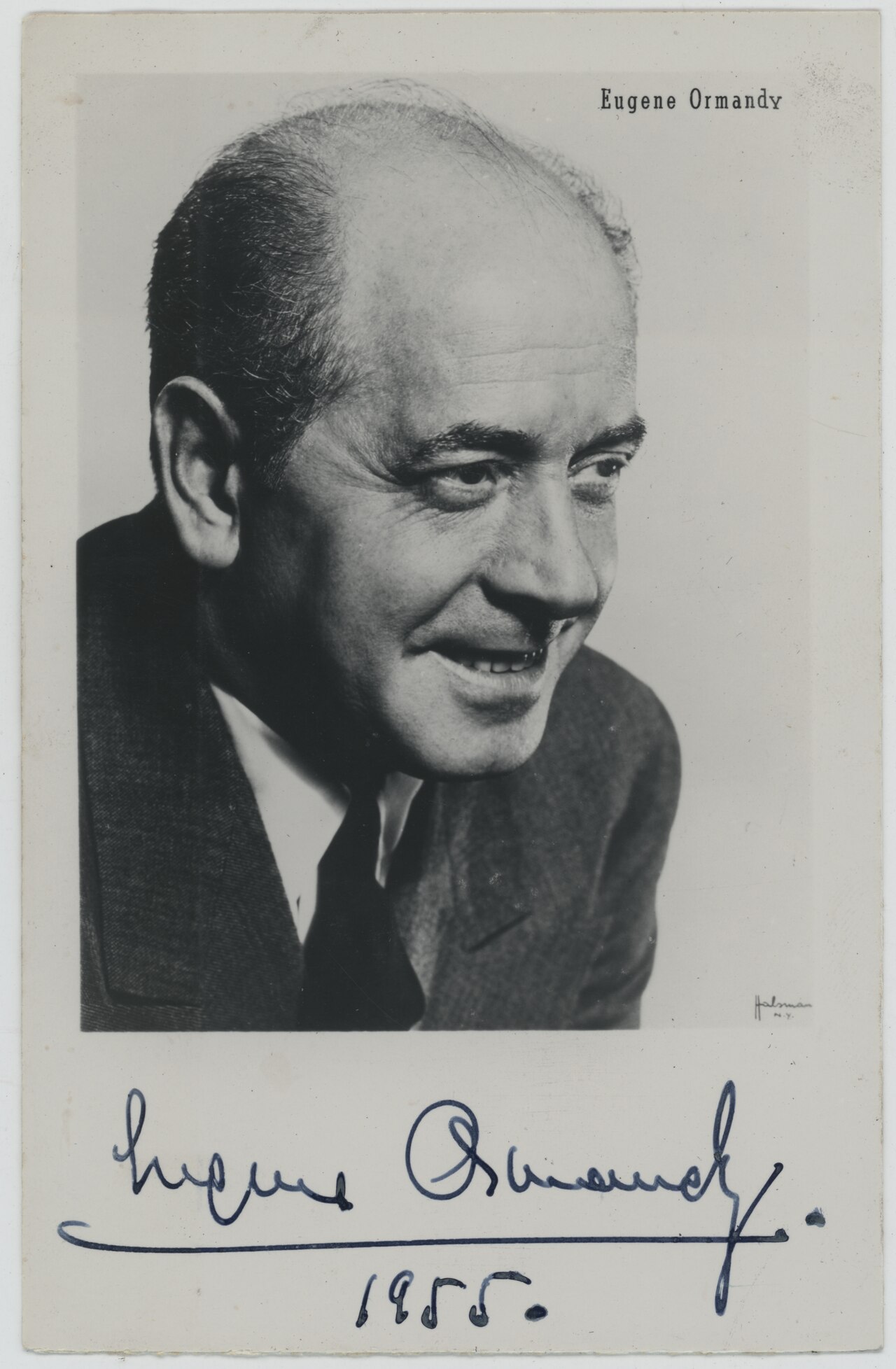
The historical document. Ormandy conducted the first performance and had the composer in the room; the orchestra is the one the score is dedicated to. What that buys you is mostly the saxophone, played with an unhurried, singing tone nobody uses now, and a genuinely observed dying-away before the finale’s last surge. What it costs you is the first movement, which sounds earthbound next to the modern versions, and 1960 Columbia sound with a hard edge on the strings. Get it second or third, not first, and get it for the second and third movements.
▶ Listen on YouTube · Apple Music · Spotify
The verdict. Ashkenazy first, Petrenko if you care about engineering and the saxophone, Ormandy for the historical thread. If you only ever play one movement, play Petrenko’s first movement and wait for the saxophone.
Follow the Score
This piece rewards score-reading more than almost anything else in the late Romantic repertoire, because so much of what you are hearing is doubling: one line handed between five instruments so that its colour changes while its shape does not. Watching it happen is the fastest way to understand why the orchestration sounds the way it does.
The two-piano version is worth seeking out as well, and it is the version that shows you the bones: the rhythm and the harmony stand exposed, with no saxophone and no bells to soften them.