Start with what rock actually does, mechanically. A riff: a short rhythmic figure repeated until it becomes the architecture instead of the decoration. A groove: accents that land off the beat and drag against it. A tone that sustains and distorts rather than decaying politely. And volume used structurally — quiet, then the wall.
Every one of those devices existed in orchestral music before anyone plugged anything in, and that is more useful than it sounds. Once you know which device in a score is doing the work, you can find orchestral music that hits the same nerve as the records you already own — instead of being handed a list of loud minor-key pieces and told to enjoy them.
The traffic between the two worlds is documented, too. Deep Purple performed Jon Lord’s Concerto for Group and Orchestra with the Royal Philharmonic Orchestra under Malcolm Arnold at the Royal Albert Hall on 24 September 1969. Emerson, Lake & Palmer built a track on Brain Salad Surgery out of an Argentine piano concerto, with the composer’s blessing.
Nine pieces below, ordered from the ones you’ll clock inside four bars to the one that closes the list because a prog band genuinely recorded it. One boundary first: this is rock — riff, groove, sustain, the build. If what you want is the heavy end sorted subgenre by subgenre, that’s a different job and we did it separately in classical music that sounds like metal.
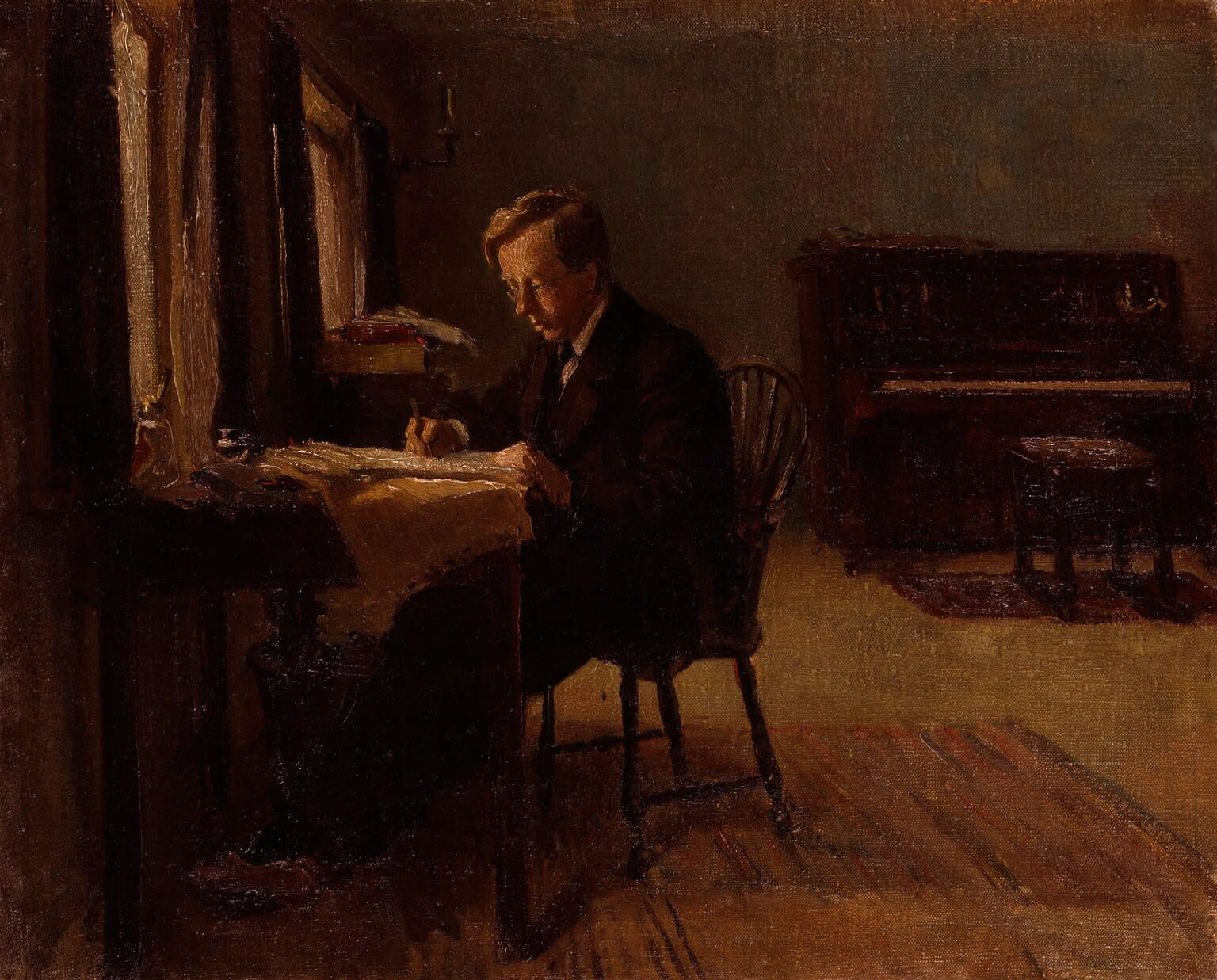
1. Holst — “Mars, the Bringer of War” from The Planets
The passage: bar one. Not a build-up to the riff — the riff, cold, from the first sound.
The device: an ostinato that is also the entire structure. Holst sets a five-beat rhythmic cell in 5/4 and repeats it, essentially unchanged, underneath everything that happens for the next seven minutes. Harmony arrives on top. The tune arrives on top. The cell never negotiates. That is precisely what a riff does in a rock song, and the odd metre is why it never settles into a march — five beats give you a bar that limps, one step too long to feel like walking.
The tone colour is the other half. The strings play col legno, striking the string with the wood of the bow instead of drawing hair across it. It is the one string effect that turns the section into a percussion department, and from inside the violas it doesn’t feel like playing a note — you’re keeping time on a piece of wood. No sustain, no vibrato, nowhere to hide. Twenty players either hit together or the riff turns to mush, which is why weak performances of Mars sound blurry rather than loud.
The Planets got its first orchestral outing in private, at the Queen’s Hall in London on 29 September 1918, conducted by Adrian Boult. For which recording to live with, we made the case in full in our guide to the best recordings of The Planets.
🎧 Also on: Apple Music · Spotify
2. Orff — “O Fortuna” from Carmina Burana
The passage: the first forty seconds, then the thirty after them.
The device: unison plus terracing. Orff has the entire choir and most of the orchestra hammer the same line at the same time — no counterpoint, no independent inner parts, nothing for the ear to untangle. Then he cuts to near-silence and starts rebuilding. Loud, then instantly quiet, then a climb back: that shape is standard issue in dance and metal production now, and Orff was doing it in 1937.
Worth being precise about why the loud part lands: a hundred voices in unison produce one enormous line with no harmony to soften its edges. That is acoustically close to what a stack of amplifiers does to a single guitar part — thickness without complication.
Carmina Burana was premiered at the Frankfurt Opera on 8 June 1937. The rock world took the hint early: “O Fortuna” opens Ozzy Osbourne’s 1987 live album Tribute, and served as the walk-on music for his shows of that era.
Honest caveat: this is by far the most over-exposed piece here. If you’ve met it in one trailer too many, the fix is the whole cantata — the movements around it are lighter, stranger and much less famous.
▶ Listen on YouTube · Apple Music · Spotify
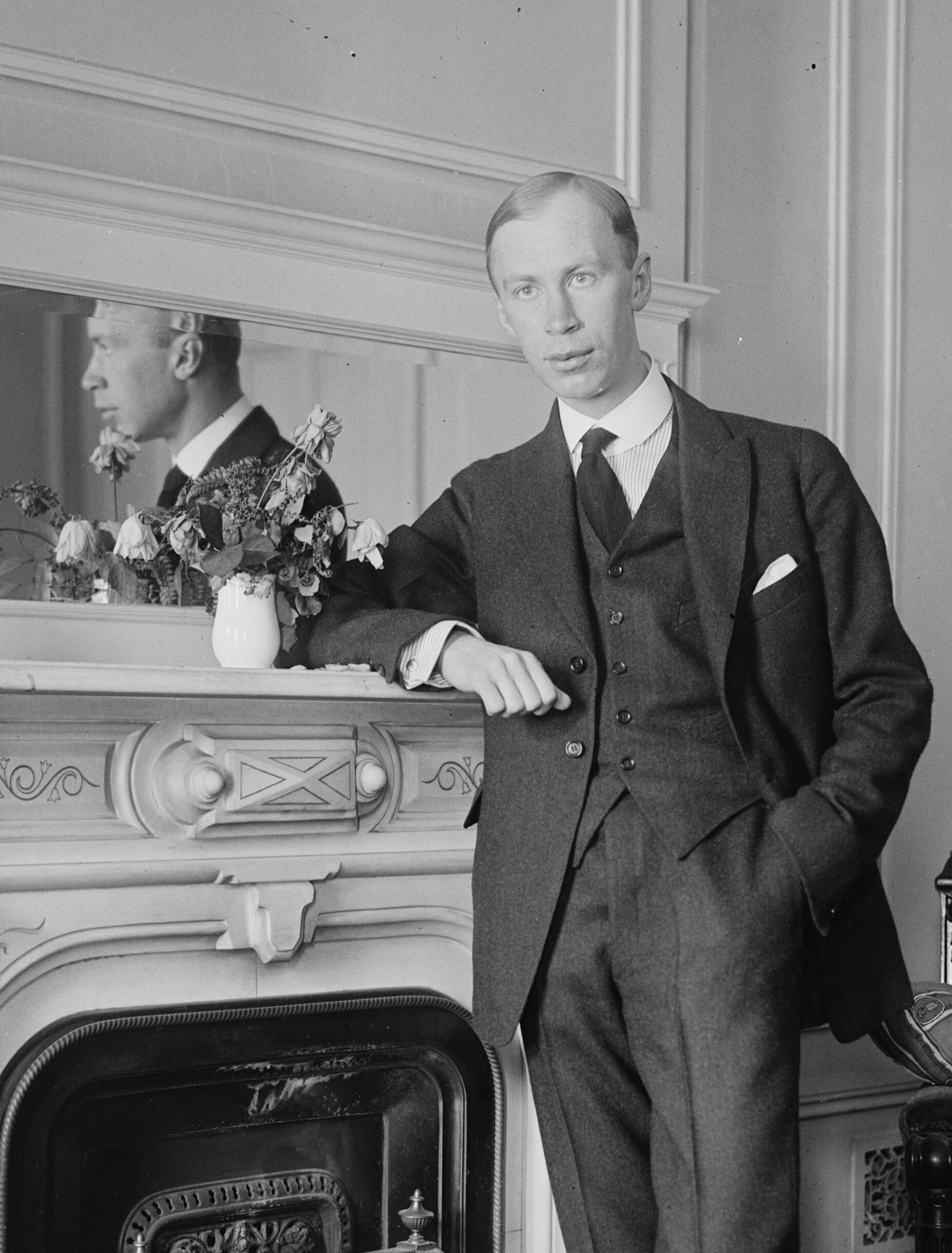
3. Prokofiev — “Montagues and Capulets” from Romeo and Juliet
The passage: the heavy dotted theme that arrives after the opening dissonance, usually about forty seconds in. This is the one that soundtracks every arrogant entrance in television.
The device: the dotted rhythm — long, short, long — which is what swagger sounds like when you write it down. A straight eighth-note pulse marches; a dotted one struts, because the short note arrives late and shoves you into the next downbeat. Prokofiev then doubles the line across low strings, low brass and bassoons, so the riff comes at you as one thick object rather than a chord voiced in parts. Bass and rhythm guitar playing the same figure in octaves is the identical trick.
There’s an oddity in the scoring too: the ballet’s orchestra includes a tenor saxophone, which is not standard equipment, and it takes the lyrical middle section. Dropped into a heavy orchestral riff, it does the job of a lead guitar break — cutting through by timbre rather than volume.
From a player’s side, this movement is deceptive. The notes are easy. The together is not: dotted rhythms across a whole low-string section drift almost immediately, and a section that’s fractionally loose turns the strut into a shuffle. When a performance of this sounds flabby, that’s usually the reason.
Prokofiev finished the score in 1935, but the staged premiere didn’t happen until 30 December 1938, in Brno.
🎧 Also on: Apple Music · Spotify
4. Attributed to Bach — Toccata and Fugue in D minor, BWV 565
The passage: the first twenty seconds. The turn, the run down, the diminished chord that sits there and refuses to resolve.
The device: distortion, three centuries early. A pipe organ does two things an orchestra can’t. It sustains indefinitely, because air keeps moving through the pipe as long as the key is down, so a chord doesn’t decay — it just stands. And its mixture stops add extra pipes tuned to upper harmonics above every note you play, so a single key produces a bright, buzzing stack of overtones. Adding overtones to a sustained note is the working definition of what a distortion pedal does. The organ was the loud, sustaining, harmonically saturated instrument, and BWV 565 is that instrument showing off.
The opening also has a shape rock inherited whole: a free, unmeasured, single-voice flourish before the piece proper begins. Every guitarist who opens cold and alone before the band crashes in is using that rhetoric.
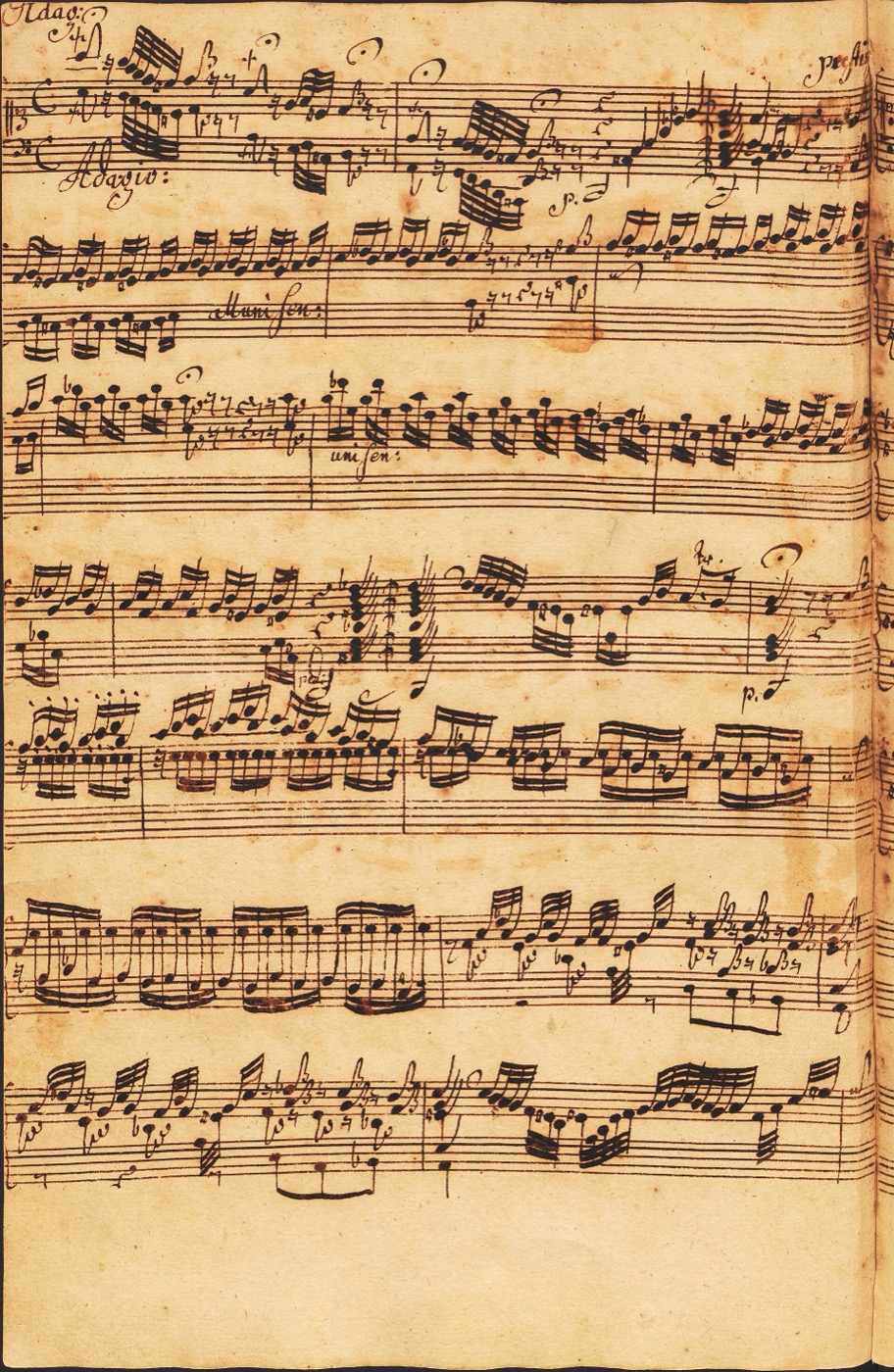
One thing to know before you call it Bach in company. The piece survives in no autograph; the earliest source is a copy made by Johannes Ringk. The English musicologist Peter Williams questioned the attribution in 1981, pointing to features rare in Bach’s organ writing, and no scholarly consensus has settled the question since. Some scholars argue for a lost original in another form; others defend Bach’s authorship. The safe phrasing is “attributed to Bach”, and the piece is no less thrilling for it.
▶ Listen on YouTube · Apple Music · Spotify
5. Ravel — Boléro
The passage: all fifteen minutes, which is the point. If you want the moment, it’s the modulation near the end, when the key lurches sideways from C to E and the whole machine seems to slip a gear.
The device: the single-loop build. One snare rhythm, stated in the first bar, repeated without variation to the last page. One melody, handed round the orchestra. No development, no contrasting theme, no key change until that late shove — everything that happens is a matter of how many players are doing it and how loud. That is the structure of every long rock track that starts with one person and ends with everyone.
Ravel wrote it on commission from the dancer Ida Rubinstein, and it was first performed at the Paris Opéra on 22 November 1928. He was reportedly unbothered by the charge that it contained no music, only orchestration — the most rock-and-roll defence ever mounted for a fifteen-minute one-riff track.
▶ Listen on YouTube · Apple Music · Spotify
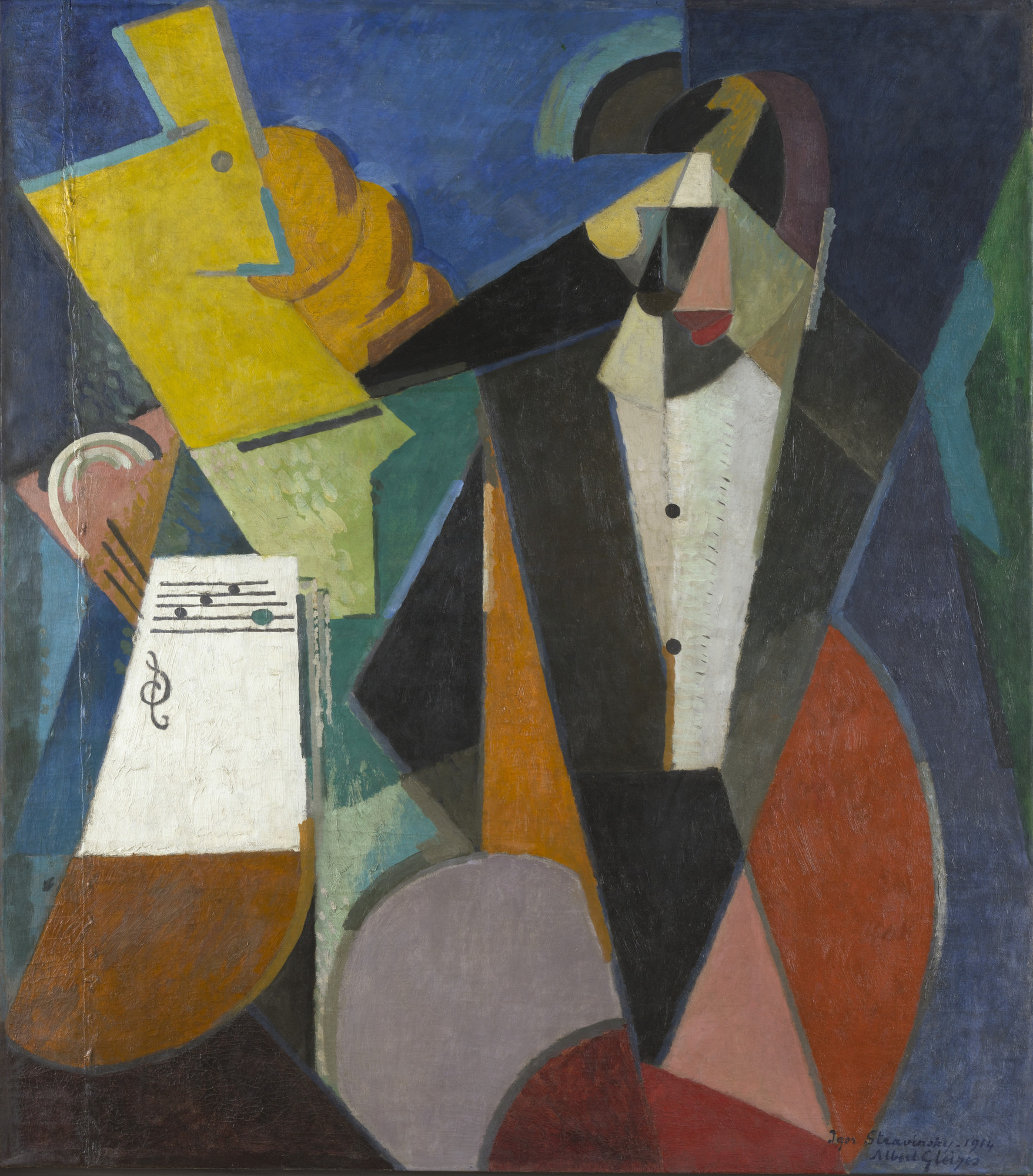
6. Stravinsky — “Augurs of Spring” from The Rite of Spring
The passage: the stamping chords, roughly three minutes in, right after the introduction thins out and the strings dig in.
The device: accent displacement. Stravinsky takes one chord — an E-flat dominant seventh stacked on an F-flat major triad, two chords at once — and repeats it in even eighth notes. Nothing changes except where the accents fall, and he moves them on and off the beat until your body stops knowing where “one” is. It is the most transferable idea on this list: violence built out of static harmony, purely by lying about the downbeat.
The horns punching in on the off-beats are the other half of it — they interrupt the pulse rather than reinforce it. Played properly the passage feels physically aggressive rather than merely loud.
That premiere, at the Théâtre des Champs-Élysées on 29 May 1913, is the most mythologised evening in the repertoire, and the myth has grown well past the evidence. We went through what can and can’t be established in our piece on the Rite of Spring riot.
▶ Listen on YouTube · Apple Music · Spotify
7. Shostakovich — Symphony No. 10, second movement
The passage: the whole movement. It runs about four minutes and it does not let up once.
The device: sustained maximum with short cells. Where Boléro takes a quarter of an hour to arrive, this starts at the top and stays. The material is deliberately cheap — brief scrappy figures, three or four notes each, thrown between sections and hammered rather than developed. Add a snare drum under it and the effect is a double-time thrash section that happens to be scored for a symphony orchestra. It’s also the shortest way to prove to a sceptical friend that orchestral music can be genuinely aggressive, because the argument is over before they can compose a rebuttal.
The symphony was premiered by the Leningrad Philharmonic under Yevgeny Mravinsky on 17 December 1953, months after Stalin’s death. The popular reading of this movement as a portrait of Stalin comes from Testimony, the memoir published under Shostakovich’s name in 1979, and the reliability of that book remains disputed. Treat it as one common interpretation, not a settled fact.
▶ Listen on YouTube · Apple Music · Spotify
8. Bartók — Allegro barbaro
The passage: the opening, and then more or less all of the next two and a half minutes.
The device: the piano used as a drum kit. The left hand hammers a repeated chord in relentless even eighths while the right hand throws accents across it, and the interest is entirely rhythmic — the harmony sits still for long stretches on purpose. Bartók also mixes a pentatonic Hungarian flavour against chromatic Romanian material, which produces exactly the sour, unresolved quality a guitarist gets from a riff built on flattened notes rather than a clean major or minor scale.
Composed in 1911, it lasts about as long as a single song, and it is the best answer here to anyone who thinks a solo instrument can’t be heavy: no orchestra, no volume advantage, no distortion, just one player attacking a keyboard with the attitude of a rhythm section. The title is commonly read as a shot back at critics who had called Bartók a barbarian.
▶ Listen on YouTube · Apple Music · Spotify
9. Ginastera — Piano Concerto No. 1, fourth movement
The passage: the finale, marked “Toccata concertata”. Start there and work backwards into the concerto if you like it.
The device: a malambo — the driving Argentine folk dance whose whole identity is a hard, repeating rhythmic pattern under a soloist. Structurally that is a band: a rhythm section that will not deviate, and a virtuoso playing across the top of it. Ginastera writes the piano as a percussion instrument for most of the movement, in clusters and stabs rather than melody, and the orchestra behaves like a drummer and bass player who have agreed on the pattern in advance and are not open to suggestions.
This one closes the list because it isn’t an analogy. Keith Emerson adapted this exact movement as “Toccata” on Emerson, Lake & Palmer’s 1973 album Brain Salad Surgery, having sought out Ginastera in Switzerland to play him the arrangement and secure his approval. A prog trio heard a 1961 concert work and recognised a rock track, and the composer agreed.
The concerto was premiered on 22 April 1961 in Washington, D.C., by João Carlos Martins with the National Symphony Orchestra under Howard Mitchell. The recording below is Martins, the pianist who gave that first performance.
🎧 Also on: Apple Music · Spotify
Where to start, and where to go next
If you play only one of these, play the Shostakovich: four minutes, no preamble, and it settles the question of whether an orchestra can be aggressive. The one that will stay in your head is Mars. The one that will surprise you is the Ginastera — follow it with the Emerson, Lake & Palmer track to hear how little had to change.
Two warnings. Orchestral aggression comes in waves — even Mars has a hushed middle, and nothing here sustains a wall of sound the way a compressed rock record does. And the recording matters more than usual, because every piece on this list depends on rhythmic precision. A loose ensemble turns a riff into a smear.
From here: the heavier end of the same idea, matched subgenre by subgenre, is in classical music that sounds like metal. If you want this energy for something practical rather than for listening, several of these pieces reappear in our workout list, where tempo stability matters more than drama.