Most “classical music that sounds like metal” lists work by picking loud pieces. Big brass, minor key, timpani, done. The trouble is that nobody actually listens to “metal.” They listen to doom, or thrash, or black metal, or whatever Meshuggah is doing, and those things barely share an audience, let alone a sound. A doom fan and a tech-death fan want opposite things: one wants time to slow down until a single chord becomes a room you’re trapped in, the other wants the floor to keep moving under them.
So this list is built the other way round. One classical piece per metal subgenre, chosen because the mechanism matches — the actual device in the score that produces the effect, not a vibe. Slow crushing repetition is not the same trick as tremolo-picked treble wash, and neither is the same trick as a percussive off-beat slap. If you already know which corner of metal you live in, skip to it. If you want the broader version of this argument — the nine pieces that read as metal-adjacent generally, including the documented Holst-to-Black-Sabbath paper trail — that’s our heavy metal list. This one is narrower and, I think, more useful.
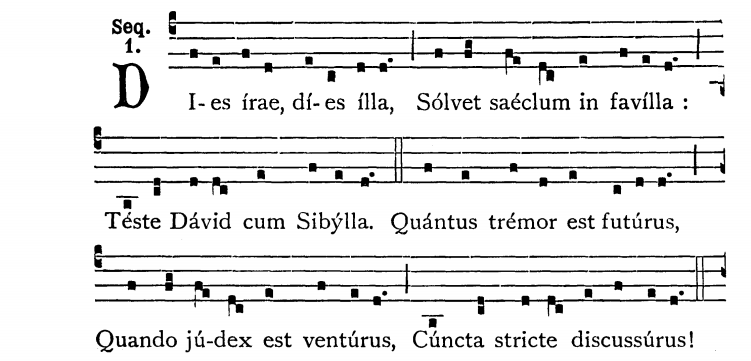
One thread runs through several of these picks, so it’s worth flagging up front: the Dies irae, a medieval Latin plainchant about the Day of Wrath. Composers have been quoting its opening four notes as shorthand for death for two centuries. It is, functionally, classical music’s oldest recurring riff.
1. Doom — Mahler, Symphony No. 6, finale
Doom’s defining move is patience weaponised. Tempo drops, a riff repeats past the point of comfort until it stops being a riff and becomes architecture, and the ending feels decided before the song starts. Think Black Sabbath’s slower half, or Electric Wizard.
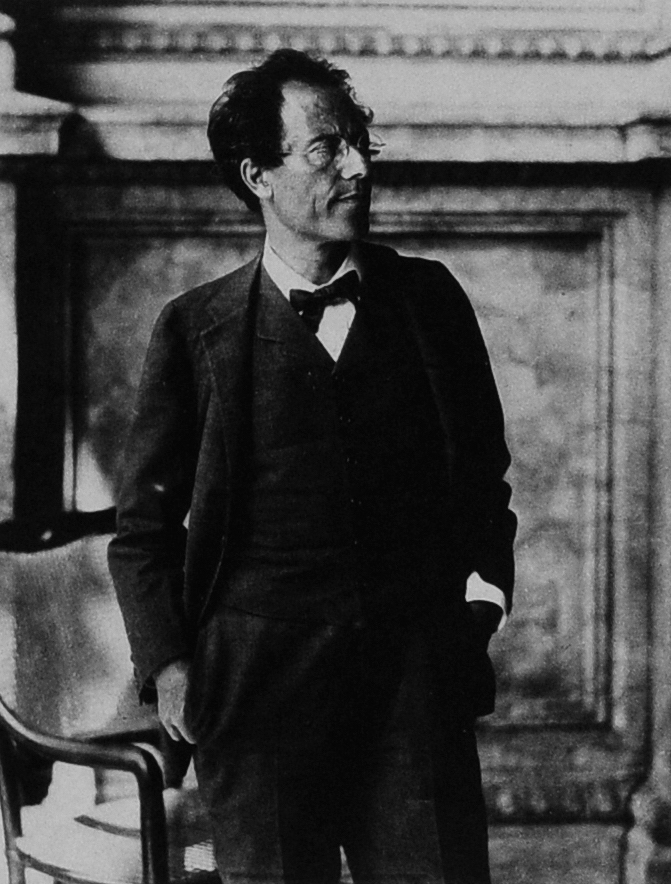
Mahler’s Sixth finale runs about half an hour and is structured exactly like that: build, get flattened, rebuild, get flattened again. The flattening is literal. Mahler scores a hammer — a large mallet struck against a wooden box — for an unpitched, non-musical impact that no orchestral instrument can make. It arrives at the peak of a climb, and everything after it sounds like wreckage. He originally wrote three of these blows and cut the last one; the published score carries two, which is why recordings disagree about how many you hear.
The other doom device here is the symphony’s motto: a bright major triad that slides down into minor over a snare-drum tattoo. A major chord curdling into minor is a cadence doom guitarists would rediscover sixty years later. Mahler conducted the first public performance on 27 May 1906 in Essen.
Who it’s for: anyone whose favourite part of a doom record is the last ninety seconds. Fair warning — this is the longest commitment on the list, and the payoff is structural, not immediate.
▶ Listen on YouTube · Apple Music · Spotify
2. Death metal — Prokofiev, Scythian Suite, second movement
Death metal lives in the bottom of the register: downtuned chromatic riffing, drums that hammer rather than groove, and harmony that grinds sideways instead of resolving. The vocal is a texture, not a melody.
The second movement of Prokofiev’s Scythian Suite, titled in English “The Evil God and the Dance of the Pagan Monsters,” does all of that with an orchestra. Low brass and low strings lock into a short repeated cell and stay there. The percussion drives straight eighths under it with no swing and no let-up, which is functionally a blast beat scored for timpani, bass drum and cymbals. The harmony is chromatic clusters that refuse to cadence, so the music has no exit; it just stops. Prokofiev also writes the brass loud enough and low enough that the sound distorts in a hall, which is the acoustic equivalent of clipping a preamp on purpose.
The suite exists because Diaghilev rejected the ballet Prokofiev wrote for him, Ala i Lolli, and Prokofiev salvaged the score as a concert work. He conducted the premiere in Petrograd on 29 January 1916, and it caused a scandal.
Who it’s for: anyone who has been told orchestras can’t be genuinely ugly. This is the counter-argument, and it’s four minutes long.
▶ Listen on YouTube · Apple Music · Spotify
3. Symphonic and power metal — Berlioz, Grande Messe des morts, “Tuba mirum”
Symphonic metal’s whole proposition is scale. Choirs, layered brass, a production so wide it stops being a band and becomes a weather system. Power metal adds the heroic major-key lift on top.
Berlioz got there in 1837 and, honestly, nobody has beaten him since. The “Tuba mirum” erupts out of the Dies irae movement of his Requiem, and the device is not volume — it’s geography. The score calls for sixteen timpani and four separate brass groups stationed at the four corners of the performing space, so the fanfare arrives from four directions at once and the listener is inside it rather than in front of it. That is precisely what a quadruple-tracked guitar wall and a hard-panned mix are trying to fake, except Berlioz did it with actual distance and actual air. The premiere was on 5 December 1837 at the church of Les Invalides in Paris, conducted by François-Antoine Habeneck.
The honest caveat: this one loses more than any other pick on headphones. The spatial trick collapses into a stereo image. If a Berlioz Requiem is ever performed near you, that is the entry on this list to go and hear in a room.
▶ Listen on YouTube · Apple Music · Spotify
4. Neoclassical shred — Liszt, Totentanz
Neoclassical metal is the one subgenre that admits its debt out loud: Yngwie Malmsteen and everyone after him took Baroque and Romantic figuration and played it fast on a Stratocaster. The ancestor is not Bach, though. It’s Liszt.
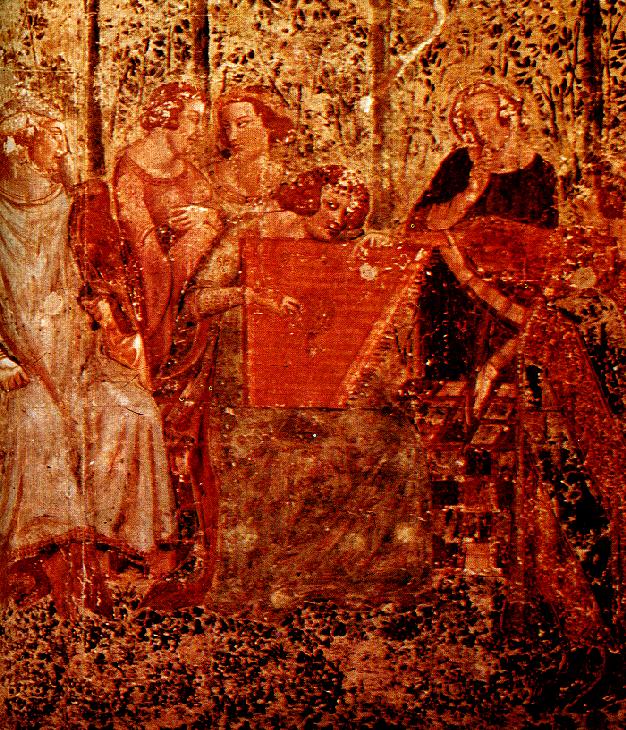
Totentanz opens with the Dies irae pounded out in bare octaves at the very bottom of the piano, and that is the riff — a four-note death chant hammered rather than sung. What follows is variation after variation in which the tune stays recognisable while the surrounding technique escalates: glissandi, repeated-note barrages, hands crossing, the soloist doing damage. The structure is riff-then-solo, exactly as a metal track lays it out, and the orchestra spends most of the piece functioning as a rhythm section. Liszt published it as a paraphrase on the Dies irae, and it was premiered in The Hague on 15 April 1865 with Hans von Bülow as soloist.
The usual account holds that Liszt’s starting point was The Triumph of Death, the fresco in the Camposanto at Pisa, though how directly that image shaped the notes is interpretation rather than documented fact.
🎧 Also on: Apple Music · Spotify
5. Thrash — Vivaldi, “Summer” from The Four Seasons, third movement
Thrash is about the right hand: fast, tight, downpicked, no ornament, the riff repeating at a tempo that punishes anyone who drops a note. Slayer and early Metallica made a virtue of mechanical precision under pressure.
Baroque motor rhythm is the direct ancestor of that. The Presto that ends Vivaldi’s “Summer” concerto — the summer storm — runs unbroken semiquavers in the ensemble from the first bar to the last, over a bass line that stamps the beat without ever pausing for breath. One harmony sits underneath while a torrent of notes rakes across the top. The soloist’s part is a shred solo in all but name: scalar runs, string crossings, and arpeggios played at a speed where the notes stop being individually audible and become a shape.
The Four Seasons were published in Amsterdam in 1725 as the first four concertos of Vivaldi’s Op. 8, Il cimento dell’armonia e dell’inventione, and “Summer” is the G minor concerto, RV 315.
Who it’s for: anyone who wants the fastest thing here. It’s under three minutes and it does not slow down once. It’s also the most accessible pick on the list, which is either a feature or a mark against it depending on how much you value obscurity.
▶ Listen on YouTube · Apple Music · Spotify
6. Black metal — Penderecki, Threnody to the Victims of Hiroshima
Black metal’s signature is texture replacing notes. Tremolo picking so fast the individual attacks blur into a single sheet of sound, treble-forward production, no groove to hold onto — you’re meant to hear a surface, not a line.
Penderecki wrote the manual for this in 1960, for 52 string instruments: 24 violins, 10 violas, 10 cellos and 8 double basses. The piece opens with all of them entering on the highest pitch each player can produce, at once. From there he writes tone clusters — every quarter-tone inside a band of pitch sounded simultaneously — plus bowing behind the bridge, bowing on the tailpiece, and striking the body of the instrument. The result is not chords. It’s a wall with an edge on it, and the ear gives up trying to separate the parts, which is exactly what a bank of tremolo guitars is engineered to do.
A detail worth knowing: he first titled it 8′37″, after its duration, and only attached the Hiroshima dedication later. The music was abstract before it was a memorial.
Who it’s for: the extremity end of the list. If you find it unlistenable, that is a legitimate reaction and not a failure of taste — this is the one pick here I would not hand to a curious newcomer first.
▶ Listen on YouTube · Apple Music · Spotify
7. Tech and math metal — Bartók, String Quartet No. 4, fourth movement
Meshuggah, Gojira, Animals as Leaders: notes used as impacts, accents that regroup so the bar keeps moving under you, and a guitar tone engineered to sound like a struck object rather than a sustained one.
Bartók’s fourth quartet has a movement, marked Allegretto pizzicato, in which nobody uses a bow for two and a half minutes. Everything is plucked. And Bartók asks for a specific attack — pull the string so far off the fingerboard that it snaps back and slaps the wood. That effect is now called the Bartók pizzicato, and it is a percussion sound with a pitch attached, which is the exact description of a palm-muted, heavily compressed metal guitar chug. Four string players stop being a quartet and become a rhythm section trading hits. The accents land off the beat and reorganise, so the pulse is always present but never quite where you left it.
He composed the quartet in 1928; the Waldbauer–Kerpely Quartet gave the first public performance in Budapest on 20 March 1929.
This is my pick for the single most metal-sounding stretch of chamber music in the repertoire, and it takes less time than one Meshuggah track.
🎧 Also on: Apple Music · Spotify
8. The one that shouldn’t work — Biber, Battalia à 10
Everything above comes from the last two hundred years, which makes the resemblance easy to explain away: big Romantic and modern orchestras were loud, metal is loud, coincidence. Then there’s Biber, writing in 1673 for three violins, four violas, two violones and continuo, doing things that have no business existing that early.
The second movement is titled “Die liederliche Gesellschaft von allerley Humor” — roughly, the dissolute company of all sorts of humour — and it depicts drunk soldiers by having eight different folk songs played simultaneously in eight different keys. Not dissonance as a passing effect — sustained, deliberate, comic noise. Elsewhere in the piece Biber instructs a bass player to slide a sheet of paper under the strings so the instrument buzzes and rattles like a snare drum, and has the players strike the strings with the wood of the bow. That is a prepared instrument and a deliberately degraded tone: someone making a violin sound broken because broken is the sound he wanted.
Strip the period instruments away and the intent is identical to a guitarist stacking fuzz pedals. Biber closes this list because he proves the impulse isn’t a modern one. The technology changed; the appetite for organised ugliness didn’t.
🎧 Also on: Apple Music · Spotify
Where to go next
If you came in through doom or death metal, the two entries to sit with are Mahler’s Sixth and the Prokofiev — both reward a second listen in a way the faster picks don’t. If you came in through thrash or neoclassical, Vivaldi and Liszt will land immediately and you should treat them as gateways rather than destinations.
From here: the general heavy metal list covers the pieces I deliberately left out of this one, including Holst’s Mars, the piece with an actual documented line to the first Black Sabbath riff. If the rhythmic drive is what hooked you rather than the darkness, the galloping list works the same seam from a different angle. And if you want to go deep on one work instead of collecting fragments, our guide to the best recordings of The Planets is the natural next stop.