Hannibal Lecter has had a Bach problem since 1991. In The Silence of the Lambs, the Aria from the Goldberg Variations plays while he takes apart two Memphis policemen, and ever since, “cannibal listens to Bach” has been shorthand for cultured evil — a joke that got thinner with every parody. Bryan Fuller’s NBC series inherited it and had to make it mean something again.
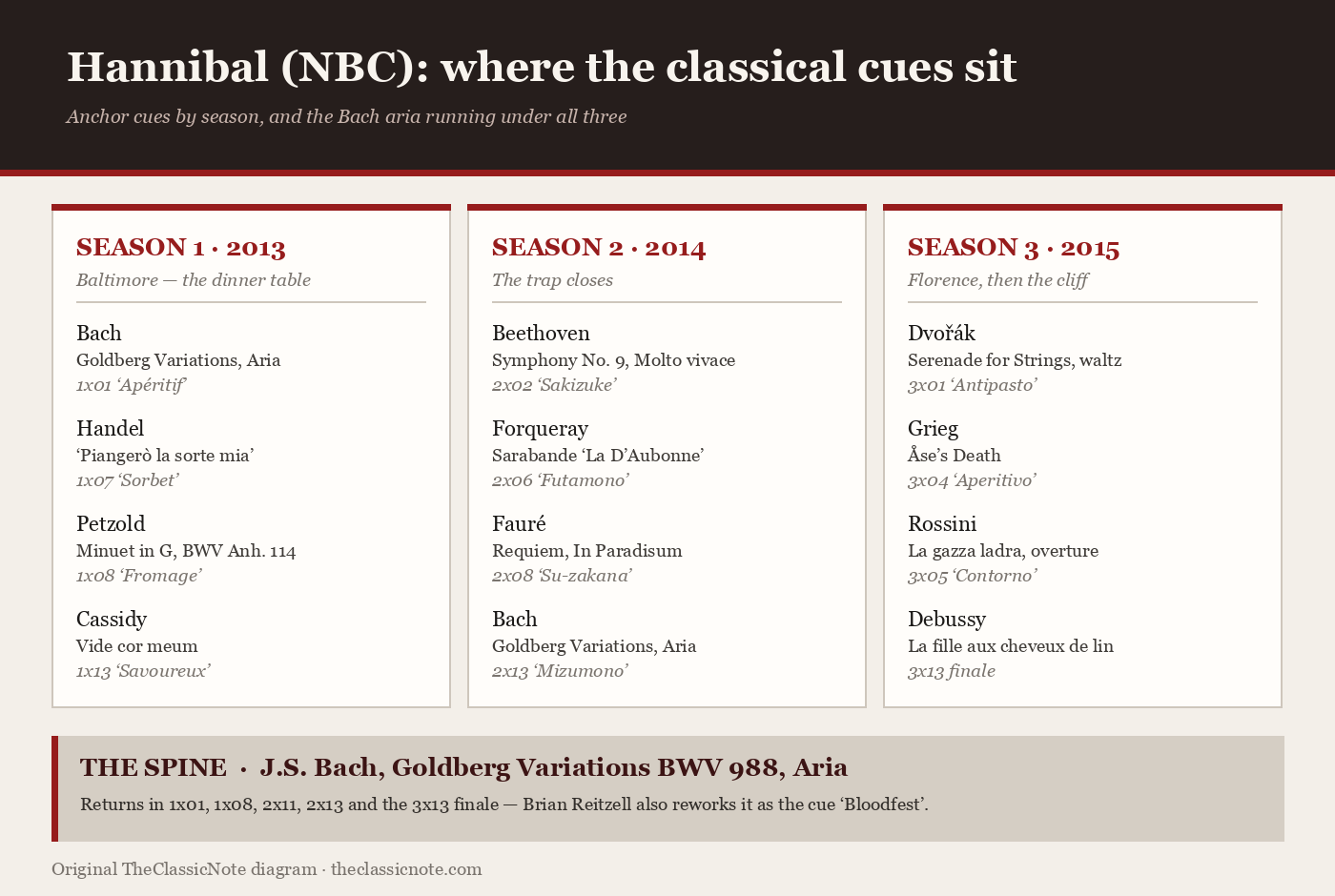
It did, by promoting the record collection from set dressing to a second script. Across three seasons and 39 episodes, from April 2013 to August 2015, the classical cues tell you what he is cooking, who he considers worth a performance, and — more than once — the moment he has decided someone will die. Composer Brian Reitzell built the original score from percussion and a harpsichord, then let the repertoire do the plot work. Below: the cues that carry weight, the scene each lands on, and one recording for hearing the piece properly.
Spoiler warning: this article discusses scenes from all three seasons of Hannibal, including the season two and season three finales.
How the show actually uses classical music
The pattern is simple once you see it, and it is why this show’s music works where most “villain with taste” shorthand does not. Almost every repertoire cue is diegetic — playing in the room, from Hannibal’s stereo or his harpsichord, because he put it there. The score, Reitzell’s domain, is everyone else’s nervous system: scraped metal, tuned drums, low drones. Hear a string quartet and you are in Lecter’s point of view. Hear a bowed cymbal and you are in Will Graham’s.
That split hands the show a brutal editing trick: cut from a Baroque dinner to a crime lab and the music goes from consonant to unbearable in one frame. It also makes the cues characterisation rather than mood — a man who cooks a rival to a comic opera overture is telling you how he rates the rival.
The cues that matter, scene by scene
J.S. Bach — Goldberg Variations, BWV 988: Aria
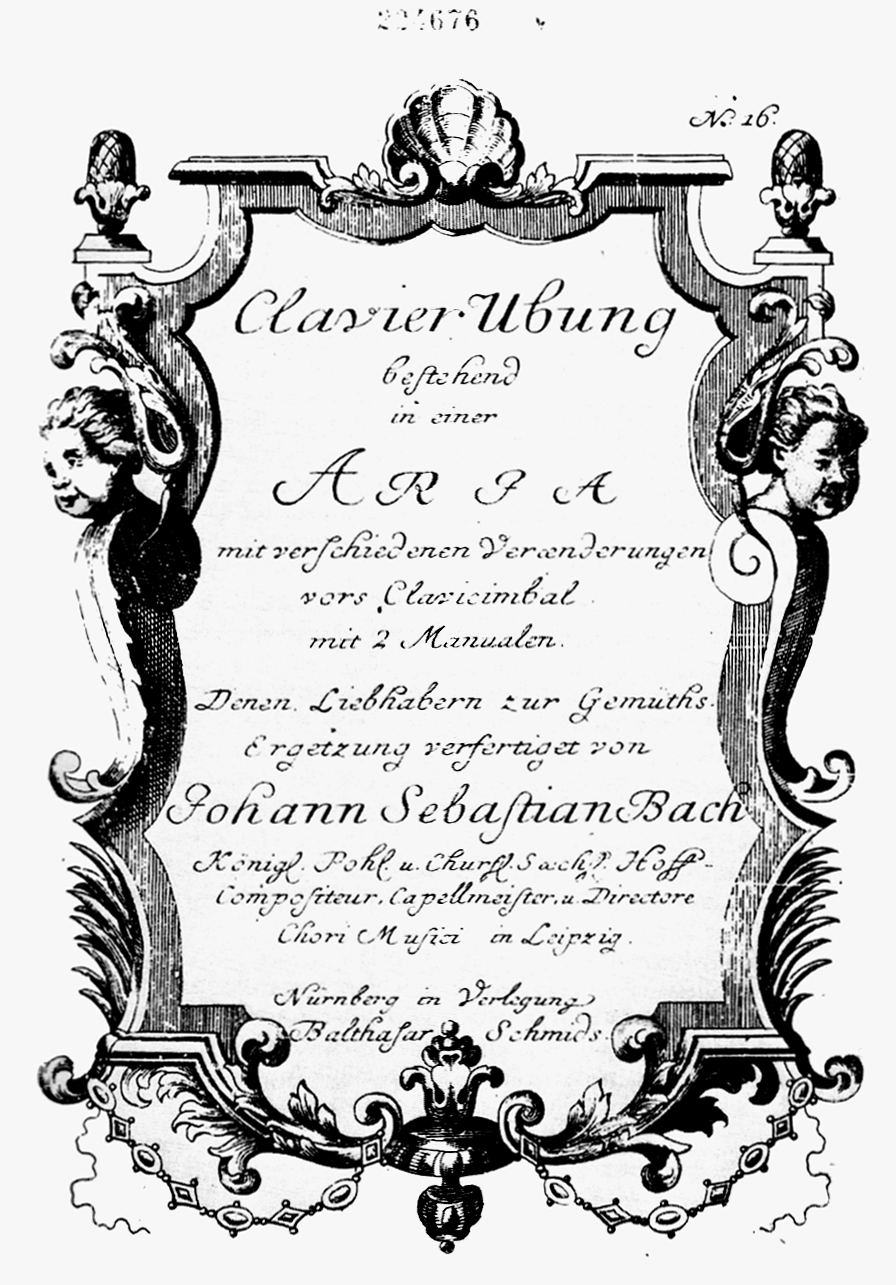
The spine of the whole series. The Aria is the first thing you hear under Hannibal in the pilot, “Apéritif,” while he eats alone at a laid table — the show establishing the Lecter of the films in about fifteen seconds without a word of dialogue. It comes back at the harpsichord in “Fromage” after he has strangled Tobias Budge in his own office, returns during the ortolan dinner in “Kō No Mono,” plays in the plane at the end of season two, and closes the series in “The Wrath of the Lamb.” Reitzell also reworks it into an original cue titled “Bloodfest.”
Why the Aria and not one of the thirty variations? Because it is the only part with no argument in it: a sarabande over a bass that walks down and comes back, while everything after it is Bach proving what can be built on that ground. Lecter’s taste, on this show’s reading, is for the frame rather than the invention. My pick is Glenn Gould’s 1981 remake, slow enough that every ornament lands.
🎧 Also on: Apple Music · Spotify
If you want the whole work rather than the four minutes the show uses, we have a full guide to Bach’s Goldberg Variations, BWV 988.
Handel — “Piangerò la sorte mia” from Giulio Cesare
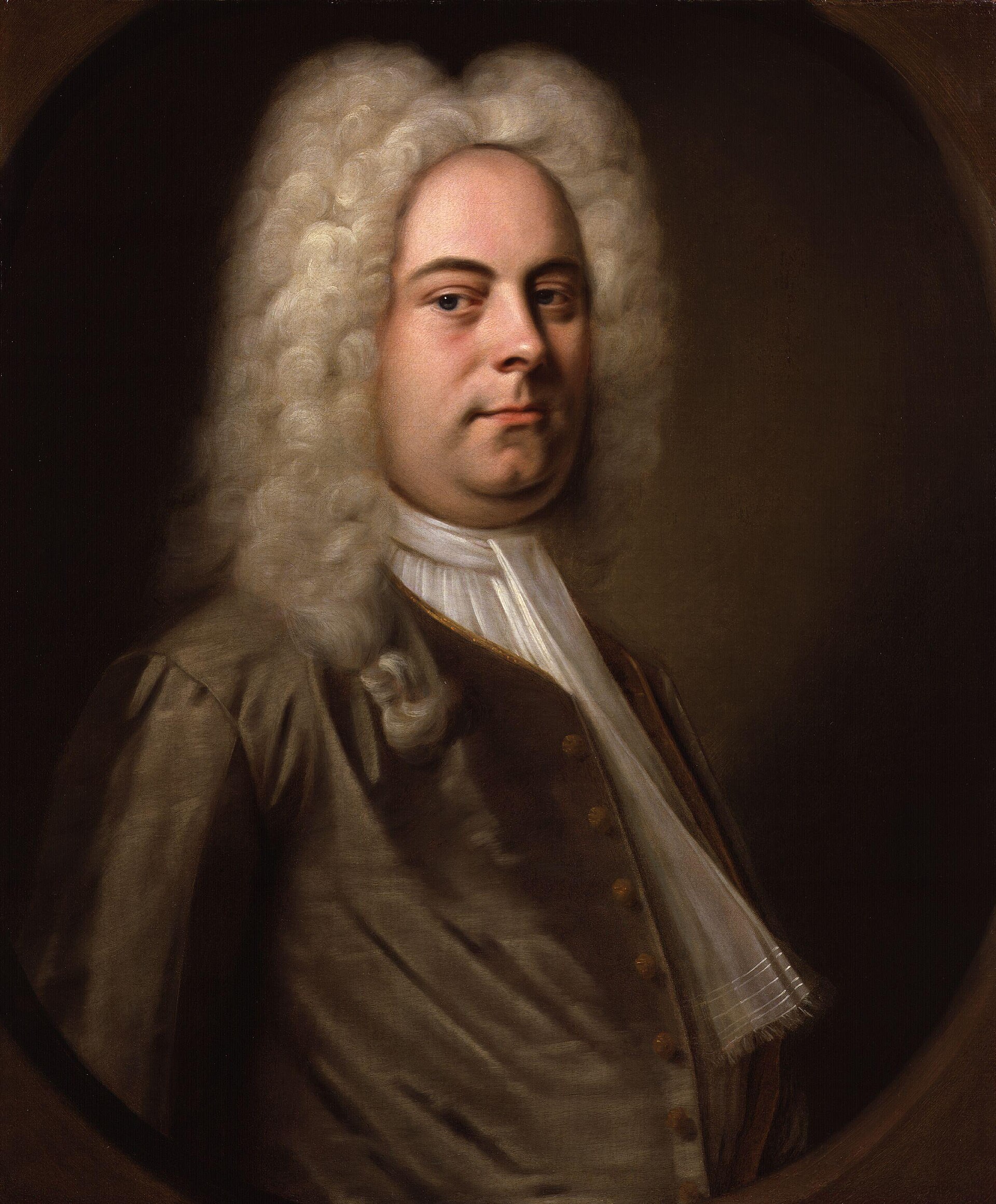
The best-known music scene in the series, in “Sorbet” (season one, episode seven). At a benefit concert a soprano sings Cleopatra’s Act III lament from Giulio Cesare, Hannibal’s eyes fill, and he is the first to stand and applaud. The singer on screen is the Canadian soprano Emily Klassen, credited in the episode as Lenora; only part of the aria is used.
It is the best piece of characterisation in the show, and it works because of what the aria is. Cleopatra sings it believing she has lost everything: a slow, resigned E-flat siciliana with a furious middle section where she promises to haunt her enemy as a ghost — then back to the resigned music as if nothing happened. Grief bookending rage is the closest thing the series gives us to a diagram of its lead. This Boston Baroque performance with soprano Susanna Phillips keeps the middle section’s teeth in.
▶ Listen on YouTube · Apple Music · Spotify
Christian Petzold — Minuet in G major, BWV Anh. 114
In “Fromage,” the cello-shop owner Tobias Budge — who murders people and strings their vocal cords — teaches a child this minuet. It is the piece every beginner learns, and for two centuries it was published as Bach, catalogued in the appendix to his works as BWV Anh. 114 because it sits in the Notebook for Anna Magdalena Bach. It is not by Bach. It is by Christian Petzold, an organist in Dresden.
Whether the production knew that, I cannot source, so I will not claim it as intent. The coincidence is still too good to skip: an episode about two men passing themselves off as more refined than they are, scored by the most famous misattribution in keyboard music. Hear the Netherlands Bach Society recording — harpsichord, real dance tempo, no longer a piano lesson.
▶ Listen on YouTube · Apple Music · Spotify
Mendelssohn — Intermezzo from A Midsummer Night’s Dream, Op. 61
Also from “Fromage,” under the dinner Hannibal cooks for Tobias — two predators sizing each other up over a table. Of all the incidental music Mendelssohn wrote for the Shakespeare, the Intermezzo is the agitated one: it is the music for Hermia lost in the wood, a running A minor line that will not settle, breaking off into a wandering, aimless bridge before the comic band arrives.
Under a polite dinner it reads as excellent manners with something running underneath — precisely the scene. It is also the least-played movement of a score everyone thinks they know from the Wedding March, so if that is all you know of Op. 61, start here.
▶ Listen on YouTube · Apple Music · Spotify
Beethoven — Symphony No. 9, II. Molto vivace
Season two, “Sakizuke”: Hannibal makes osso buco to the scherzo of the Ninth. This is the show at its most sardonic. The Molto vivace is a fugal chase driven by a hammering three-note rhythm and famously punctuated by the timpani, tuned in octaves, interrupting the orchestra — the most physically violent movement in the symphony, from the work everyone else in the world uses to mean brotherhood.
Cutting it into butchery is not subtle and the show knows it. The joke survives on the tempo match: the scherzo’s hard one-in-a-bar pulse sits under knife work the way a metronome sits under a scale. Iván Fischer with the Concertgebouworkest is my pick for articulation — you hear the fugue subject enter instead of a wash. For the whole symphony, we ranked the best recordings of Beethoven’s Ninth.
▶ Listen on YouTube · Apple Music · Spotify
Antoine Forqueray — Sarabande “La D’Aubonne”
The deep cut, from “Futamono” in season two, where Hannibal plays it at his harpsichord. Forqueray was a viol player at the French court whose pieces his son published in a harpsichord version; “La D’Aubonne” is a slow sarabande in the French style, all suspensions and unresolved ornament, the kind of piece that leans on a dissonance and refuses to move off it.
It is the most revealing choice in the series and almost nobody notices, because the surface is so quiet. Reitzell has described the harpsichord as “the instrument of death because the notes die” — pluck once and there is no sustain at all. Forqueray is what that instrument sounds like brooding rather than sparkling. Gustav Leonhardt’s recording is the reference.
▶ Listen on YouTube · Apple Music · Spotify
Fauré — Requiem, Op. 48: In Paradisum
Fauré’s Requiem is the series’ recurring funeral music: “In Paradisum” plays in Hannibal’s car in “Su-zakana,” the Introit and Kyrie closes “Shiizakana,” and the “Pie Jesu” appears in “Tome-wan” and in season three’s “Primavera.”
The choice is exact. Fauré’s is the famous setting that leaves out the Dies irae — no judgment, no wrath, no fire — ending on a high rocking soprano line over harp that sounds less like heaven than like being told everything is fine. For a man who does not believe he needs forgiving, it is the only requiem that fits. King’s College Cambridge gives you the treble sound Fauré wrote for.
▶ Listen on YouTube · Apple Music · Spotify
Dvořák — Serenade for Strings in E major, Op. 22: II. Tempo di valse
Season three opens in Florence with Hannibal and Bedelia du Maurier posing as husband and wife, and Dvořák’s waltz plays as they dance at a party in “Antipasto.” He almost smiles, then murmurs “bellissima” at her.
This is not a Viennese waltz. It is in the minor, it lilts rather than sweeps, and its trio keeps slipping into a warmer key and withdrawing again — charm that never commits. Against a marriage that is really a hostage situation, that hesitation is the entire scene.
▶ Listen on YouTube · Apple Music · Spotify
Grieg — “Åse’s Death” from Peer Gynt, Op. 46
Used in “Aperitivo,” the season three episode that catches up with everyone Hannibal maimed in the finale before. The shortest cue on this list, and it earns its place by being unbearably on the nose: muted strings, a four-note descending figure repeated at rising dynamic levels until it breaks and falls back to nothing. Grieg wrote it for a son sitting with his dying mother.
Dropped into an hour about survivors, it treats the wreckage as a death scene nobody will admit to being in. Karajan and the Berlin Philharmonic remain the plush benchmark; it is also the second movement of the suite covered in our guide to Grieg’s Peer Gynt Suite No. 1.
▶ Listen on YouTube · Apple Music · Spotify
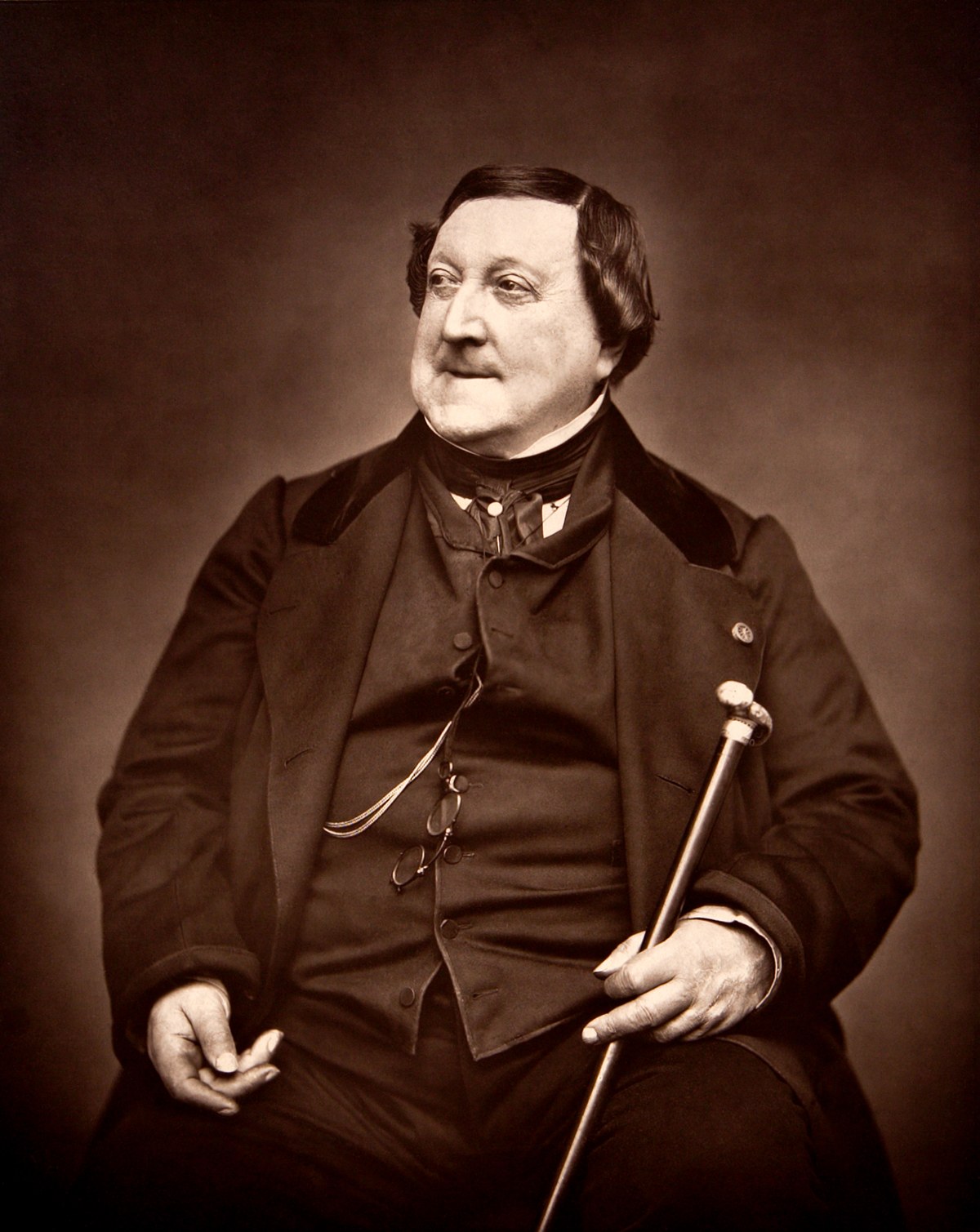
Rossini — La gazza ladra, Overture
Season three, “Contorno.” Inspector Rinaldo Pazzi walks into the Palazzo Vecchio to take Hannibal for the bounty, a record is already playing, and The Thieving Magpie runs under the murder — snare roll and stiff military march first, then, after Jack Crawford restarts the player, the fast giggling second half.
Critics reviewing the episode read this as a nod to A Clockwork Orange, which scores a gang fight to the same overture, and the parallel is hard to miss. But the cue stands on its own, which is why it is the best in the series. Rossini wrote it as the curtain-raiser to an opera in which someone is nearly executed for a theft committed by a bird — comic music bolted to a wrongful death. Pazzi dies for money, on a rope, in the building his ancestor was hanged from. The snare roll is a firing-squad sound Rossini uses as a joke; here nobody is joking and the piece grins anyway. The Danish National Symphony Orchestra performance below has the crispest snare I have found.
🎧 Also on: Apple Music · Spotify
Debussy — “La fille aux cheveux de lin”
The eighth prelude from Debussy’s first book turns up twice near the end of season three: in “… And the Beast from the Sea” and in the finale, “The Wrath of the Lamb.” It is the one piece that belongs to Francis Dolarhyde’s half of the story rather than Hannibal’s.
The prelude is barely two and a half minutes of a pentatonic tune stepping down and being caught by a soft chord underneath — no development, no climax, deliberately naive. Against the Great Red Dragon material it becomes the sound of the ordinary life the show dangles and then removes. Jean-Yves Thibaudet is my pick for the unforced touch; for the wider set see our guide to Debussy’s Préludes, Books 1 and 2.
▶ Listen on YouTube · Apple Music · Spotify
Patrick Cassidy — “Vide cor meum”
Not repertoire, and that is the point. Cassidy wrote “Vide cor meum” for Ridley Scott’s 2001 film Hannibal, setting a sonnet from Dante’s Vita nuova, heard there during an outdoor opera in Florence. The NBC series closes its first season, “Savoureux,” with it — borrowing the previous Hannibal’s music for its own last shot.
It is shameless writing and it works: a rising modal line for the two singers, strings that swell exactly where you expect, a text about a woman made to eat a burning heart. If you only know the thirty seconds everyone knows, the twentieth-anniversary recording with the London Symphony Orchestra and London Voices earns the full six minutes. The 2001 film’s own cue list is a separate story — we covered it in the classical music in the Hannibal movie.
▶ Listen on YouTube · Apple Music · Spotify
The standout: Rossini in “Contorno”
Take one cue from this show and take the Gazza ladra overture. Every other choice here is a good match between a piece and a scene; that one is the only cue that changes what the scene means. Played straight, Pazzi’s death is a competent set piece — a greedy policeman gets what greedy policemen get. With Rossini under it, the sequence acquires a point of view in which a man’s death is a comic-opera plot about a stolen spoon, and the tempo of the killing is set by the record rather than the killer. The show lets it run long, lets Jack restart it, and lets it finish. Nothing else in three seasons commits to a needle-drop that hard.
Runner-up: the Handel in “Sorbet” — the more beautiful scene, and the more sentimental one, which is why it comes second.
What is verified here, and what is not
Two different claims get made about music in television and they deserve different levels of confidence. Which piece appears in which episode is documented — IMDb’s per-episode soundtrack listings, the long-running fan index at hannibalsmusic.tumblr.com, and episode reviews that discuss the cues directly. Those I state plainly.
Which specific recording the production licensed is a different matter, and for most of these cues it is not published. So none of the recordings above is claimed to be the one heard on screen. They are my picks for hearing the piece properly, chosen on interpretation.
Readings of why a cue works are mine, not statements about what Bryan Fuller or Brian Reitzell intended. Where a widely repeated reading comes from critics rather than the production — the Clockwork Orange parallel — I have said so. Reitzell’s remarks about the harpsichord come from his own interviews.