If you want one piece to try tonight, make it Satie’s first Gymnopédie: barely three minutes on two chords rocking back and forth, no crescendo, no sudden entrance, nothing that pounces. That last part is the whole selection rule here. Most “calming classical” playlists are assembled by mood, which is how they end up dropping the 1812 Overture two tracks after a lullaby. This one is assembled by predictability — steady pulse, narrow dynamic range, no ambush — because for a lot of autistic children that is what decides whether music is a refuge or an assault.
Start here — the five that work most often:
- Satie, Gymnopédie No. 1 — wind-down. Three minutes, zero dynamic jumps.
- Bach, Cello Suite No. 1, Prelude — focus and transitions. One unbroken pattern, about two and a half minutes.
- Fauré, Berceuse from the Dolly Suite — an actual lullaby, written for an actual small child.
- Holst, Venus, the Bringer of Peace — the surprise pick. Holst with every crash removed.
- Pachelbel, Canon in D — the most predictable structure in the repertoire, and that is exactly the point.
One caveat first. Autistic children are not one audience: some are drawn to music so strongly it organises their whole day, others find any music intrusive and would rather have silence. Both are fine. Nothing here is a treatment — the research section at the end is blunter about that than most lists are. Treat this as a shortlist for a child who already likes sound, and let the child veto anything.
What actually makes a piece work
What ruins most classical music for a sound-sensitive listener is not volume. It is change in volume. A piece can sit at a comfortable level for four minutes and still be unbearable if it spends bar 61 detonating. Decreased sound tolerance is common enough to plan around: a 2021 meta-analysis in Ear and Hearing put current hyperacusis prevalence in autistic people at 41.4% and lifetime prevalence at 60.6% on interview and questionnaire measures, and 27.3% on observational measures. That single figure drives the first criterion — flat dynamics.
The second is a pulse you can predict. Music that repeats a figure — a ground bass, an ostinato, a broken-chord shape that never varies — gives a listener something to lock onto; in the Bach Prelude and the Pachelbel Canon that repetition is the entire architecture. The third is timbre: solo piano, cello and small string groups are easier to tolerate than brass and percussion, because their attacks are gentler, so the sound arrives rather than starts. The fourth is the ending — a piece that fades out beats one that stops on a bang, because a single bang teaches a child to brace for the whole track.
Wind-down and lights-off
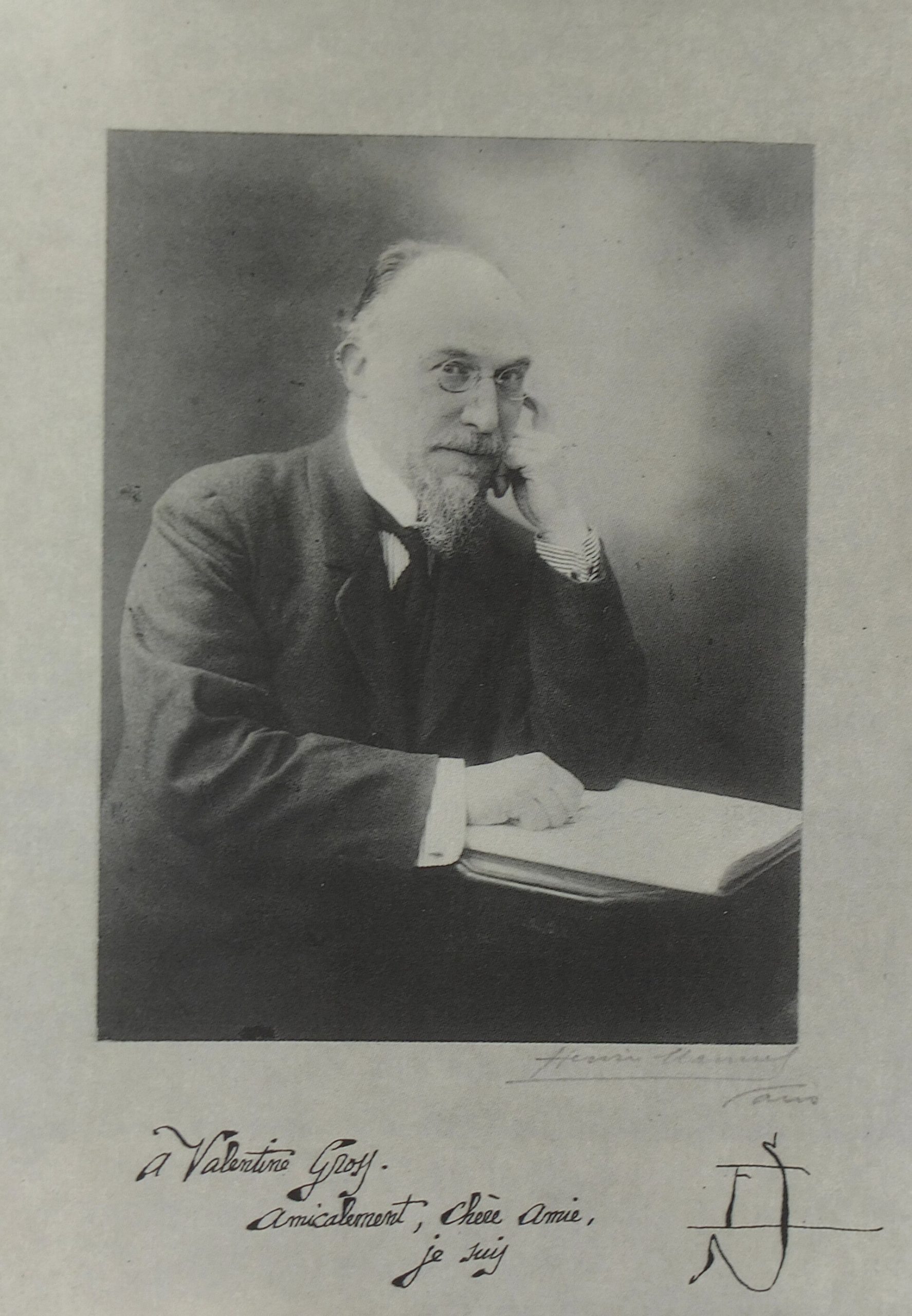
Erik Satie — Gymnopédie No. 1
Satie finished the three Gymnopédies by April 1888, and the first has become the internet’s default calm-piano track for a reason that is structural rather than atmospheric. The opening alternates two major seventh chords, on G and on D, and that alternation keeps going underneath the tune. Nothing resolves in a way that demands attention. A child can leave the room, come back, and the piece is doing exactly what it was doing.
Khatia Buniatishvili takes it slower than most and keeps the left hand almost flat — that is the version I would put on at bedtime. Speed is the one variable I would not raise here.
🎧 Also on: Apple Music · Spotify
Gabriel Fauré — Berceuse from the Dolly Suite
Written for piano duet between 1893 and 1896 and named after Régina-Hélène Bardac, the small daughter of Fauré’s mistress Emma Bardac; the pieces marked her birthdays. So it is a lullaby written for a specific real child, and it behaves like one — rocking accompaniment, a tune that circles back, under three minutes, ending quieter rather than bigger. Keep the four-hands original over any orchestration: two pianists at one keyboard make a smaller, drier sound than strings, and the Scott Brothers Duo keep the tempo honest instead of dragging it into syrup.
▶ Listen on YouTube · Apple Music · Spotify
Maurice Ravel — Pavane pour une infante défunte
A pavane is a slow processional dance, and Ravel holds the tread even from first bar to last. The orchestral version opens with a horn tune over pizzicato strings and harp, and the melody returns essentially unchanged — that is the pattern-recognition payoff. Six and a half minutes inside a narrow band of volume, no percussion, no abrupt entries. Take it over the solo piano version: the horn gives a child one recurring voice to track, and the Berliner Philharmoniker keep it warm rather than mournful.
▶ Listen on YouTube · Apple Music · Spotify
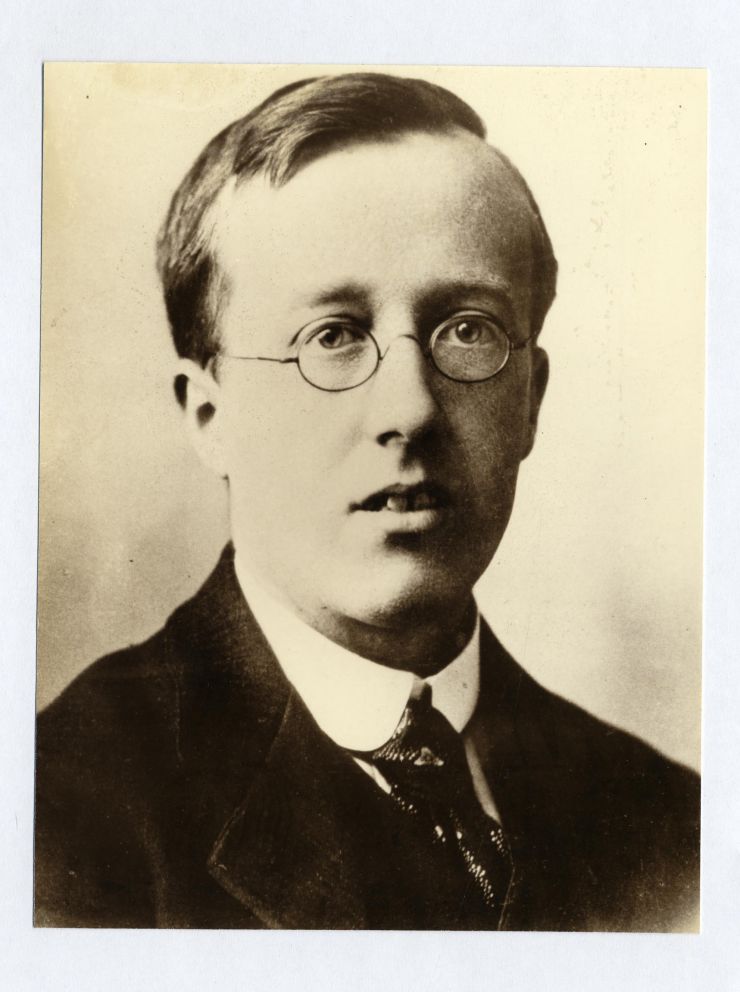
Gustav Holst — Venus, the Bringer of Peace
The pick I would defend hardest, because The Planets has a reputation problem: everyone knows Mars, five-beat military hammering and precisely what you are trying to avoid. Venus, composed in the latter part of 1914, is its opposite. A solo horn opens, answered quietly by flutes and oboes; then oscillating chords from flutes and harps with celesta on top. No percussion assault anywhere, and the texture thins rather than thickens.
Eight minutes makes it a whole wind-down segment rather than a single track. One caution: Mars sits two movements earlier in the suite, so play Venus alone — or read our guide to the best recordings of The Planets and pick a version you can navigate by track.
🎧 Also on: Apple Music · Spotify
For bedtime specifically, this group pairs with our list of classical music for kids’ sleep, built on the same no-climax rule.
Focus, homework, and transitions
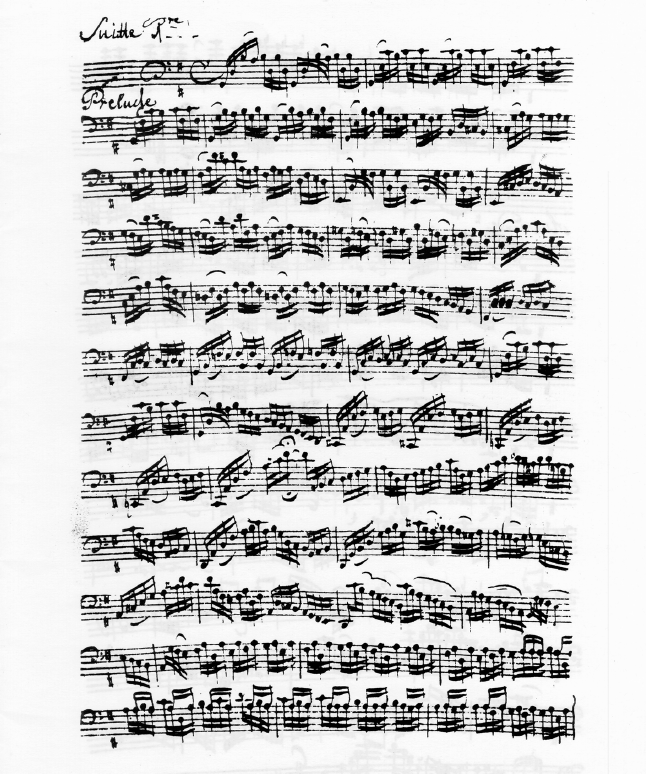
J. S. Bach — Cello Suite No. 1 in G major, Prelude
You can see the argument in the manuscript above without hearing a note: the same broken-chord figure repeats across the page, changing only which harmony it outlines. Two and a half minutes, one instrument, one gesture — for a child settling into a task, that consistency is worth more than melodic interest.
Yo-Yo Ma is the reference point — unhurried, without the exaggerated swell at every phrase peak that some cellists cannot resist. Wider context is in our full guide to Bach’s Cello Suites; here, the first Prelude on repeat is the whole prescription.
🎧 Also on: Apple Music · Spotify
J. S. Bach — Goldberg Variations, Aria
Not the whole set — the Aria alone, which opens and closes the work and runs about four minutes. It is a sarabande over a very stable bass, symmetrical in a way a child can feel: two halves, each repeated. Glenn Gould recorded the Goldbergs in 1955 and again in 1981, and for this use the 1981 Aria wins by a wide margin — far slower, much more even. The 1955 is thrilling and completely wrong for a quiet room. Our guide to the Goldberg Variations covers the rest.
▶ Listen on YouTube · Apple Music · Spotify
Johann Pachelbel — Canon in D
Include the obvious one, because it is obvious for a good reason. The Canon is built on a two-bar bass line repeated twenty-eight times without alteration while three violins enter one after another, each playing the same melody two bars behind the last. Structurally it is the most predictable piece most people will ever hear, and predictability is the currency here.
Skip the lush string-orchestra arrangements. Voices of Music play the original scoring — three violins and continuo, on period instruments — and the result is quieter, drier and far less sweet than the wedding version. Drier is easier on sensitive ears, not harder.
▶ Listen on YouTube · Apple Music · Spotify
Philip Glass — Metamorphosis One
The unexpected entry, and the one most likely to be dismissed unheard. Glass wrote the five Metamorphosis pieces for solo piano in 1988, drawing on his score for Errol Morris’s documentary The Thin Blue Line and on a staging of Kafka. Metamorphosis One runs a little under six minutes over a left-hand pattern that changes so gradually you can stop noticing it. It earns its place twice over: it is contemporary, so it does not read as old people’s music to a nine-year-old, and its method is incremental change, so it never asks the listener to reorient.
▶ Listen on YouTube · Apple Music · Spotify
Listening together
These three are busier than everything above. They are not background music — they are for sitting down with a child who wants to talk about what the instruments are doing, and they assume a full orchestra is already tolerable.
Camille Saint-Saëns — Aquarium, from The Carnival of the Animals
Two minutes of rippling piano figures, strings and glass harmonica (usually played on celesta), with no loud moment at all. Saint-Saëns composed the suite in February 1886 and refused to let it be published in his lifetime, believing it would damage his standing as a serious composer; he relented only for The Swan, and the full set appeared in 1922. Aquarium is the one movement of the fourteen I would leave running unsupervised; Fossils and the Royal March of the Lion have sharp attacks that undo the point.
▶ Listen on YouTube · Apple Music · Spotify
Edvard Grieg — Morning Mood, from Peer Gynt Suite No. 1
Grieg published the first Peer Gynt suite in 1888 and Morning Mood opens it: a flute tune answered by oboe, the phrase handed round the orchestra and gradually joined by more players. It does swell in the middle, so it is not a lights-off piece — but the swell arrives slowly and audibly, which is nothing like a shock. That is why I would use it as a transition track: waking up, leaving the house, moving between activities. It comes from Act IV of the incidental music rather than the start of the play, which surprises people; our guide to the Peer Gynt Suite No. 1 has the rest.
▶ Listen on YouTube · Apple Music · Spotify
Sergei Prokofiev — Peter and the Wolf
The one full-length work here, with the highest ceiling and the highest risk. First performed at the Large Hall of the Moscow Conservatory on 2 May 1936, it gives every character a fixed instrument that never changes: bird is flute, duck is oboe, cat is clarinet, grandfather is bassoon, the wolf is three horns, Peter is the strings. A one-to-one mapping of sound to meaning, held for half an hour — for a child who likes systems, an unusually satisfying half hour.
The risk is concrete: the hunters arrive with timpani and bass drum standing in for gunshots, loud and abrupt. Preview it, know where it lands, and either drop the volume for ninety seconds or skip ahead. Narrations vary wildly too — some narrators shout.
▶ Listen on YouTube · Apple Music · Spotify
Four to skip, and exactly why
These appear on general “classical for children” lists constantly. Each contains an engineered shock.
Haydn — Symphony No. 94, second movement
The nickname is the warning label. Premiered at the Hanover Square Rooms in London on 23 March 1792, the Andante states a quiet theme, repeats it more quietly still, then at bar 16 the whole orchestra lands a fortissimo chord and carries on as if nothing happened. A great joke, and a terrible idea for a sound-sensitive listener — the effect depends on not seeing it coming.
Tchaikovsky — 1812 Overture
Cannons, written into the score. Even where recordings substitute bass drum, the last three minutes are a wall of brass, percussion and bells. We have a whole guide to it, but it belongs nowhere near this playlist.
Grieg — In the Hall of the Mountain King
From the same Peer Gynt suite as Morning Mood, and its exact inverse: one theme that accelerates and gets louder until it collapses in a crash. The design goal is anxiety, and it succeeds.
Orff — O Fortuna, from Carmina Burana
Opens with full chorus and orchestra at maximum volume, drops to a whisper, then rebuilds the same wall. Two dynamic cliffs in five minutes. Some children love it precisely for the shock — fine, but do not introduce anyone with it.
How to actually use these
Volume first, repertoire second. Set the level with a piece you know, then leave the dial alone. Adjusting mid-piece reintroduces the unpredictability the selection is meant to remove.
Repeat rather than shuffle. A three-minute piece looped six times beats eighteen minutes of variety, and a familiar loop is what turns music into a transition cue — the same track for teeth-brushing every night, until the track does the work of the instruction.
Headphones are a tool, not a default. Over-ear headphones hand a child control of the environment, which is often the point. They also remove the ambient sound some children use to track the room, and the clamping pressure can be worse than the noise. Try both.
Preview everything once, alone. Ninety seconds skimming a track for percussion entries catches most ambushes. The same logic drives our list of classical music for anxiety.
What the research actually says
The largest trial is TIME-A, published in JAMA in 2017. It randomised 364 children to improvisational music therapy plus enhanced standard care, or enhanced standard care alone. After five months, ADOS social affect scores had fallen in both groups by nearly identical amounts — a mean difference of 0.06, 95% confidence interval −0.70 to 0.81, P = .88. The authors concluded that the findings do not support improvisational music therapy for symptom reduction. A null result from a large, well-run study deserves stating plainly rather than burying.
Against it, the 2022 Cochrane review reported that music therapy is probably associated with an increased chance of global improvement and probably reduces total autism symptom severity, at moderate certainty. How to reconcile the two is unsettled — differences in outcome measure, dose, and what counts as music therapy all get proposed, and none is agreed.
Two things follow. Neither study was about playing recordings — both examined therapist-led sessions, a different activity from putting Satie on in the living room. And nobody has shown that a child enjoying music needs a clinical outcome to justify it.
One myth to bury while we are here. The “Mozart effect” comes from a 1993 Nature paper by Rauscher, Shaw and Ky reporting a temporary improvement on an abstract spatial-reasoning task after listening to Mozart’s Sonata for Two Pianos, K. 448. IQ was never measured, and no effect outlasted about fifteen minutes. A 2010 meta-analysis of 39 studies by Pietschnig, Voracek and Formann found little support for it and reported small effect sizes. Classical music does not make anyone smarter. It can make a room feel manageable — a smaller claim, and an honest one.