- Composer
- Chopin
- Work
- Ballade No. 1 in G minor, Op. 23
- Key
- G minor
- Composed
- Sketched 1831, completed 1835
- Movements
- 1 movements
Single movement: Introduction – Theme 1 (G minor) – Theme 2 (E♭ major) – Development – Recapitulation – Coda (Presto con fuoco) - Instrumentation
- Solo piano
- Premiere
- 1836
Paris (approximate; exact date unknown) - Dedication
- Baron Nathaniel von Stockhausen
Robert Schumann left Leipzig with a new piece of music in his hands and a memo he couldn’t stop writing. It was the fall of 1836. He’d just visited Chopin in person and walked away with an unpublished manuscript. His verdict: “The work closest to his genius.” Then he told Chopin directly — this is my favorite of everything you’ve written. Chopin went quiet for a moment, then answered firmly: “I’m glad. It is my most beloved work too.”
Here’s the strange part: this isn’t a nocturne. It’s not a mazurka or a grand polonaise. It’s a single-movement piano piece in a form that didn’t really exist before Chopin invented it. And yet both men agreed — this was the one.
There’s a reason for that.
The Exile Who Started Writing in Vienna
Chopin arrived in Vienna in November 1830, intending to build his concert career abroad. Three weeks later, news came from Warsaw: revolution. The November Uprising — Polish independence fighters against Russian imperial rule. The war lasted months. When it was crushed, Chopin’s path home was gone with it.
He never returned to Poland. For the rest of his life, he was an exile in Paris.
Vienna was miserable. Concert bookings dried up. Money ran short. His letters home grew heavier. In one journal entry from this period, he wrote: “Am I destined to live like a Pole, not a Frenchman, not a German?” He was twenty-one years old and had no idea when — or whether — he’d see his family again.
It was here, in this state of suspended grief, that sketches for what would become Ballade No. 1 began to appear.
By December 1831, Chopin had made it to Paris, and everything changed. Liszt heard him play and reportedly said he wasn’t sure he deserved to sit at a piano. Mendelssohn became a friend. Delacroix painted his portrait. Salon bookings filled his calendar. The sketches continued to develop, and by 1835, the Ballade was complete. He dedicated it to Baron Nathaniel von Stockhausen — the Hanoverian ambassador to France and one of Chopin’s early patrons in Paris. A refugee musician, four years in, had climbed high enough to dedicate work to a diplomat.
Inventing a Form That Didn’t Exist
Before Chopin, a “ballade” was a vocal form — a ballad, a narrative song. Medieval ballads told stories of heroes, tragedies, supernatural encounters. Schubert’s “Erlkönig” is a ballad: a poem set to music, a story told in song.
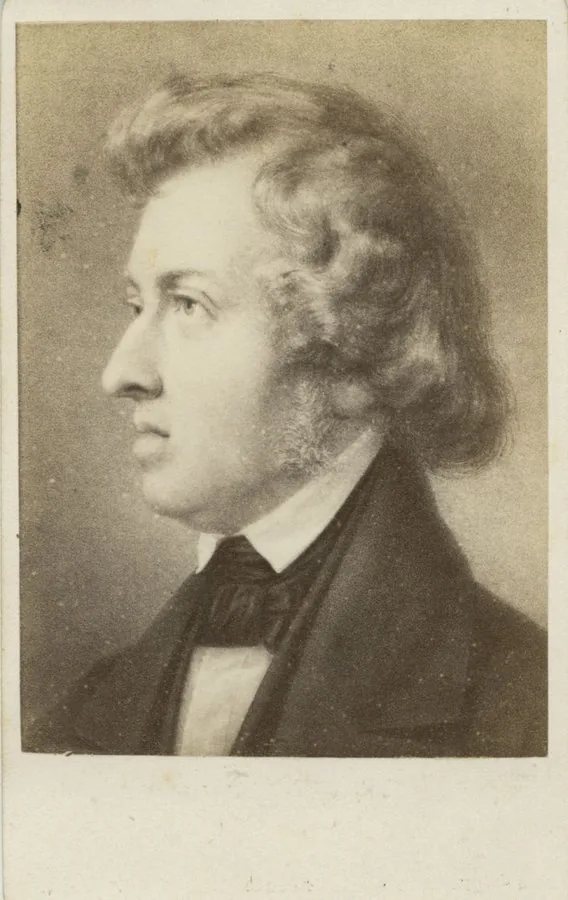
Chopin took the word and applied it to a solo piano piece with no text, no vocalist, no explicit program. He was the first to do this. After him, Brahms wrote four piano ballades, Liszt wrote two, and the form kept being used. But Chopin named it and set the template.
What distinguishes a piano piece as a “ballade” instead of just a sonata or a fantasy? Chopin never explained it directly. But listen to this one, and you’ll feel it: there’s a story happening. Characters appear. Something builds, strains, and then breaks. It’s the structure of narrative fiction applied to pure instrumental music.
The architecture is clever and strange. Two main themes — first in G minor (dark, questioning), then in E♭ major (warm, almost peaceful). They develop, transform, and collide. The recapitulation reverses their order from the exposition — an unusual structural choice that makes the explosive coda feel even more inevitable when it arrives.
And the time signatures shift: 4/4 in the introduction, then 6/4 for most of the piece, then 2/2 in the coda. The meter itself tightens as the music accelerates toward its conclusion.
Schumann noticed all of this. The melody was beautiful — Chopin’s melodies always were — but the form was what astonished him.
> 💡 First-time listener’s guide: The piece divides roughly into two emotional zones. For the first eight minutes, it’s lyrical and searching — Chopin at his most beautiful. Then a single chord drops like an axe, and the last two minutes (the Presto con fuoco coda) become something unrecognizable. The first listen, you might just be surprised. On the second listen, you’ll hear that everything before the coda was preparation. That’s when this piece really opens up.
The Two Themes and What Happens to Them
Theme 1 arrives quietly at measure 8, G minor. It moves cautiously upward, like the opening sentence of a novel that hasn’t told you yet what kind of story it is. This theme will return later, and when it does, it will feel entirely different — not because the notes change substantially, but because of what’s happened in between.
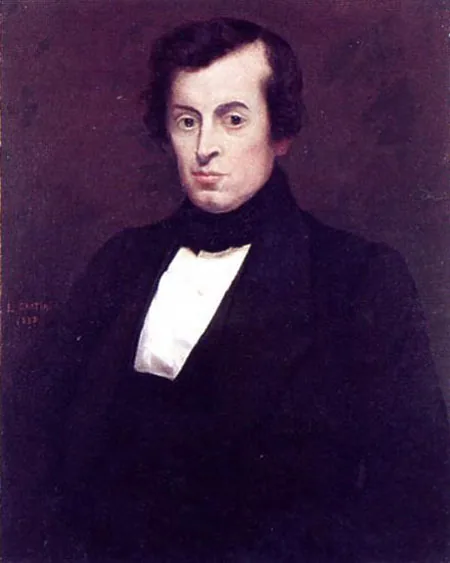
Theme 2 appears around the 2:30 mark, in E♭ major. If Theme 1 is a question, Theme 2 is the moment someone answers warmly and you feel, briefly, that everything might be okay. This is Chopin at his most disarming — the switch from minor to major, the texture opening up, something almost hopeful entering the room. It doesn’t last.
The development section puts both themes through transformations and harmonic detours. In the recapitulation, the themes return — but in reverse order. Theme 2 first, then Theme 1. This is structurally unusual and not accidental: by the time Theme 1 returns, everything it touches feels more desperate. And then the coda arrives.
The coda: Presto con fuoco. “Very fast, with fire.” A thundering chord. And then the piece essentially becomes a different animal — both hands racing, the initial Neapolitan harmony reappearing like a callback to the opening bars, a final scale run down the entire keyboard, and then it’s over.
The whole thing is ten minutes. It has more emotional range than most ninety-minute films.
A Piece That Saved a Life
In Roman Polanski’s 2002 film The Pianist, based on the true story of Władysław Szpilman, there’s a scene that many people remember above all others. Warsaw, 1944. The city is in ruins. Szpilman — a Jewish pianist who has survived the ghetto, hidden by strangers, nearly killed a dozen times — is discovered by a German officer, Captain Wilm Hosenfeld.
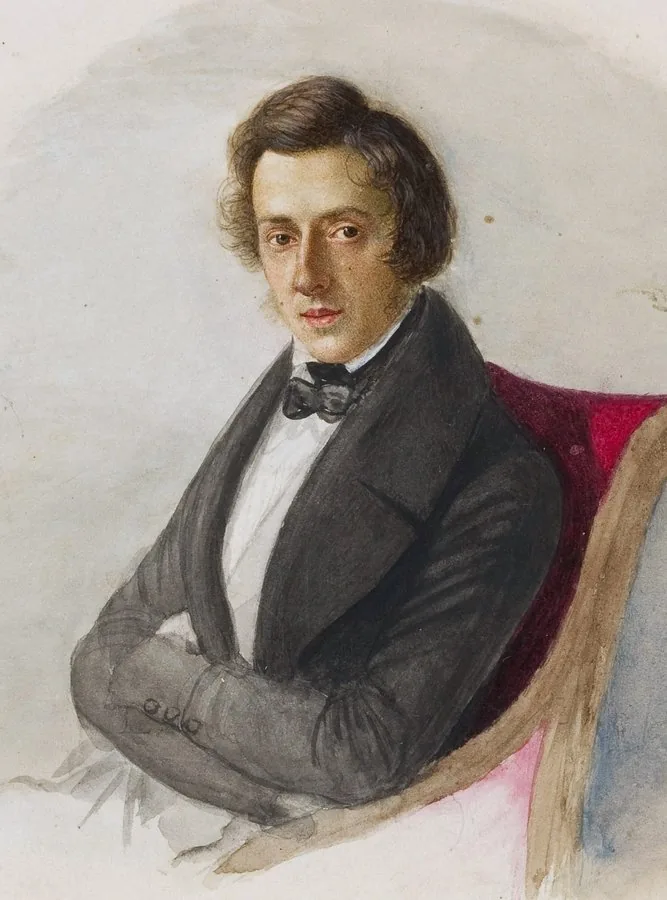
Hosenfeld asks if Szpilman can play piano. Szpilman sits at the instrument, cold and starving, and plays Ballade No. 1. Hosenfeld listens. Then he helps hide Szpilman and keeps him supplied with food until the end of the war.
This actually happened. Hosenfeld was captured by Soviet forces after the war and died in a prison camp. Szpilman survived, played piano in Poland for decades more, and tried to find Hosenfeld but couldn’t reach him in time. Two men, a piano, one Chopin ballade — and one of them lived because of it.
That’s the kind of cultural weight this piece has accumulated.
On Ice and in Anime
If you’ve followed competitive figure skating, you know the other major context for this piece. Yuzuru Hanyu used Ballade No. 1 as his short program for four consecutive seasons from 2014 to 2018. In that time, he won two Olympic gold medals and set five world records in the short program. As of 2021, the five highest short program scores in history all belong to Hanyu skating to this piece.
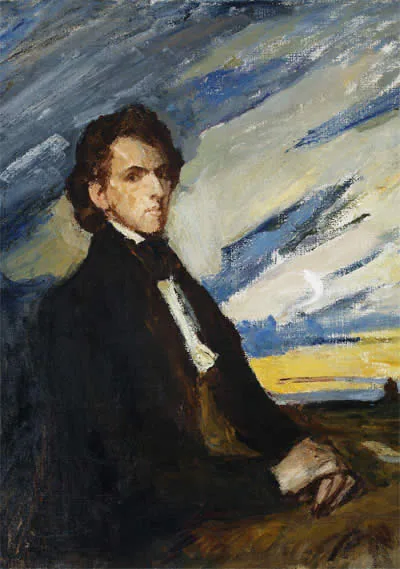
He explained his choice by saying the structure matched what he wanted to do on ice: lyrical at the start, explosive at the end. He was right, and the combination worked in a way that hadn’t been seen before in the sport.
In anime, Your Lie in April (Shigatsu wa Kimi no Uso) features Ballade No. 1 as a central piece — the composition the protagonist Kousei plays when he returns to performance after years away from music. It’s a choice that makes sense. This is a piece about building toward something irreversible.
For First-Time Listeners
Three things to listen for on your first pass:
The opening return. The first theme appears at the beginning and again, transformed, in the middle of the piece. Listen to whether it sounds different the second time — not in notes, but in feeling. It should.
The E♭ major theme. Around two-and-a-half minutes in, something warmer arrives. Notice how long it lasts, and what happens to it.
The chord that starts the coda. You won’t miss it. Everything before it was the setup. Everything after it is the release. If you only listen for one thing, listen for the moment the music decides to let go.
Recommended Recordings
Martha Argerich
Argerich’s account is dangerous. Her coda is unlike almost anyone else’s — faster, more reckless, more willing to sacrifice polish for impact. The lyrical sections are beautiful; the coda sounds like something has finally snapped. An essential listening experience.
Krystian Zimerman (1980, DG)
Zimerman recorded this at twenty-three. It shows in the best possible way — the architecture is clear, each section purposeful, the coda exactly as explosive as it should be but never out of control. The most structurally illuminating recording available.
Maurizio Pollini (c. 1972, DG)
Pollini’s version is coolly authoritative. The technical difficulties look easy, which makes the music easier to follow without distraction. A good second listen after you already know the piece.
Listen with the Score
The score reveals the structural decisions — where the themes split and recombine, where the meter changes, where the Neapolitan harmony reappears. The full score is freely available at IMSLP. → View the score on IMSLP
Frequently Asked Questions